This is a multi-state form covering the subject matter of the title.
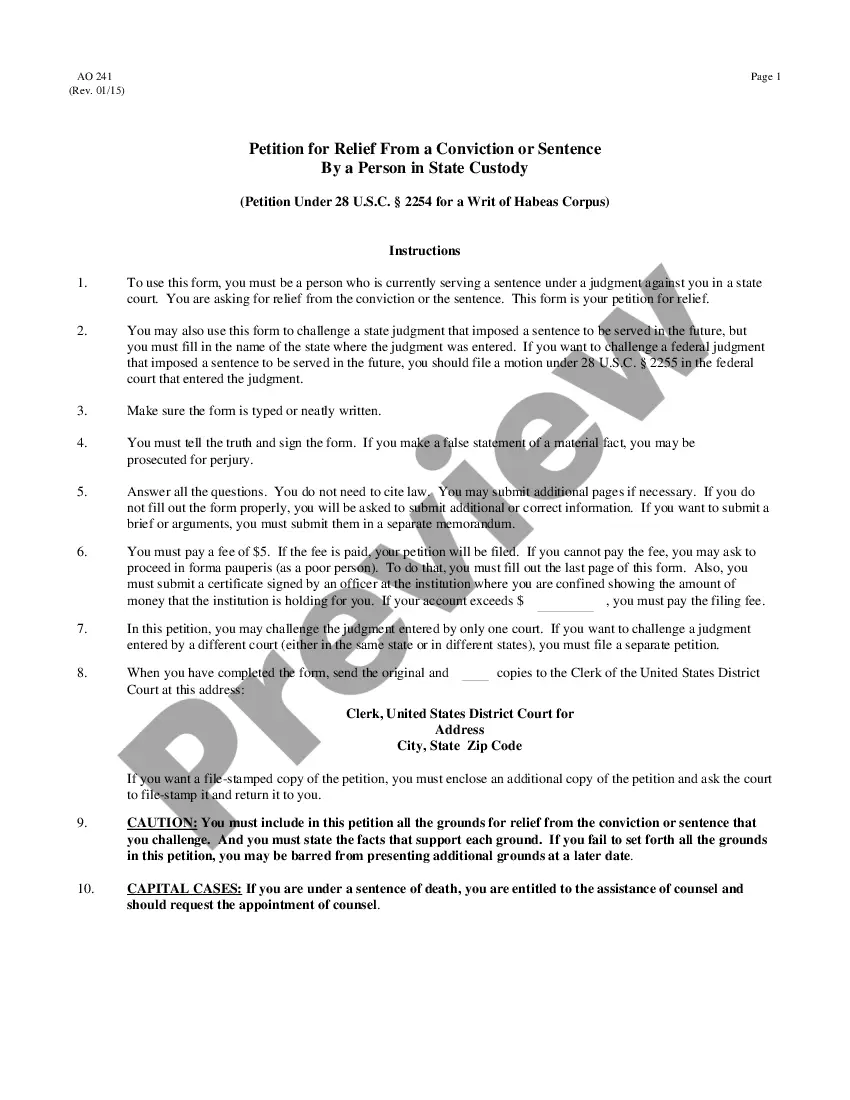
Montana Petition for Writ of Habeas Corpus by a Person in State Custody
Category:
State:
Multi-State
Control #:
US-00277
Format:
Word;
Rich Text
Instant download
Description
Free preview

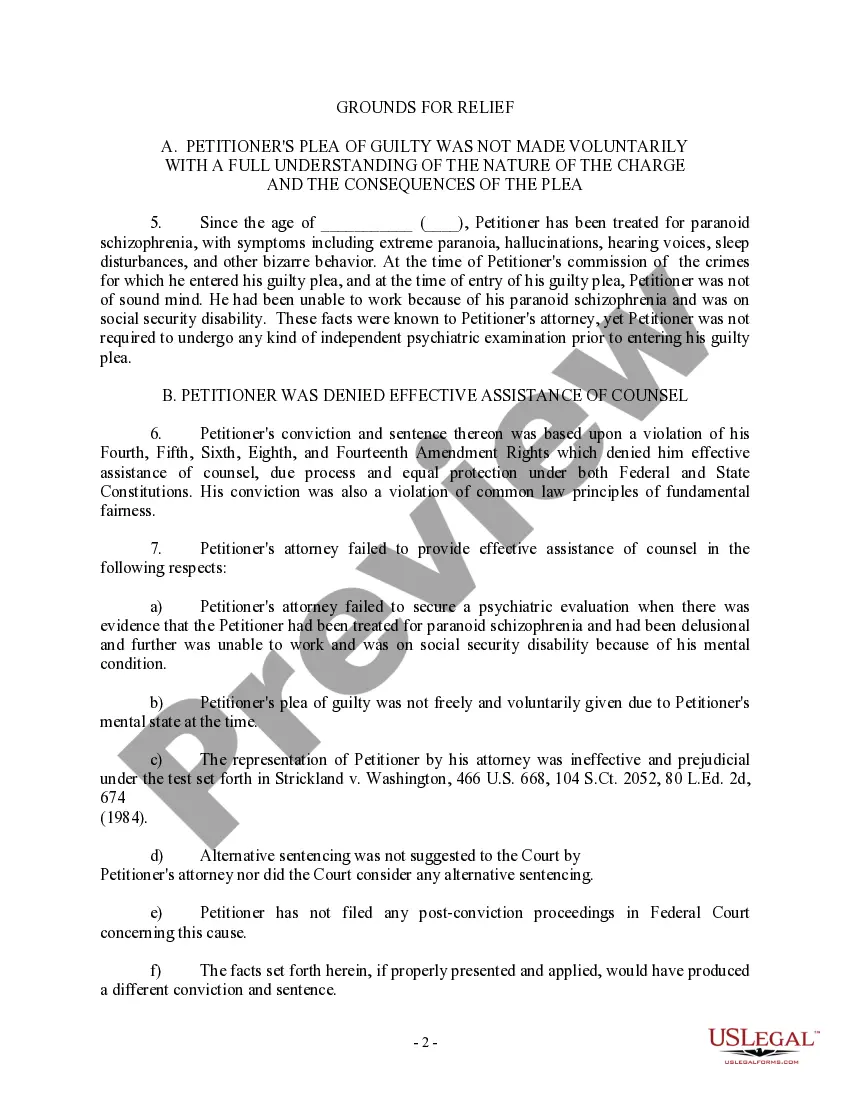
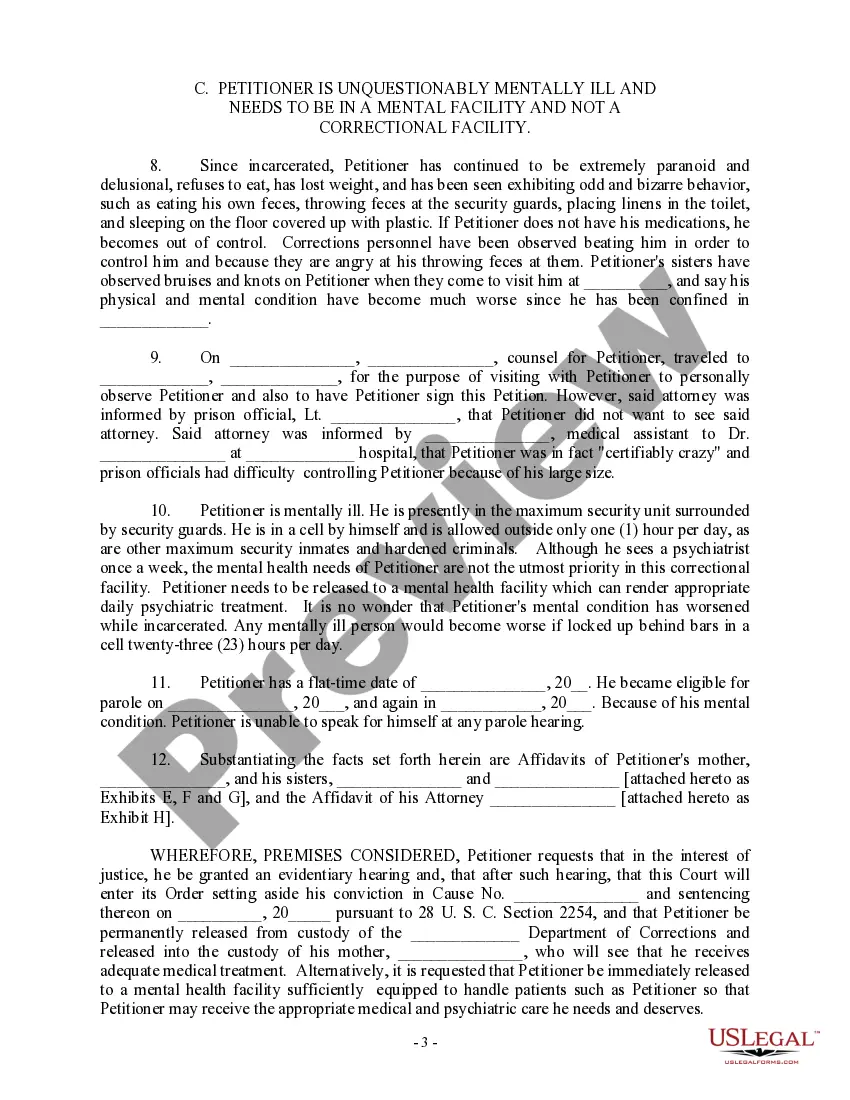
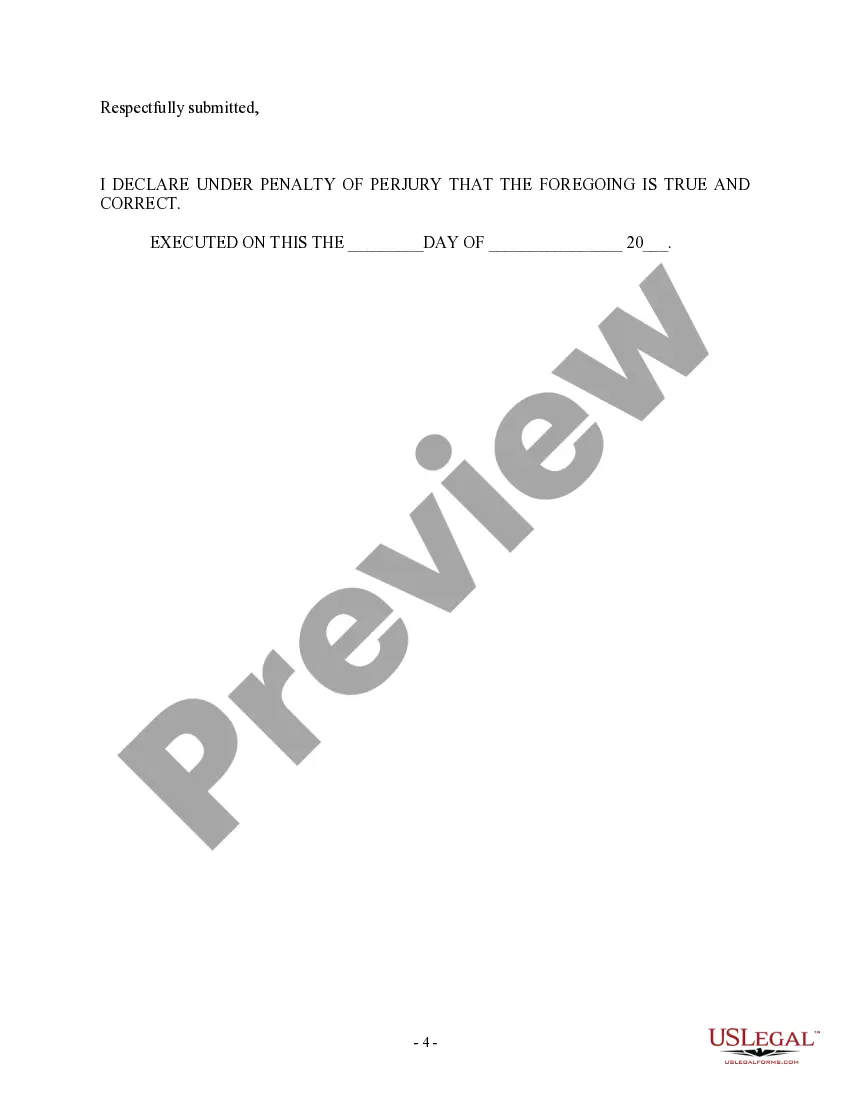
How to fill out Petition For Writ Of Habeas Corpus By A Person In State Custody?
You can spend hours online attempting to find the valid document template that satisfies the state and federal standards you require.
US Legal Forms offers a vast array of valid forms that can be assessed by professionals.
You can obtain or print the Montana Petition for Writ of Habeas Corpus by a Person in State Custody from our service.
- If you already possess a US Legal Forms account, you can Log In and then click the Acquire button.
- After that, you can fill out, modify, print, or sign the Montana Petition for Writ of Habeas Corpus by a Person in State Custody.
- Every valid document template you buy is yours indefinitely.
- To obtain another copy of any purchased form, navigate to the My documents tab and click the corresponding button.
- If you are visiting the US Legal Forms website for the first time, follow the simple steps listed below.
- First, ensure you have selected the correct document template for the area/city of your choice.
- Review the form details to confirm you have chosen the right form.
- If available, use the Preview button to view the document template as well.
- If you want to find another version of the form, use the Search section to discover the template that meets your needs and specifications.
- Once you have found the template you want, click Acquire now to proceed.
- Select the pricing plan you prefer, enter your credentials, and register for an account on US Legal Forms.
- Complete the transaction.
- You may use your Visa or Mastercard or PayPal account to pay for the valid form.
- Select the format of the document and download it to your device.
- Make alterations to your document if necessary.
- You can fill out, edit, sign, and print the Montana Petition for Writ of Habeas Corpus by a Person in State Custody.
- Obtain and print numerous document templates using the US Legal Forms website, which offers the largest collection of valid forms.
- Utilize professional and state-specific templates to manage your business or personal needs.
Form popularity
FAQ
The success rate of habeas corpus petitions can vary significantly depending on the specific circumstances of each case. Generally, only a small percentage of Montana Petition for Writ of Habeas Corpus by a Person in State Custody result in favorable outcomes, often due to the complexities involved in legal arguments and evidence. However, understanding the nuances of your case and properly presenting your petition can improve your chances. Utilizing resources from platforms like uslegalforms can help streamline the process and enhance your understanding of the requirements.
Filing a habeas corpus petition typically involves several steps. First, a petitioner must prepare a Montana Petition for Writ of Habeas Corpus by a Person in State Custody, detailing the reasons for the request. Next, this petition is submitted to the appropriate court, where a judge will review the case and may hold a hearing to evaluate the evidence. Throughout this process, it is advisable to consult with legal experts to ensure the petition is properly filed and argued.
The writ of habeas corpus can be a crucial tool in child custody cases, allowing a parent to challenge the legality of a child's detention by the state. This process involves filing a Montana Petition for Writ of Habeas Corpus by a Person in State Custody, which seeks to ensure that the rights of the child are protected. By using this legal action, parents can demand a review of the circumstances surrounding the custody arrangement. It's essential to understand that this petition can provide a legal avenue to regain custody or visitation rights.
Any order denying a petition for writ of habeas corpus must contain a brief statement of the reasons for the denial. An order only declaring the petition to be "denied" is insufficient. (Subd (g) amended and relettered effective January 1, 2002; adopted as subd (e) effective January 1, 1982.)
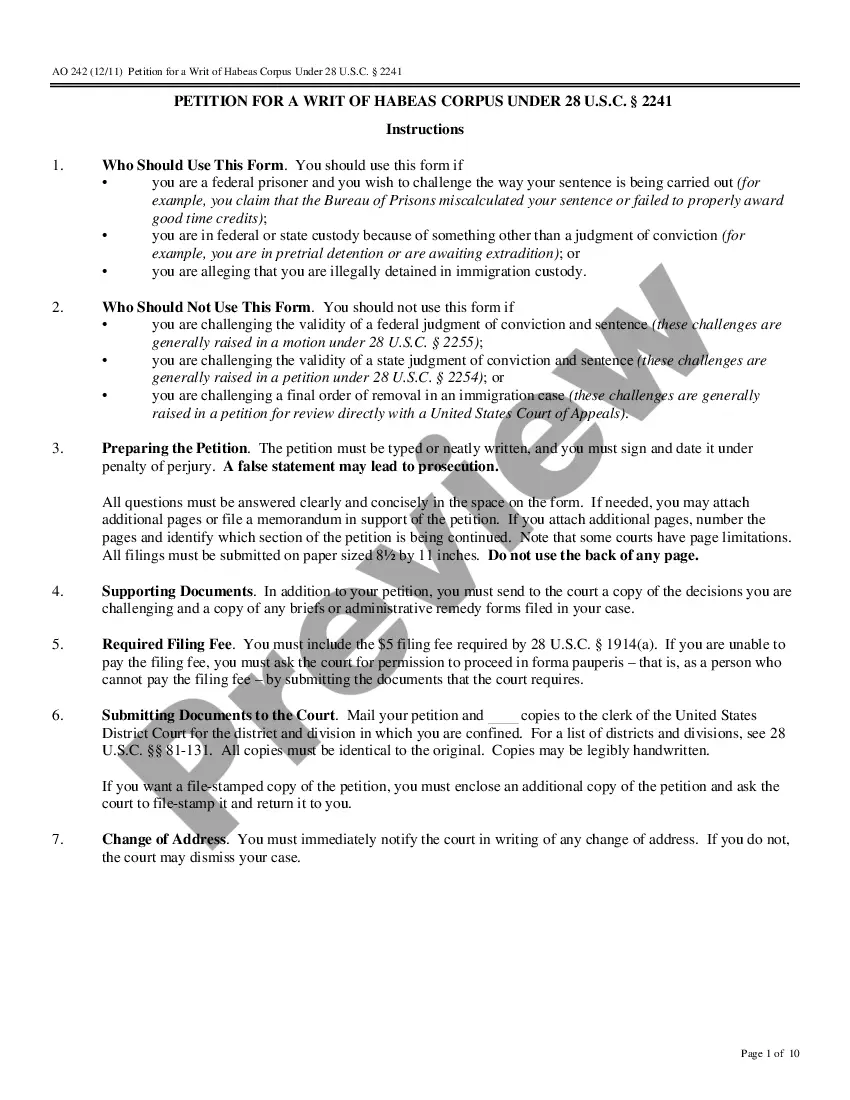
Section 2241 of Title 28 of the United States Code (?28 U.S.C. § 2241?) permits courts to issue writs of habeas corpus where a prisoner establishes that he is in custody in violation of the Constitution or laws or treaties of the United States.
For example, if an individual was convicted on the basis that their skin color matched that of the perpetrator ing to eyewitnesses, but there is no other evidence against them, then the individual can appeal for habeas corpus in order to be freed from imprisonment.
A writ of habeas corpus orders the custodian of an individual in custody to produce the individual before the court to make an inquiry concerning his or her detention, to appear for prosecution (ad prosequendum) or to appear to testify (ad testificandum).
Habeas Corpus is a Latin word meaning which literally means 'to have the body of'. It is an order issued by the court to a person who has detained another person, to produce the body of the latter before it. The court then examines the cause and legality of detention.
Your lawyer can file a pretrial writ of habeas corpus to have your bond lowered to a reasonable amount so you can get out of jail.
Arguments that Can Overturn Convictions. A Writ of Habeas Corpus usually addresses claims of ineffective assistance of counsel, prosecutorial misconduct, newly discovered evidence, jury misconduct, and claims of actual innocence.