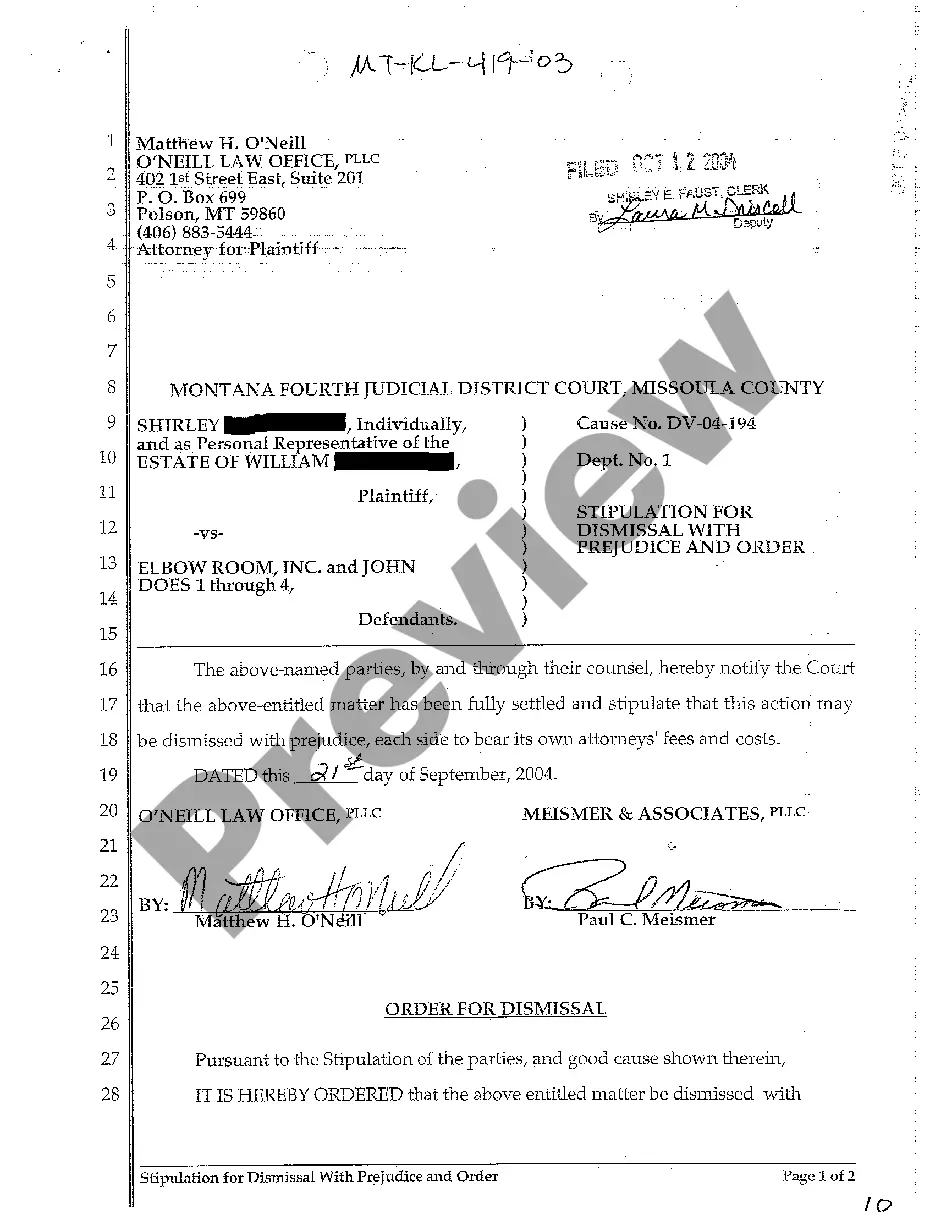
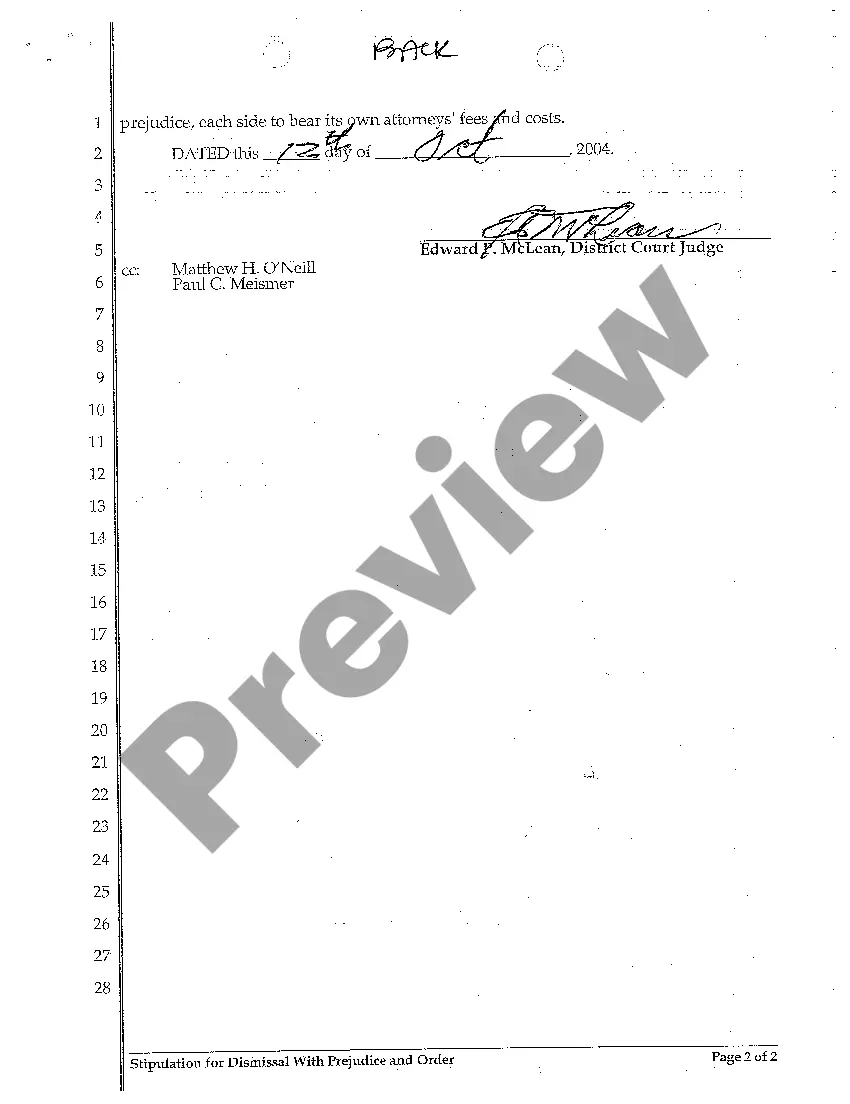
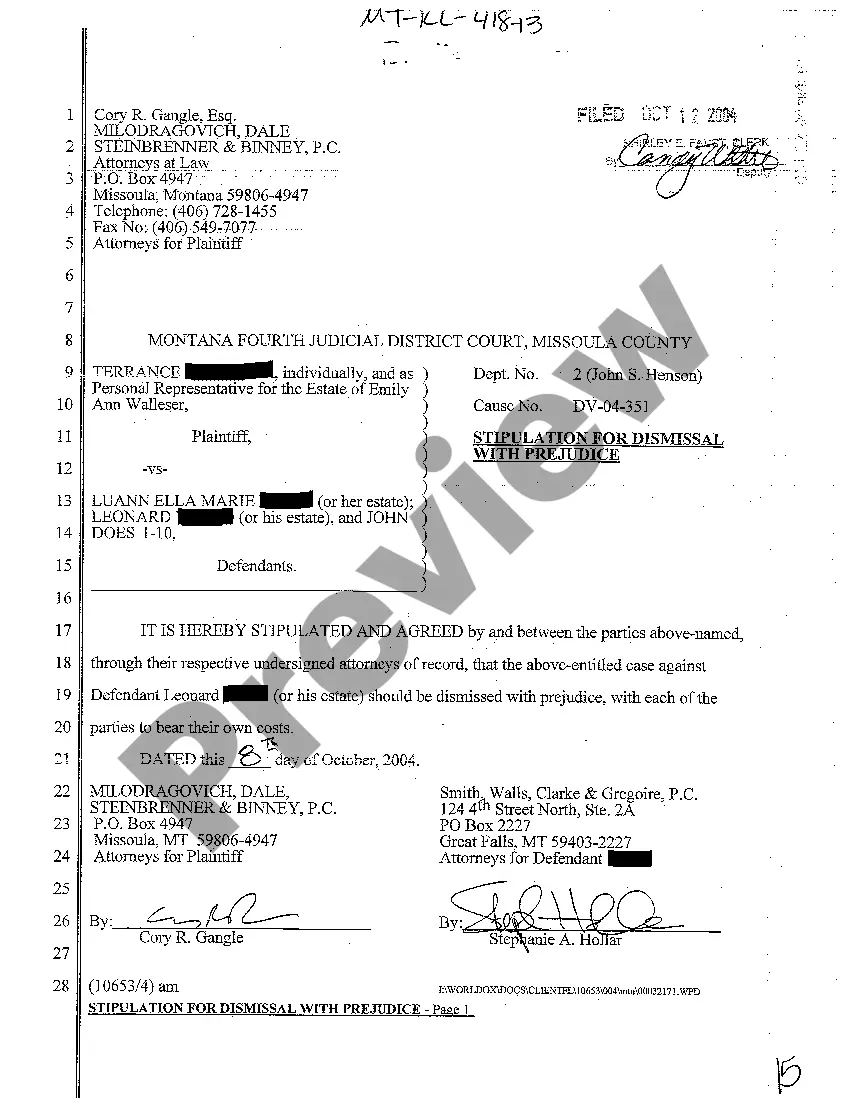
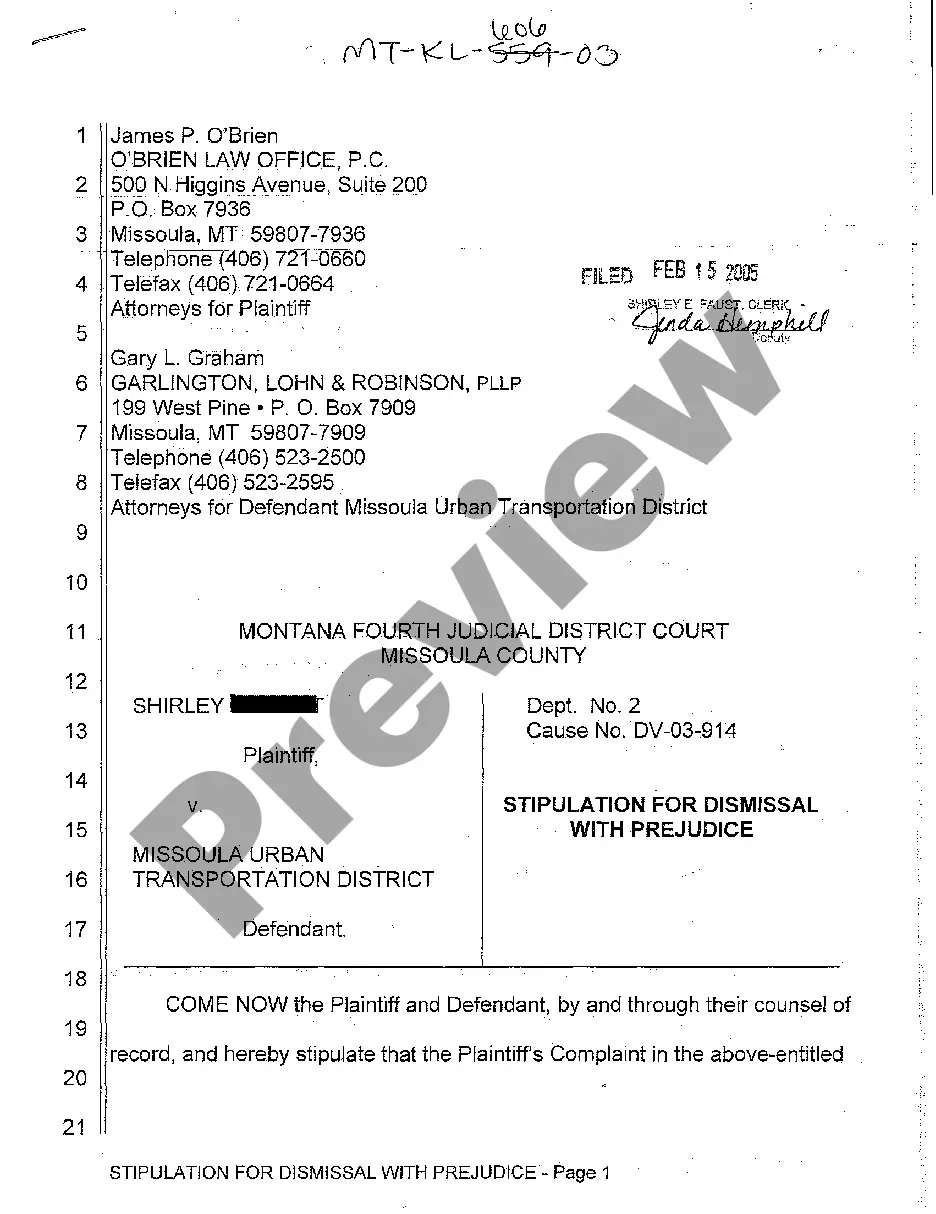
Montana Stipulation for Dismissal with Prejudice and Order
Description
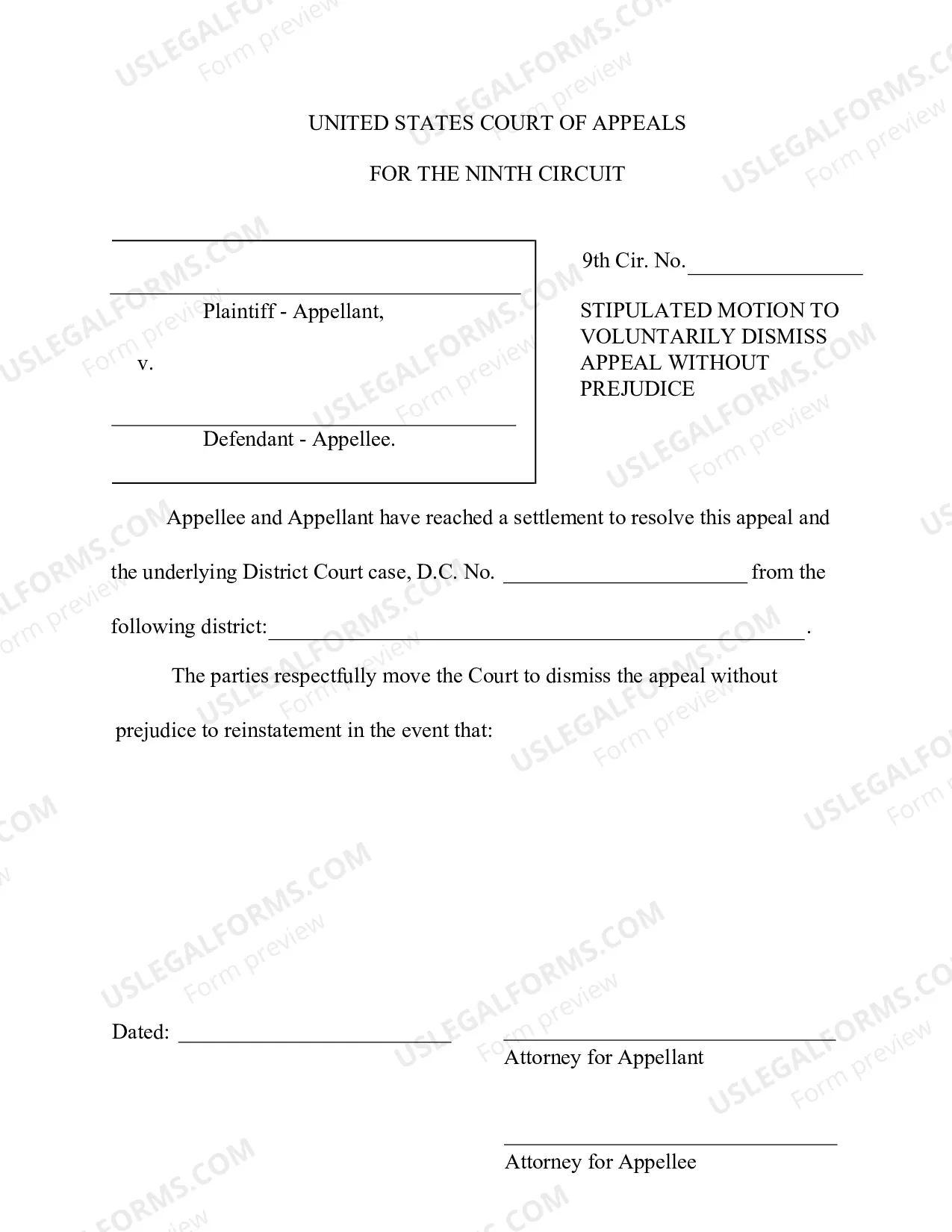
Key Concepts & Definitions
A03 Stipulation for Dismissal with Prejudice and refers to a legal agreement or order where a case is dismissed permanently, preventing the same claim from being brought against the defendant again. 'With prejudice' indicates that the plaintiff is barred from filing another lawsuit based on the same grounds.
Step-by-Step Guide to Understanding A03 Stipulation for Dismissal
- Identify the Case: Verify if your case can be eligible for an A03 stipulation based on the nature of the complaint and jurisdiction.
- Consult a Lawyer: Engage with a legal expert to understand the implications and the process involved.
- Prepare the Stipulation: Draft the stipulation document which should explicitly state that it is 'with prejudice' and include all necessary legal language.
- Signatures: Both parties involved in the case must sign the stipulation, confirming their agreement to the dismissal.
- Judicial Approval: Submit the document to the court and obtain approval from a judge, ensuring the dismissal is legally binding.
Risk Analysis
Using an 'A03 stipulation for dismissal with prejudice' poses several risks:
- Permanent Closure: Once dismissed with prejudice, the claim cannot be reopened or refiled, which can be risky if new evidence emerges later.
- Legal Finality: This type of dismissal may inadvertently waive rights to claims that were not thoroughly considered.
- Dependency on Mutual Agreement: The agreement requires consent from both parties, which can be challenging if interests are not aligned.
Best Practices
- Thoroughly Evaluate Implications: Ensure you fully understand the long-term legal implications of a dismissal with prejudice.
- Legal Expertise: Always consult with legal professionals to navigate the complexities involved in such a stipulation.
- Clear Documentation: Maintain explicit and clear legal documents to avoid future legal ambiguities or disputes.
Common Mistakes & How to Avoid Them
- Lack of Clarity: Failing to specify that the dismissal is 'with prejudice' can lead to potential re-filings of the lawsuit. Ensure the stipulation clearly states this term.
- Insufficient Legal Counsel: Trying to handle the agreement without professional legal advice can lead to unfavorable outcomes. Engage a lawyer throughout the process.
FAQ
- What does 'with prejudice' mean in legal terms? It means the case is permanently dismissed and cannot be refiled on the same grounds.
- Can either party challenge an A03 stipulation once signed? Generally, once a stipulation for dismissal with prejudice is approved by a court, it is final and cannot be appealed or contested by the parties involved.
How to fill out Montana Stipulation For Dismissal With Prejudice And Order?
Acquire a printable Montana Stipulation for Dismissal with Prejudice and Order in just a few clicks from the largest collection of legal electronic documents.
Locate, download, and print professionally prepared and verified samples on the US Legal Forms website. US Legal Forms has been the premier source of economical legal and tax forms for US citizens and residents online since 1997.
Once you have downloaded your Montana Stipulation for Dismissal with Prejudice and Order, you can fill it out in any online editor or print it out and complete it by hand. Utilize US Legal Forms to gain access to 85,000 professionally crafted, state-specific documents.
- Customers who already possess a subscription must Log In directly to their US Legal Forms account, download the Montana Stipulation for Dismissal with Prejudice and Order, and find it saved in the My documents section.
- Individuals without a subscription must adhere to the guidelines outlined below.
- Ensure your template complies with your state's regulations.
- If available, review the form’s description for additional details.
- If available, preview the document to see more information.
- When you are confident the template suits your needs, simply click Buy Now.
- Establish a personal account.
- Choose a plan.
- Make payment through PayPal or credit card.
- Download the document in Word or PDF format.
Form popularity
FAQ
Dismissal with prejudice is a final judgment and the case becomes res judicata on the claims that were or could have been brought in it; dismissal without prejudice is not.
A case will be dismissed with prejudice if there is reason for the case not to be brought back to court; for example, if the judge deems the lawsuit frivolous or the the matter under consideration is resolved outside of court.
In the formal legal world, a court case that is dismissed with prejudice means that it is dismissed permanently. A case dismissed with prejudice is over and done with, once and for all, and can't be brought back to court. A case dismissed without prejudice means the opposite.
When a lawsuit is dismissed with prejudice, the court is saying that it has made a final determination on the merits of the case, and that the plaintiff is therefore forbidden from filing another lawsuit based on the same grounds. See also: dismiss, dismissal without prejudice.
A stipulated (agreed) dismissal (see s. 799.24(3) of the Wisconsin Statutes) happens when the plaintiff and the defendant agree to have the judge dismiss the action and not enter a judgment against the defendant only if the defendant pays the plaintiff an agreed upon amount by a certain date.