Montana Marital Domestic Separation and Property Settlement Agreement no Children parties may have Joint Property or Debts Effective Immediately
About this form
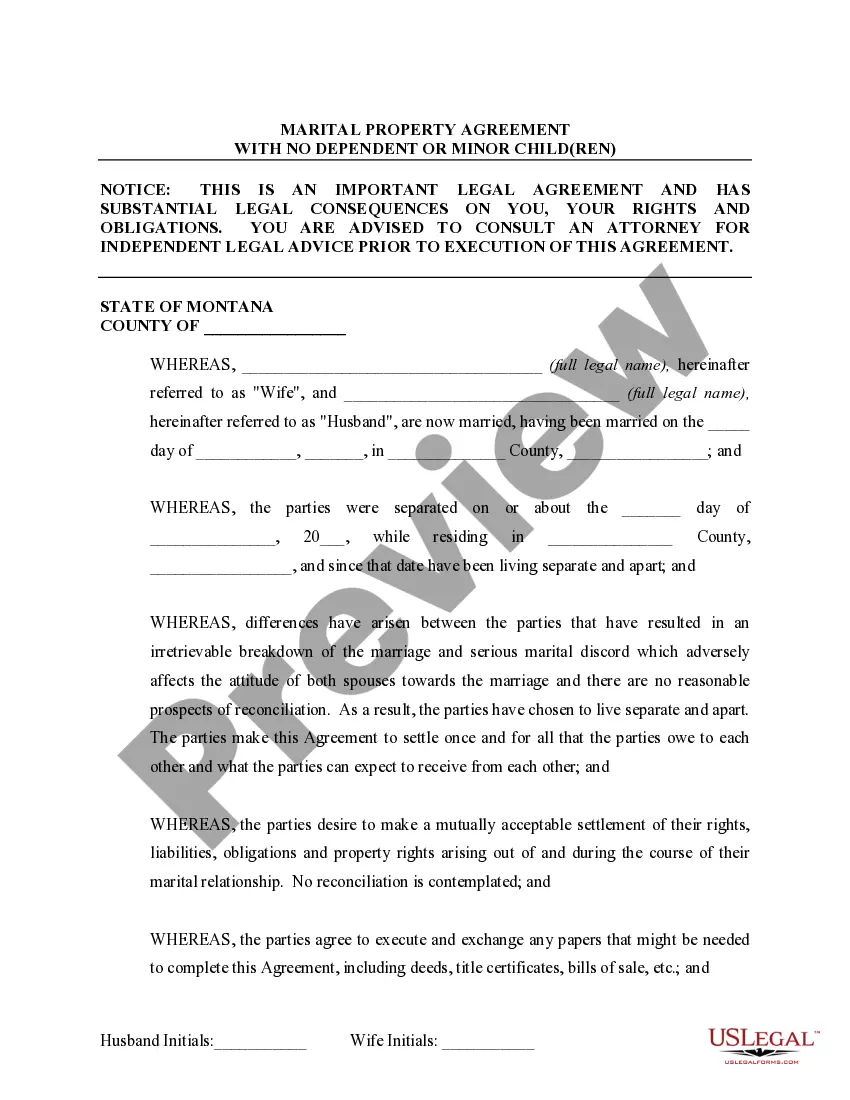
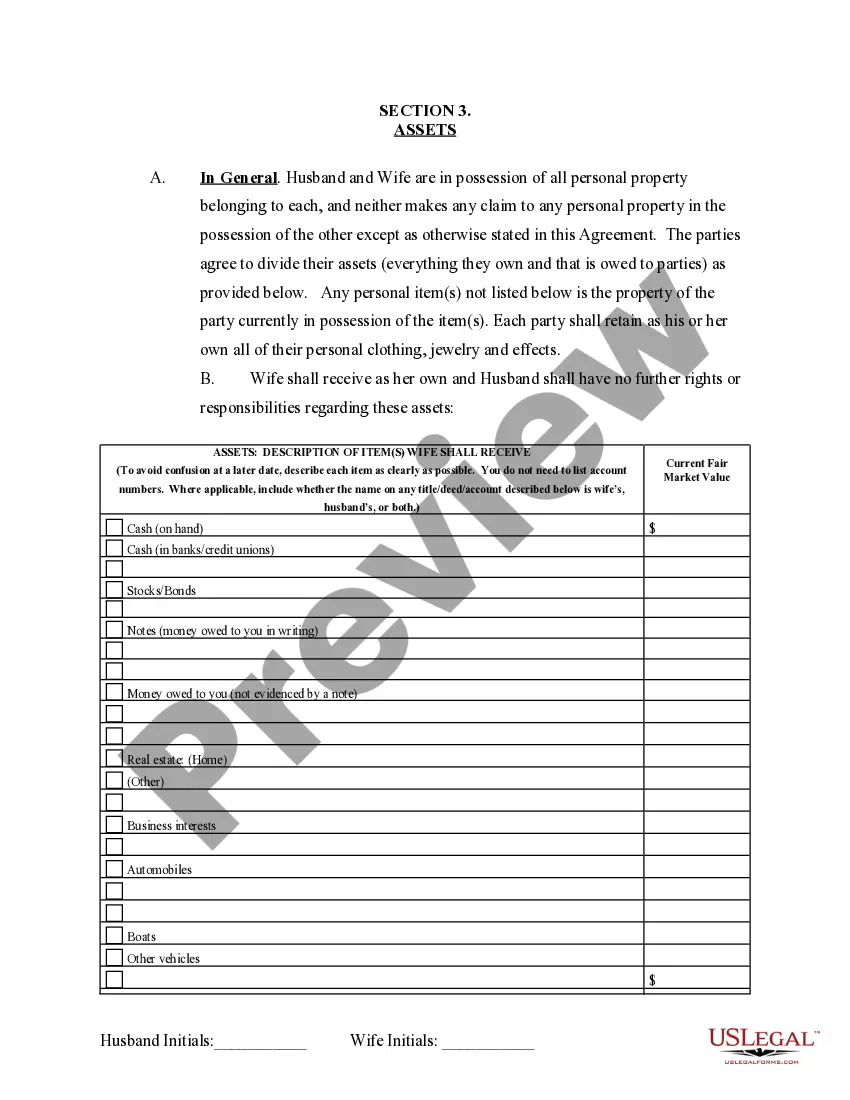
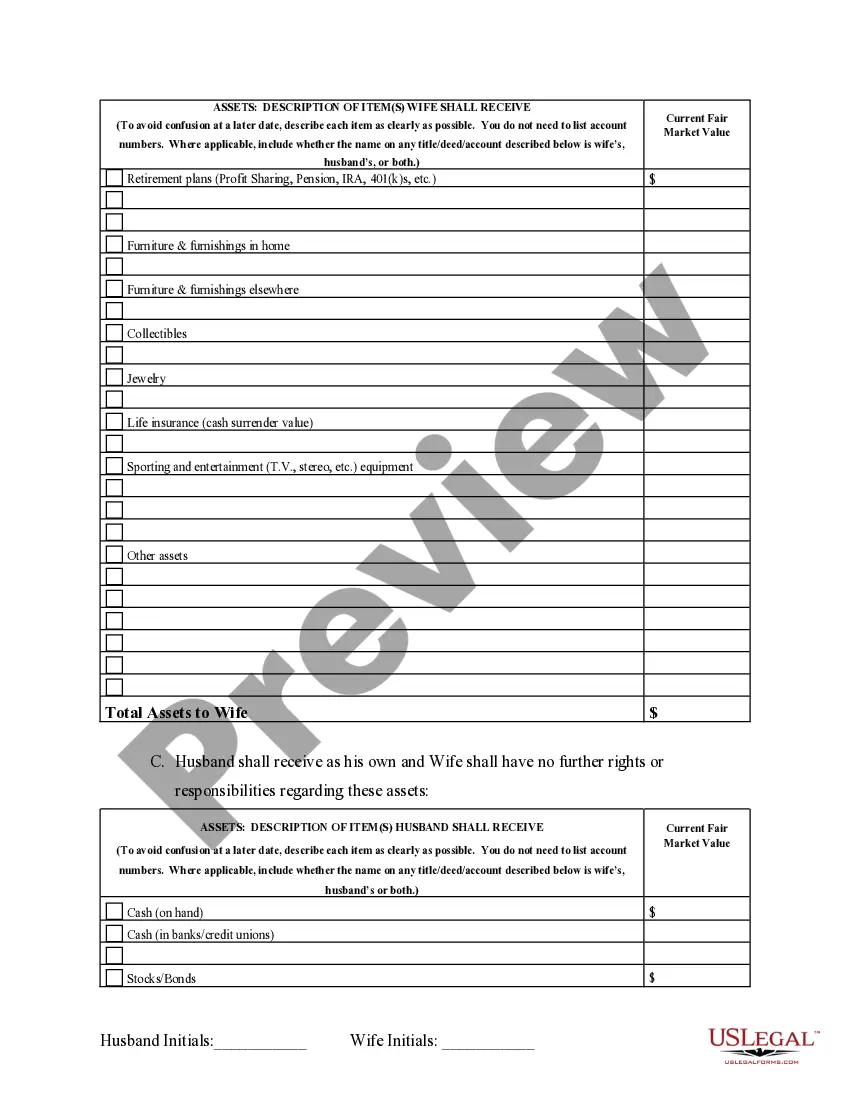
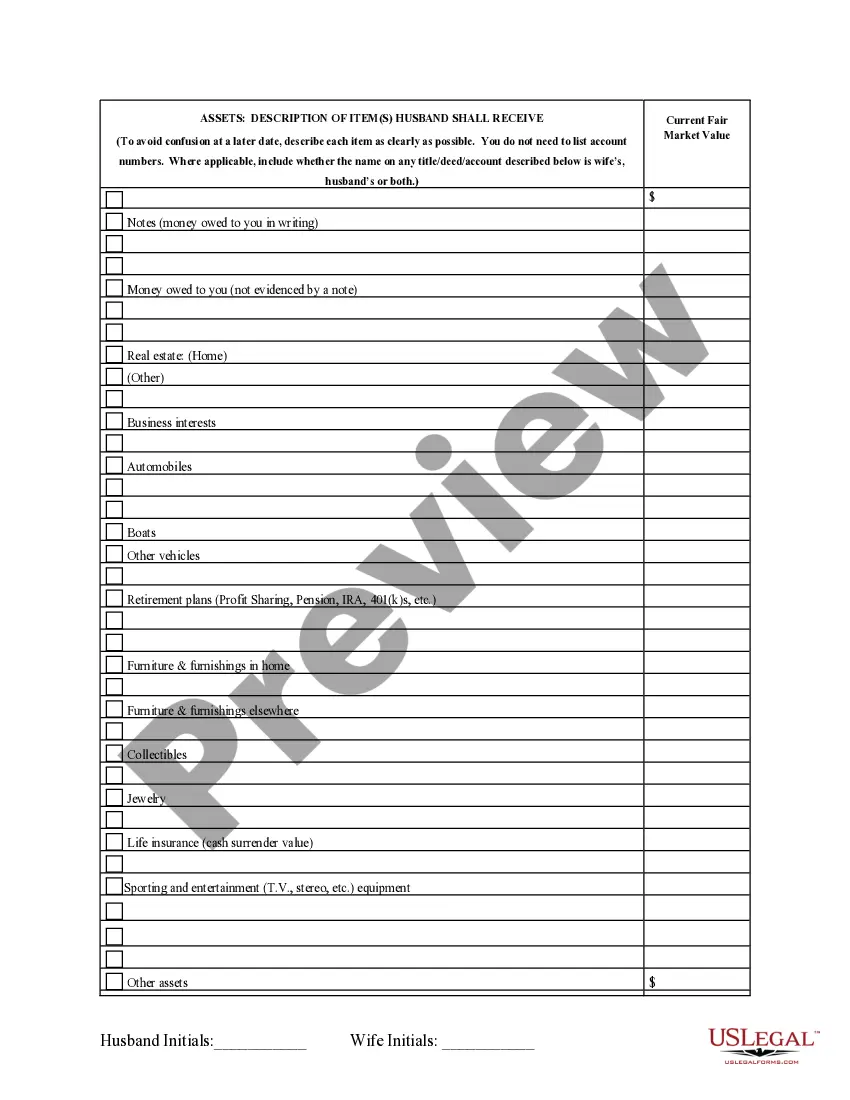
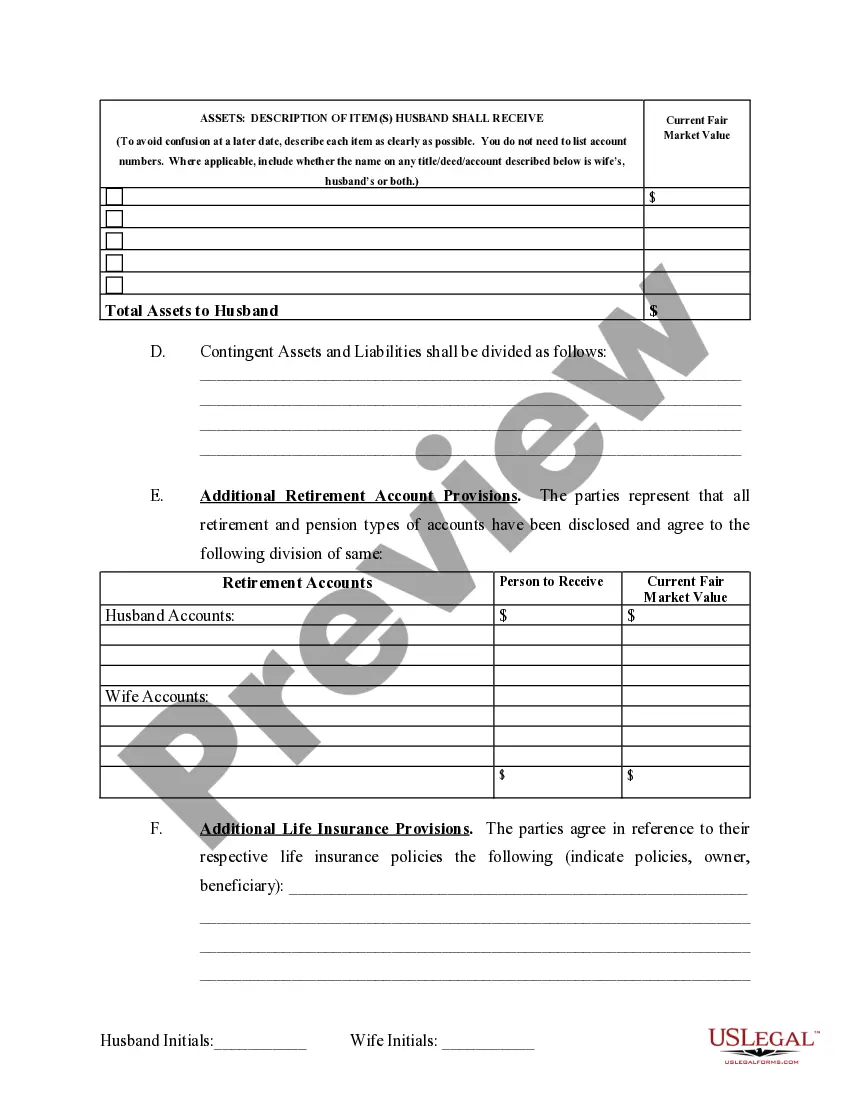
The Marital Domestic Separation and Property Settlement Agreement is a legal document designed for married couples without minor children who need to outline the division of joint property and debts upon separation. This agreement formalizes the terms of separation and ensures that both parties understand their rights and responsibilities regarding their shared assets and liabilities. It differs from other separation agreements by specifically addressing situations without children involved, focusing solely on property and debt division.
Key parts of this document
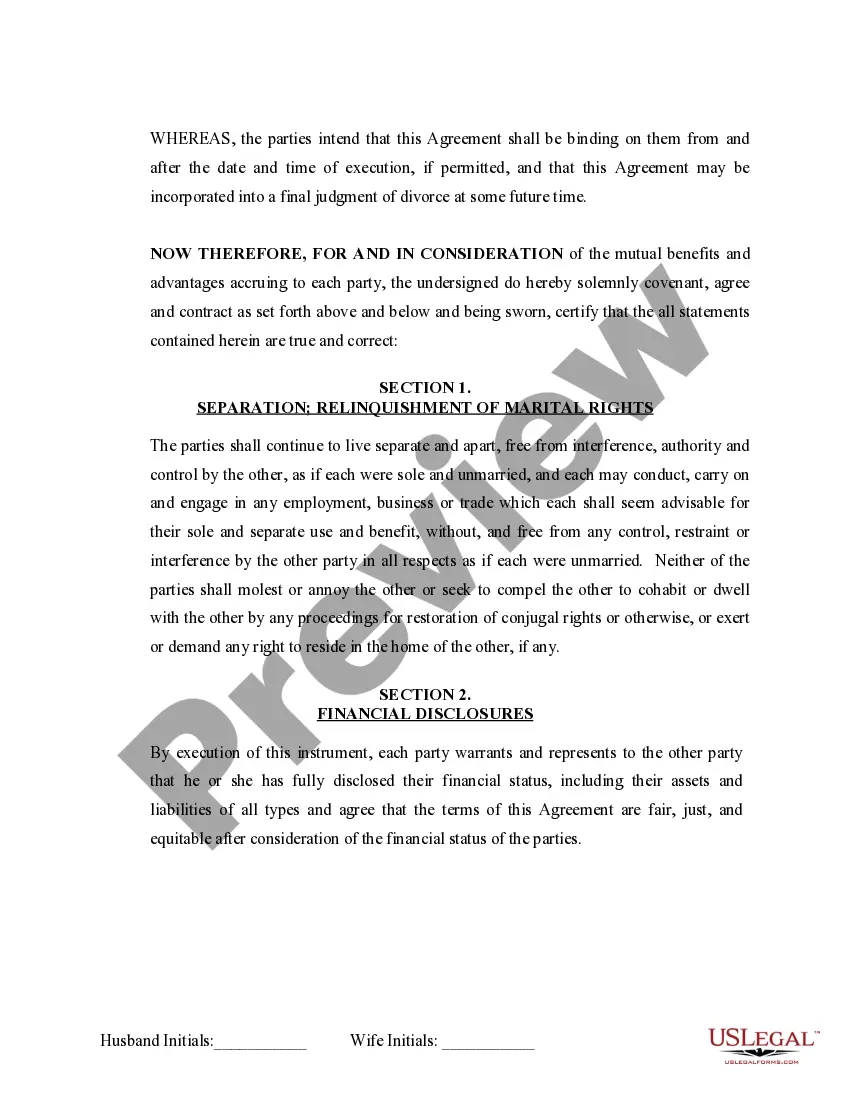
- Separation and Relinquishment of Marital Rights.
- Financial Disclosures required from both parties.
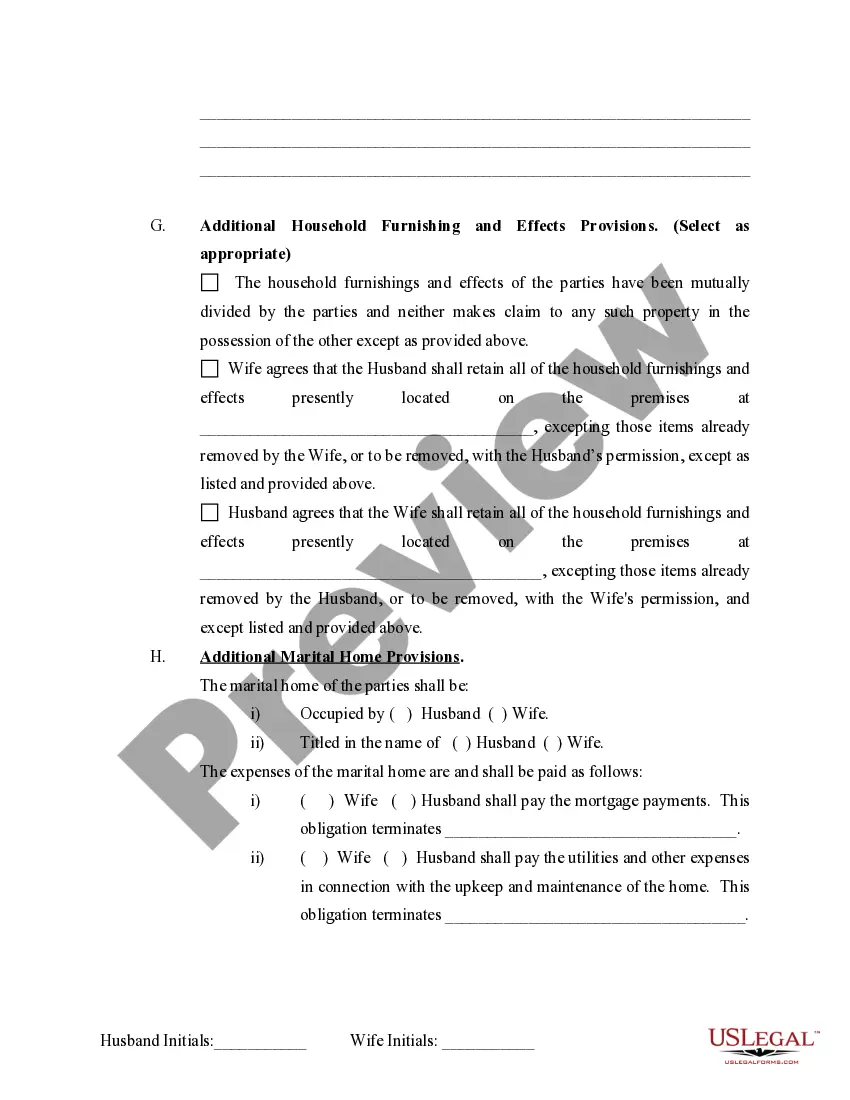
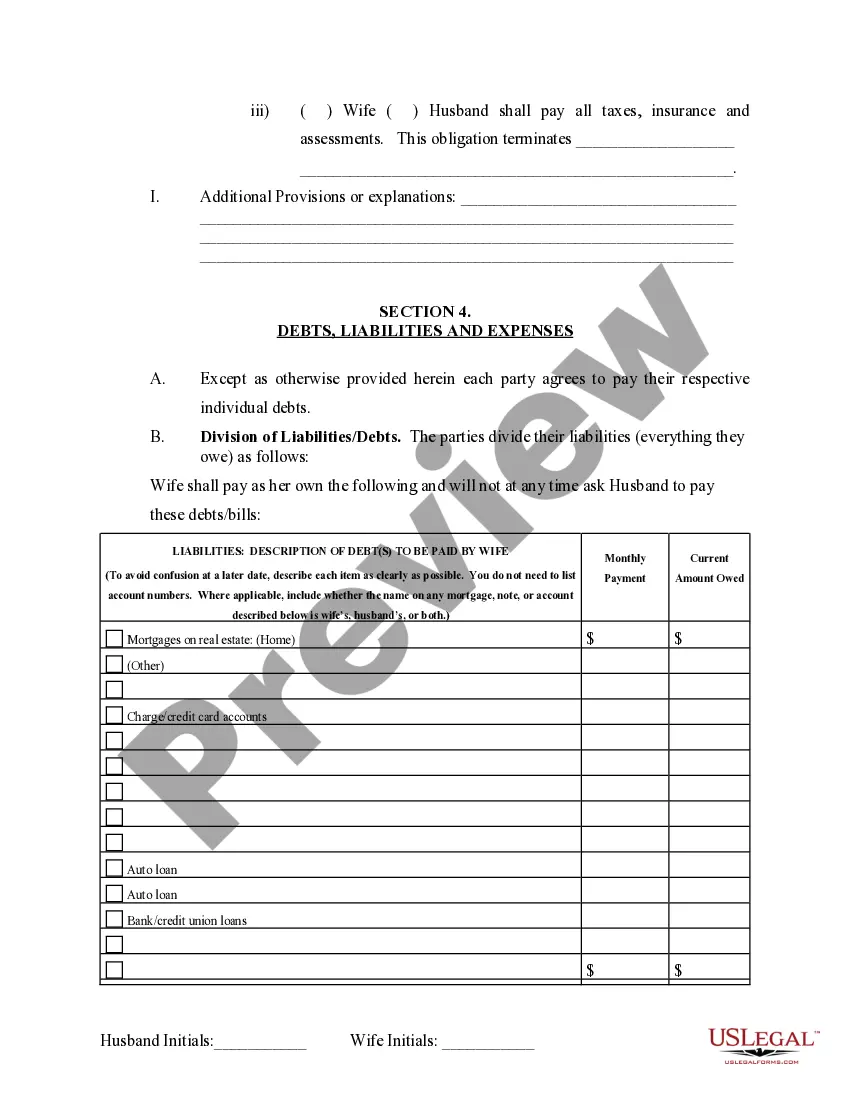
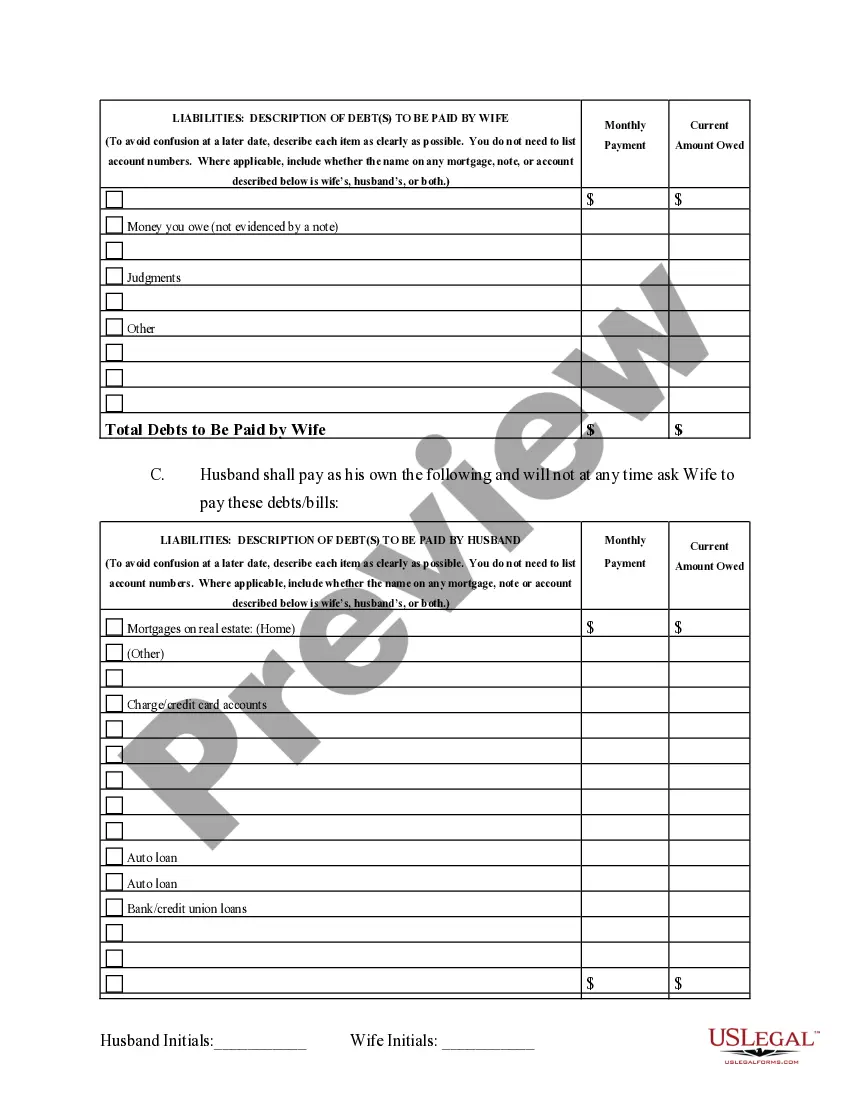
- Detailed sections for Assets and Liabilities division.
- Agreement on future earnings and acquisitions.
- Indemnity provisions for debts and liabilities.
- Clauses regarding legal enforceability and modification terms.


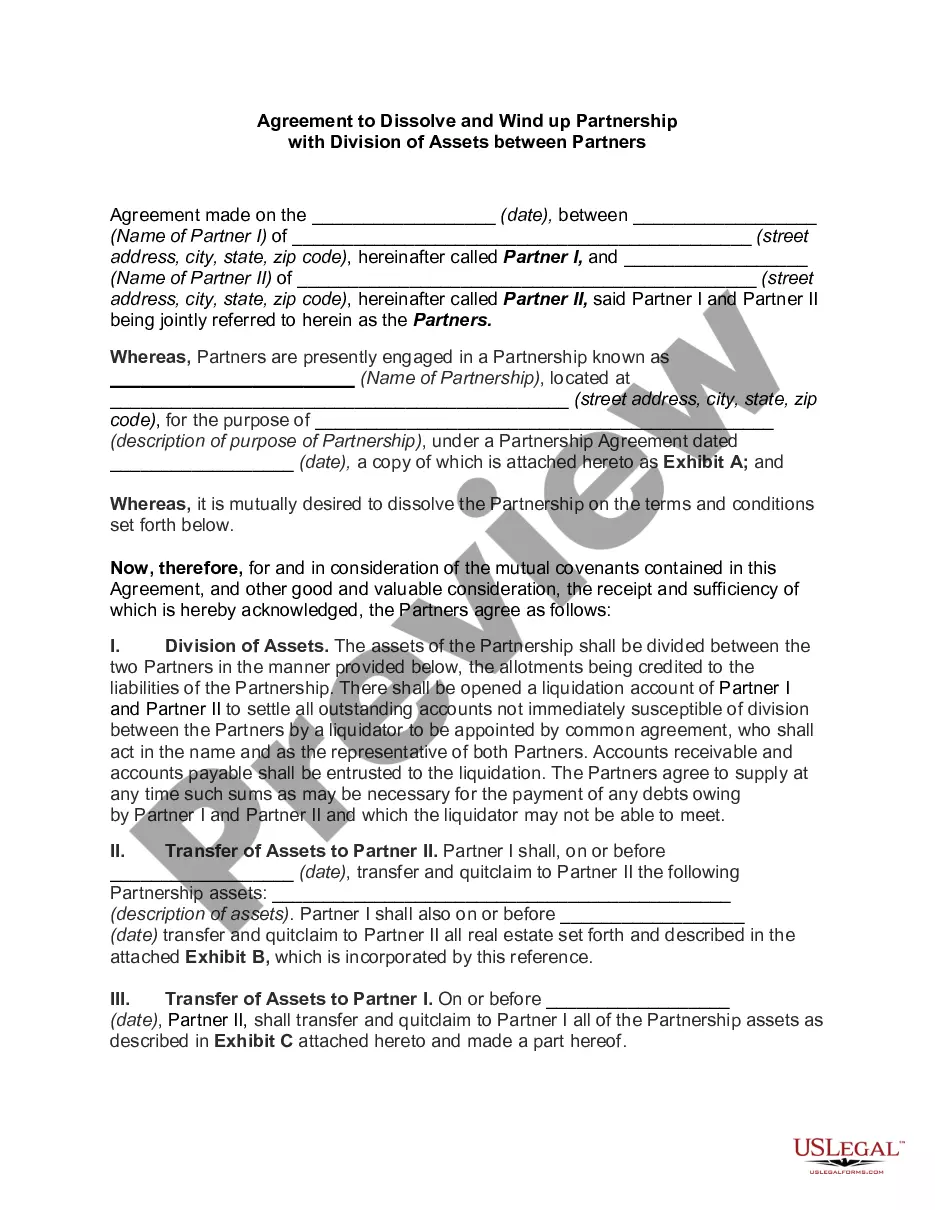
When to use this form
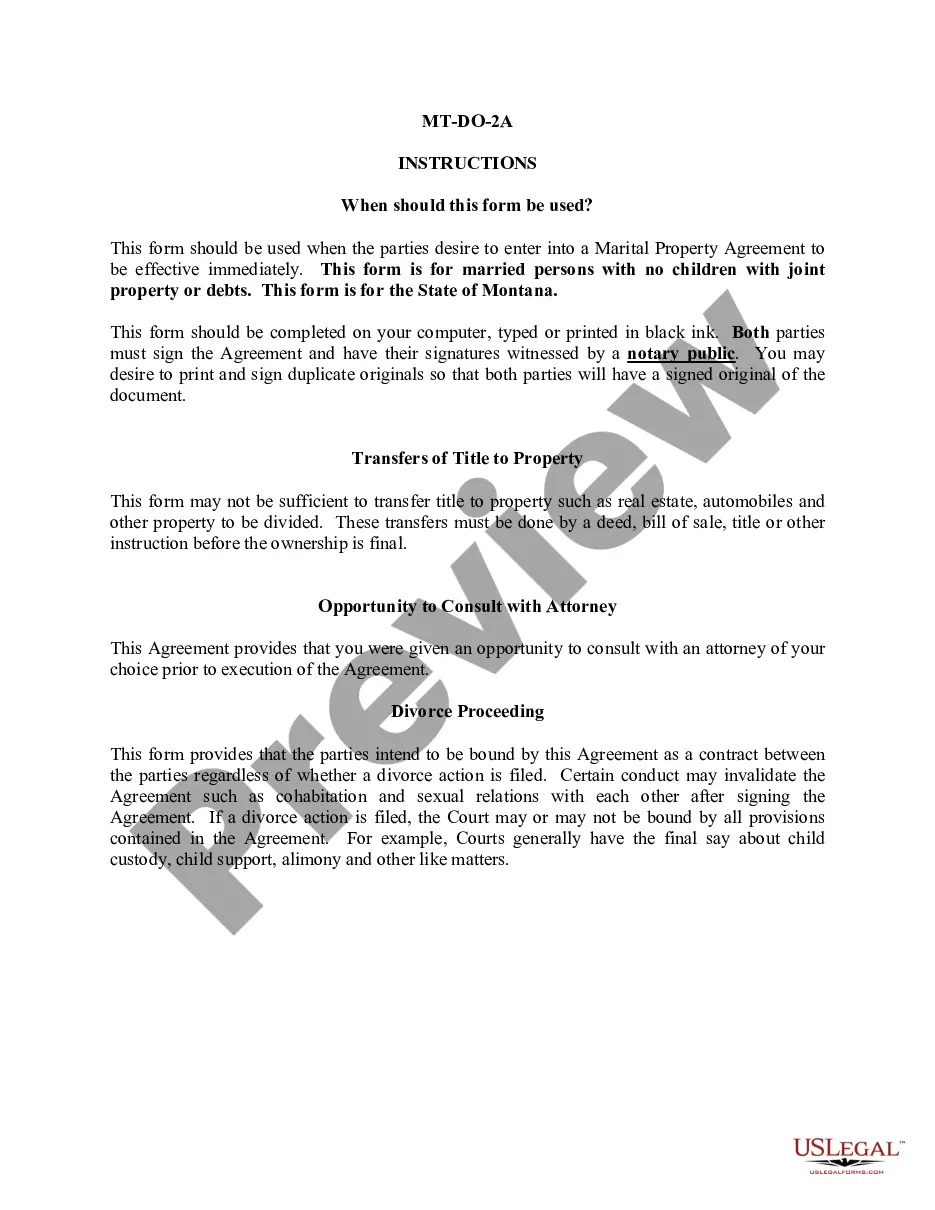
This form should be used when married individuals decide to separate and need a clear agreement outlining their intentions regarding property and debt. It is appropriate when both parties have joint assets or debts and wish to ensure a fair division without the influence of court proceedings, especially if no children are involved.
Who can use this document
- Married couples without minor children.
- Couples who share joint property or debts.
- Couples looking to settle their financial issues amicably before or after separation.
- Parties wishing to document their rights and obligations crisply and legally.
Steps to complete this form
- Identify and list the full legal names of both parties.
- Specify the date of separation and the location of residence at that time.
- Clearly describe the assets owned by both parties, including their current market values.
- Outline the division of debts and liabilities using detailed descriptions.
- Both parties must sign the document in the presence of a notary public.
- Print and retain duplicate copies for both parties after signing.
Notarization requirements for this form
Notarization is required for this form to take effect. Our online notarization service, powered by Notarize, lets you verify and sign documents remotely through an encrypted video session, available 24/7.
Get your form ready online
Our built-in tools help you complete, sign, share, and store your documents in one place.
Make edits, fill in missing information, and update formatting in US Legal Forms—just like you would in MS Word.
Download a copy, print it, send it by email, or mail it via USPS—whatever works best for your next step.
Sign and collect signatures with our SignNow integration. Send to multiple recipients, set reminders, and more. Go Premium to unlock E-Sign.
If this form requires notarization, complete it online through a secure video call—no need to meet a notary in person or wait for an appointment.
We protect your documents and personal data by following strict security and privacy standards.

Make edits, fill in missing information, and update formatting in US Legal Forms—just like you would in MS Word.

Download a copy, print it, send it by email, or mail it via USPS—whatever works best for your next step.

Sign and collect signatures with our SignNow integration. Send to multiple recipients, set reminders, and more. Go Premium to unlock E-Sign.

If this form requires notarization, complete it online through a secure video call—no need to meet a notary in person or wait for an appointment.

We protect your documents and personal data by following strict security and privacy standards.
Typical mistakes to avoid
- Failing to fully disclose all assets and liabilities, which can lead to complications later.
- Not obtaining proper notarization, which may invalidate the agreement.
- Assuming willful non-compliance with the agreement will not have consequences.
- Neglecting to consider tax implications associated with the agreement terms.
Why complete this form online
- Convenience of accessing and completing the form at any time.
- Editability allows for accurate entries and adjustments before finalizing.
- Reliability through professionally drafted templates created by licensed attorneys.
Looking for another form?

Form popularity
FAQ
Property one spouse owned alone, before the marriage, or acquired by gift or inheritance during the marriage, is that spouse's separate property in California.California law also provides that property spouses acquire before a divorce, but after the date of separation, is separate property.
Montana is NOT a community property state, which means that marital property is not automatically divided 50/50 between the spouses in a divorce case.Factors such as one spouse's economic misconduct may also be considered.
Montana law is clear that adultery, and other misconduct during the marriage, does not affect alimony. Adultery also usually does not affect the court's property division during a divorce or separation.Montana courts also don't consider adultery when deciding custody and visitation of children.
What Rights do Spouses Have During Separation? In a legal separation proceeding, a court can decide matters such as child custody and support, alimony and property division. However, as stated above, the spouses will remain legally married and cannot remarry unless and until they get a divorce.
Montana is an equitable distribution state. Equitable distribution means that the marital property will be split between spouses in a way that is equitable, or fair.The court will usually accept a written separation agreement that details the spouses' preference.
Separation agreement is a general term used to describe a written contract that spouses enter into to address some or all issues arising from their marital separation.Therefore, if a spouse refuses to sign a separation agreement, the other spouse cannot force the unwilling spouse to do so.
Marital Settlement Agreements, reached between the parties in writing and signed by the parties, become legally binding when approved by the court at the time of the final court hearing.Once approved by the court, such post judgment stipulations do become legally binding and enforceable between the parties.
Yes, it is mandatory. Each party must obtain independent legal advice prior to signing a separation agreement. You also cannot use the same lawyer and should not use the same law firm. If you fail to obtain advice from a lawyer, the separation agreement will be unenforceable.
WHAT ARE MY PROPERTY RIGHTS IN A MONTANA DIVORCE? Montana is an equitable division state, not a "community property" state.