Mississippi Last Will and Testament for Married Person with Children
What is this form?
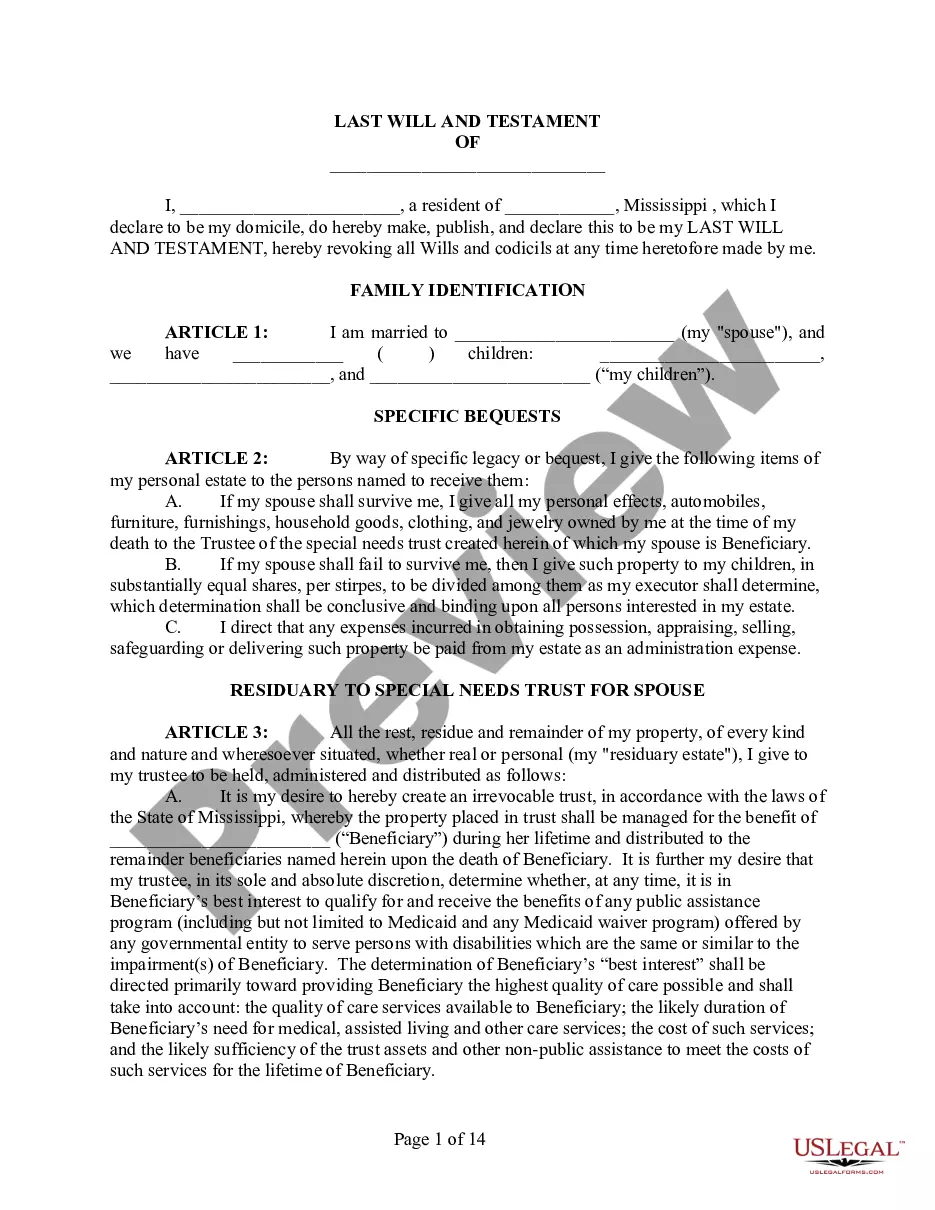
The Last Will and Testament for Married Person with Children is a legal document designed for individuals who are married and have both children from their current spouse and from a prior relationship. This will specifies how assets will be distributed among the spouse, children, and grandchildren, making provisions for a special needs trust. Unlike simpler wills, this document accommodates blended families and addresses unique scenarios concerning minor children and grandchildren.
What’s included in this form
- Identification of the testator and revocation of previous wills.
- Provisions for the distribution of personal belongings and property to the spouse or children.
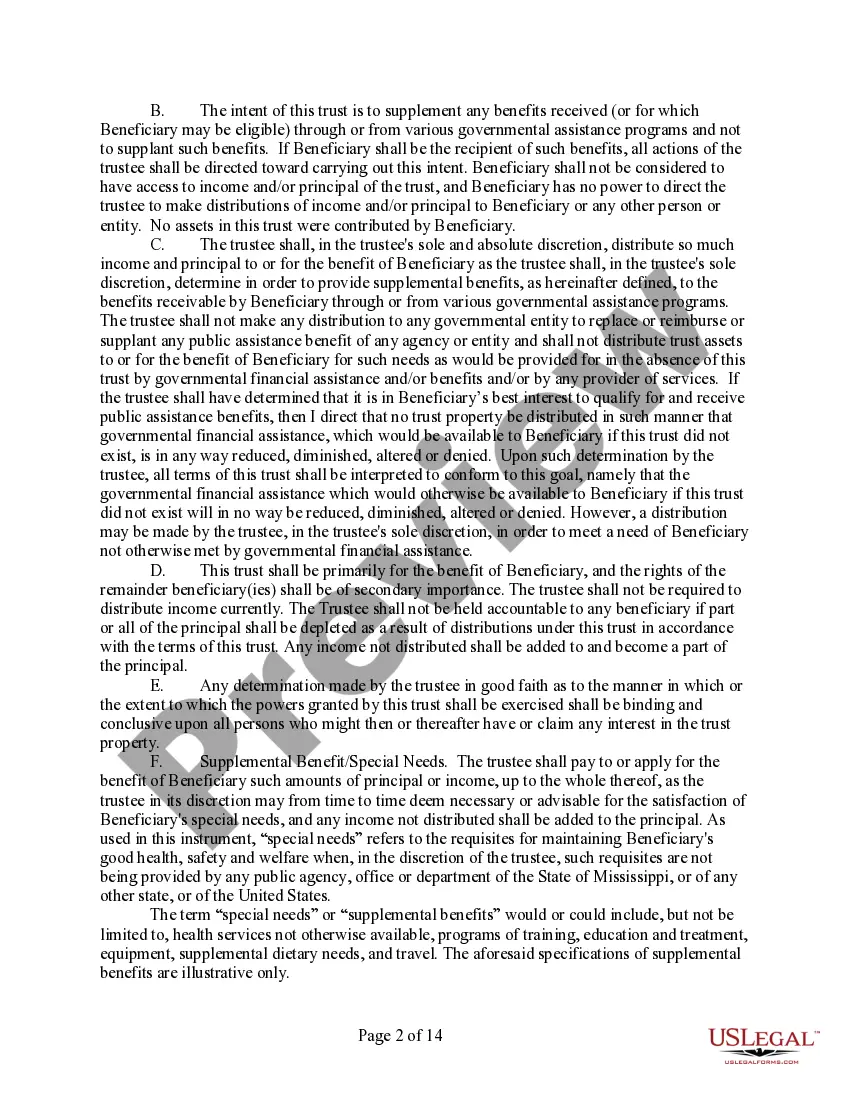
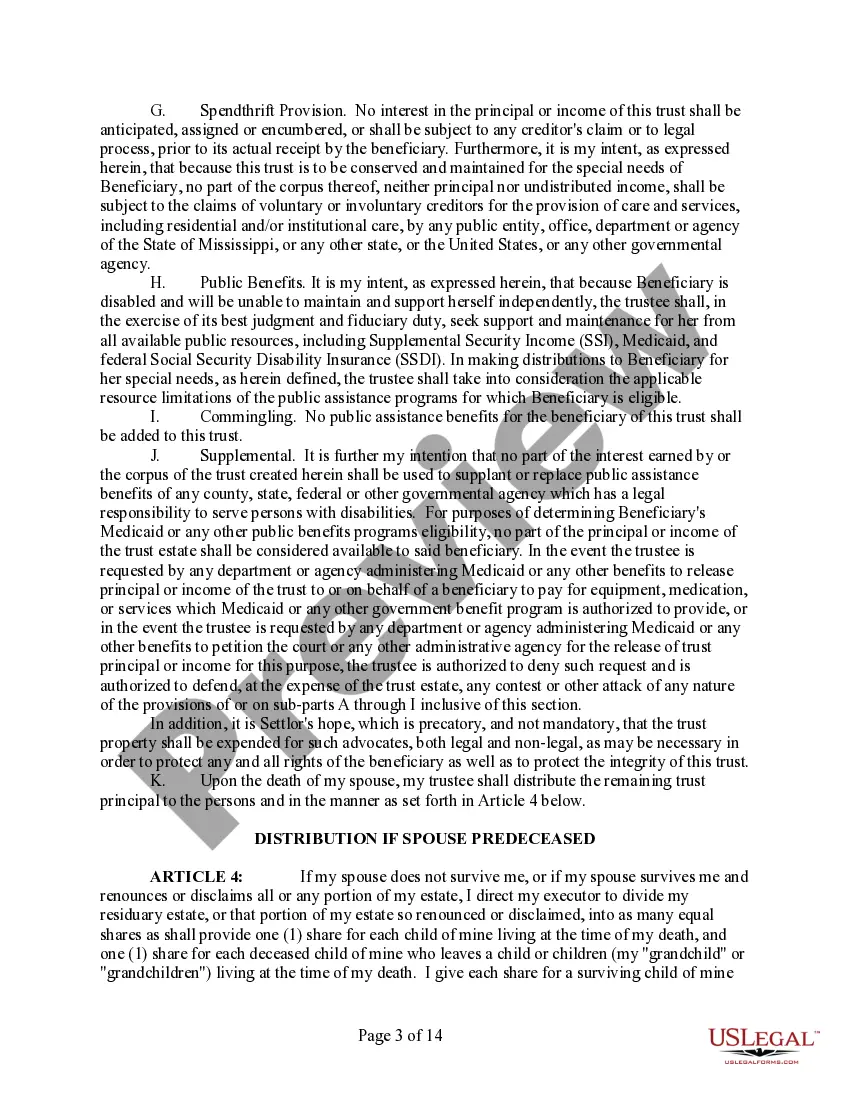
- Creation of a special needs trust for the spouse, ensuring eligibility for public benefits.
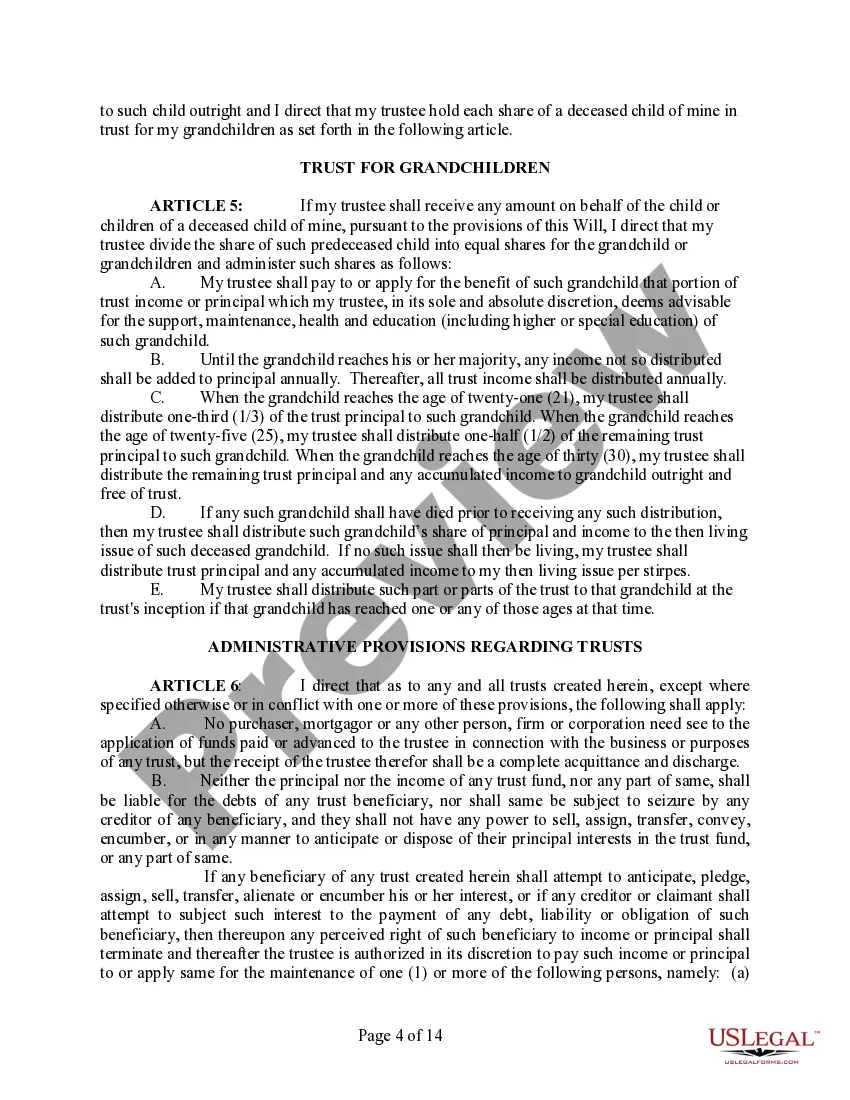
- Detailed instructions for distributing the residuary estate among surviving children and grandchildren.
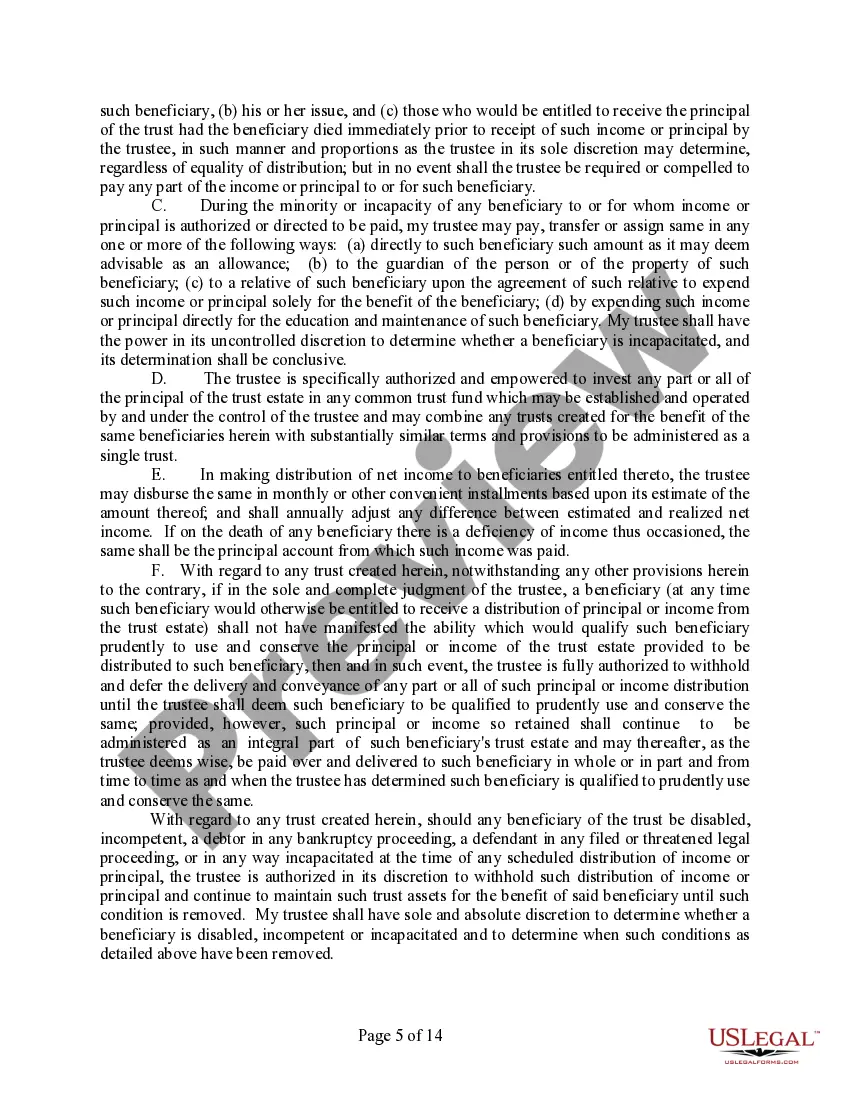
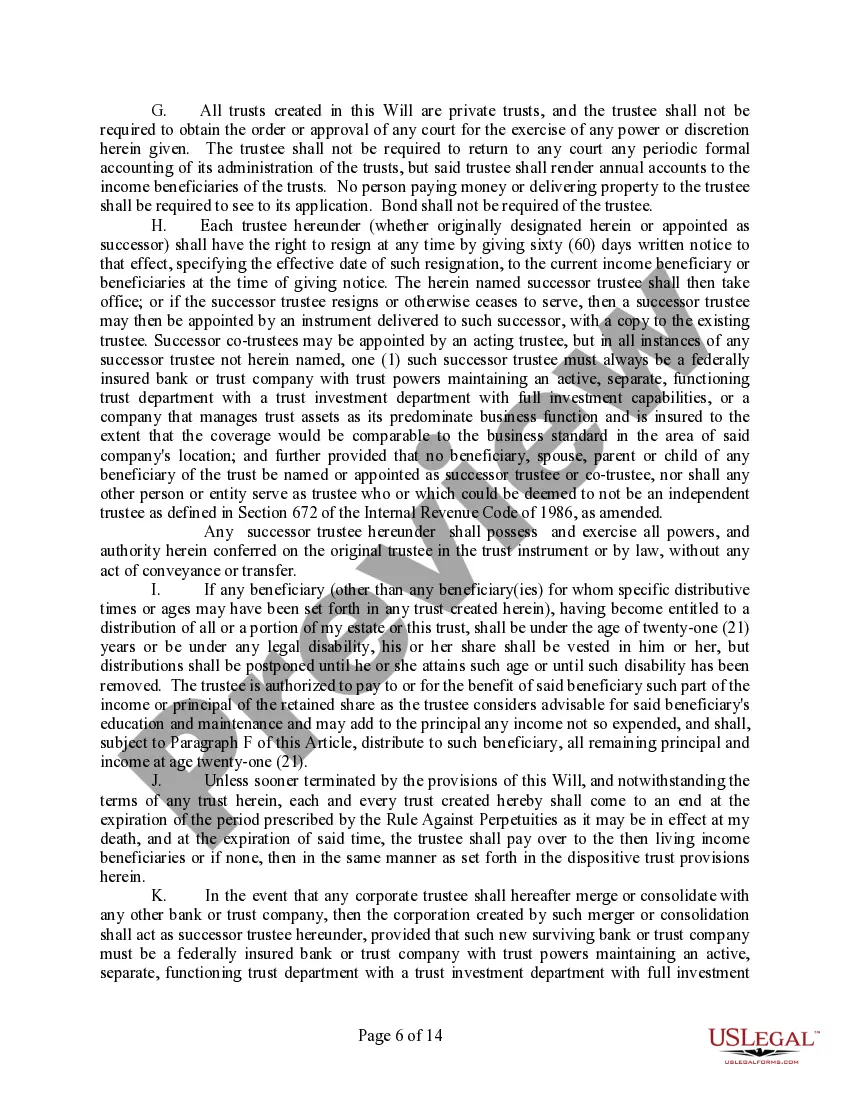
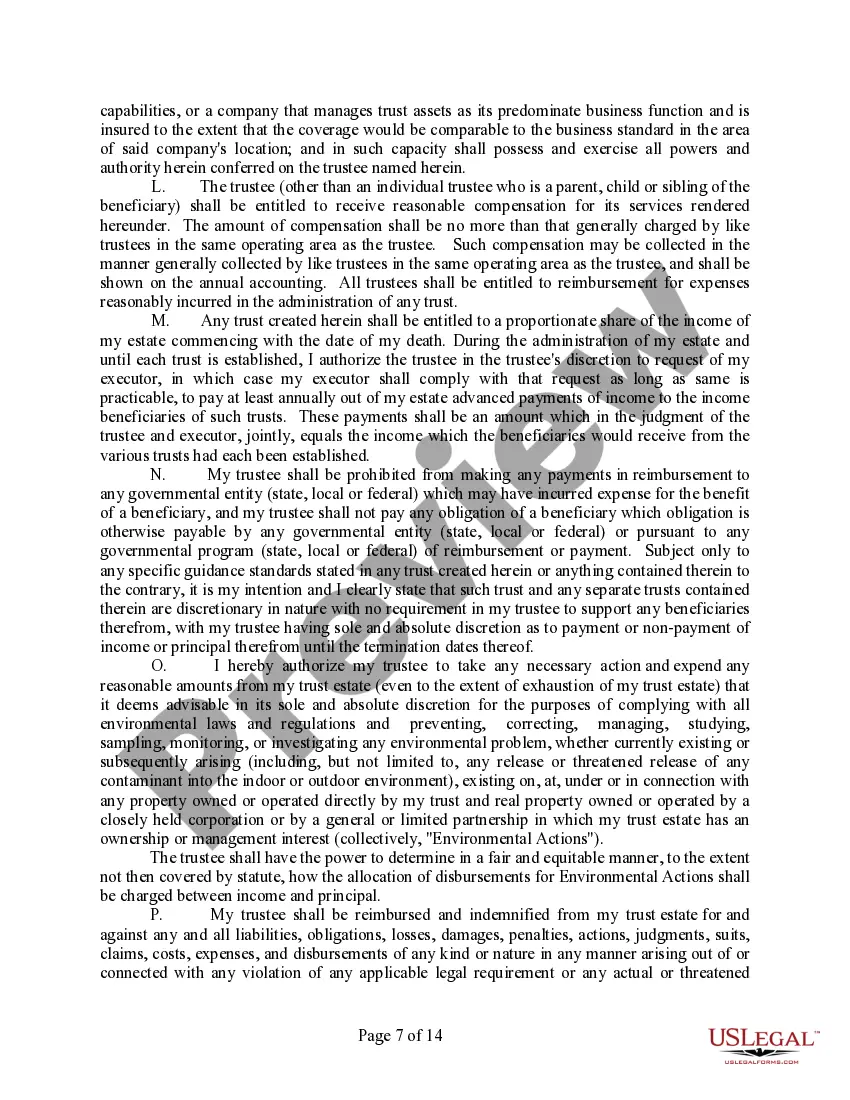
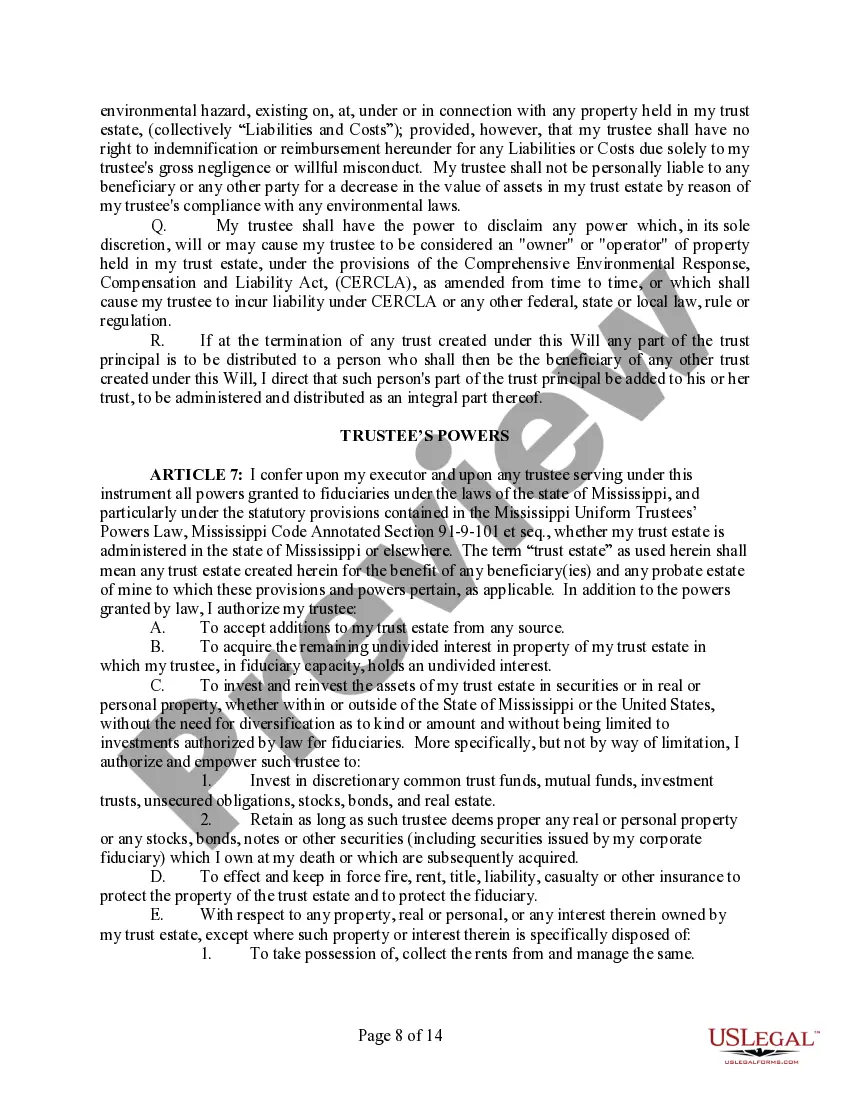
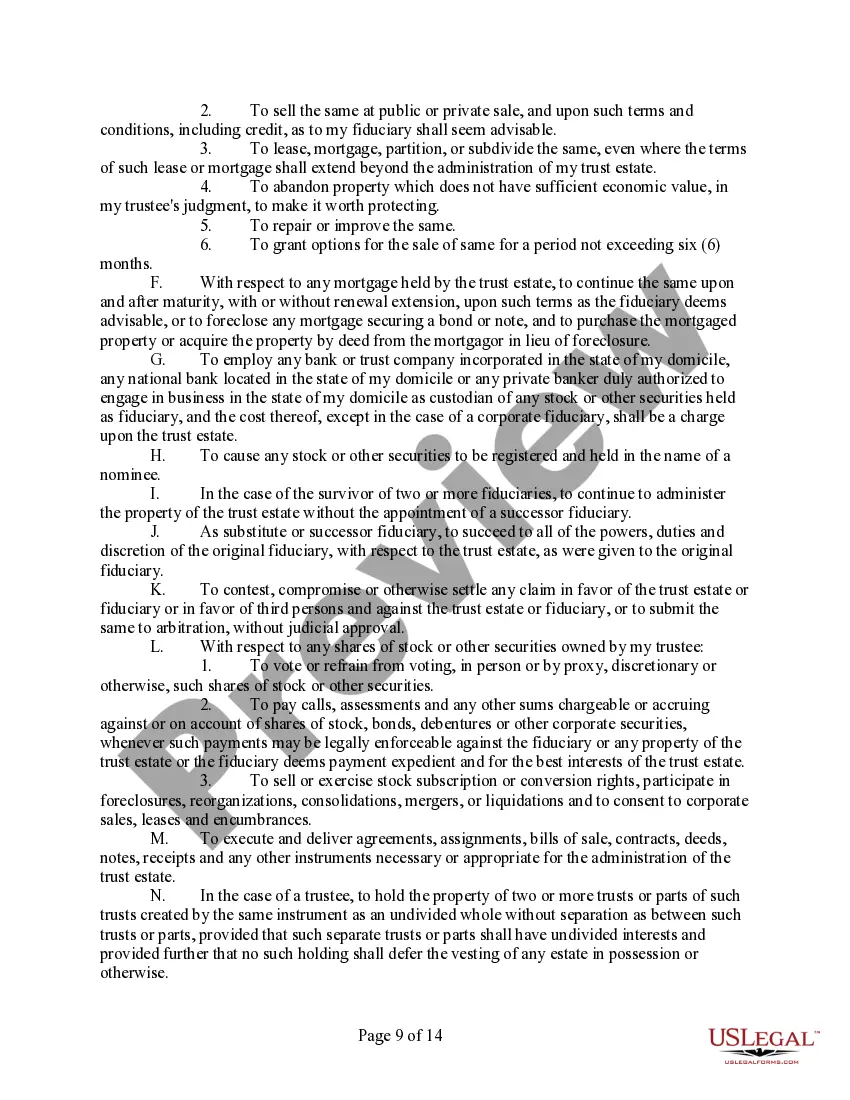
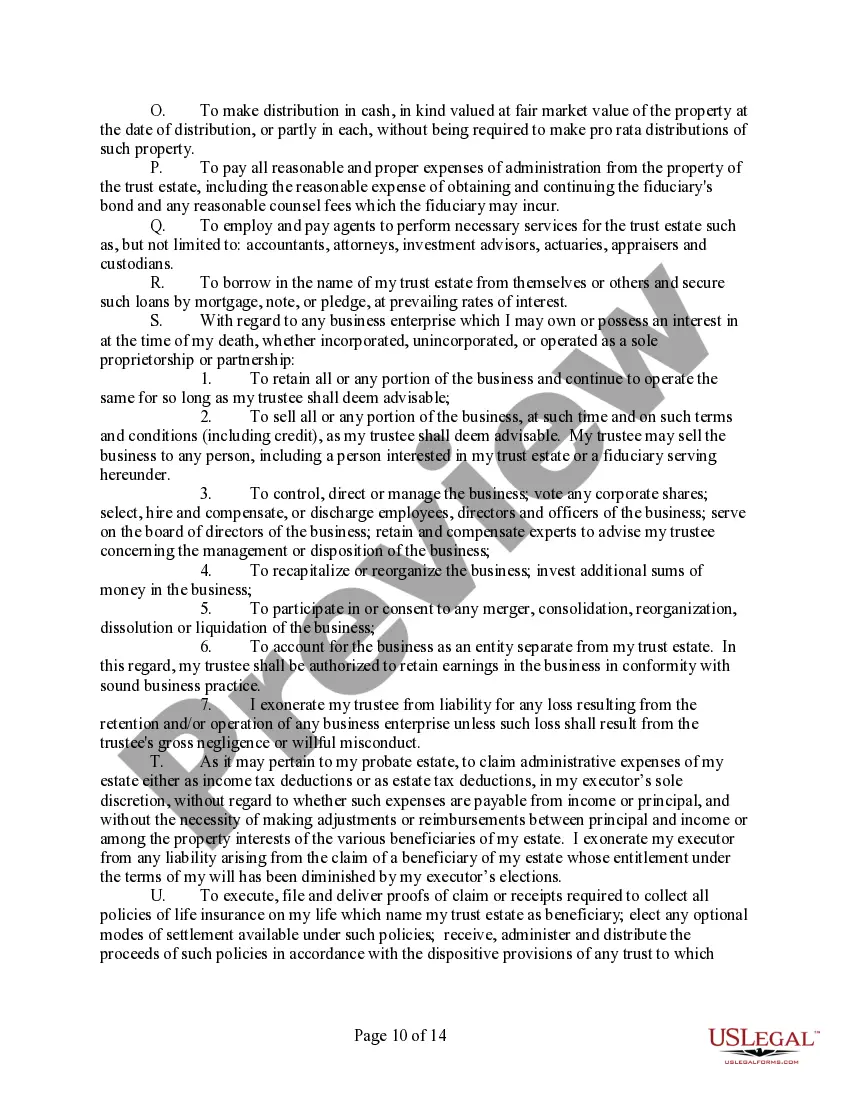
- Administrative provisions regarding the trust, including powers and responsibilities of the trustee.





When this form is needed
This form should be used when a married individual with children, including children from previous relationships, wants to outline their wishes for asset distribution after death. It is particularly useful for those looking to provide for a spouse and ensure that any minor children or grandchildren are considered in the inheritance plan. Additionally, it is beneficial for those needing a special needs trust for a spouse to maintain eligibility for government benefits.
Who needs this form
- Married individuals with children from their current marriage and previous relationships.
- Individuals wanting to ensure their spouse's financial security while addressing the interests of children and grandchildren.
- People concerned about maintaining a spouseâs eligibility for public assistance.
- Anyone looking to establish a clear estate plan that reflects their unique family dynamics.
How to prepare this document
- Identify yourself as the testator and provide your domicile information.
- Clearly name your spouse, children, and any grandchildren involved.
- Specify how personal belongings and property will be divided between your spouse and children.
- Create a special needs trust, detailing management and distribution instructions for your spouse's benefit.
- Sign the will in front of two witnesses and ensure proper attestation as required by law.
Notarization guidance
This form does not typically require notarization unless specified by local law. However, it is always good practice to consult with a legal professional or check local requirements to ensure that all conditions for validity are met.
Get your form ready online
Our built-in tools help you complete, sign, share, and store your documents in one place.
Make edits, fill in missing information, and update formatting in US Legal Forms—just like you would in MS Word.
Download a copy, print it, send it by email, or mail it via USPS—whatever works best for your next step.
Sign and collect signatures with our SignNow integration. Send to multiple recipients, set reminders, and more. Go Premium to unlock E-Sign.
If this form requires notarization, complete it online through a secure video call—no need to meet a notary in person or wait for an appointment.
We protect your documents and personal data by following strict security and privacy standards.

Make edits, fill in missing information, and update formatting in US Legal Forms—just like you would in MS Word.

Download a copy, print it, send it by email, or mail it via USPS—whatever works best for your next step.

Sign and collect signatures with our SignNow integration. Send to multiple recipients, set reminders, and more. Go Premium to unlock E-Sign.

If this form requires notarization, complete it online through a secure video call—no need to meet a notary in person or wait for an appointment.

We protect your documents and personal data by following strict security and privacy standards.
Typical mistakes to avoid
- Failing to accurately identify all beneficiaries, particularly in blended families.
- Not properly witnessing the will, which could invalidate it.
- Neglecting to consider tax implications or excluding important provisions for minor children.
- Assuming a simple will suffices without addressing the unique needs of dependents.
Why use this form online
- Convenient access to legally vetted templates that save time compared to drafting from scratch.
- Editable fields that allow customization to fit individual family circumstances.
- Secure online process that ensures privacy and compliance with legal standards.
Main things to remember
- The Last Will and Testament for Married Person with Children is essential for individuals with complex family dynamics.
- Creating a special needs trust helps protect the financial well-being of a spouse while maintaining eligibility for assistance programs.
- Proper execution of the will, including witnessing and signing, is crucial for the document's legality.
Looking for another form?
Form popularity
FAQ
Holographic or Handwritten Wills A holographic or handwritten will is valid in Mississippi if it's testamentary in character (i.e. intended to be a will, not just a letter to a friend) and is wholly written, dated, and signed by the testator or creator of the will.
No, in Mississippi, you do not need to notarize your will to make it legal. However, Mississippi allows you to make your will "self-proving" and you'll need to go to a notary if you want to do that.
The will must be in writing, signed by the testator or by someone else at the testator's direction and in their presence. It must also be signed by at least two witnesses. The will must be notarized. Otherwise, certain conditions must be met to determine its veracity.
To write a will, Mississippi law states you must be at least 18 years old, of sound and disposing mind, must intend the document to be your will and must have the written will validly executed. Upon your death, your will must go through probate, a court proceeding that declares the will valid or invalid.
A will can be revoked by the testator destroying, canceling, or obliterating it or having someone else do it in his or her presence. Mississippi is one of the few states where oral or nuncupative wills are valid.
Ing to Title 91 Chapter 7 Section 5 of the Mississippi Code, the court can compel the person who has the will to present it. The person who has the will must file it with the court within 40 days after the person's death.
If you die with children but no spouse, your children will inherit everything. If you die with one child, your spouse gets half of the intestate property and your child gets the other half. If you die with two or more children, your surviving spouse and children each get an equal share of your intestate property.