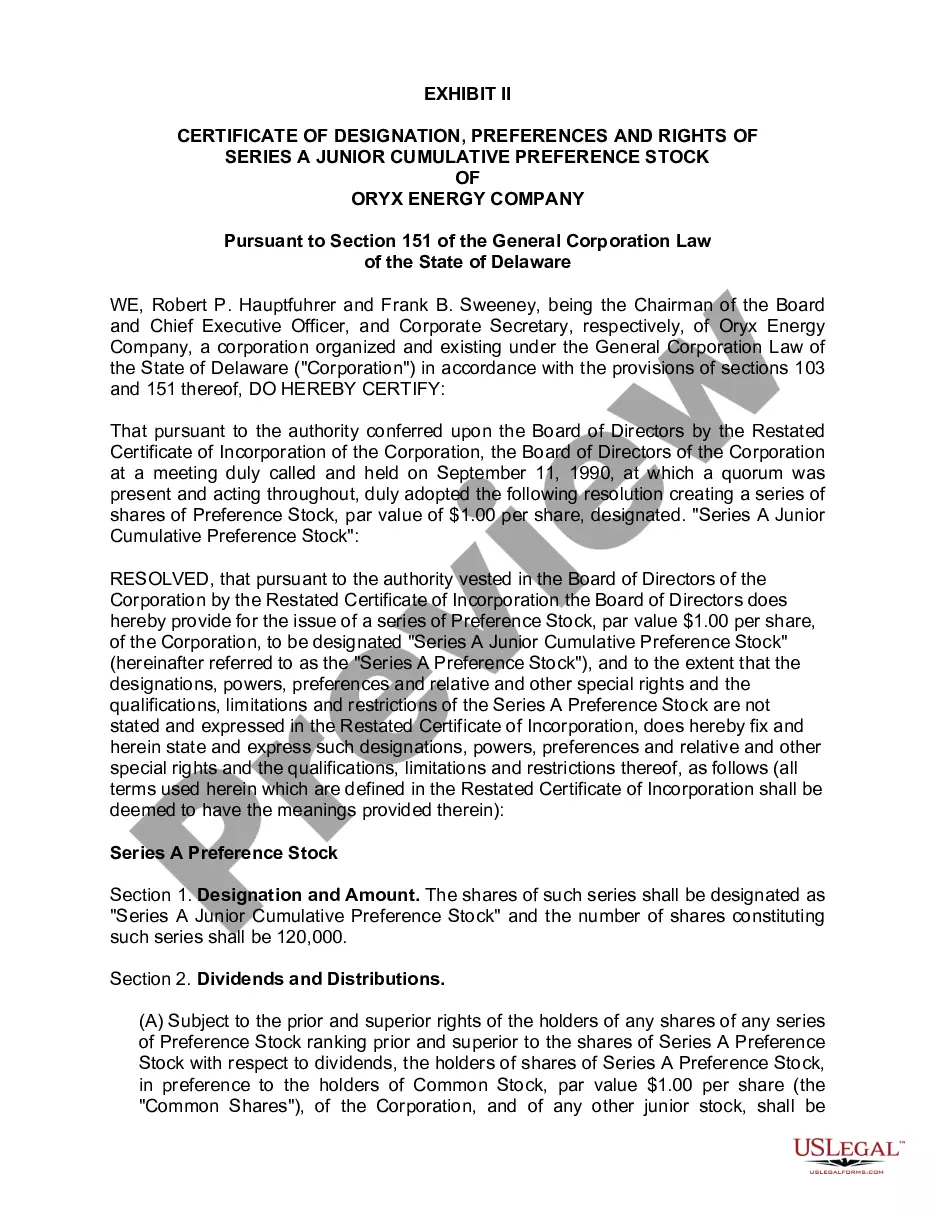
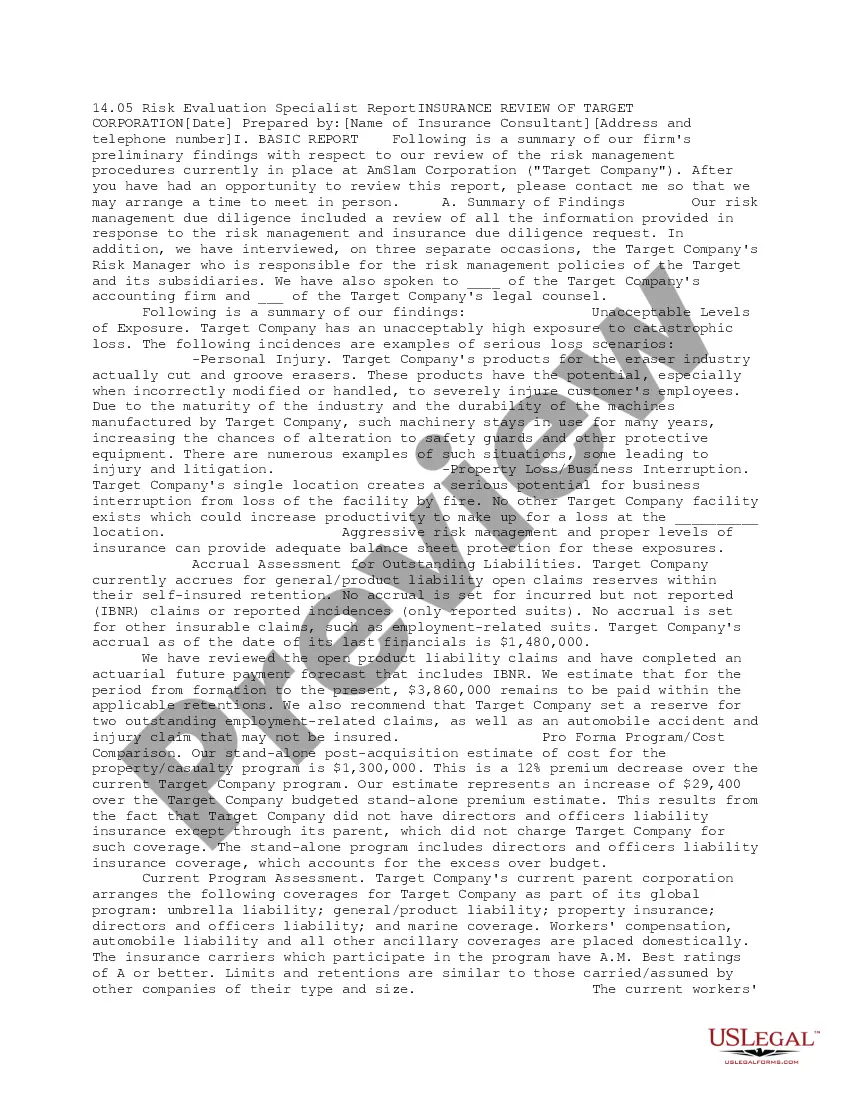
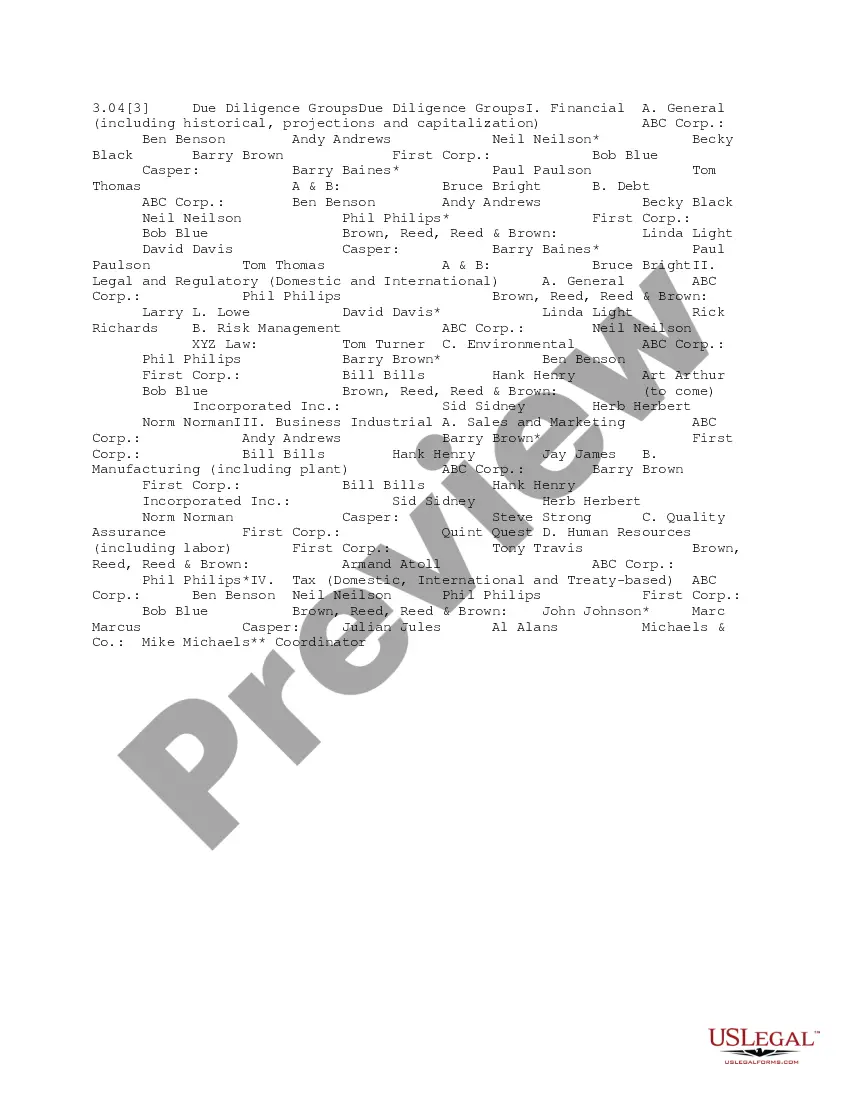
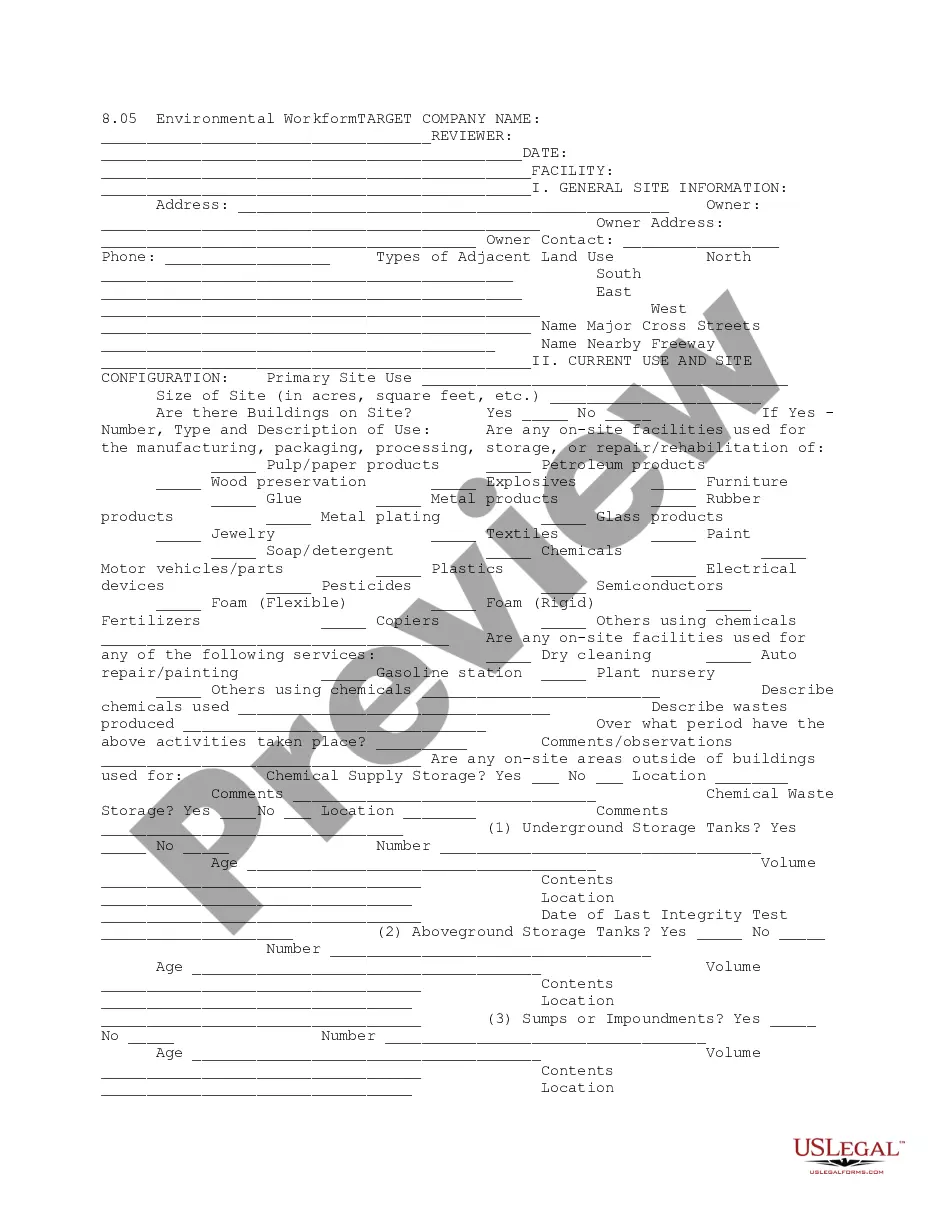
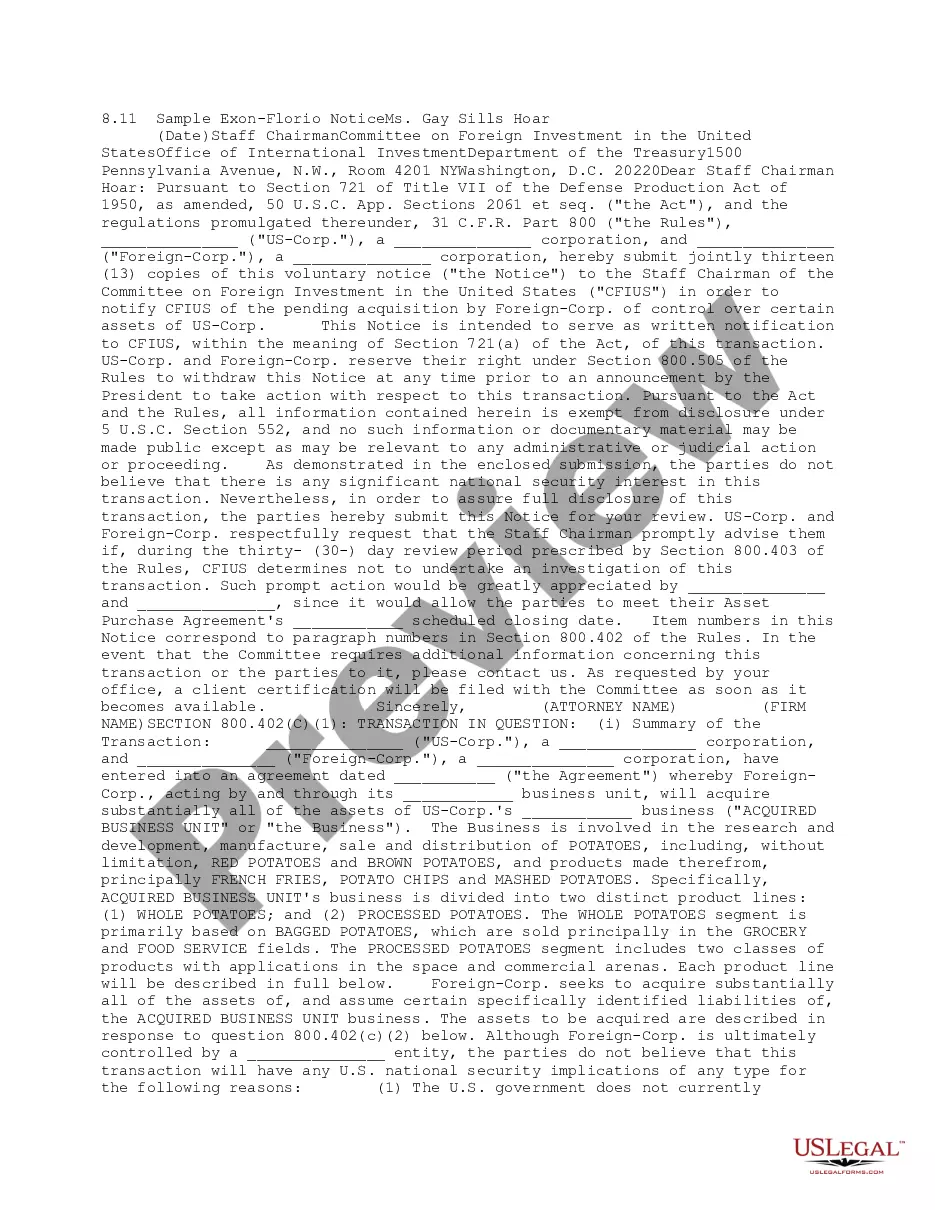
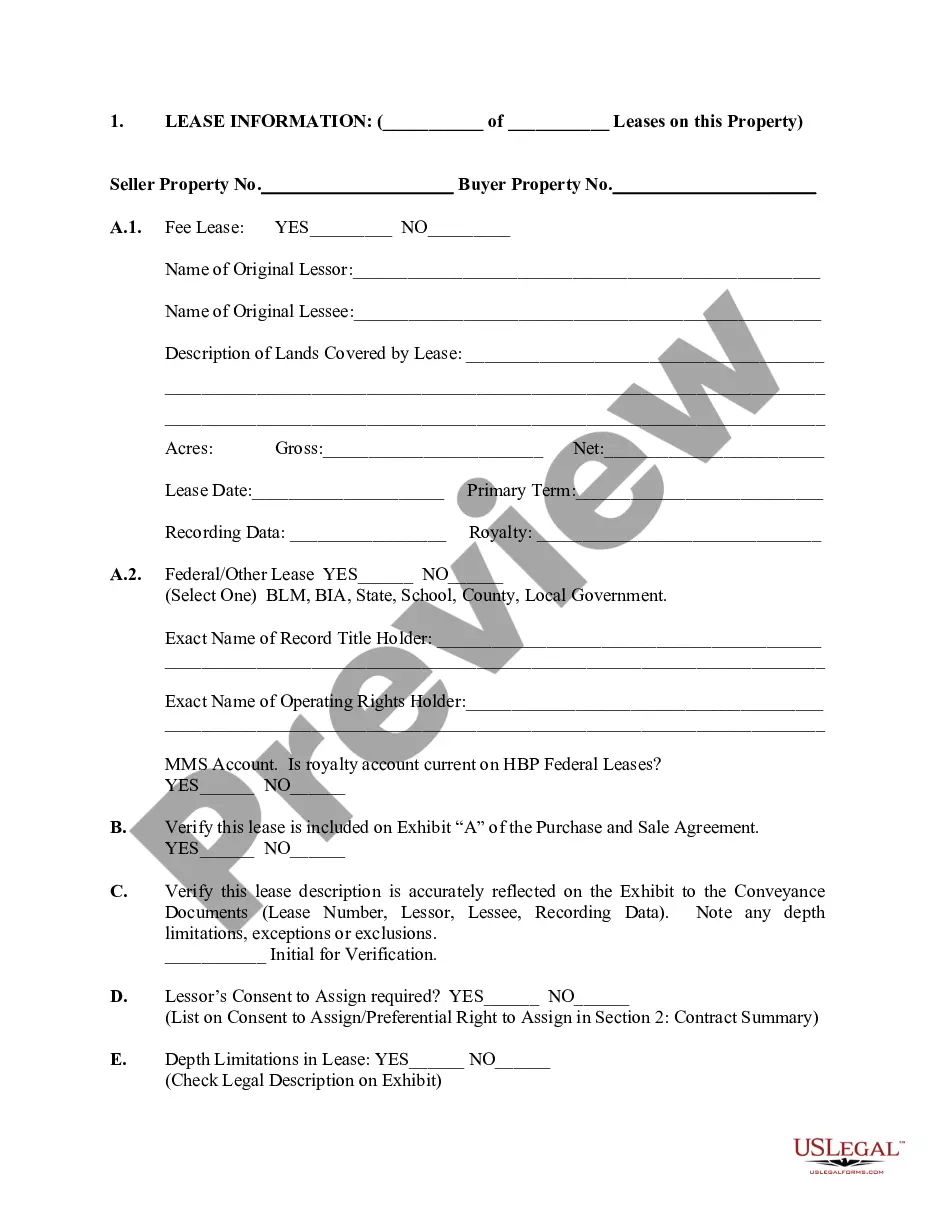
This due diligence form contains information documented from a risk evaluation within a company regarding business transactions.
Mississippi Risk Evaluation Specialist Matrix
Category:
State:
Multi-State
Control #:
US-DD01406
Format:
Word;
PDF;
Rich Text
Instant download
Description
Free preview


Get your form ready online
Our built-in tools help you complete, sign, share, and store your documents in one place.
Built-in online Word editor
Make edits, fill in missing information, and update formatting in US Legal Forms—just like you would in MS Word.
Export easily
Download a copy, print it, send it by email, or mail it via USPS—whatever works best for your next step.
E-sign your document
Sign and collect signatures with our SignNow integration. Send to multiple recipients, set reminders, and more. Go Premium to unlock E-Sign.
Notarize online 24/7
If this form requires notarization, complete it online through a secure video call—no need to meet a notary in person or wait for an appointment.
Store your document securely
We protect your documents and personal data by following strict security and privacy standards.

Make edits, fill in missing information, and update formatting in US Legal Forms—just like you would in MS Word.

Download a copy, print it, send it by email, or mail it via USPS—whatever works best for your next step.

Sign and collect signatures with our SignNow integration. Send to multiple recipients, set reminders, and more. Go Premium to unlock E-Sign.

If this form requires notarization, complete it online through a secure video call—no need to meet a notary in person or wait for an appointment.

We protect your documents and personal data by following strict security and privacy standards.
Looking for another form?




How to fill out Risk Evaluation Specialist Matrix?
It is feasible to spend hours online attempting to locate the legal document template that complies with the state and federal requirements you will need.
US Legal Forms provides thousands of legal forms that are reviewed by experts.
You can effortlessly download or print the Mississippi Risk Evaluation Specialist Matrix from your account.
If available, utilize the Preview option to review the document template as well.
- If you possess a US Legal Forms account, you can Log In and select the Download option.
- Afterward, you can complete, modify, print, or sign the Mississippi Risk Evaluation Specialist Matrix.
- Every legal document template you acquire is yours permanently.
- To receive another copy of a purchased form, visit the My documents tab and click the corresponding option.
- If you are using the US Legal Forms website for the first time, follow the simple instructions below.
- First, ensure that you have selected the appropriate document template for the county/city of your choice.
- Review the form description to ensure you have chosen the correct form.
Form popularity
FAQ
The 5 Steps to Risk Assessment Explained1: Identify the Hazards.2: Decide Who Might Be Harmed and How.3: Evaluate the Risks and Take Action to Prevent Them.4: Record Your Findings.5: Review the Risk Assessment.
How do you calculate risk in a risk matrix?Step 1: Identify the risks related to your project.Step 2: Define and determine risk criteria for your project.Step 3: Analyze the risks you've identified.Step 4: Prioritize the risks and make an action plan.12-Jul-2021
The Risk equation is known to be Risk = Hazard X Vulnerability.
In general, to do an assessment, you should: Identify hazards. Determine the likelihood of harm, such as an injury or illness occurring, and its severity. Consider normal operational situations as well as non-standard events such as maintenance, shutdowns, power outages, emergencies, extreme weather, etc.
The risk assessment matrix will help your organization identify and prioritize different risks, by estimating the probability of the risk occurring and how severe the impact would be if it were to happen....The process:Identify the risk universe.Determine the risk criteria.Assess the risks.Prioritize the risks.26-Jun-2020
You can do it yourself or appoint a competent person to help you.Identify hazards.Assess the risks.Control the risks.Record your findings.Review the controls.17-Mar-2022
The 5 Steps to Risk Assessment Explained1: Identify the Hazards.2: Decide Who Might Be Harmed and How.3: Evaluate the Risks and Take Action to Prevent Them.4: Record Your Findings.5: Review the Risk Assessment.
A risk assessment matrix is the table (matrix) used for allocating risk ratings for risks that you identify, based on two intersecting factors: the likelihood (or probability) of a security risk-based event occurring, and the consequence (or impact) to an asset if it did.
- Licensed and retail premises.Overview.Step 1: Identify the hazards.Step 2: Decide who might be harmed and how.Step 3: Evaluate the risks and decide on precautions.Step 4: Record your findings and implement them.Step 5: Review your risk assessment and update if necessary.02-Jun-2021
A risk matrix is a matrix that is used during risk assessment to define the level of risk by considering the category of probability or likelihood against the category of consequence severity. This is a simple mechanism to increase visibility of risks and assist management decision making.