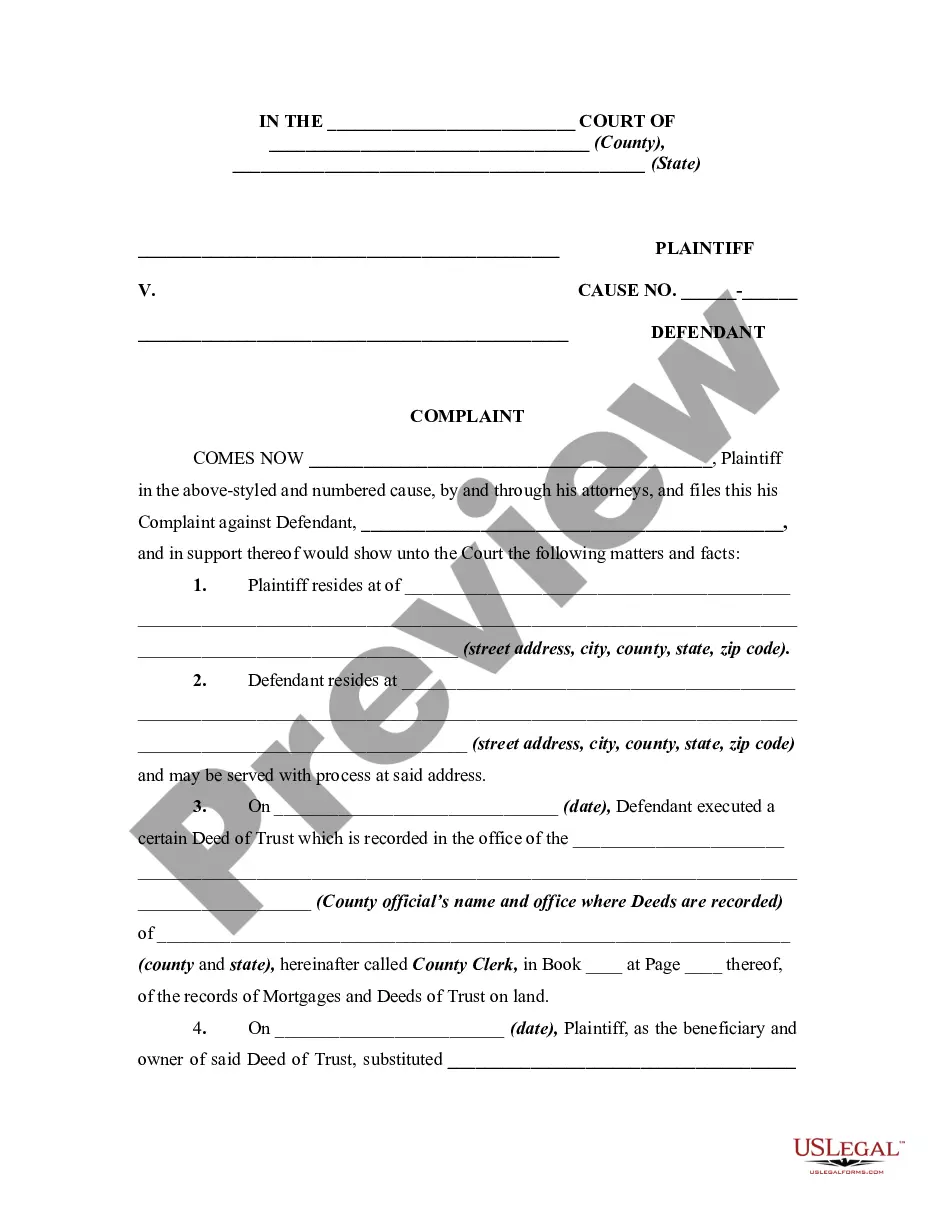
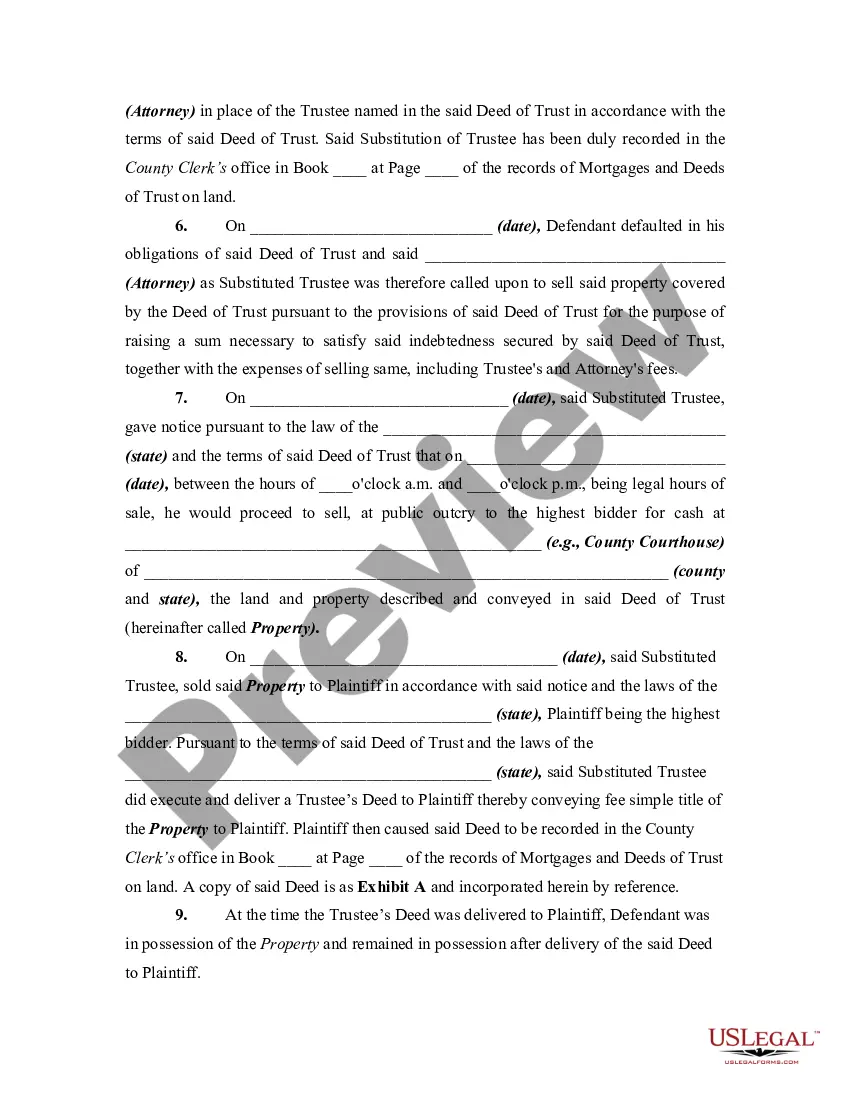
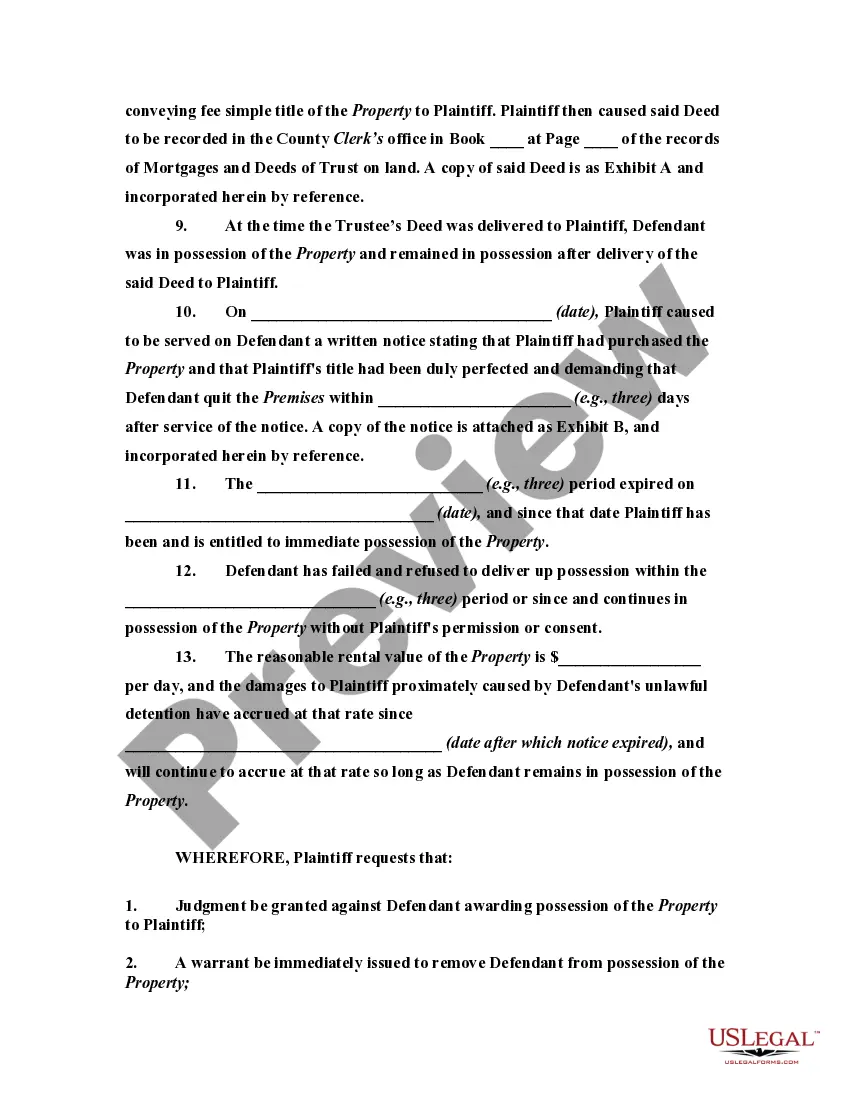
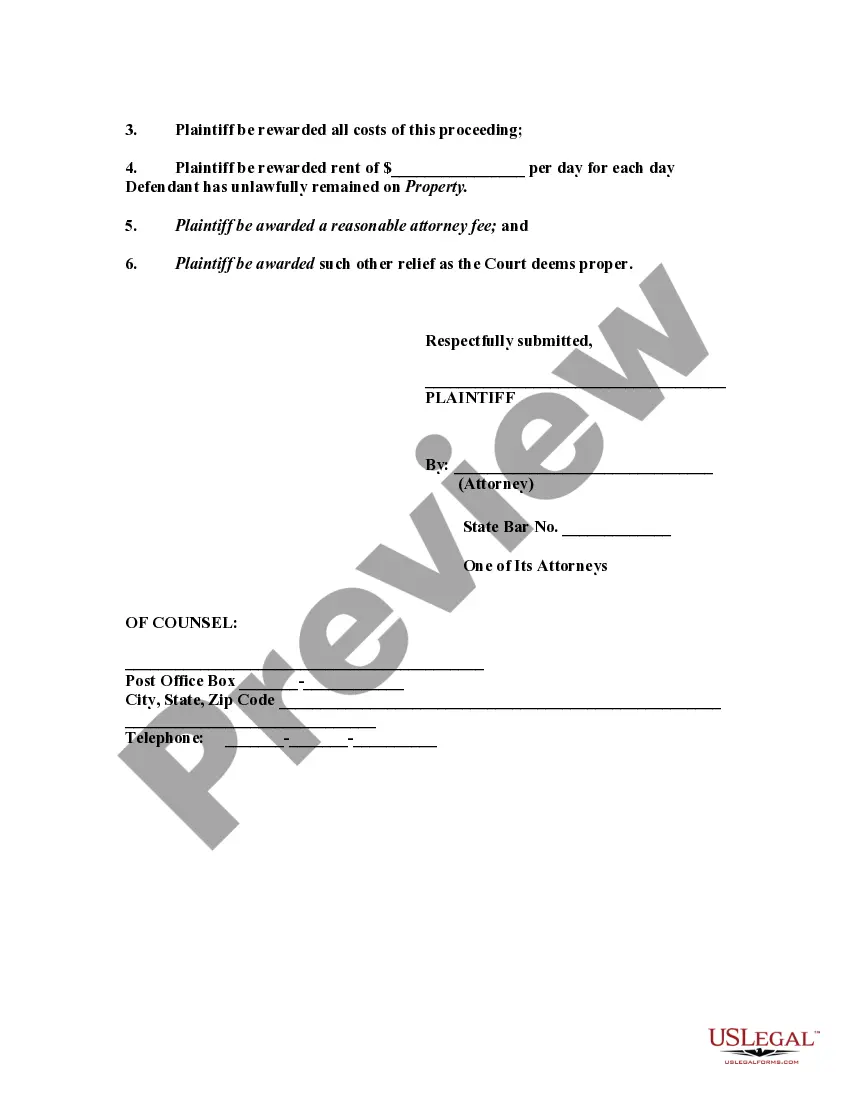
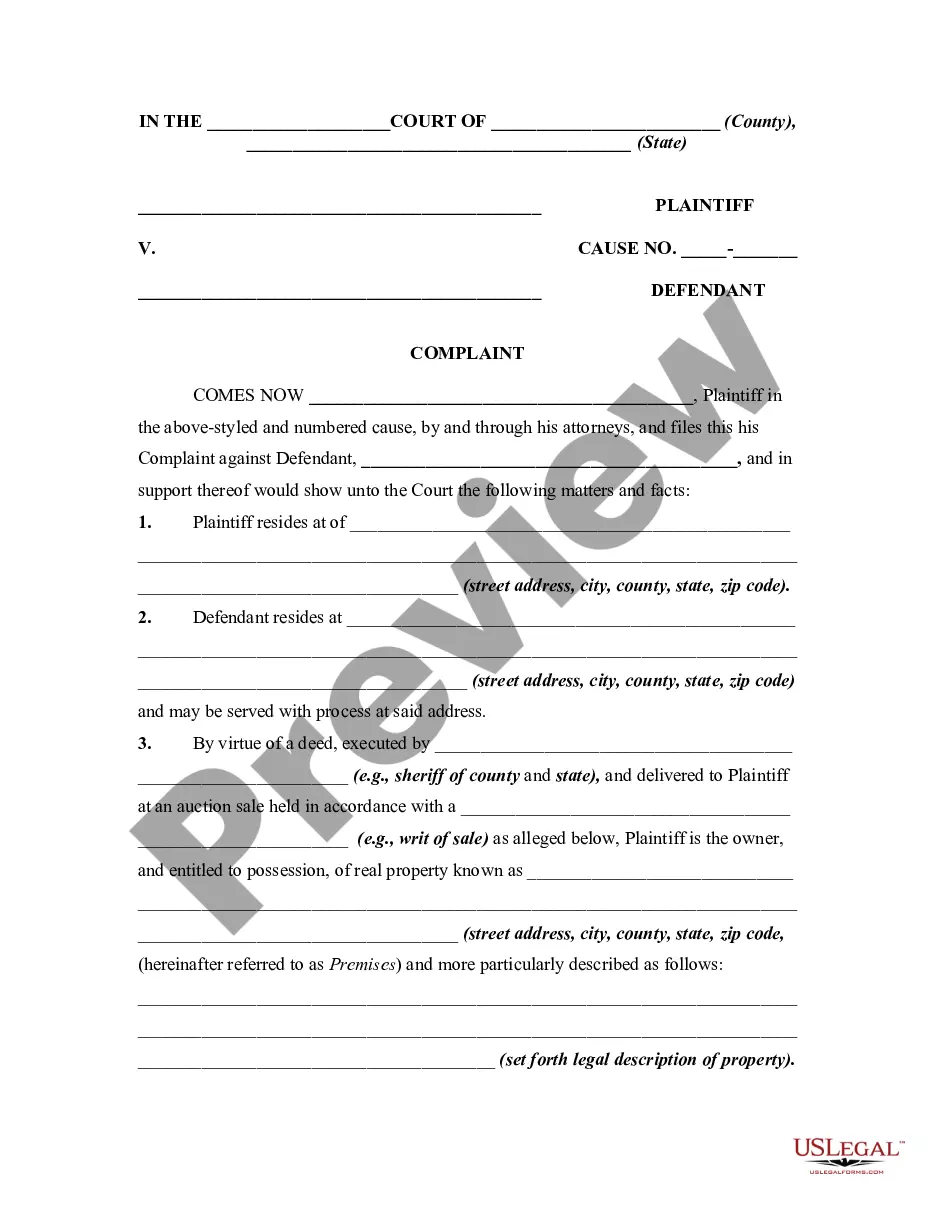
Keeping possession of real property without a right, such as after a lease has expired or after the real property has be sold by the possessor, may entitle the owner to file a lawsuit for "unlawful detainer," asking for possession by court order, unpaid rent and damages. This form is for illustrative purposes only. Local laws should be consulted to determine any specific requirements for such a notice in a particular jurisdiction.
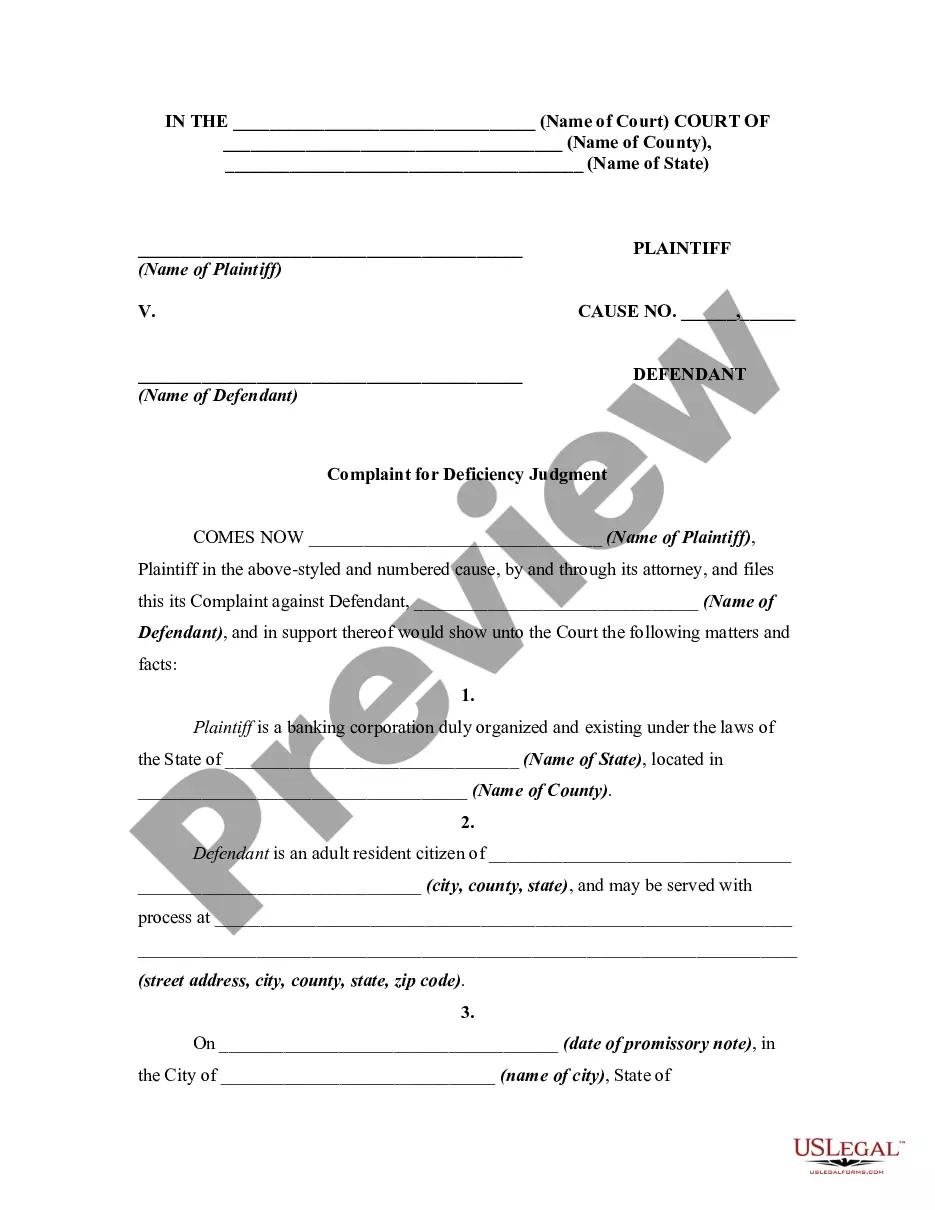
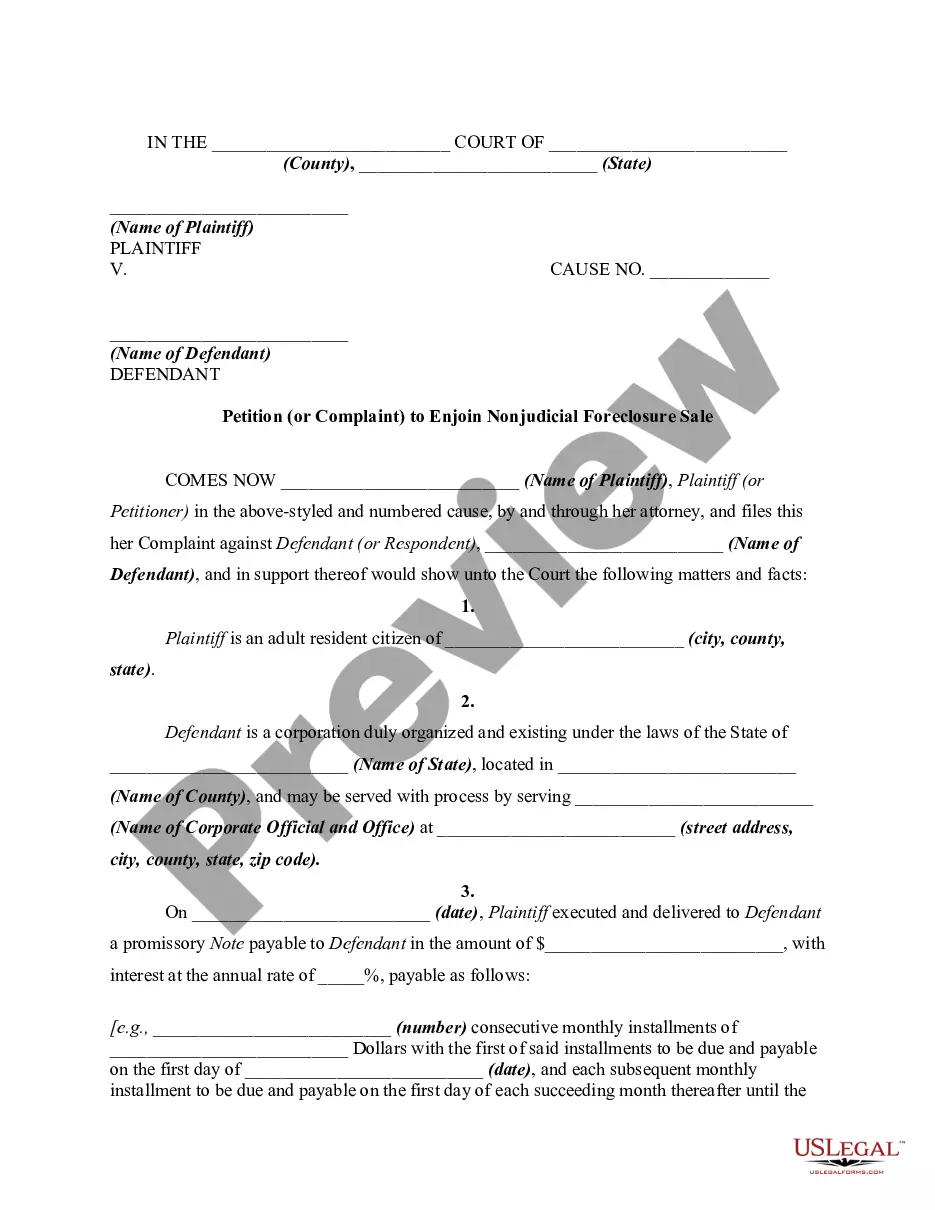
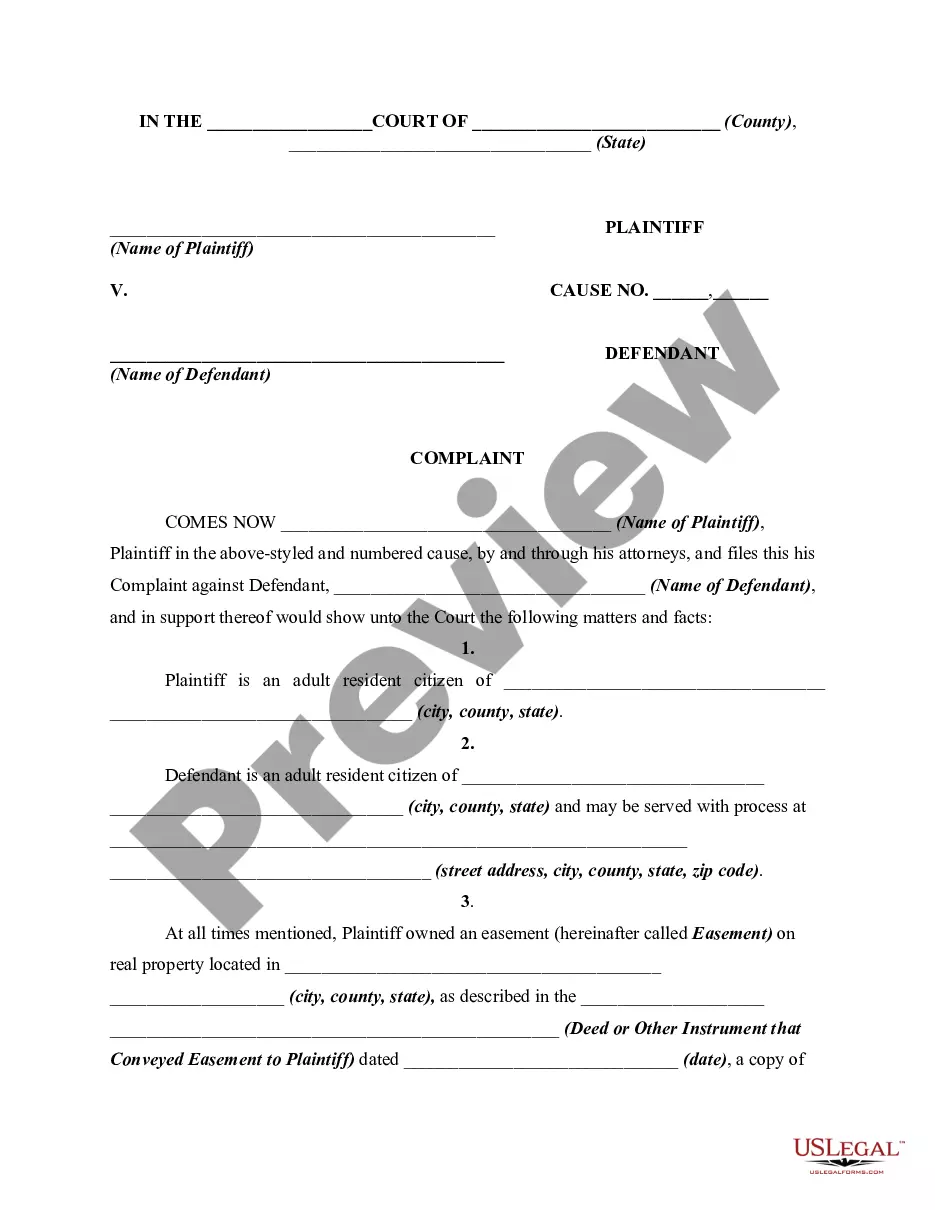
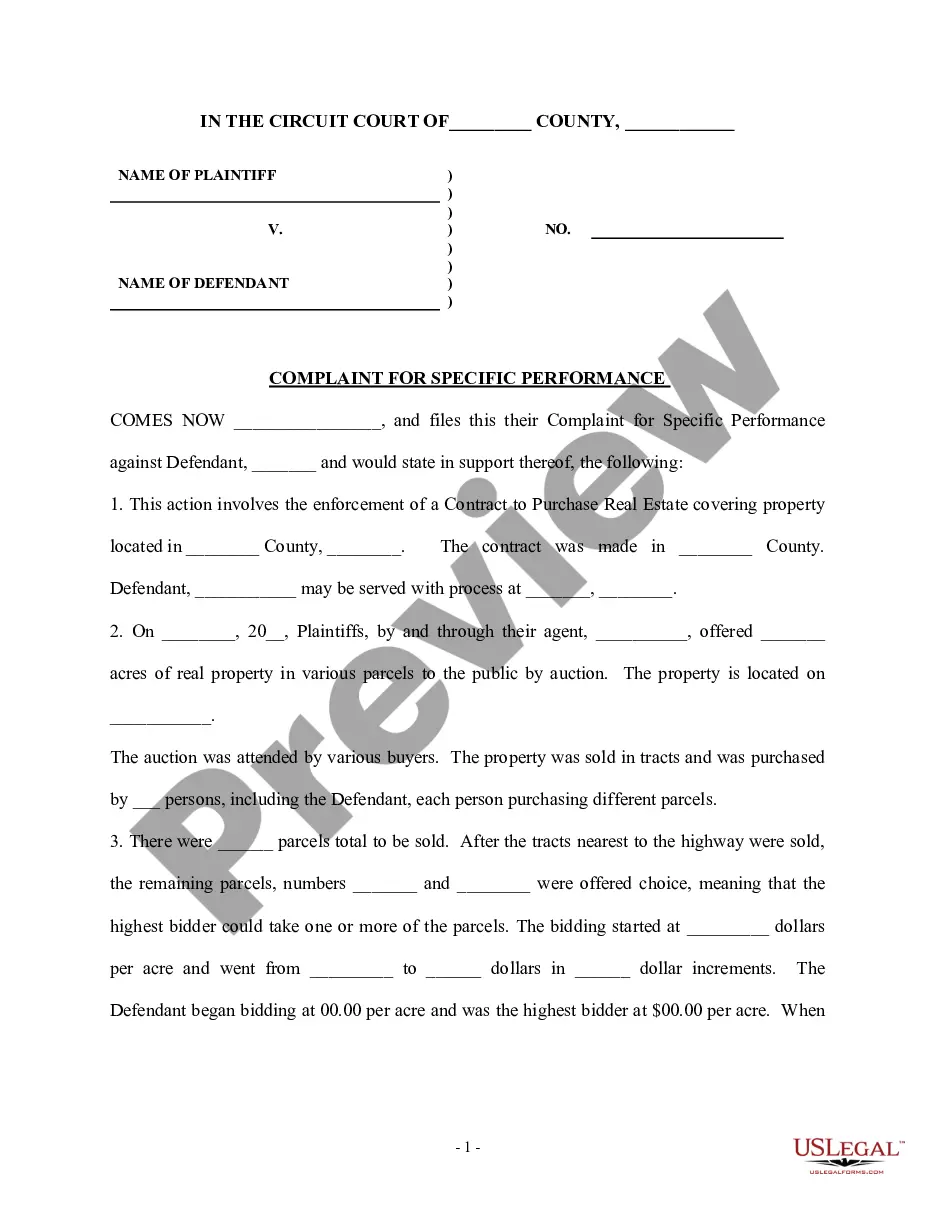
Mississippi Complaint or Petition by Purchaser Against Possessor of Real Property After a Foreclosure Sale Pursuant to a Deed of Trust
Category:
State:
Multi-State
Control #:
US-01014BG
Format:
Word;
Rich Text
Instant download
Description
Free preview
Get your form ready online
Our built-in tools help you complete, sign, share, and store your documents in one place.
Built-in online Word editor
Make edits, fill in missing information, and update formatting in US Legal Forms—just like you would in MS Word.
Export easily
Download a copy, print it, send it by email, or mail it via USPS—whatever works best for your next step.
E-sign your document
Sign and collect signatures with our SignNow integration. Send to multiple recipients, set reminders, and more. Go Premium to unlock E-Sign.
Notarize online 24/7
If this form requires notarization, complete it online through a secure video call—no need to meet a notary in person or wait for an appointment.
Store your document securely
We protect your documents and personal data by following strict security and privacy standards.

Make edits, fill in missing information, and update formatting in US Legal Forms—just like you would in MS Word.

Download a copy, print it, send it by email, or mail it via USPS—whatever works best for your next step.

Sign and collect signatures with our SignNow integration. Send to multiple recipients, set reminders, and more. Go Premium to unlock E-Sign.

If this form requires notarization, complete it online through a secure video call—no need to meet a notary in person or wait for an appointment.

We protect your documents and personal data by following strict security and privacy standards.
Looking for another form?





How to fill out Complaint Or Petition By Purchaser Against Possessor Of Real Property After A Foreclosure Sale Pursuant To A Deed Of Trust?
Are you presently in the situation that you require documents for potentially business or personal purposes almost every day.
There are numerous authorized document templates accessible online, but locating ones you can trust is not straightforward.
US Legal Forms provides thousands of form templates, such as the Mississippi Complaint or Petition by Purchaser Against Possessor of Real Property After a Foreclosure Sale Pursuant to a Deed of Trust, which can be published to satisfy federal and state regulations.
If you find the appropriate form, just click Acquire now.
Select the pricing plan you prefer, provide the necessary details to create your account, and complete the purchase using your PayPal or Visa or Mastercard.
- If you are currently aware of the US Legal Forms website and have an account, just Log In.
- Then, you can obtain the Mississippi Complaint or Petition by Purchaser Against Possessor of Real Property After a Foreclosure Sale Pursuant to a Deed of Trust template.
- If you do not have an account and wish to start using US Legal Forms, follow these steps.
- Locate the form you desire and ensure it is for the correct city/region.
- Use the Preview option to examine the form.
- Review the description to confirm that you have selected the right form.
- If the form is not what you are looking for, use the Search area to find the form that fulfills your needs and requirements.
Form popularity
FAQ
A Mississippi deed of trust is a document by which an owner's property title transfers to a neutral party (trustee) to serve as security for a real estate loan granted by a lender (beneficiary). The trustee holds onto the property title until the land owner (borrower) pays back the loan in full to the lender.
No Redemption Period After a Nonjudicial Foreclosure in Mississippi. Some states have a law that gives a foreclosed homeowner time after the foreclosure sale to redeem the property. In Mississippi, however, you don't get a post-sale redemption period after a foreclosure.
On the contrary, Mississippi laws do not give the right of redemption after the foreclosure. The borrower may have the right to stop the non-judicial foreclosure when you ?reinstate? the loan, as long as the total overdue amount (including interest and fees) will be paid off.
A mortgage or deed of trust is an agreement in which a borrower puts up title to real estate as security (collateral) for a loan. People often refer to a home loan as a "mortgage." But a mortgage isn't a loan agreement. The promissory note promises to repay the amount you borrowed to buy a home.
What is the difference between a deed of trust and a mortgage? The mortgage only includes the borrower and the lender while a deed of trust will include the deed of trust will include the borrower, the lender, and the trustee.
A mortgage involves only two parties: the borrower and the lender. A deed of trust has a borrower, lender and a ?trustee.? The trustee is a neutral third party that holds the title to a property until the loan is completely paid off by the borrower.
Key Takeaways. Right of redemption is a legal process that allows a delinquent mortgage borrower to reclaim their home or other property subject to foreclosure if they are able to repay their obligations in time.
To put simply, the deed is the legal document that proves who holds title to a property, while a mortgage is an agreement between a financial lender and borrower to repay the amount borrowed to purchase a home.