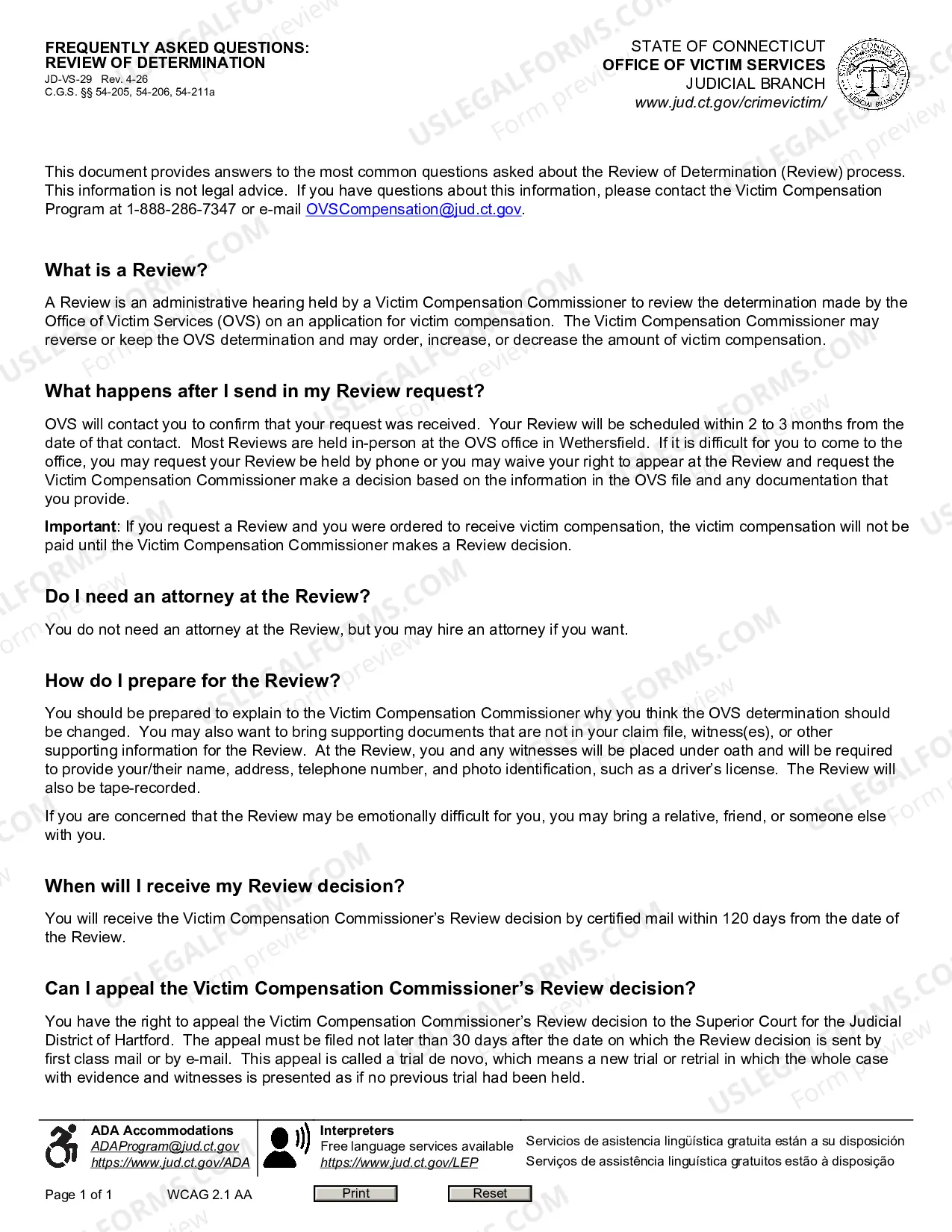
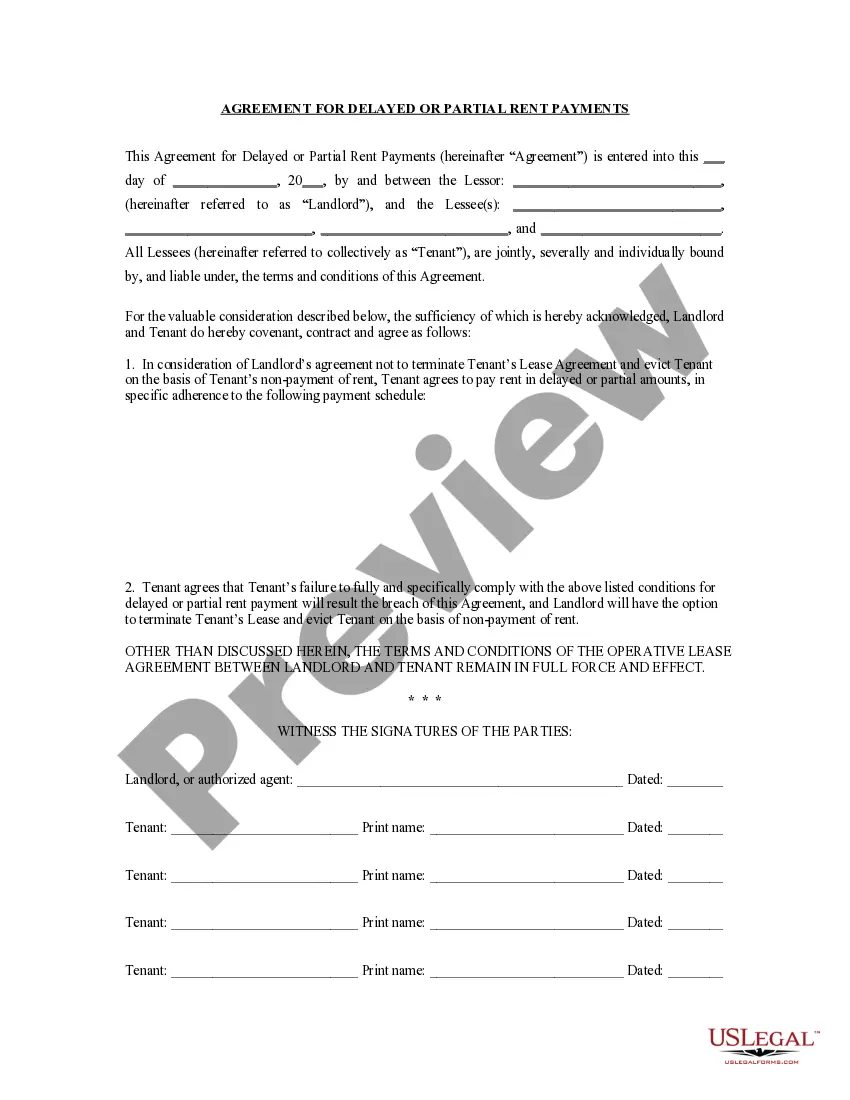
Mississippi Agreement for Delayed or Partial Rent Payments
About this form
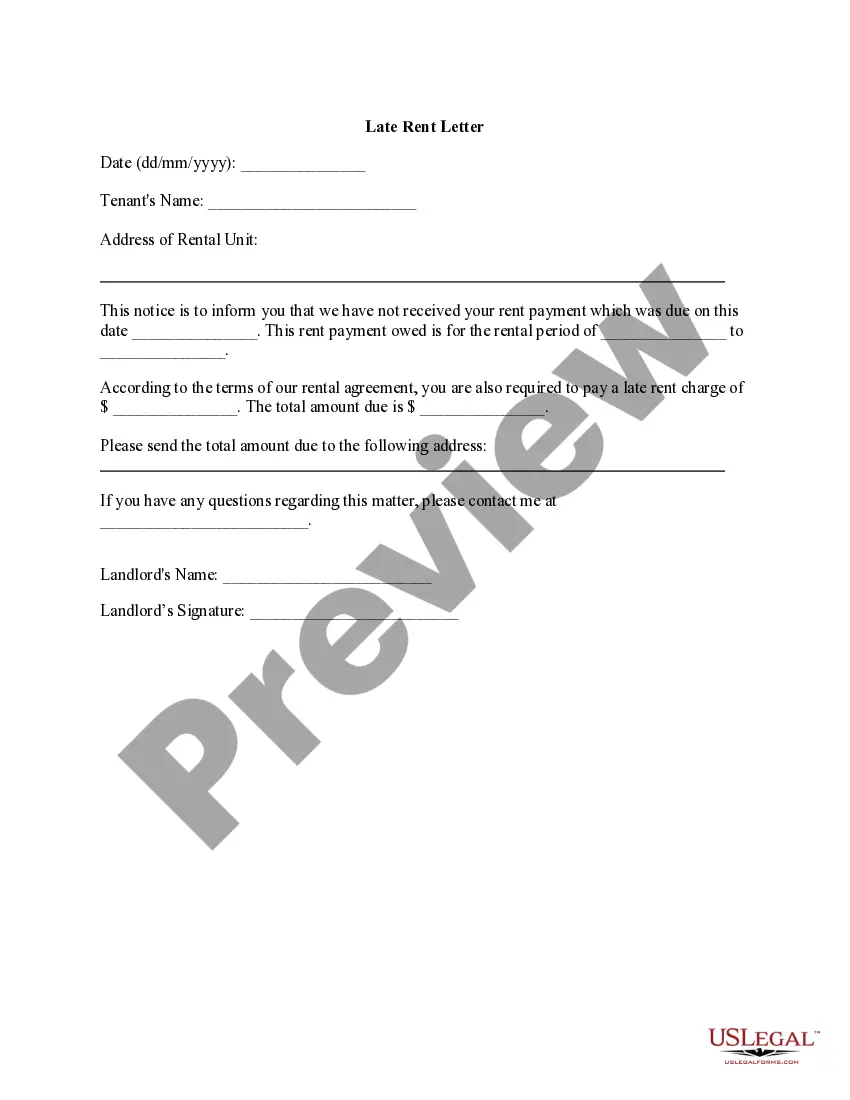
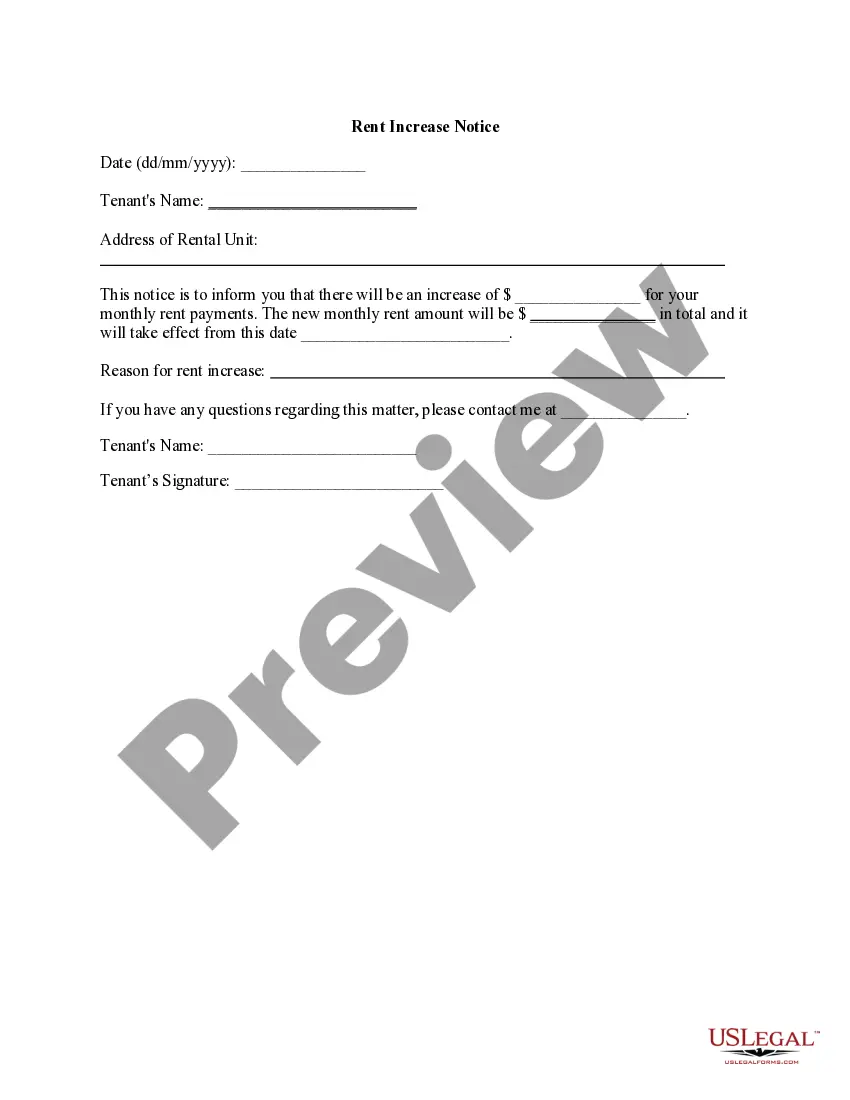
The Agreement for Delayed or Partial Rent Payments is a legal document that outlines the terms under which a tenant can defer or pay rent in smaller amounts to their landlord. This agreement protects the tenant from eviction for non-payment while clarifying the payment schedule and conditions with the landlord. It serves as a crucial alternative for tenants facing temporary financial difficulties, ensuring their lease remains intact while addressing outstanding payments responsibly.
Key parts of this document
- Identification of the landlord and tenant parties involved in the agreement.
- Specific deadlines for delayed or partial payment amounts.
- Terms outlining conditions for keeping the lease agreement active despite the delay in payments.
- Signatures of all parties involved, indicating their agreement to the terms.
- A clause reaffirming that other terms of the original lease agreement remain in effect.
Situations where this form applies
This form is useful in situations where a tenant is experiencing financial hardship and cannot make full rent payments on time. It should be used when a landlord agrees to allow either delayed payment or partial payments without initiating eviction proceedings. Such circumstances often arise during unexpected life events, such as job loss, medical emergencies, or other financial setbacks.
Who should use this form
- Landlords who are open to negotiating payment terms with tenants facing financial difficulties.
- Tenants who need temporary relief from full rent payments while ensuring their lease remains active.
- Individuals who want a formalized agreement to protect their legal rights regarding rent payments.
Instructions for completing this form
- Identify the parties: Fill in the names and contact information of the landlord and tenant(s).
- Specify the terms: Clearly state the amount and dates for delayed or partial rent payments.
- Include consideration: Acknowledge the landlord's agreement to avoid eviction based on non-payment.
- Sign the agreement: Ensure all parties sign and date the document for it to be valid.
- Keep a copy: Each party should retain a copy of the signed agreement for their records.
Is notarization required?
In most cases, this form does not require notarization. However, some jurisdictions or signing circumstances might. US Legal Forms offers online notarization powered by Notarize, accessible 24/7 for a quick, remote process.
Get your form ready online
Our built-in tools help you complete, sign, share, and store your documents in one place.
Make edits, fill in missing information, and update formatting in US Legal Forms—just like you would in MS Word.
Download a copy, print it, send it by email, or mail it via USPS—whatever works best for your next step.
Sign and collect signatures with our SignNow integration. Send to multiple recipients, set reminders, and more. Go Premium to unlock E-Sign.
If this form requires notarization, complete it online through a secure video call—no need to meet a notary in person or wait for an appointment.
We protect your documents and personal data by following strict security and privacy standards.

Make edits, fill in missing information, and update formatting in US Legal Forms—just like you would in MS Word.

Download a copy, print it, send it by email, or mail it via USPS—whatever works best for your next step.

Sign and collect signatures with our SignNow integration. Send to multiple recipients, set reminders, and more. Go Premium to unlock E-Sign.

If this form requires notarization, complete it online through a secure video call—no need to meet a notary in person or wait for an appointment.

We protect your documents and personal data by following strict security and privacy standards.
Common mistakes to avoid
- Failing to include specific payment amounts and due dates.
- Not obtaining signatures from all involved parties.
- Ignoring other obligations outlined in the original lease agreement.
- Using unclear language that can lead to misinterpretation of terms.
Why use this form online
- Convenience of accessing and downloading the form from anywhere.
- Editability to personalize the agreement according to specific needs.
- Reliability of a document drafted by licensed attorneys to ensure legal compliance.
- Fast turnaround time, enabling quick resolution of rental payment issues.
Legal use & context
- This Agreement serves as a legally binding modification to the original rental lease.
- It protects the tenant from eviction while ensuring the landlord has a clear expectation of rental income.
- Both parties are encouraged to seek legal advice to ensure their rights are protected.
Summary of main points
- The Agreement for Delayed or Partial Rent Payments outlines a clear plan for tenants struggling to pay rent.
- It is essential for both landlords and tenants to sign the document to validate the agreement.
- This form helps prevent misunderstandings about rental obligations during challenging financial periods.
Looking for another form?



Form popularity
FAQ
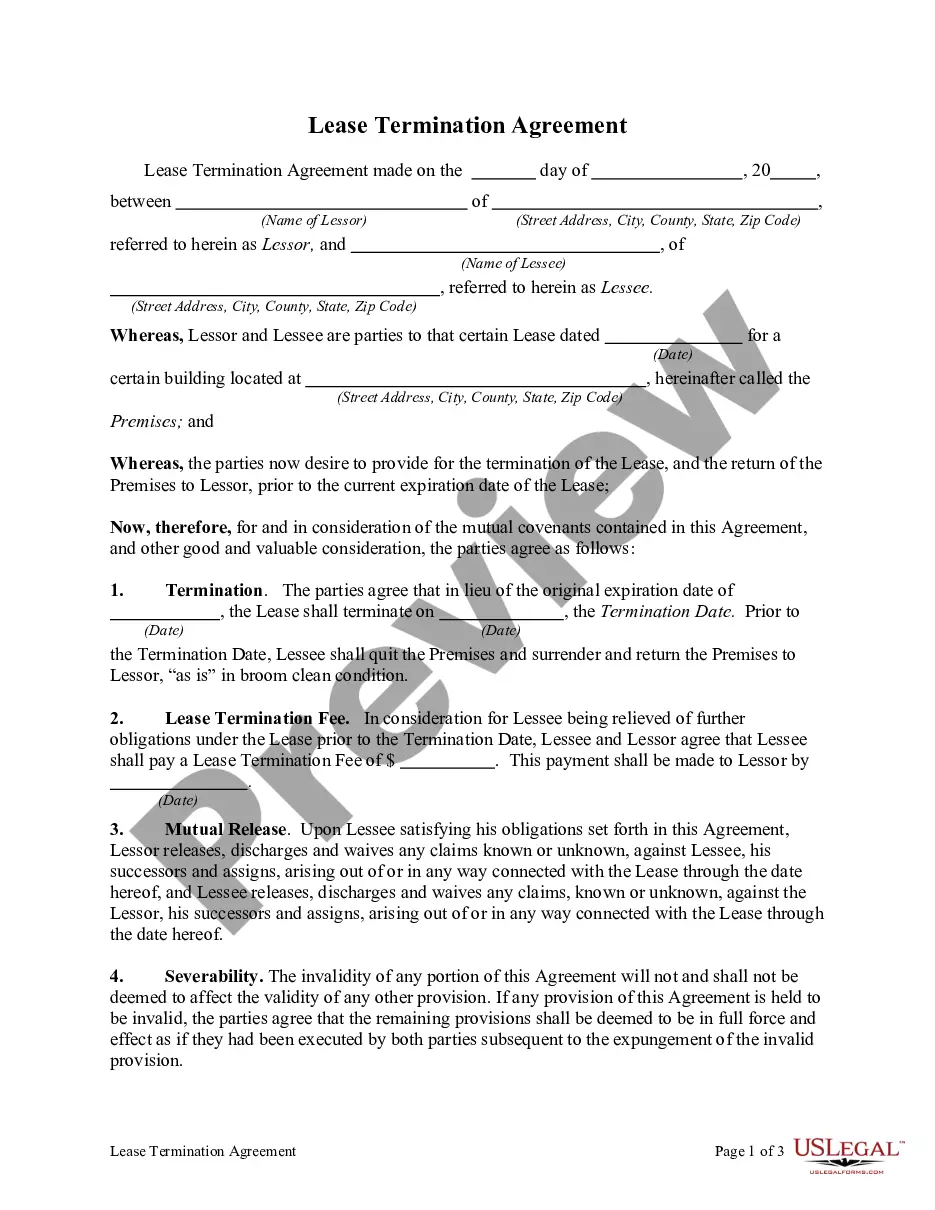
If the tenancy is month to month, without a set ending date to the lease, either the landlord or tenant may terminate the lease by giving 30 days written notice. No reason is required for the termination.
Mississippi is another landlord-friendly state, there's no limit for how much a landlord can charge for a security deposit, and landlords have 45 days to return the security deposit at the end of a tenancy.
Notice to terminate a week-to-week lease. A one-week written notice is required. Notice to terminate a month-to-month lease. 30-day written notice is required. Notice to terminate a yearly lease with no end date.
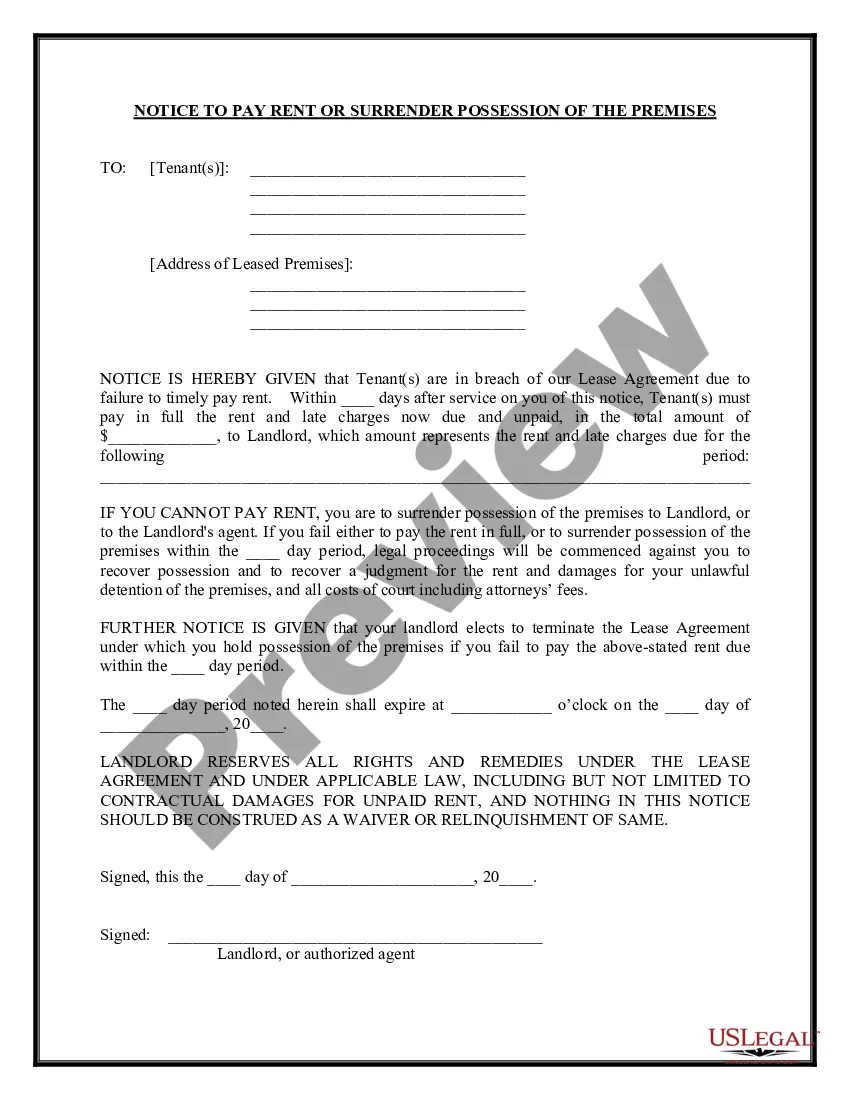
The landlord must give the tenant a three day notice, in writing, to evict for nonpayment of rent. The notice must state that the tenant must pay rent or vacate possession. If the tenant does not pay in three days, the landlord may file an eviction action in justice court and obtain an order of eviction.
Indiana. Indiana laws allow landlords to hold on to security deposits for 45 days to give them time to determine any damages caused by tenants. Colorado. Colorado is one of few states that allow landlords to access the rental property without an advance notice requirement. Georgia.
Vermont ranked first among the renter-friendly states, followed closely by Delaware and Hawaii who were tied for second place. Rhode Island, Arizona, D.C., Maine and Alaska Statutes also seem to take good care of their renters according to our analysis.
Withhold rent Mississippi landlord tenant law does not allow a tenant in Mississippi to withhold rent in response to habitability issues. Repair and deduct tenants have the right to repair the issue themselves and deduct a reasonable amount for the repair from the following month's rent.
Only in an emergency can a landlord enter the residence without consent. Consent to enter may be granted within the terms of the lease.The landlord has 45 days to return the deposit but may deduct rent owed or reasonable costs for cleaning the unit or repairing damage caused by the tenant.
A landlord cannot evict a tenant without an adequately obtained eviction notice and sufficient time. A landlord cannot retaliate against a tenant for a complaint. A landlord cannot forego completing necessary repairs or force a tenant to do their own repairs.A landlord cannot remove a tenant's personal belongings.