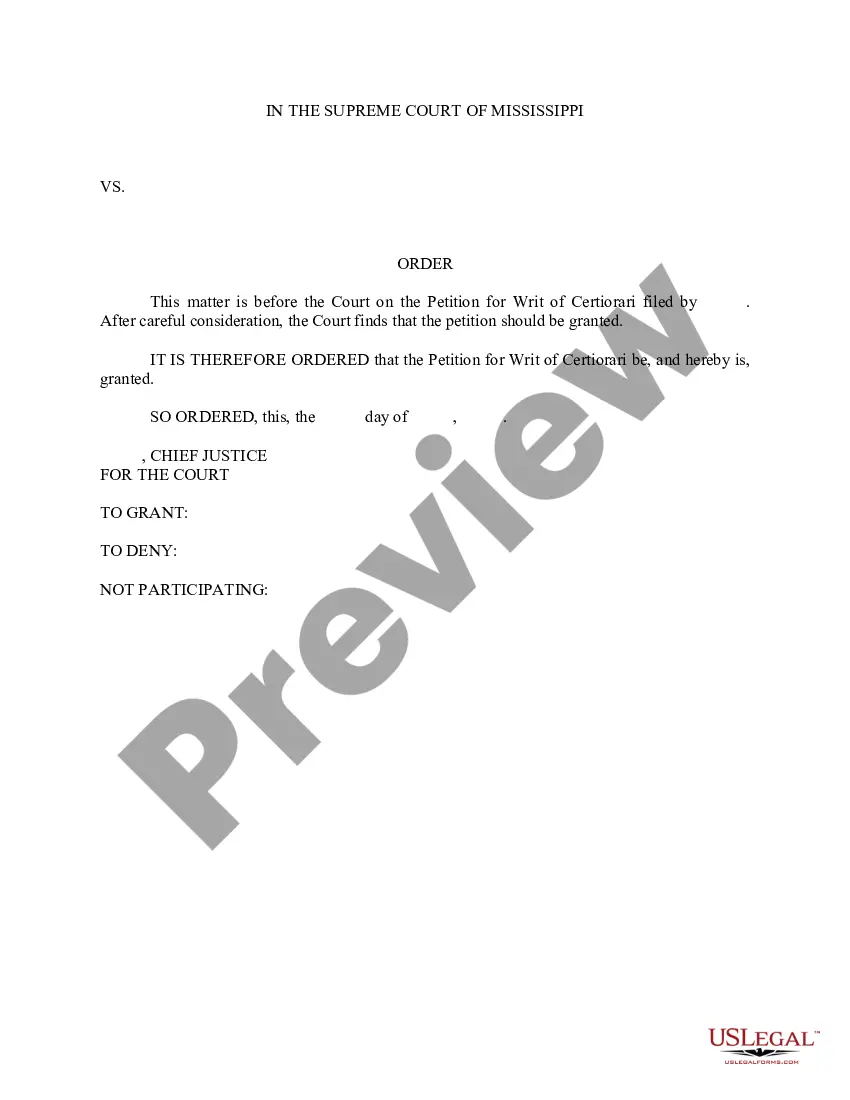
Mississippi Order Granting Writ of Certiorari
Overview of this form
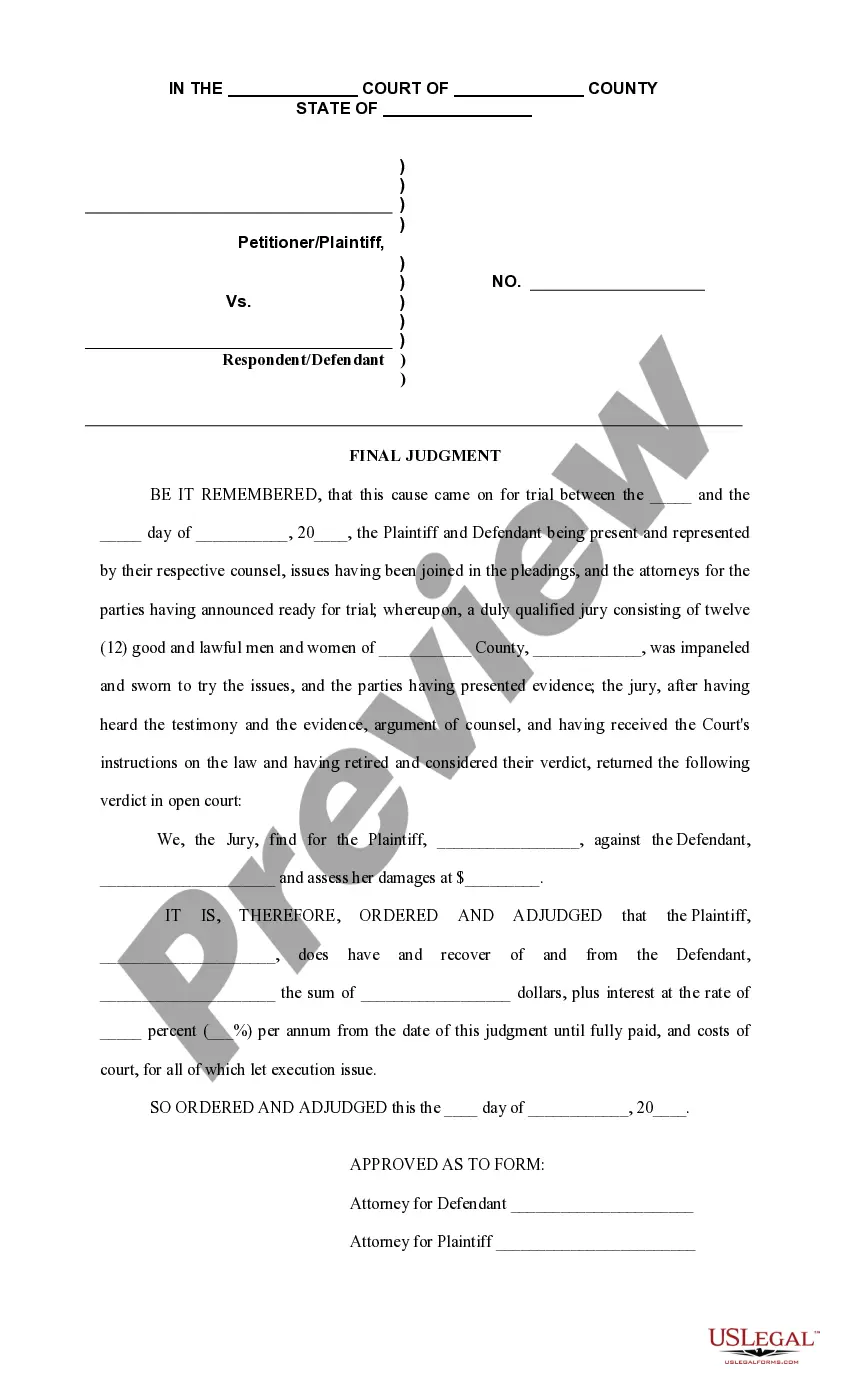
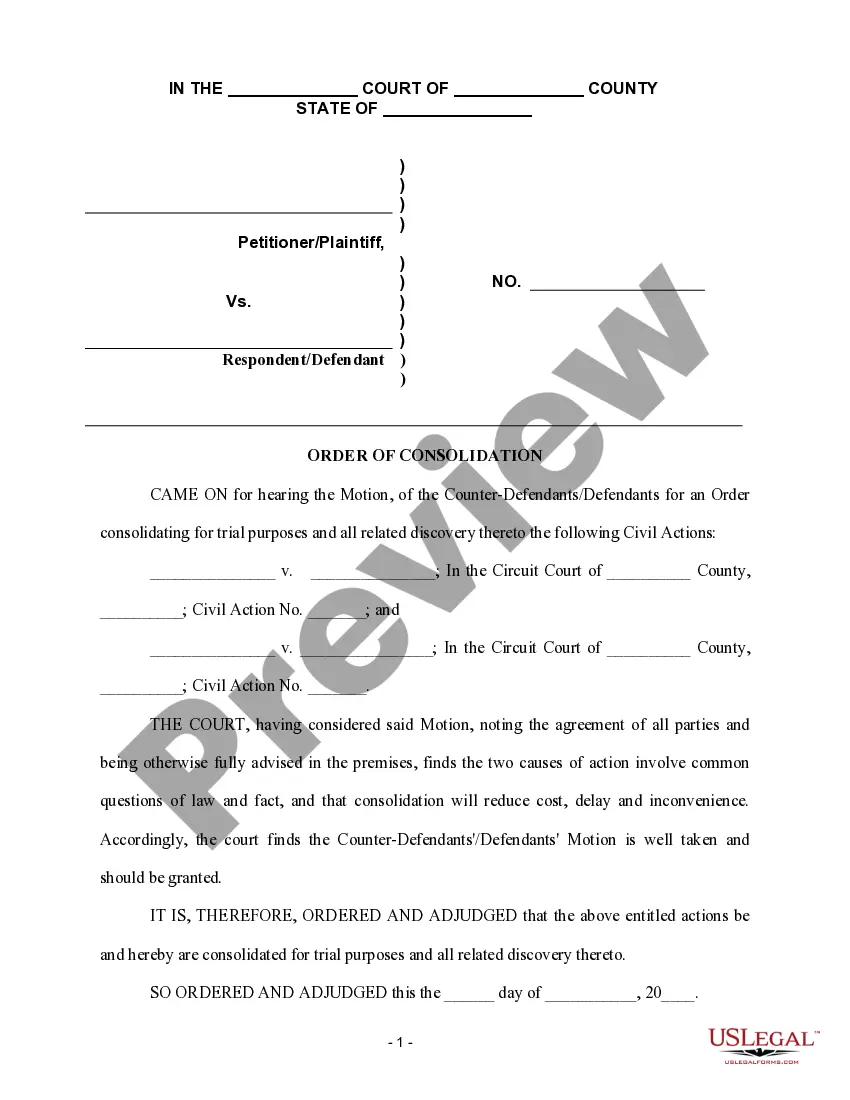
The Order Granting Writ of Certiorari is a legal document that directs a lower court to deliver its records to a higher court for review. This form is essential in cases where a party seeks a higher court's examination of a lower court's decision, typically in appeals. It distinguishes itself from other legal filings by its specific procedural focus on obtaining a review of lower court cases, which is critical for ensuring justice and adherence to legal standards.
Key components of this form
- Title: Clearly states the purpose of the document.
- Case Information: Identifies the parties involved and relevant case details.
- Grounds for Certiorari: Specifies the reasons for seeking the review.
- Signature Lines: Required signatures from the parties involved or their legal representatives.
- Date Filed: The date on which the form is submitted to the court.
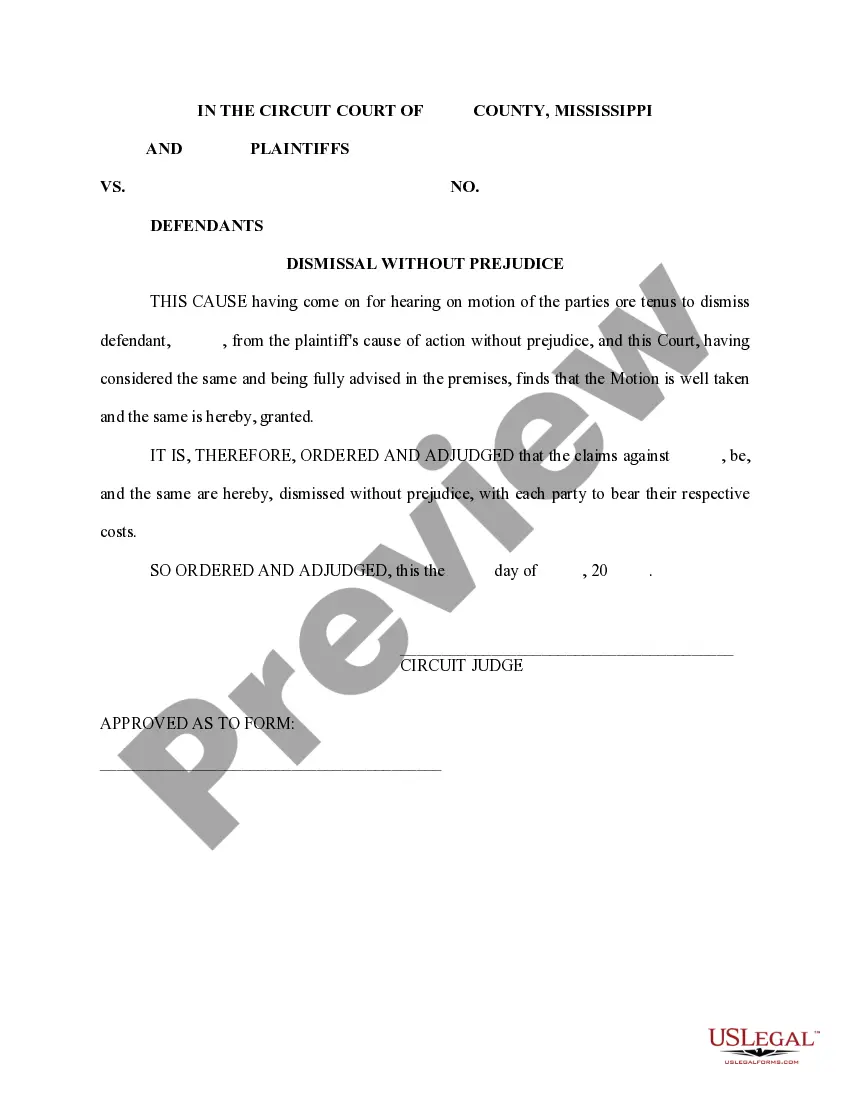
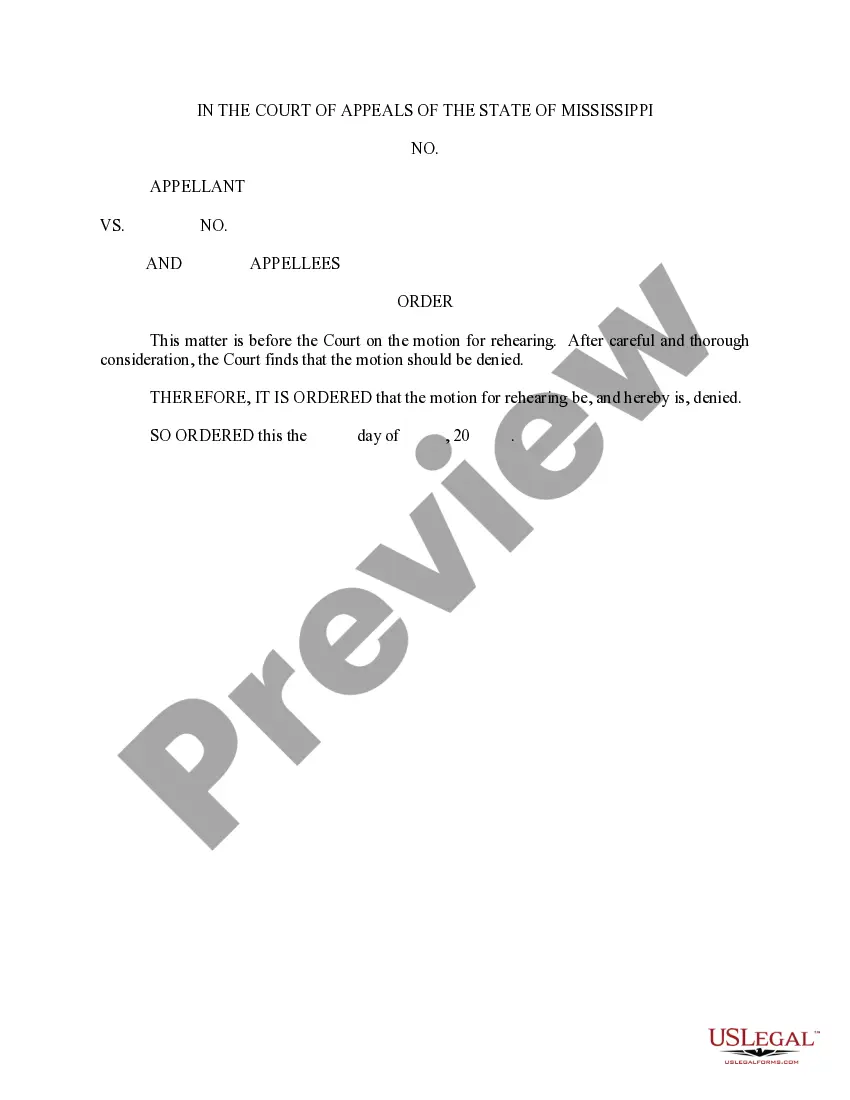
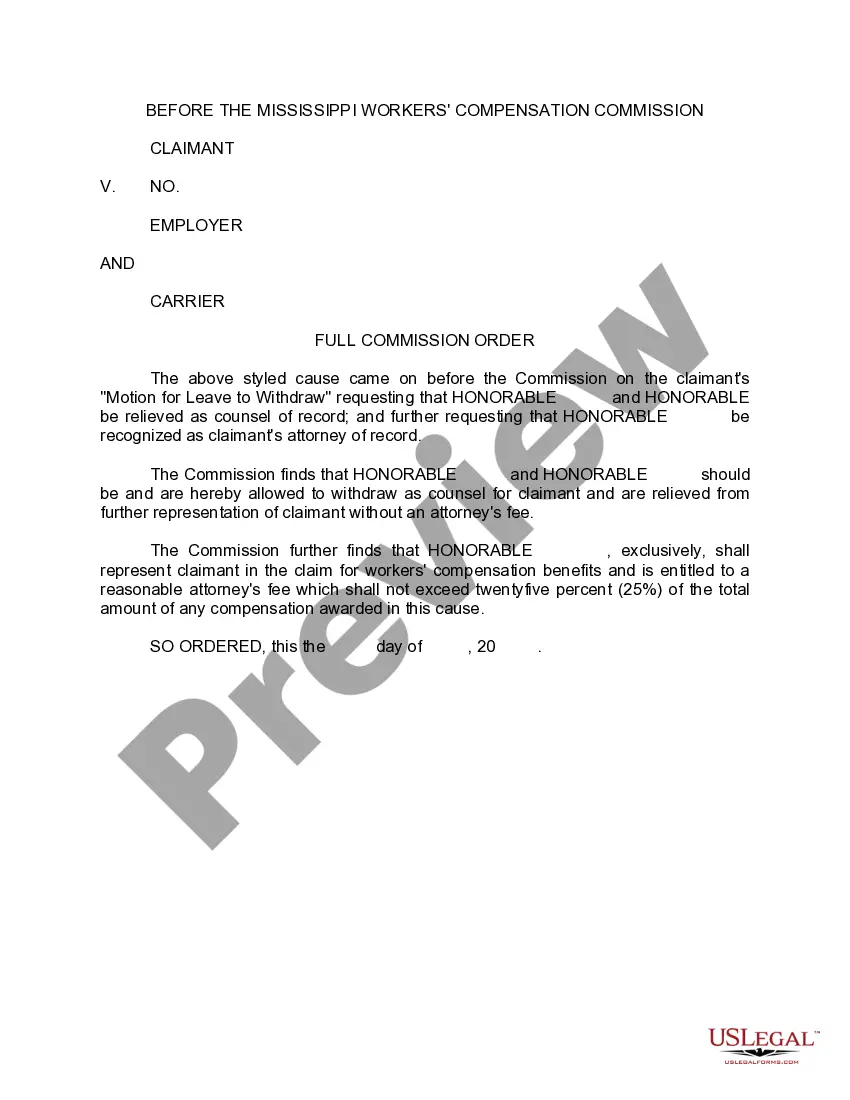
When to use this document
This form should be used when an individual or entity wishes to challenge a decision made by a lower court. Situations may include dissatisfaction with a ruling in a civil, criminal, or administrative matter. If you believe that the lower court made an error in interpreting the law or in the application of facts, this form is necessary to initiate a formal appeal process.
Who this form is for
- Individuals or legal entities seeking to appeal a lower court's decision.
- Attorneys representing clients in matters requiring higher court review.
- Parties involved in cases where procedural or substantive justice is questioned.
How to complete this form
- Identify the parties involved in the case.
- Provide details of the lower court's decision you are appealing.
- List the grounds for requesting the writ of certiorari.
- Fill in the date and sign the document.
- Submit the completed form to the appropriate higher court.
Notarization requirements for this form
In most cases, this form does not require notarization. However, some jurisdictions or signing circumstances might. US Legal Forms offers online notarization powered by Notarize, accessible 24/7 for a quick, remote process.
Get your form ready online
Our built-in tools help you complete, sign, share, and store your documents in one place.
Make edits, fill in missing information, and update formatting in US Legal Forms—just like you would in MS Word.
Download a copy, print it, send it by email, or mail it via USPS—whatever works best for your next step.
Sign and collect signatures with our SignNow integration. Send to multiple recipients, set reminders, and more. Go Premium to unlock E-Sign.
If this form requires notarization, complete it online through a secure video call—no need to meet a notary in person or wait for an appointment.
We protect your documents and personal data by following strict security and privacy standards.

Make edits, fill in missing information, and update formatting in US Legal Forms—just like you would in MS Word.

Download a copy, print it, send it by email, or mail it via USPS—whatever works best for your next step.

Sign and collect signatures with our SignNow integration. Send to multiple recipients, set reminders, and more. Go Premium to unlock E-Sign.

If this form requires notarization, complete it online through a secure video call—no need to meet a notary in person or wait for an appointment.

We protect your documents and personal data by following strict security and privacy standards.
Avoid these common issues
- Failing to clearly outline the grounds for certiorari.
- Not providing complete case information or party details.
- Missing signature or date before filing.
Benefits of completing this form online
- Convenience: Access and download the form anytime from anywhere.
- Editability: Personalize the template to fit the specific facts of your case quickly.
- Reliability: Ensure the form is compliant and drafted with legal standards in mind.
Looking for another form?


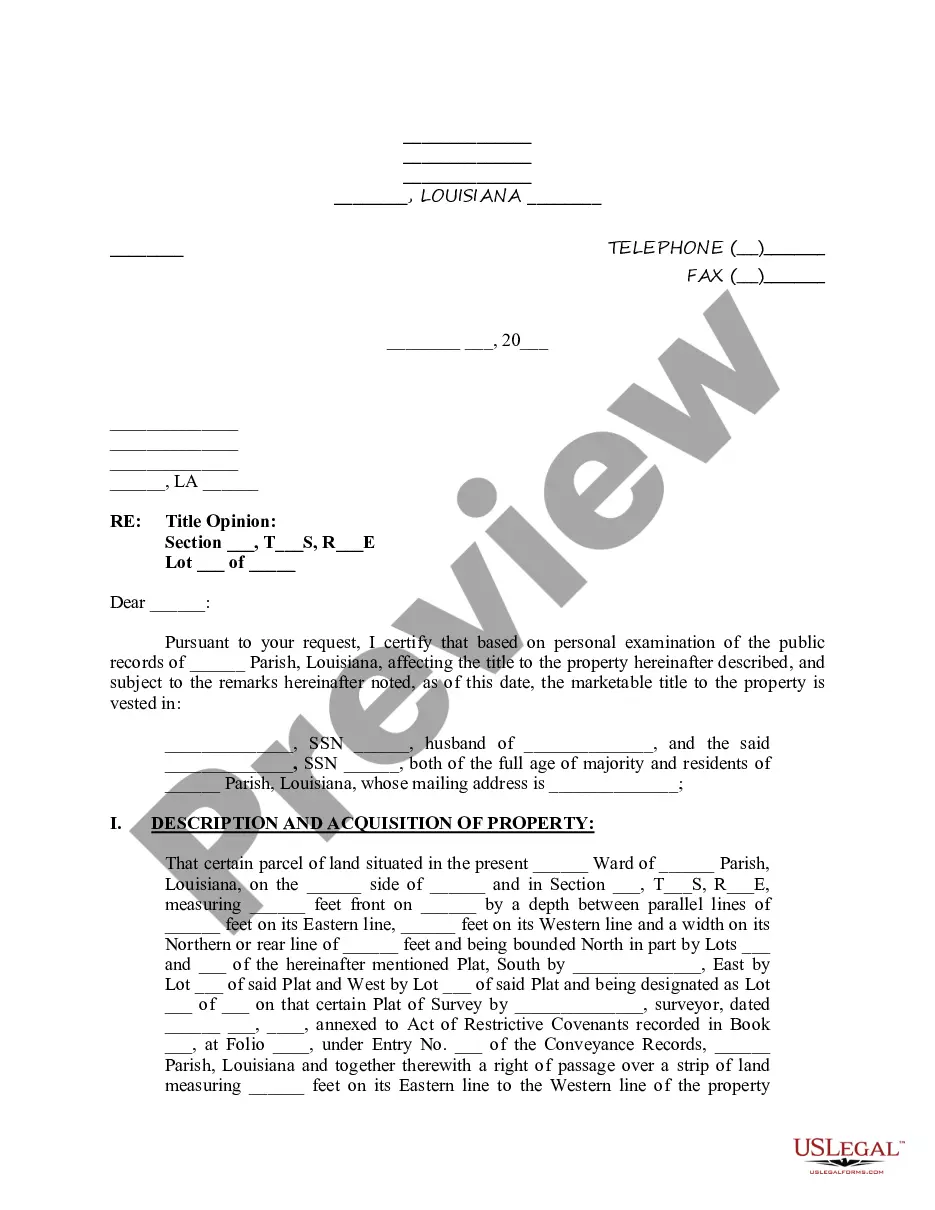
Form popularity
FAQ
There are basically 3 stages to a civil appeal in Mississippi. First, you file your notice of appeal and other preliminary documents. Critically, you MUST file your notice of appeal within 30 days of the trial court's final judgment. In some cases, you should file a post-trial motion within 10 days of the judgment.
Writs of Certiorari Parties who are not satisfied with the decision of a lower court must petition the U.S. Supreme Court to hear their case. The primary means to petition the court for review is to ask it to grant a writ of certiorari.According to these rules, four of the nine Justices must vote to accept a case.
The denial of a petition for writ of certiorari does not have any effect on the case. The lower court's judgment still stands. Further, denial of cert. is not a stamp of approval by the higher court of the judgment in the lower court.
The Writ of Certiorari Process Anyone dissatisfied with the ruling of the Court of Appeals can then ask the Supreme Court to review the Court of Appeals' decision and procedures.By granting the petition and issuing a writ of certiorari, the Court agrees to hear the case.
United States Supreme Court In the Supreme Court, if four Justices agree to review the case, then the Court will hear the case. This is referred to as "granting certiorari," often abbreviated as "cert." If four Justices do not agree to review the case, the Court will not hear the case.
Getting a case heard by the Supreme Court is considerably more difficult than gaining admission to Harvard. In 2010, there were 5,910 petitions for a Writ of Certiorari filed with the Supreme Court, but cert was granted for only 165 cases. That is a success rate of only 2.8%.
If your Writ of Certiorari is denied, it simply means that the appeals court decision agreed with the current law. While this may be hard to swallow, especially if you are on the wrong end of an expensive lawsuit, remember that the current law is not always in agreement with our sense of fairness.
A minimum of four of the nine justices is required to grant a writ of certiorari, referred to as the "rule of four". The court denies the vast majority of petitions and thus leaves the decision of the lower court to stand without review; it takes roughly 80 to 150 cases each term.