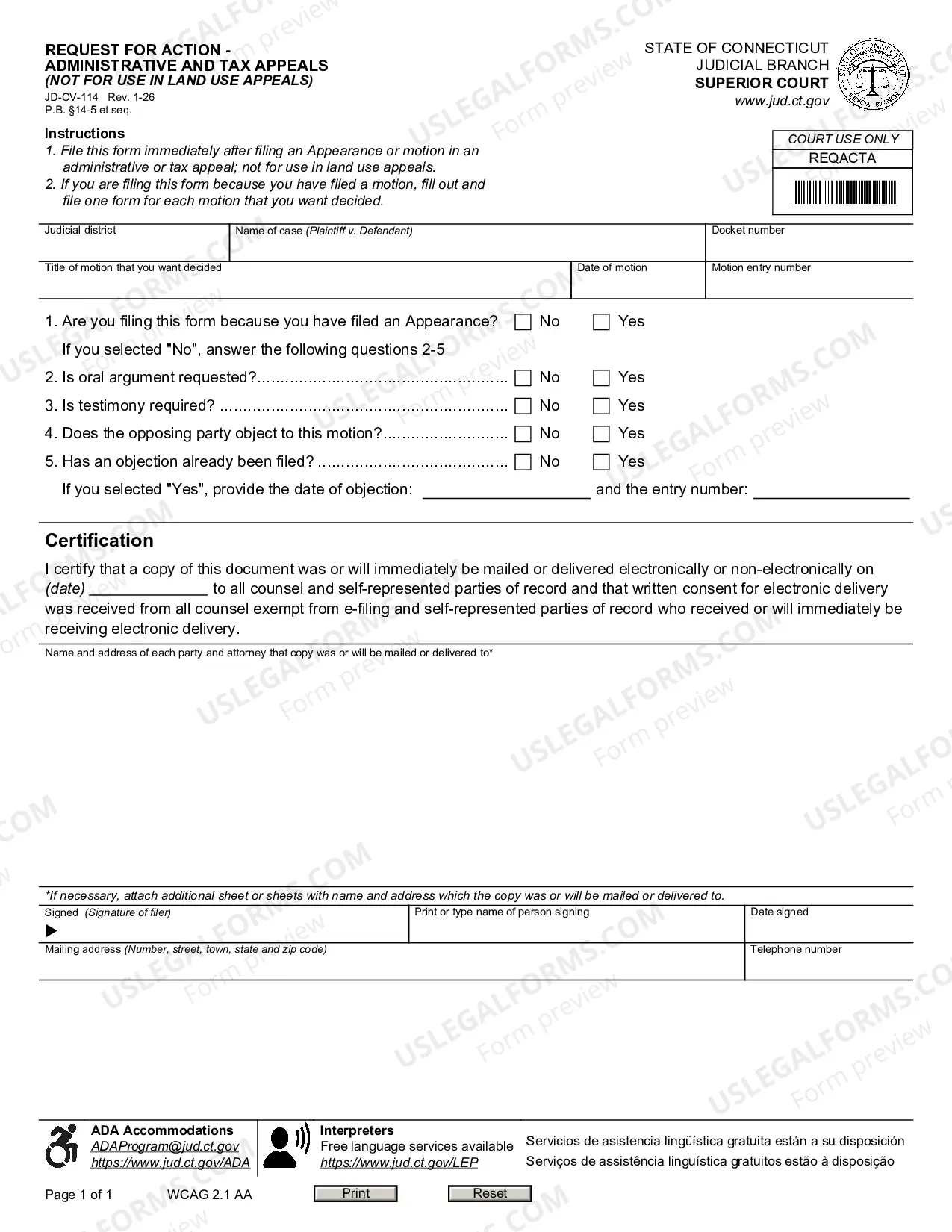
Mississippi Motion to Withdraw and Substitute Counsel
About this form
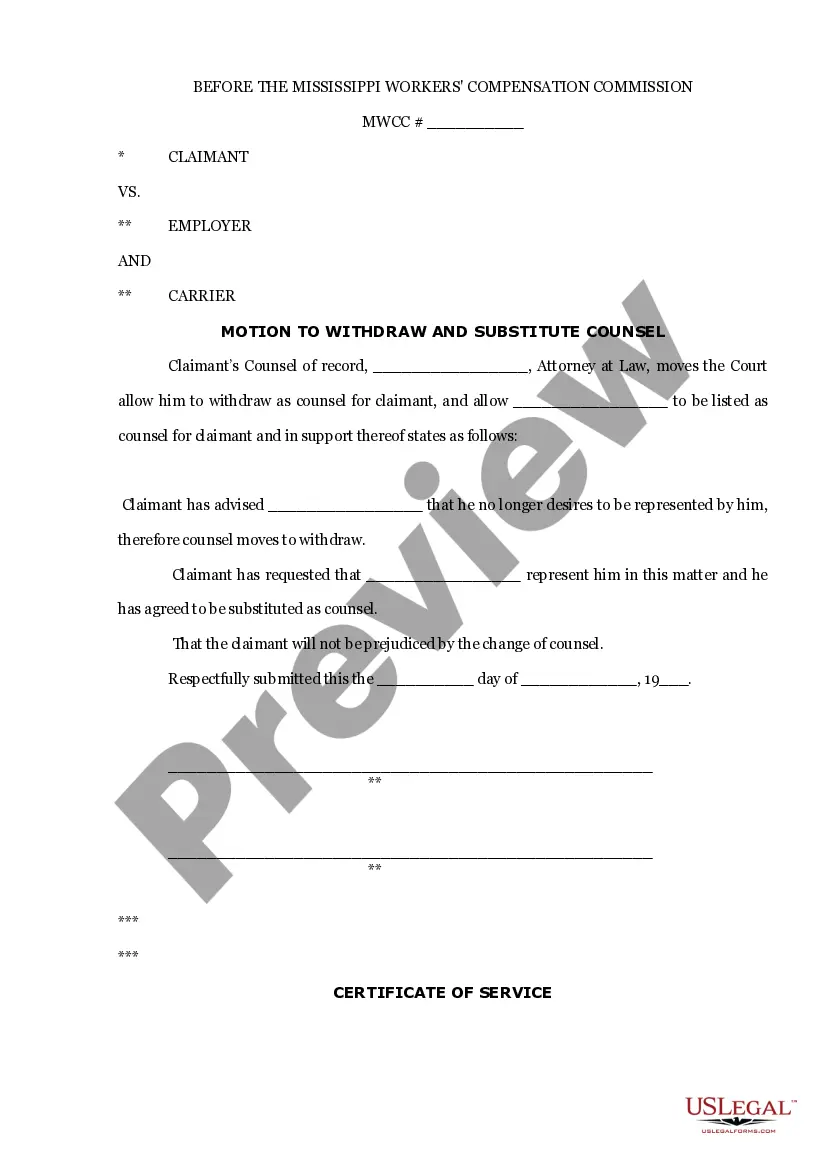
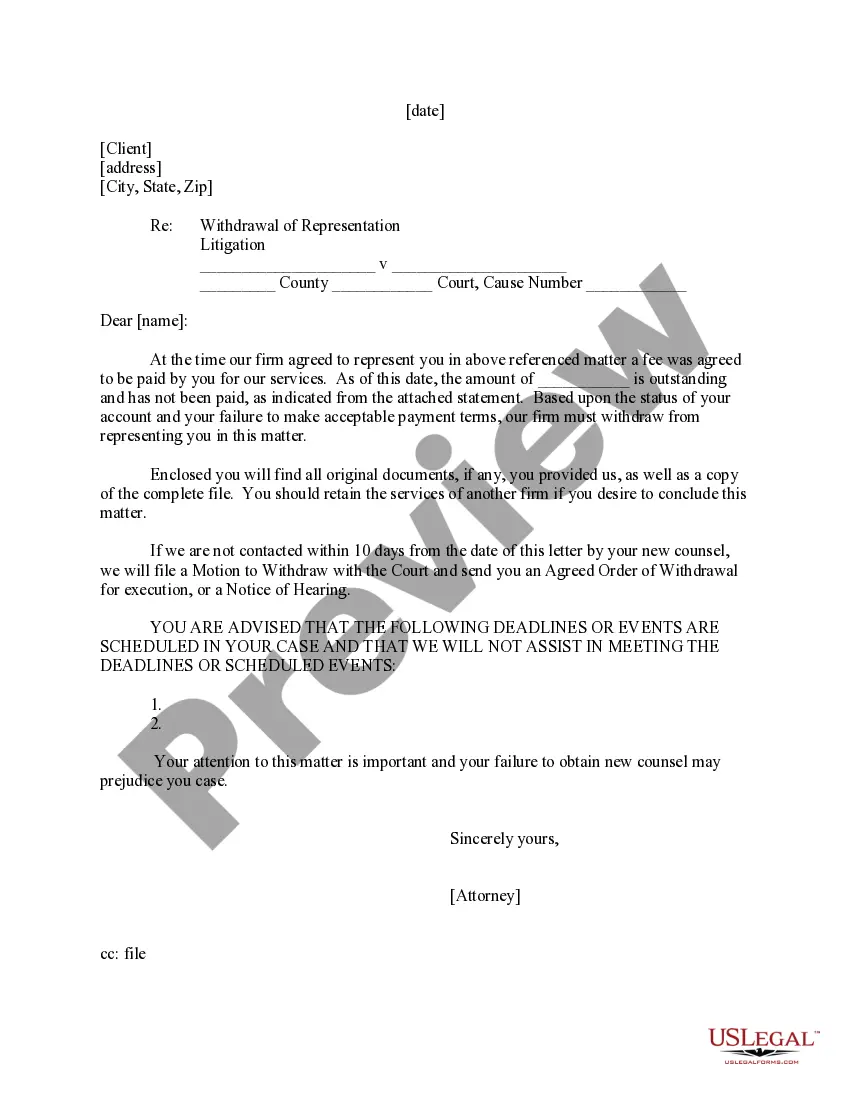
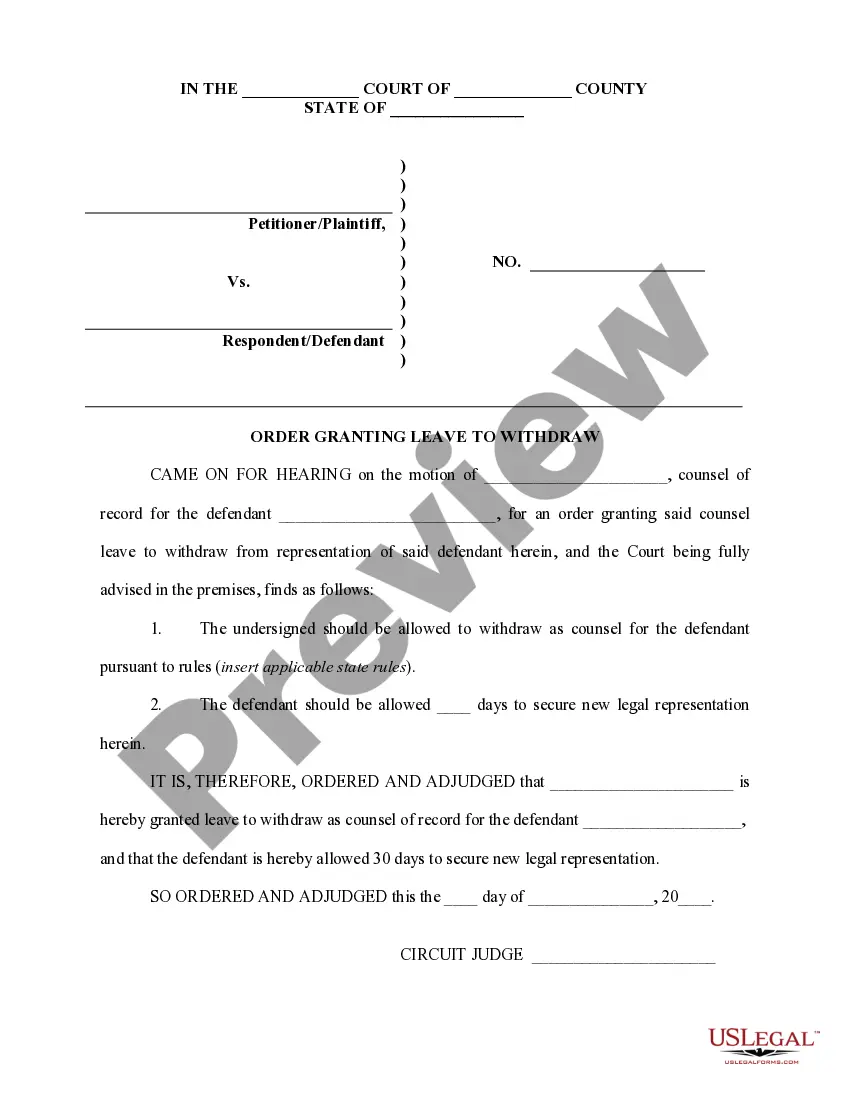
The Motion to Withdraw and Substitute Counsel is a legal document used to request the court's permission for an attorney to withdraw from representing a client and to allow another attorney to take their place. This form serves the specific purpose of notifying the court of changes in legal representation, ensuring that the claimant's rights are safeguarded during this transition. It differs from other motions in that it specifically focuses on alterations to legal counsel rather than broader case-related requests.
Main sections of this form
- Claimant's counsel information: Includes the current attorney's name and the new attorney's name.
- Withdrawal request: A statement explaining the claimant's desire to change legal representation.
- Substitution request: A section confirming the new attorney has agreed to represent the claimant.
- No prejudice clause: Assurance that the claimant will not suffer disadvantages due to the change of counsel.
- Certification of service: A section indicating that the motion has been properly served to related parties.

Common use cases
This form should be utilized when a client wishes to change their legal representation in a case. Scenarios may include situations where the claimant is dissatisfied with their current attorney, needs a lawyer with a different specialization, or if the current attorney is unable to continue representation due to unforeseen circumstances. It is essential to formalize such changes to maintain clear communication with the court and protect the interests of the claimant.
Who should use this form
This form is intended for:
- Claimants in a legal proceeding who wish to change their attorney.
- Attorneys representing claimants who are seeking to withdraw from a case.
- Newly appointed attorneys taking over the legal representation on behalf of the claimant.
Completing this form step by step
- Identify the parties involved: Fill in the names of the claimant, current counsel, and new counsel.
- Clearly state the reason for withdrawal: Include a brief explanation of the claimant's desire for a new attorney.
- Include a statement of agreement: Ensure the new attorney has accepted the representation and is listed in the necessary sections.
- Sign and date the motion: The current attorney must sign and provide the date of the motion.
- Complete the certificate of service: Indicate how and when other relevant parties were notified of the changes.
Is notarization required?
This form does not typically require notarization unless specified by local law. Make sure to check for any specific requirements in your jurisdiction to ensure compliance.
Get your form ready online
Our built-in tools help you complete, sign, share, and store your documents in one place.
Make edits, fill in missing information, and update formatting in US Legal Forms—just like you would in MS Word.
Download a copy, print it, send it by email, or mail it via USPS—whatever works best for your next step.
Sign and collect signatures with our SignNow integration. Send to multiple recipients, set reminders, and more. Go Premium to unlock E-Sign.
If this form requires notarization, complete it online through a secure video call—no need to meet a notary in person or wait for an appointment.
We protect your documents and personal data by following strict security and privacy standards.

Make edits, fill in missing information, and update formatting in US Legal Forms—just like you would in MS Word.

Download a copy, print it, send it by email, or mail it via USPS—whatever works best for your next step.

Sign and collect signatures with our SignNow integration. Send to multiple recipients, set reminders, and more. Go Premium to unlock E-Sign.

If this form requires notarization, complete it online through a secure video call—no need to meet a notary in person or wait for an appointment.

We protect your documents and personal data by following strict security and privacy standards.
Common mistakes to avoid
- Failing to include the new attorney's information fully.
- Not properly signing the motion before submission.
- Neglecting to notify all relevant parties about the change in representation.
- Leaving out the reason for withdrawal, which is crucial for the court's understanding.
Benefits of completing this form online
- Convenience: Download and fill out the form at your convenience.
- Editability: Make adjustments easily to tailor the form to your specific situation.
- Reliability: Access a template drafted by licensed attorneys to ensure legal adequacy.
Legal use & context
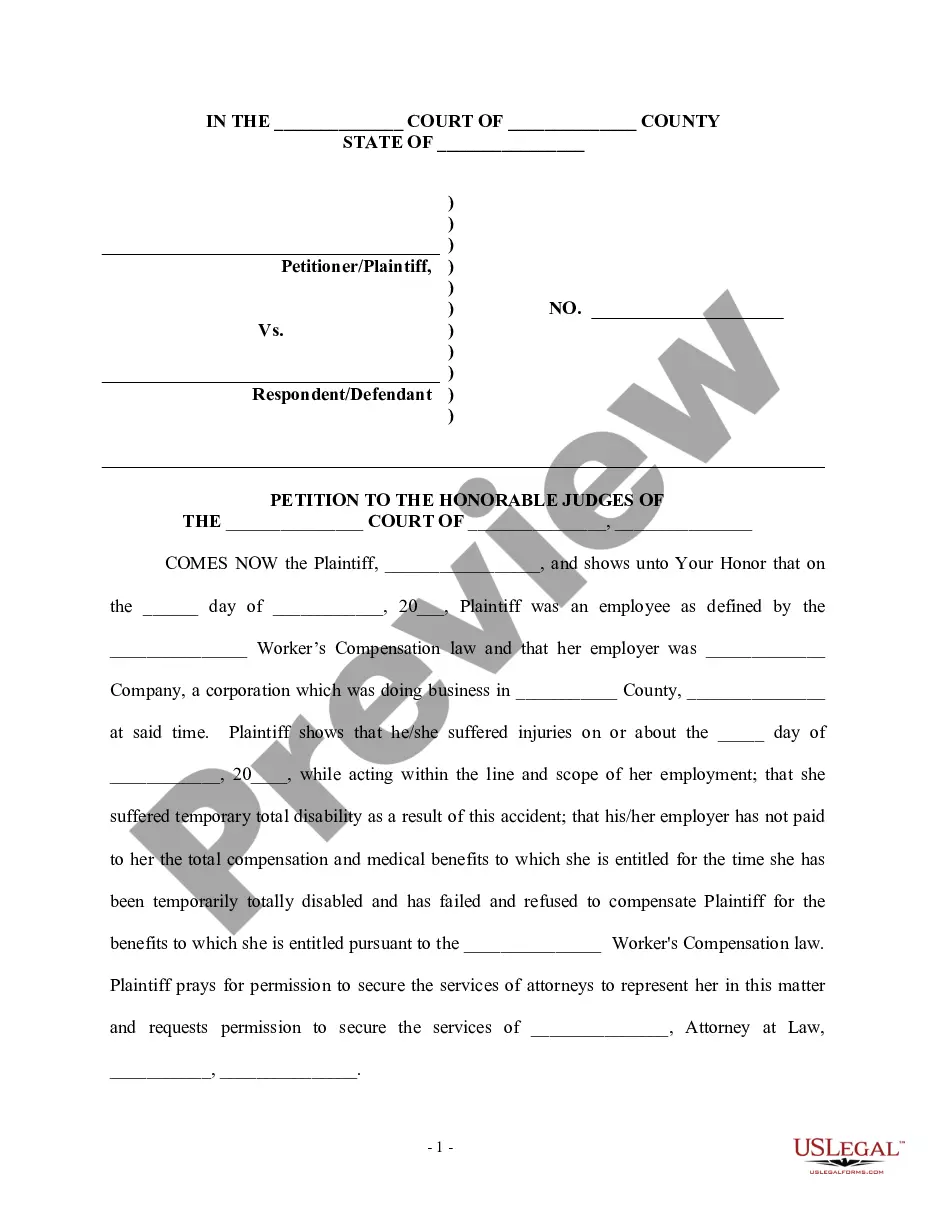
- This motion is legally recognized in the Mississippi Workers Compensation Commission and must be properly filed to effectuate the change of counsel.
- Failure to follow correct procedures may result in delays or rejection by the court.
- Parties should retain copies of all documents submitted for their records.
Looking for another form?

Form popularity
FAQ
A motion to withdraw is a document an attorney files with the court when that attorney no longer wishes to represent his client.
Withdrawal from representation, in United States law, occurs where an attorney terminates a relationship of representing a client.Where litigation has been filed and an attorney is representing the client in court, permission of the court must usually be sought in support of an attorney's withdrawal.
It is difficult for a lawyer to withdraw from representing a client. Judges have discretion in appointing guardian ad litem or indigent cases to attorneys. Judges have discretion in appointing guardian ad litem or indigent cases to attorneys.
(1) Substitution if the Claim Is Not Extinguished. If a party dies and the claim is not extinguished, the court may order substitution of the proper party. A motion for substitution may be made by any party or by the decedent's successor or representative.A statement noting death must be served in the same manner.
(a) Notice of withdrawal. An attorney may withdraw from the case by filing with the court and serving on all parties a notice of withdrawal. The notice of withdrawal shall include the address of the attorney's client and a statement that no motion is pending and no hearing or trial has been set.
The answer depends. If the attorney is withdrawing due to your inability to pay or a difference in opinion as to bow the case should be presented should not have a negative affect on you. However, if the attorney withdraws for ethical reasons that may look questionable.
Lawyers can withdraw based on the fact their client refuses to be truthful, refuses to follow the attorney's advice, demands to pursue an unethical course of action, demands unrealistic results, desires to mislead the Court, refuses to cooperate with their counsel as well as countless other reasons.
A Motion for Substitution may be made by any party or by the descendant's successor or representative. It permits a party to substitute into an adversary proceeding or contested matter as a party if any of the following circumstances exist in a case:If a party dies and the claim is not extinguished.
Anyone can file the Substitution of Attorney form with the court. There is no court rule or code section mandating who should file it.