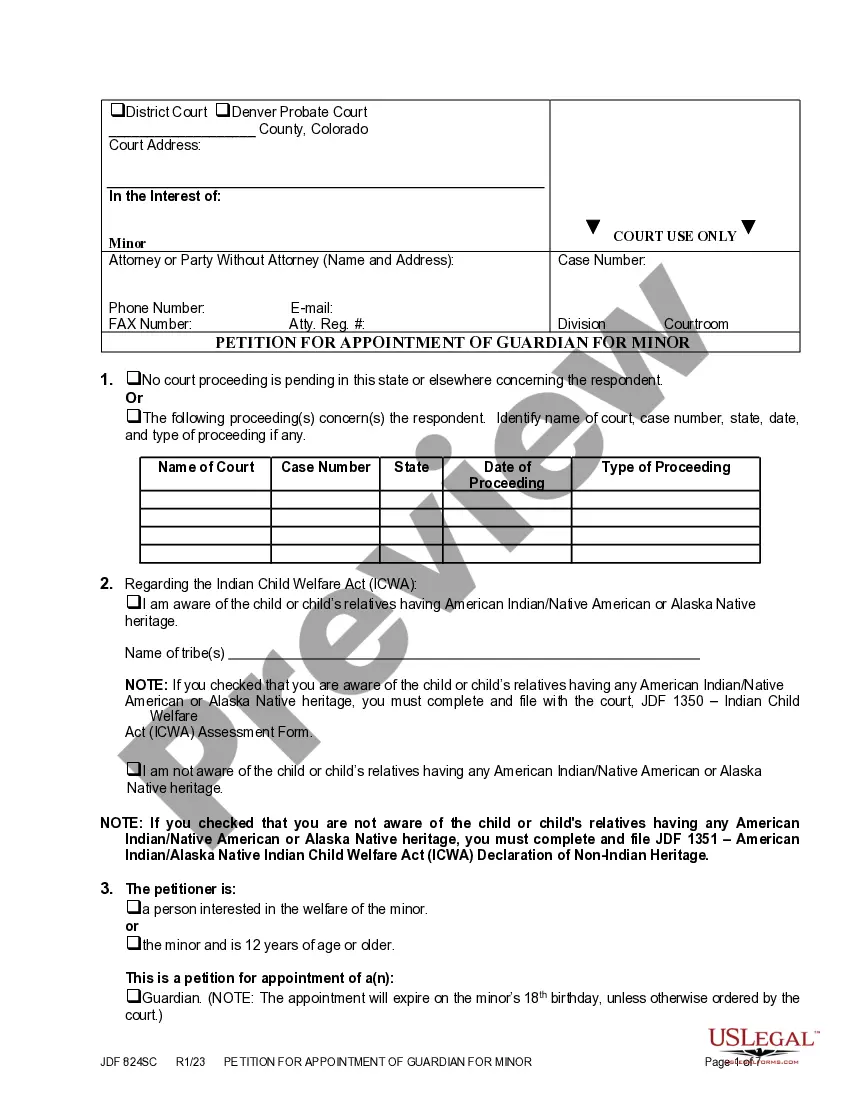
Mississippi Motion for Judgment Notwithstanding the Verdict, or in the Alternative, for a New Trial
Understanding this form
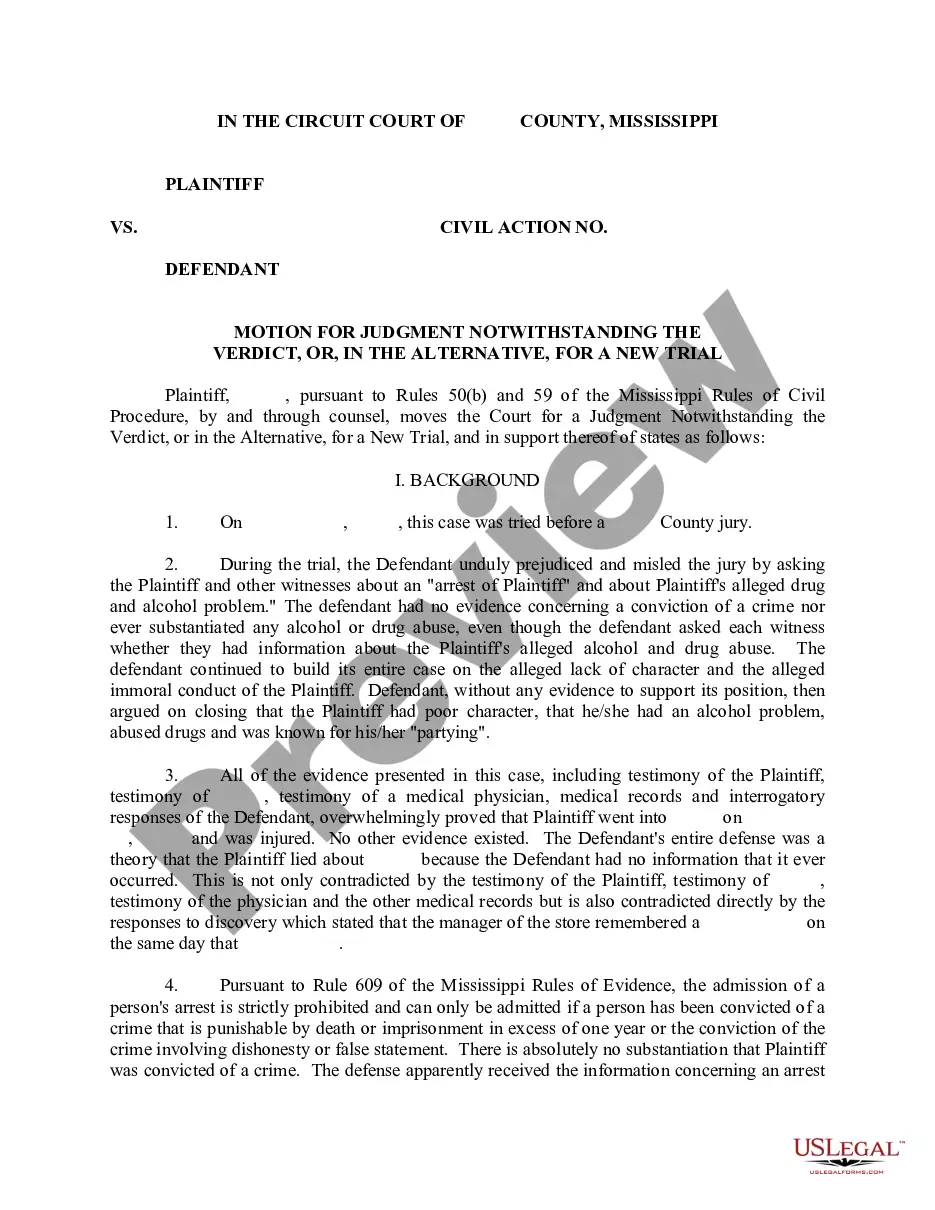
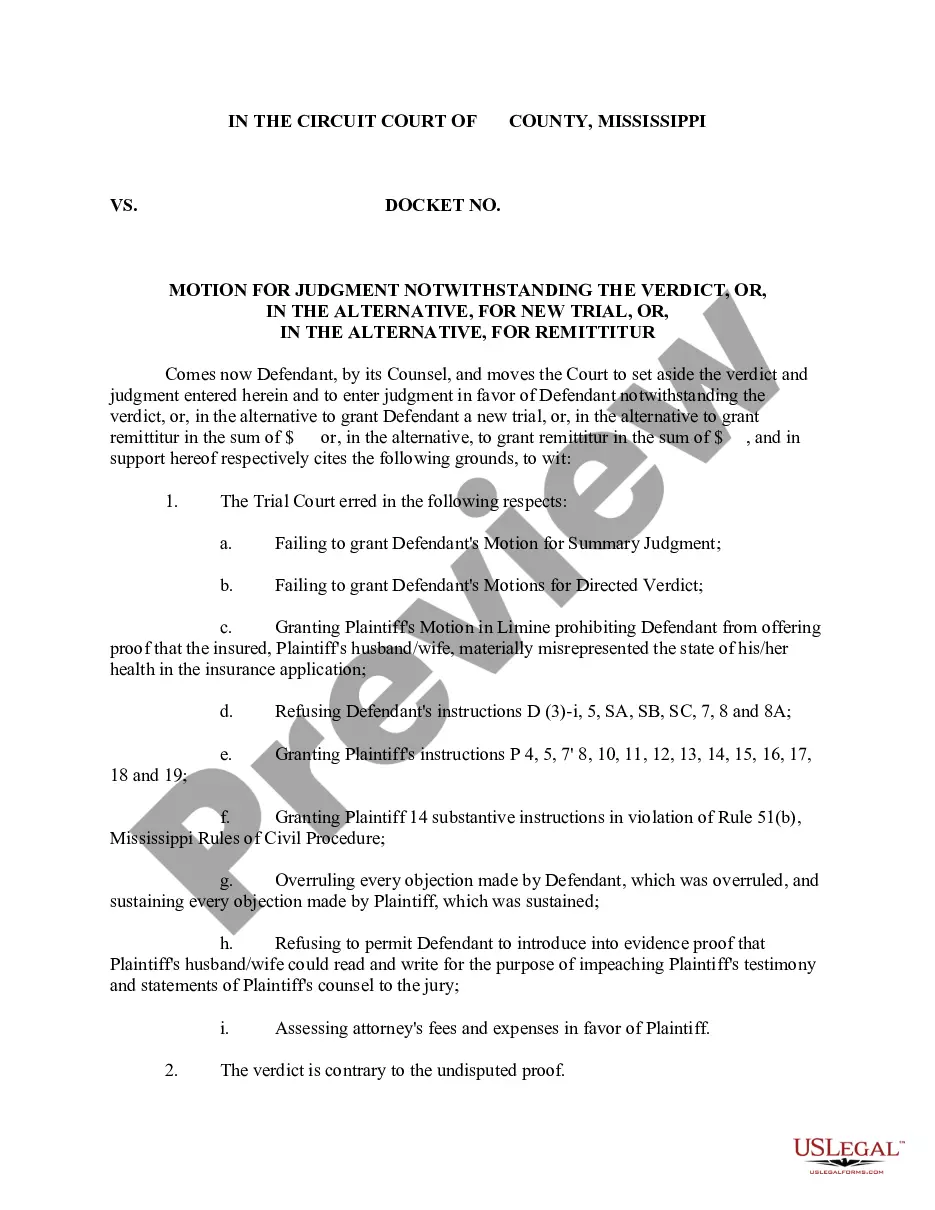
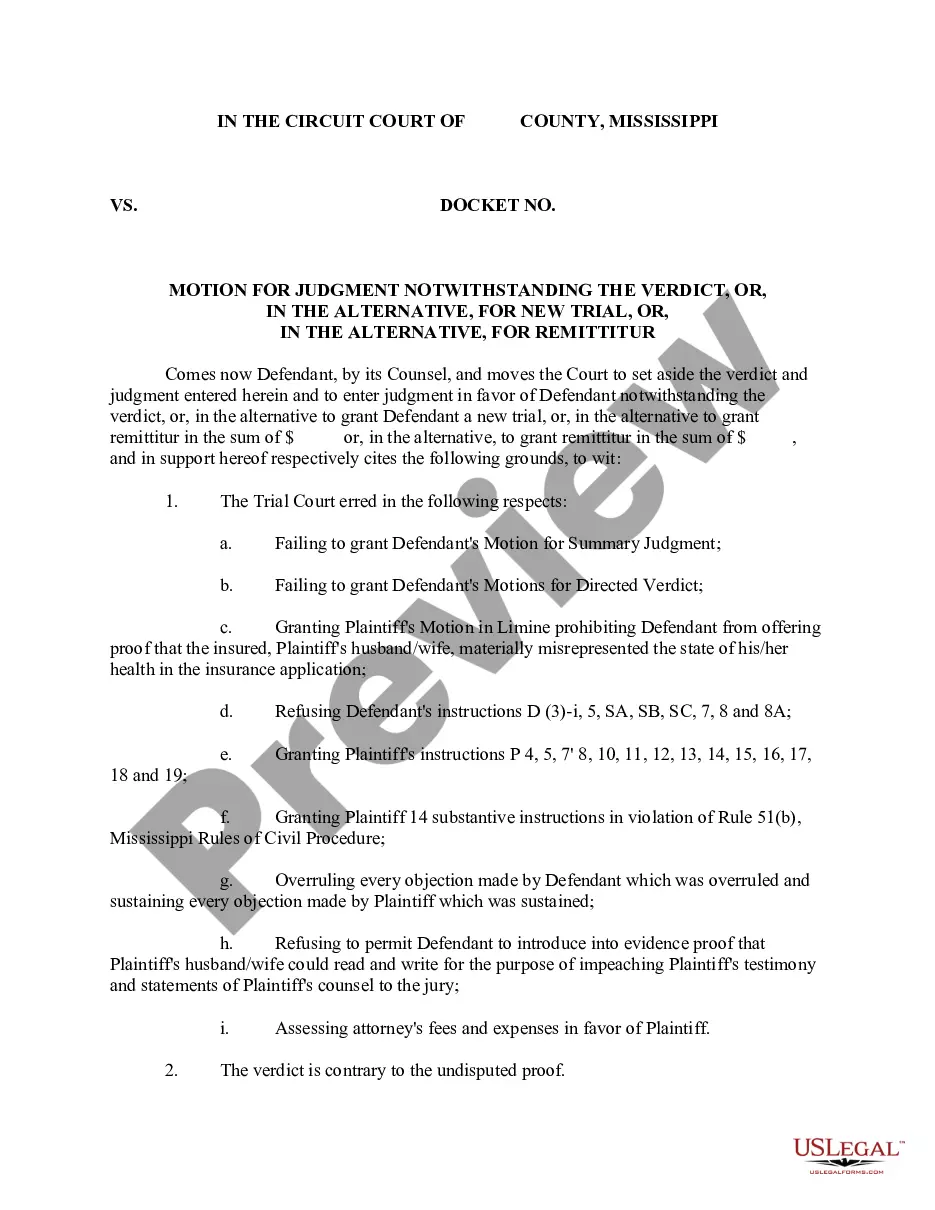
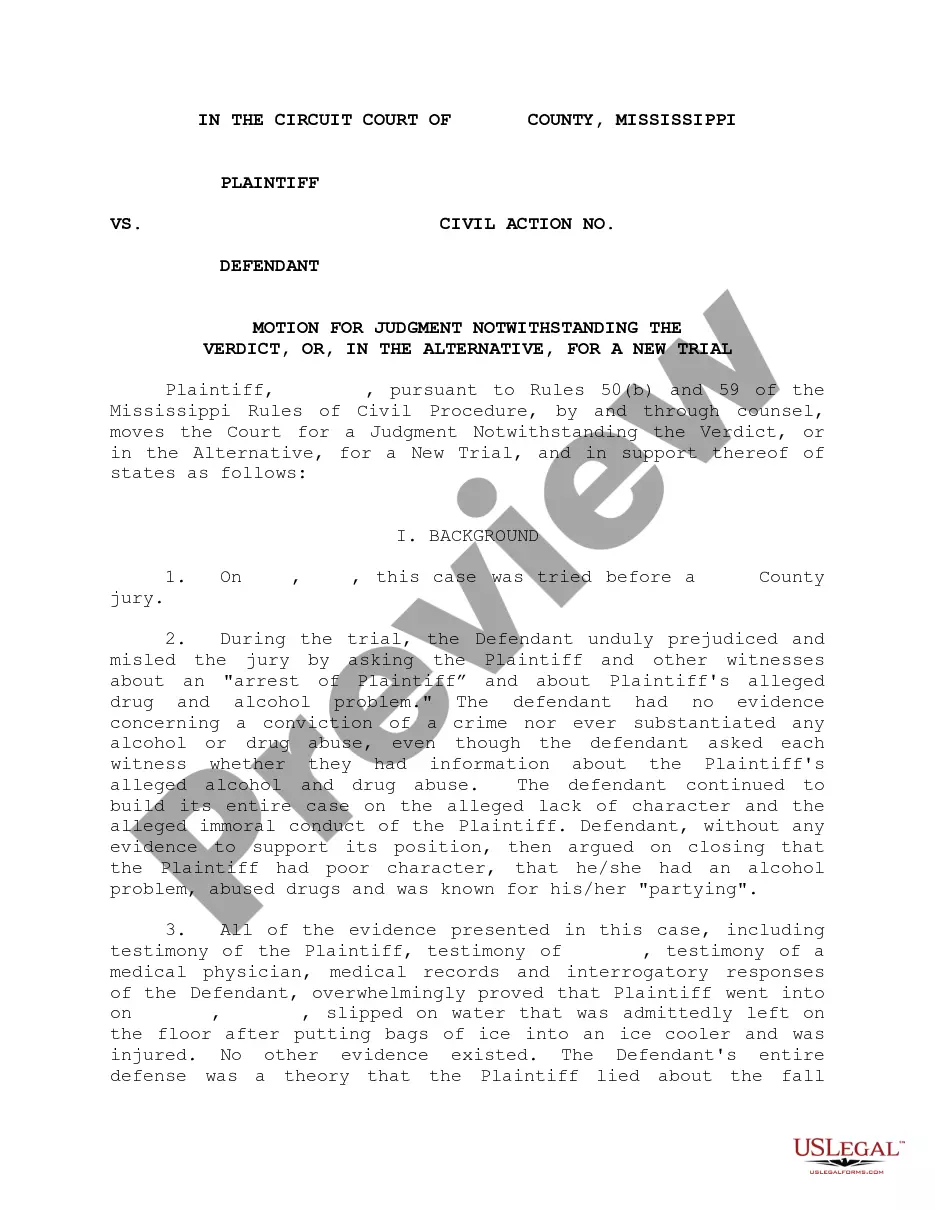
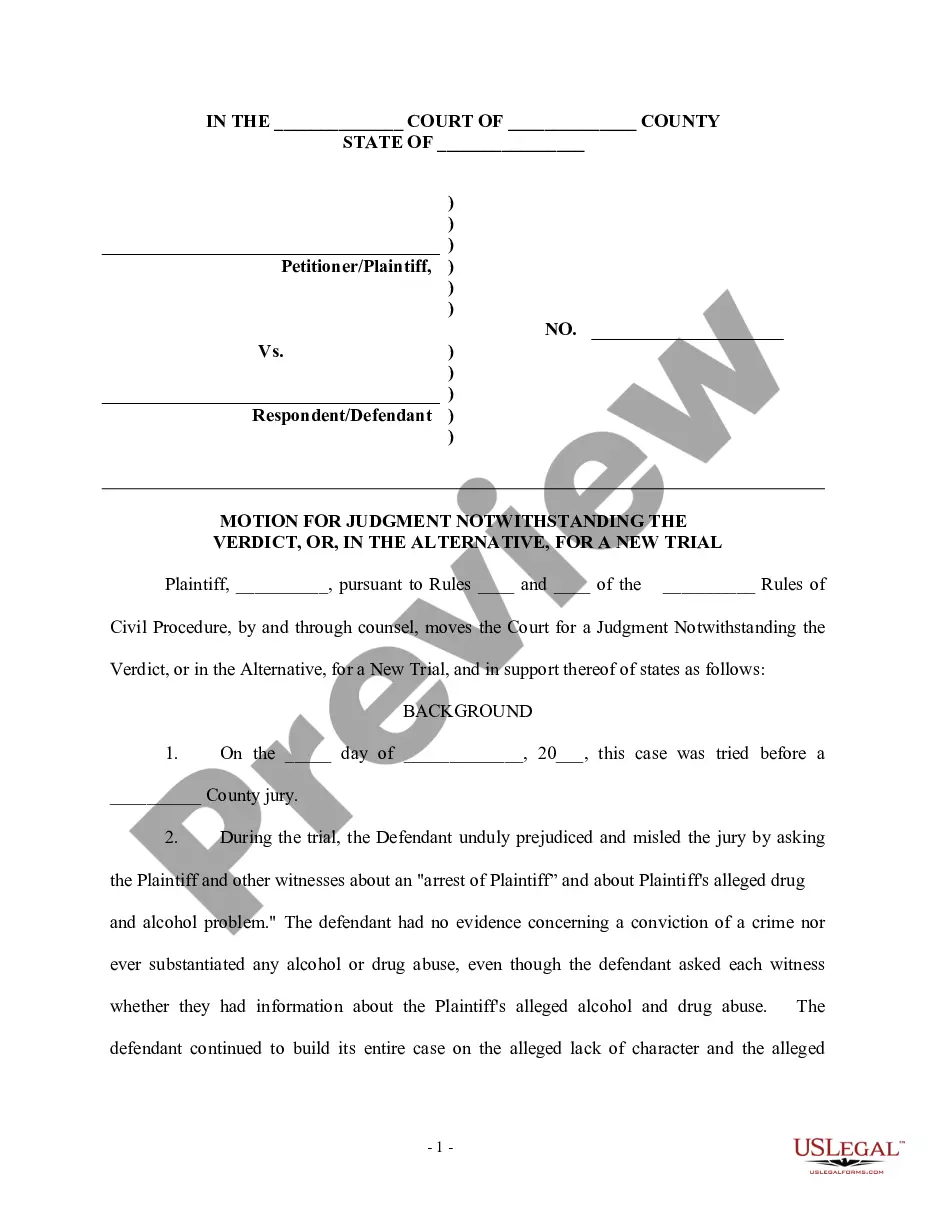
The Motion for Judgment Notwithstanding the Verdict, or in the Alternative, for a New Trial is a legal document that allows a party to request the court to overturn a jury's verdict or, alternatively, to order a new trial. This form is essential for challenging a verdict when it is believed that the outcome was unjust or based on flawed reasoning or evidence. Unlike other motions, this particular motion specifically addresses issues related to jury determinations and procedural fairness, making it crucial in civil litigation scenarios.
Key components of this form
- Introduction of the motion identifying specific grounds for the request.
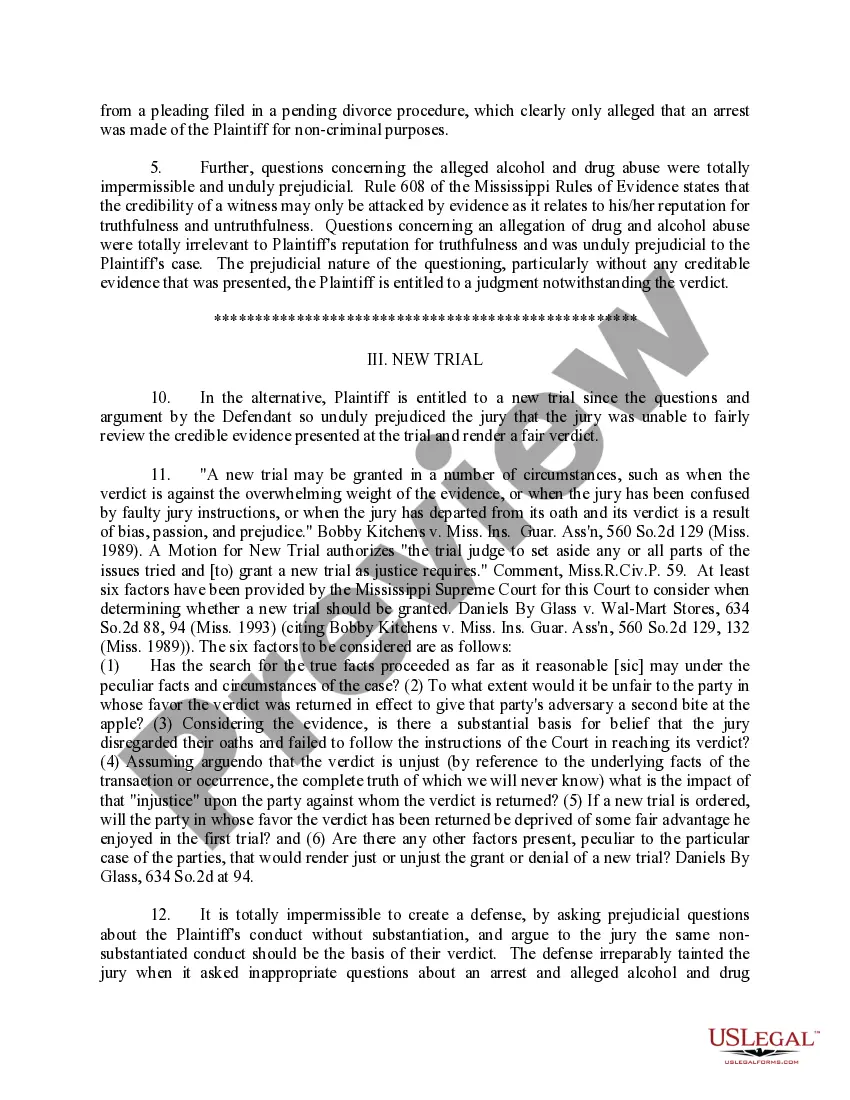
- Arguments challenging the jury's verdict, citing relevant legal standards.
- Reference to precedents and legal rules supporting the motion.
- Assertion of the necessity for a fair trial and unbiased jury assessment.
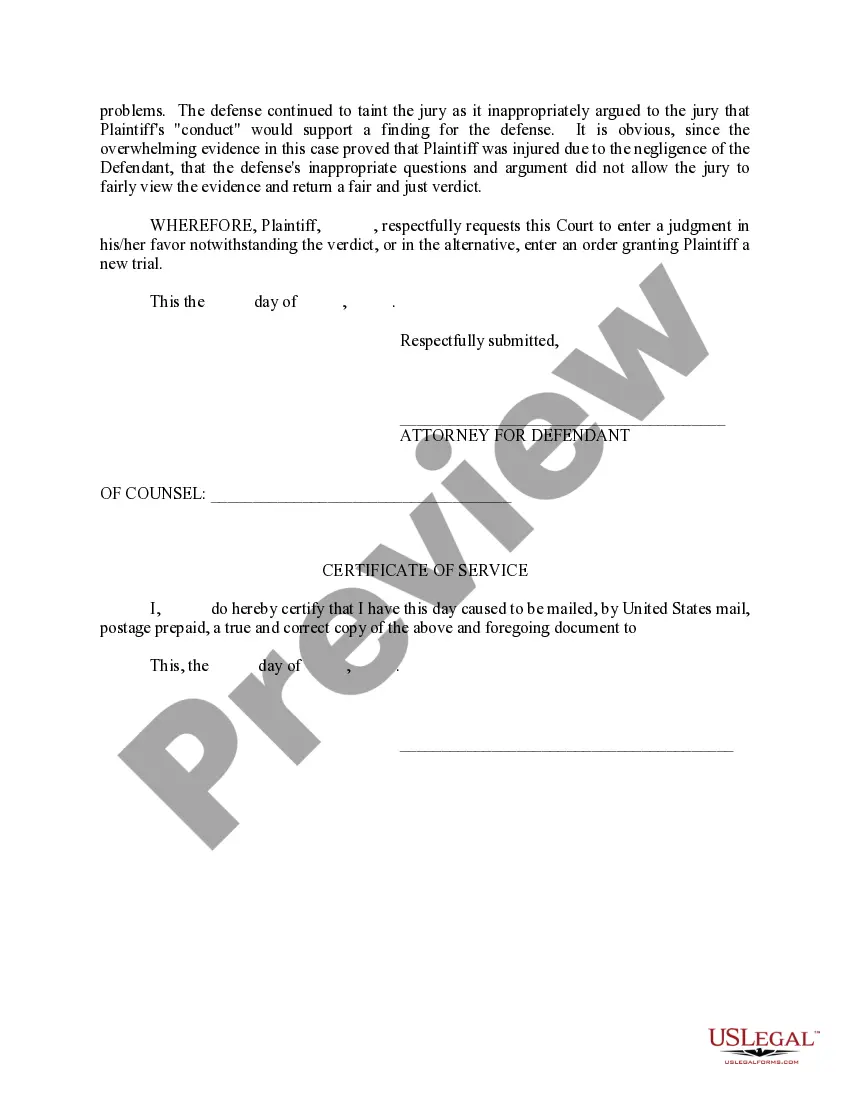
- Conclusion requesting specific relief, either setting aside the verdict or ordering a new trial.

When to use this document
This form is typically used after a jury verdict in a civil case that one party believes is incorrect. Situations may include instances where improper evidence was presented, jurors were influenced by outside factors, or the verdict contradicted the overwhelming weight of the evidence. It is crucial for ensuring that the fundamental principles of justice and fairness are maintained, especially when a party feels disadvantaged by the trial's outcome.
Intended users of this form
- Individuals or legal representatives involved in civil litigation seeking to challenge a jury verdict.
- Parties who believe their rights to a fair trial were compromised.
- Attorneys representing clients in cases where a motion for new trial is warranted.
- Plaintiffs or defendants looking to secure justice in situations of blatant bias or procedural error.
Instructions for completing this form
- Identify the parties involved in the case.
- State the specific grounds for requesting a judgment notwithstanding the verdict or a new trial.
- Cite relevant laws or case precedents that support your motion.
- Clearly express the perceived unfairness or errors that have occurred during the trial.
- Sign and date the motion before submission to the court.
Is notarization required?
In most cases, this form does not require notarization. However, some jurisdictions or signing circumstances might. US Legal Forms offers online notarization powered by Notarize, accessible 24/7 for a quick, remote process.
Get your form ready online
Our built-in tools help you complete, sign, share, and store your documents in one place.
Make edits, fill in missing information, and update formatting in US Legal Forms—just like you would in MS Word.
Download a copy, print it, send it by email, or mail it via USPS—whatever works best for your next step.
Sign and collect signatures with our SignNow integration. Send to multiple recipients, set reminders, and more. Go Premium to unlock E-Sign.
If this form requires notarization, complete it online through a secure video call—no need to meet a notary in person or wait for an appointment.
We protect your documents and personal data by following strict security and privacy standards.

Make edits, fill in missing information, and update formatting in US Legal Forms—just like you would in MS Word.

Download a copy, print it, send it by email, or mail it via USPS—whatever works best for your next step.

Sign and collect signatures with our SignNow integration. Send to multiple recipients, set reminders, and more. Go Premium to unlock E-Sign.

If this form requires notarization, complete it online through a secure video call—no need to meet a notary in person or wait for an appointment.

We protect your documents and personal data by following strict security and privacy standards.
Mistakes to watch out for
- Failing to cite authoritative case law or relevant statutes to support the motion.
- Not adhering to local court rules in formatting or filing deadlines.
- Overgeneralizing the claims without specific evidence to substantiate them.
- Neglecting to clearly articulate the impact of the alleged errors on the case outcome.
- Forgetting to sign the motion before submission.
Why use this form online
- Immediate access to a professionally drafted motion template tailored for your needs.
- Convenience of downloading the form from anywhere, anytime.
- Editable fields that allow you to customize the form to fit your specific case circumstances.
- Reliable format ensuring compliance with legal standards.
- Ease of printing and filing as required by the court.
Looking for another form?


Form popularity
FAQ
A motion for a judgment notwithstanding the verdict is often filed together with a motion for a new trial by the losing party in response to the jury's verdict. A judge's decision to grant or deny a motion for JNOV is often reviewable on appeal.
Rule 50(a) provides for a motion for judgment as a matter of law (JMOL) which may be made at any time before submission of the case to the jury. This was previously known as a motion for a directed verdict.
Directed Verdict a) After Plaintiff201fs evidence or after the close of all the evidence, a party may move for a directed verdict in its favor. Standard: If the non-moving party201fs evidence is insufficient as a matter of law to go to a jury, the Court should grant a directed verdict for the moving party.
1. The Rule. Rule 50(a) provides for a motion for judgment as a matter of law (JMOL) which may be made at any time before submission of the case to the jury.If the court decides the initial motion should have been granted, it may set aside the verdict of the jury and enter judgment as a matter of law.
A JNOV is proper when the court finds that the party bearing the BURDEN OF PROOF fails to make out a PRIMA FACIE case (a case that on first appearance will prevail unless contradicted by evidence). To be granted relief by a JNOV, a party must make a motion seeking that relief.
The High Court found that a trial judge is able to direct a jury to return a verdict of not guilty where a verdict of guilty would be 'unsafe or unsatisfactory. 'So, all in all, courts can intervene to either direct the outcome of a case or overturn a verdict of guilty but these situations are rare.
A judgment notwithstanding the verdict (or JNOV) is an order by a judge after a jury has returned its verdict. The judge can overturn the jury's verdict if he or she feels it cannot reasonably be supported by the evidence or if it contradicts itself.
To overturn a guilty verdict, the judge must look at all evidence presented most favorable to the prosecution. The judge can only grant judgment to overturn the verdict if the evidence clearly fails to establish guilt.A judge will never interfere with a jury's decision and process unless there is a legitimate reason.
A motion for judgment as a matter of law may be made at any time before the case is submitted to the jury. The motion must specify the judgment sought and the law and facts that entitle the movant to the judgment.