Mississippi Notice of Motion
Overview of this form
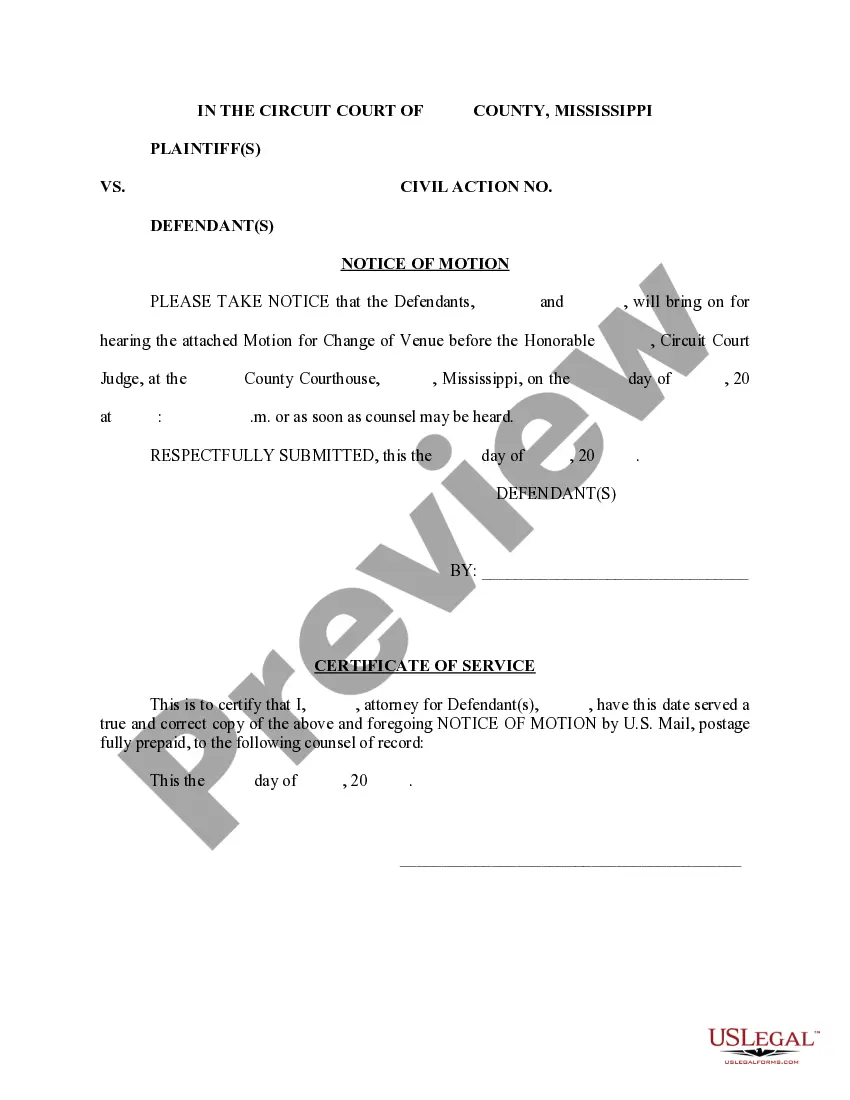
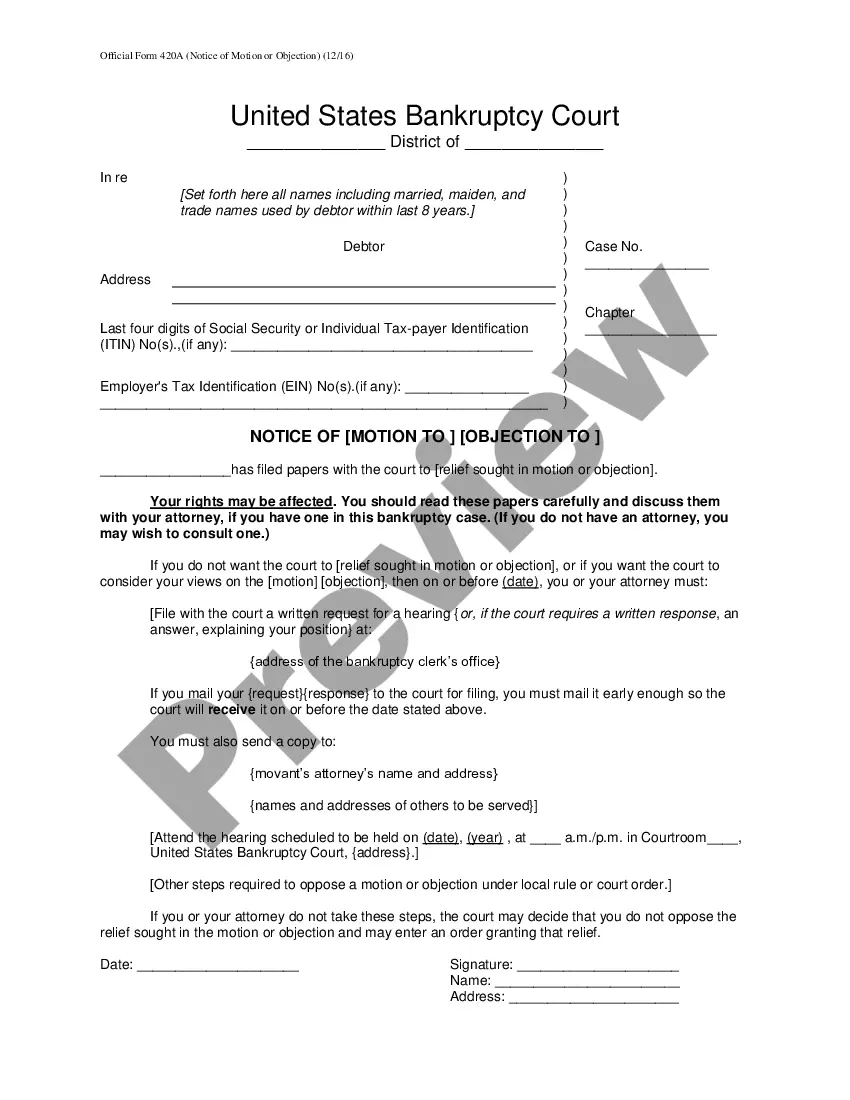
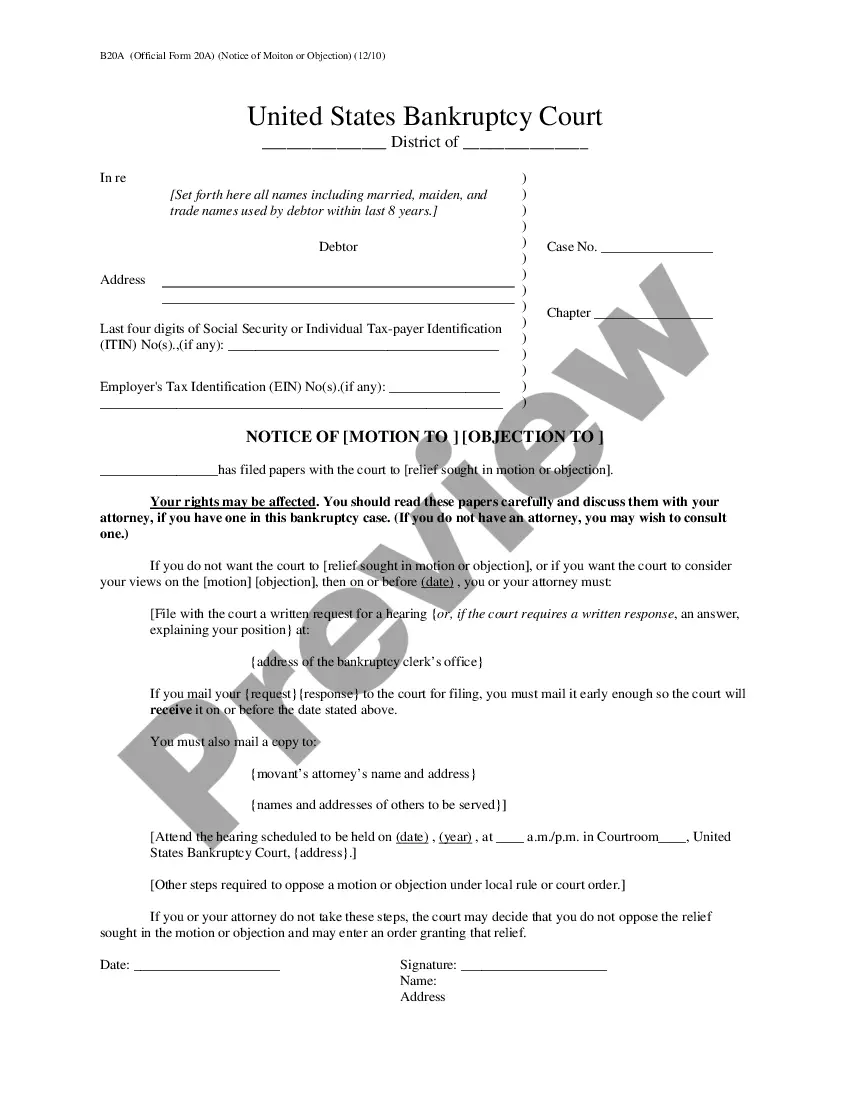
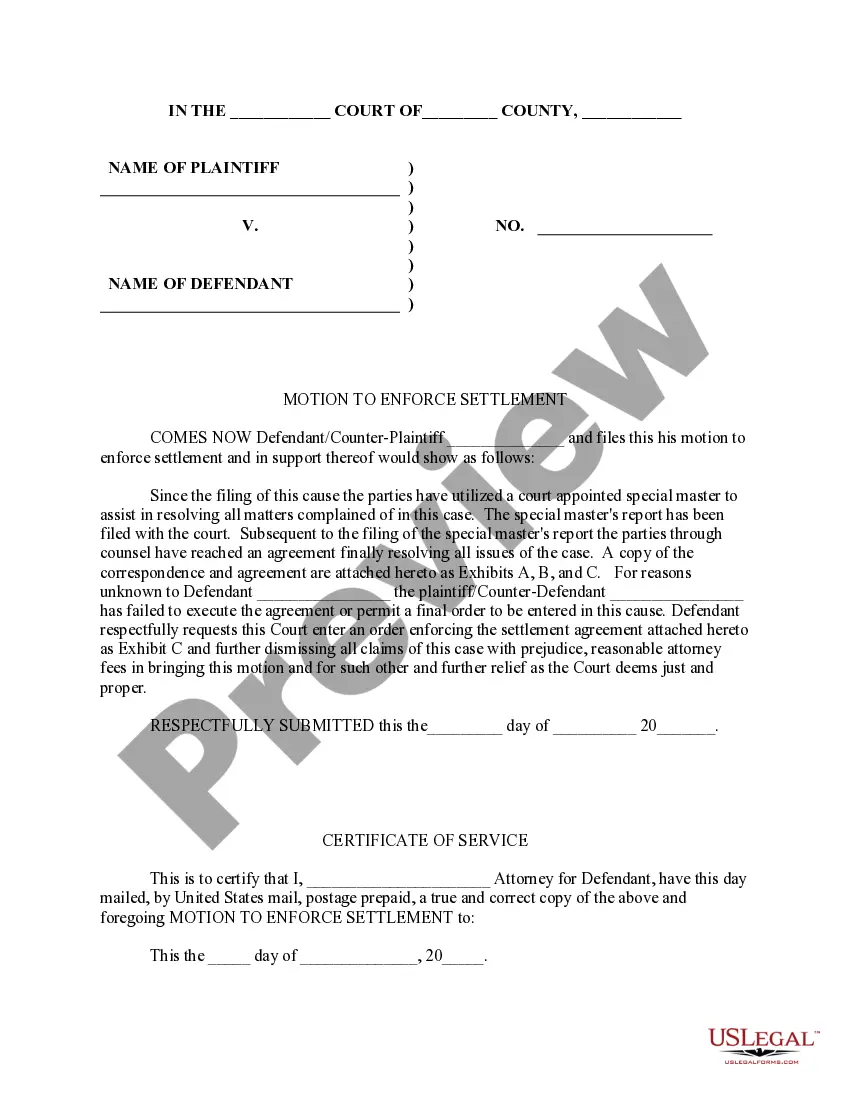
A Notice of Motion is a legal document that serves as formal notification to a party regarding an important aspect of a legal matter. This form is essential in legal proceedings, as it ensures that all parties are aware of the issues being presented to the court. Unlike other legal notices, a Notice of Motion specifically outlines the motion being filed and the relief sought. Timely and proper use of this form can help prevent delays in lawsuits and ensure that your legal matters progress smoothly.
Form components explained
- Caption: Identifies the court and case information.
- Title of Motion: Clearly states the purpose of the motion.
- Body: States the specific request and the grounds for that request.
- Notice to Other Party: Confirms that all parties involved have been informed about the motion.
- Date and Signatures: Includes the date of the notice and the signature of the party making the motion or their attorney.
Situations where this form applies
This form should be used when you need to formally notify another party about a motion you are filing with the court. Common scenarios include motions for summary judgment, changes in custody arrangements, or requests for temporary relief. It is crucial to use this form whenever a motion needs to be presented to ensure fairness and proper notice in legal proceedings.
Intended users of this form
This form is intended for:
- Individuals representing themselves in court (pro se litigants).
- Attorneys filing motions on behalf of clients.
- Any party involved in a legal dispute that requires the court's attention.
How to prepare this document
- Identify the parties involved and the relevant court information.
- State the type of motion you are filing in the title section.
- Clearly outline the grounds for your motion in the body of the notice.
- Include a statement confirming that the other party has been notified.
- Date the form and include your signature, or that of your attorney, if applicable.
Notarization requirements for this form
This form does not typically require notarization unless specified by local law. Always check if your jurisdiction has any specific notarization requirements.
Get your form ready online
Our built-in tools help you complete, sign, share, and store your documents in one place.
Make edits, fill in missing information, and update formatting in US Legal Forms—just like you would in MS Word.
Download a copy, print it, send it by email, or mail it via USPS—whatever works best for your next step.
Sign and collect signatures with our SignNow integration. Send to multiple recipients, set reminders, and more. Go Premium to unlock E-Sign.
If this form requires notarization, complete it online through a secure video call—no need to meet a notary in person or wait for an appointment.
We protect your documents and personal data by following strict security and privacy standards.

Make edits, fill in missing information, and update formatting in US Legal Forms—just like you would in MS Word.

Download a copy, print it, send it by email, or mail it via USPS—whatever works best for your next step.

Sign and collect signatures with our SignNow integration. Send to multiple recipients, set reminders, and more. Go Premium to unlock E-Sign.

If this form requires notarization, complete it online through a secure video call—no need to meet a notary in person or wait for an appointment.

We protect your documents and personal data by following strict security and privacy standards.
Mistakes to watch out for
- Failing to include proper contact information for all parties involved.
- Neglecting to state the specific relief sought in the motion.
- Not notifying the opposing party in a timely manner.
Benefits of completing this form online
- Immediate access to professional legal language drafted by licensed attorneys.
- Easy customization to fit your specific legal needs.
- Convenience of downloading and printing directly from your home or office.
Legal use & context
- This form is legally binding once properly filled and delivered to the appropriate parties.
- Completing this form incorrectly may result in delays or dismissal of the motion.
- Always keep a copy for your records and confirm receipt by the other party.
What to keep in mind
- A Notice of Motion is essential for formal notification in legal proceedings.
- Ensure all required sections are filled out accurately to avoid complications.
- Verifying state-specific requirements can prevent future legal issues.
Looking for another form?


Form popularity
FAQ
Motions are not pleadings but are requests for the judge to make a legal ruling. Some of the most common pre-trial motions include: Motion to Discover. A motion by which one party seeks to gain information from the adverse party.
When you file your motion, the court clerk will insert the date, time, and place of the hearing on your motion. You must then serve (mail) a copy of your filed motion (including all exhibits and the date, time, and place of hearing) to all other parties in the case.
A notice of motion is a written application to the Court. This document requests the Court to issue a ruling or order on a legal matter. These motions are the first step a party must take before the Court can weigh in on a legal matter.
A hearing for the purpose of asking a judge to issue a ruling or order. The motion is typically filed by one side and a notice is sent to the opposing attorney who responds in writing.
There are basically 3 stages to a civil appeal in Mississippi. First, you file your notice of appeal and other preliminary documents. Critically, you MUST file your notice of appeal within 30 days of the trial court's final judgment. In some cases, you should file a post-trial motion within 10 days of the judgment.
21 provides that misjoinder of parties is not ground for dismissal of an action, and that parties may be dropped or added by court order on motion of any party or of the court's own initiative at any stage in the action and on such terms as are just.
This appeal must be made within (15) days of the date of mailing of the notice demanding payment. Your request should be mailed to MDES, Appeals Department, P.O. Box 1699, Jackson, MS 39215-1699.
A notice of motion is a written application to the Court. This document requests the Court to issue a ruling or order on a legal matter. These motions are the first step a party must take before the Court can weigh in on a legal matter.
Filing the Notice of Appeal. Abandonment or Settlement. Waiver of Fees. Designating the Record. Civil Case Information Sheet. Briefs. Oral Argument. The Court's Decision.