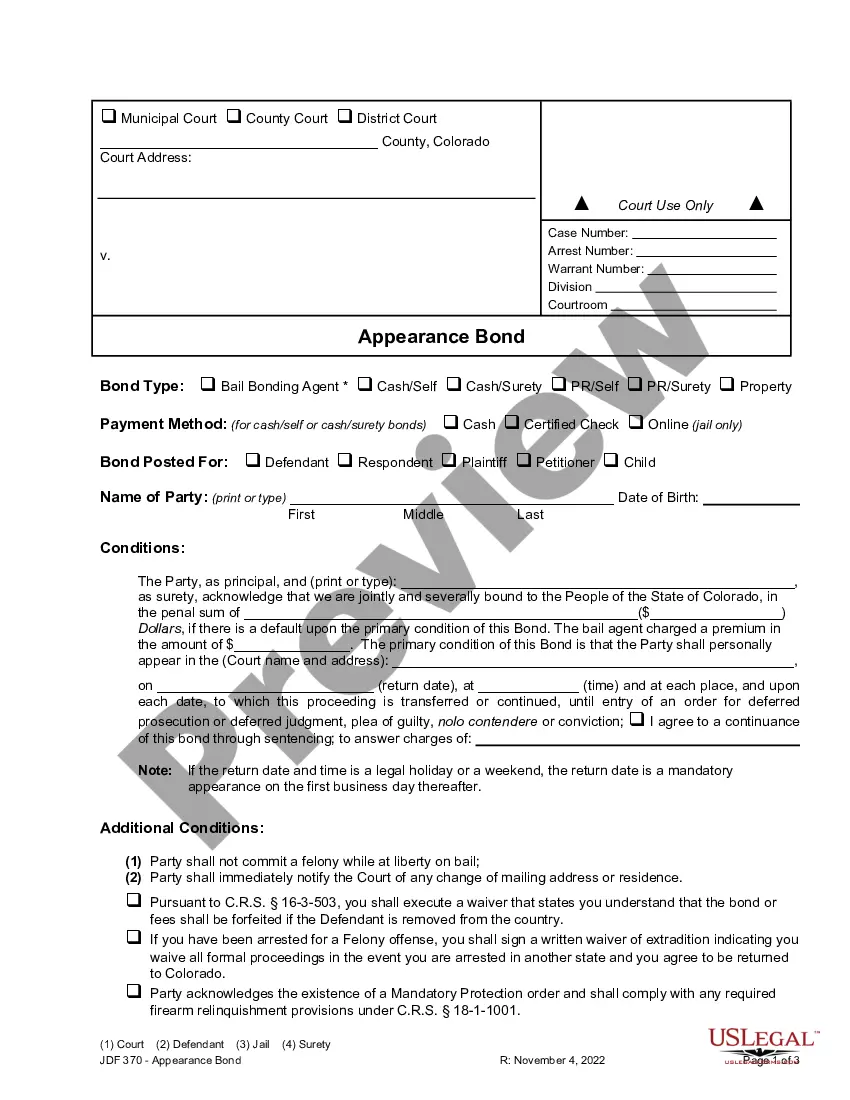
Mississippi Motion in Limine to Prohibit Evidence on the Issue of Performance, Productivity and or Efficiency
What is this form?
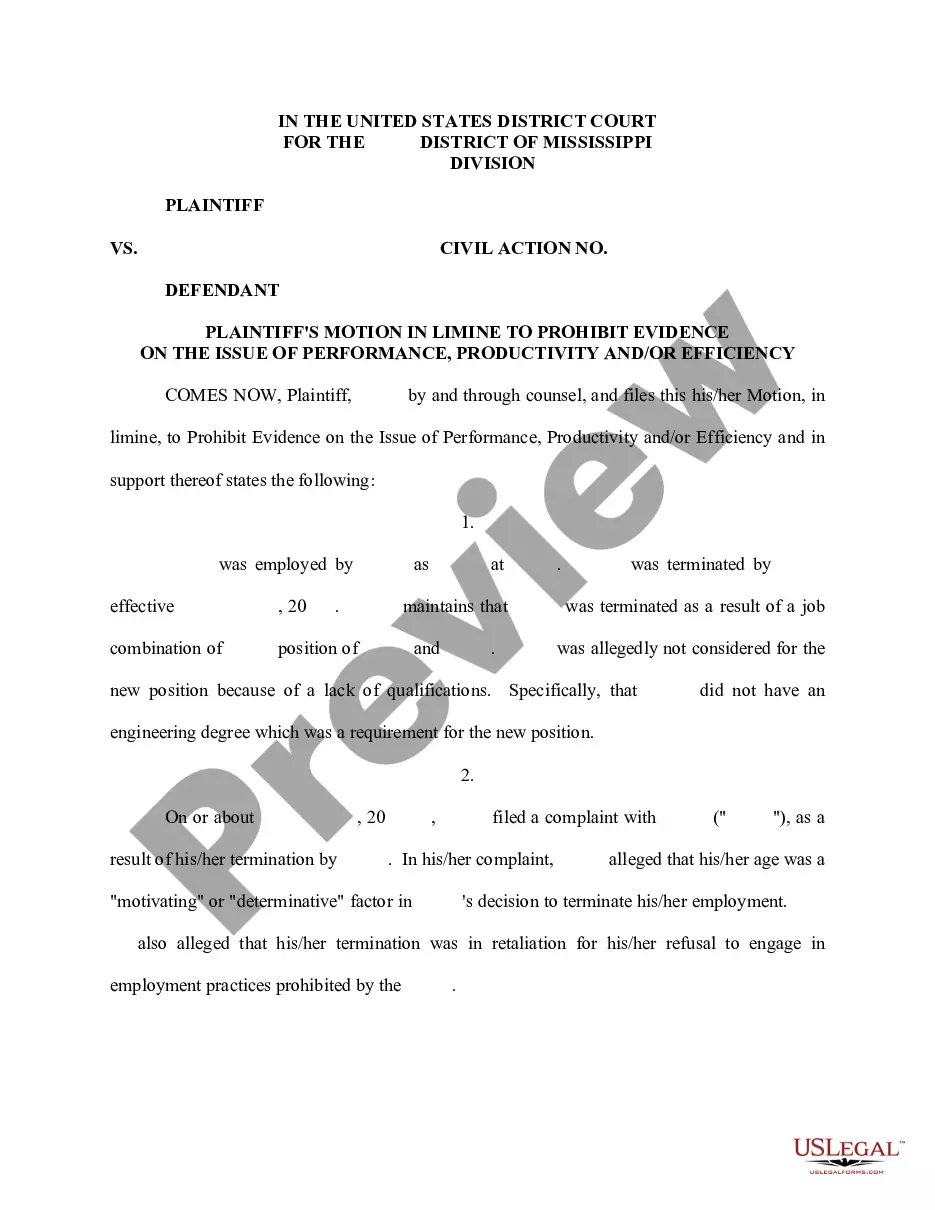
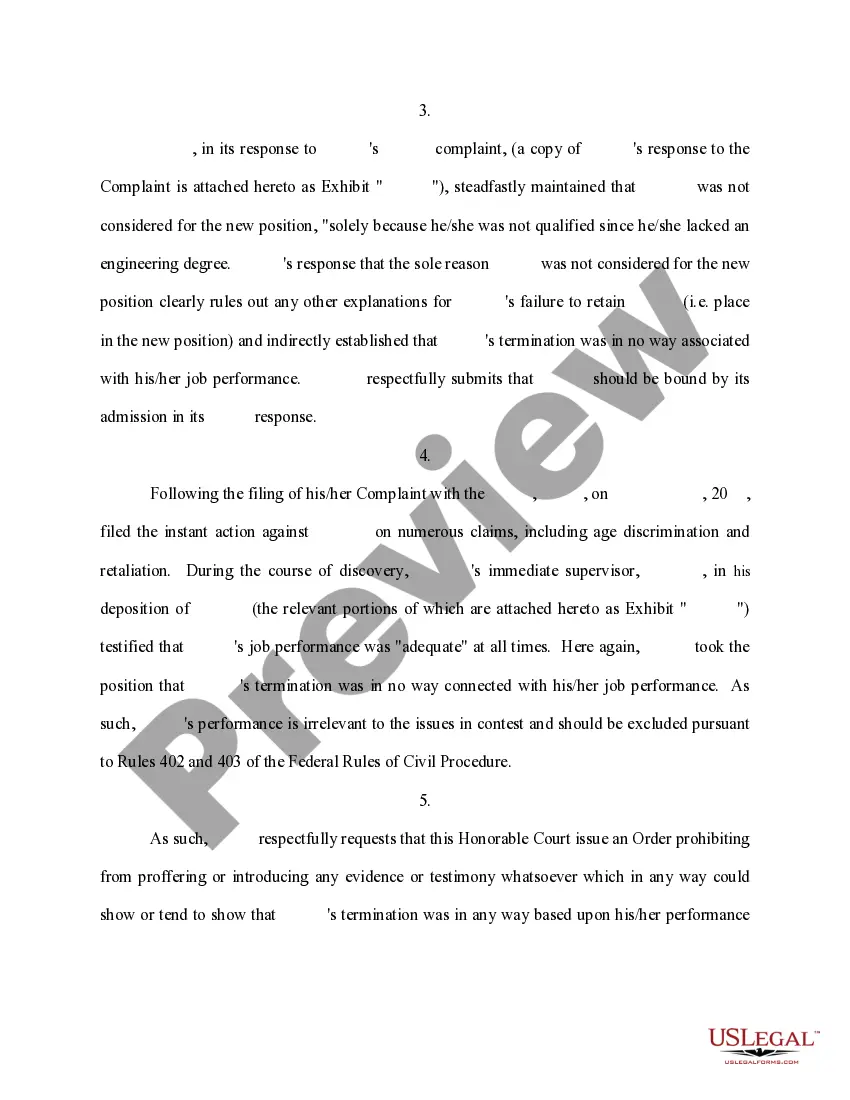
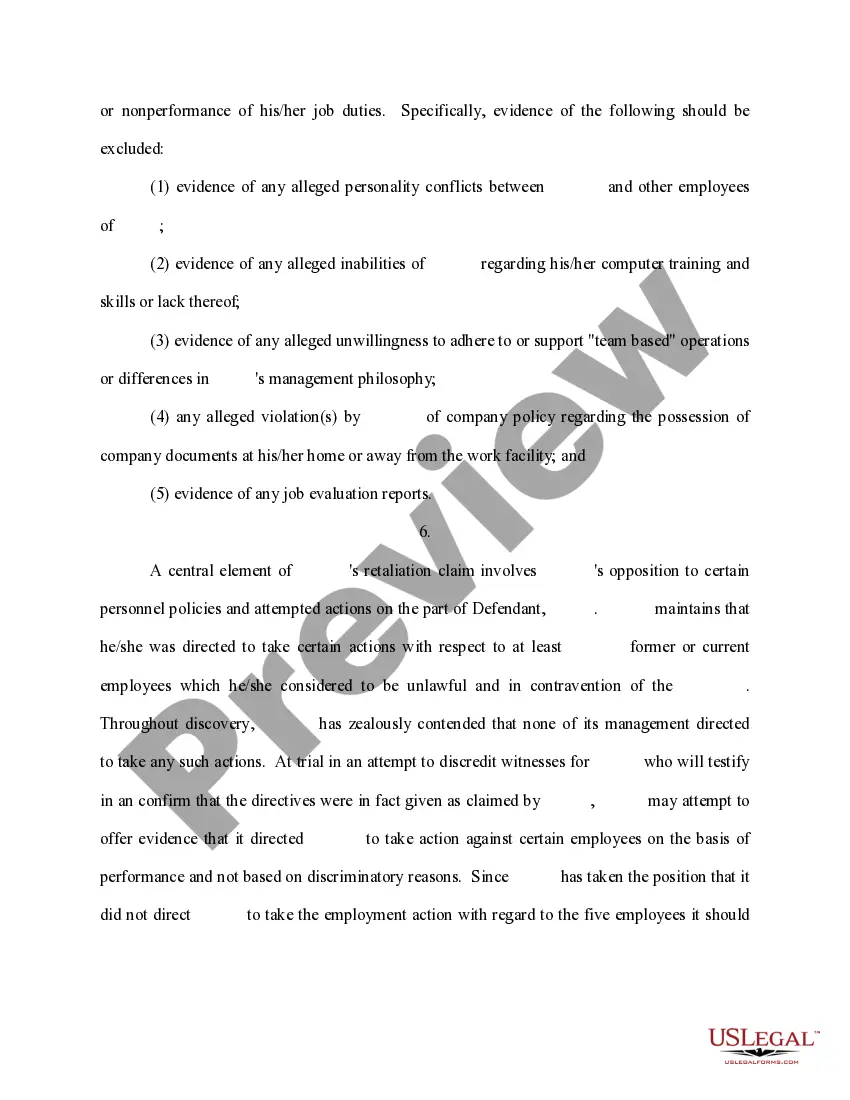
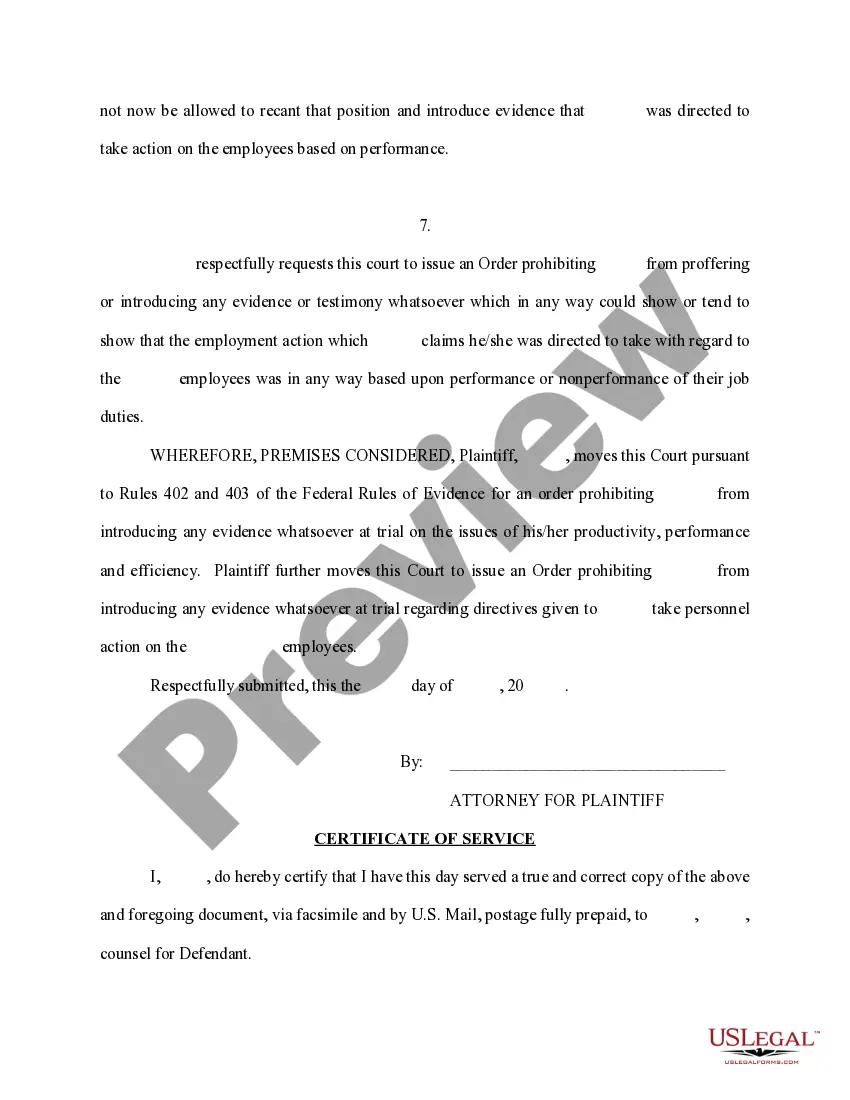
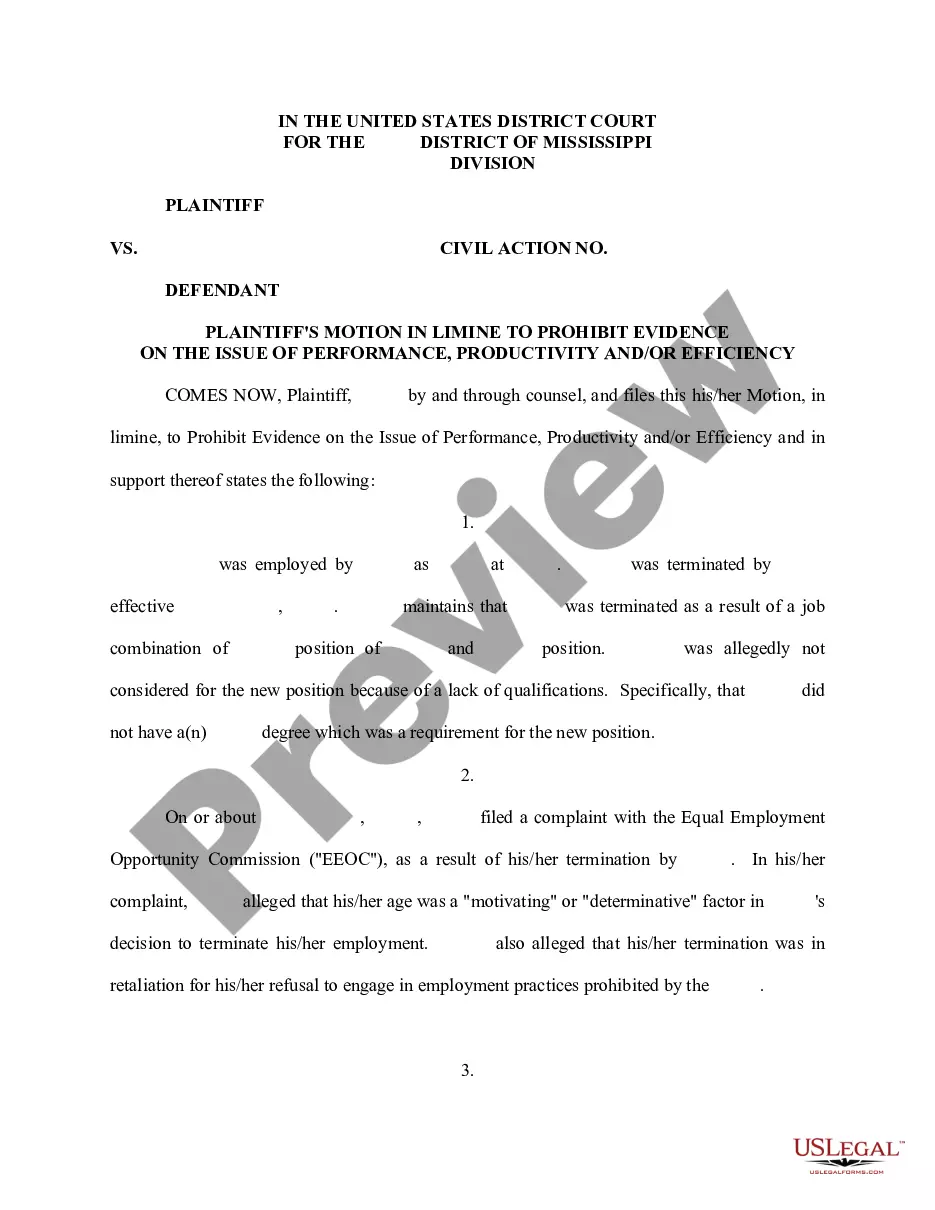
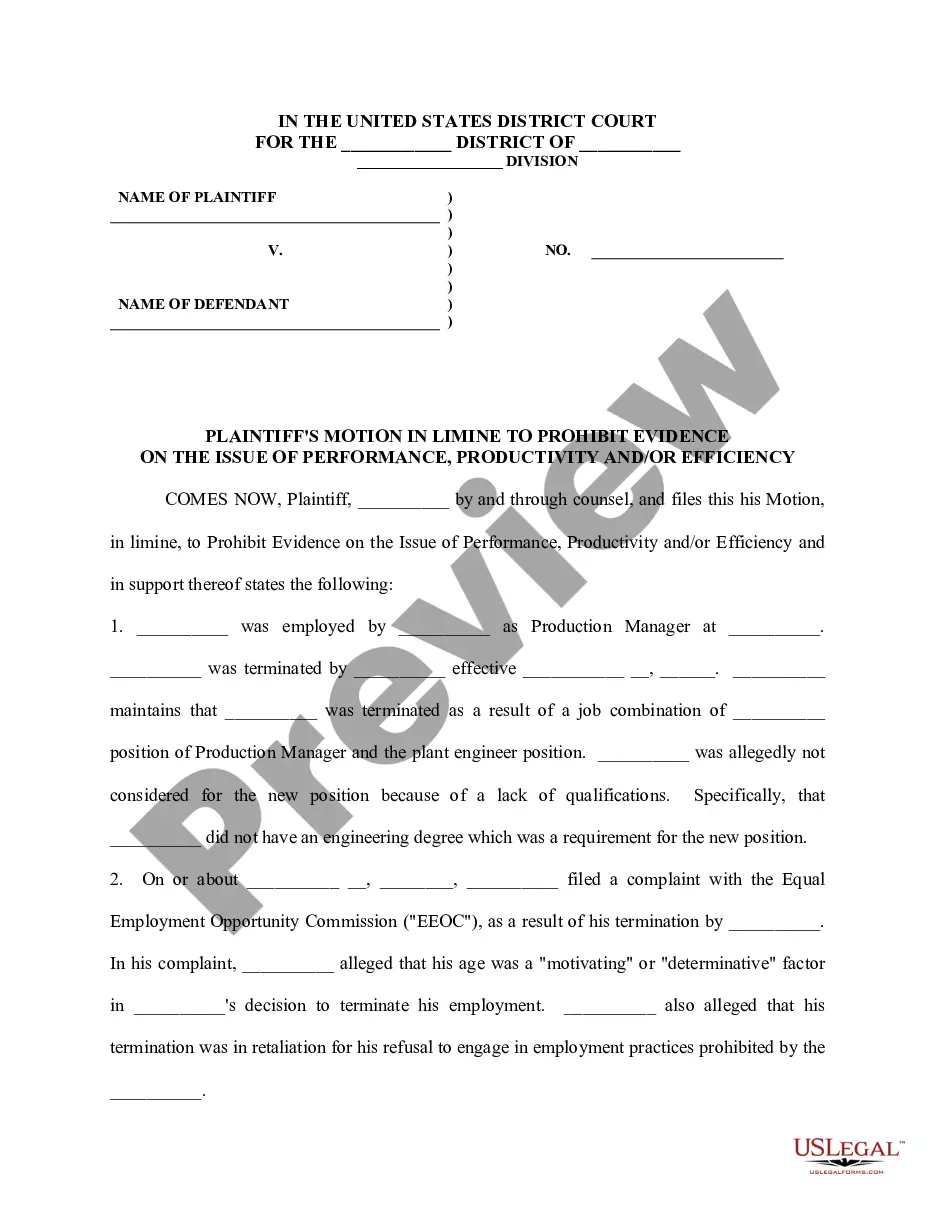
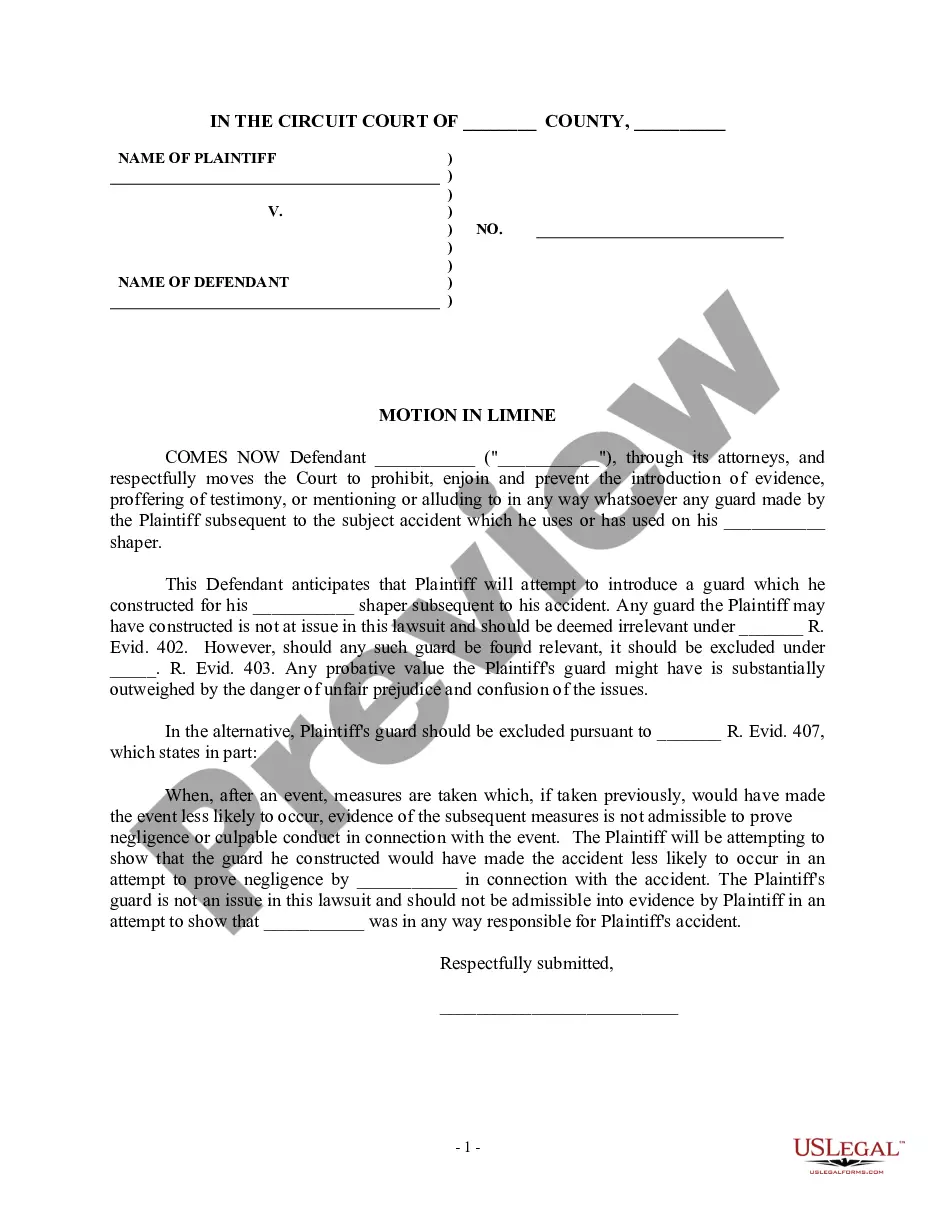
A Motion in Limine to Prohibit Evidence on the Issue of Performance, Productivity, and/or Efficiency is a formal written request made to the court. This motion seeks to exclude specific evidence relating to the performance or efficiency of parties involved in a legal proceeding. It is distinct from other motions as it specifically targets the admissibility of evidence that may unfairly affect a case based on productivity measures, thereby ensuring a fair trial.
Key components of this form
- Title of the motion: Clearly states the purpose of the form.
- Case specifics: Space to include details relevant to the case, such as parties involved and the court where the motion is filed.
- Grounds for the motion: Sections for outlining the legal basis for excluding the evidence.
- Signature block: Area designated for the signature of the moving party or their attorney.
- Notice of hearing: Information regarding when the court will consider the motion.

Common use cases
This form is typically used by parties involved in litigation when they believe that evidence concerning performance, productivity, or efficiency should not be presented in court. Examples include cases where such evidence may distort the facts, lead to bias, or not be relevant to the issues at hand. It is often employed in employment disputes, contract disputes, or personal injury cases where productivity metrics are disputed.
Who should use this form
- Litigants seeking to control the evidence that will be presented during a trial.
- Attorneys representing clients in cases involving claims where performance and productivity are contested.
- Any party in a legal proceeding aiming to ensure a fair evaluation of their case, free from prejudicial evidence.
How to prepare this document
- Identify the parties involved in the case, including their roles (e.g., plaintiff, defendant).
- State the specific court and case number for the legal proceeding.
- Detail the grounds for the motion, citing specific laws or precedents that support excluding the evidence.
- Complete the notice of hearing section with date and time for the hearing.
- Sign and date the motion at the end, ensuring all necessary parties are informed.
Does this form need to be notarized?
Notarization is not commonly needed for this form. However, certain documents or local rules may make it necessary. Our notarization service, powered by Notarize, allows you to finalize it securely online anytime, day or night.
Get your form ready online
Our built-in tools help you complete, sign, share, and store your documents in one place.
Make edits, fill in missing information, and update formatting in US Legal Forms—just like you would in MS Word.
Download a copy, print it, send it by email, or mail it via USPS—whatever works best for your next step.
Sign and collect signatures with our SignNow integration. Send to multiple recipients, set reminders, and more. Go Premium to unlock E-Sign.
If this form requires notarization, complete it online through a secure video call—no need to meet a notary in person or wait for an appointment.
We protect your documents and personal data by following strict security and privacy standards.

Make edits, fill in missing information, and update formatting in US Legal Forms—just like you would in MS Word.

Download a copy, print it, send it by email, or mail it via USPS—whatever works best for your next step.

Sign and collect signatures with our SignNow integration. Send to multiple recipients, set reminders, and more. Go Premium to unlock E-Sign.

If this form requires notarization, complete it online through a secure video call—no need to meet a notary in person or wait for an appointment.

We protect your documents and personal data by following strict security and privacy standards.
Typical mistakes to avoid
- Failing to clearly state the legal basis for excluding the evidence.
- Not including all relevant parties in the notice section.
- Missing the deadline for filing the motion before the hearing.
- Neglecting to serve all parties with the motion in a timely manner.
Why use this form online
- Quick access: Download the necessary documents immediately, saving time in legal proceedings.
- Editable format: Customize the motion to fit your specific case requirements easily.
- Reliability: Forms crafted by licensed attorneys to ensure compliance with legal standards.
Looking for another form?

Form popularity
FAQ
There is also authority for the proposition that if a motion in limine is denied, the party opposing the evidence can be the first to offer the objectionable evidence without waiving the merits of the evidentiary objection on appeal.
The term in limineor on the thresholdmisleadingly suggests that any motion filed shortly before the start of trial is a motion in limine.There are many advantages to an advance ruling on the evidentiary issues outside the presence of the jury, and motions in limine are a powerful tool for astute trial attorneys.
There is also authority for the proposition that if a motion in limine is denied, the party opposing the evidence can be the first to offer the objectionable evidence without waiving the merits of the evidentiary objection on appeal.
Motions in limine should be used only for their original purpose to challenge evidence that is so inadmissible and prejudicial that its mere mention in the presence of the jury would lead to an unfair trial.On appeal this ruling of the trial court was affirmed.
Motions in limine can be made verbally and must take place outside the presence of the jury.Please note that because the phrase in limine is a direct foreign language borrowing, it is appropriate to present it in italics.
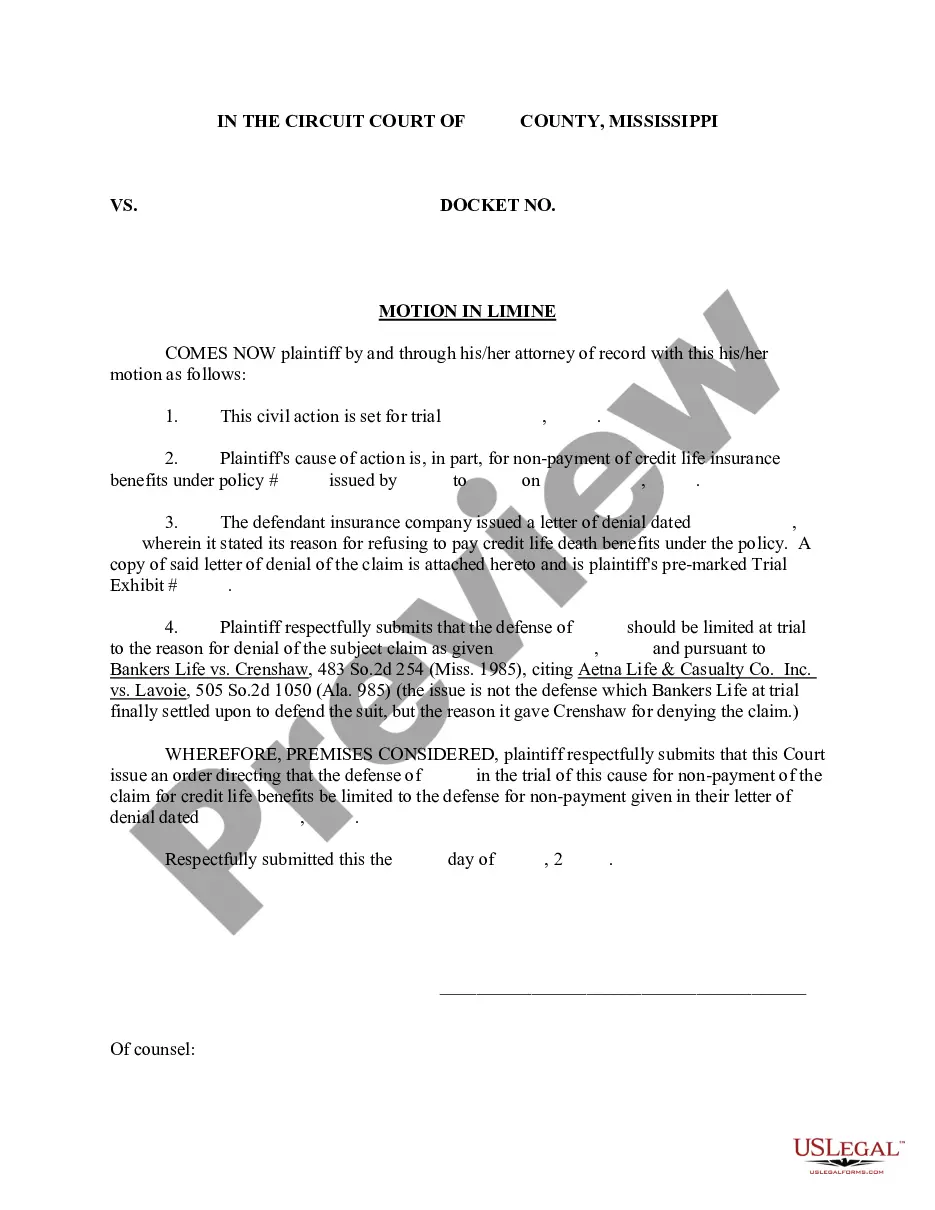
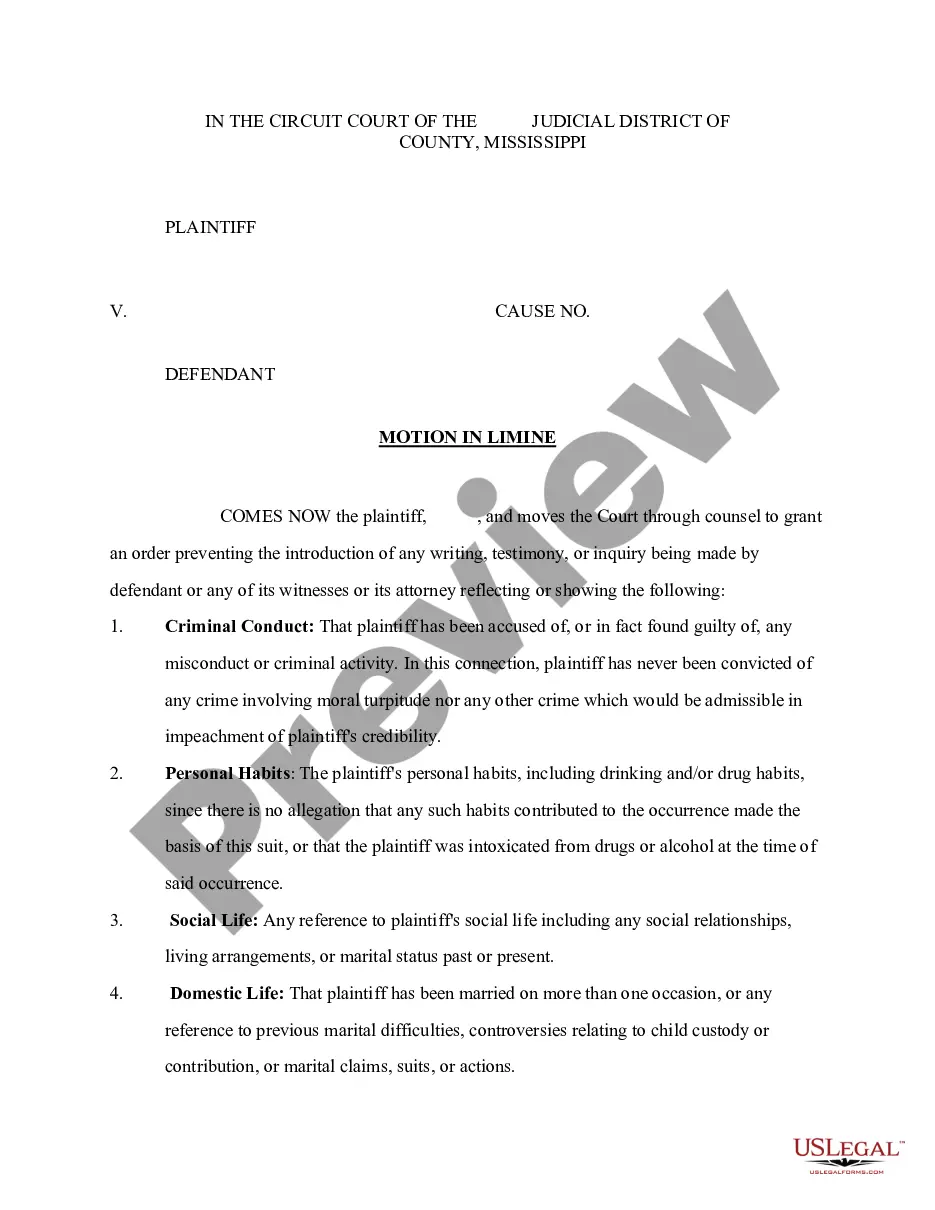
Examples of motions in limine would be that the attorney for the defendant may ask the judge to refuse to admit into evidence any personal information, or medical, criminal or financial records, using the legal grounds that these records are irrelevant, immaterial, unreliable, or unduly prejudicial, and/or that their
Your motion in limine should be broken into two sections: (1) Factual Background and (2) Argument. The Factual Background section of your Memorandum should include all of the facts necessary for the judge to resolve every issue raised in your motion. appropriate, include procedural posture, as well.
Generally, a party in a lawsuit files a motion in limine to exclude evidence from a trial because the evidence isn't relevant or because its prejudicial effect substantially outweighs its probative value. You can oppose the motion in limine by drafting and filing your own motion in opposition.
Importantly, motions in limine are generally made before a trial begins, and always argued outside the presence of the jury. Thus, a motion in limine allows key evidentiary questions to be decided without the jury present and, if the motion is granted, will preclude the jury from ever learning of the disputed evidence.