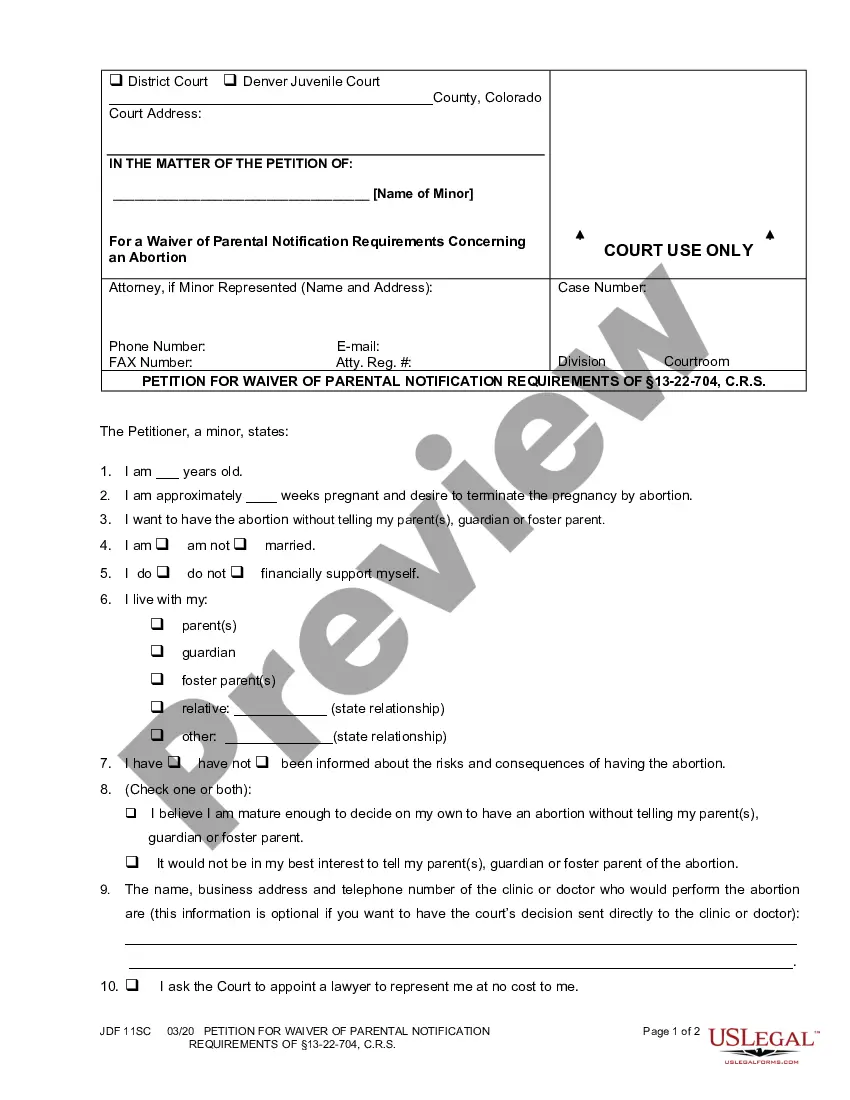
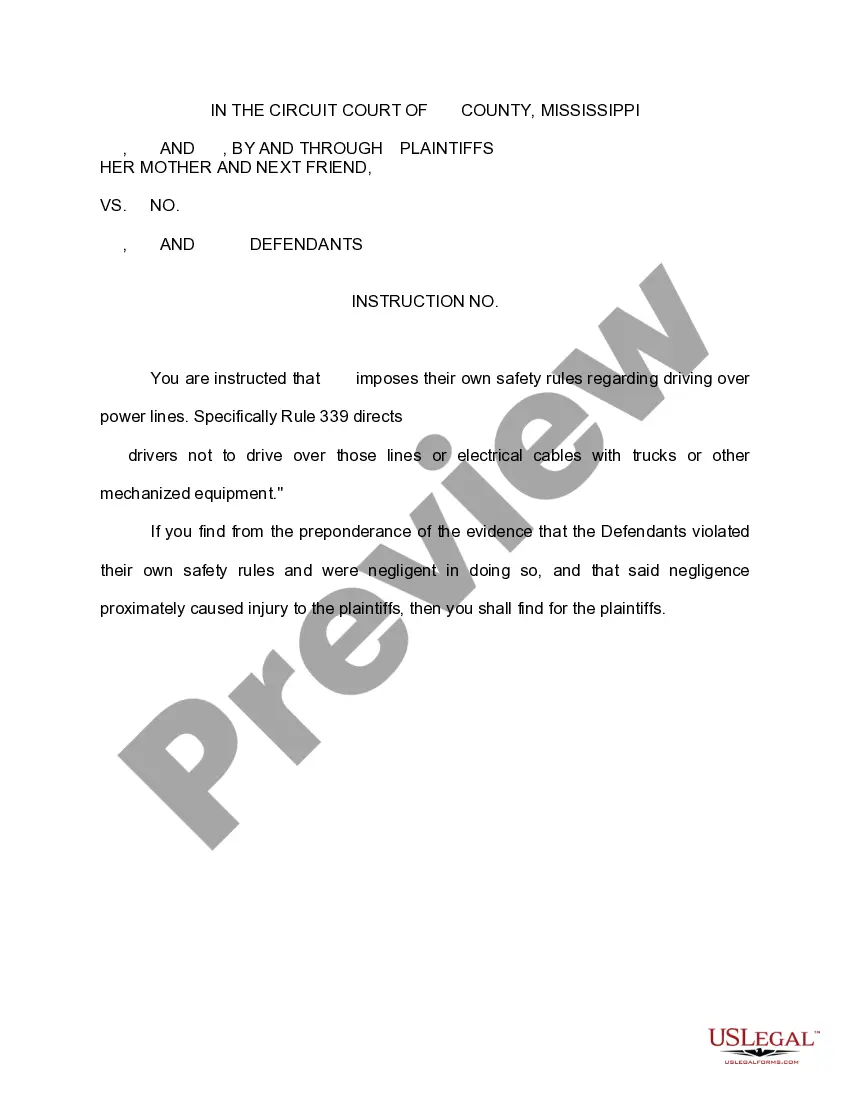
Mississippi Jury Instruction - Violation of Safety Rules - Injury by Power Lines
Overview of this form
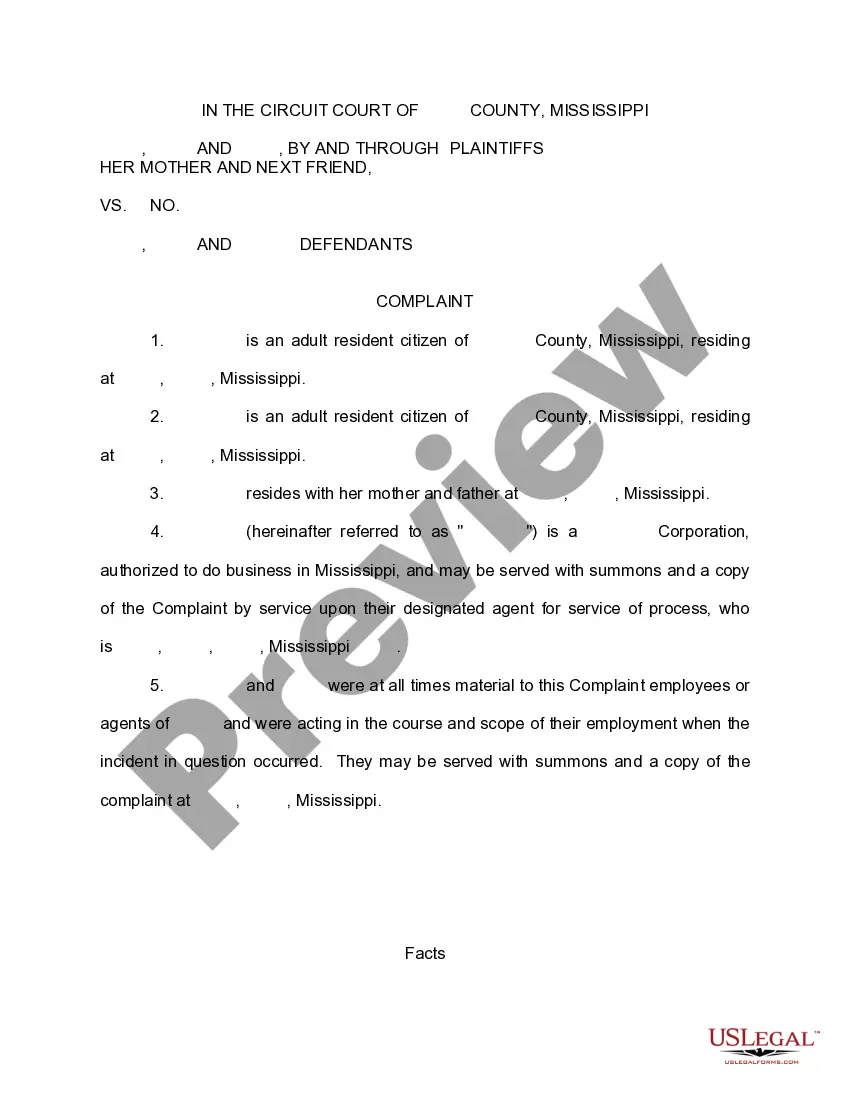
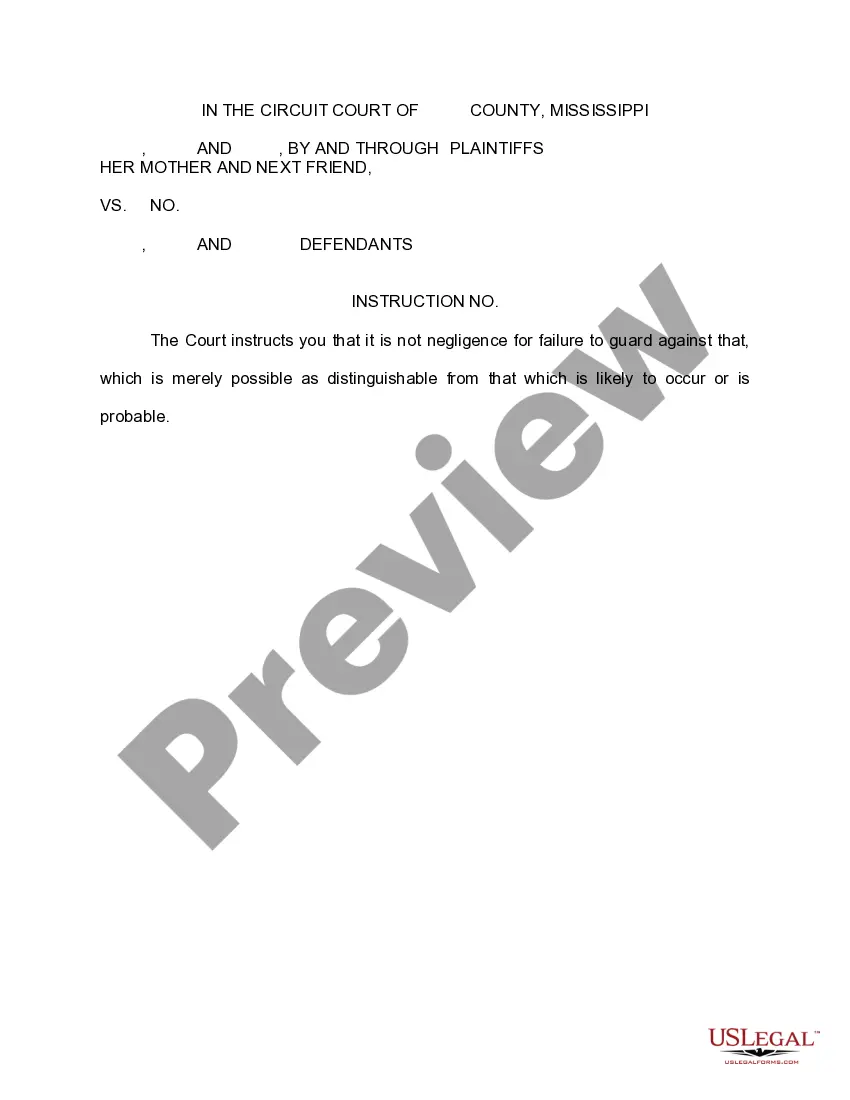
This Jury Instruction - Violation of Safety Rules - Injury by Power Lines form provides legal guidance for juries in Mississippi regarding the negligence related to safety rules affecting power lines. It outlines the responsibilities of drivers concerning safety protocols and informs jurors on how to assess violations that may lead to injury claims, distinguishing it from other jury instructions by focusing specifically on power line safety.
Form components explained
- Identification of the parties involved in the case.
- Description of the safety rule in question (Rule 339).
- Instruction on the jury's responsibility to determine negligence.
- Clarification of how negligent actions may lead to plaintiff injury.
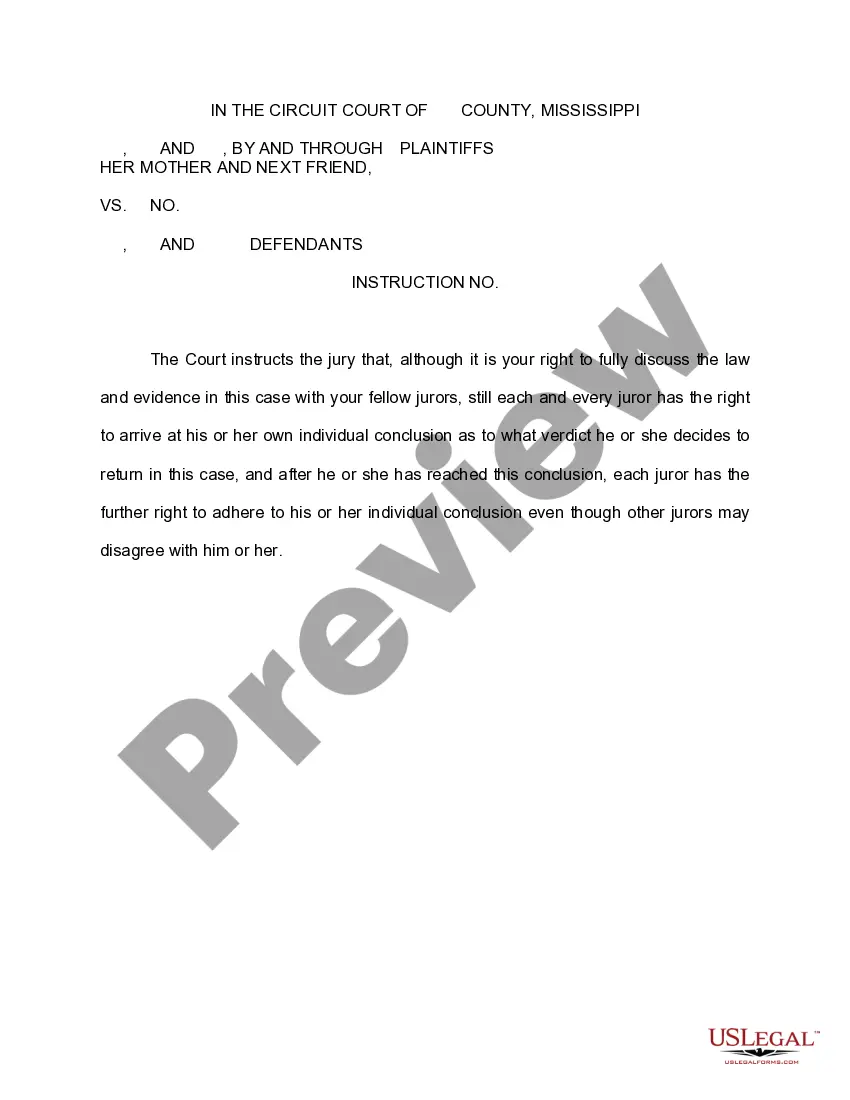
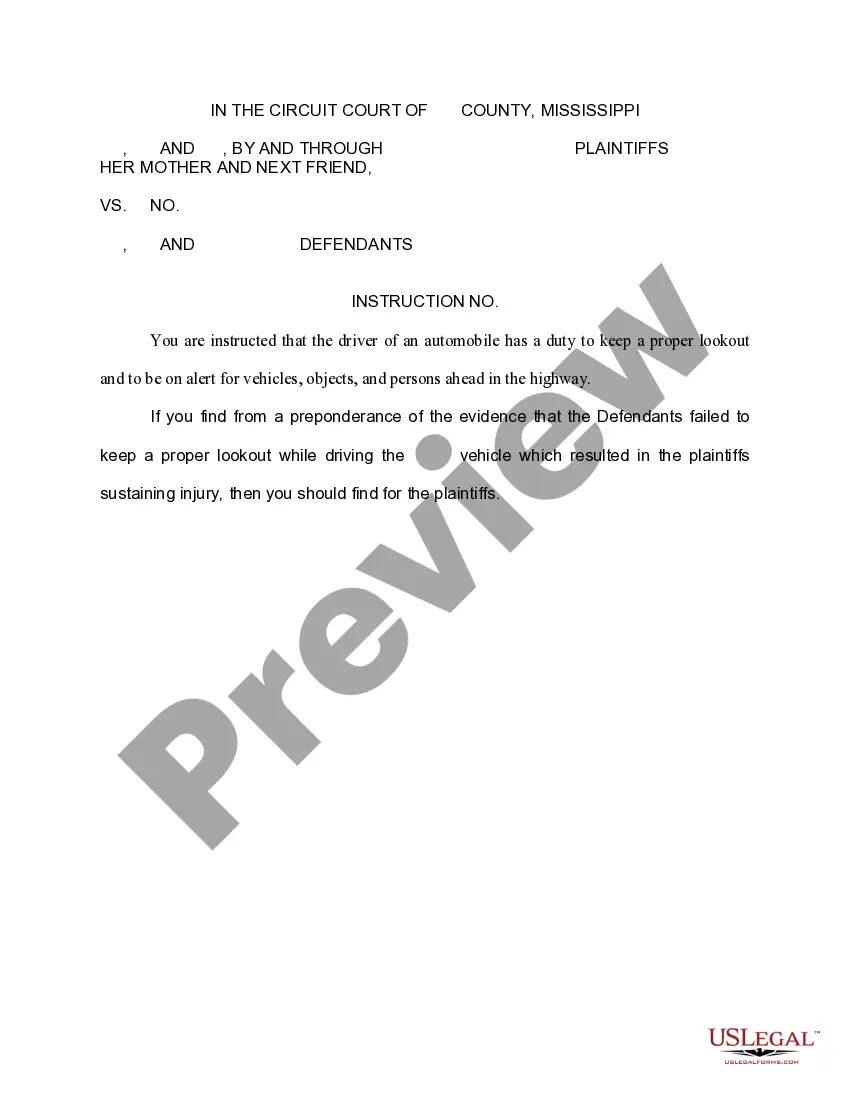
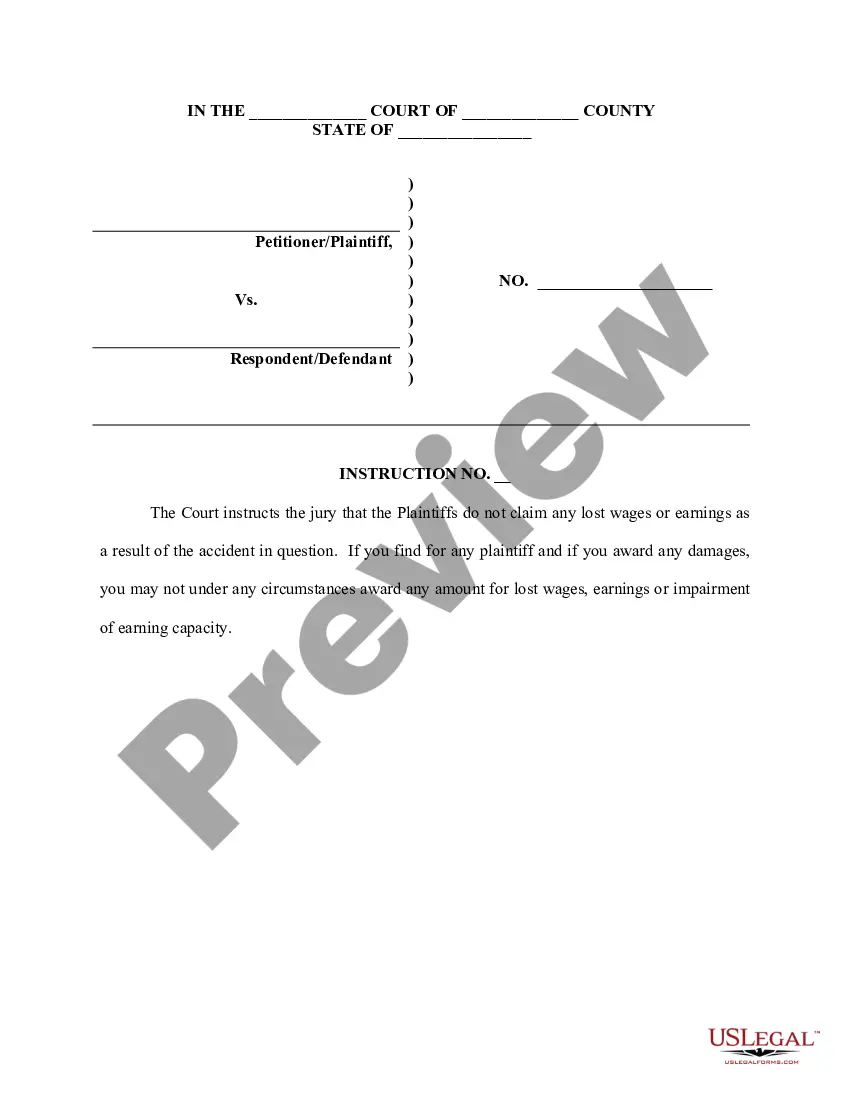
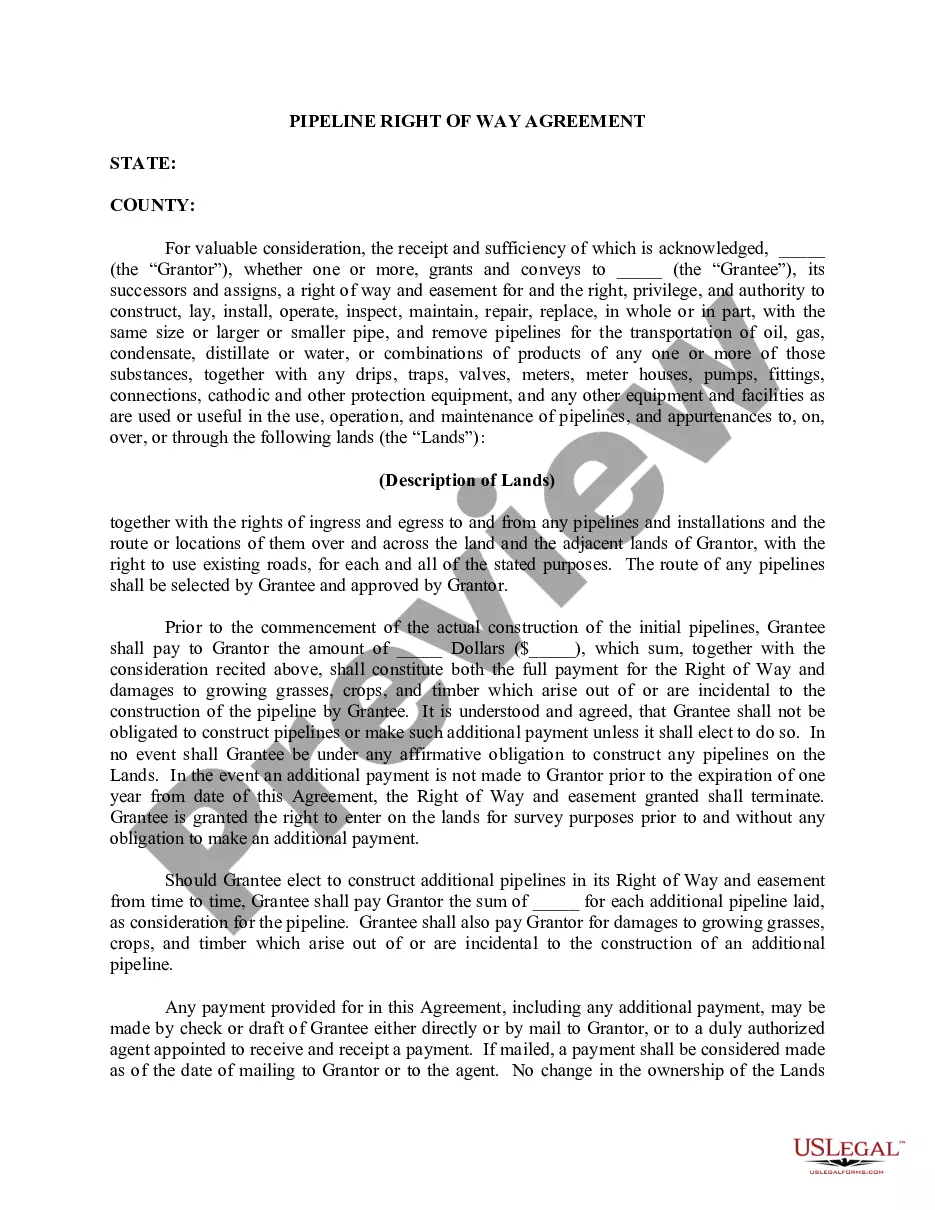
Common use cases
This form should be utilized in cases where a plaintiff claims injury due to a defendant's negligent violation of safety rules regarding power lines. It is particularly relevant in personal injury lawsuits where determining the breach of conduct related to driving over power lines is essential for the jury's deliberation and verdict.
Who this form is for
- Attorneys representing plaintiffs or defendants in personal injury cases.
- Judges needing to instruct juries on applicable state laws.
- Legal professionals involved in jury trials related to power line safety violations.
How to complete this form
- Identify the plaintiffs and the defendants in the case.
- Clearly state the safety rule being violated in the context of the incident.
- Detail the defendant's actions that constitute negligence.
- Specify how the negligence resulted in injuries to the plaintiffs.
- Present this instruction to the jury for deliberation during the trial.
Is notarization required?
Notarization is generally not required for this form. However, certain states or situations might demand it. You can complete notarization online through US Legal Forms, powered by Notarize, using a verified video call available anytime.
Get your form ready online
Our built-in tools help you complete, sign, share, and store your documents in one place.
Make edits, fill in missing information, and update formatting in US Legal Forms—just like you would in MS Word.
Download a copy, print it, send it by email, or mail it via USPS—whatever works best for your next step.
Sign and collect signatures with our SignNow integration. Send to multiple recipients, set reminders, and more. Go Premium to unlock E-Sign.
If this form requires notarization, complete it online through a secure video call—no need to meet a notary in person or wait for an appointment.
We protect your documents and personal data by following strict security and privacy standards.

Make edits, fill in missing information, and update formatting in US Legal Forms—just like you would in MS Word.

Download a copy, print it, send it by email, or mail it via USPS—whatever works best for your next step.

Sign and collect signatures with our SignNow integration. Send to multiple recipients, set reminders, and more. Go Premium to unlock E-Sign.

If this form requires notarization, complete it online through a secure video call—no need to meet a notary in person or wait for an appointment.

We protect your documents and personal data by following strict security and privacy standards.
Mistakes to watch out for
- Failing to clearly identify all parties involved in the case.
- Neglecting to specify the relevant safety rule accurately.
- Omitting key details about how the defendant's actions directly caused the plaintiff's injury.
Benefits of using this form online
- Instant access to a valid, attorney-drafted legal document.
- Easy editing capabilities to tailor the form to specific case details.
- Secure download and storage options to keep your legal documents organized.
Looking for another form?
Form popularity
FAQ
Any employer who willfully violates any standard, rule, or order promulgated pursuant to section 6 of this Act, or of any regulations prescribed pursuant to this Act, and that violation caused death to any employee, shall, upon conviction, be punished by a fine of not more than $10,000 or by imprisonment for not more
Employee rights are put into place by the federal government to protect employees. States also have labor regulations that employers must follow.Common rights violations are discrimination, wage miscalculations, sexual harassment and whistleblowing.
Common Workplace Violations. Employee Theft And Assault Are The Biggest Disciplinary Offenses. Disciplining Janitors For Excessive Absenteeism. Employee Discipline For Intoxication And Horseplay. Disciplining Janitors For Harassment In The Workplace.
Right to a safe workplace free of dangerous conditions, toxic substances, and other potential safety hazards; Right to be free from retaliation for filing a claim or complaint against an employer (these are sometimes called "whistleblower" rights); and. Right to fair wages for work performed.
De Minimis Violations. Other-than-Serious Violations. Serious Violations. Willful Violations. Repeated Violation. Failure to Abate Prior Violation.
SERIOUS. A violation where there is substantial probability that death or serious physical harm could result and that the employer knew, or should have known, of the hazard. There is a mandatory penalty for serious violations which may be up to $7,000.
Any employer who willfully violates any standard, rule, or order promulgated pursuant to section 6 of this Act, or of any regulations prescribed pursuant to this Act, and that violation caused death to any employee, shall, upon conviction, be punished by a fine of not more than $10,000 or by imprisonment for not more
Doing anything OSHA construes as lying, misleading or falsifying records is the absolute worst thing a company can do during an OSHA investigation that follows an accident, according to Chajet. "These are all felonies, and probably the leading cause of criminal prosecution in occupational safety and health," he said.
#3 Scaffolding. #4 Respiratory Protection. #5 Lockout/Tagout. #6 Powered Industrial Trucks. #7 Electrical Wiring Methods. #8 Ladders. #9 Machine Guarding. #10 Electrical General Requirements. There have already been 2,056 safety violations this year alone for electrical requirements.