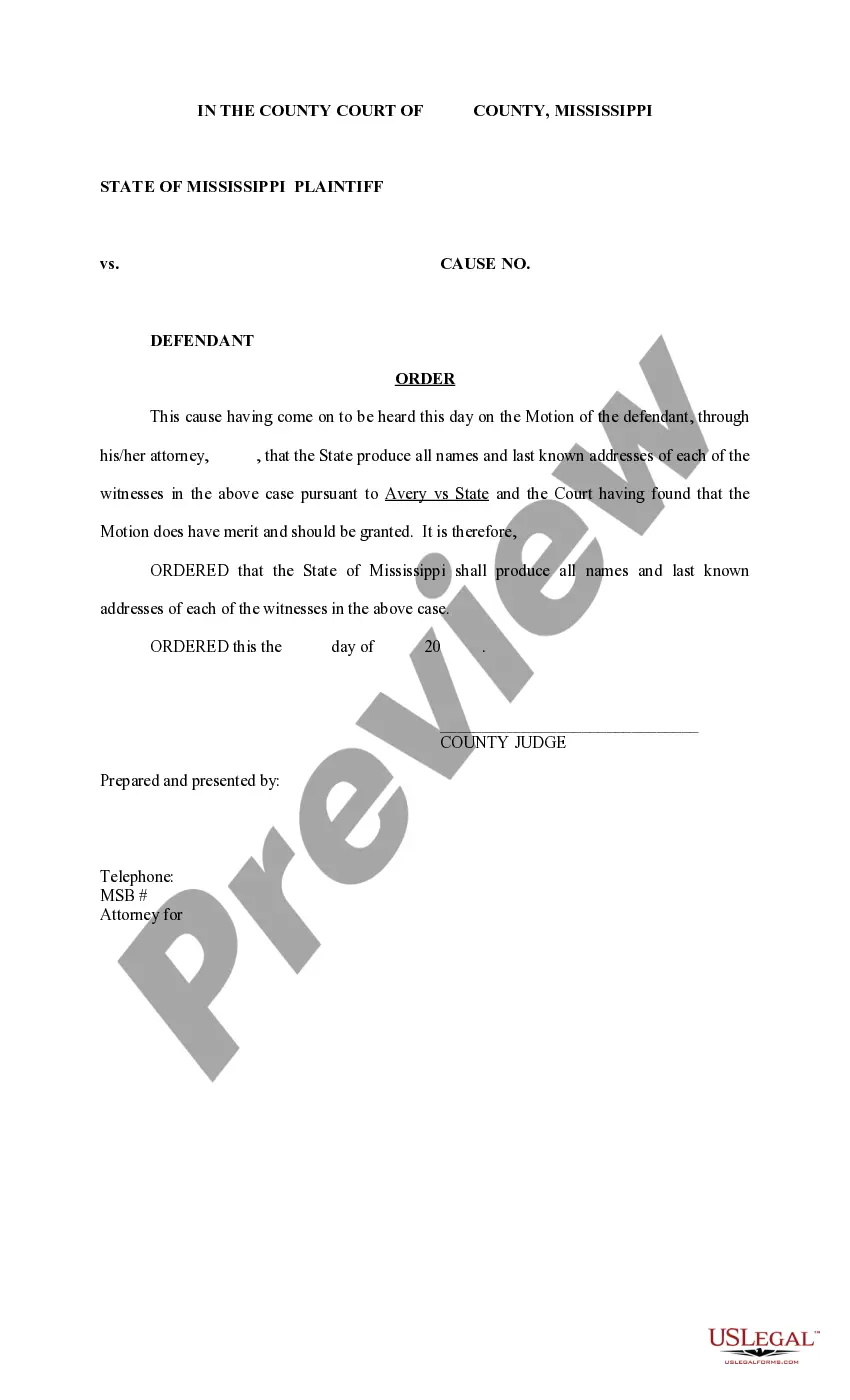
Mississippi Order to Disclose Witnesses
Understanding this form
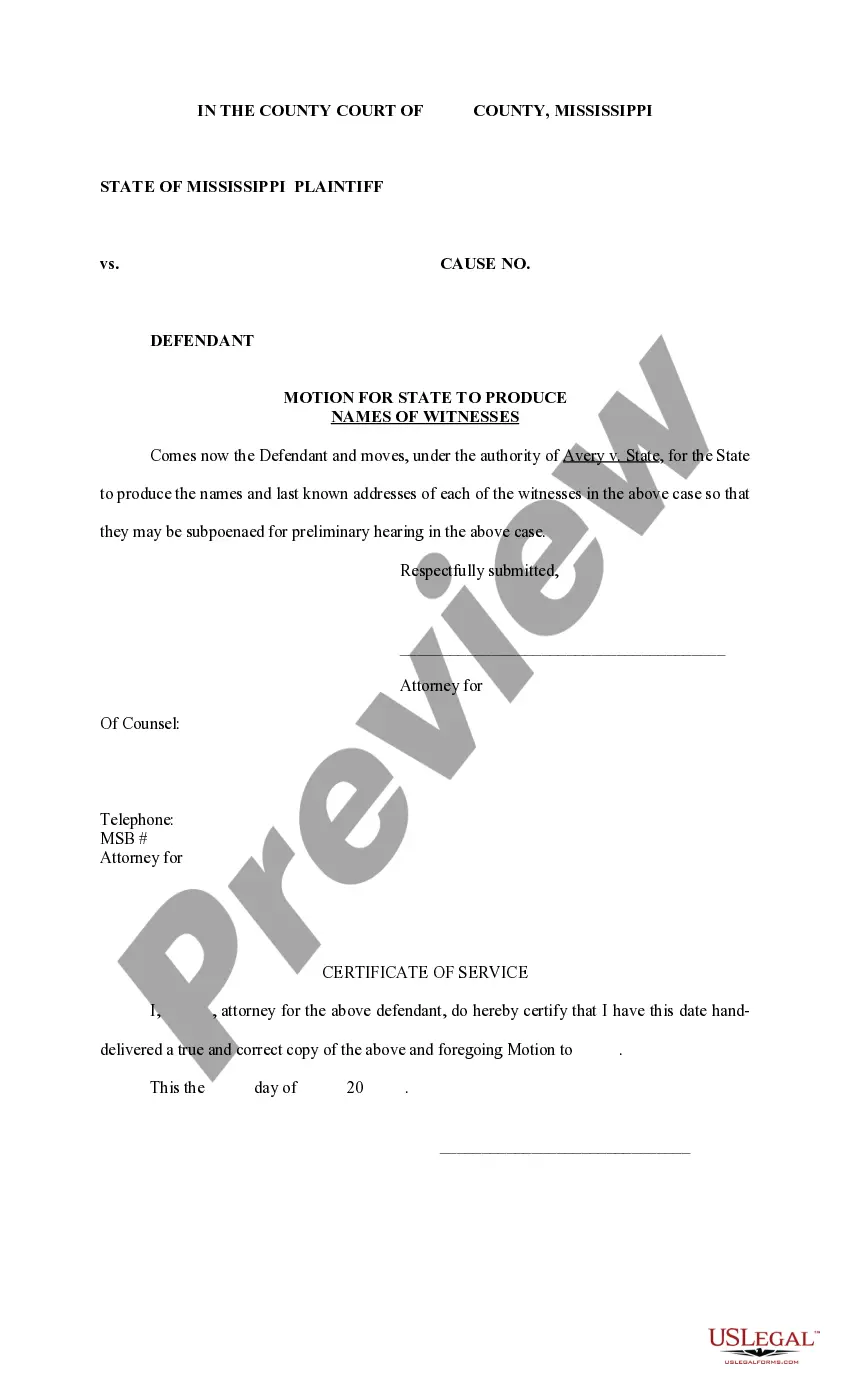
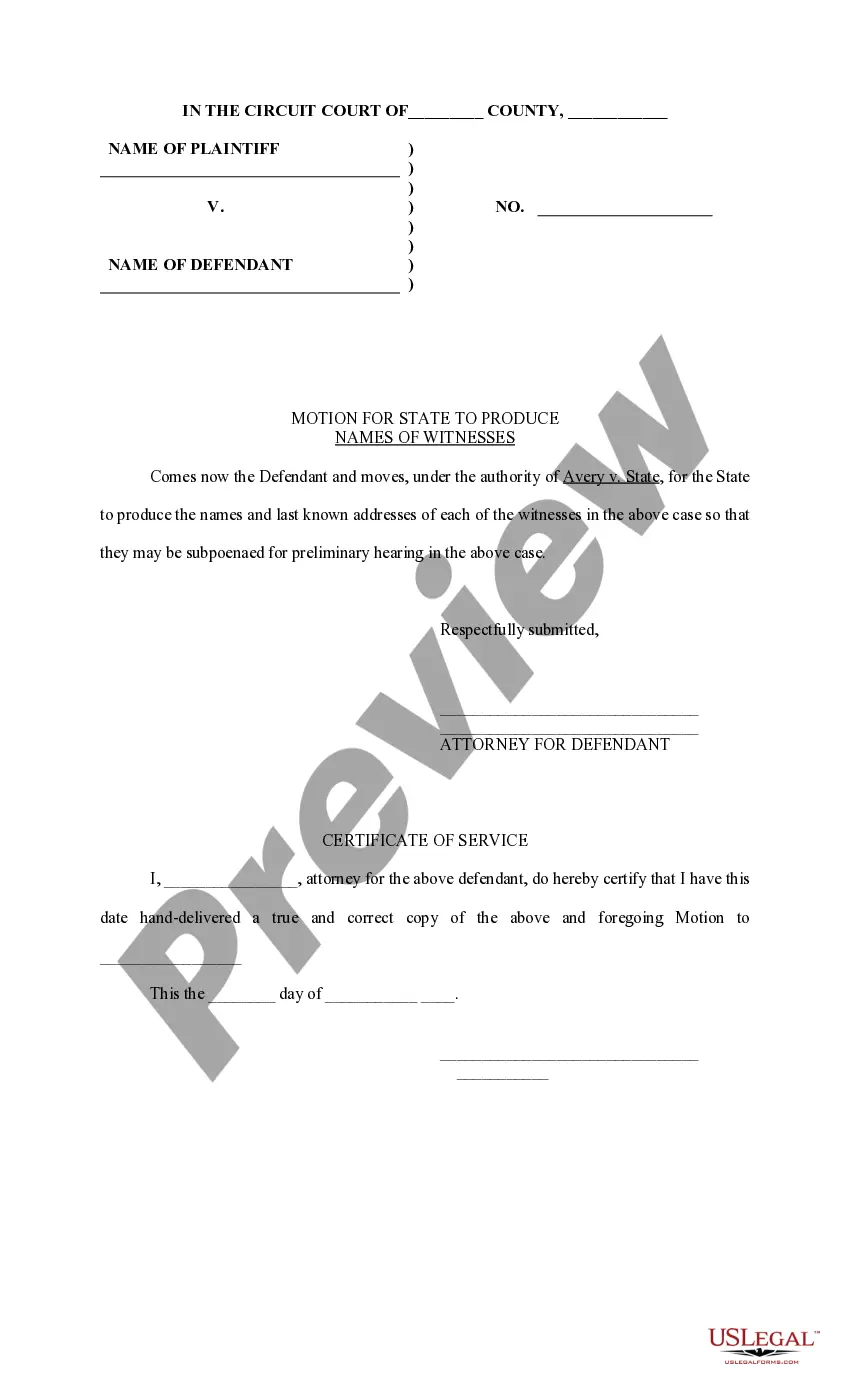
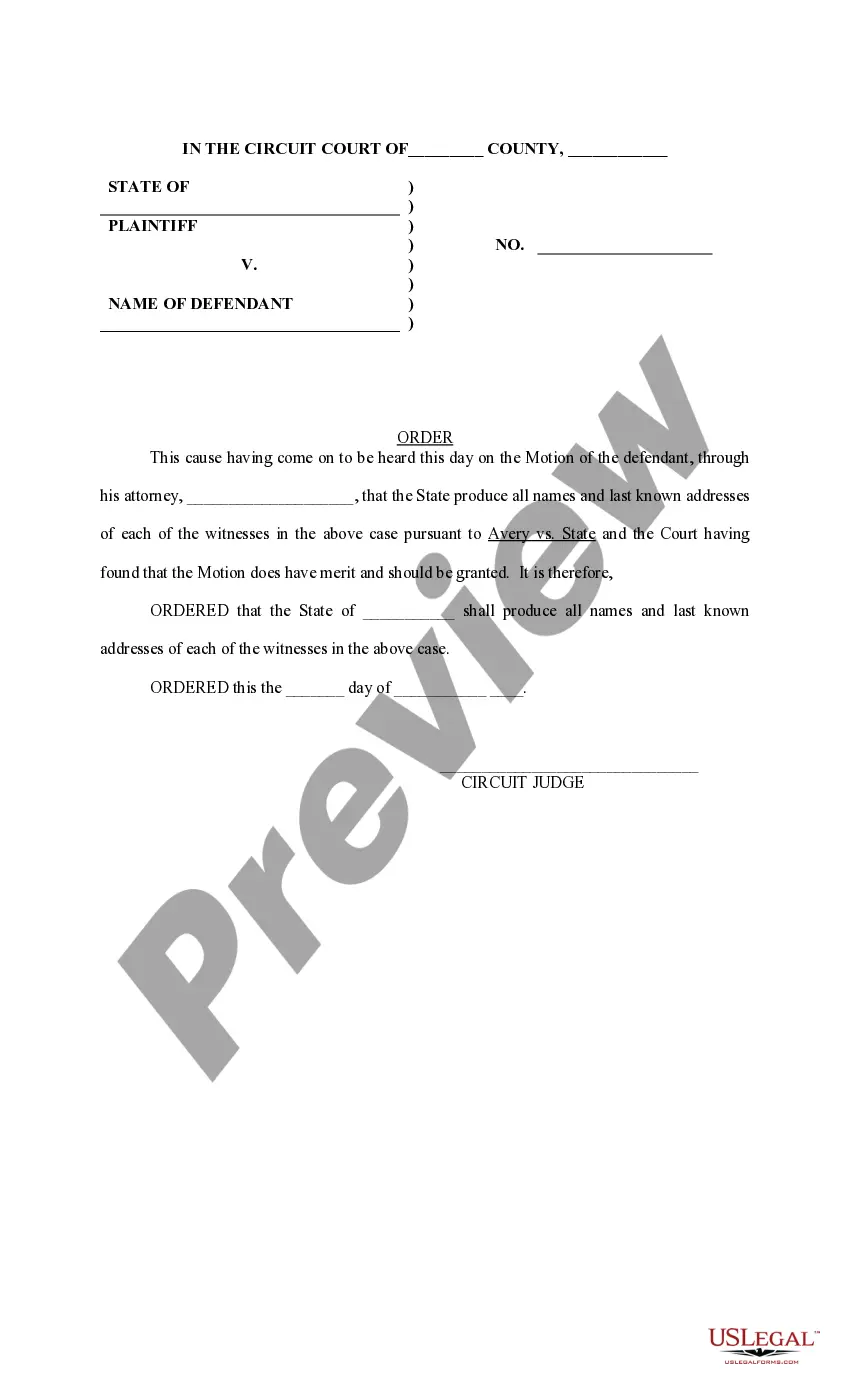
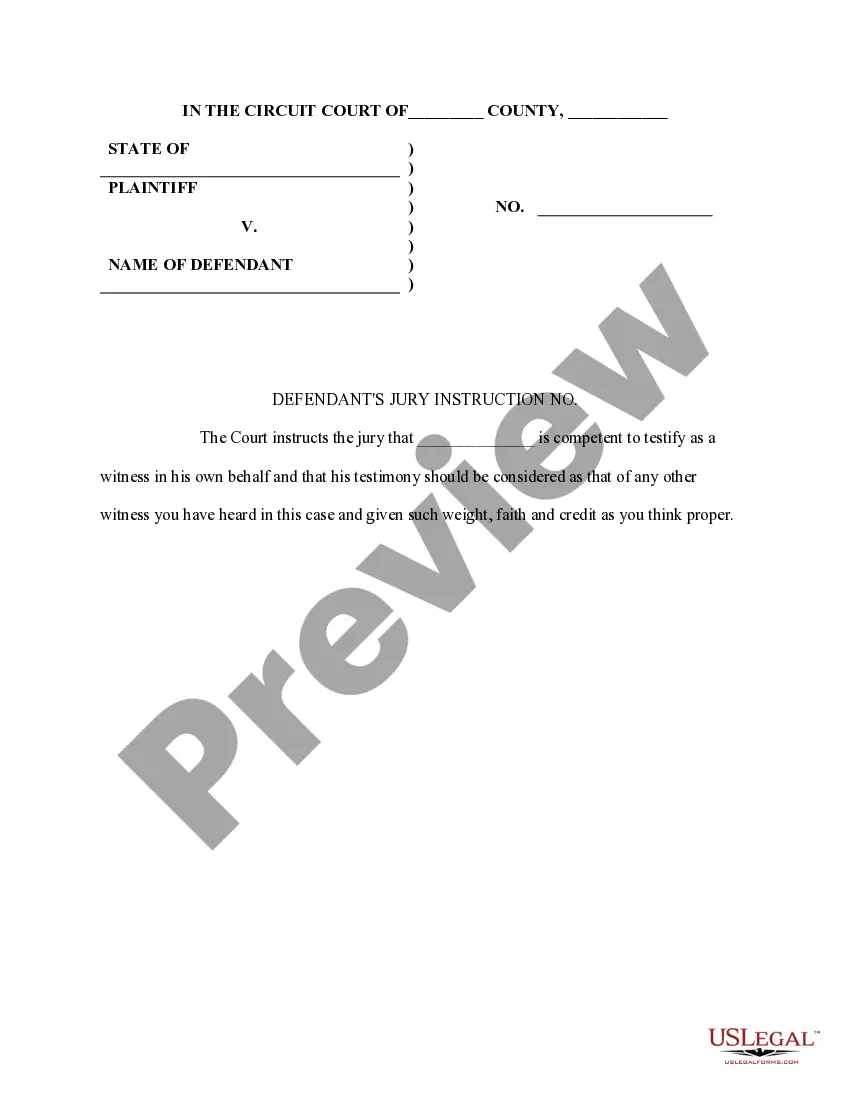
The Order to Disclose Witnesses is a legal document issued by a court that requires a party involved in a legal proceeding to provide a list of witnesses they intend to call during the trial. This form serves to ensure transparency and allows all parties to prepare adequately for the case. Unlike other court documents, this order specifically focuses on witness disclosure, which is crucial for fair trials and effective legal representation.
What’s included in this form
- Caption: Includes the court's name, case number, and parties involved.
- Judicial signature: Confirms the order is legitimate and enforceable.
- Order statement: Clearly states the requirement for disclosure of witnesses.
- Deadline: Specifies the time frame within which witnesses must be disclosed.
- Compliance clause: Outlines the consequences for failing to comply with this order.
Common use cases
This form is necessary when a court requires one or more parties in a legal case to disclose their intended witnesses. It is typically used in the pre-trial phase to facilitate the exchange of information between sides, ensuring both parties know who will testify. Using this order can prevent surprises during trial and allows for a more organized presentation of evidence.
Who this form is for
- Litigants involved in civil or criminal cases requiring witness testimony.
- Attorneys representing clients in court who need to prepare for trial.
- Parties directed by the court to draft an order for witness disclosure.
How to complete this form
- Identify the case: Enter the court name, case number, and the parties involved.
- Draft the order: Clearly state the requirement for disclosing witnesses.
- Specify deadlines: Include the date by which the witness list must be submitted.
- Sign the document: Ensure it is signed by the judge or relevant court official.
- File the order: Submit the completed form to the court within the appropriate timeframe.
Is notarization required?
This form usually doesn’t need to be notarized. However, local laws or specific transactions may require it. Our online notarization service, powered by Notarize, lets you complete it remotely through a secure video session, available 24/7.
Get your form ready online
Our built-in tools help you complete, sign, share, and store your documents in one place.
Make edits, fill in missing information, and update formatting in US Legal Forms—just like you would in MS Word.
Download a copy, print it, send it by email, or mail it via USPS—whatever works best for your next step.
Sign and collect signatures with our SignNow integration. Send to multiple recipients, set reminders, and more. Go Premium to unlock E-Sign.
If this form requires notarization, complete it online through a secure video call—no need to meet a notary in person or wait for an appointment.
We protect your documents and personal data by following strict security and privacy standards.

Make edits, fill in missing information, and update formatting in US Legal Forms—just like you would in MS Word.

Download a copy, print it, send it by email, or mail it via USPS—whatever works best for your next step.

Sign and collect signatures with our SignNow integration. Send to multiple recipients, set reminders, and more. Go Premium to unlock E-Sign.

If this form requires notarization, complete it online through a secure video call—no need to meet a notary in person or wait for an appointment.

We protect your documents and personal data by following strict security and privacy standards.
Typical mistakes to avoid
- Failing to include all necessary information in the caption.
- Missing signatures from relevant parties.
- Not adhering to the specified deadline for submission.
- Overlooking local court rules when drafting the order.
Advantages of online completion
- Convenience of accessing and completing the form from anywhere.
- Editability allows users to tailor the document to their specific case needs.
- Reliability, with forms drafted by licensed attorneys ensuring legal compliance.
Looking for another form?
Form popularity
FAQ
(a) A person is disqualified to be a witness if he or she is: (1) Incapable of expressing himself or herself concerning the matter so as to be understood, either directly or through interpretation by one who can understand him; or (2) Incapable of understanding the duty of a witness to tell the truth.
The major difference between these two types of witnesses is personal knowledge. While experts may use their knowledge or skill to draw conclusions, lay witnesses can only base their opinions on information they personally observed.Rule 602 specifically exempts expert testimony from this requirement.
A lay witness the most common type is a person who watched certain events and describes what they saw. An expert witness is a specialist someone who is educated in a certain area. A character witness is someone who knew the victim, the defendant, or other people involved in the case.
In the United States, such a witness is "more than likely to be true based on his/her experience, knowledge, training and appearance of honesty and forthrightness...." Some factors for determining the credibility of testimony in U.S. courts include: (1) the witness had personal knowledge, (2) he or she was actually
A fact witness is allowed to be compensated a reasonable amount above and beyond the $15 to compensate for lost time, work or expenses. When a witness is subpoenaed to court he must answer questions truthfully as to the facts known to him, but he cannot be forced to give an opinion.