Mississippi Order of Dismissal
Overview of this form
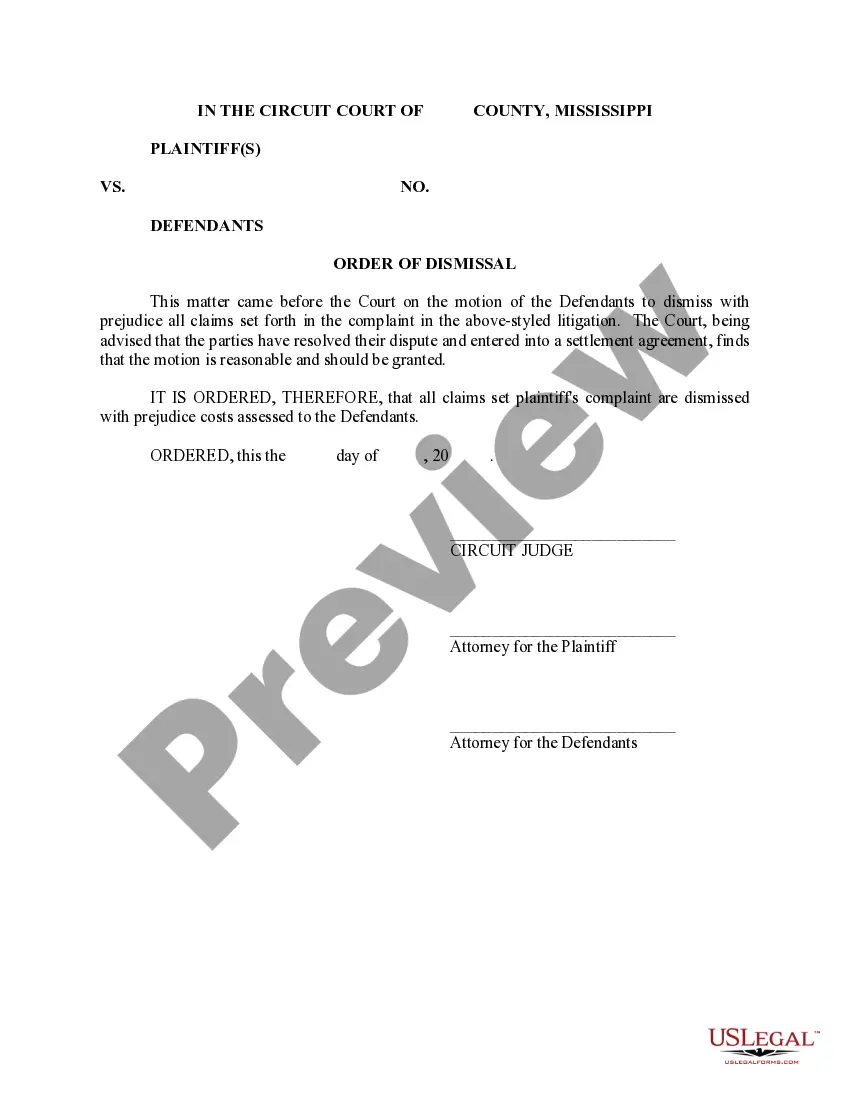
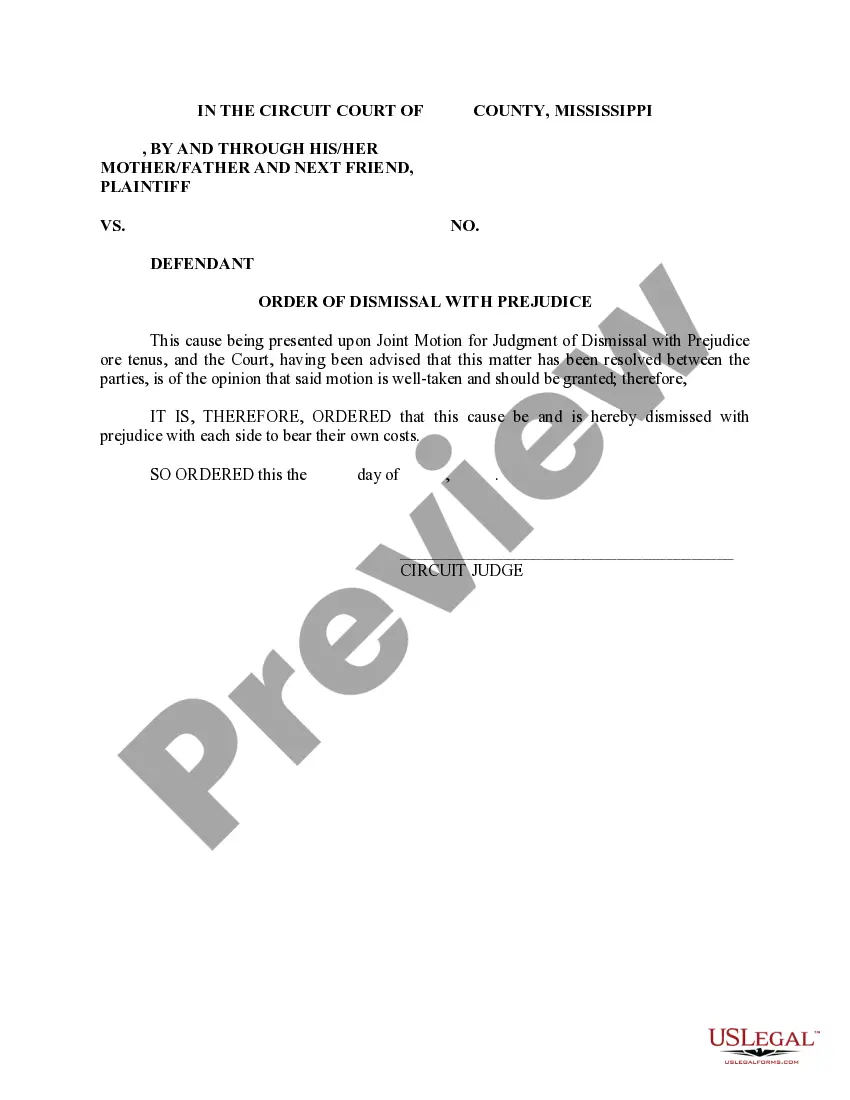
The Order of Dismissal is an official court document that authorizes the dismissal of a case. It includes a directive from the judge, specifying that the claims set forth in the plaintiff's complaint are dismissed with prejudice. This means that the case cannot be refiled. This form is unique as it serves as a template for creating an order that a court may request, ensuring compliance with legal requirements.
Form components explained
- Identification of the court, the judge, and the parties involved in the case.
- A declaration stating that all claims are dismissed with prejudice.
- Specification of any costs assessed to the defendants.
- Signature line for the judge to authenticate the order.
Situations where this form applies
This form is typically used when a court has determined that a case can be dismissed permanently. You may need to file this order in situations where you wish to end litigation after reaching a settlement, when claims lack merit, or in circumstances where no further action is required by either party.
Who this form is for
- Plaintiffs seeking to officially dismiss their case.
- Defendants who want to acknowledge the court's order dismissing the case against them.
- Lawyers assisting clients in formalizing the dismissal of legal actions.
Instructions for completing this form
- Fill in the name of the court and the case number at the top of the document.
- Clearly identify the parties involved in the case.
- State the grounds for dismissal and specify that it is with prejudice.
- Indicate if any costs will be assessed and to whom they will be applied.
- Have the presiding judge sign the order to finalize the dismissal.
Is notarization required?
Notarization is not commonly needed for this form. However, certain documents or local rules may make it necessary. Our notarization service, powered by Notarize, allows you to finalize it securely online anytime, day or night.
Get your form ready online
Our built-in tools help you complete, sign, share, and store your documents in one place.
Make edits, fill in missing information, and update formatting in US Legal Forms—just like you would in MS Word.
Download a copy, print it, send it by email, or mail it via USPS—whatever works best for your next step.
Sign and collect signatures with our SignNow integration. Send to multiple recipients, set reminders, and more. Go Premium to unlock E-Sign.
If this form requires notarization, complete it online through a secure video call—no need to meet a notary in person or wait for an appointment.
We protect your documents and personal data by following strict security and privacy standards.

Make edits, fill in missing information, and update formatting in US Legal Forms—just like you would in MS Word.

Download a copy, print it, send it by email, or mail it via USPS—whatever works best for your next step.

Sign and collect signatures with our SignNow integration. Send to multiple recipients, set reminders, and more. Go Premium to unlock E-Sign.

If this form requires notarization, complete it online through a secure video call—no need to meet a notary in person or wait for an appointment.

We protect your documents and personal data by following strict security and privacy standards.
Avoid these common issues
- Failing to include all necessary information about the parties involved.
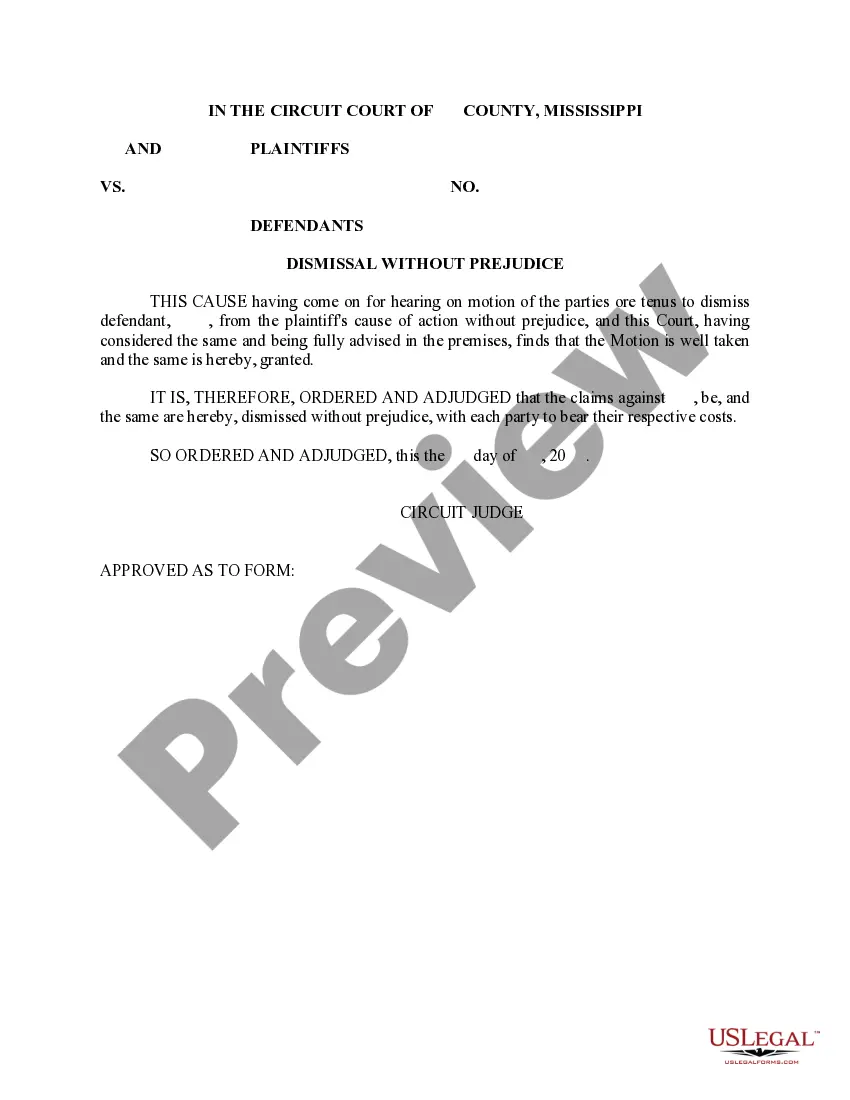
- Not specifying whether the dismissal is with or without prejudice.
- Neglecting to include the judge's signature or the court's seal.
Why use this form online
- Convenient access to a legally vetted template drafted by licensed attorneys.
- Easy customization to fit the specific facts and circumstances of your case.
- Immediate download allows for quick submission to the court.
Legal use & context
- This form serves as a formal mechanism to achieve a permanent dismissal of a case.
- Use of this order ensures both compliance with legal standards and formal acknowledgment by the court.
- Understanding how to properly use this form can prevent potential legal issues in future cases.
Looking for another form?

Form popularity
FAQ
Dismissal with prejudice is a final judgment and the case becomes res judicata on the claims that were or could have been brought in it; dismissal without prejudice is not.
In California, the process of expunging or clearing a criminal record is usually called "dismissal." For legal purposes, if your conviction is dismissed, it is as though you never committed the crime.
A request for involuntary dismissal can be made by a defendant through a motion for dismissal, on grounds that the other party is not prosecuting the case, is not complying with a court order, or to comply with the Federal Rules of Civil Procedure.
It means the case was dismissed, either because plaintiff dismissed it or plaintiff didn't show up for the trial.