Mississippi Letter to Sheriff
About this form
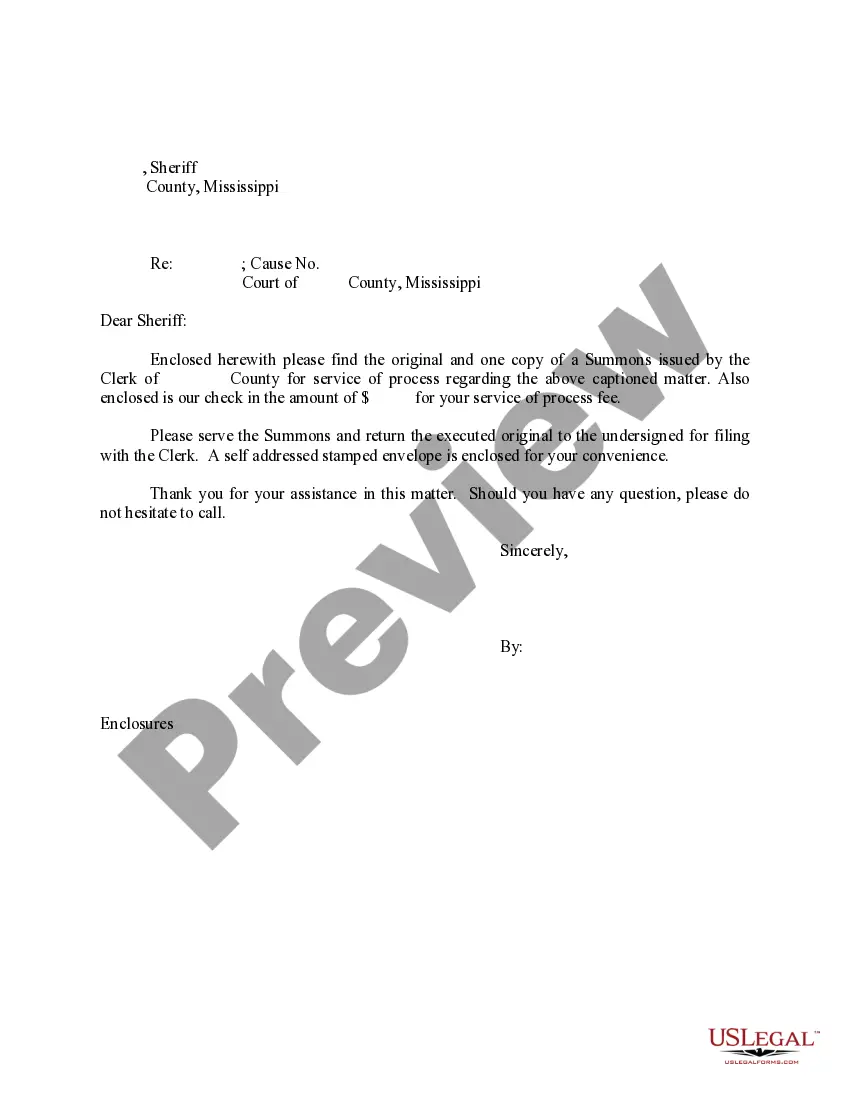
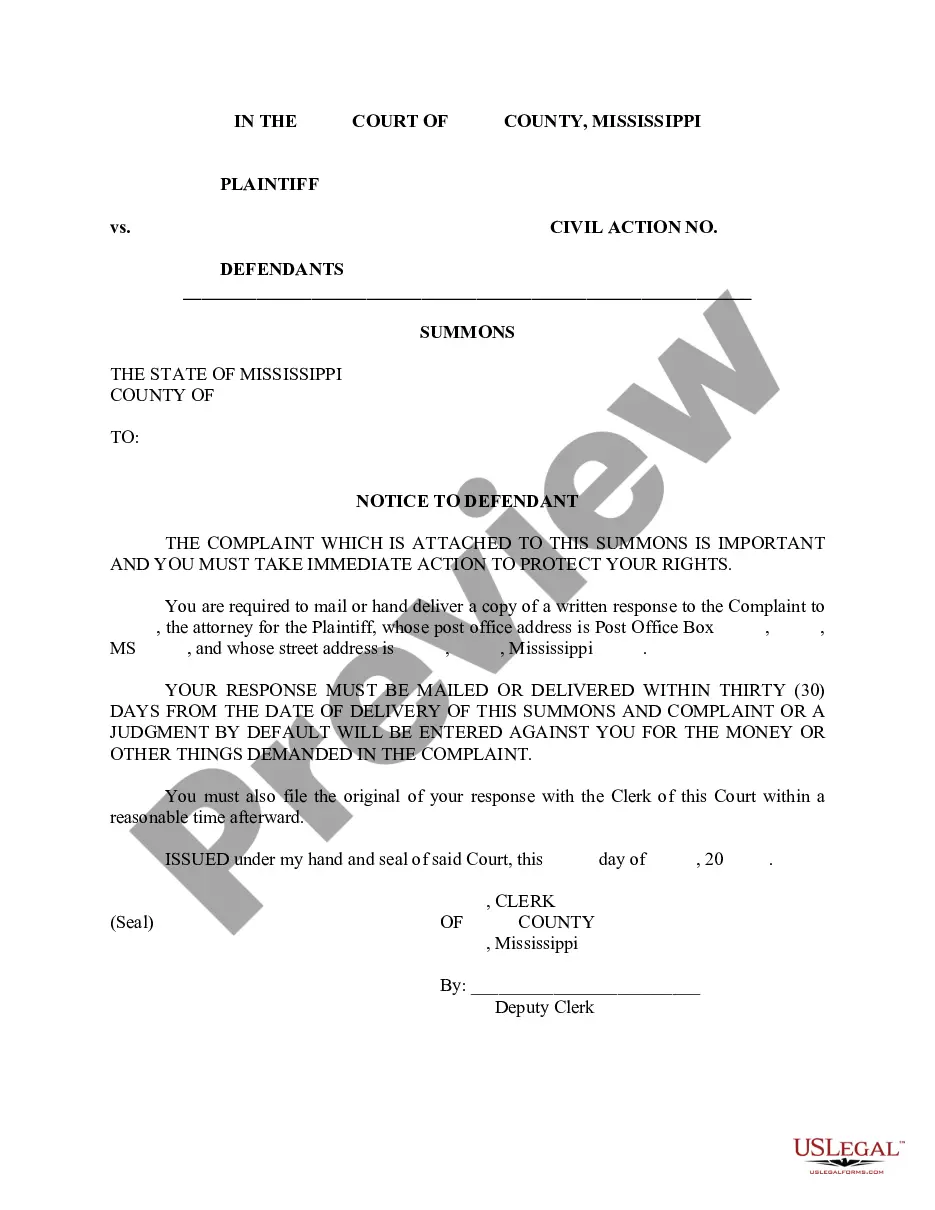
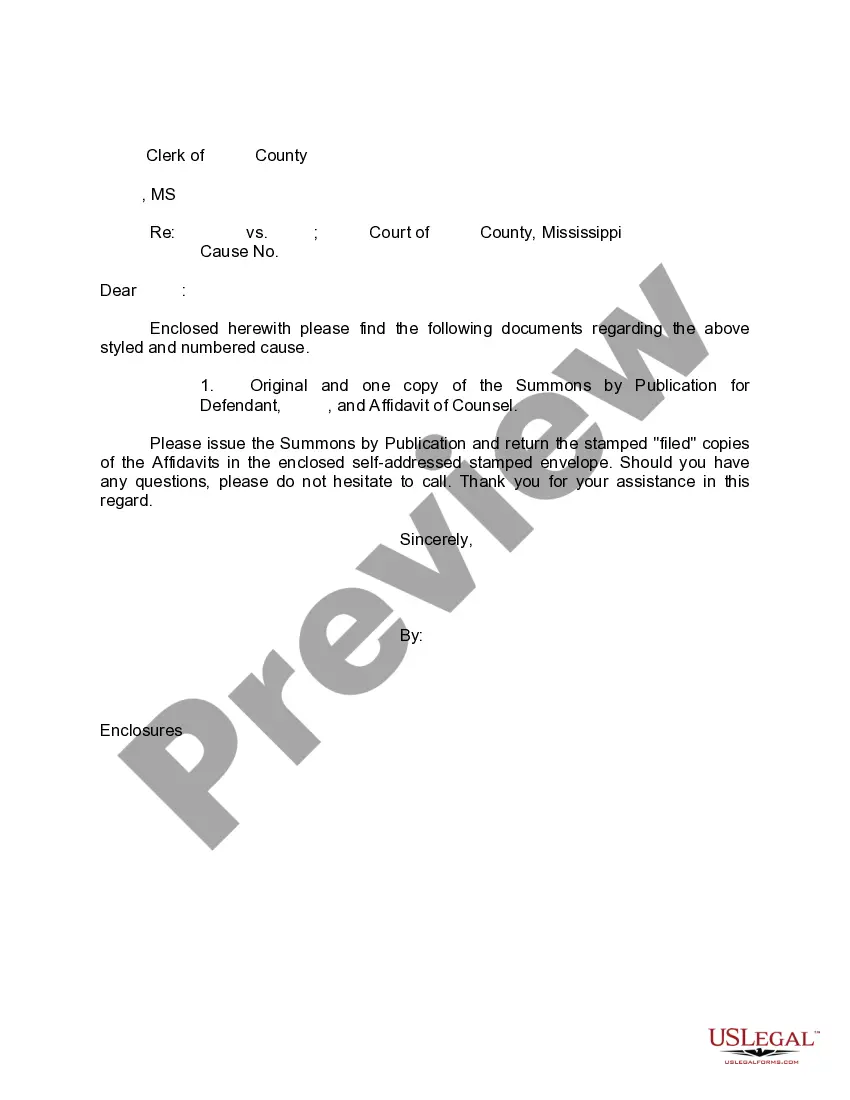
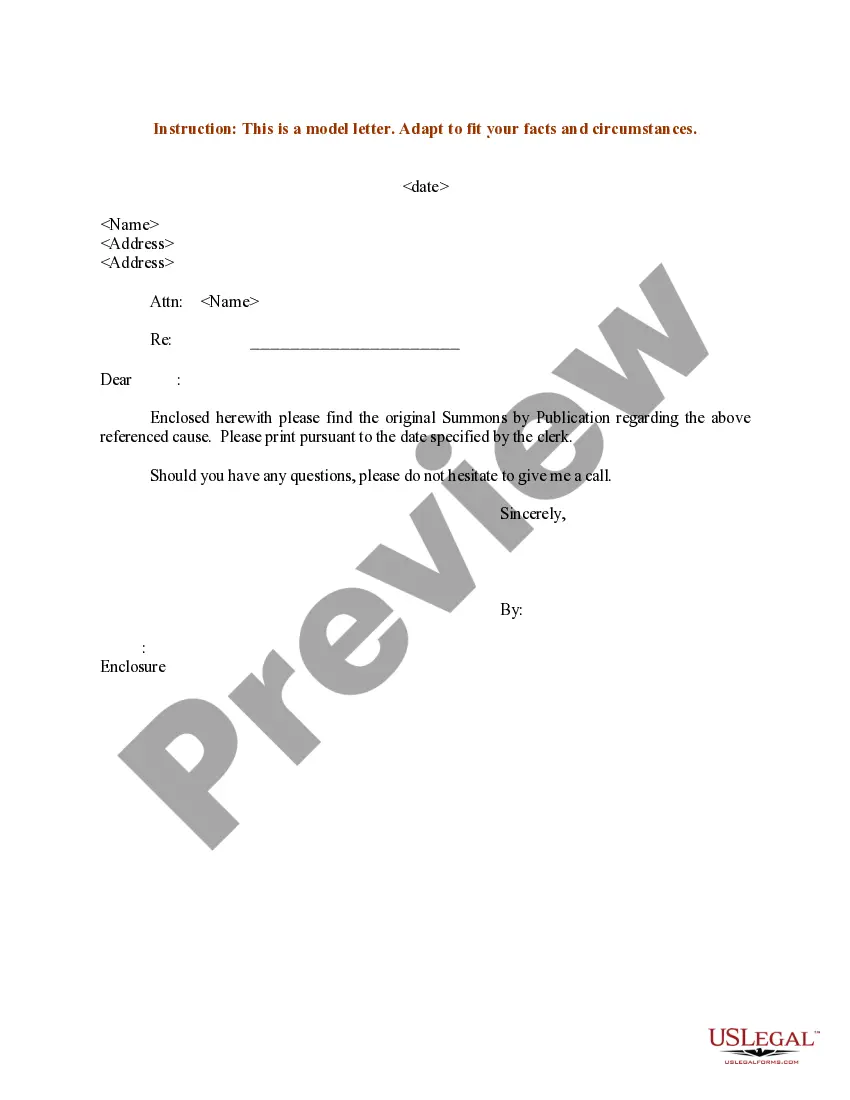
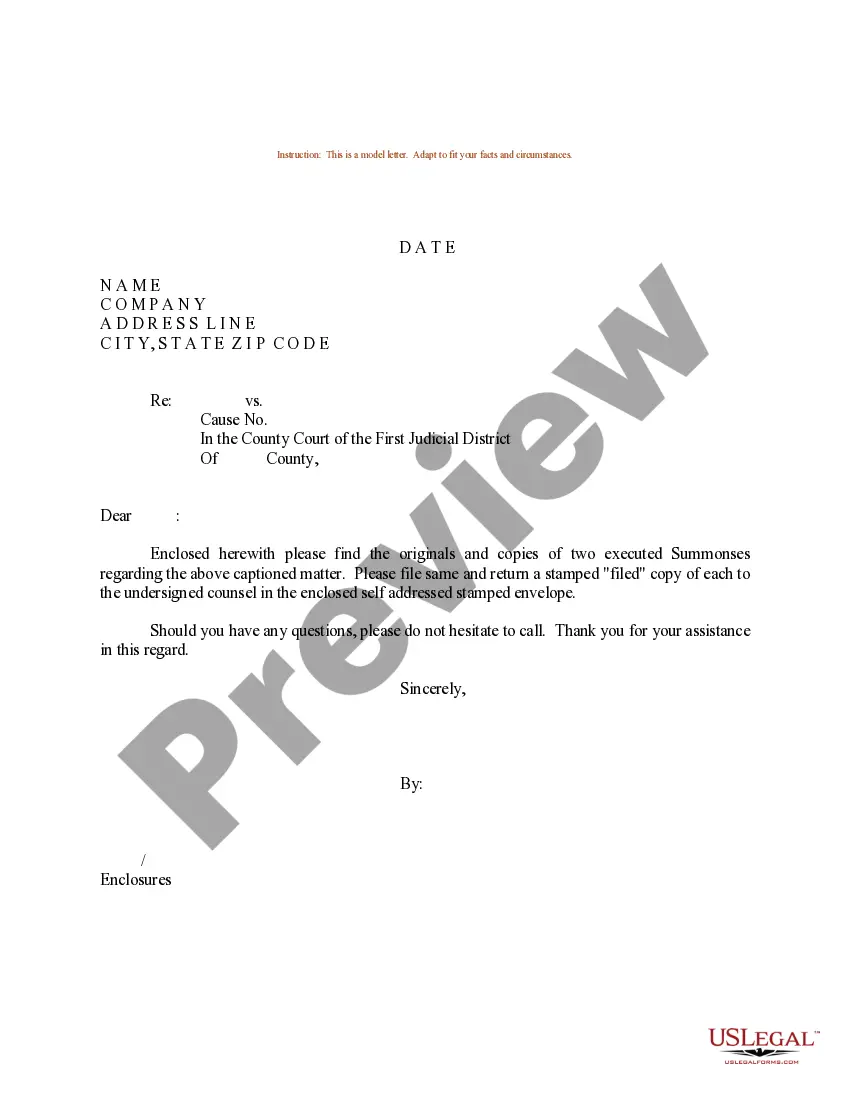
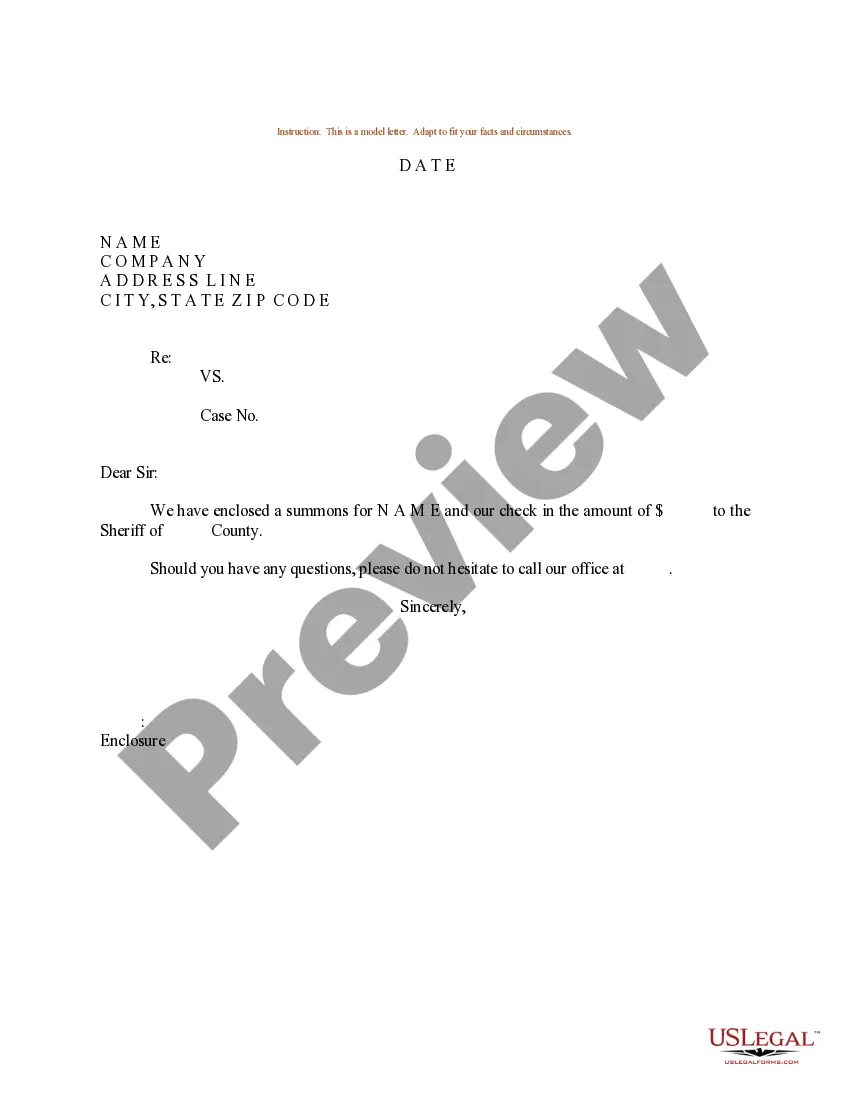
The Letter to Sheriff is a legal document used in Mississippi to request the Sheriff's office to deliver a Summons and Complaint to a specified Defendant. This form is specifically designed to comply with Mississippi laws and is essential when initiating legal proceedings against an individual. Unlike other communication forms, this letter serves a direct legal purpose in the service of process, ensuring that the Defendant is formally notified of the legal action against them.
Key components of this form
- Sender's information: The details of the individual requesting the delivery.
- Defendant's information: Details of the person to whom the Summons and Complaint is directed.
- Specific instructions: Clear directives for the Sheriff regarding the delivery of documents.
- Date of request: The date on which the letter is issued.
- Signature: The sender's signature to validate the request.
Common use cases
This form should be used when you have filed a lawsuit and need the Sheriff to officially serve the Summons and Complaint to the Defendant. It is essential in situations where personal service is required to ensure that the Defendant is notified legally, which is a critical step in the litigation process.
Who should use this form
This form is intended for:
- Individuals filing a lawsuit in Mississippi.
- Attorneys representing clients in civil cases.
- Parties who require formal service of process for legal documents.
How to prepare this document
- Identify the sender's information, including name and address.
- Fill in the Defendant's information accurately.
- Clearly outline the instructions for the Sheriff regarding the Summons and Complaint.
- Enter the date of the request to establish a timeline.
- Sign the document to affirm its authenticity.
Notarization requirements for this form
This form does not typically require notarization unless specified by local law. Always check your local regulations to confirm requirements.
Get your form ready online
Our built-in tools help you complete, sign, share, and store your documents in one place.
Make edits, fill in missing information, and update formatting in US Legal Forms—just like you would in MS Word.
Download a copy, print it, send it by email, or mail it via USPS—whatever works best for your next step.
Sign and collect signatures with our SignNow integration. Send to multiple recipients, set reminders, and more. Go Premium to unlock E-Sign.
If this form requires notarization, complete it online through a secure video call—no need to meet a notary in person or wait for an appointment.
We protect your documents and personal data by following strict security and privacy standards.

Make edits, fill in missing information, and update formatting in US Legal Forms—just like you would in MS Word.

Download a copy, print it, send it by email, or mail it via USPS—whatever works best for your next step.

Sign and collect signatures with our SignNow integration. Send to multiple recipients, set reminders, and more. Go Premium to unlock E-Sign.

If this form requires notarization, complete it online through a secure video call—no need to meet a notary in person or wait for an appointment.

We protect your documents and personal data by following strict security and privacy standards.
Common mistakes to avoid
- Failing to provide complete Defendant information.
- Not including specific delivery instructions for the Sheriff.
- Omitting the sender's signature, making the form invalid.
- Using outdated versions of the form that may not comply with current laws.
Benefits of using this form online
- Convenience of immediate access and download.
- Editable format allows users to fill in relevant details easily.
- Reliability of forms updated to comply with current laws.
Main things to remember
- The Letter to Sheriff is essential for formal notification of legal actions in Mississippi.
- Ensure all required information is accurate and complete for effective service.
- Utilizing this form online streamlines the legal process, saving time and effort.
Looking for another form?
Form popularity
FAQ
What does it mean when I received a letter from sheriff's regarding a court process?The letter states that it is a request to appear.
First line: Full name. Second line: Company name. Third line: Street address. Fourth line: City or town, followed by the state name and zip code. The address should appear under the sender's name and should be aligned to the left.
Add the name and address of the police station to the letter you're writing. Put the date that you're sending out the complaint letter below the police department's address. Explain the nature of your complaint in the first paragraph. Talk briefly about the issue you have with the department, staff member or officer.
WHAT HAPPENS WHEN THE SHERIFF COMES TO MY HOME? The Sheriff will explain that if you do not pay the amount owing your goods will be taken and sold at auction to pay the debt.The Sheriff will tell you when s/he will return to take the goods away. The Sheriff can seize property without taking it immediately.
Informal addresses include sir/ma'am. The formality of the situation should match the formality of the address chosen, but even when casual, you do not use their first name. In written correspondence, use their full name with the rank, then their title (e.g., Major Judith Smith, Jonesville Chief of Police).
To serve you papers. You are being sued, for money, for divorce, for eviction, or you failed to do something required by law. Like show up in court, pay fines, or answer a summons.You are being summoned to appear.
Use sir or ma'am if they're addressing you directly. If an officer is talking directly to you and they're asking you a question or waiting for a response, be sure to throw a sir or ma'am in there. You can start or end the sentence with one of the terms depending on the flow of the sentence.
Most sheriffs' offices perform a wide variety of law enforcement functions, including response to criminal incidents, response to calls for service, patrol, crime investigation, arrest of criminal suspects, execution of warrants, traffic enforcement, traffic direction and control, accident investigation, drug
-So, on an official envelope it would be: --Mr./Ms. ( Full Name) --Acting Sheriff of (Name of Jurisdiction) -The salutation would be: --Dear Mr./Ms. ( Surname) In conversation use: --Mr./Ms. ( Surname) ---or informally.