Mississippi Affidavit of Amount Due on Open Account
What is this form?
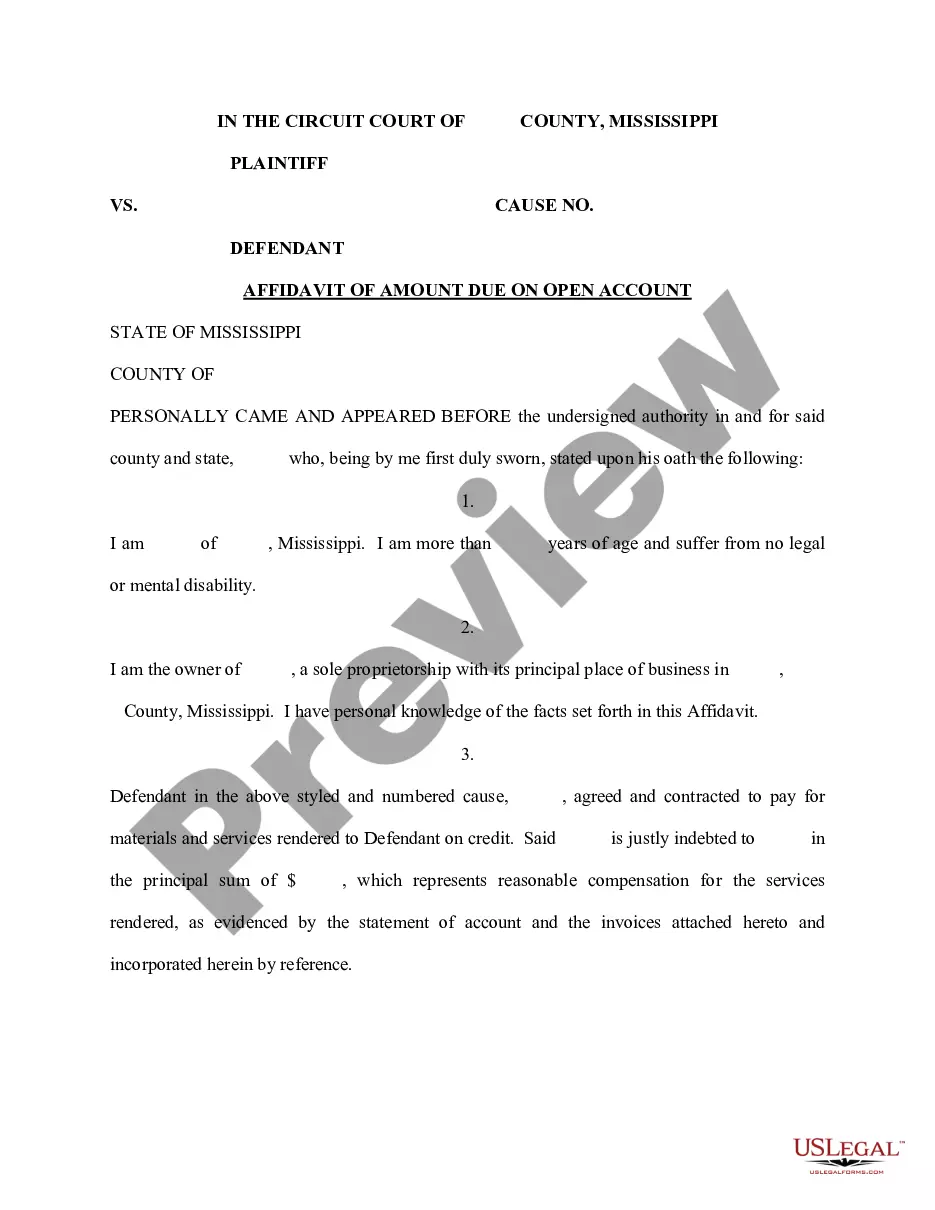
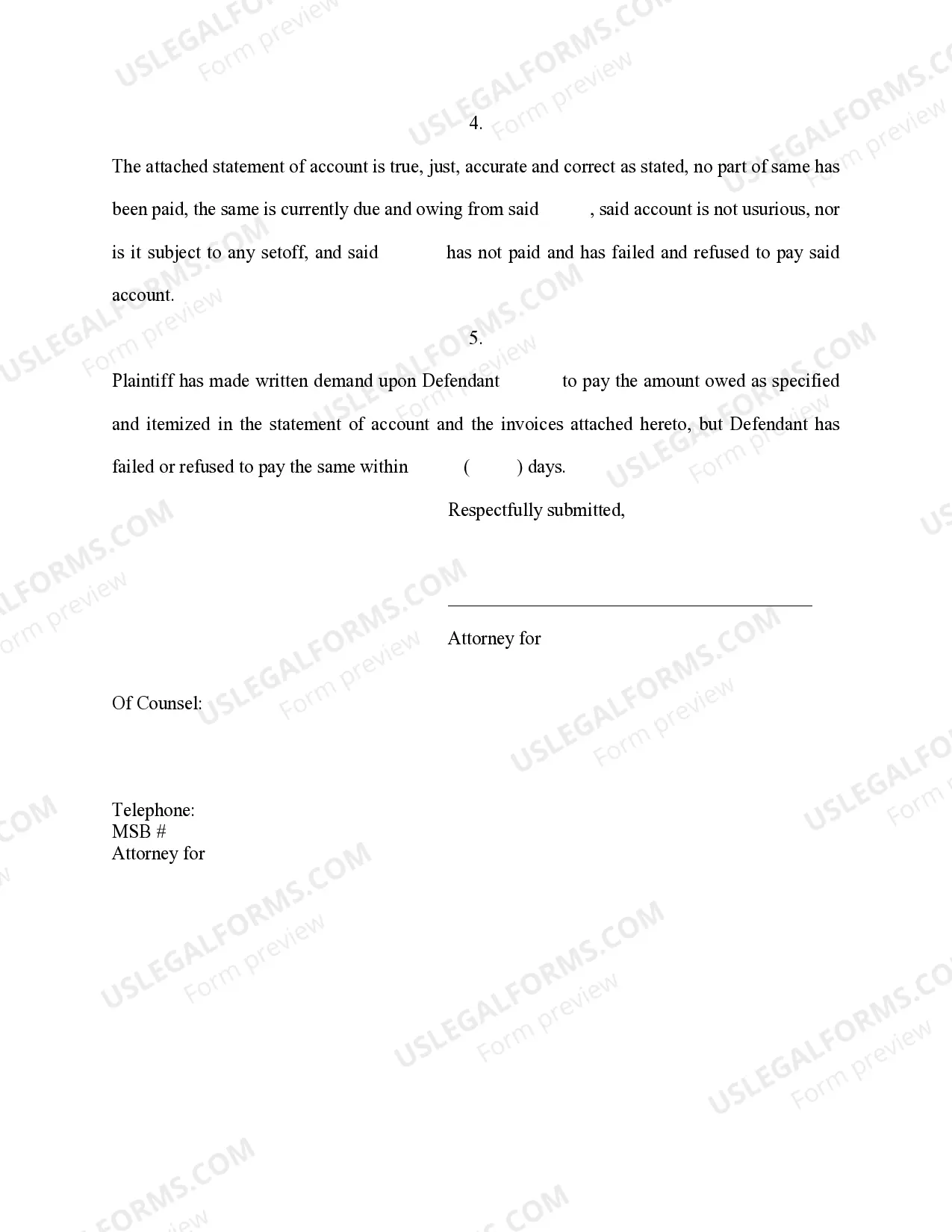
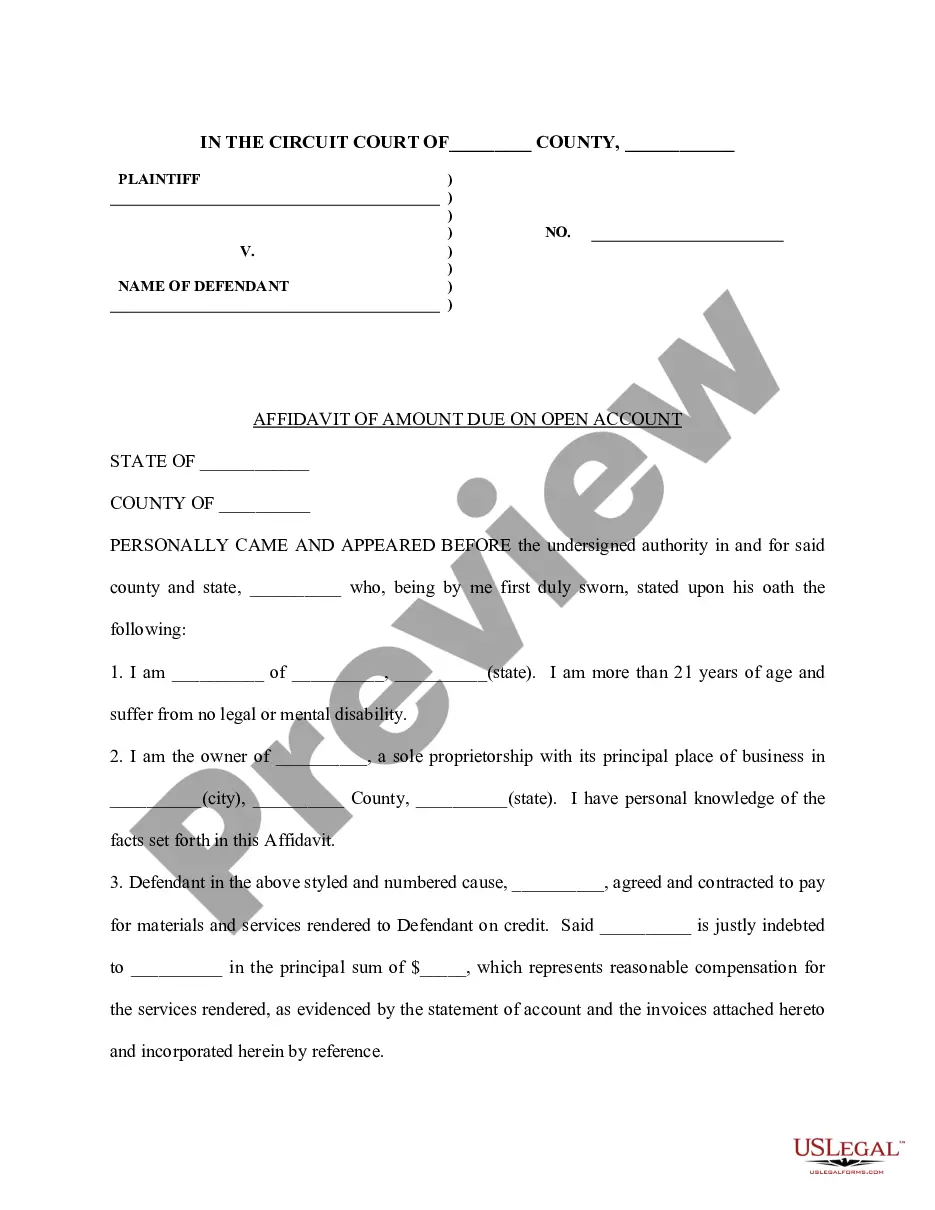
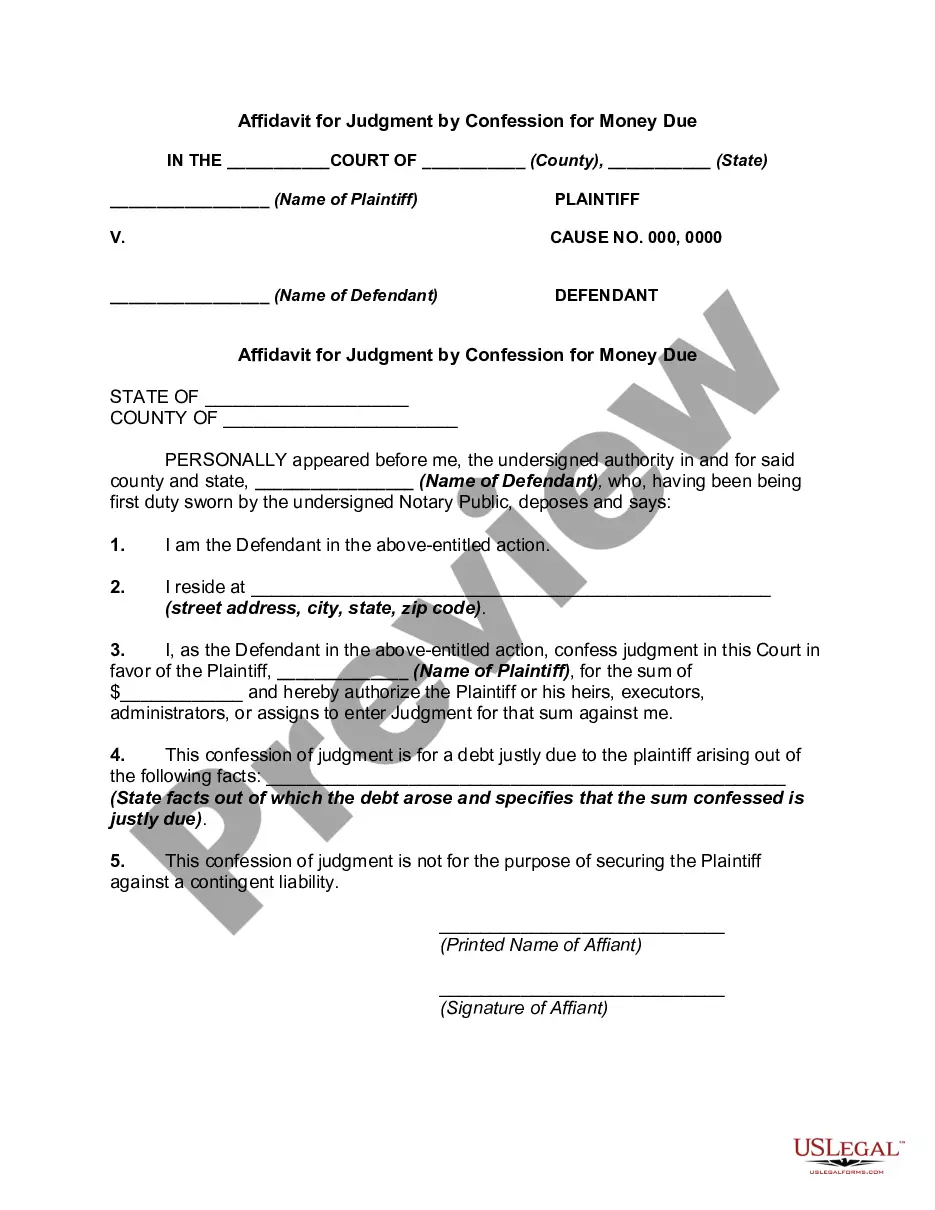
The Affidavit of Amount Due on Open Account is a sworn statement that outlines the amount owed to a creditor. This form serves to confirm debts that remain unpaid, and it is typically used in legal proceedings or negotiations surrounding debt recovery. Unlike similar forms, this affidavit specifically focuses on open accounts and provides a clear declaration of amounts due, making it a crucial tool for creditors seeking to enforce their claims.
Main sections of this form
- Affiant's information: Personal details of the person making the statement.
- Creditor's details: Information about the creditor or company owed money.
- Account details: Description of the open account and related transactions.
- Amount due: Explicit declaration of the total amount owed.
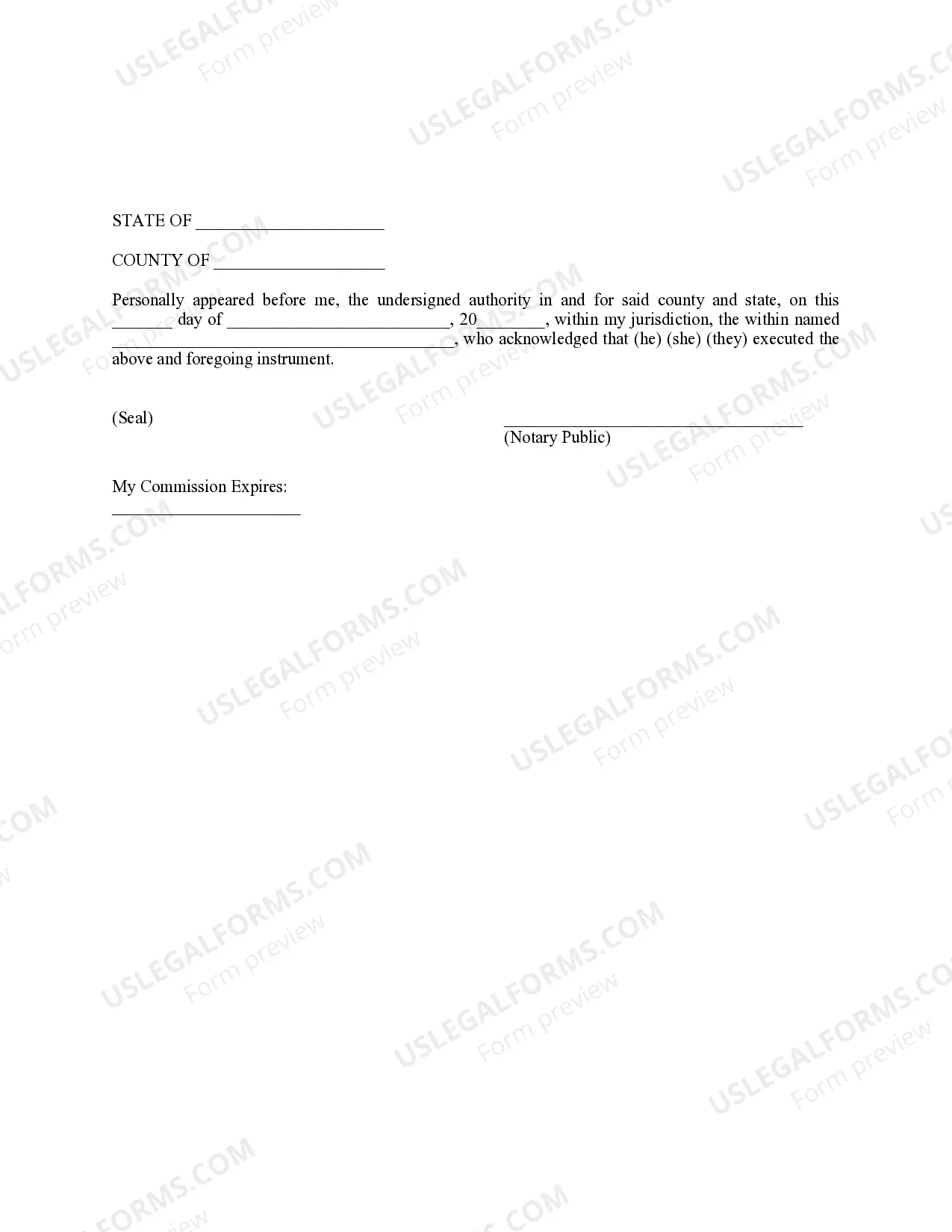
- Signature and notarization: Space for the affiant's signature and a notary's acknowledgment.
Common use cases
This form is typically used when a creditor needs to formally assert an outstanding balance owed on an open account. Scenarios include initiating court proceedings for debt recovery, negotiating payment terms with a debtor, or proving the existence of a debt in a legal context.
Who needs this form
- Creditors seeking to document amounts owed by debtors.
- Businesses with unpaid accounts receivable.
- Individuals claiming debts due from other individuals or entities.
- Legal representatives working on debt recovery cases.
Steps to complete this form
- Identify the parties: Include the names and addresses of the affiant and creditor.
- Specify account details: Describe the open account and summarize the transactions.
- Enter the amount due: Clearly state the total amount owed.
- Sign before a notary: The affiant must sign the document in the presence of a notary public.
- Ensure notarization: The notary must sign and stamp the document to confirm validity.
Notarization requirements for this form
Yes, this form must be notarized to be legally valid. The notarization process confirms the identity of the affiant and ensures that the statement is sworn under oath. Additionally, US Legal Forms offers integrated online notarization, allowing you to complete this step securely via a video call without the need for travel.
Get your form ready online
Our built-in tools help you complete, sign, share, and store your documents in one place.
Make edits, fill in missing information, and update formatting in US Legal Forms—just like you would in MS Word.
Download a copy, print it, send it by email, or mail it via USPS—whatever works best for your next step.
Sign and collect signatures with our SignNow integration. Send to multiple recipients, set reminders, and more. Go Premium to unlock E-Sign.
If this form requires notarization, complete it online through a secure video call—no need to meet a notary in person or wait for an appointment.
We protect your documents and personal data by following strict security and privacy standards.

Make edits, fill in missing information, and update formatting in US Legal Forms—just like you would in MS Word.

Download a copy, print it, send it by email, or mail it via USPS—whatever works best for your next step.

Sign and collect signatures with our SignNow integration. Send to multiple recipients, set reminders, and more. Go Premium to unlock E-Sign.

If this form requires notarization, complete it online through a secure video call—no need to meet a notary in person or wait for an appointment.

We protect your documents and personal data by following strict security and privacy standards.
Typical mistakes to avoid
- Leaving out important account details, which can lead to confusion about the debt.
- Not signing in front of a notary, rendering the affidavit invalid.
- Failing to accurately calculate the amount due.
- Using outdated or incorrect forms that do not meet current legal requirements.
Why use this form online
- Convenience: Downloadable form readily available for immediate use.
- Editability: Tailor the document to fit specific details of your situation.
- Reliability: Forms are drafted by licensed attorneys, ensuring legal compliance.
Quick recap
- The Affidavit of Amount Due on Open Account is a key legal document for creditors.
- It formalizes claims on outstanding debts and supports legal actions.
- Accurate completion and notarization of the form are critical for enforceability.
- Understanding state-specific rules is important for proper use.
Looking for another form?
Form popularity
FAQ
An affidavit is used for the purpose of proving in court that a claim is true, and is typically used in conjunction with witness statements and other corroborating evidence. Through an affidavit, an individual swears that the information contained within is true to the best of their knowledge.
An affidavit is a written statement. It considers having a format under oath. It's only valid when it is on a voluntary basis and without coercion. When you sign an affidavit, you say that the evidence is accurate and that you are aware of the details in the affidavit personally.
In the sentence, the person writing the statement must state that he or she is stating that the information is accurate. (Example: I, Jane Doe, solemnly swear that the contents of this document are true and correct, and that I agree to abide by the terms in this affidavit.)
Title the affidavit. First, you'll need to title your affidavit. Craft a statement of identity. Write a statement of truth. State the facts. Reiterate your statement of truth. Sign and notarize.
In a nutshell, an affidavit is a sworn statement that is in writing. Affidavits are usually used in a court or in negotiations. They are common in family law cases and bankruptcy cases. They are also used in civil and criminal cases, though not as often as family or bankruptcy law cases.