Mississippi Answer
About this form
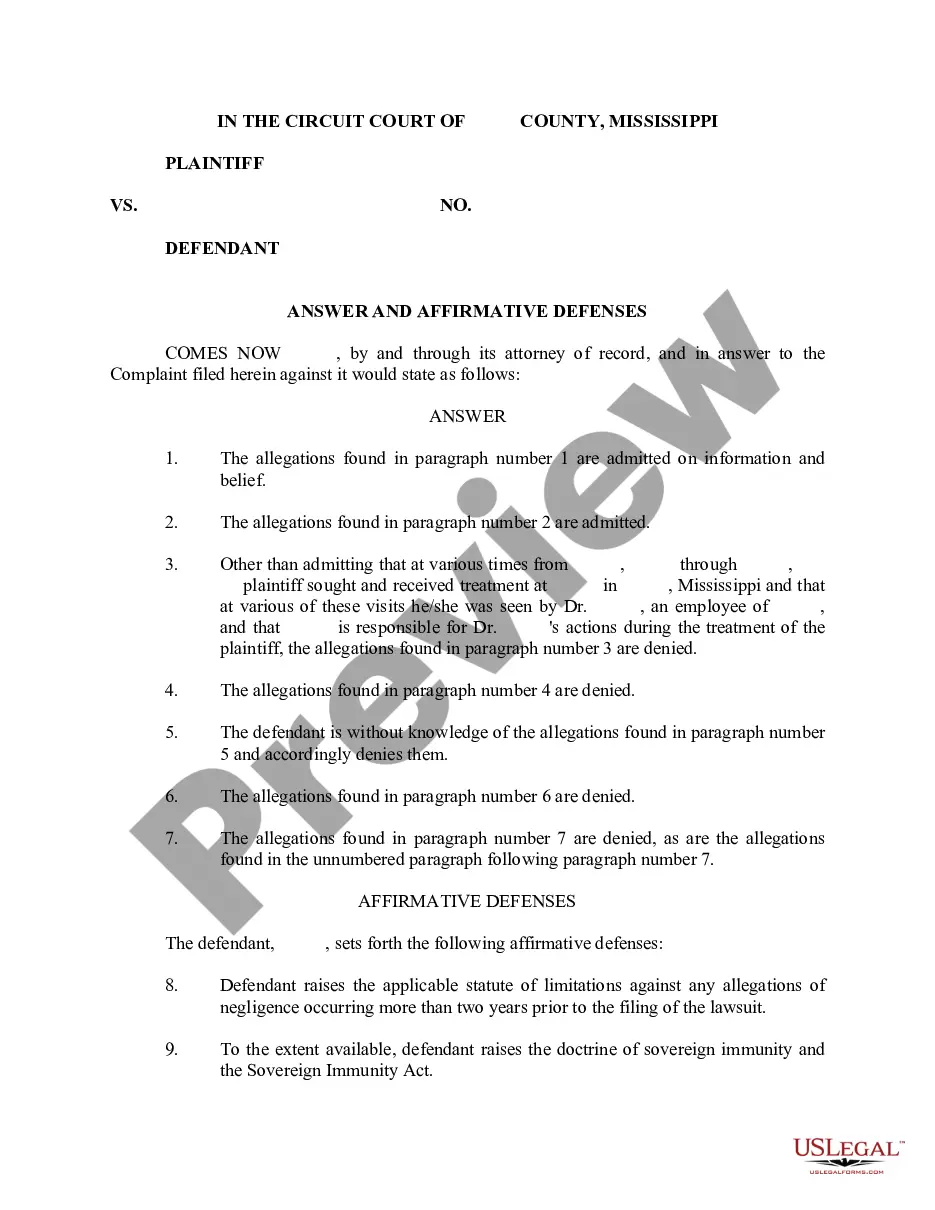
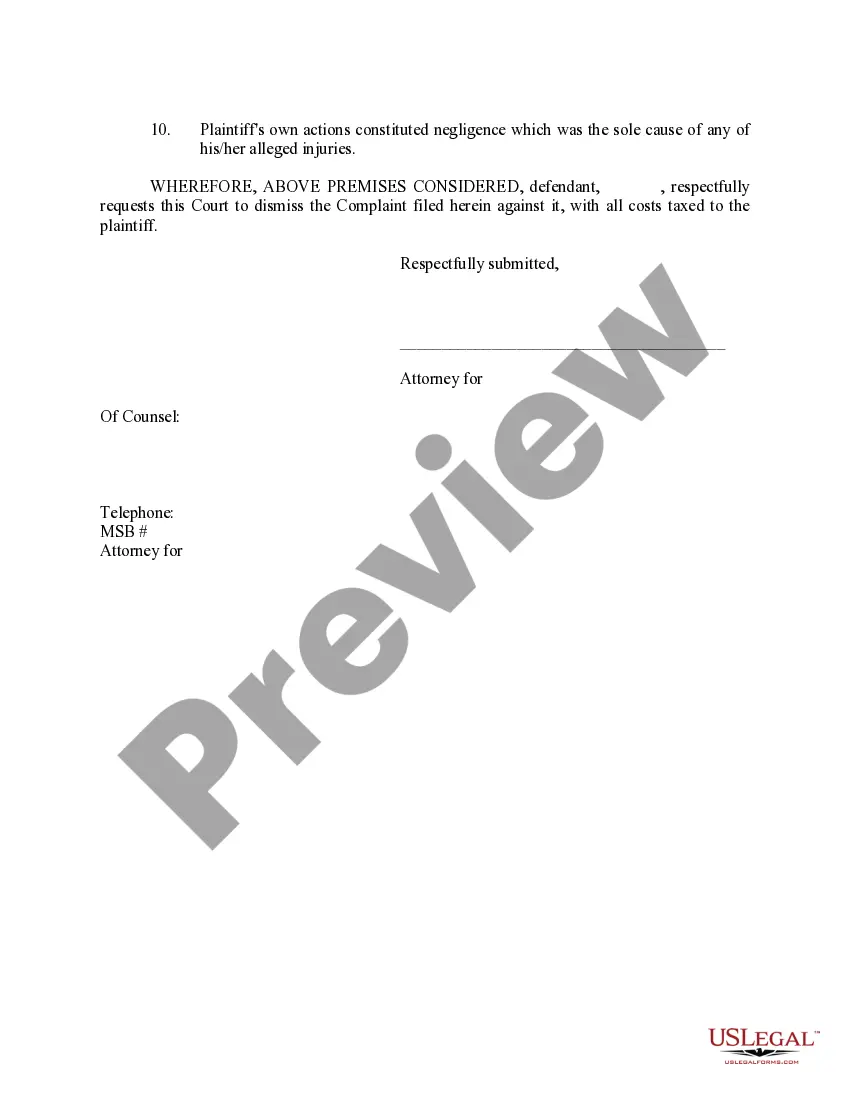
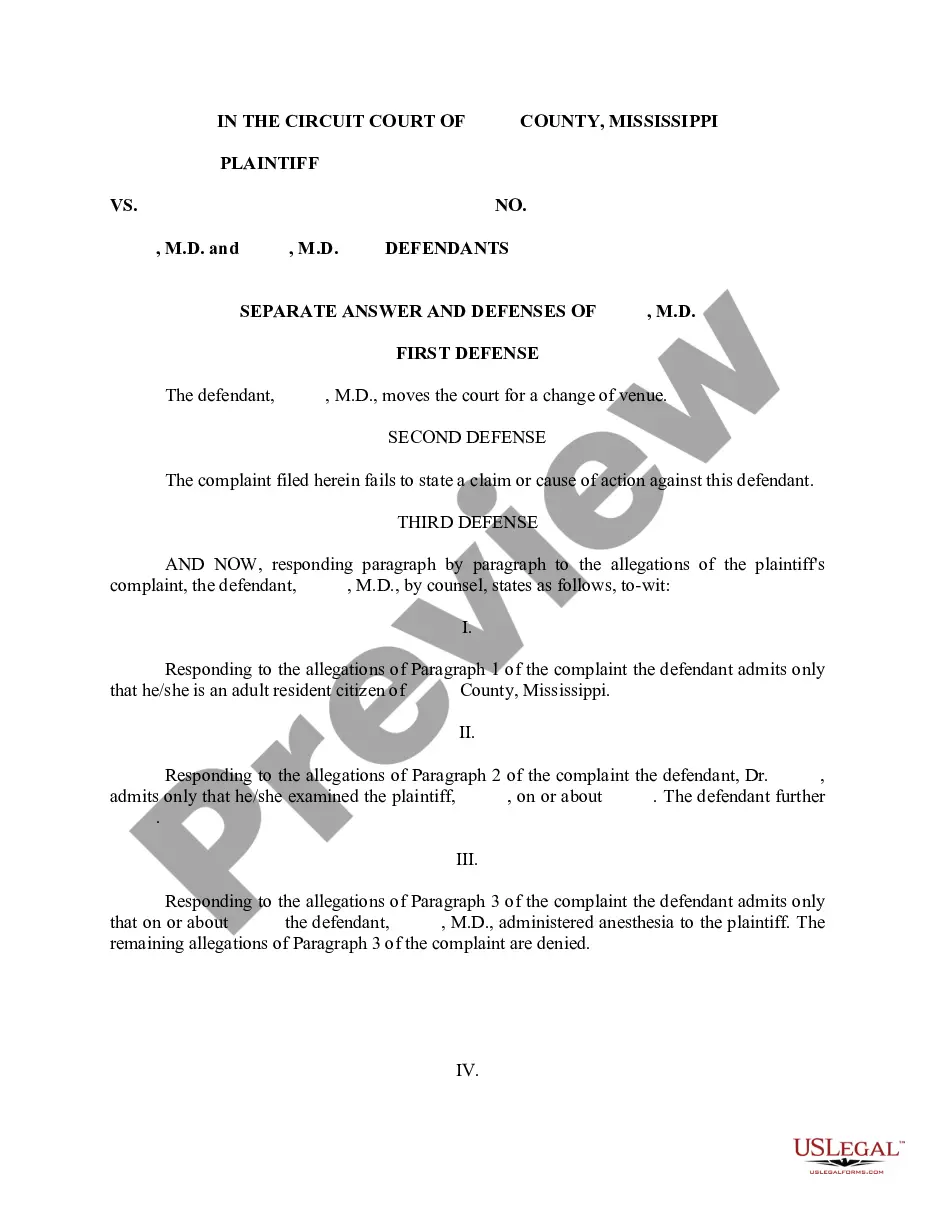
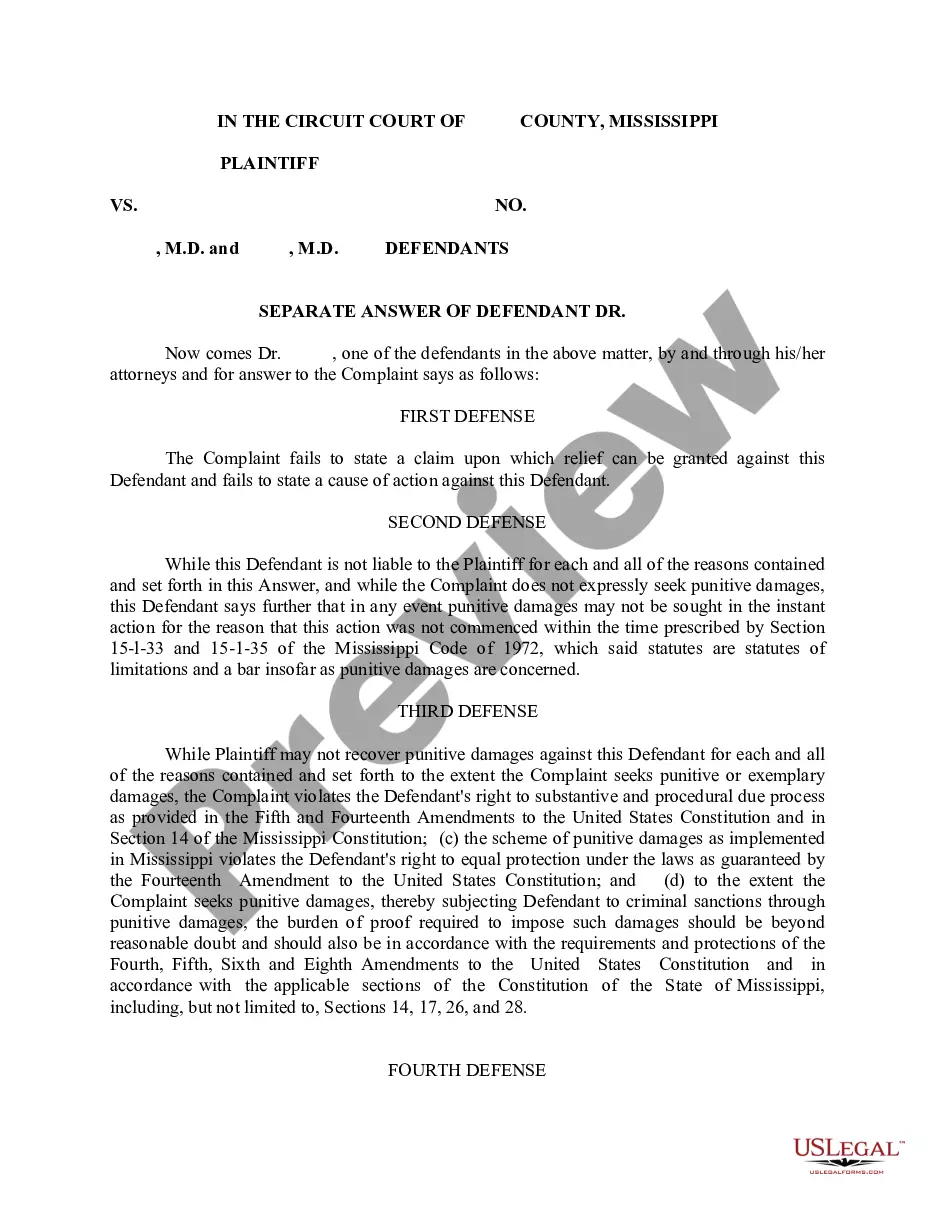
The Answer form is a legal document filed in response to a Complaint, specifically in cases involving medical malpractice. It serves as a formal reply to the allegations made against the defendant and includes affirmative defenses that assert reasons why the defendant should not be held liable. This form is crucial for the defendant to protect their rights during the lawsuit process, distinguishing it from other legal documents that may not address defenses.
Key parts of this document
- Admission or denial of allegations presented in the Complaint.
- Statement of lack of knowledge regarding certain claims, allowing for denial.
- Inclusion of affirmative defenses that may exonerate the defendant, such as contributory negligence.
When this form is needed
This form should be used when a defendant in a medical malpractice lawsuit needs to formally respond to the allegations made against them. It is essential to file an Answer to avoid default judgment and to outline any defenses that may apply to the case.
Intended users of this form
- Defendants in medical malpractice cases seeking to contest allegations against them.
- Individuals who need to assert affirmative defenses as part of their response to a Complaint.
- Parties involved in litigation who wish to ensure their responses are legally valid.
Completing this form step by step
- Review each allegation in the Complaint to understand the claims against you.
- Indicate your response to each allegation by admitting, denying, or stating lack of knowledge.
- Draft your affirmative defenses, clearly stating any reasons you assert for your non-liability.
- Sign and date the Answer form to validate your responses.
- File the completed Answer with the court and serve a copy to all parties involved in the lawsuit.
Notarization requirements for this form
This form usually doesn’t need to be notarized. However, local laws or specific transactions may require it. Our online notarization service, powered by Notarize, lets you complete it remotely through a secure video session, available 24/7.
Get your form ready online
Our built-in tools help you complete, sign, share, and store your documents in one place.
Make edits, fill in missing information, and update formatting in US Legal Forms—just like you would in MS Word.
Download a copy, print it, send it by email, or mail it via USPS—whatever works best for your next step.
Sign and collect signatures with our SignNow integration. Send to multiple recipients, set reminders, and more. Go Premium to unlock E-Sign.
If this form requires notarization, complete it online through a secure video call—no need to meet a notary in person or wait for an appointment.
We protect your documents and personal data by following strict security and privacy standards.

Make edits, fill in missing information, and update formatting in US Legal Forms—just like you would in MS Word.

Download a copy, print it, send it by email, or mail it via USPS—whatever works best for your next step.

Sign and collect signatures with our SignNow integration. Send to multiple recipients, set reminders, and more. Go Premium to unlock E-Sign.

If this form requires notarization, complete it online through a secure video call—no need to meet a notary in person or wait for an appointment.

We protect your documents and personal data by following strict security and privacy standards.
Common mistakes to avoid
- Failing to respond to all allegations, which can lead to default judgment.
- Not filing the Answer within the required time frame after receiving the Complaint.
- Omitting clear affirmative defenses that could aid in establishing a case for dismissal.
Why use this form online
- Immediate access to a professionally drafted form tailored to medical malpractice cases.
- Easy to download and edit in Word or Rich Text format according to your needs.
- Ensures compliance with legal standards to aid your case strategy.
Looking for another form?
Form popularity
FAQ
An affirmative defense operates to prevent conviction even when the prosecutor has proof beyond a reasonable doubt as to every element of the crime. Some jurisdictions place the burden on the defendant to prove the defense, while others require that the prosecution disprove the defense beyond a reasonable doubt.
Accord and Satisfaction, Arbitration and Award, Assumption of the Risk, Contributory Negligence, Discharge in Bankruptcy, Duress, Estoppel, Failure of Consideration,
These defenses include formation problems, lack of capacity, illegality of subject matter, impossibility, duress, unconscionability, undue influence, violation of the Statute of Frauds requirement that certain types of contracts must be in writing to be enforceable against the defendant, exceeding the statute of
While the availability of an affirmative defense will depend on the state, there are generally two categories of affirmative defenses, justifications and excuses.
31 Affirmative Defenses And How To Assert Them.
Affirmative defenses are legal defenses that raise new facts or issues not raised in the Complaint. If you want the court to consider your legal defenses you MUST include them in your Answer. Therefore, any possible defense you might want the court to consider at trial should be in your Answer.
A new fact or set of facts that operates to defeat a claim even if the facts supporting that claim are true. A plaintiff sets forth a claim in a civil action by making statements in the document called the complaint. An affirmative defense is also allowed under rules of CRIMINAL PROCEDURE.
An affirmative defense is a justification for the defendant having committed the accused crime. It differs from other defenses because the defendant admits that he did, in fact, break the law. He is simply arguing that he has a good reason for having done so, and therefore should be excused from all criminal liability.