Mississippi Order Dismissing Case
What this document covers
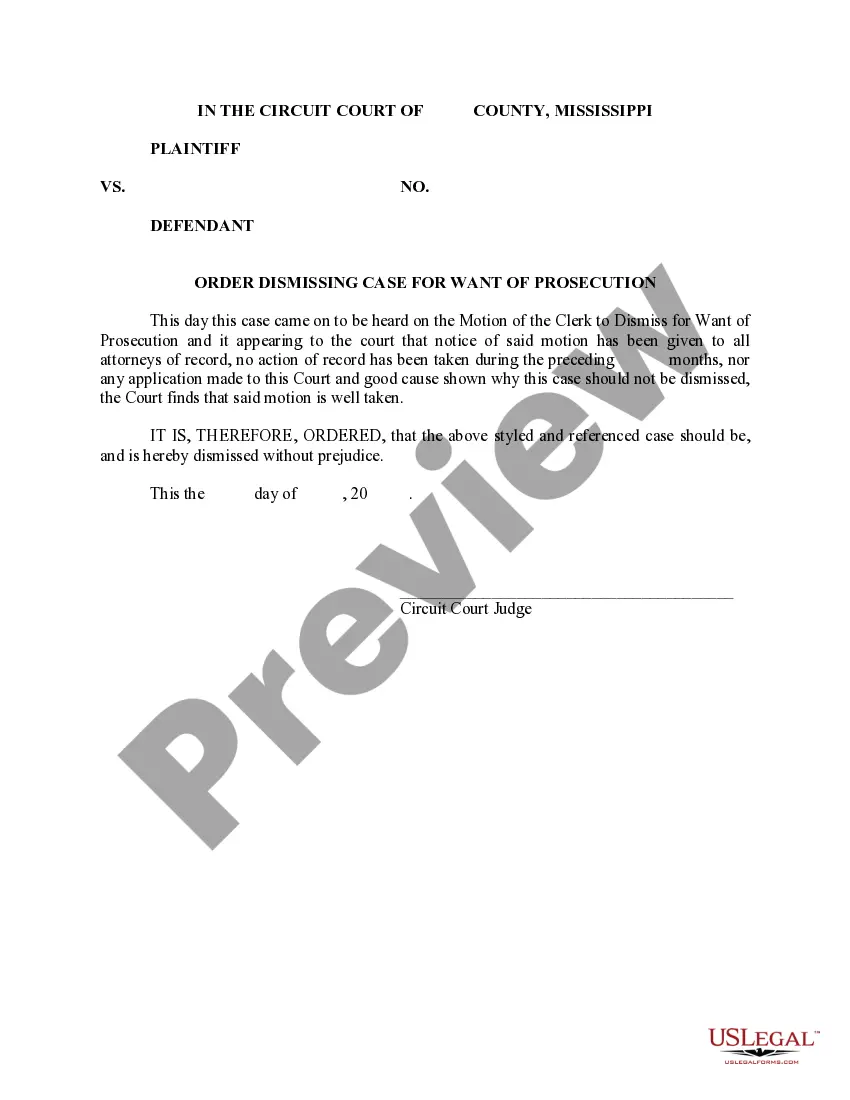
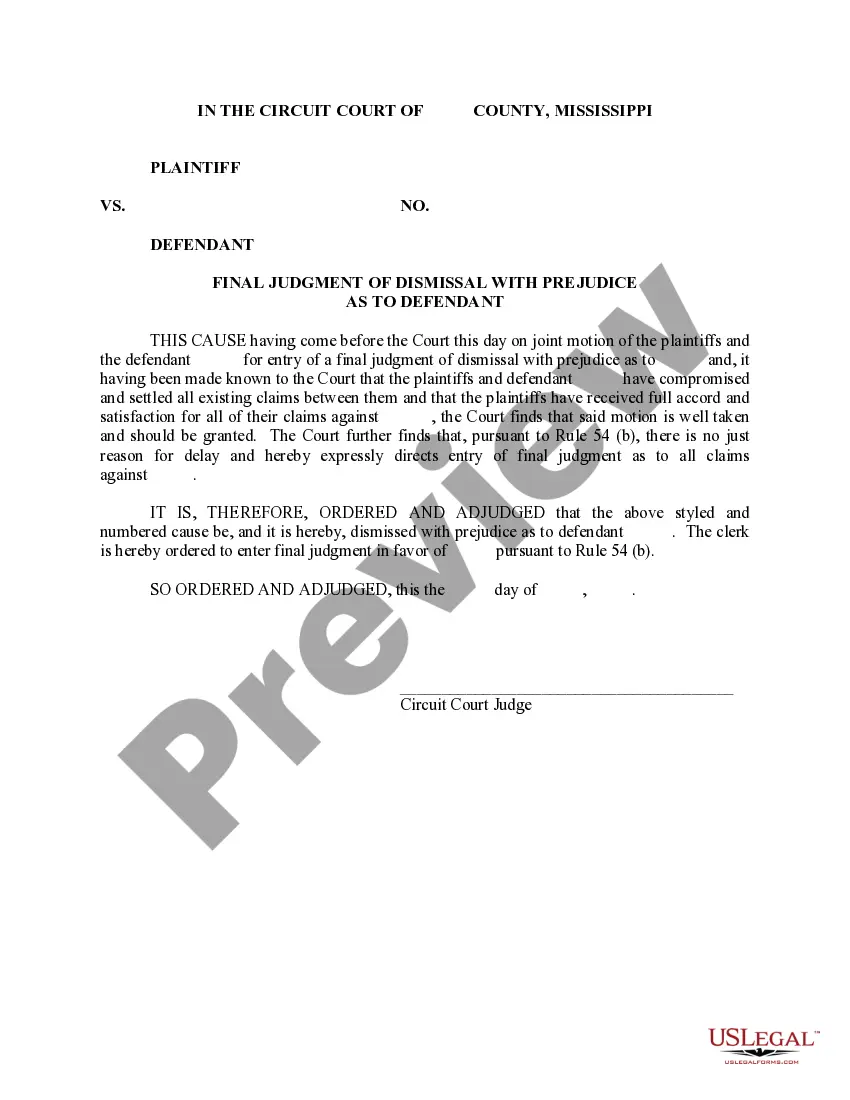
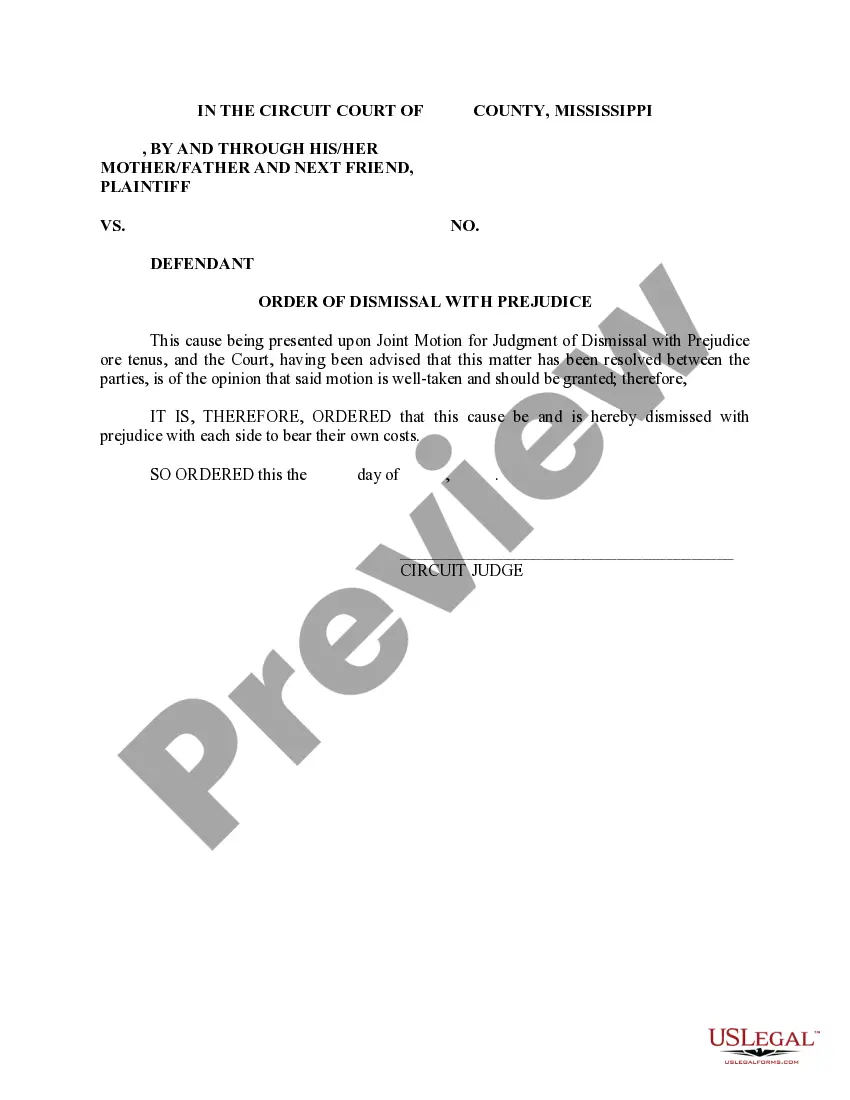
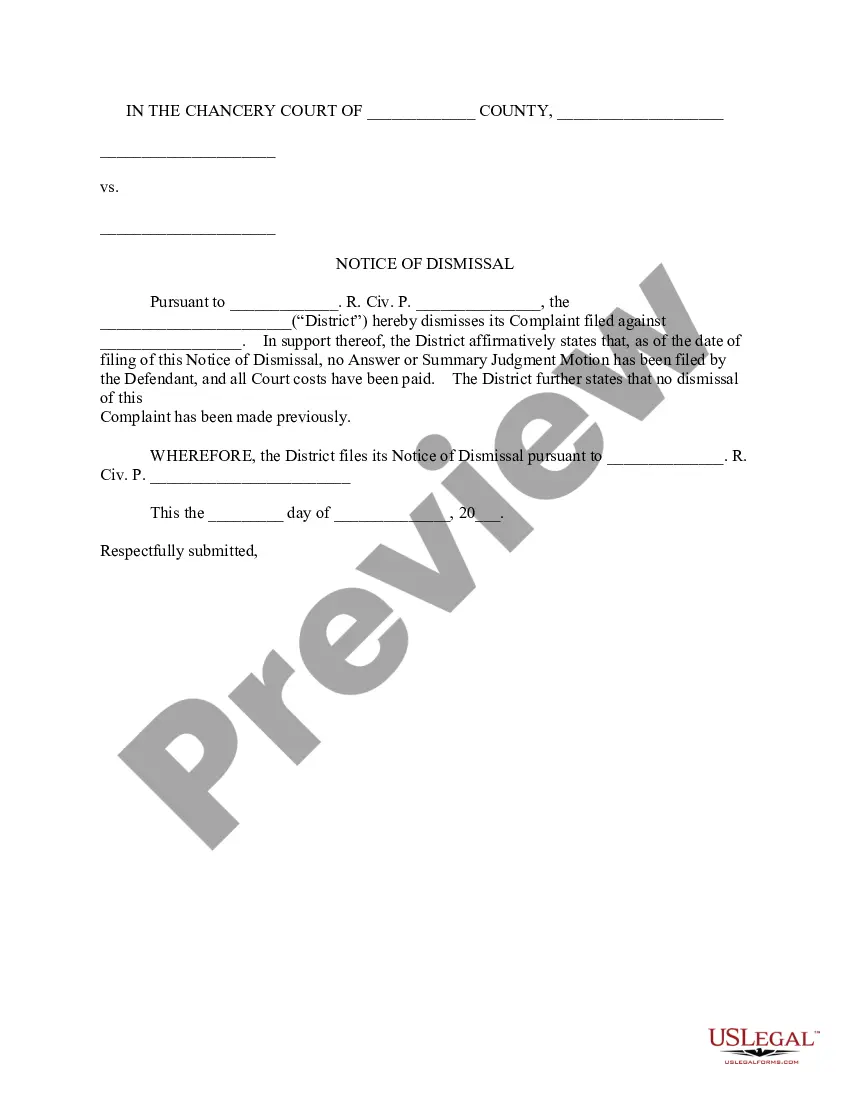
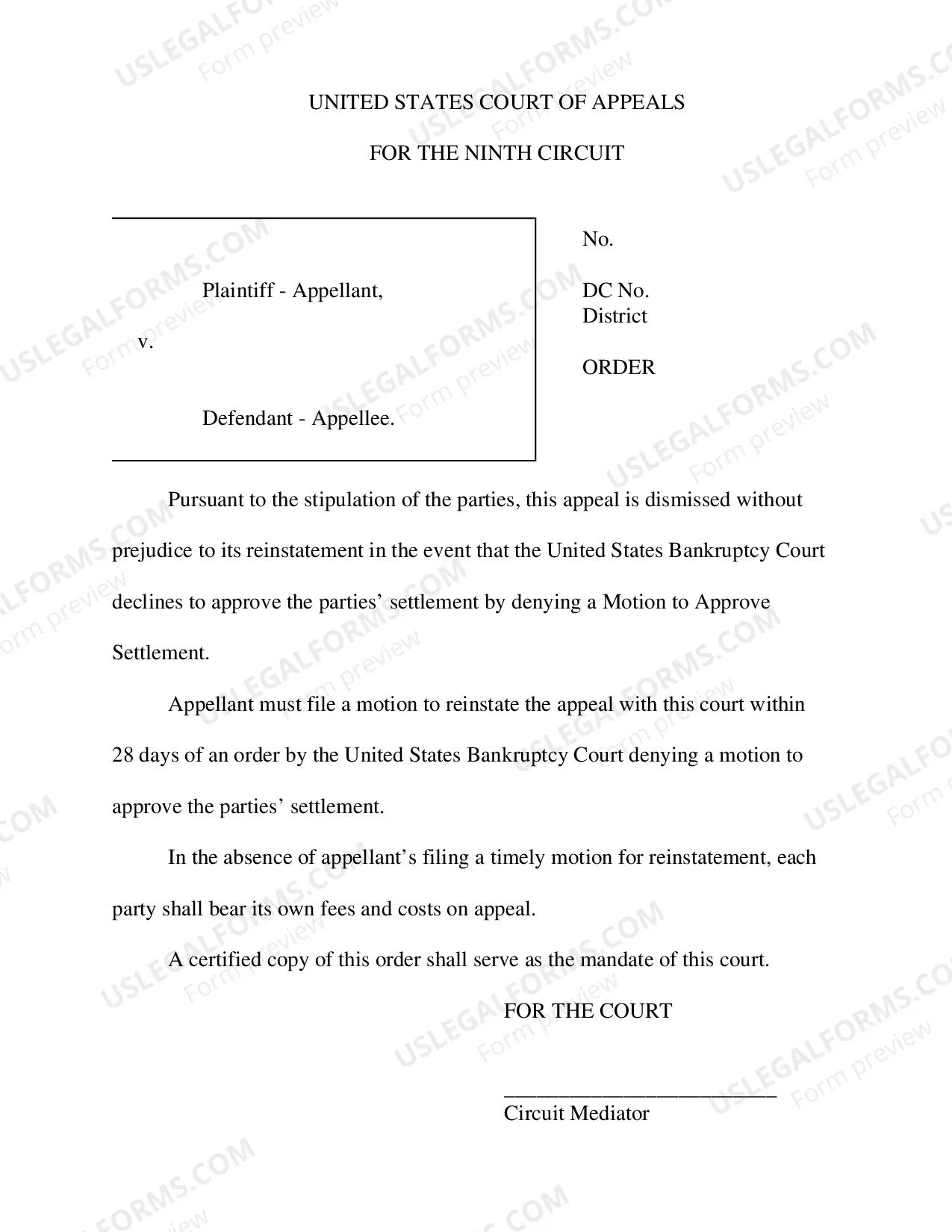
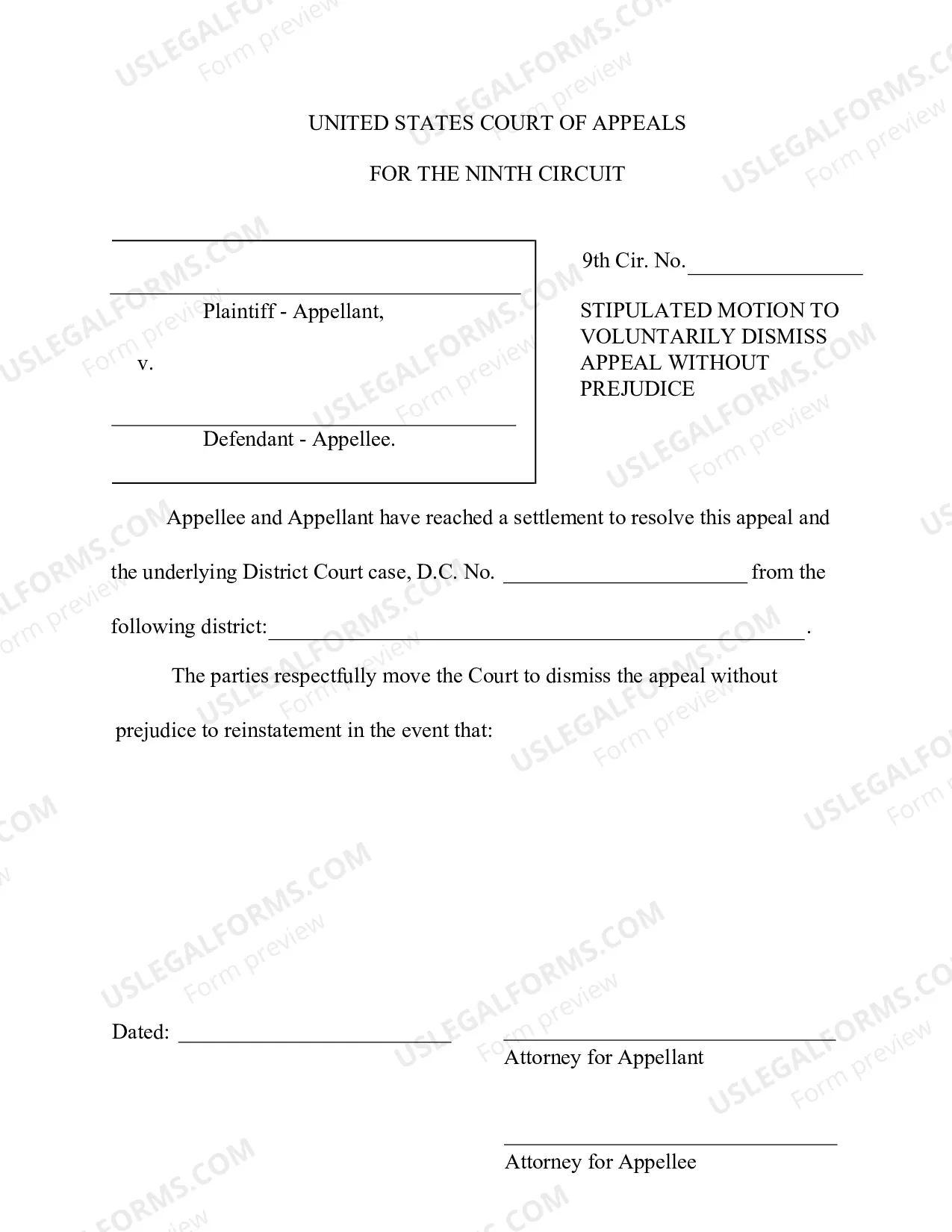
An Order Dismissing Case is an official court document that commands the dismissal of a lawsuit without prejudice, meaning the case can potentially be brought back to court in the future. This form is important for parties looking to officially terminate a case, and it differs from similar documents, like a settlement agreement, which focuses on resolving the terms of a dispute rather than ending a case outright. Use this template to draft the dismissal order as requested by the court.
Main sections of this form
- The title of the court case at the top.
- A statement indicating that the case is dismissed without prejudice.
- The judge's signature line confirming the order.
- Space for the date of the order.
Common use cases
This form should be used when a party wishes to formally request the dismissal of a case from court, either because of changed circumstances, settlement, or other legal reasons. It is commonly utilized to conclude a case without prejudice, allowing for the option to refile if necessary.
Who should use this form
- Individuals or entities involved in a legal case that no longer wish to pursue it.
- Lawyers representing clients who need to dismiss a case for strategic or factual reasons.
- Anyone looking to formally document the dismissal of their legal action.
Instructions for completing this form
- Begin by entering the title of the case at the top of the form.
- Clearly state that the case is being dismissed without prejudice.
- Provide the necessary details, such as the date of dismissal.
- Ensure the judge signs the document to make it official.
Notarization guidance
Notarization is generally not required for this form. However, certain states or situations might demand it. You can complete notarization online through US Legal Forms, powered by Notarize, using a verified video call available anytime.
Get your form ready online
Our built-in tools help you complete, sign, share, and store your documents in one place.
Make edits, fill in missing information, and update formatting in US Legal Forms—just like you would in MS Word.
Download a copy, print it, send it by email, or mail it via USPS—whatever works best for your next step.
Sign and collect signatures with our SignNow integration. Send to multiple recipients, set reminders, and more. Go Premium to unlock E-Sign.
If this form requires notarization, complete it online through a secure video call—no need to meet a notary in person or wait for an appointment.
We protect your documents and personal data by following strict security and privacy standards.

Make edits, fill in missing information, and update formatting in US Legal Forms—just like you would in MS Word.

Download a copy, print it, send it by email, or mail it via USPS—whatever works best for your next step.

Sign and collect signatures with our SignNow integration. Send to multiple recipients, set reminders, and more. Go Premium to unlock E-Sign.

If this form requires notarization, complete it online through a secure video call—no need to meet a notary in person or wait for an appointment.

We protect your documents and personal data by following strict security and privacy standards.
Common mistakes
- Failing to include the case title or relevant case number.
- Not clarifying that the dismissal is without prejudice, which is essential for future actions.
- Omitting the date or judge's signature, rendering the form incomplete.
Why complete this form online
- Convenient access to download and use the form at any time.
- Editable templates allow customization to fit specific cases.
- Reliability, knowing the form is created by licensed attorneys.
Legal use & context
- This form is legally recognized for dismissing cases in most jurisdictions.
- A dismissal without prejudice allows for future legal action regarding the same issue.
- Filing the order with the court is necessary for it to take effect.
Main things to remember
- The Order Dismissing Case is used to formally end a lawsuit without prejudice.
- This order can be modified to suit your case and should reflect local jurisdictional standards.
- Completing this form accurately is crucial to ensure it is accepted by the court.
Looking for another form?





Form popularity
FAQ
When a defendant files a motion to dismiss, he asks the Court to throw out all or part of the plaintiff's case.The parties (well, their lawyers) will come to court, explain their positions on the motion to dismiss, and answer any questions posed by the judge. Finally, the judge will decide to grant or deny the motion.
A motion to dismiss can be filed at any time. They are usually filed by defendants early on in the lawsuit, before they have filed an answer. Often a motion to dismiss is alleging that the claim should not proceed because of an issue unrelated to the facts.
A motion to dismiss can be filed at any time. They are usually filed by defendants early on in the lawsuit, before they have filed an answer. Often a motion to dismiss is alleging that the claim should not proceed because of an issue unrelated to the facts.
It is otherwise, if the motion is granted. A final judgment for the moving party follows. Denial of the motion is not a final judgment; it is not a final decision on the merits." The motion to dismiss the appeal is granted and the appeal is dismissed.
Generally, however, a defendant must file a motion to dismiss before filing an "answer" to the complaint. If the motion to dismiss is denied, the defendant must still file their answer, usually within a shortened amount of time.The motion to dismiss must be filed with the court and served on the other party.
WHAT IS A DISMISSED CASE? A dismissed criminal case is one in which you were not convicted. When a criminal charge is dismissed, you are not guilty and the case is concluded.
N. application by a defendant in a lawsuit or criminal prosecution asking the judge to rule that the plaintiff (the party who filed the lawsuit) or the prosecution has not and cannot prove its case.
A dismissed case means that a lawsuit is closed with no finding of guilt and no conviction for the defendant in a criminal case by a court of law. Even though the defendant was not convicted, a dismissed case does not prove that the defendant is factually innocent for the crime for which he or she was arrested.
If you file an lawsuit and you decide you do not want to move forward, you can ask the court to dismiss the case. The person you sued paid you the money he or she owed you.