Mississippi Motion to Remove Conservator and to Set Aside Conservatorship or in the Alternative to Have Another Named as Conservator
Overview of this form
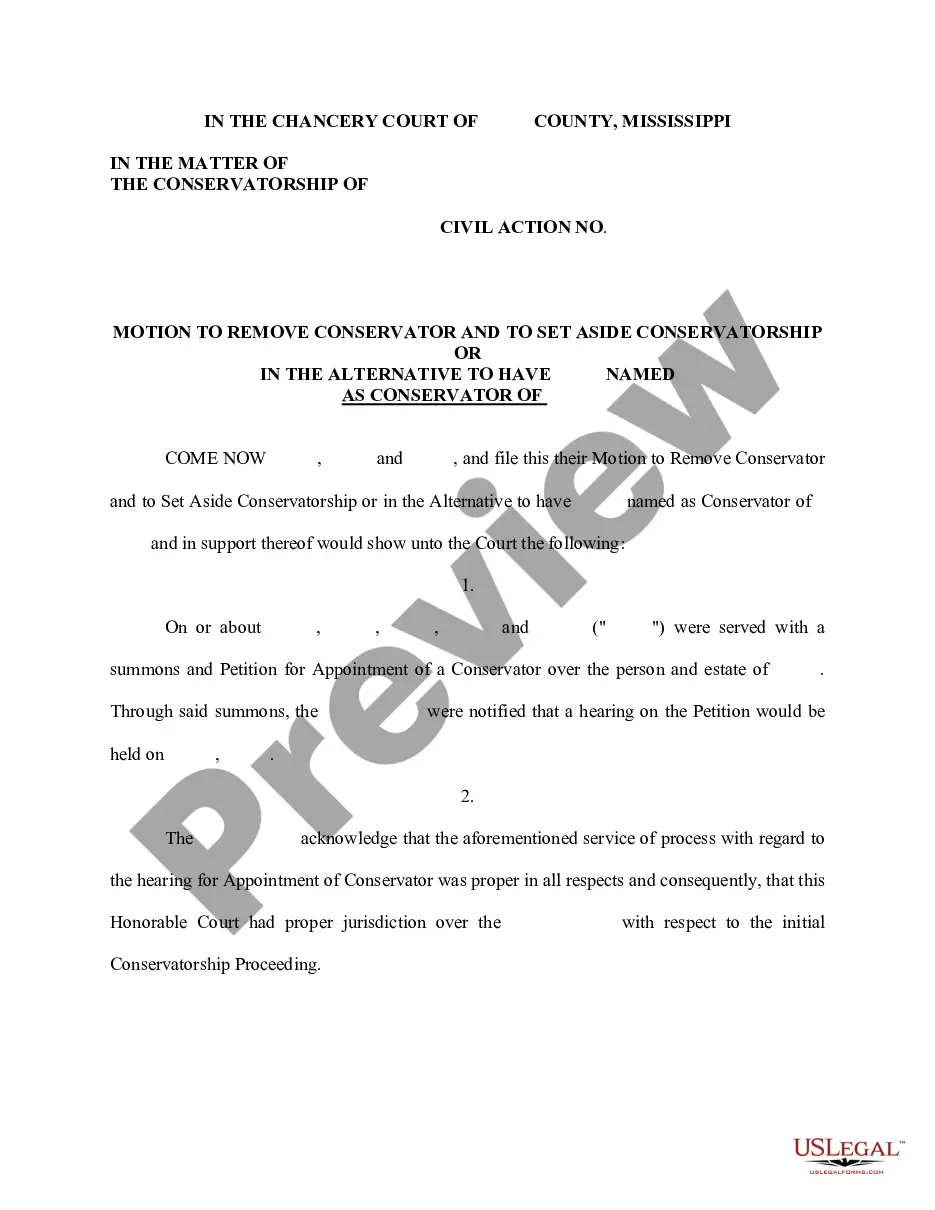
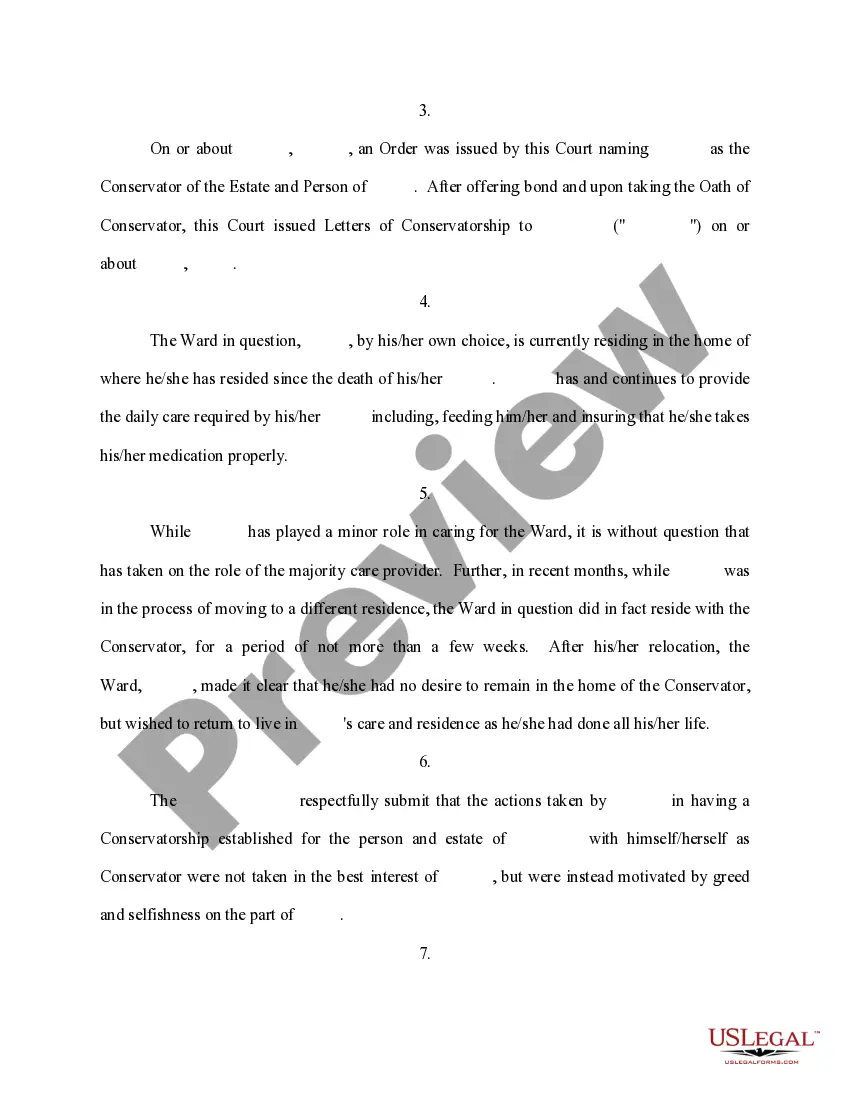
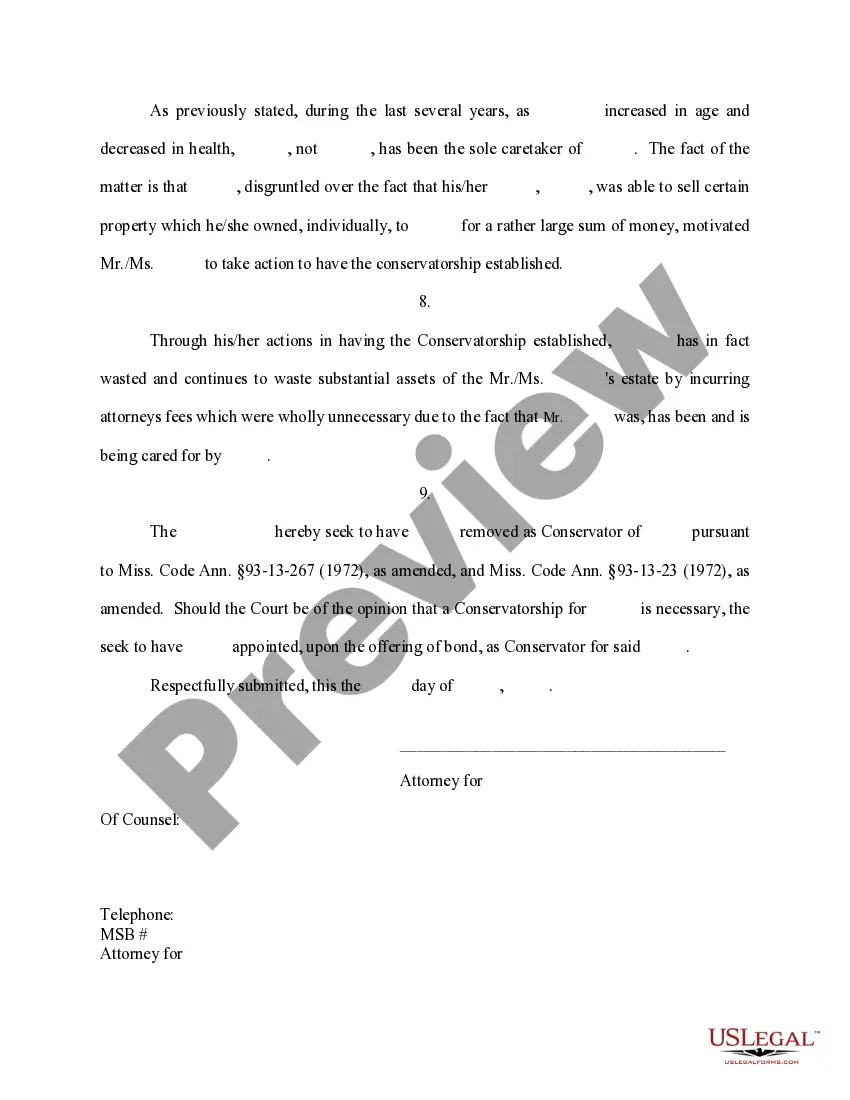
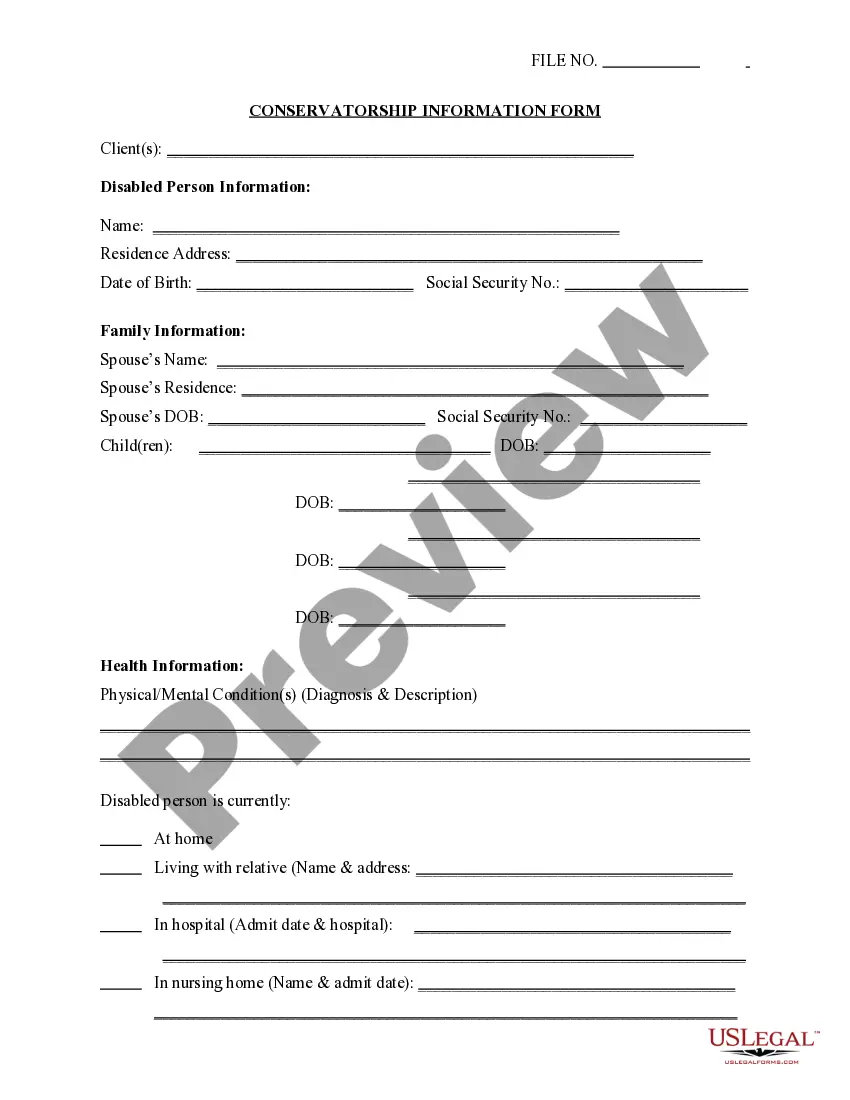
The Motion to Remove Conservator and to Set Aside Conservatorship or in the Alternative to Have Another Named as Conservator is a legal document that allows you to request the court to remove a current conservator, nullify the existing conservatorship, or appoint a different individual as conservator. This motion differs from other motions related to conservatorships by specifically addressing the removal and appointment aspects of the conservatorship arrangement. It is an essential tool for anyone looking to change or end a conservatorship legally.
Main sections of this form
- Caption: Identifies the court and parties involved.
- Statement of Facts: Outlines the reasons for seeking the removal of the conservator and the termination of the conservatorship.
- Request for Relief: Clearly states what you are asking the court to do.
- Signature Block: Includes space for your signature and date.
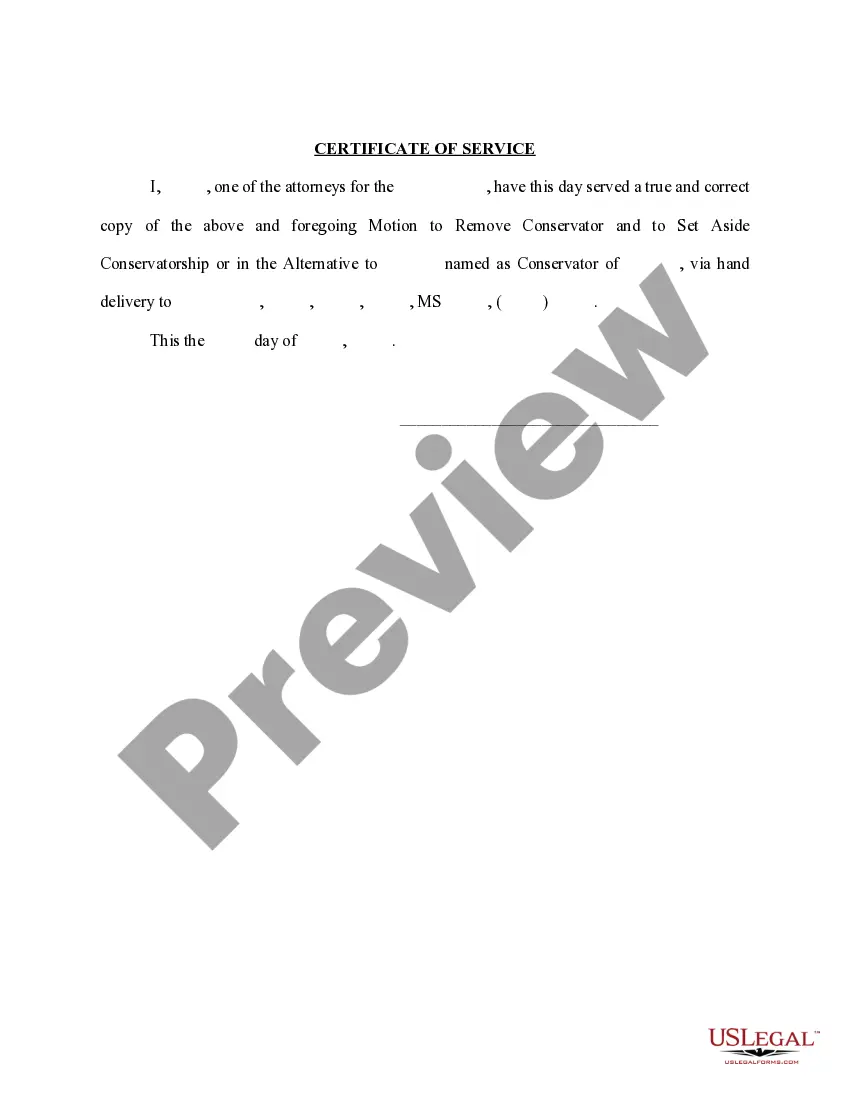
- Notice Provision: Indicates how other parties are to be informed about the motion.
When this form is needed
This form should be used when you believe that the current conservator is not acting in the best interests of the individual under conservatorship or when circumstances have changed that warrant a review of the conservatorship arrangement. It's applicable in cases of neglect, abuse, or the need for a more suitable conservator.
Who needs this form
- Individuals seeking to remove a conservator due to concerns about mismanagement or misconduct.
- Family members or friends of a person under a conservatorship who believe a change is necessary.
- Legal guardians or advocates representing the interests of the individual under conservatorship.
Instructions for completing this form
- Identify the parties: List the current conservator and the individual under conservatorship.
- Provide a detailed statement of facts: Explain the reasons for wanting to remove the conservator or set aside the conservatorship.
- Specify the relief sought: Clearly state what action you would like the court to take.
- Sign and date the motion: Include your signature and the date of filing.
- File the motion with the court: Submit your completed form along with any required filing fees.
Does this form need to be notarized?
To make this form legally binding, it must be notarized. Our online notarization service, powered by Notarize, lets you verify and sign documents remotely through an encrypted video session.
Get your form ready online
Our built-in tools help you complete, sign, share, and store your documents in one place.
Make edits, fill in missing information, and update formatting in US Legal Forms—just like you would in MS Word.
Download a copy, print it, send it by email, or mail it via USPS—whatever works best for your next step.
Sign and collect signatures with our SignNow integration. Send to multiple recipients, set reminders, and more. Go Premium to unlock E-Sign.
If this form requires notarization, complete it online through a secure video call—no need to meet a notary in person or wait for an appointment.
We protect your documents and personal data by following strict security and privacy standards.

Make edits, fill in missing information, and update formatting in US Legal Forms—just like you would in MS Word.

Download a copy, print it, send it by email, or mail it via USPS—whatever works best for your next step.

Sign and collect signatures with our SignNow integration. Send to multiple recipients, set reminders, and more. Go Premium to unlock E-Sign.

If this form requires notarization, complete it online through a secure video call—no need to meet a notary in person or wait for an appointment.

We protect your documents and personal data by following strict security and privacy standards.
Avoid these common issues
- Failing to provide sufficient evidence or facts to support the motion.
- Not notifying the current conservator or other interested parties about the filing.
- Incomplete or incorrect information in the signature block or caption.
Benefits of completing this form online
- Convenience: Download the form anytime and from anywhere.
- Editability: Customize the form to accurately reflect your situation.
- Reliability: Ensure you are using a document drafted by licensed attorneys familiar with legal requirements.
Looking for another form?

Form popularity
FAQ
The conservator has the power to collect all the conservatee's assets, pay bills, make investments, etc. The conservator must seek court supervision for major transactions, such as purchase or sale of property, borrowing money, or gifting of assets.
The Principal can override either type of POA whenever they want. However, other relatives may be concerned that the Agent (in most cases a close family member like a parent, child, sibling, or spouse) is abusing their rights and responsibilities by neglecting or exploiting their loved one.
Yes, a conservatorship can be contested in any state. Sometimes, the simplest way to contest a conservatorship is to object to the petition for conservatorship to stop the conservatorship in the first place, or to file a competing petition for conservatorship.
The person who successfully petitions for a conservatorship will have the authority over your mother and the power of attorney will no longer have any effect. A caution though that the Power of Attorney or another estate planning document...
If you want to get off of your conservatorship, you have the right to have a rehearing. You can ask for a rehearing right away, but once you have one, you must wait another six months before having another one.
Can a guardian live in a different state from the protected person? Response: Yes.That said, proximity to the protected person could be an important factor in a court deciding between two candidates to serve as guardian.
While there are a variety of ways that an elderly individual may be abused or exploited, one of the most common types involves financial exploitation. A common way for an individual to take advantage of an older individual is to become his or her conservator, or guardian.
No. The conservator is not liable for the acts or debts of the incapacitated solely by becoming a conservator. However, the conservator can become responsible and liable if he or she grossly mismanages or steals the incapacitated's assets.
Yes. Conservator of estate may file civil action in name of conservatee.