Mississippi Complaint Against Official for Ethics Violation
Understanding this form
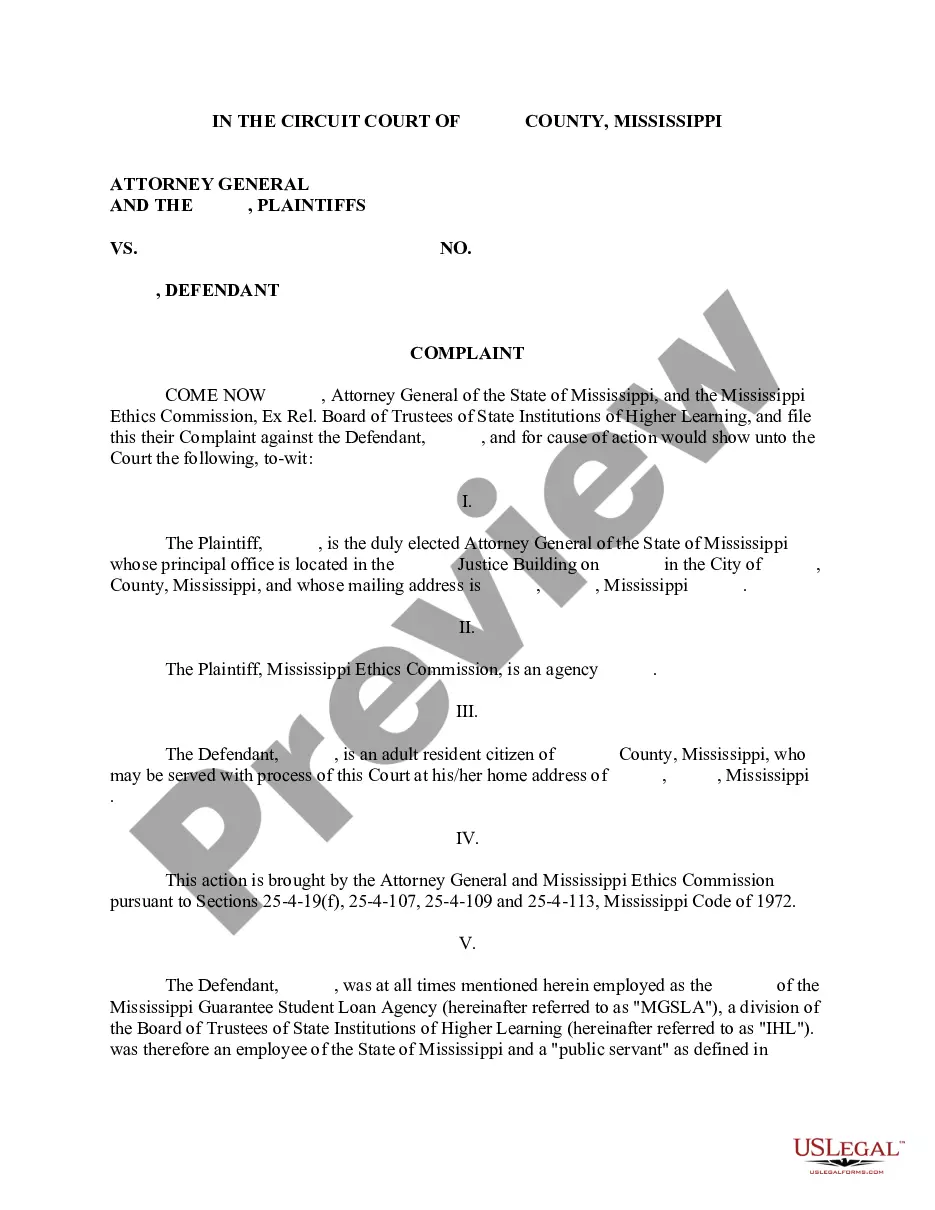
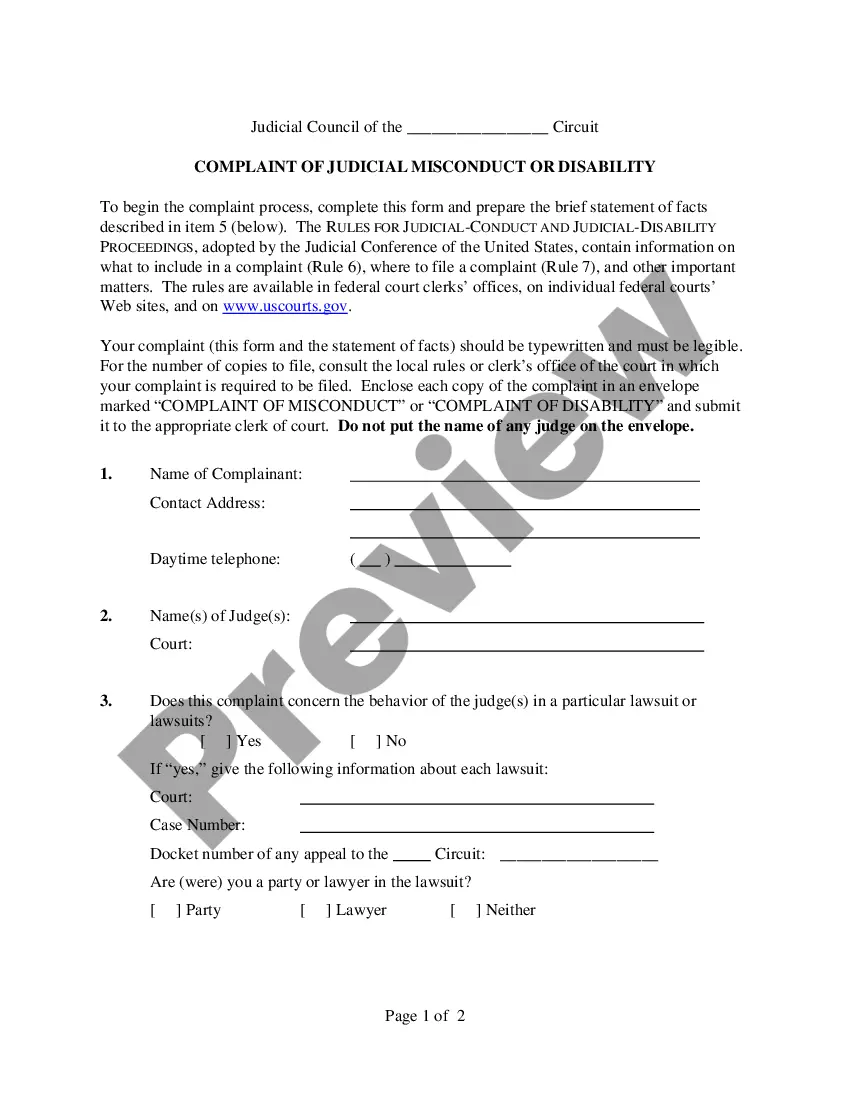
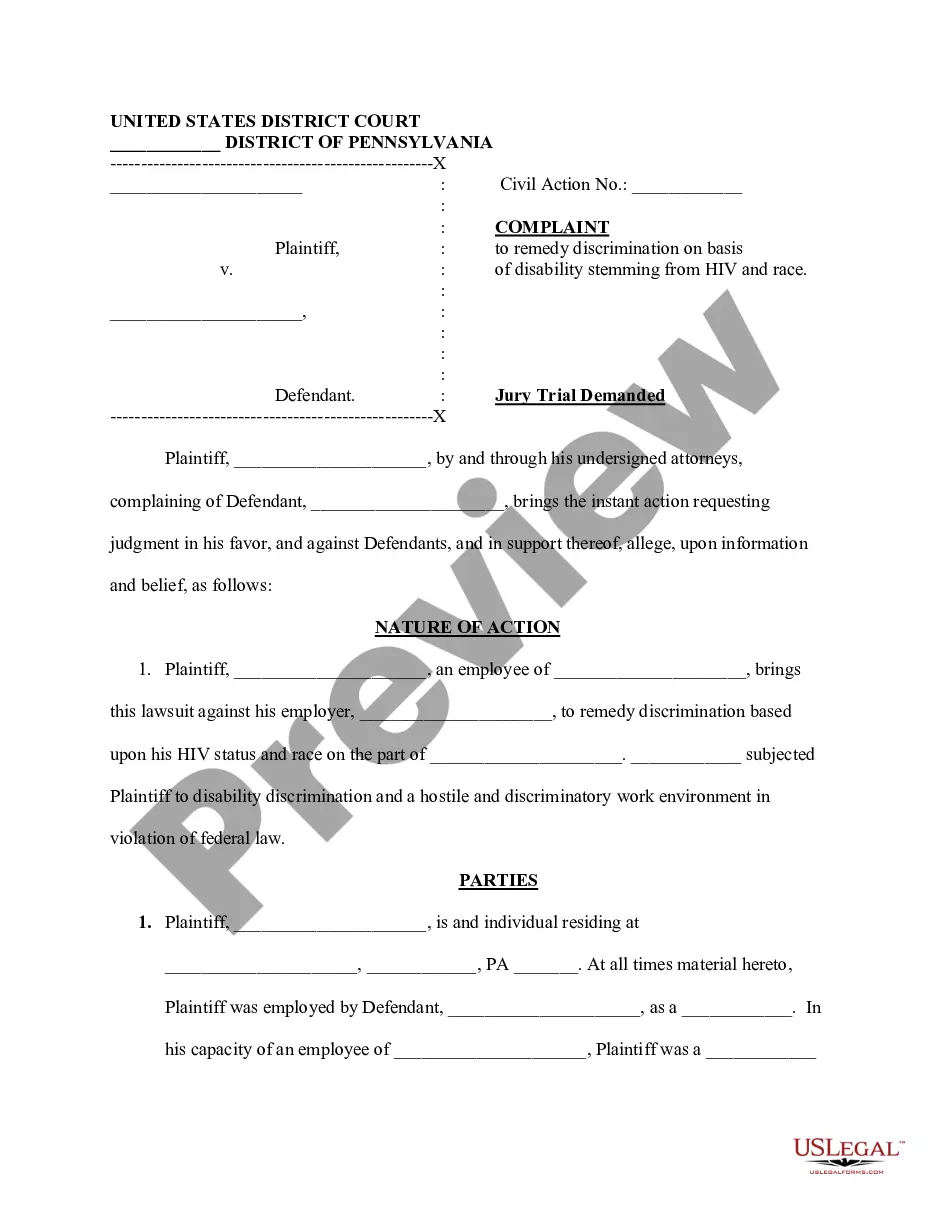
The Complaint Against Official for Ethics Violation is a legal document that initiates a lawsuit regarding allegations of unethical behavior by a public official. This form outlines the plaintiff's claims against the defendant, specifically targeted at addressing ethics concerns. It serves as a formal method to express grievances and seeks resolution through the judicial system, marking a step that differs from general complaints by focusing specifically on ethics violations.
Key parts of this document
- Caption: Identifies the court and parties involved in the complaint.
- Statement of jurisdiction: Explains why the court has the authority to hear the case.
- Factual allegations: Describes the specific actions of the official that constitute the ethics violation.
- Legal claims: Outlines the legal basis under which the plaintiff is bringing the complaint.
- Relief sought: Specifies the remedy or outcome the plaintiff is asking the court to provide.

Common use cases
This form should be used when an individual believes that a public official has violated ethical standards set forth by law or regulation. Common situations include witnessing misuse of power, conflicts of interest, or actions that undermine public trust. Submitting this complaint can help hold officials accountable and seek appropriate judicial remedies for the perceived misconduct.
Intended users of this form
- Individuals who have witnessed unethical behaviors by public officials.
- Concerned citizens wanting to hold authorities accountable.
- Organizations advocating for ethical governance and public integrity.
How to complete this form
- Identify the parties involved by entering the names of the plaintiff and defendant at the beginning of the form.
- State the jurisdiction clearly to inform the court of your caseâs authority.
- Detail the factual allegations by describing the actions of the official that constitute the ethics violation.
- Specify the legal claims you are asserting in response to the violations observed.
- Define the relief sought, indicating what outcome you wish the court to provide.
Is notarization required?
This form does not typically require notarization unless specified by local law. Verify your stateâs requirements to ensure compliance and validity.
Get your form ready online
Our built-in tools help you complete, sign, share, and store your documents in one place.
Make edits, fill in missing information, and update formatting in US Legal Forms—just like you would in MS Word.
Download a copy, print it, send it by email, or mail it via USPS—whatever works best for your next step.
Sign and collect signatures with our SignNow integration. Send to multiple recipients, set reminders, and more. Go Premium to unlock E-Sign.
If this form requires notarization, complete it online through a secure video call—no need to meet a notary in person or wait for an appointment.
We protect your documents and personal data by following strict security and privacy standards.

Make edits, fill in missing information, and update formatting in US Legal Forms—just like you would in MS Word.

Download a copy, print it, send it by email, or mail it via USPS—whatever works best for your next step.

Sign and collect signatures with our SignNow integration. Send to multiple recipients, set reminders, and more. Go Premium to unlock E-Sign.

If this form requires notarization, complete it online through a secure video call—no need to meet a notary in person or wait for an appointment.

We protect your documents and personal data by following strict security and privacy standards.
Common mistakes to avoid
- Failing to clearly state the jurisdiction, which can result in dismissal.
- Not detailing specific facts about the ethics violation, making the complaint vague.
- Using legal jargon without explanation, which may confuse the court.
- Neglecting to sign the complaint or missing other required signatures.
Why use this form online
- Convenience of accessing and downloading the form anytime.
- Editability allows for customization to fit specific cases.
- Reliability ensured by using forms drafted by licensed attorneys.
Looking for another form?

Form popularity
FAQ
Visit RomingerLegal.com "State and Local Bar Association" service. Scroll through the list until you find either the state you live in or the state the lawyer is located in (if those two states are not the same). To practice law in a state, a lawyer has to become a member of the bar association for that state.
You may submit your written request by mail, facsimile to 601-608-7869 or email to ogc@msbar.org. The Office of General Counsel grants additional time to respond based upon the specific need stated by the attorney as well as the complexity of the Bar complaint.
Your complaint must cite one or more of the seventeen (17) Articles of the Code of Ethics which may have been violated. Hearing Panels decide whether the Articles expressly cited in complaints were violatednot whether Standards of Practice or case interpretations were violated.
You may submit your written request by mail, facsimile to 601-608-7869 or email to ogc@msbar.org. The Office of General Counsel grants additional time to respond based upon the specific need stated by the attorney as well as the complexity of the Bar complaint.
Most of all, remember that an ethics investigation is designed to gather facts and information to assist in determining whether or not there is evidence to support the allegations of violations of the Code of Professional Conduct.
A complaint against an advocate has to be in the form of a petition. It has to be duly signed and verified as required under the Code of Civil Procedure. The complaint can be filed in English or in Hindi or in a regional language where the language has been declared to be a state language.
Ethics complaints must be filed with the local Board or Association of Realtors® within one hundred eighty (180) days from the time a complainant knew (or reasonably should have known) that potentially unethical conduct took place (unless the Board's informal dispute resolution processes are invoked in which case the
Ethics Complaint means a document that states facts constituting an alleged ethics violation of the Code of Ethics and is signed under penalty of perjury by the person filing the ethics complaint.
Cooperate with the investigation. Be on time. Set a professional and respectful tone. Provide a coherent description of the facts with documents to back it up. Hire counsel (or at least get a second opinion)