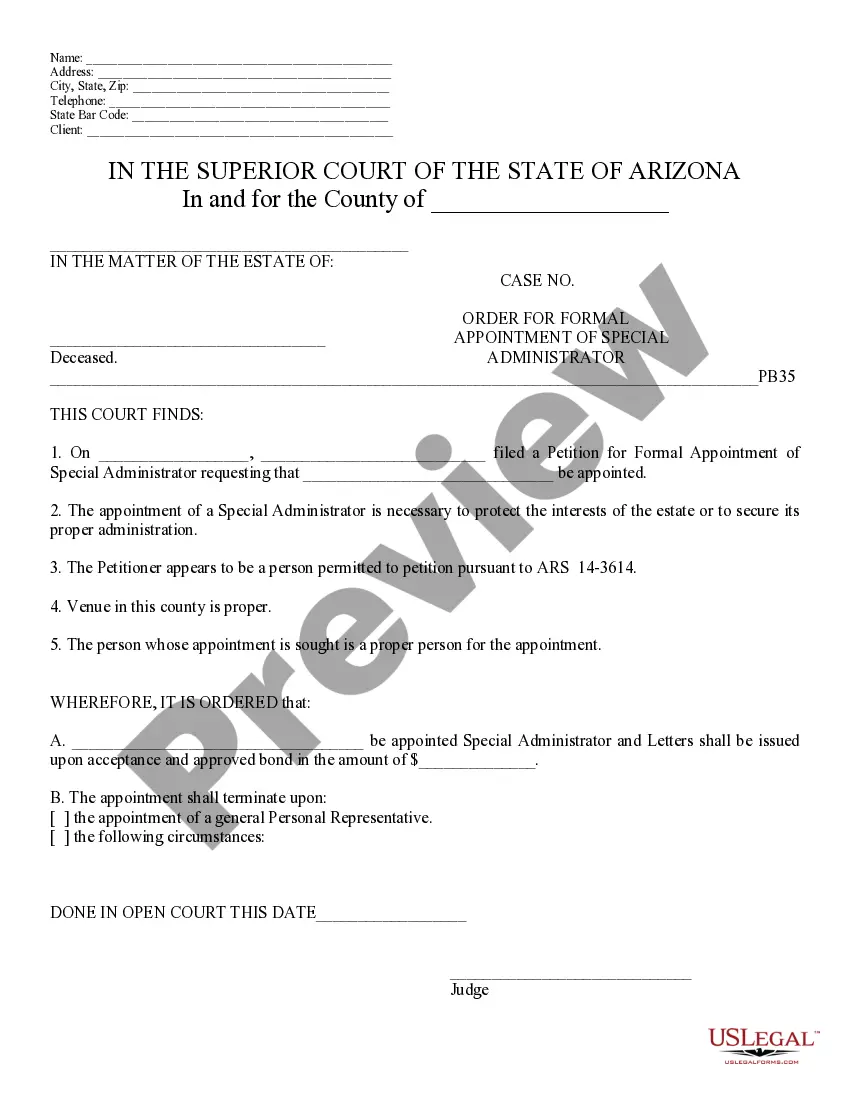
Mississippi Intervenor's Answers and Affirmative Defenses
What this document covers
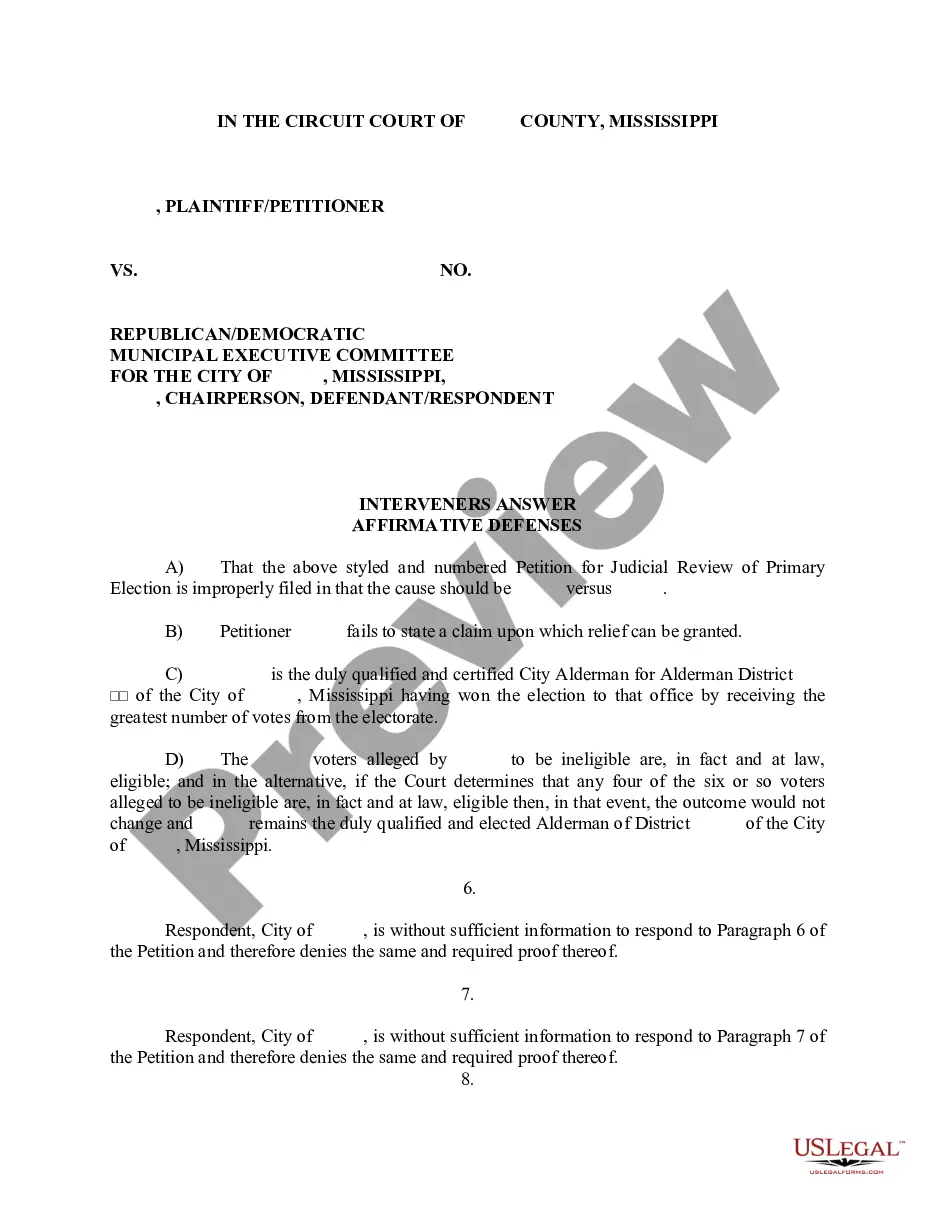
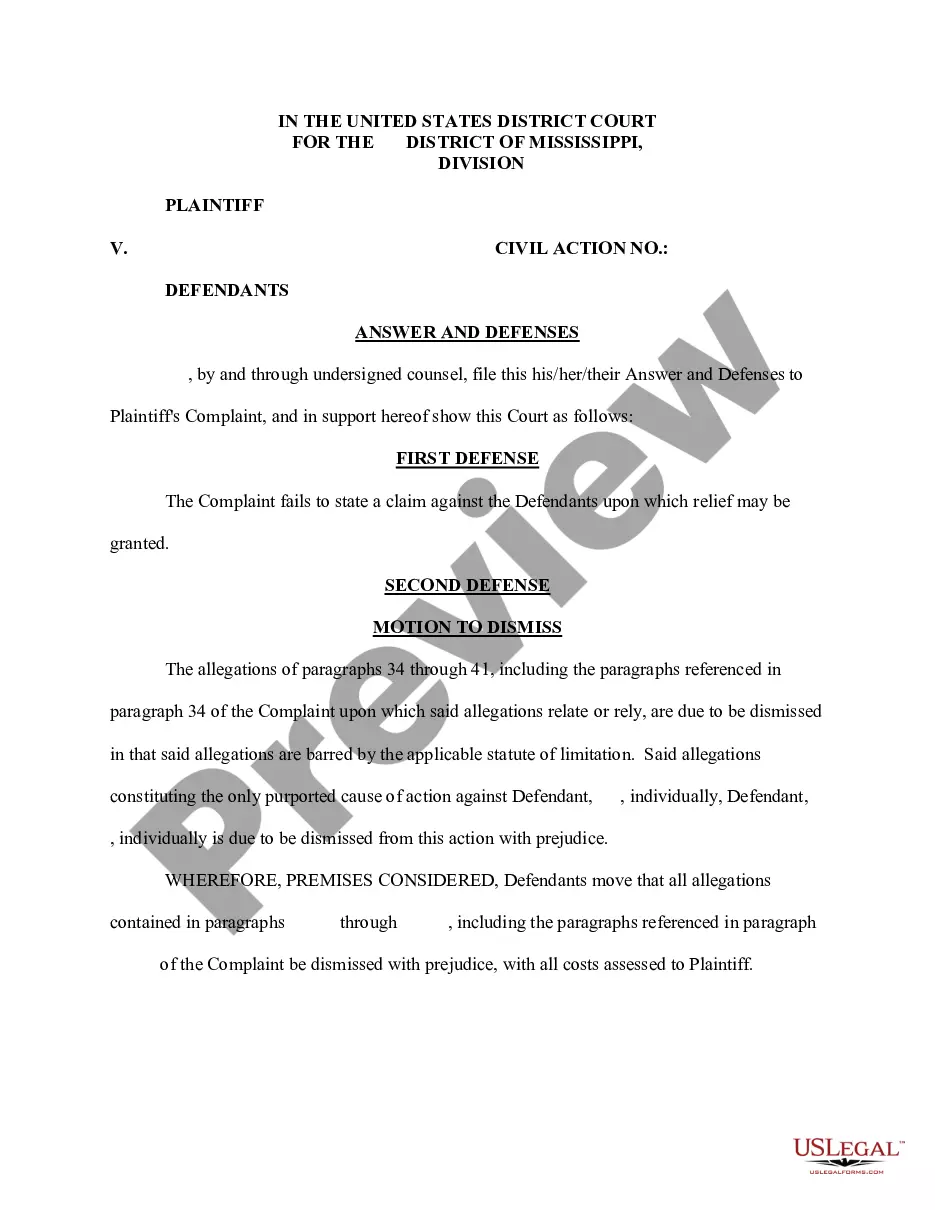
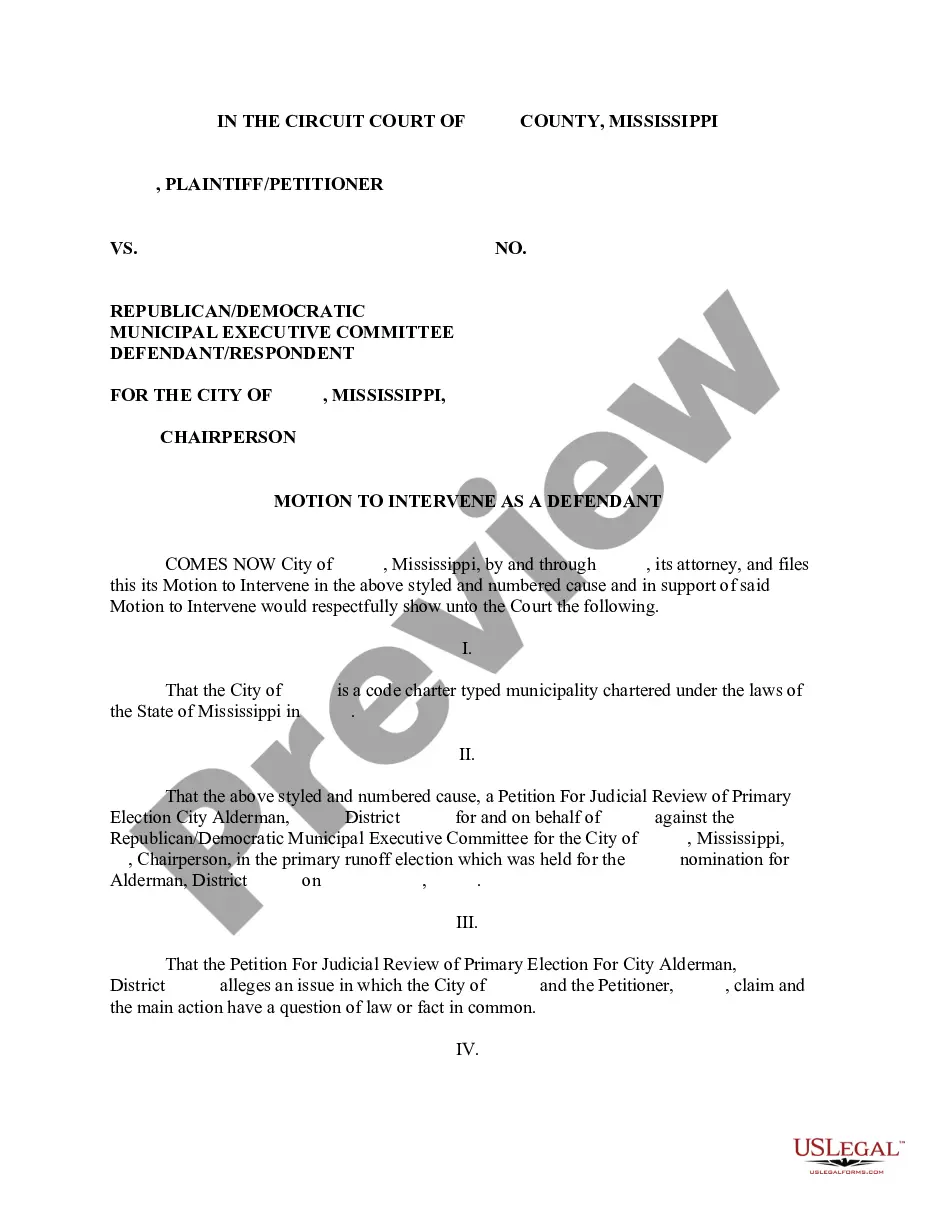
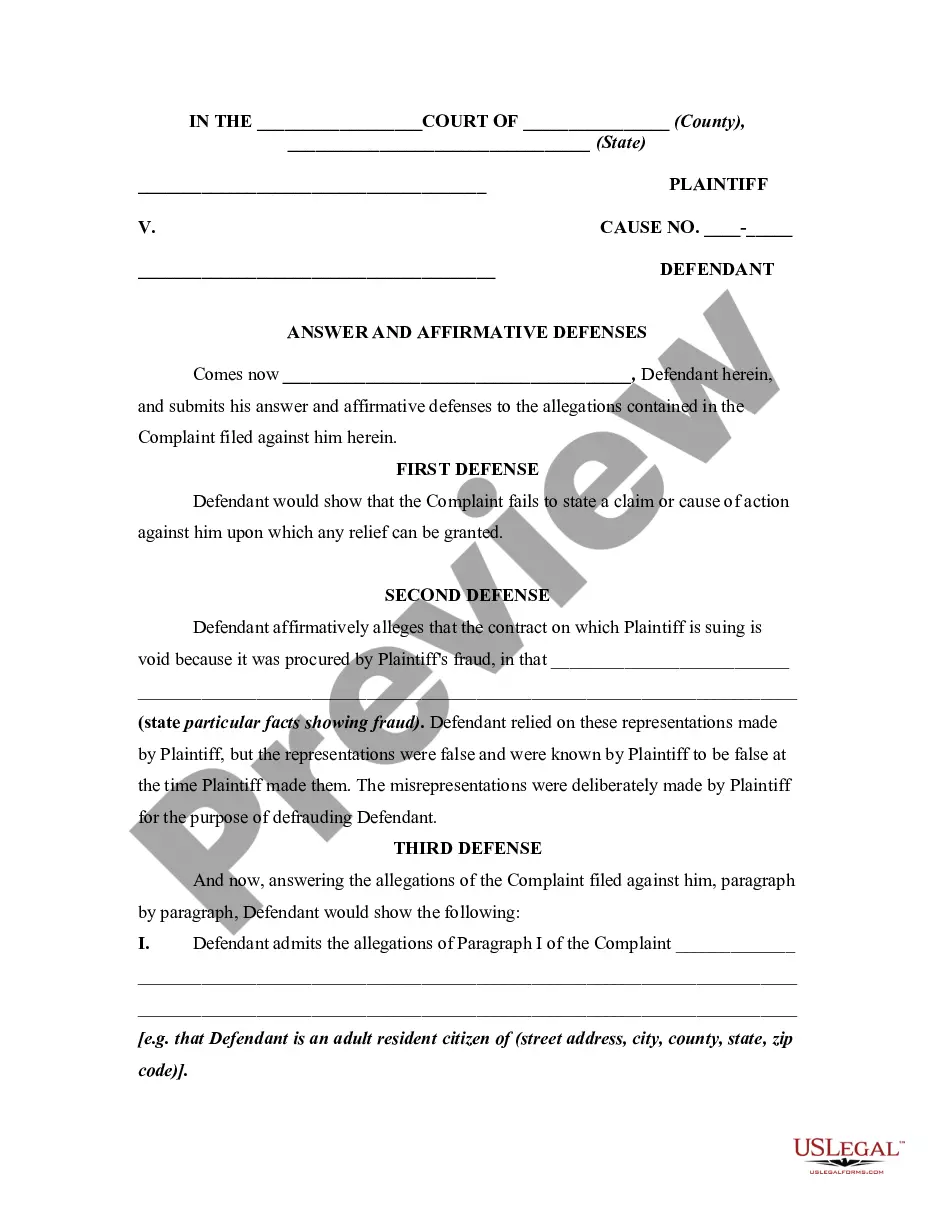
The Intervenor's Answers and Affirmative Defenses is a legal document filed in response to a Complaint, specifically in cases concerning the election of Aldermen. This form helps an intervenor assert their position and present affirmative defenses related to the election process, especially when there are claims of questionable circumstances surrounding an electee's election. It is important to differentiate this form from standard Answers, as it caters specifically to election-related disputes.
Key parts of this document
- Caption: Includes case details, such as party names and court information.
- Introduction: States the nature of the response to the Complaint.
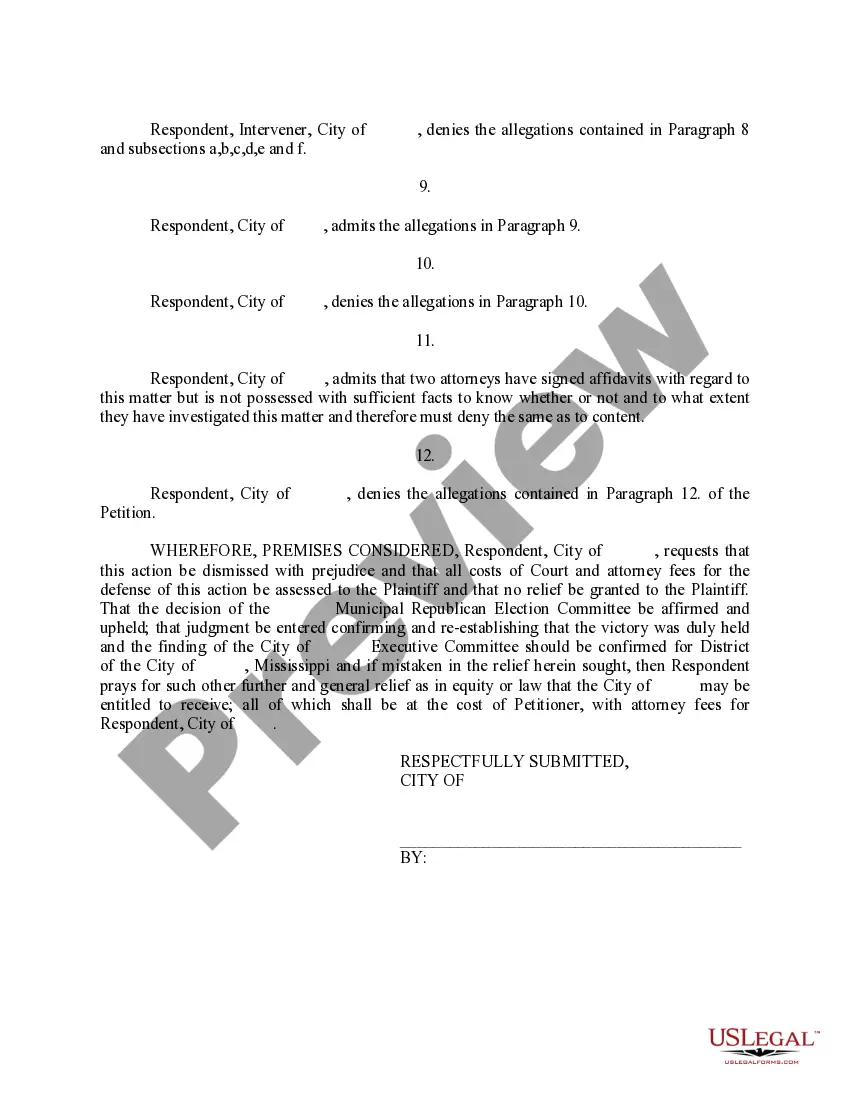
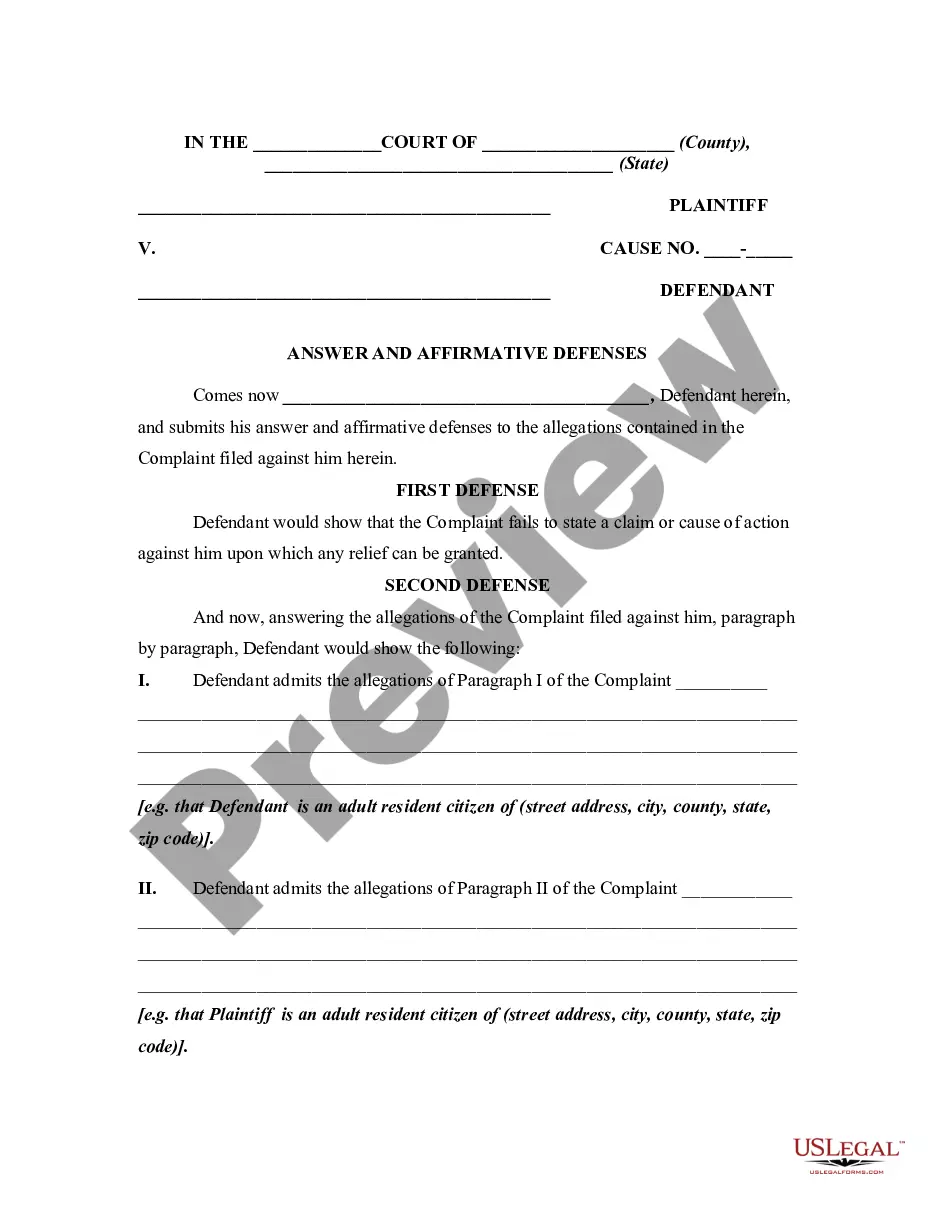
- Answers to allegations: Legally responds to each claim made in the complaint.
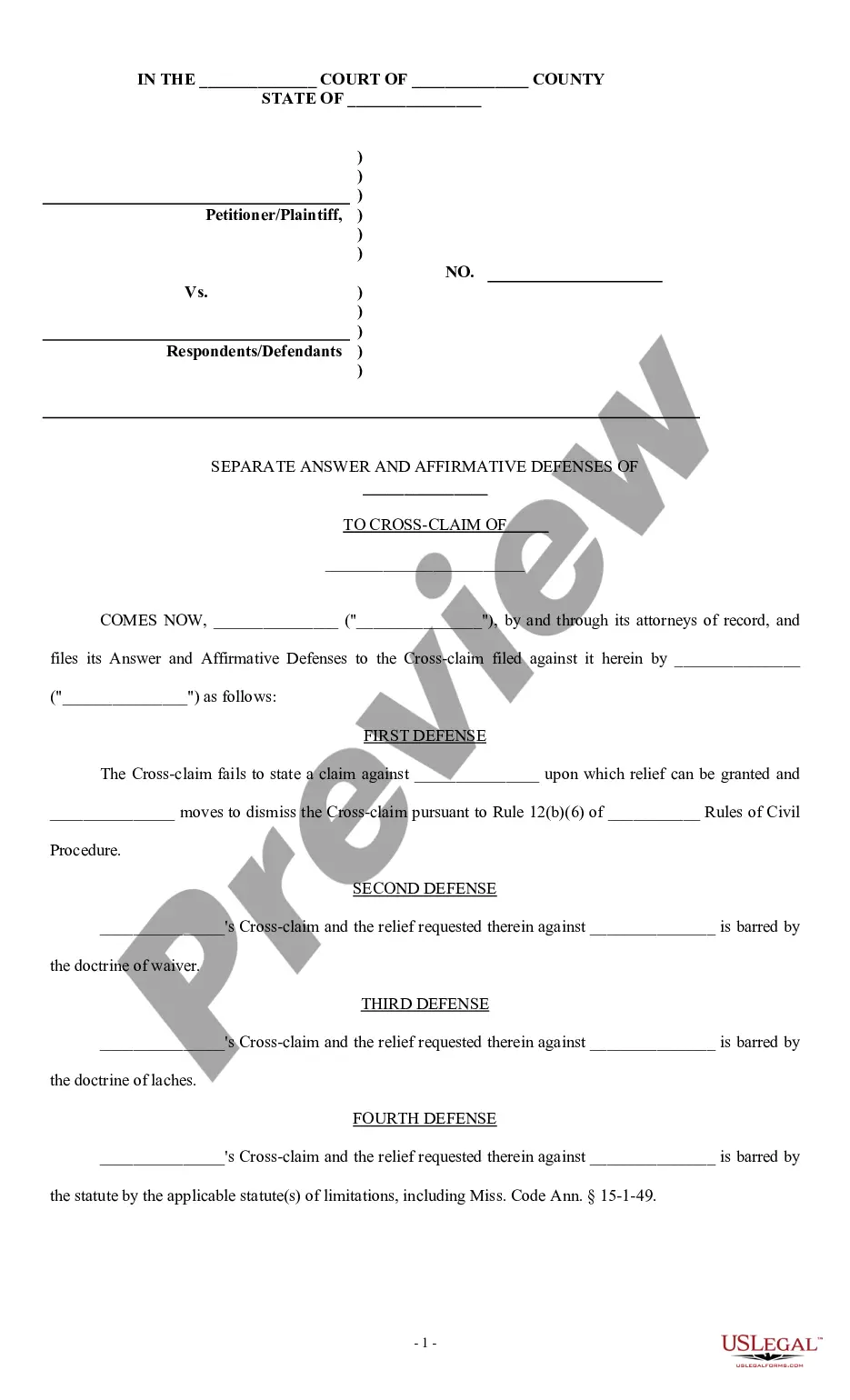
- Affirmative defenses: Lists legal defenses that support the intervenor's position.
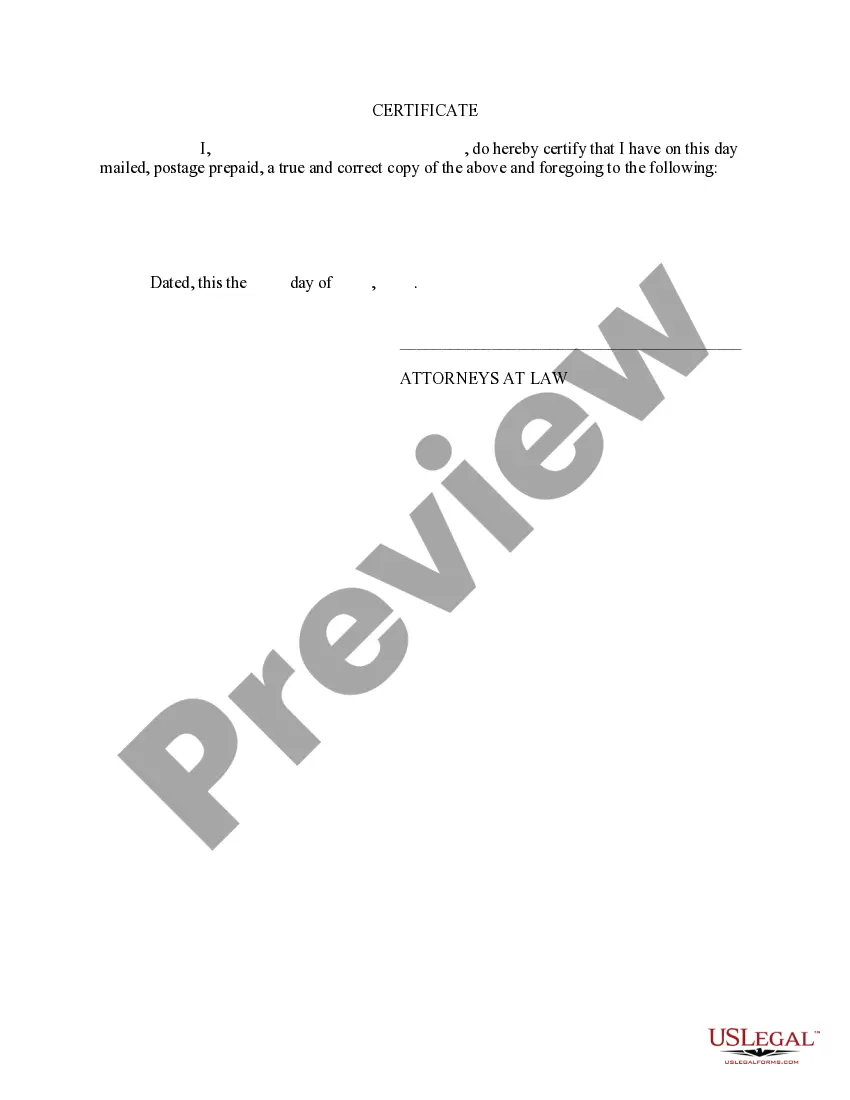
- Signature block: Area for the intervenor or their attorney to sign and date the document.
When to use this form
This form should be used when an individual or entity wishes to intervene in a lawsuit concerning the election of Aldermen. It is particularly relevant when there are concerns about the legitimacy of the election process or the qualifications of the elected individuals. Using this form allows the intervenor to formally present their position and defenses during the legal proceedings.
Intended users of this form
- Individuals or entities wishing to intervene in an election-related lawsuit.
- Parties who believe they have been affected by the election results.
- Those contesting the legitimacy of an Alderman's election.
How to prepare this document
- Read the Complaint carefully to understand the allegations against the elected Aldermen.
- Provide the required case information in the caption.
- Answer each allegation with a clear response, indicating whether you admit, deny, or lack knowledge of the claim.
- List any affirmative defenses that apply to your situation to strengthen your position.
- Sign and date the form in the designated signature block.
Does this form need to be notarized?
This form usually doesn’t need to be notarized. However, local laws or specific transactions may require it. Our online notarization service, powered by Notarize, lets you complete it remotely through a secure video session, available 24/7.
Get your form ready online
Our built-in tools help you complete, sign, share, and store your documents in one place.
Make edits, fill in missing information, and update formatting in US Legal Forms—just like you would in MS Word.
Download a copy, print it, send it by email, or mail it via USPS—whatever works best for your next step.
Sign and collect signatures with our SignNow integration. Send to multiple recipients, set reminders, and more. Go Premium to unlock E-Sign.
If this form requires notarization, complete it online through a secure video call—no need to meet a notary in person or wait for an appointment.
We protect your documents and personal data by following strict security and privacy standards.

Make edits, fill in missing information, and update formatting in US Legal Forms—just like you would in MS Word.

Download a copy, print it, send it by email, or mail it via USPS—whatever works best for your next step.

Sign and collect signatures with our SignNow integration. Send to multiple recipients, set reminders, and more. Go Premium to unlock E-Sign.

If this form requires notarization, complete it online through a secure video call—no need to meet a notary in person or wait for an appointment.

We protect your documents and personal data by following strict security and privacy standards.
Avoid these common issues
- Failing to respond to all allegations in the Complaint.
- Omitting relevant affirmative defenses that could strengthen the case.
- Not signing the form or missing the date, making it invalid.
- Submitting the form past any deadlines set by the court.
Advantages of online completion
- Convenience of downloading the form instantly from any location.
- Editability allows customization to fit specific legal needs.
- Access to templates drafted by licensed attorneys to ensure reliability.
Looking for another form?
Form popularity
FAQ
In addition to admitting or denying the plaintiff's allegations, an answer must contain the defendant's affirmative defenses for which the defendant bears the burden of proof at trial.
31 Affirmative Defenses And How To Assert Them.
While the availability of an affirmative defense will depend on the state, there are generally two categories of affirmative defenses, justifications and excuses.
Definition. This is a defense in which the defendant introduces evidence, which, if found to be credible, will negate criminal liability or civil liability, even if it is proven that the defendant committed the alleged acts.
Accord and Satisfaction, Arbitration and Award, Assumption of the Risk, Contributory Negligence, Discharge in Bankruptcy, Duress, Estoppel, Failure of Consideration,
A new fact or set of facts that operates to defeat a claim even if the facts supporting that claim are true. A plaintiff sets forth a claim in a civil action by making statements in the document called the complaint. An affirmative defense is also allowed under rules of CRIMINAL PROCEDURE.
These defenses include formation problems, lack of capacity, illegality of subject matter, impossibility, duress, unconscionability, undue influence, violation of the Statute of Frauds requirement that certain types of contracts must be in writing to be enforceable against the defendant, exceeding the statute of