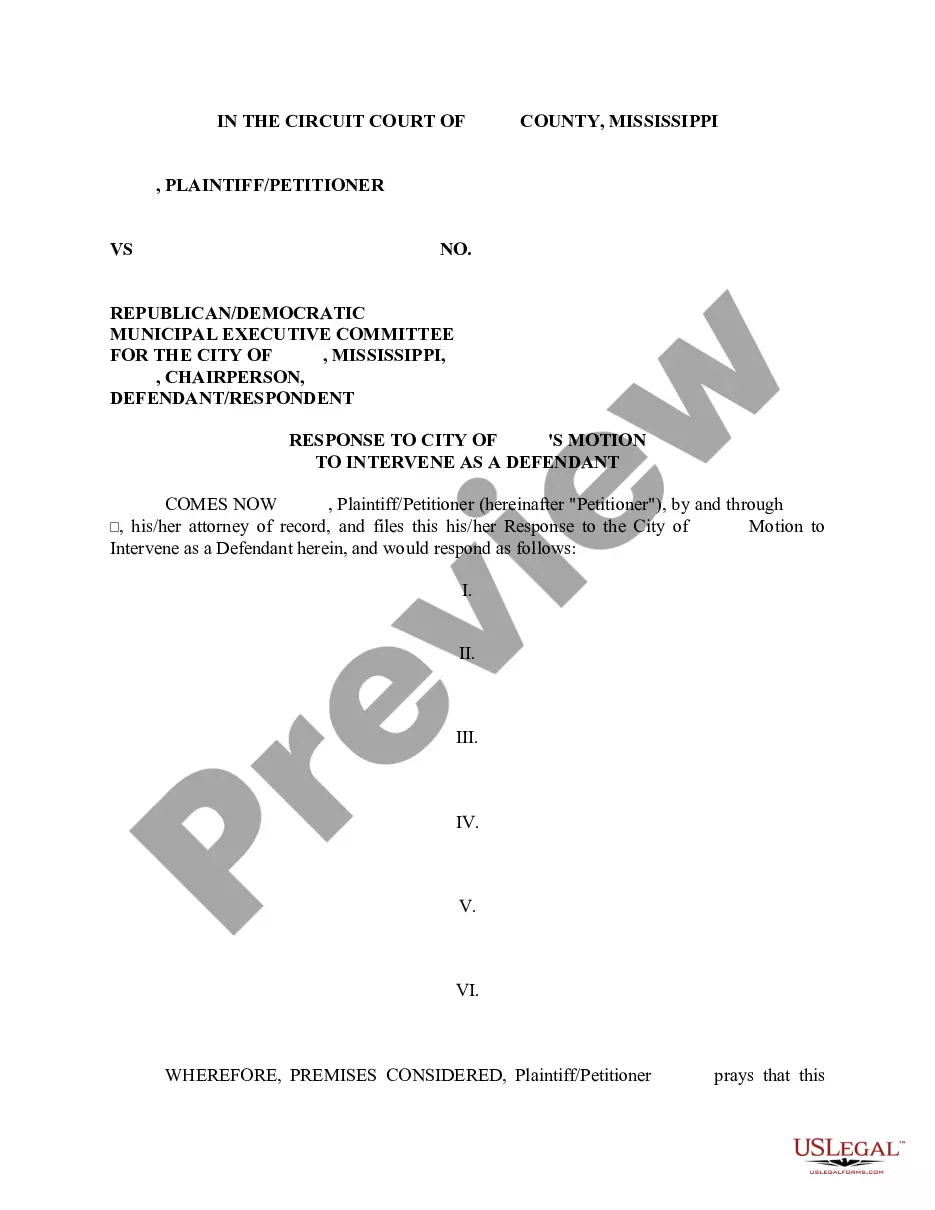
Mississippi Response to Motion to Intervene
Overview of this form
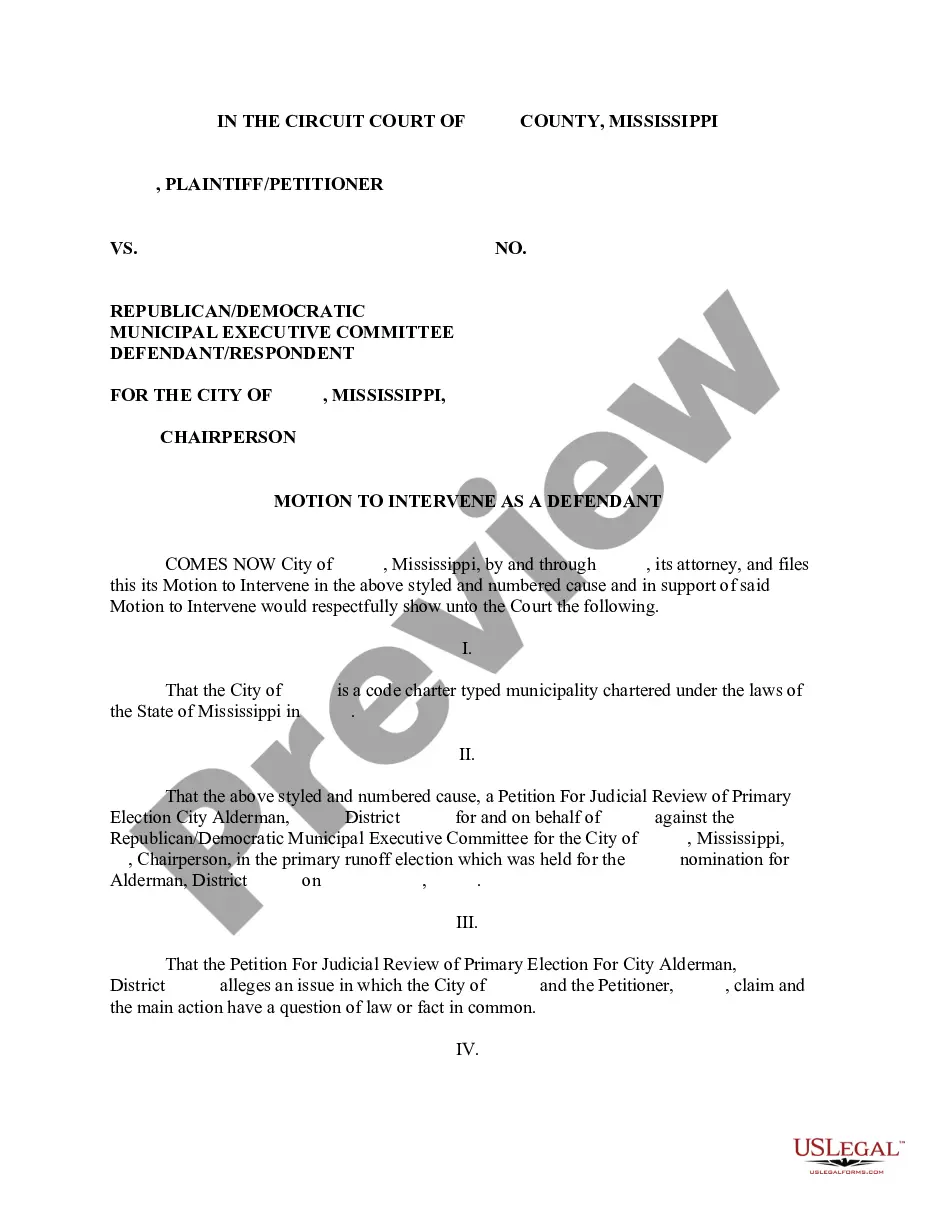
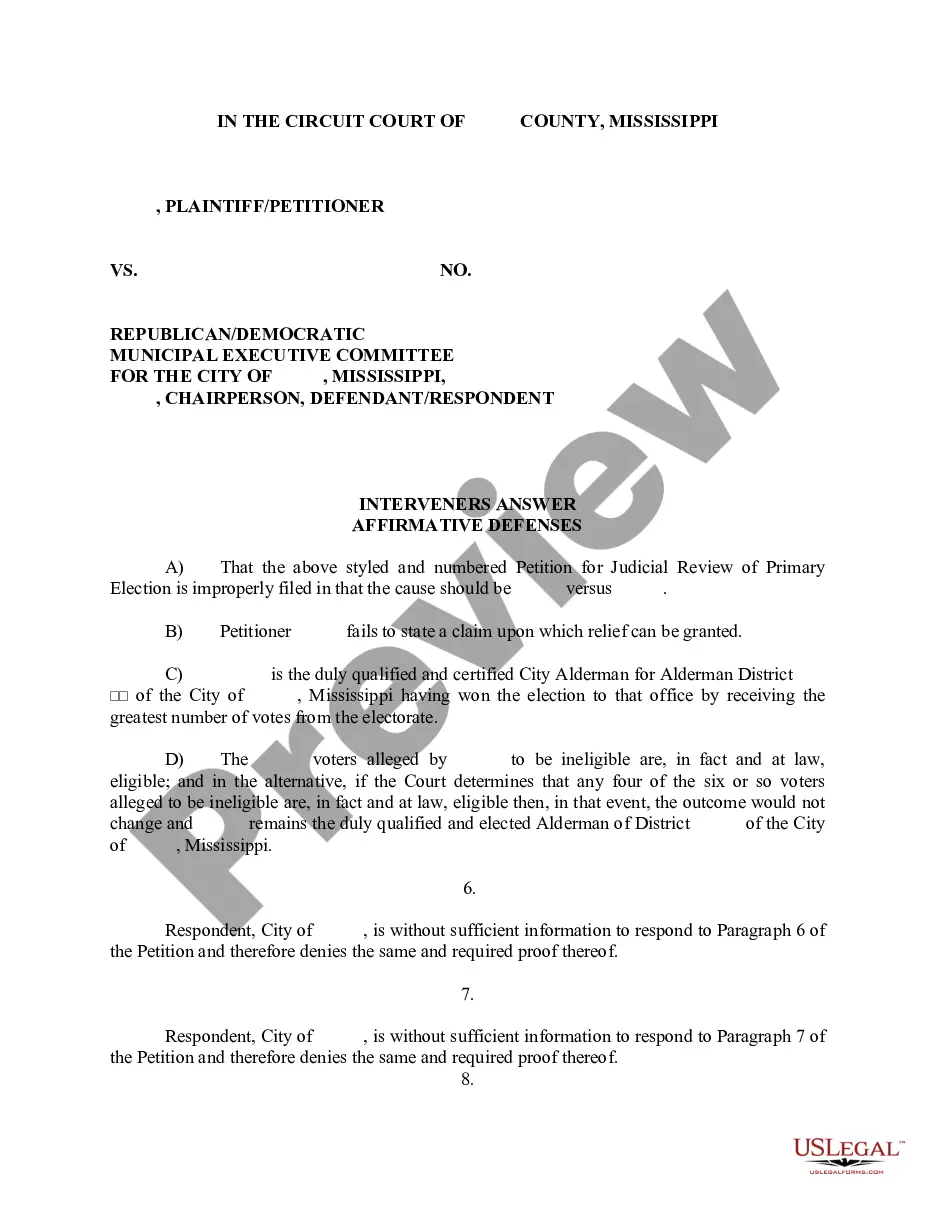
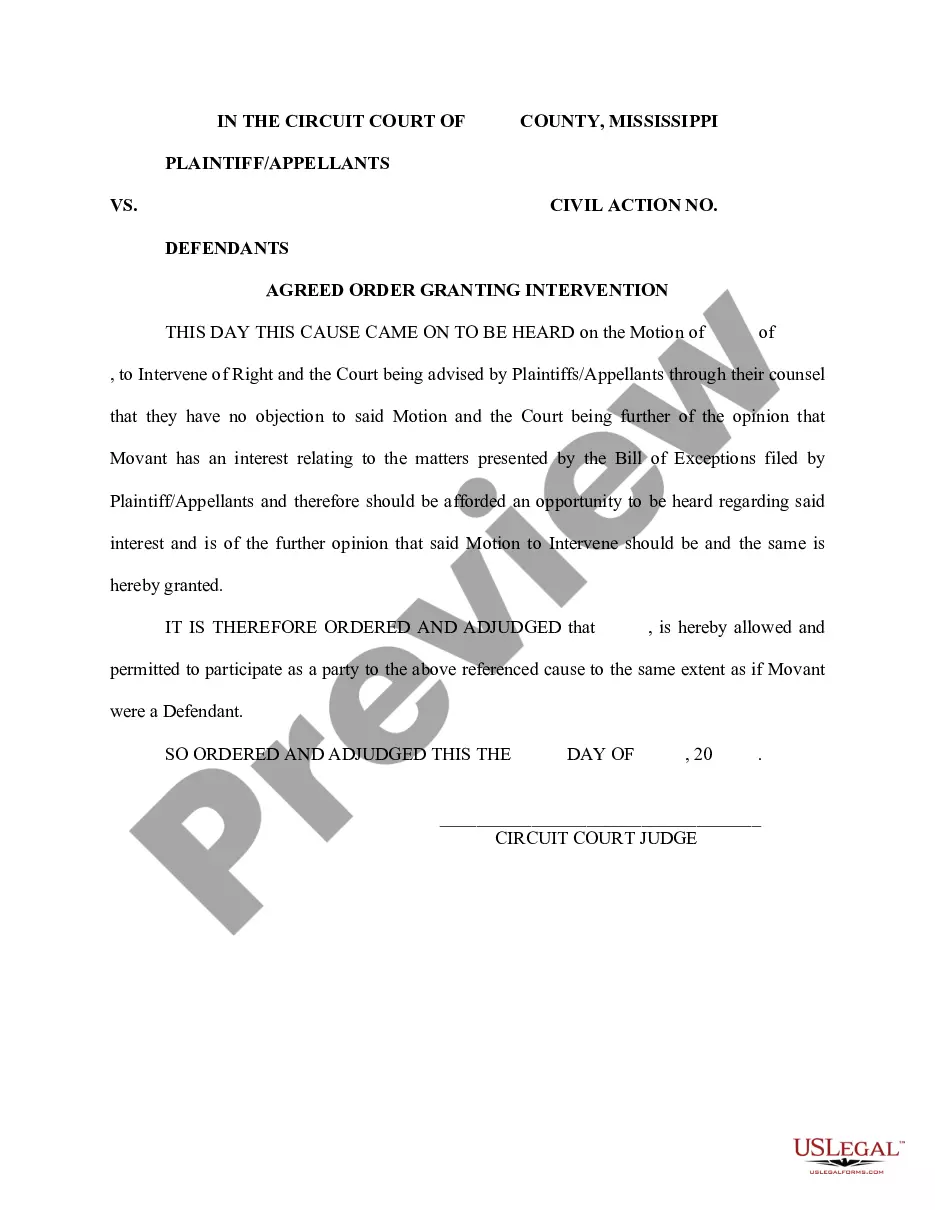
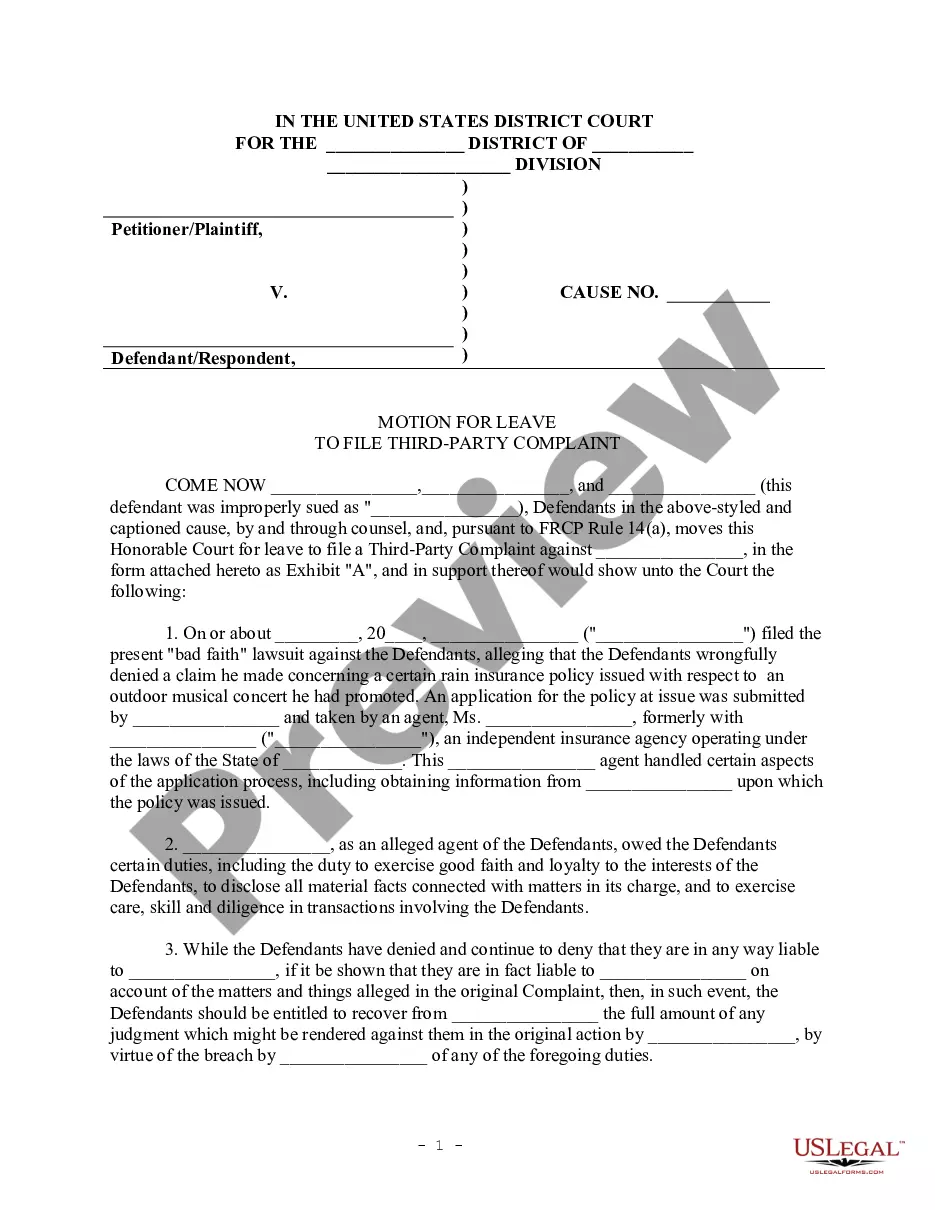
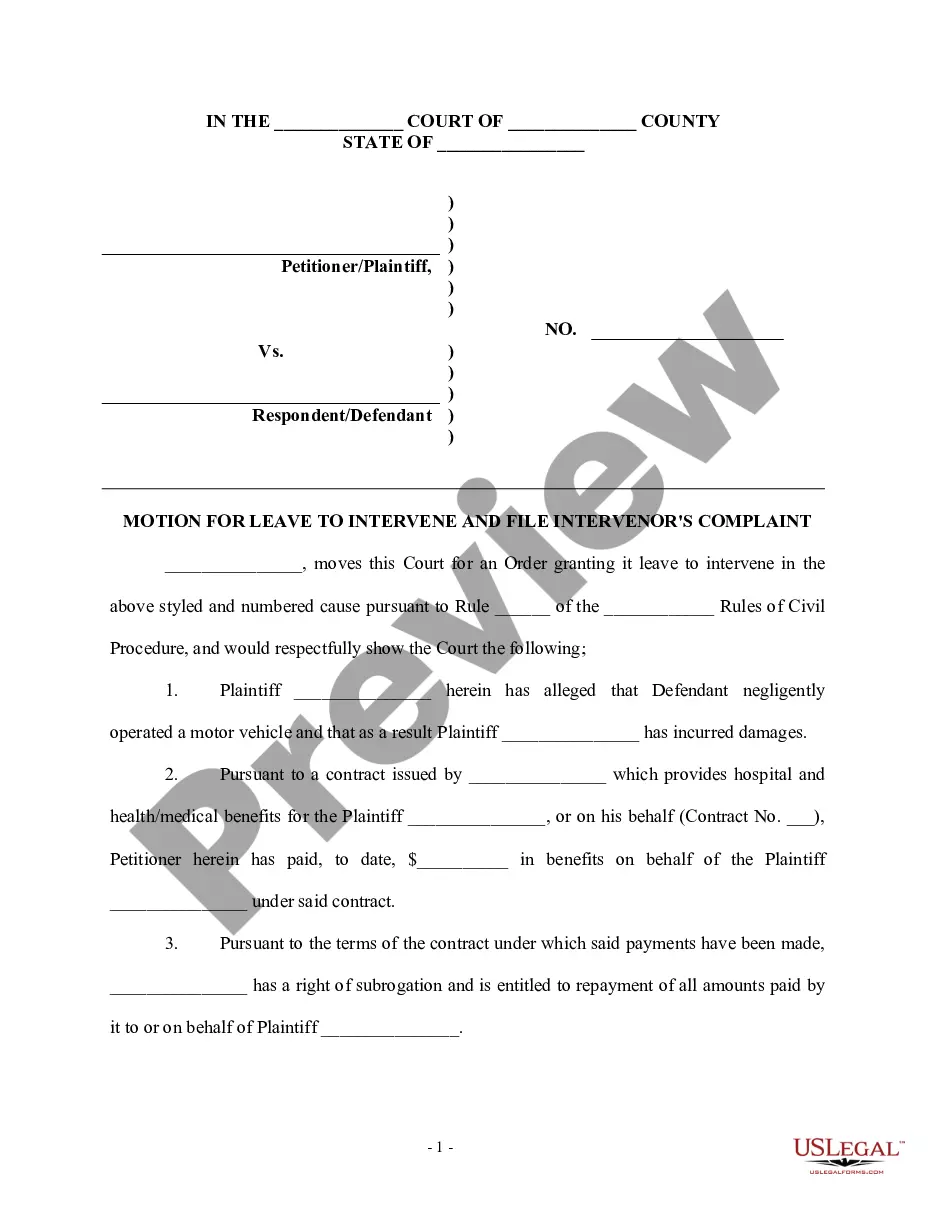
The Response to Motion to Intervene is a legal document used in court proceedings when a party wishes to respond to a request by another party for permission to join the case. This form allows you to clearly communicate your objections or support regarding the motion. Unlike other court responses, this form specifically addresses the nuances of motions to intervene in a legal action.
What’s included in this form
- Title of the court and case number
- Identification of the parties involved
- Statement of the position regarding the motion to intervene
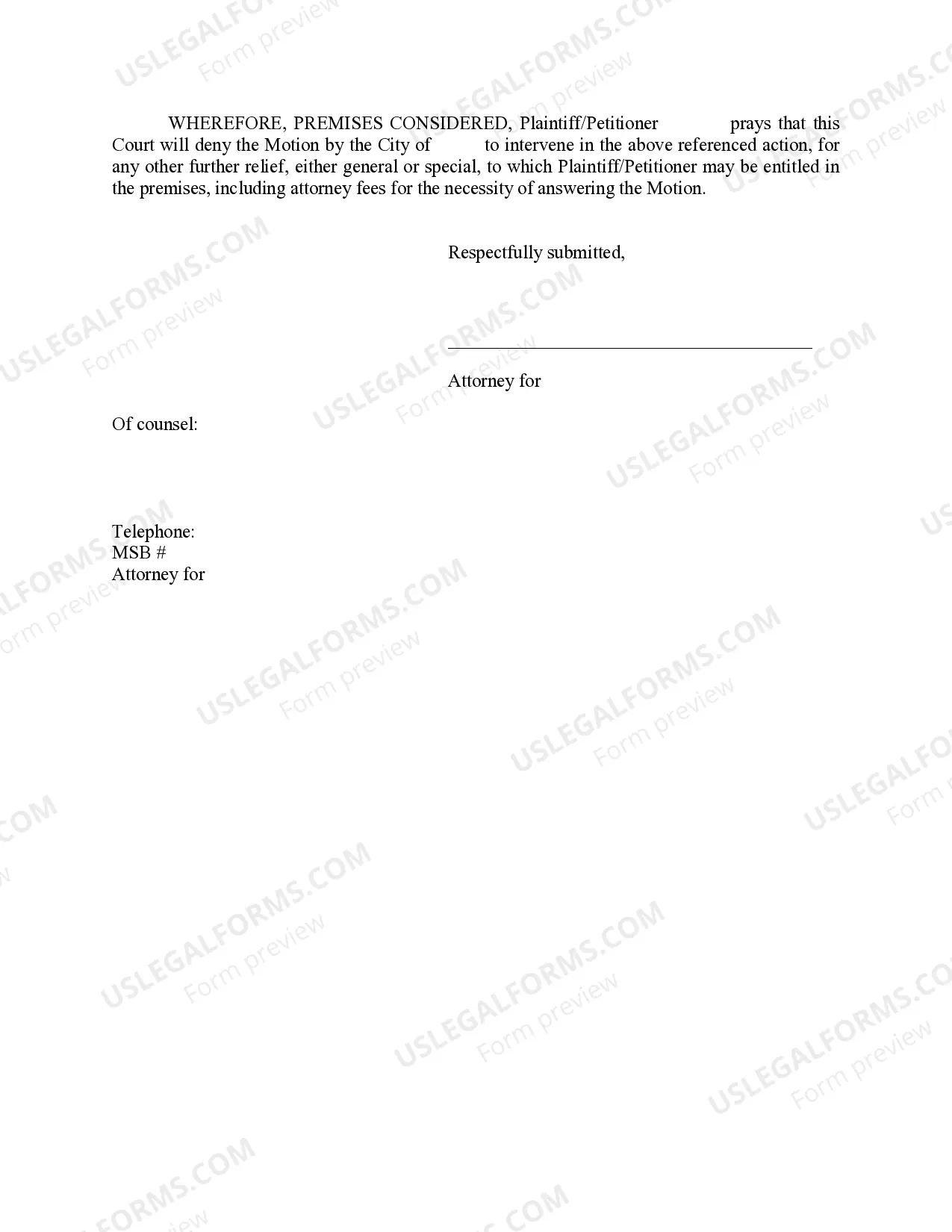
- Supporting arguments and legal grounds for your response
- Signature block for the responder
Situations where this form applies
You should use the Response to Motion to Intervene when a person or organization seeks to join an ongoing legal case, and you need to formally express your position on that request. This form is applicable when you want to object to or support the motion, ensuring your voice is heard within the legal process.
Who needs this form
- Individuals or organizations involved in a legal case facing a motion to intervene
- Defendants or plaintiffs seeking to assert their rights regarding the intervention request
- Legal representatives acting on behalf of a party in the case
Steps to complete this form
- Enter the title of the court and the case number at the top of the form.
- Identify all parties involved in the proceedings and their roles.
- Articulate your position regarding the motion to intervene clearly.
- List any supporting arguments or evidence to back your position.
- Sign and date the form where indicated.
Notarization requirements for this form
This form does not typically require notarization to be legally valid. However, some jurisdictions or document types may still require it. US Legal Forms provides secure online notarization powered by Notarize, available 24/7 for added convenience.
Get your form ready online
Our built-in tools help you complete, sign, share, and store your documents in one place.
Make edits, fill in missing information, and update formatting in US Legal Forms—just like you would in MS Word.
Download a copy, print it, send it by email, or mail it via USPS—whatever works best for your next step.
Sign and collect signatures with our SignNow integration. Send to multiple recipients, set reminders, and more. Go Premium to unlock E-Sign.
If this form requires notarization, complete it online through a secure video call—no need to meet a notary in person or wait for an appointment.
We protect your documents and personal data by following strict security and privacy standards.

Make edits, fill in missing information, and update formatting in US Legal Forms—just like you would in MS Word.

Download a copy, print it, send it by email, or mail it via USPS—whatever works best for your next step.

Sign and collect signatures with our SignNow integration. Send to multiple recipients, set reminders, and more. Go Premium to unlock E-Sign.

If this form requires notarization, complete it online through a secure video call—no need to meet a notary in person or wait for an appointment.

We protect your documents and personal data by following strict security and privacy standards.
Typical mistakes to avoid
- Failing to identify all relevant parties to the motion.
- Not providing sufficient legal grounds for your response.
- Omitting your signature or the date.
Why use this form online
- Convenient access to the form anytime, anywhere.
- Edit and tailor the document to meet your specific needs easily.
- Reliable templates crafted by licensed attorneys to ensure clarity and legal compliance.
Legal use & context
- This form is a vital component of the response process in legal proceedings.
- Using this form ensures that you are officially registered as part of the litigation process.
- Failing to respond adequately can result in legal disadvantages or waive certain rights.
Key takeaways
- The Response to Motion to Intervene is essential for maintaining your rights in a legal case.
- Properly completing the form can influence the court's decision regarding the motion.
- Always check for state-specific guidelines that may apply to your situation.
Looking for another form?



Form popularity
FAQ
If a third party wants to intervene in a lawsuit to which you are a party, you or your attorney will receive a motion to intervene, which is a written document through which the third party asks the court's permission to intervene in the case.
Upon timely application, any person who has an interest in the matter in litigation, or in the success of either of the parties, or an interest against both, may intervene in the action or proceeding. (Code of Civ.
A motion to intervene, in a divorce for instance, is a request by someone other than the wife or the husband to come into the case because that third party says they have an interest of some sort in the case.
In law, intervention is a procedure to allow a nonparty, called intervenor (also spelled intervener) to join ongoing litigation, either as a matter of right or at the discretion of the court, without the permission of the original litigants.
Any person who want to assist the court in deciding a case which is already filed, can file Intervention Application (IA) to the Court. If the court allows IA filed by the applicant, they can intervene. As per order XVII of Supreme Court Rules 2013 .
Under Rule 24(a) of the Federal Rules of Civil Procedure, intervention allows a person who is not a party to an action, who has interests in subject of an action to be joined, instead of waiting to be forced into action, if he or she timely applies to the court to intervene, assuming his interest is not adequately
21 provides that misjoinder of parties is not ground for dismissal of an action, and that parties may be dropped or added by court order on motion of any party or of the court's own initiative at any stage in the action and on such terms as are just.
A motion for intervention, in the context of family law, is a petition by an interested party to testify to the best interests of a child when the existing parties cannot adequately protect a child's best interests.