Mississippi Appellant's Motion to Supplement the Record
Overview of this form
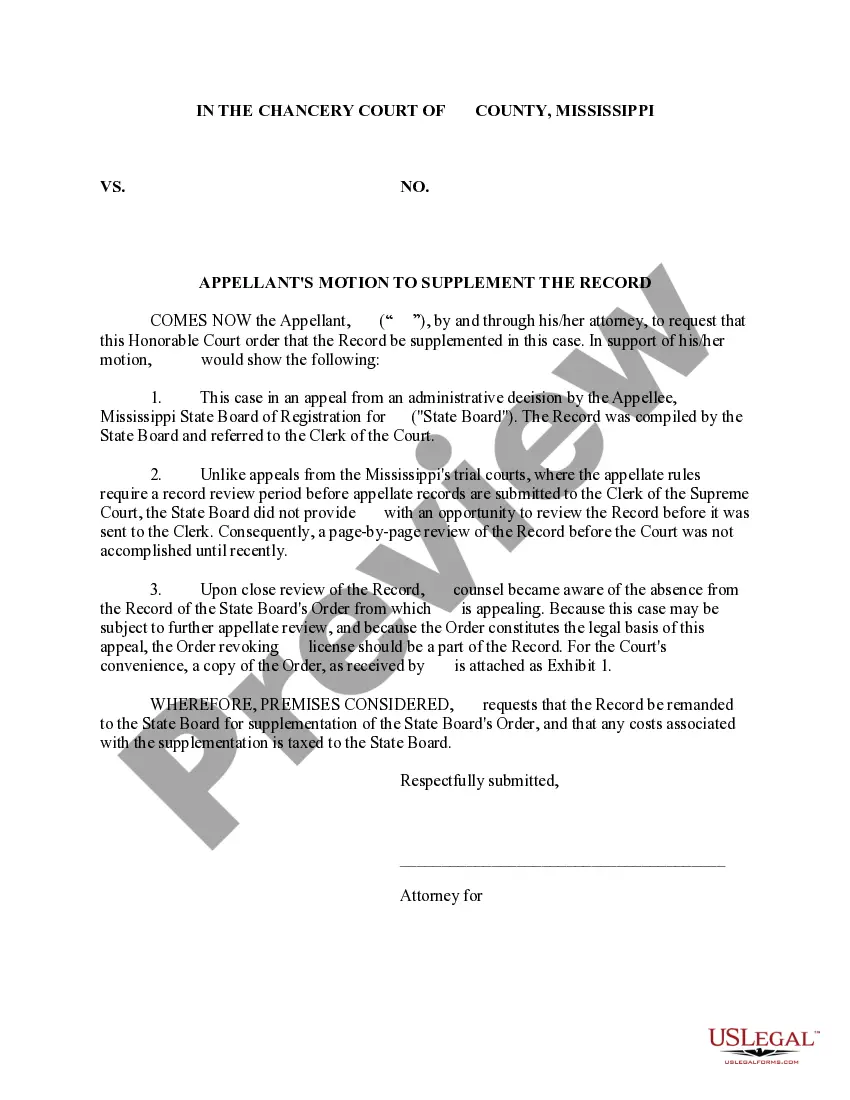
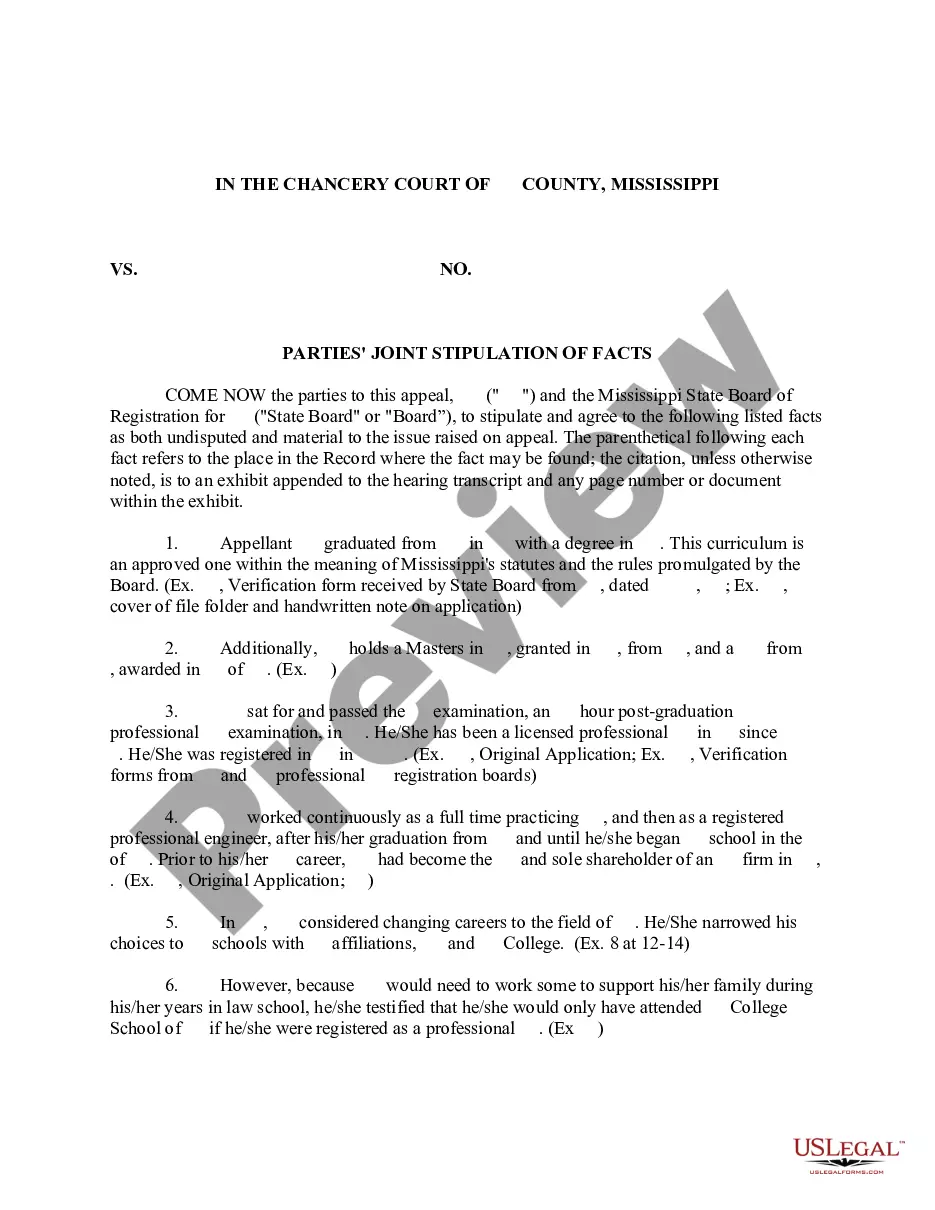
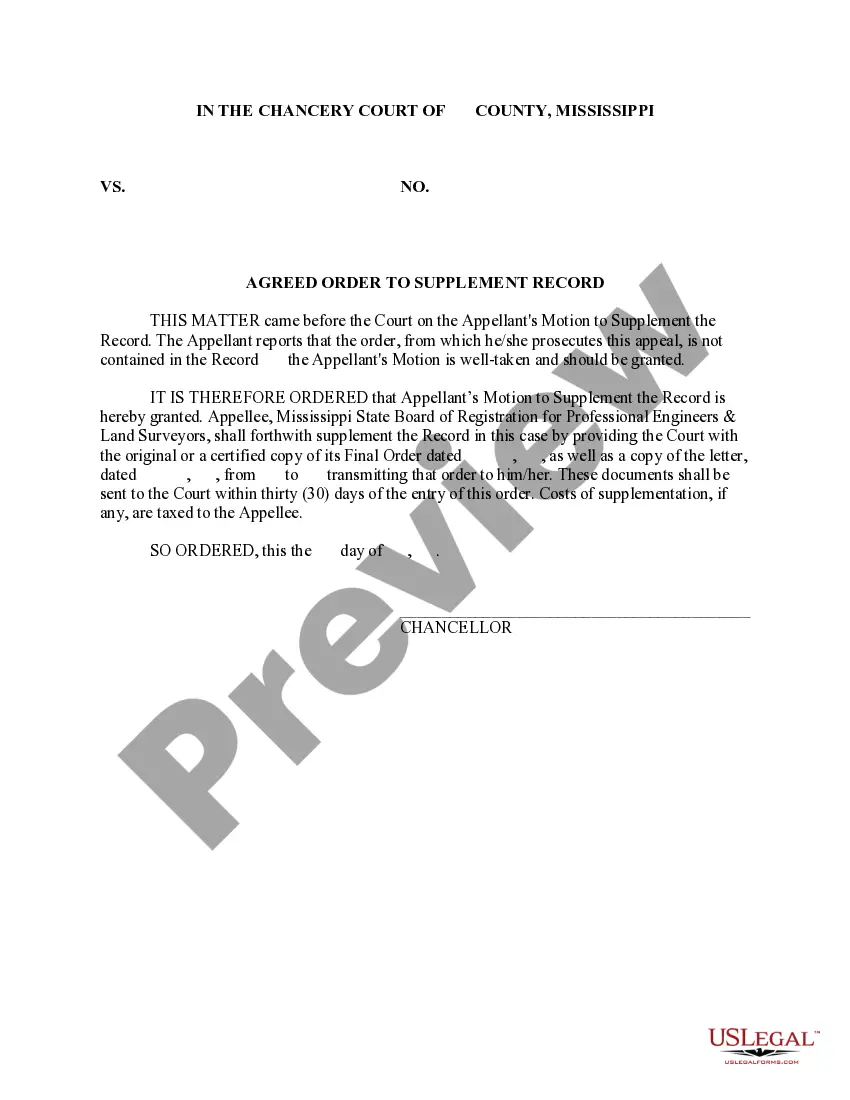
The Appellant's Motion to Supplement the Record is a formal request made to the court, asking for the addition of specific documents or information to the existing case record. This form is utilized in appeals to ensure that all relevant materials are included for the court's consideration. It differs from other motions in that it specifically focuses on enhancing the record for appellate review, addressing any gaps that might affect the outcome of the appeal.
Main sections of this form
- Heading: Identifies the purpose of the motion and the parties involved.
- Statement of fact: Describes the circumstances that led to the need for supplementation.
- Details of the missing records: Specifies the documents that should be included in the record.
- Exhibit: References any attached documents that support the motion.
- Conclusion and request: Clearly states what the appellant is asking the court to do.
When to use this form
This form is used when an appellant discovers that critical documents or orders are missing from the appellate record after it has been submitted. This situation may arise when there is a lack of opportunity to review the case file before it was filed for appeal, necessitating the need to supplement the record to support the appeal appropriately.
Who needs this form
- Individuals or entities appealing a decision from a State Board.
- Appellants who are aware of missing records essential to their case.
- Legal representatives acting on behalf of the appellant in a case.
Steps to complete this form
- Identify the parties involved in the appeal and the relevant court.
- State the reasons for the supplementation and detail the missing documents.
- Attach any related documents needed to substantiate your request as exhibits.
- Complete the conclusion by specifying the requested actions from the court.
- Sign and date the motion to validate it.
Notarization requirements for this form
This form usually doesn’t need to be notarized. However, local laws or specific transactions may require it. Our online notarization service, powered by Notarize, lets you complete it remotely through a secure video session, available 24/7.
Get your form ready online
Our built-in tools help you complete, sign, share, and store your documents in one place.
Make edits, fill in missing information, and update formatting in US Legal Forms—just like you would in MS Word.
Download a copy, print it, send it by email, or mail it via USPS—whatever works best for your next step.
Sign and collect signatures with our SignNow integration. Send to multiple recipients, set reminders, and more. Go Premium to unlock E-Sign.
If this form requires notarization, complete it online through a secure video call—no need to meet a notary in person or wait for an appointment.
We protect your documents and personal data by following strict security and privacy standards.

Make edits, fill in missing information, and update formatting in US Legal Forms—just like you would in MS Word.

Download a copy, print it, send it by email, or mail it via USPS—whatever works best for your next step.

Sign and collect signatures with our SignNow integration. Send to multiple recipients, set reminders, and more. Go Premium to unlock E-Sign.

If this form requires notarization, complete it online through a secure video call—no need to meet a notary in person or wait for an appointment.

We protect your documents and personal data by following strict security and privacy standards.
Typical mistakes to avoid
- Failing to attach necessary supporting documents or exhibits.
- Not providing a clear explanation of why the supplementation is needed.
- Leaving out important details regarding the original record and missing items.
- Not properly identifying the court or other parties involved.
Why complete this form online
- Convenient access to legal documents anytime and from anywhere.
- Easy to complete and customize according to your specific case needs.
- Reliability from forms drafted by licensed attorneys, ensuring legal validity.
Looking for another form?



Form popularity
FAQ
A party who files an appeal is called an "appellant", "plaintiff in error", "petitioner" or "pursuer", and a party on the other side is called an "appellee". A "cross-appeal" is an appeal brought by the respondent. For example, suppose at trial the judge found for the plaintiff and ordered the defendant to pay $50,000.
Filing the Notice of Appeal. Abandonment or Settlement. Waiver of Fees. Designating the Record. Civil Case Information Sheet. Briefs. Oral Argument. The Court's Decision.
After a judge or jury has made a decision in civil litigation, this is not necessarily the end of the partys' involvement with the legal system. Either a plaintiff or a defendant can appeal the decision that was made.
The record in an appeal is the official account of what went on at the hearing or the trial that is being appealed. A party designates the record by listing what items to include in a Notice Designating Record on Appeal form (Sample Form F).
To perfect the appeal is to fully comply with the rules, procedures, and time lines of the court. When an appeal has been perfected, it is sent to the Superior Court so the judge can review the decision of the lower court and decide whether or not it should be enforced. Synonyms: perfect the appeal.
A petition for rehearing asks the Court of Appeal to hear or consider the case again and correct a legal mistake in the court's opinion. Generally, the court only agrees to a rehearing if the mistake is a major error of fact or law, or if an important argument was not included in the court's decision.
After filing a petition for rehearing If the court does not act on the petition before the decision becomes final, the petition will be deemed denied "by operation of law" (automatically without an order of any kind from the court).
Remember, the appellate court will not consider new evidence. An appeal is not a new trial. You cannot appeal a court's decision just because you do not like it.