Mississippi Order Terminating Guardianship
What is this form?
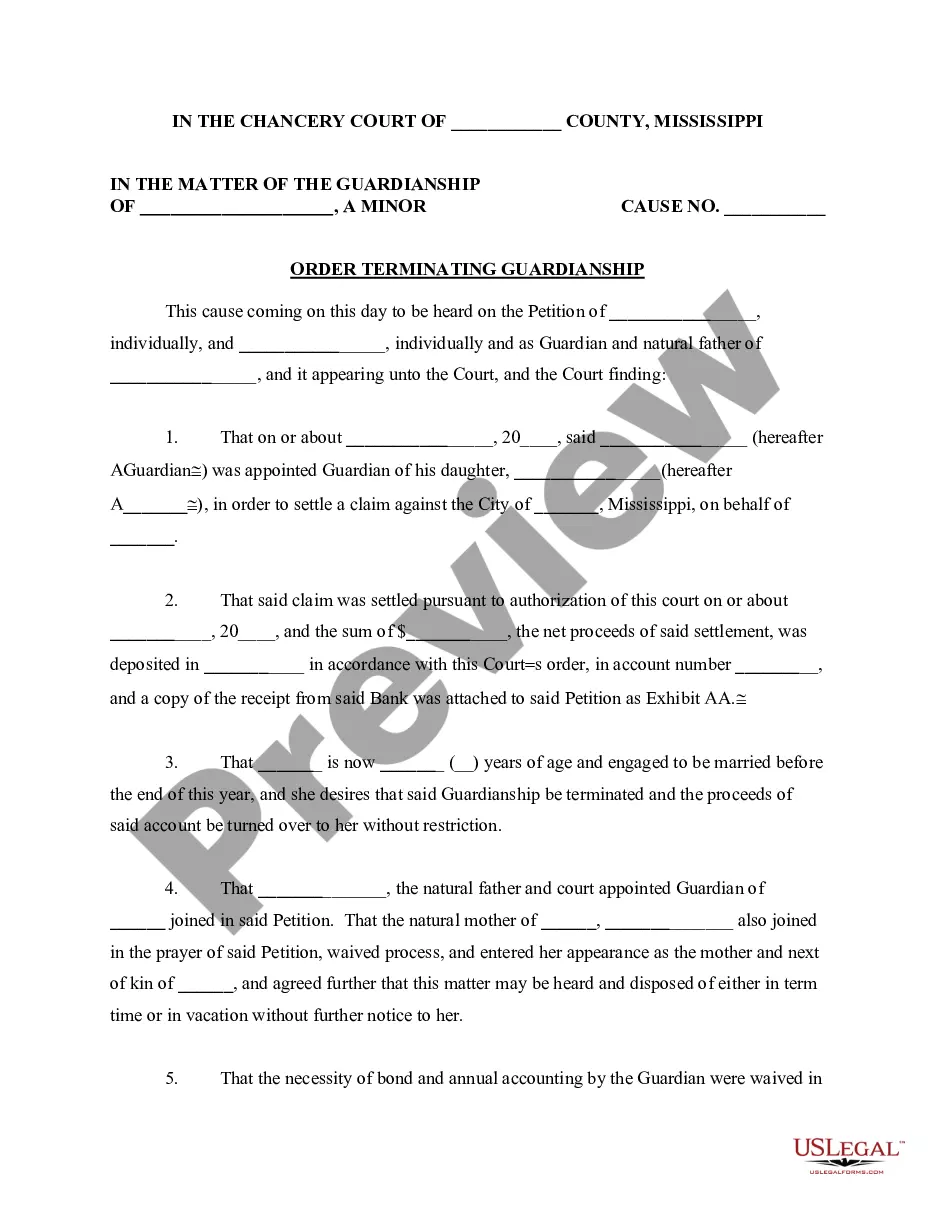
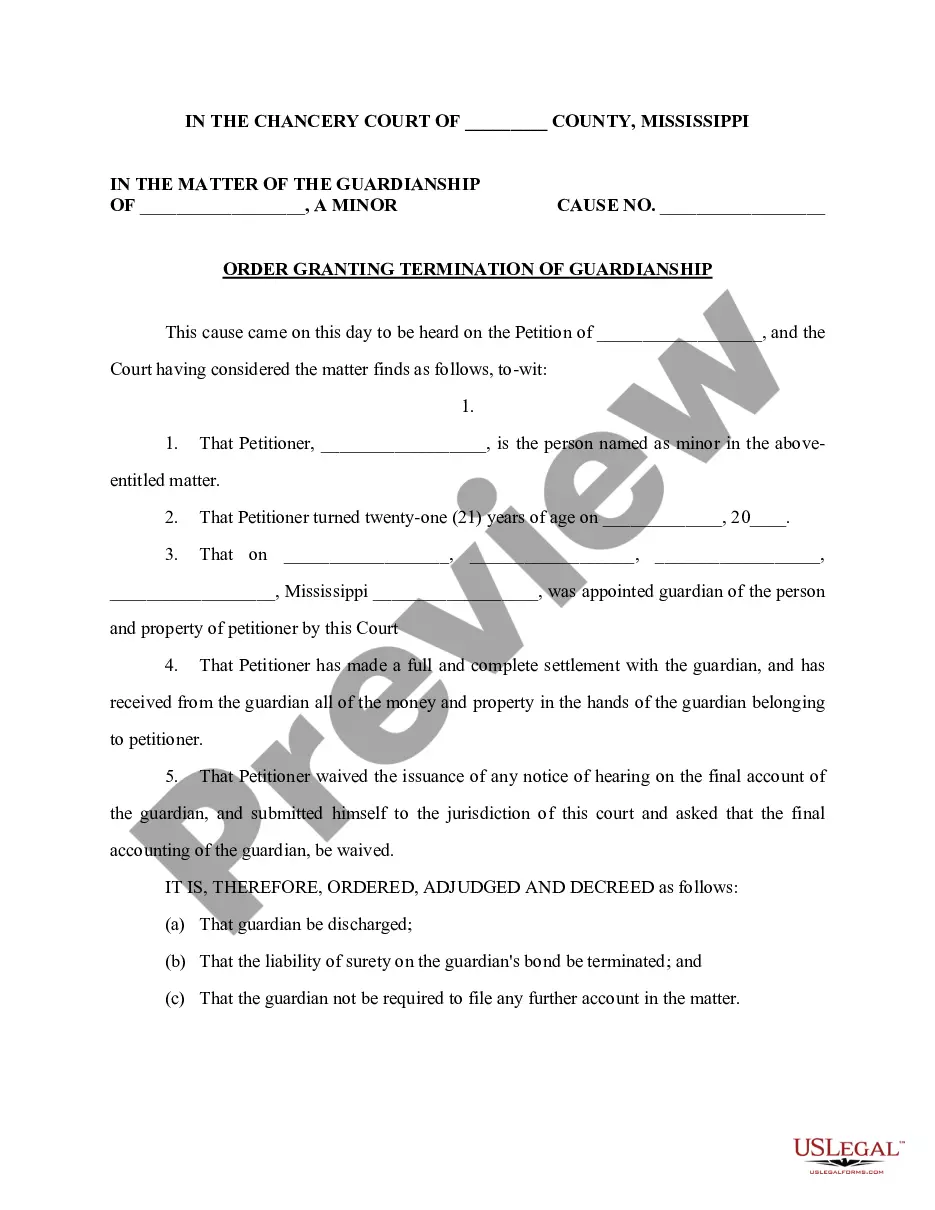
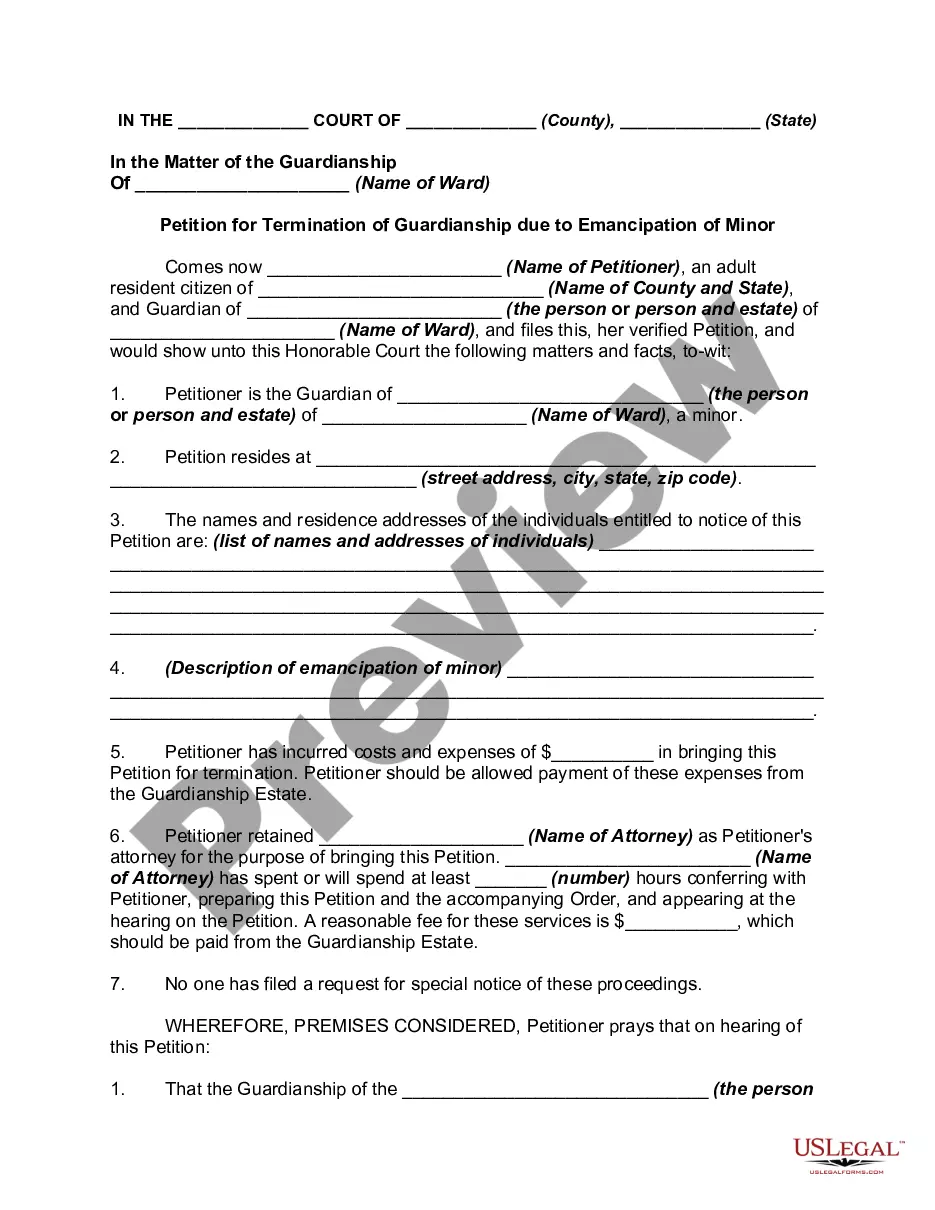
The Order Terminating Guardianship is a legal document issued by the court that officially ends a guardianship arrangement. This form serves as an official command from a judge, detailing the termination of guardianship for a minor. Unlike other guardianship forms, this one specifically focuses on concluding the guardian's authority and transferring control back to the minor, often requiring that the individual be of a certain age or condition, such as marrying or being financially independent.
What’s included in this form
- Identification of the minor involved and the parties petitioning for termination.
- Details regarding the original guardianship appointment and its purpose.
- Age and situation of the minor, including any significant life events like marriage.
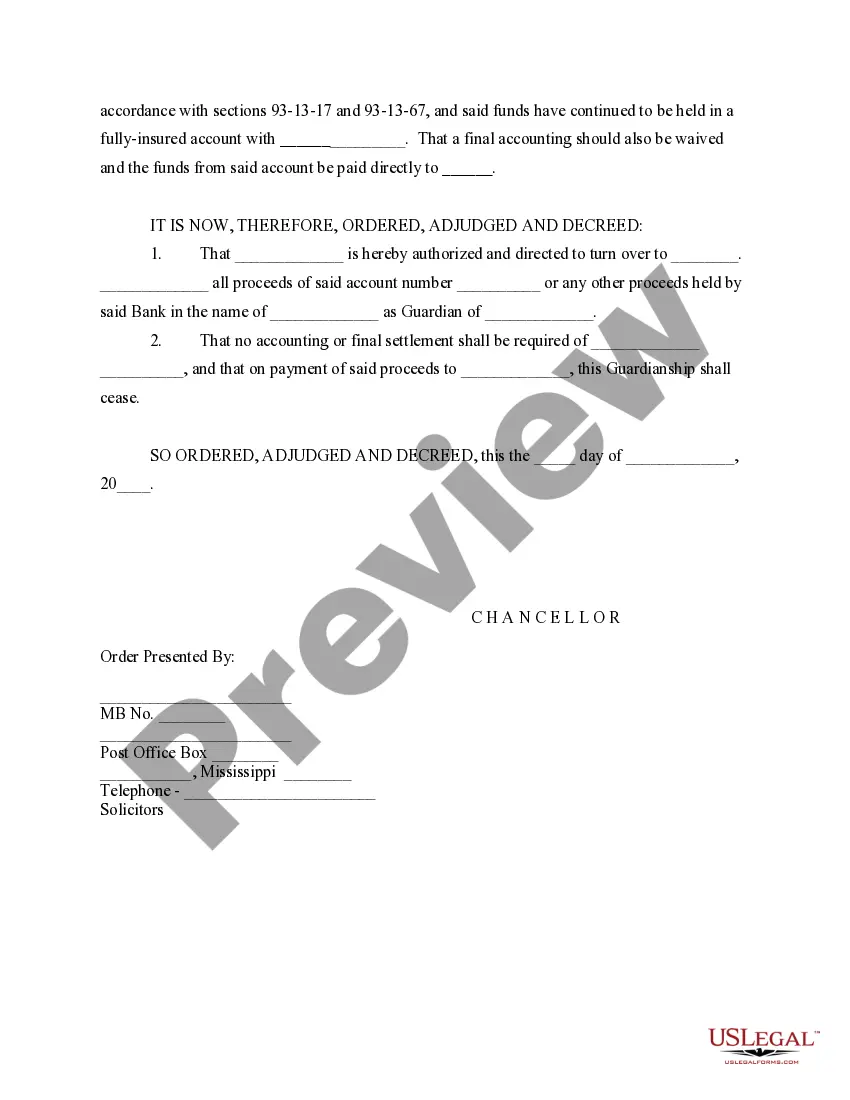
- Waivers of bond and final accounting by the guardian.
- Order for the release of funds and cessation of guardianship.


When to use this form
This form should be used when the guardian and the minor wish to legally terminate the guardianship arrangement. Common scenarios include when the minor reaches a legal age, such as eighteen years old, desires to manage their own financial resources, or is about to enter into marriage. The guardianship termination may also occur when the original purpose of the guardianship has been fulfilled.
Who should use this form
- Parents or guardians looking to end an existing guardianship for a minor.
- The minor who is of legal age or is about to be married and wishes to regain their autonomy.
- Attorneys or legal representatives needing to assist clients in filing the termination petition with the court.
Steps to complete this form
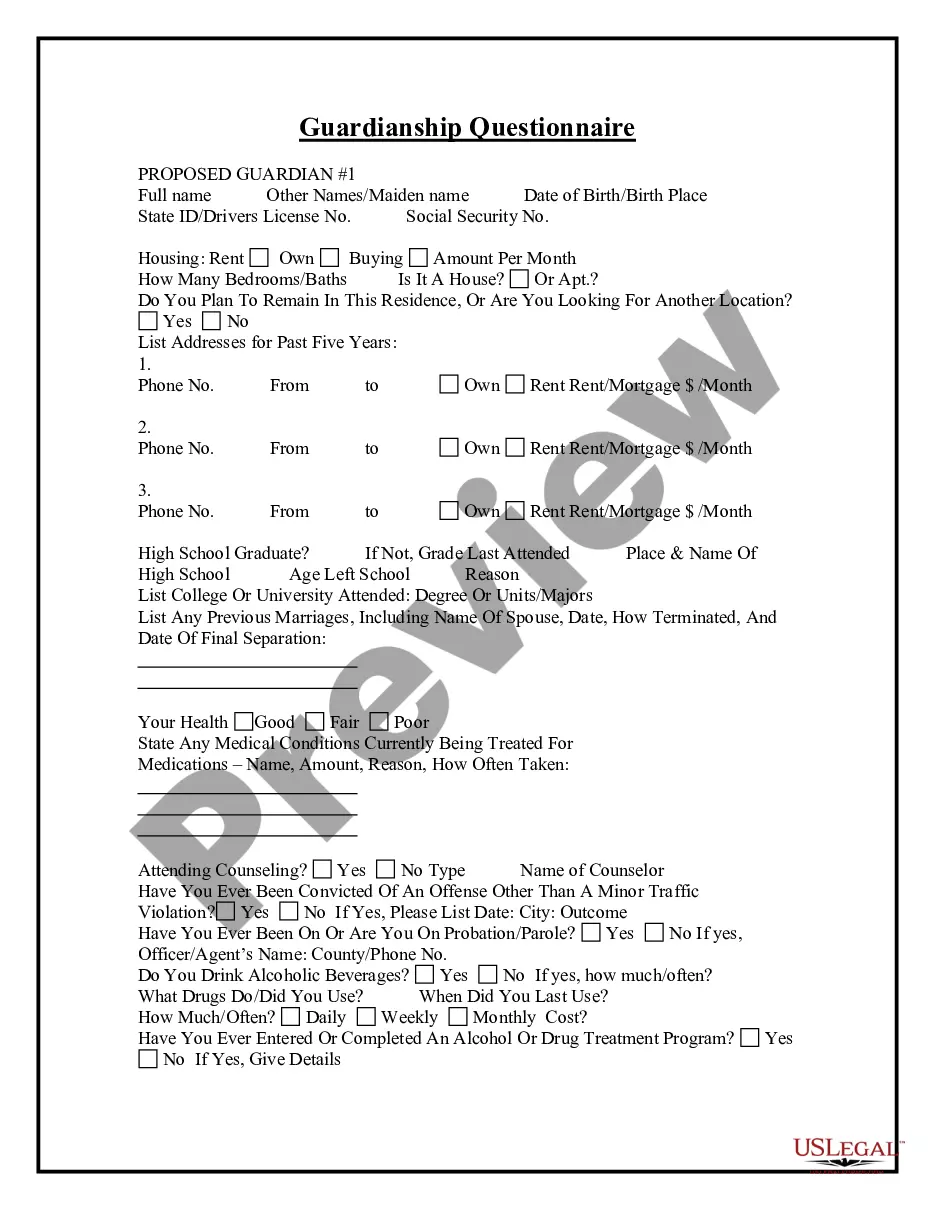
- Identify the minor's name and the petitioner's details, including their relationship to the minor.
- Specify the date of the original guardianship appointment and the reason for the guardianship.
- Provide information on the minor's current age and any significant changes, such as engagement or marriage plans.
- Include relevant financial information tied to the guardianship, such as account numbers and bank details.
- Sign and date the form where required, ensuring that all parties involved have consented to the termination.
Does this document require notarization?
To make this form legally binding, it must be notarized. Our online notarization service, powered by Notarize, lets you verify and sign documents remotely through an encrypted video session.
Get your form ready online
Our built-in tools help you complete, sign, share, and store your documents in one place.
Make edits, fill in missing information, and update formatting in US Legal Forms—just like you would in MS Word.
Download a copy, print it, send it by email, or mail it via USPS—whatever works best for your next step.
Sign and collect signatures with our SignNow integration. Send to multiple recipients, set reminders, and more. Go Premium to unlock E-Sign.
If this form requires notarization, complete it online through a secure video call—no need to meet a notary in person or wait for an appointment.
We protect your documents and personal data by following strict security and privacy standards.

Make edits, fill in missing information, and update formatting in US Legal Forms—just like you would in MS Word.

Download a copy, print it, send it by email, or mail it via USPS—whatever works best for your next step.

Sign and collect signatures with our SignNow integration. Send to multiple recipients, set reminders, and more. Go Premium to unlock E-Sign.

If this form requires notarization, complete it online through a secure video call—no need to meet a notary in person or wait for an appointment.

We protect your documents and personal data by following strict security and privacy standards.
Common mistakes
- Failing to include all necessary party signatures, especially from both parents and the guardian.
- Not specifying relevant financial accounts accurately, which can delay processing.
- Neglecting to file the form within the appropriate legal timeframe, which may cause issues with the guardianship's termination.
Advantages of online completion
- Convenient access to downloadable templates that can be completed at your own pace.
- Editable formats ensure that you can tailor the form to meet your specific needs and circumstances.
- Reliability as the forms are drafted by licensed attorneys, minimizing the risk of legal errors.
Looking for another form?


Form popularity
FAQ
To terminate parental rights, a person, agency or institution must file a request in the chancery court of the county where the child lives. The mother, legal father and biological father become parties in the action, and the court appoints a guardian to oversee the child's interests temporarily.
A temporary guardianship takes effect the day that all required parties sign the document, and automatically expires six months after that date if no sooner date is given.
In order to terminate their rights, a petition to terminate an absent parent's parental rights will need to be filed in family court.However, in situations where the other parent is also absent or deceased, another family member, legal guardian or state agency can request that parental rights be terminated.
Child abandonment occurs when a parent, guardian, or person in charge of a child either deserts a child without any regard for the child's physical health, safety or welfare and with the intention of wholly abandoning the child, or in some instances, fails to provide necessary care for a child living under their roof.
As such, the termination of parental rights is very rare. While you may feel that your deadbeat ex isn't worthy of the privilege of time with your child, the courts look on the matter differently, taking a child's needs and well-being into account over a parent's personal grievances.
Under Mississippi law, willful, continued and obstinate desertion for the space of one (1) year is grounds for divorce.In other words, a spouse's intentional and continued abandonment of the other (innocent) spouse for one year or longer, without interruption by reconciliation, constitutes desertion.
Desertion or abandonment of the child by the parent; Contact not having been made with the child for a significant period of time (at least six months for a child younger than three years old or at least one year for a child three years old or older);