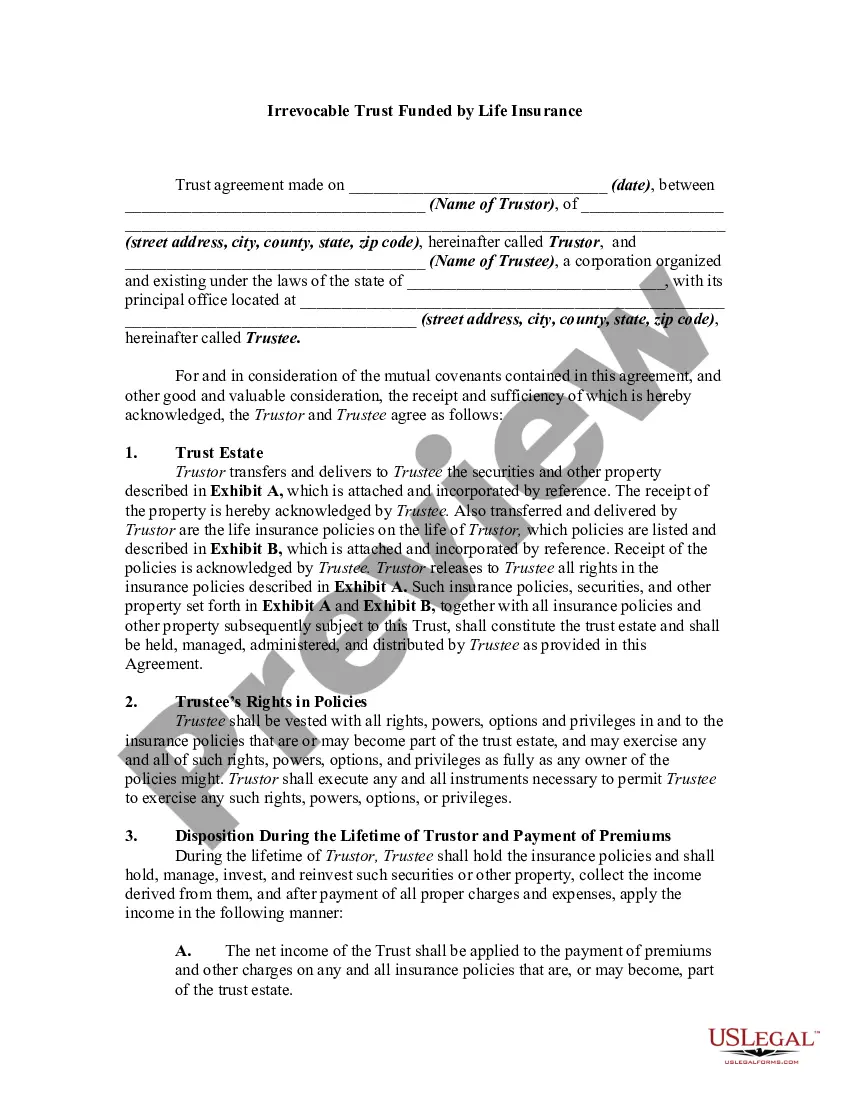
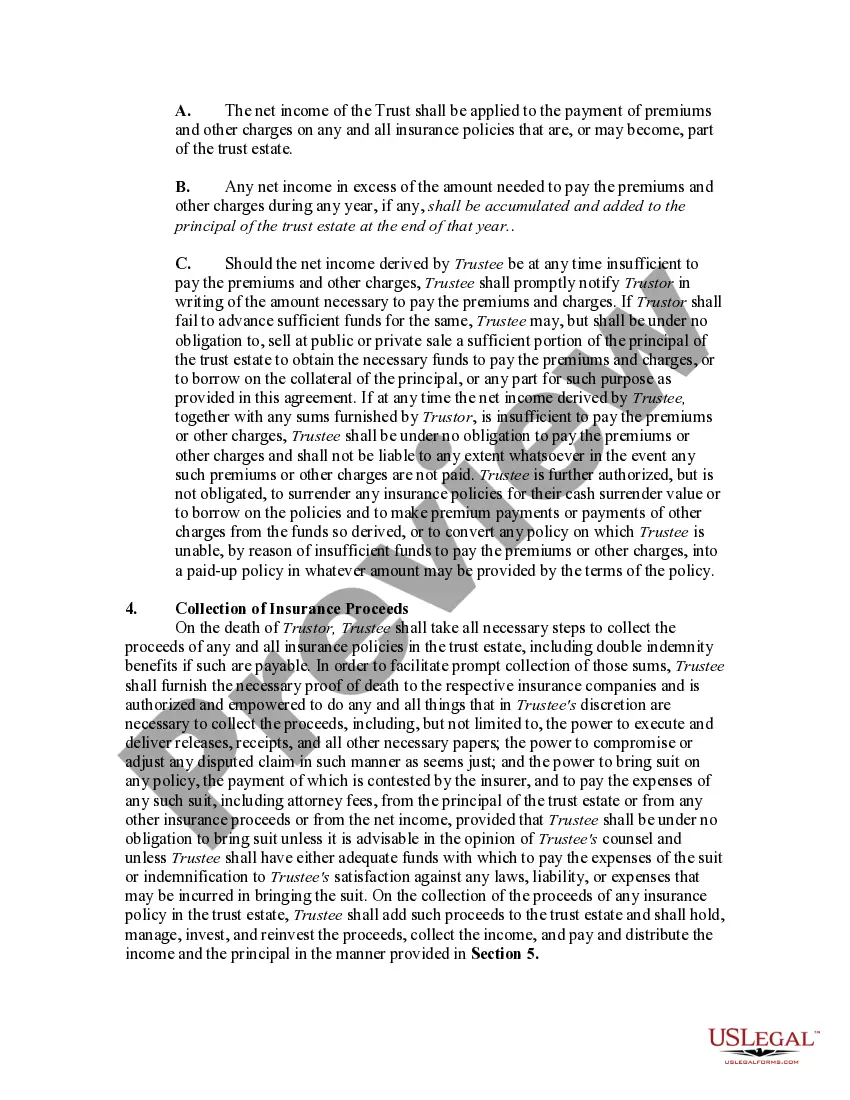
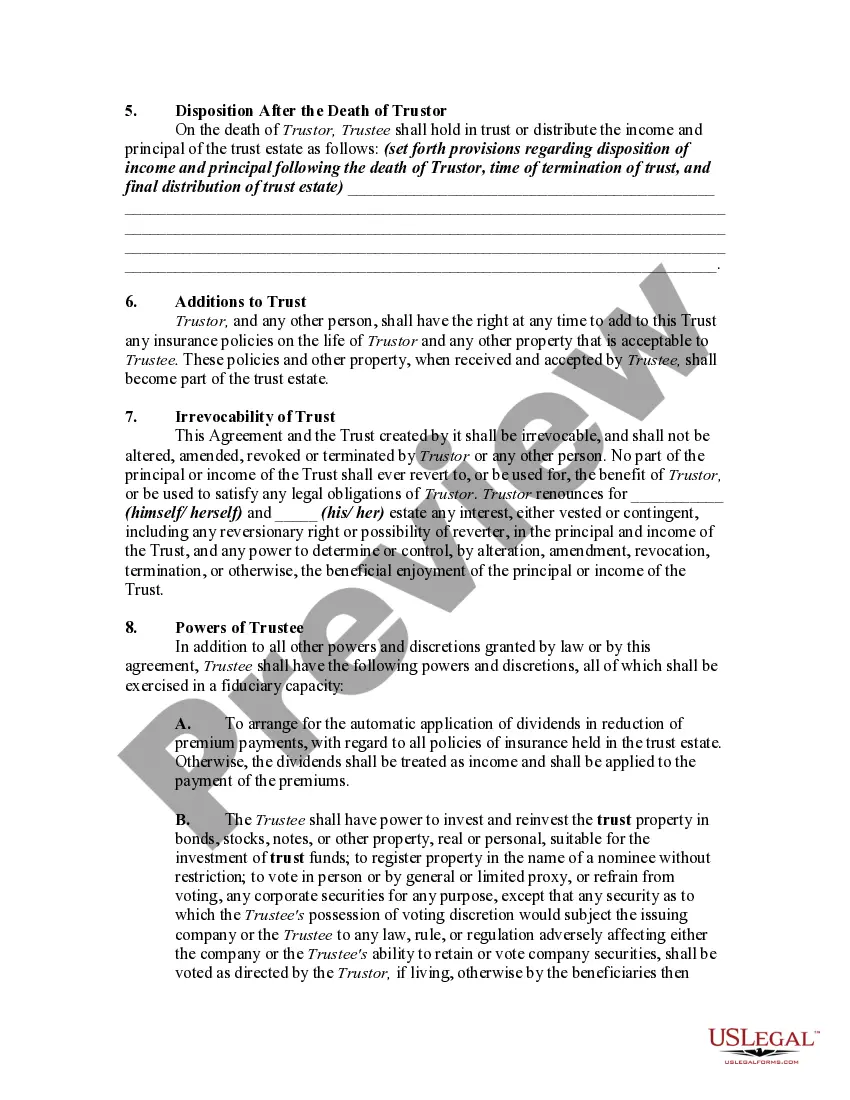
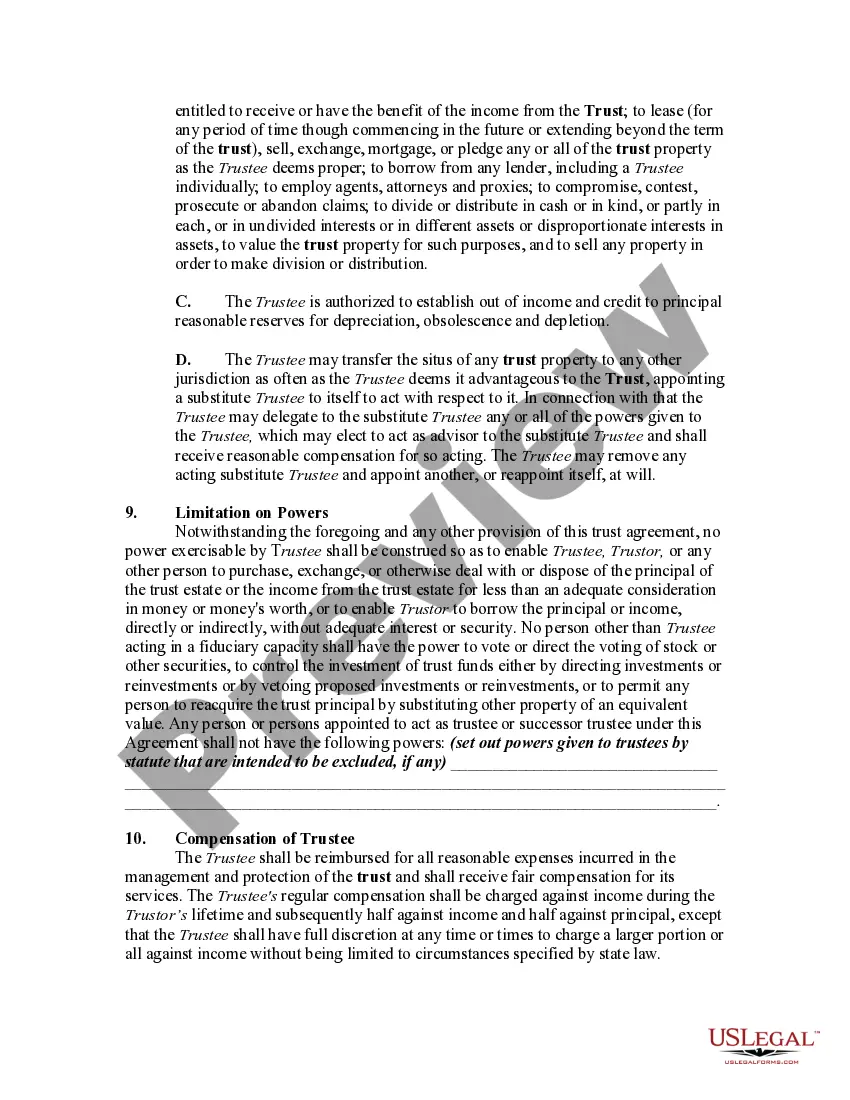
One principal advantage of insurance trusts is that they permit a greater flexibility in investment and distribution than may be effected under settlement options generally included in the policies themselves. Another advantage is that such trusts, like other gifts of insurance policies, may afford substantial estate tax savings.
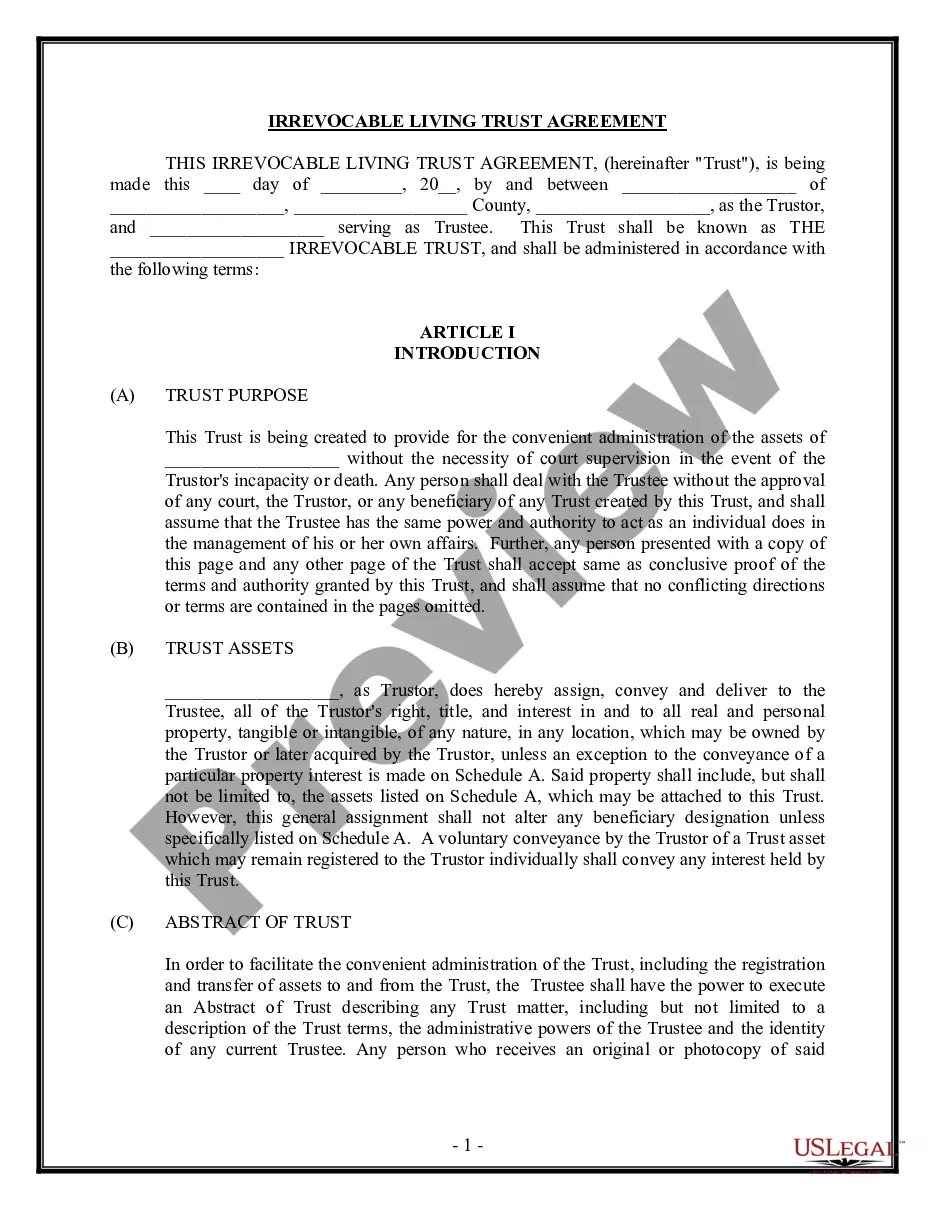
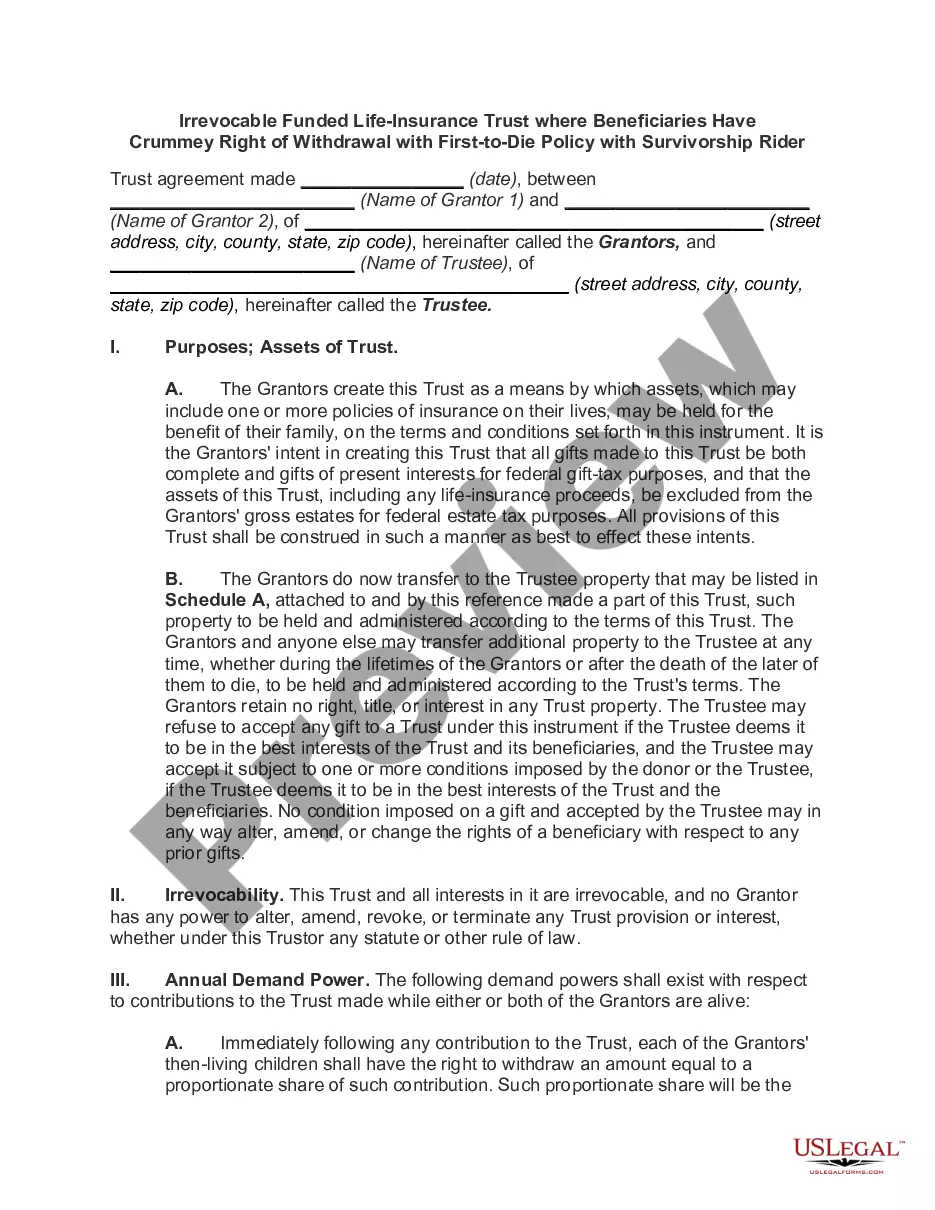
Missouri Irrevocable Trust Funded by Life Insurance
364 downloads
Description
Free preview


Get your form ready online
Our built-in tools help you complete, sign, share, and store your documents in one place.
Built-in online Word editor
Make edits, fill in missing information, and update formatting in US Legal Forms—just like you would in MS Word.
Export easily
Download a copy, print it, send it by email, or mail it via USPS—whatever works best for your next step.
E-sign your document
Sign and collect signatures with our SignNow integration. Send to multiple recipients, set reminders, and more. Go Premium to unlock E-Sign.
Notarize online 24/7
If this form requires notarization, complete it online through a secure video call—no need to meet a notary in person or wait for an appointment.
Store your document securely
We protect your documents and personal data by following strict security and privacy standards.

Make edits, fill in missing information, and update formatting in US Legal Forms—just like you would in MS Word.

Download a copy, print it, send it by email, or mail it via USPS—whatever works best for your next step.

Sign and collect signatures with our SignNow integration. Send to multiple recipients, set reminders, and more. Go Premium to unlock E-Sign.

If this form requires notarization, complete it online through a secure video call—no need to meet a notary in person or wait for an appointment.

We protect your documents and personal data by following strict security and privacy standards.
Looking for another form?





How to fill out Irrevocable Trust Funded By Life Insurance?
Locating the appropriate legal document template can be a challenge.
Of course, numerous formats are accessible online, but how do you identify the legal form you need.
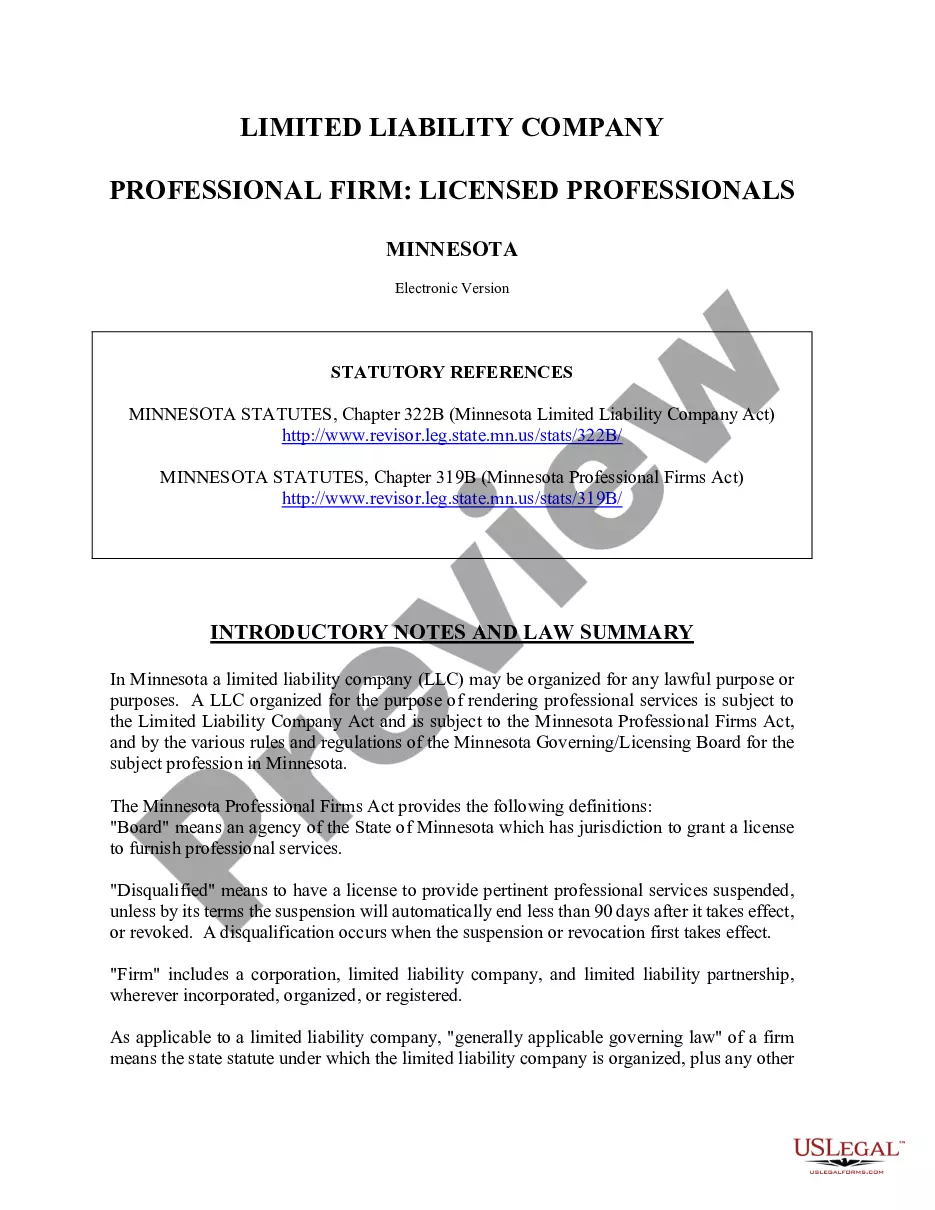
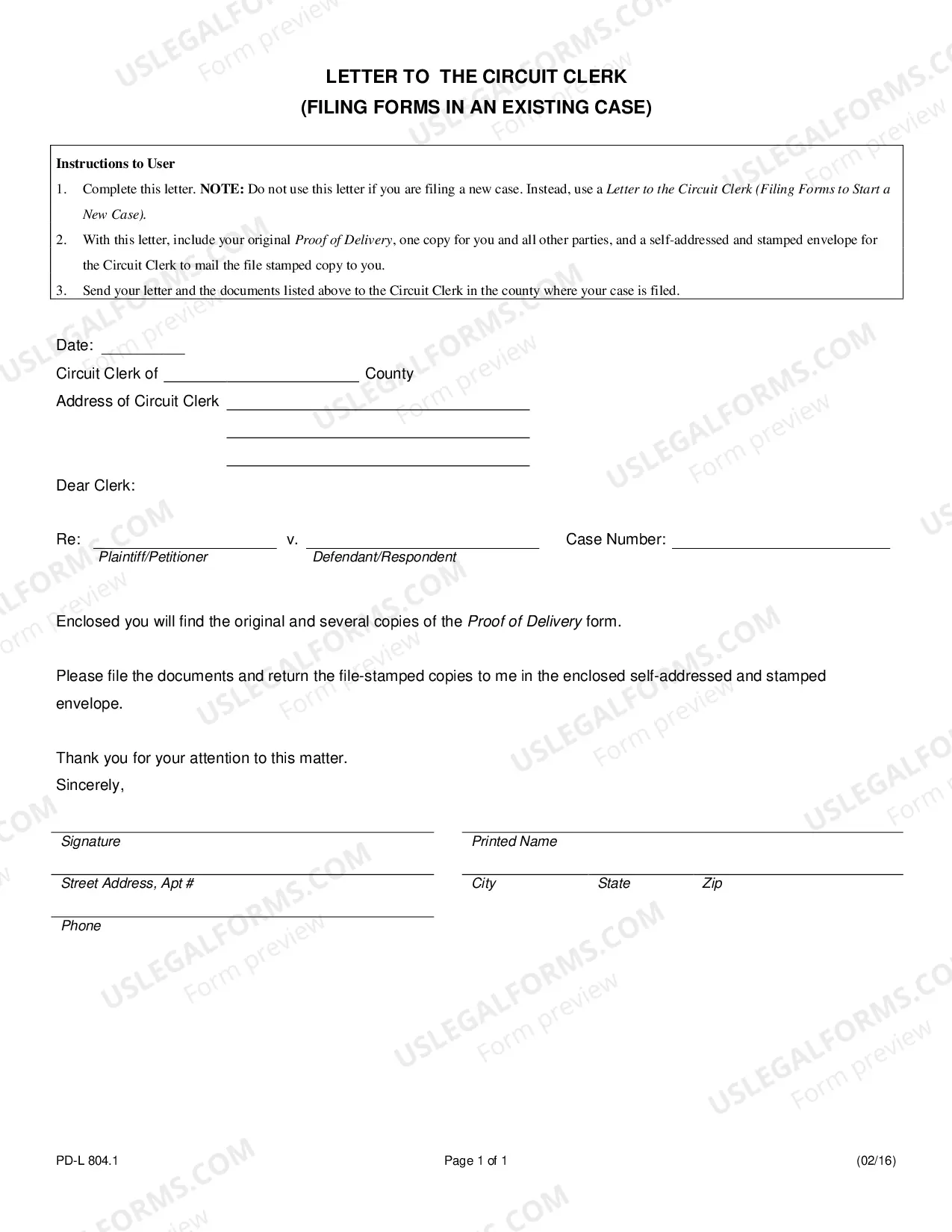
Utilize the US Legal Forms website. This service provides a multitude of templates, such as the Missouri Irrevocable Trust Funded by Life Insurance, suitable for both business and personal needs.
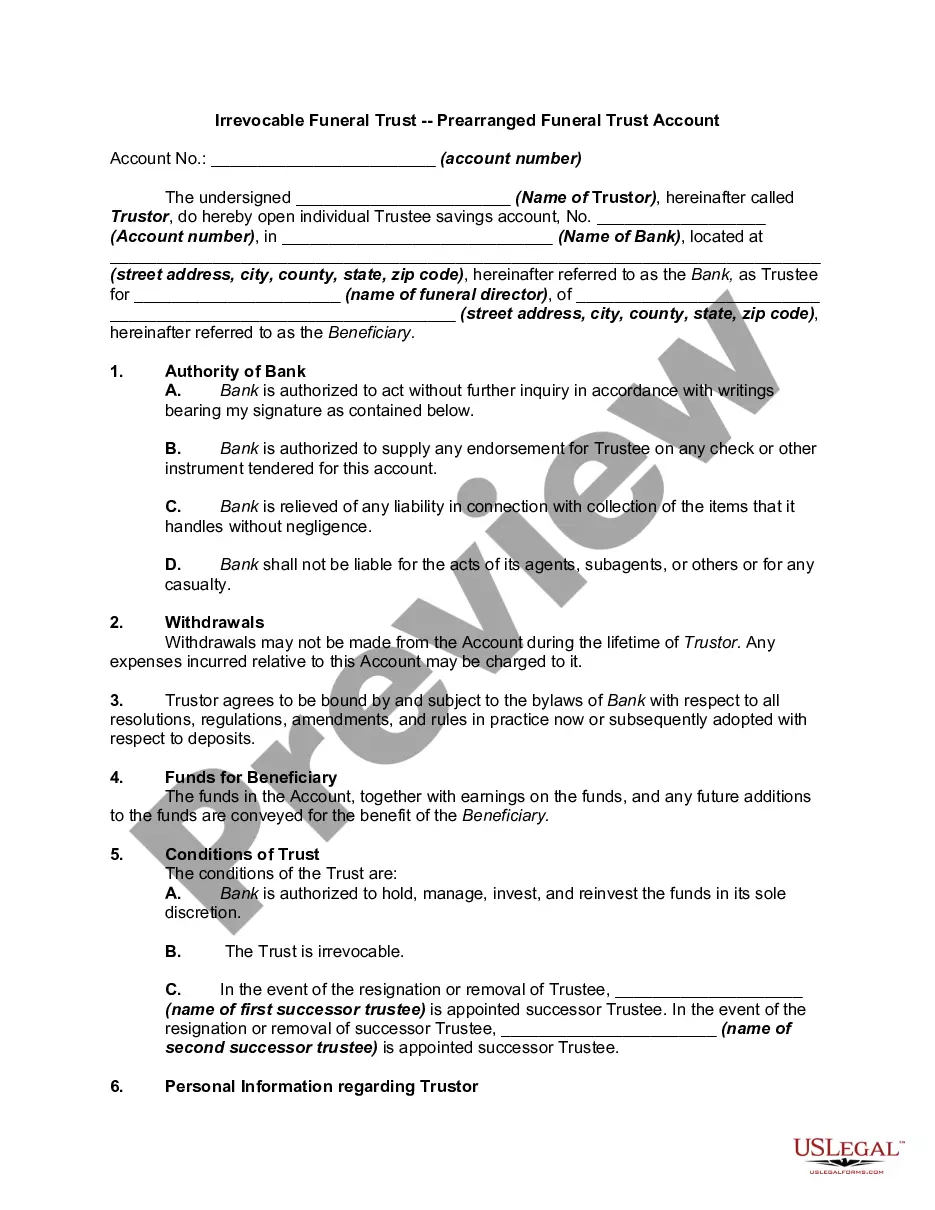
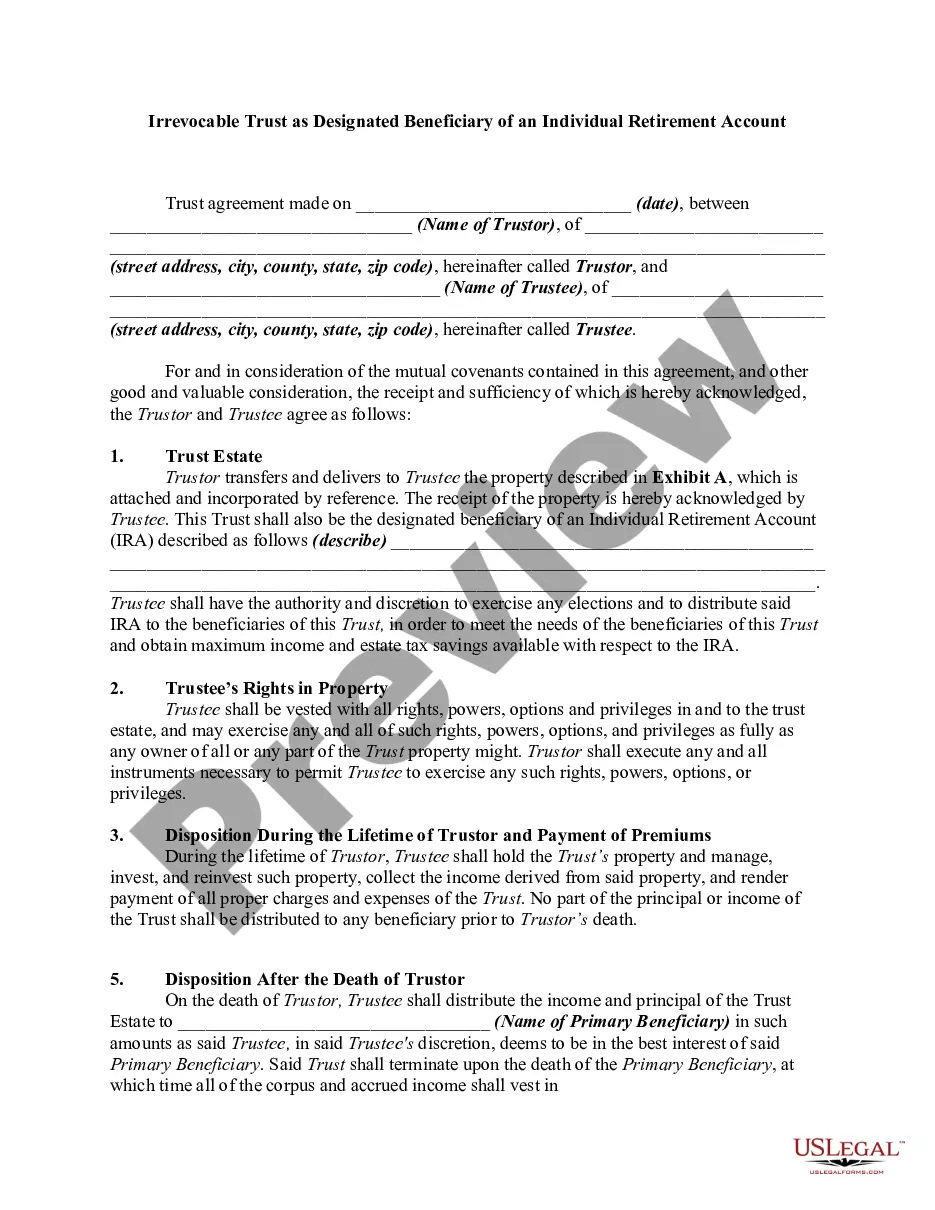
You can preview the form using the Preview option and review the form outline to ensure it meets your requirements.
- All the forms are reviewed by experts and comply with both federal and state regulations.
- If you are already registered, Log In to your account and click on the Download button to obtain the Missouri Irrevocable Trust Funded by Life Insurance.
- Use your account to browse through the legal forms you have previously ordered.
- Go to the My documents tab in your account to get another copy of the document you need.
- If you are a new user of US Legal Forms, here are some simple guidelines to follow.
- First, make sure you have selected the correct form for your area/region.
Form popularity
FAQ
The three-year rule for irrevocable trusts specifies that any assets transferred into the trust within three years prior to the grantor's death may be included in their taxable estate. This rule applies similarly to gifts and other estate planning strategies. Understanding this is important for anyone considering setting up a Missouri irrevocable trust funded by life insurance, as it can significantly influence tax implications. Consulting a legal expert can provide guidance on navigating these rules efficiently.
The three-year look-back rule for irrevocable life insurance trusts (ILIT) is crucial in estate planning. According to this rule, if you transfer a life insurance policy into an ILIT and die within three years, the policy's value is included in your taxable estate. This can affect any estate taxes your beneficiaries may owe. As you plan your estate, considering the timing of these transfers is essential to optimize tax liability.
Missouri recognizes irrevocable trusts as legal entities that cannot be amended or revoked once established. These trusts are governed by state law, which outlines the rights and obligations of the grantor and beneficiaries. The Missouri Uniform Trust Code also provides specific guidelines on how these trusts should be administered. Knowing these legal frameworks helps in better managing your Missouri irrevocable trust funded by life insurance.
The three-year look-back rule refers to the period during which the IRS evaluates any life insurance policies transferred into a Missouri irrevocable trust funded by life insurance. If you make the transfer within three years of your death, the policy is included in your estate for tax calculations. This rule is crucial for estate planning, as it can impact your estate taxes. Therefore, timing your transfer is vital.
The main disadvantages of a Missouri irrevocable trust funded by life insurance include the loss of control over the assets and the complexity involved in setting it up. Once you transfer your life insurance into the trust, you cannot amend or revoke it without the consent of all beneficiaries. Additionally, the initial setup may require legal assistance, adding to costs. Understanding these factors is essential before you proceed.
Yes, you can place life insurance policies in a Missouri irrevocable trust funded by life insurance. By doing this, you remove the policy from your estate, which can potentially reduce estate taxes. This strategy also allows beneficiaries to receive the death benefit directly upon your passing, without going through probate. It's a smart move for individuals looking to protect their assets.
Filing a tax return for an irrevocable trust is usually necessary. The trust must report any income it earns and may also have to disclose its expenses. Utilizing services like U.S. Legal Forms can clarify your obligations and streamline the process ensuring that your Missouri Irrevocable Trust Funded by Life Insurance remains compliant and effective.
Life insurance proceeds received by an irrevocable trust are typically not subject to income tax. However, the proceeds may be included in the trust's taxable estate under certain conditions. When setting up a Missouri Irrevocable Trust Funded by Life Insurance, it's essential to work with professionals to ensure that the trust is structured in a way that maximizes the tax advantages.
An irrevocable life insurance trust does indeed need to file a tax return. This requirement exists because the trust is treated as an independent taxable entity. Understanding this aspect is important when establishing a Missouri Irrevocable Trust Funded by Life Insurance, ensuring compliance and proper management of your trust affairs.
Yes, you generally need to file a tax return for an irrevocable life insurance trust. The trust must report any income it generates, even if it simply holds a life insurance policy. Consulting with a tax advisor or using solutions like U.S. Legal Forms can help you navigate this process smoothly.