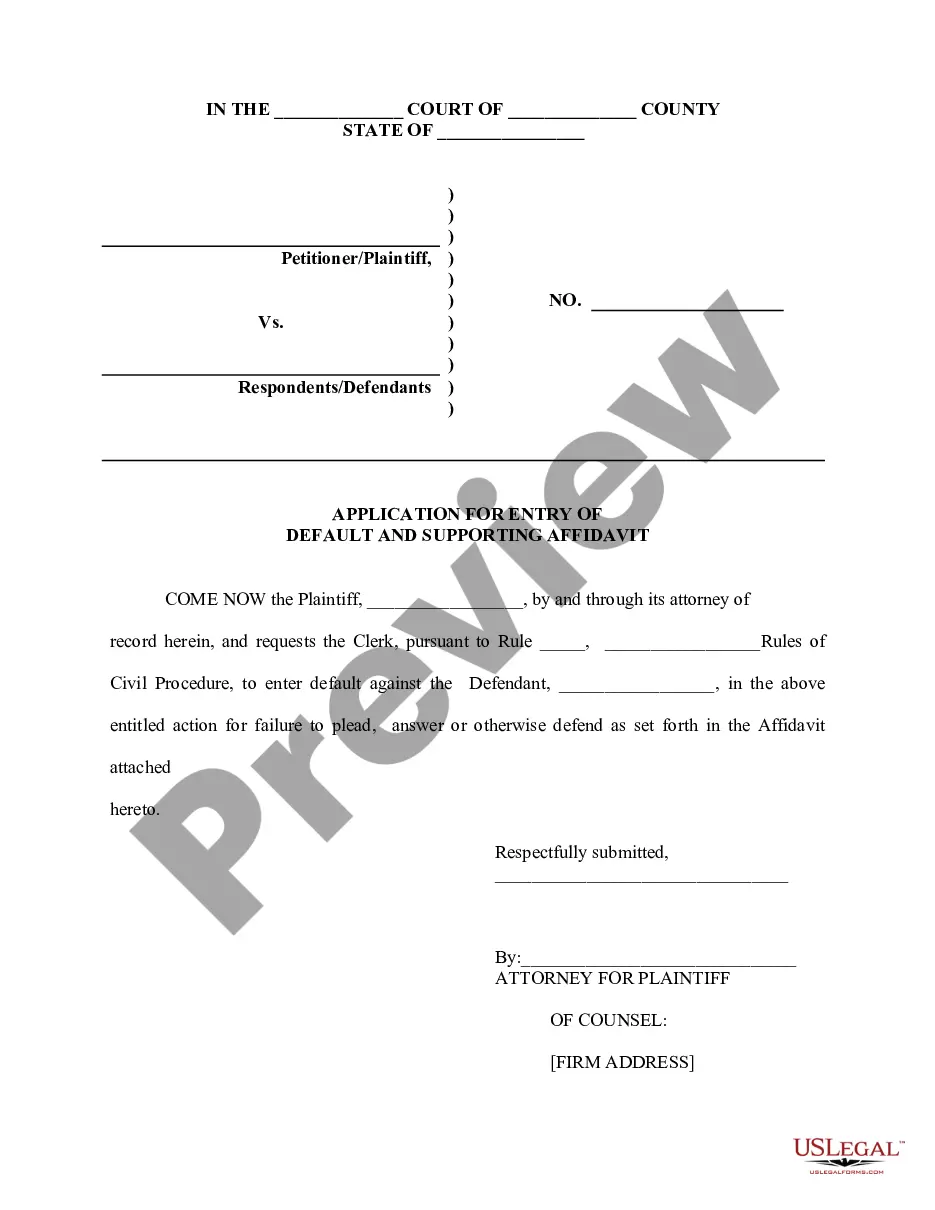
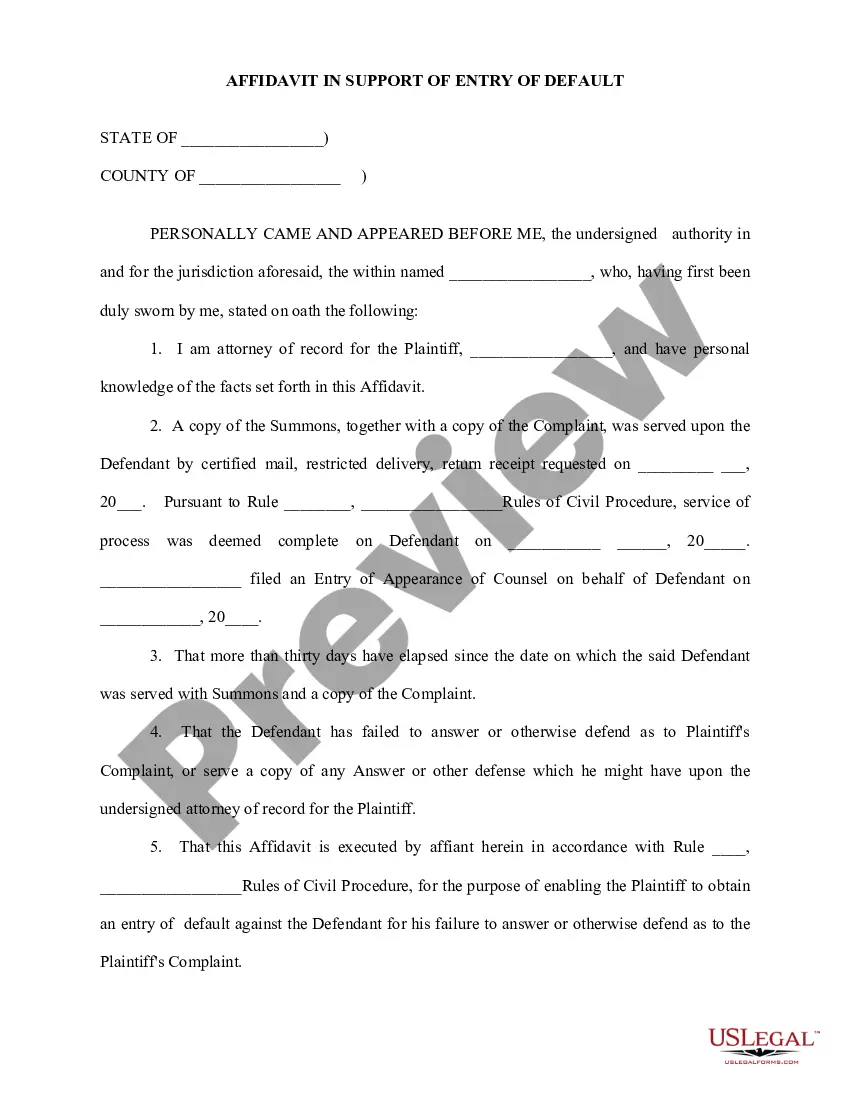
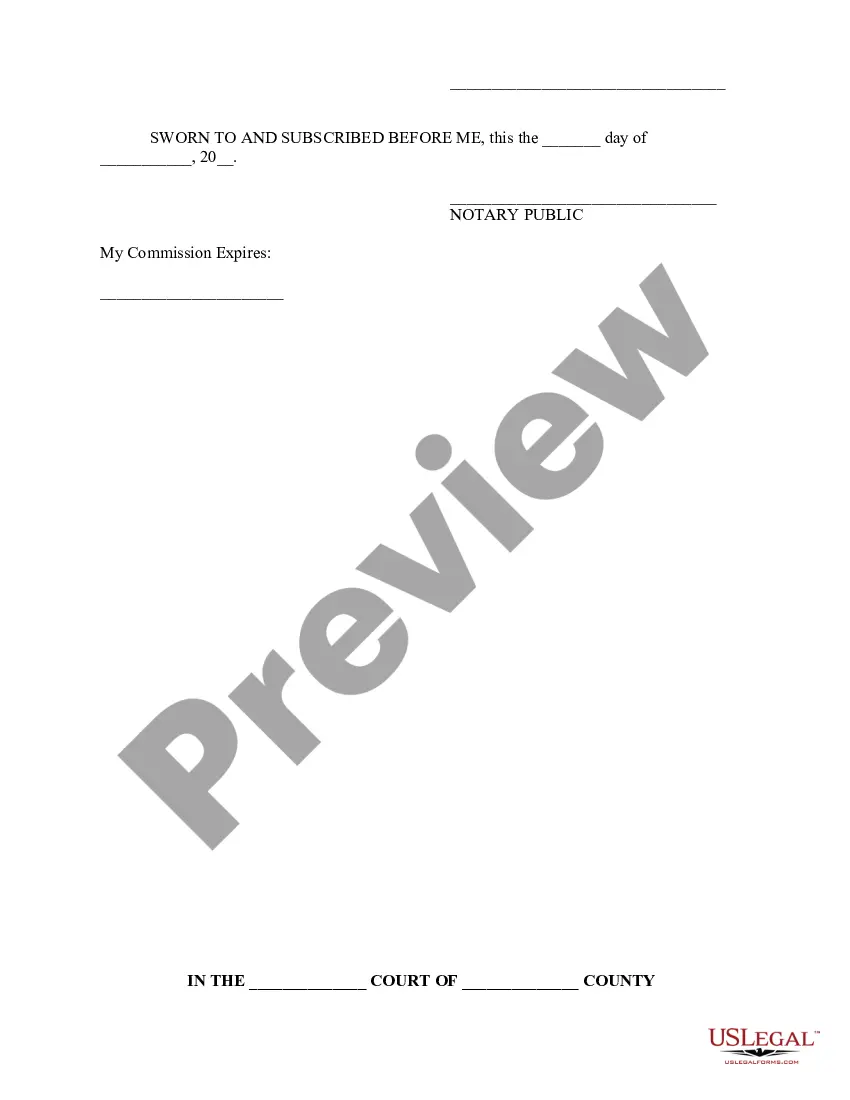
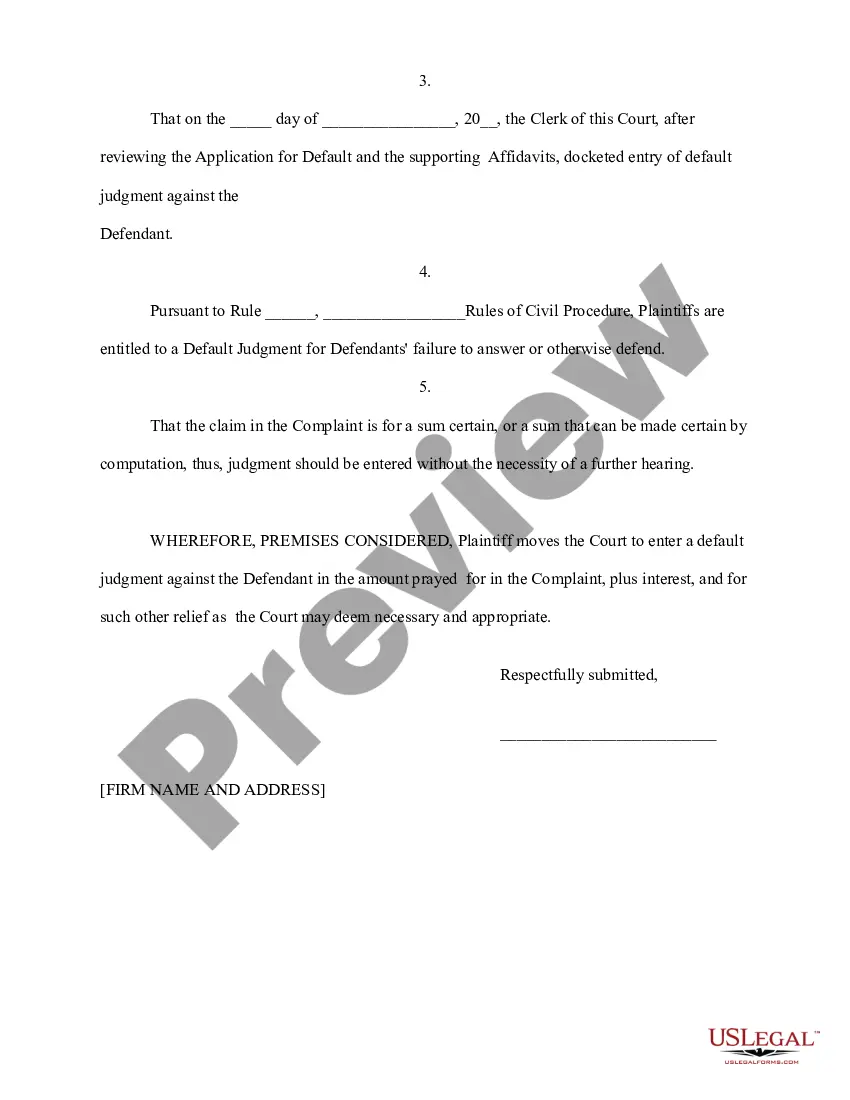
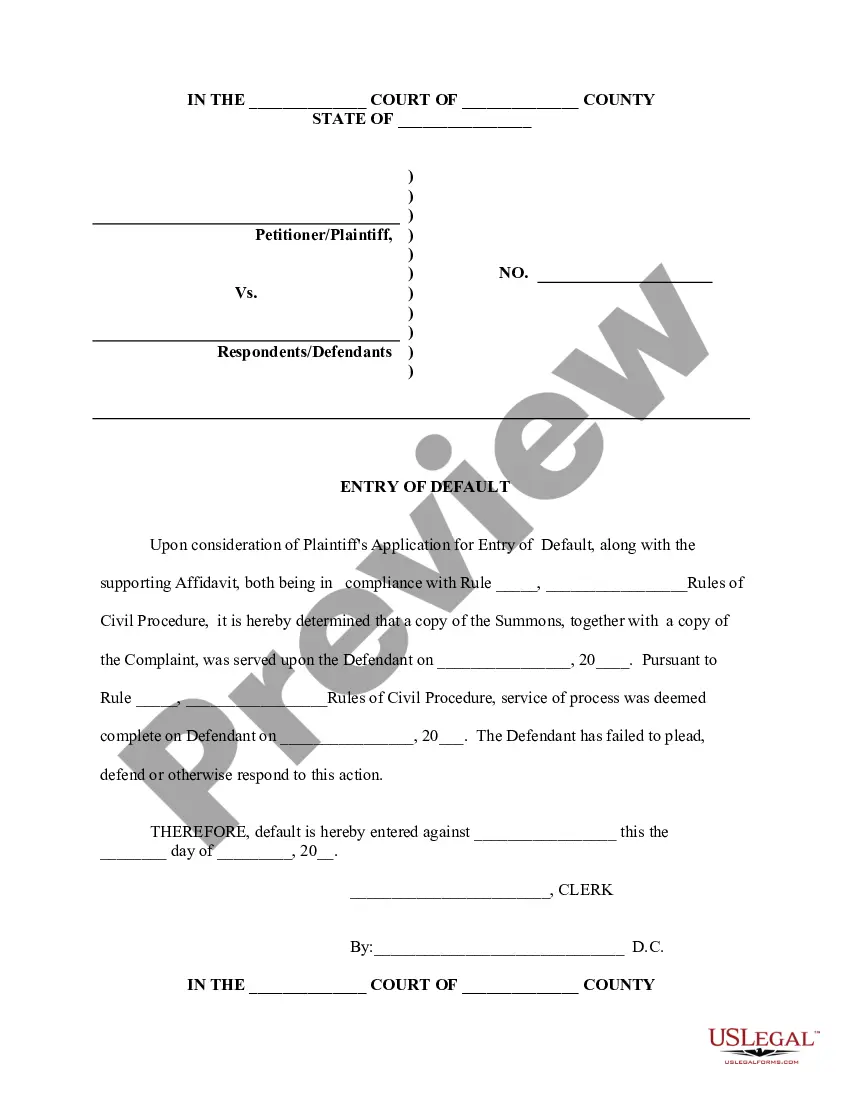
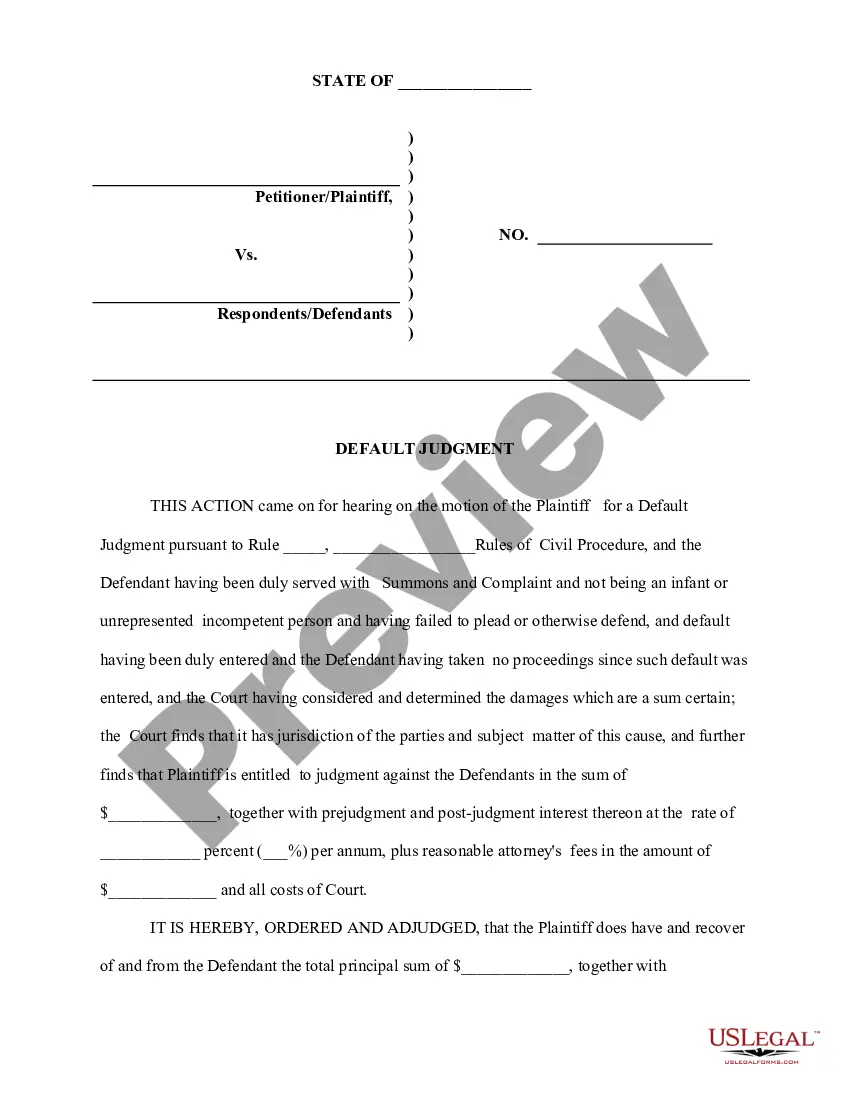
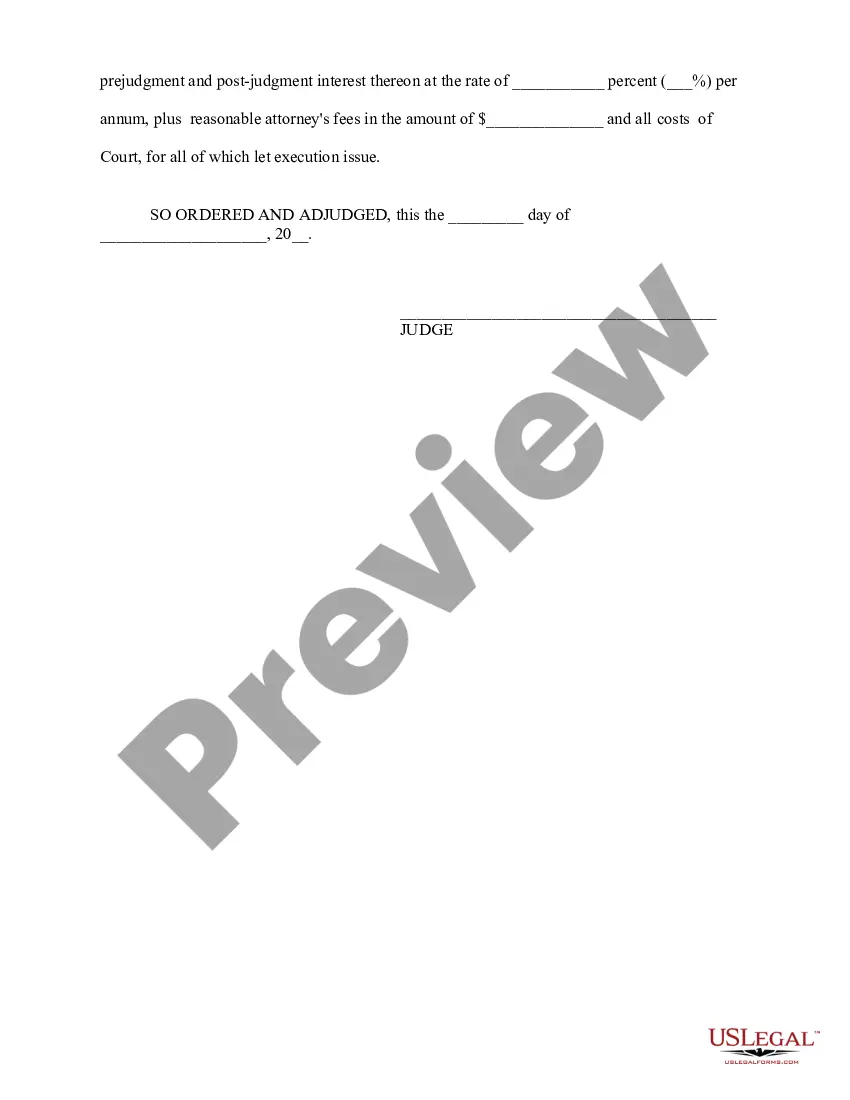
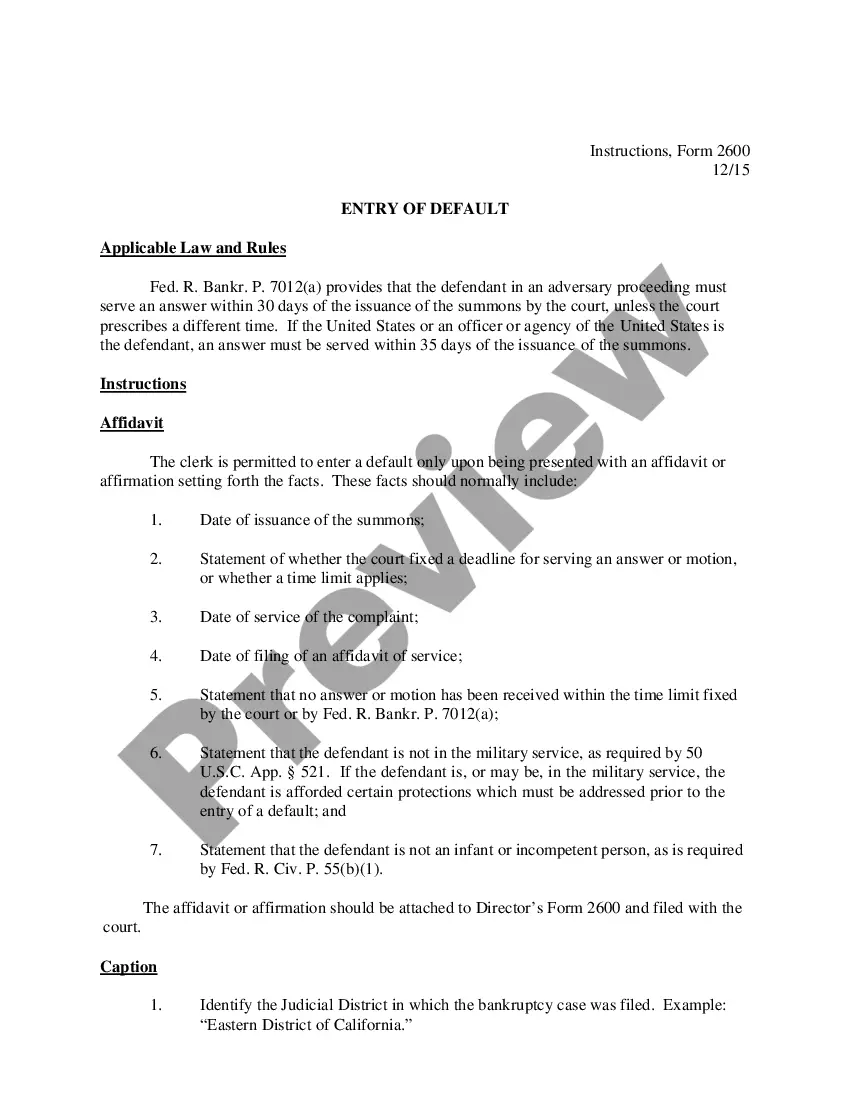
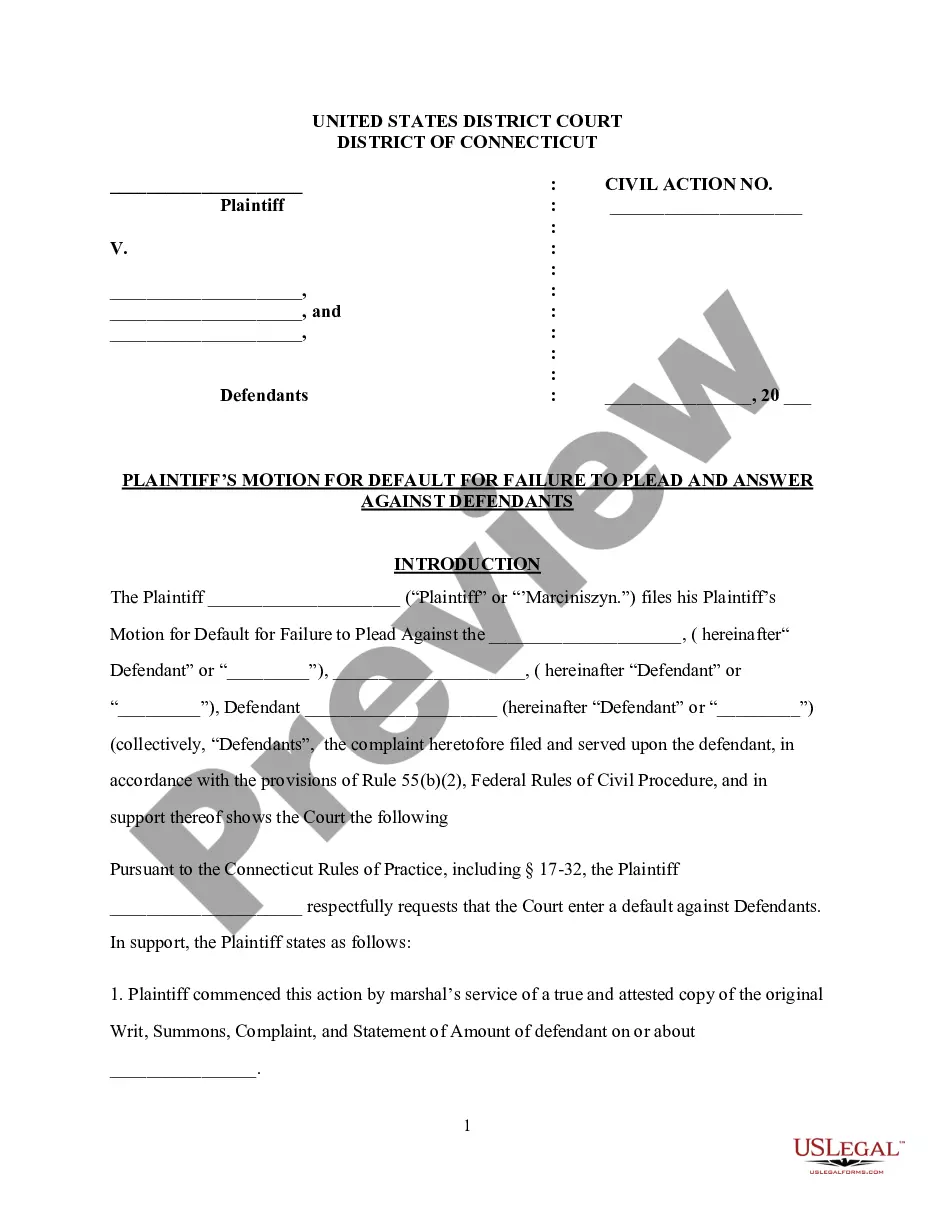
This form is a sample Application for Entry of Default and a Supporting Affidavit. The plaintiff places before the court an application for entry of default against the defendant. The form also contains an affidavit which supports the allegations made by the plaintiff.
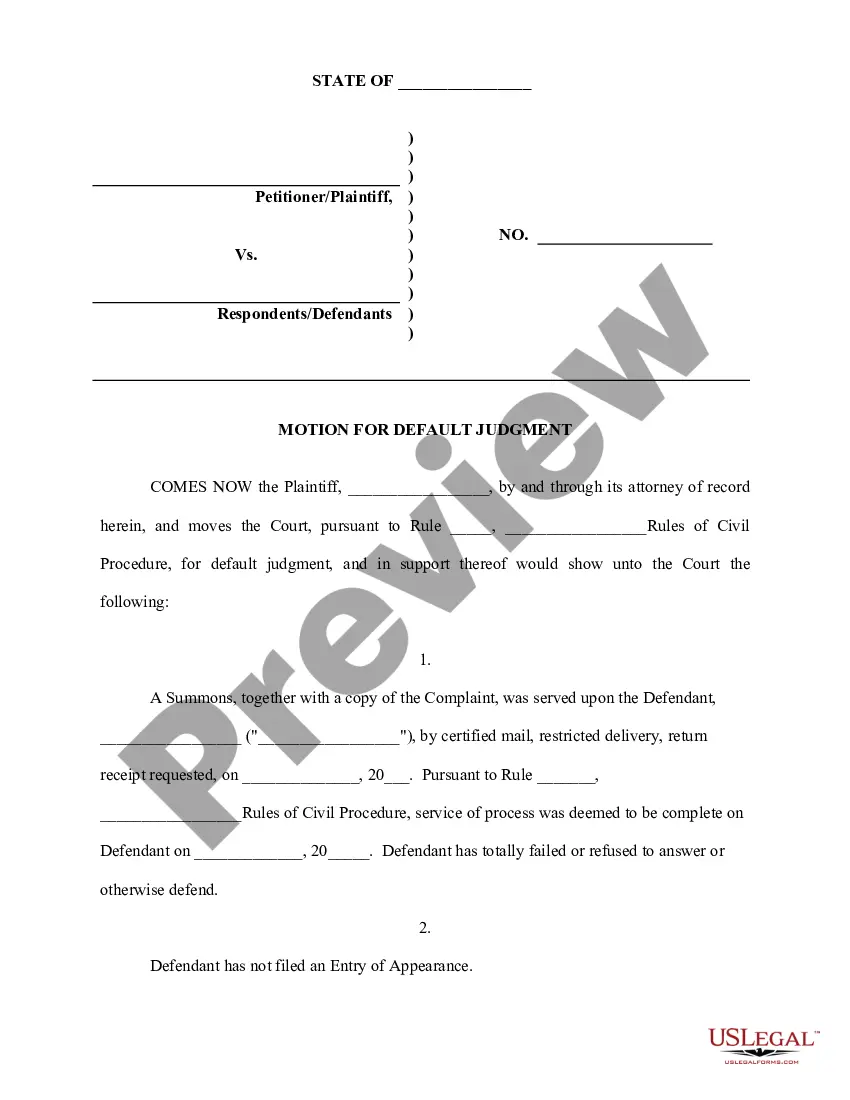
Missouri Application for Entry of Default - Affidavit - Motion - Entry of Default - Default judgment
1,570 downloads

Reviewed by
Description
Free preview
Get your form ready online
Our built-in tools help you complete, sign, share, and store your documents in one place.
Built-in online Word editor
Make edits, fill in missing information, and update formatting in US Legal Forms—just like you would in MS Word.
Export easily
Download a copy, print it, send it by email, or mail it via USPS—whatever works best for your next step.
E-sign your document
Sign and collect signatures with our SignNow integration. Send to multiple recipients, set reminders, and more. Go Premium to unlock E-Sign.
Notarize online 24/7
If this form requires notarization, complete it online through a secure video call—no need to meet a notary in person or wait for an appointment.
Store your document securely
We protect your documents and personal data by following strict security and privacy standards.

Make edits, fill in missing information, and update formatting in US Legal Forms—just like you would in MS Word.

Download a copy, print it, send it by email, or mail it via USPS—whatever works best for your next step.

Sign and collect signatures with our SignNow integration. Send to multiple recipients, set reminders, and more. Go Premium to unlock E-Sign.

If this form requires notarization, complete it online through a secure video call—no need to meet a notary in person or wait for an appointment.

We protect your documents and personal data by following strict security and privacy standards.
Looking for another form?
How to fill out Application For Entry Of Default - Affidavit - Motion - Entry Of Default - Default Judgment?
Are you currently in a role that requires documentation for potential business or personal reasons almost every day.
There are numerous legal document templates accessible online, but finding ones you can trust isn't simple.
US Legal Forms offers a vast array of form templates, such as the Missouri Application for Entry of Default - Affidavit - Motion - Entry of Default - Default judgment, designed to comply with state and federal regulations.
Once you find the correct form, click Purchase now.
Select the pricing plan you prefer, fill in the necessary information to create your account, and complete the transaction using your PayPal or credit card. Choose a convenient paper format and download your copy. Retrieve all the document templates you have purchased in the My documents section. You can get another copy of Missouri Application for Entry of Default - Affidavit - Motion - Entry of Default - Default judgment anytime, if needed. Click the required form to download or print the document template. Use US Legal Forms, the most extensive collection of legal forms, to save time and avoid mistakes. The service provides properly crafted legal document templates that can be utilized for various purposes. Create an account on US Legal Forms and start making your life easier.
- If you are already familiar with the US Legal Forms website and possess an account, simply Log In.
- Then, you can download the Missouri Application for Entry of Default - Affidavit - Motion - Entry of Default - Default judgment template.
- If you do not have an account and wish to start using US Legal Forms, follow these steps.
- Obtain the form you require and ensure it is for the correct city/county.
- Use the Preview button to examine the form.
- Read the summary to confirm that you have selected the correct form.
- If the form isn't what you are searching for, utilize the Search field to find the form that meets your needs and specifications.
Form popularity
FAQ
?Good cause? and a ?meritorious defense? Missouri Supreme Court Rule 74.05(d): (d) When Set Aside. Upon motion stating facts constituting a meritorious defense and for good cause shown, an interlocutory order of default or a default judgment may be set aside.
Typically, the default process begins when the defendant has not responded to a properly served summons and complaint. When this happens, a defendant is ?in default,? and the plaintiff can take the first step to obtain an entry of default against the defendant. (See Cal. Rules of Court, rule 3.110.)
Application to set aside ex-parte decree: It can be entertained on the two grounds: Where summon was not served. Defendant was prevented from appearing without sufficient cause.
Rule 74.05 - Entry of Default Judgment (a) Entry of Default Judgment. When a party against whom a judgment for affirmative relief is sought has failed to plead or otherwise defend as provided by these rules, upon proof of damages or entitlement to other relief, a judgment may be entered against the defaulting party.
A Motion to Set Aside Default or Judgment is used to ask the court to set aside or "undo" a default or judgment or final order in a case, and to allow the case to move ahead as if the default or judgment had not been made.
If you never knew you were being sued, and motion for default judgment is filed against you, you should respond with a Motion to Vacate Judgment, also known as a Motion to Set Aside Judgment.
A defendant must file a motion to set aside the judgment and then appeal from the court's ruling on that motion.
The court must set aside a default judgment if you: have paid the whole amount owed (including any interest and costs) before the date the creditor entered judgment; sent back the acknowledgment of service form within the time limit; put in a defence within the time limit; or.