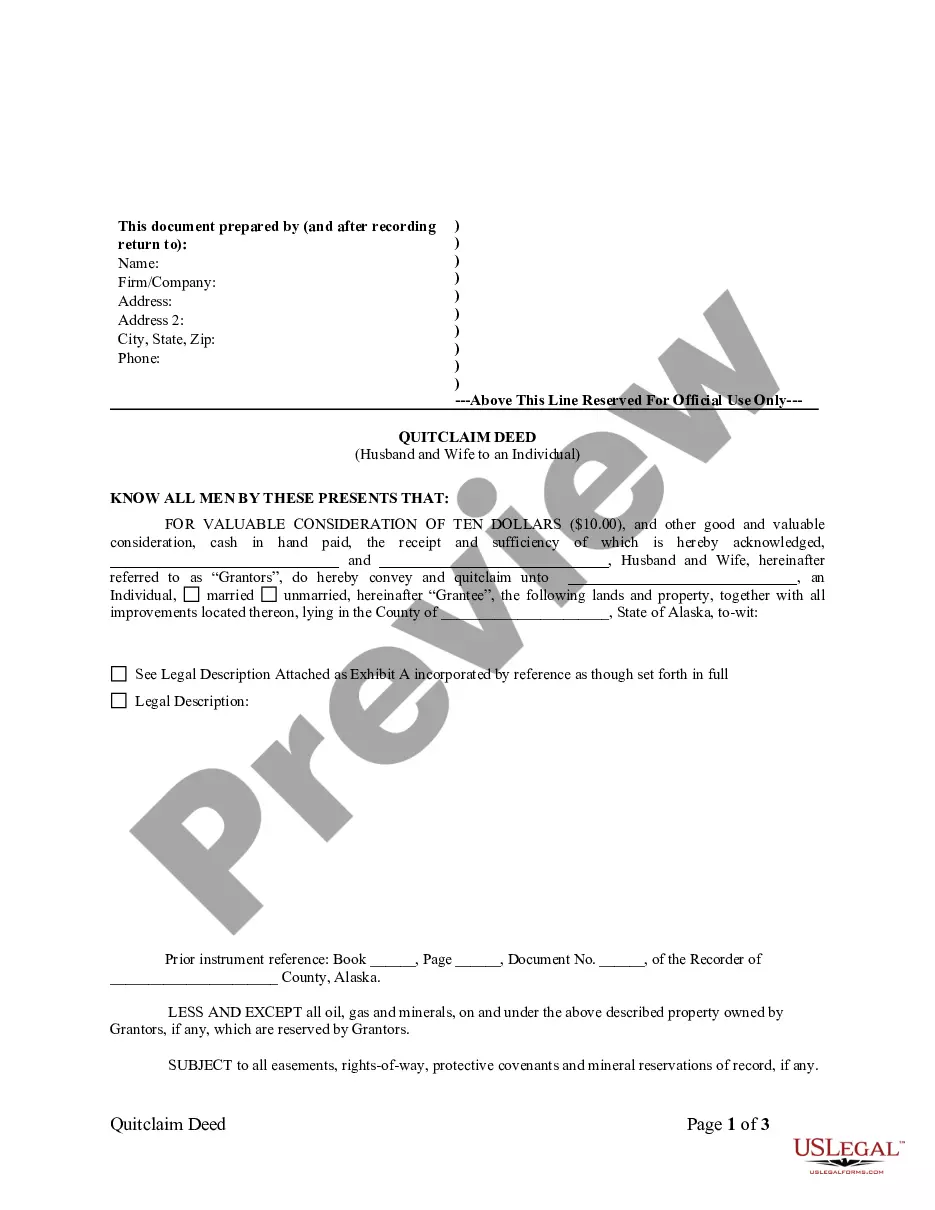
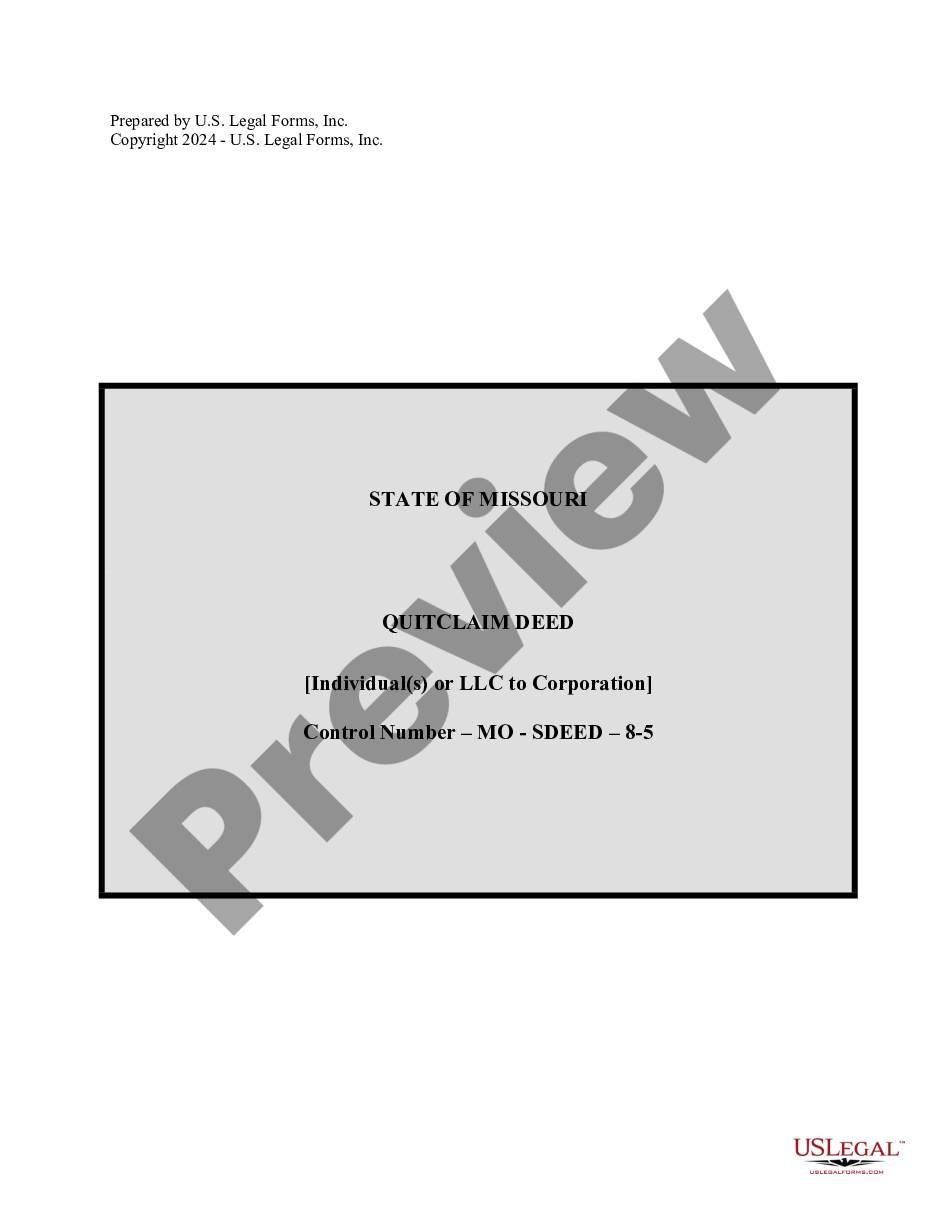
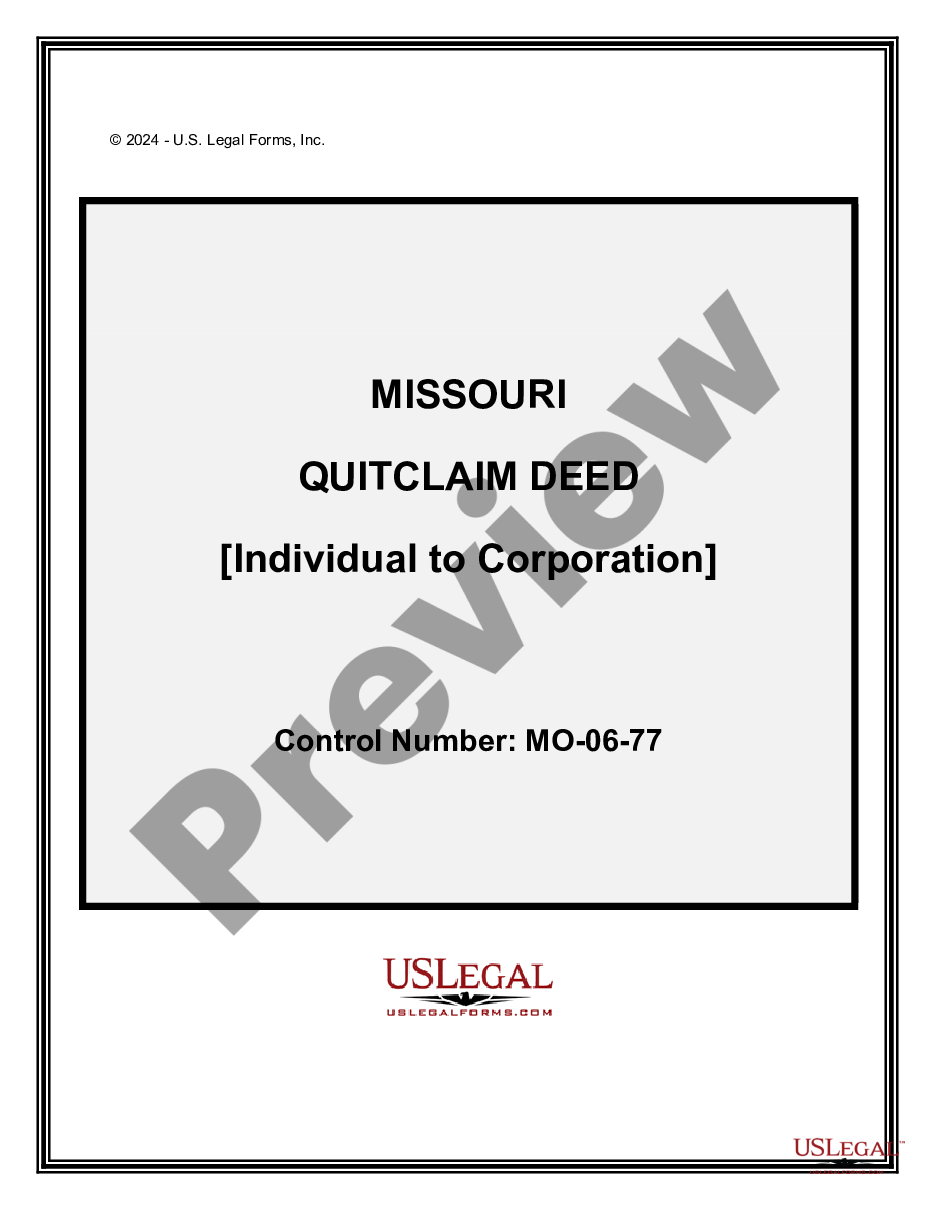
Missouri Quitclaim Deed for Individuals or LLC to Corporation
Understanding this form
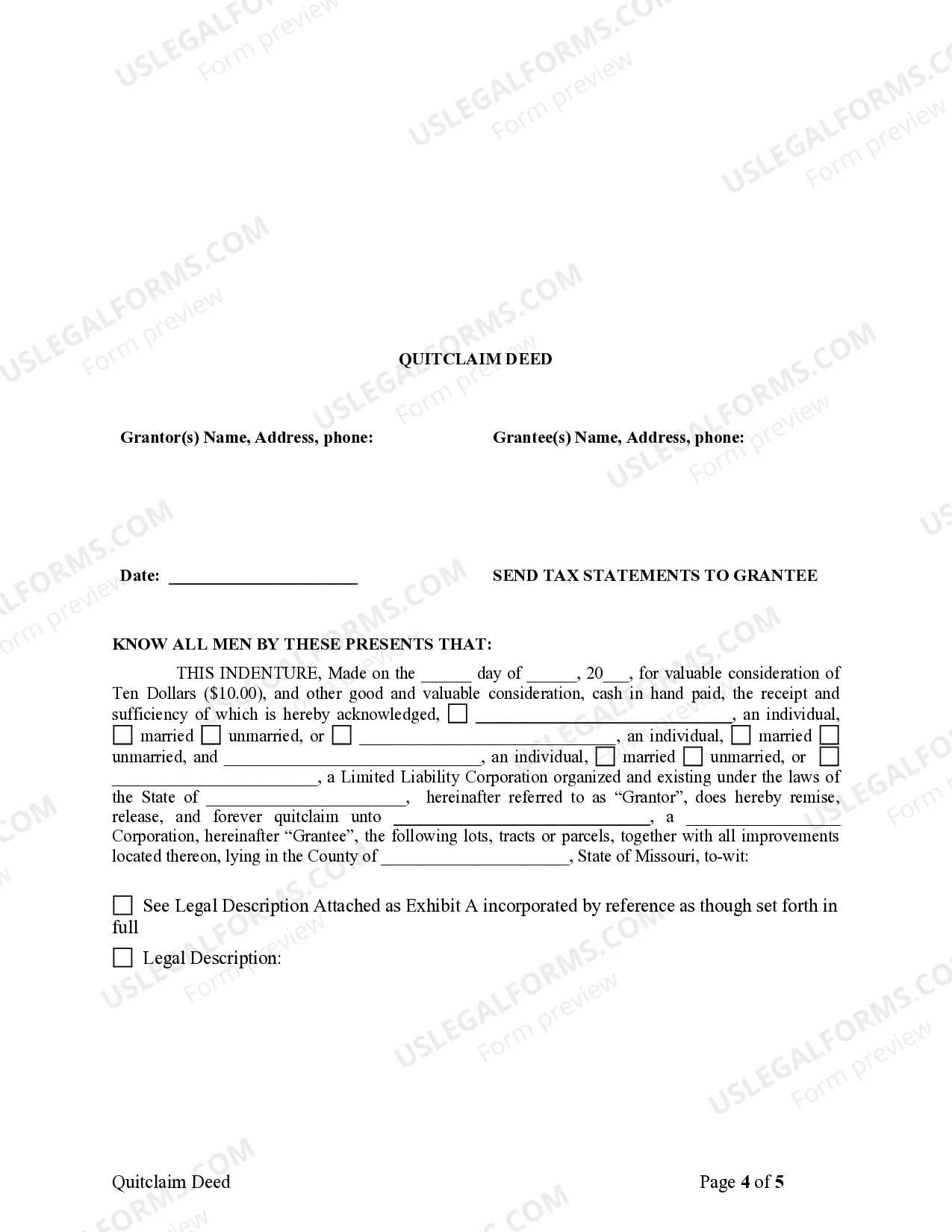
The Quitclaim Deed for Individuals or LLC to Corporation is a legal document used to transfer property ownership from an individual or a limited liability company (LLC) to a corporation. This form is distinct from other deeds, such as warranty deeds, as it does not guarantee that the grantor holds clear title to the property. Instead, it conveys whatever interest the grantor may have without warranties.
Key parts of this document
- Grantor(s) information: Name, address, and contact details.
- Grantee: The corporation receiving the property title.
- Property description: A detailed legal description of the property being transferred.
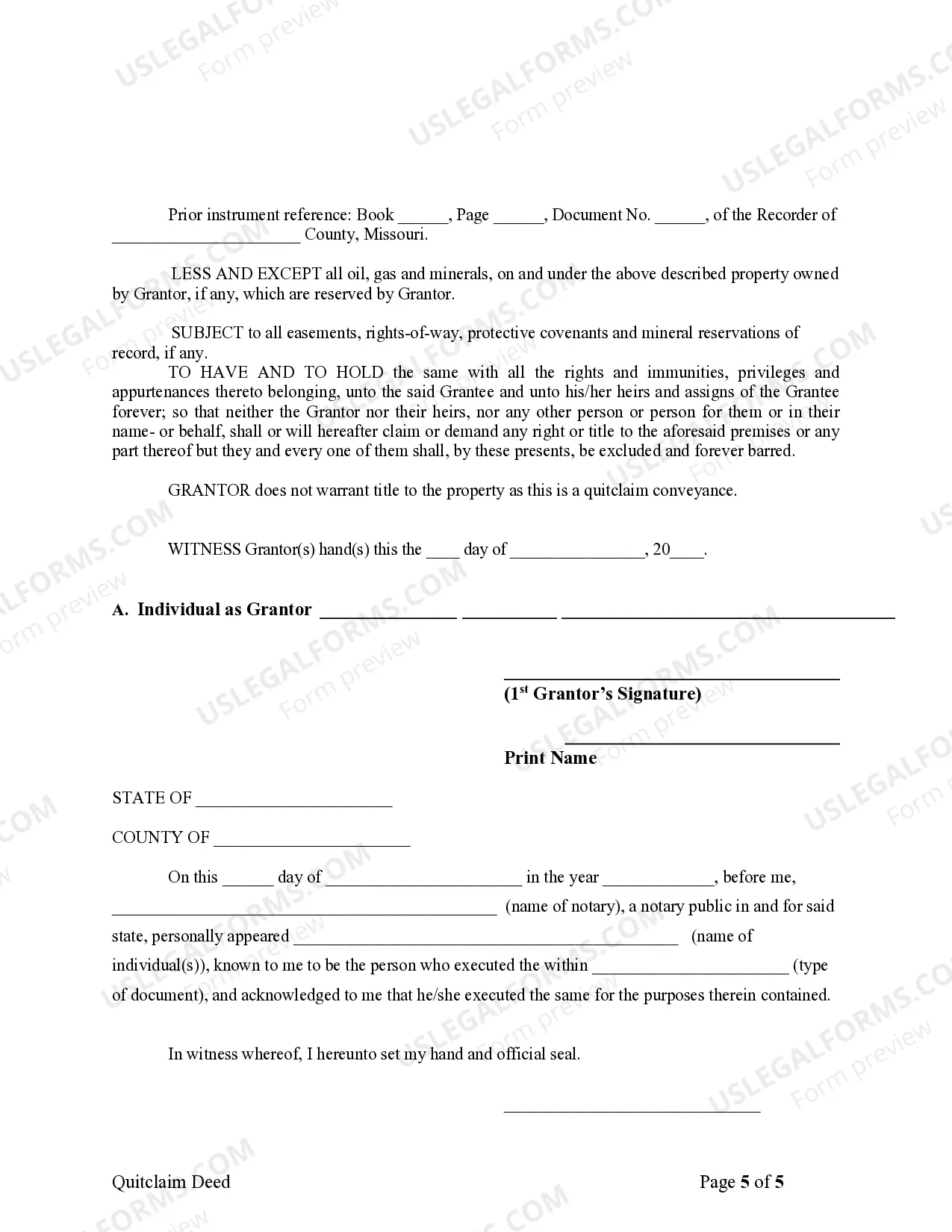
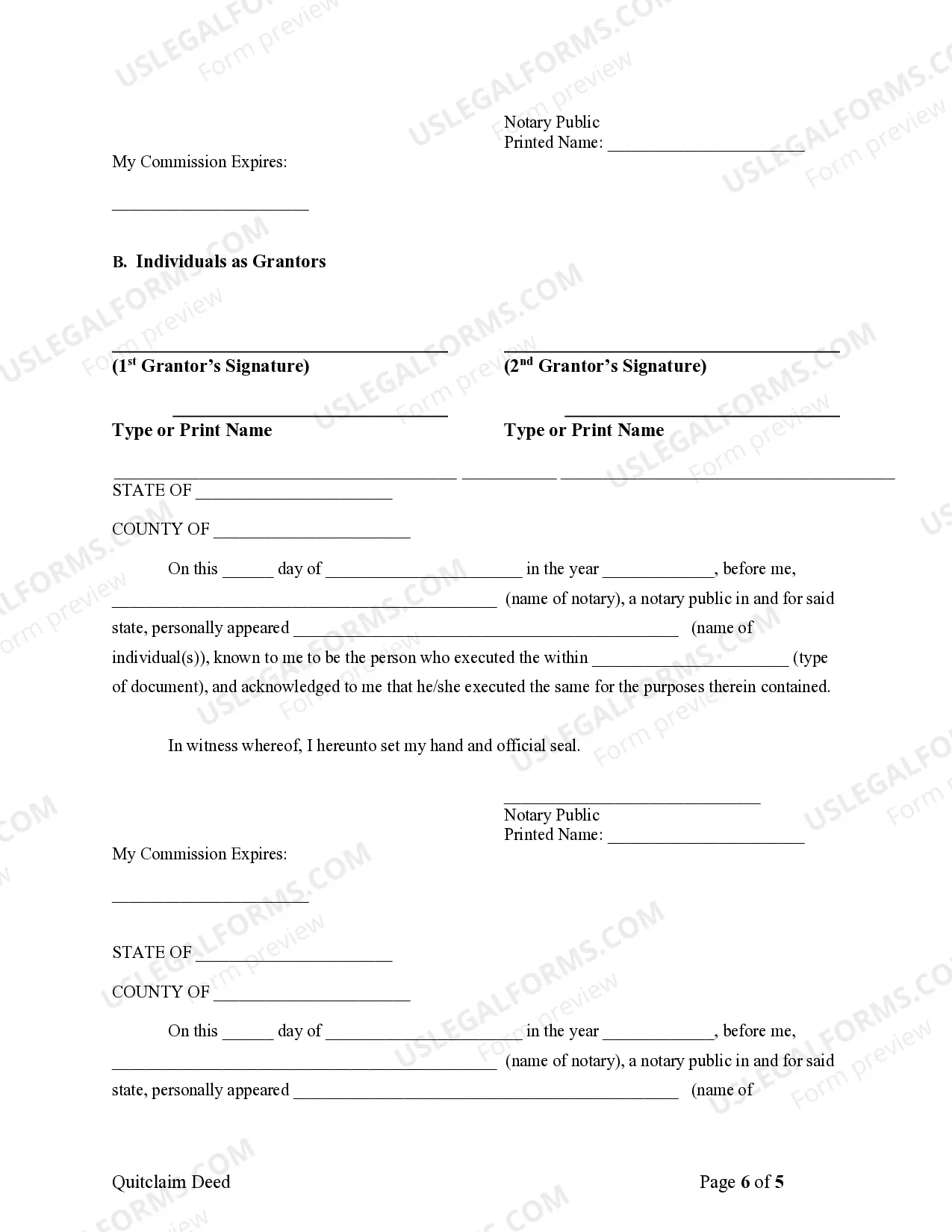
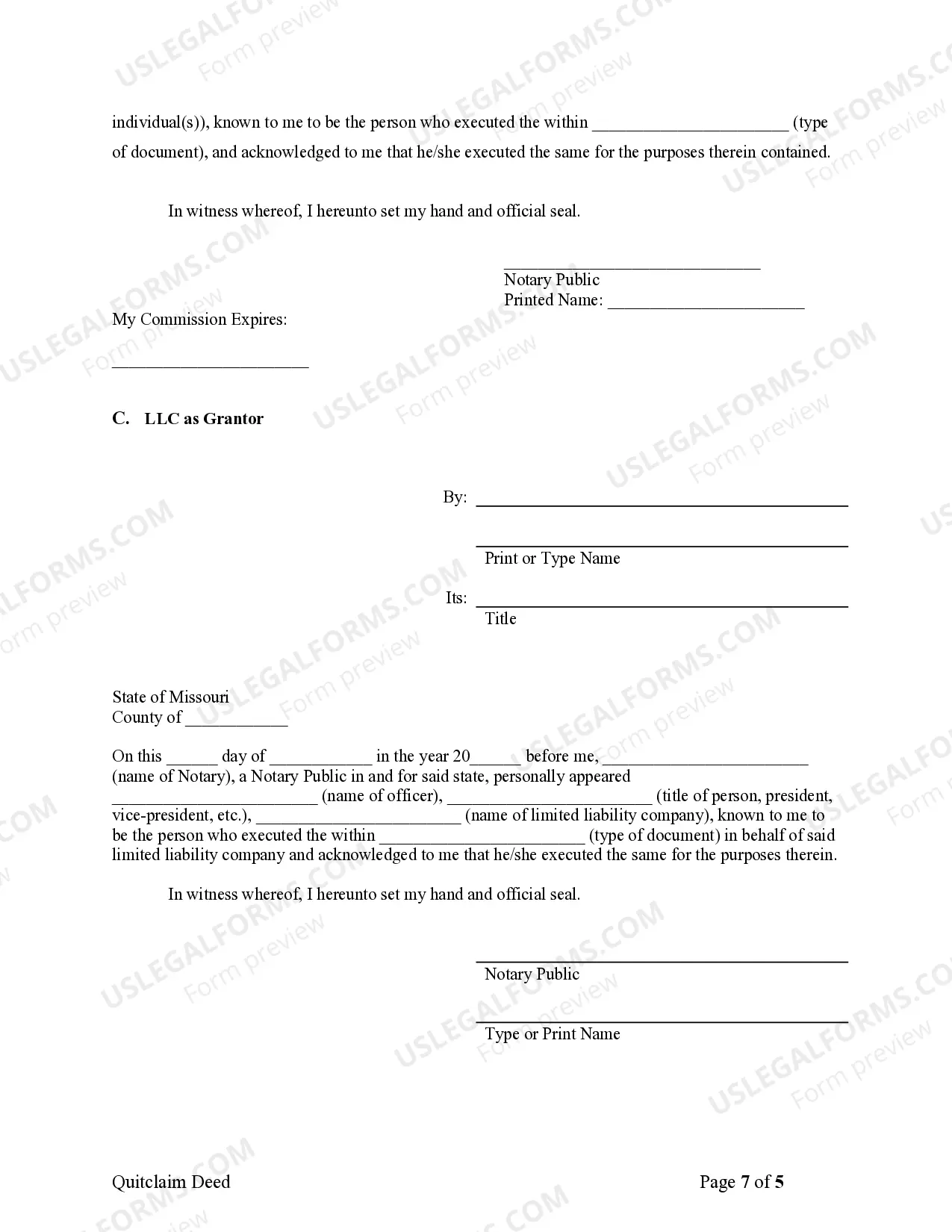
- Signature lines: Where grantor(s) must sign, along with a notary public if required.
- Disclaimer of warranty: Indicates that the grantor does not guarantee a clear title to the property.




When this form is needed
This form should be used when an individual or LLC wishes to transfer property ownership to a corporation. It is commonly utilized in real estate transactions where the owner wants to gift, sell, or otherwise convey property rights to a corporate entity without providing warranties regarding the title.
Intended users of this form
- Individuals or LLCs transferring property to a corporation.
- Corporations acquiring property from either individuals or LLCs.
- Property owners seeking a simple method to convey property rights without additional guarantees.
How to prepare this document
- Identify the parties involved: Enter the names and addresses of the grantor(s) and the grantee (the corporation).
- Specify the property: Include a detailed legal description of the property being transferred.
- Complete the signature section: Have all grantors sign the deed in the required areas.
- Notarization: Ensure that the document is notarized if required by your local jurisdiction.
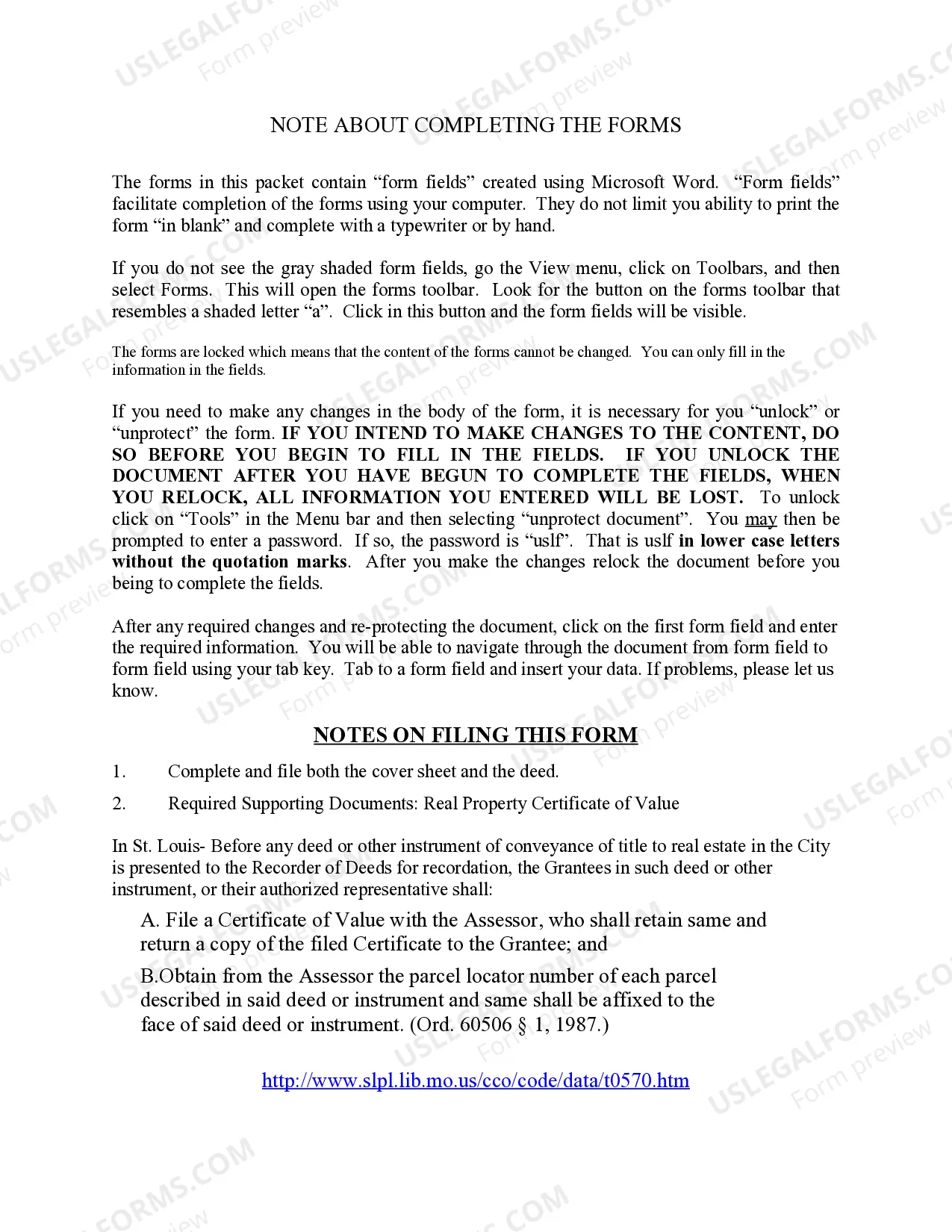
- File the completed form: Submit the deed along with any required supporting documents to the appropriate county recorder's office.
Is notarization required?
Yes, this form must be notarized to be legally valid. Notarization confirms the identity of the signers and adds an official layer of authenticity to the document. U.S. Legal Forms offers integrated online notarization, allowing you to complete this process securely via video call at any time.
Get your form ready online
Our built-in tools help you complete, sign, share, and store your documents in one place.
Make edits, fill in missing information, and update formatting in US Legal Forms—just like you would in MS Word.
Download a copy, print it, send it by email, or mail it via USPS—whatever works best for your next step.
Sign and collect signatures with our SignNow integration. Send to multiple recipients, set reminders, and more. Go Premium to unlock E-Sign.
If this form requires notarization, complete it online through a secure video call—no need to meet a notary in person or wait for an appointment.
We protect your documents and personal data by following strict security and privacy standards.

Make edits, fill in missing information, and update formatting in US Legal Forms—just like you would in MS Word.

Download a copy, print it, send it by email, or mail it via USPS—whatever works best for your next step.

Sign and collect signatures with our SignNow integration. Send to multiple recipients, set reminders, and more. Go Premium to unlock E-Sign.

If this form requires notarization, complete it online through a secure video call—no need to meet a notary in person or wait for an appointment.

We protect your documents and personal data by following strict security and privacy standards.
Avoid these common issues
- Forgetting to include a legal description of the property.
- Not obtaining notarization when required.
- Failing to complete all necessary signatures before filing.
Why complete this form online
- Convenient access: Fill out the form at your own pace using a computer.
- Editability: Easily make necessary changes before finalizing the document.
- Reliability: Utilize forms drafted by licensed attorneys to ensure legal compliance.
Legal use & context
- Acceptable for transferring ownership without warranties about the title.
- Utilized in various real estate transactions, particularly for quick transfers or informal agreements.
- Always recommended to check local laws for additional filing requirements.
Quick recap
- The Quitclaim Deed is a straightforward way to transfer property without guarantees.
- Use this form when transferring ownership from individuals or LLCs to corporations.
- Ensure notarization and accurate property descriptions for legal validity.
Looking for another form?
Form popularity
FAQ
Some disadvantages of using an LLC for property include potential double taxation and increased paperwork. While an LLC can provide liability protection, managing an LLC involves ongoing administrative responsibilities. Weighing these factors is important before deciding if an LLC is the right choice for your property.
You can prepare your own quit claim deed in Missouri, but it’s important to ensure you meet all legal requirements. Using a tool like uslegalforms can simplify the process by providing templates and guidance. This way, you can create a valid Missouri Quitclaim Deed for Individuals or LLC to Corporation without missing critical details.
Yes, you can remove a property from an LLC by preparing and filing a new Missouri Quitclaim Deed for Individuals or LLC to Corporation. This deed should transfer the property back to your name or to another entity. It’s crucial to follow the proper steps to ensure the removal is legally binding.
Problems that may arise with quitclaim deeds include potential disputes over ownership and unclear property descriptions. Without proper legal advice, individuals may face issues if the deed is not executed correctly. To avoid such complications, using a reliable platform like uslegalforms can provide the necessary guidance and templates.
To change property ownership from personal to LLC, you should create a Missouri Quitclaim Deed for Individuals or LLC to Corporation. This deed will transfer ownership from your name to the LLC's name. After completing the deed, remember to file it with the county recorder to ensure the change is recognized legally.
A quitclaim deed in Missouri must include the names of the grantor and grantee, a legal description of the property, and the date of transfer. The document must be signed by the grantor in front of a notary public. To finalize the process, you should record the deed with the appropriate county office to protect your rights.
Common mistakes when using a Missouri Quitclaim Deed for Individuals or LLC to Corporation include failing to include a complete legal description of the property and not having the document notarized. Additionally, some individuals overlook the importance of recording the deed with the county. These errors can lead to disputes over property ownership or legal challenges.
To quit claim a property to an LLC, you need to prepare a Missouri Quitclaim Deed for Individuals or LLC to Corporation. This document should include the legal description of the property, the names of the current owner and the LLC, and be signed by the current owner. It's important to file the deed with the local county recorder to ensure the transfer is official.