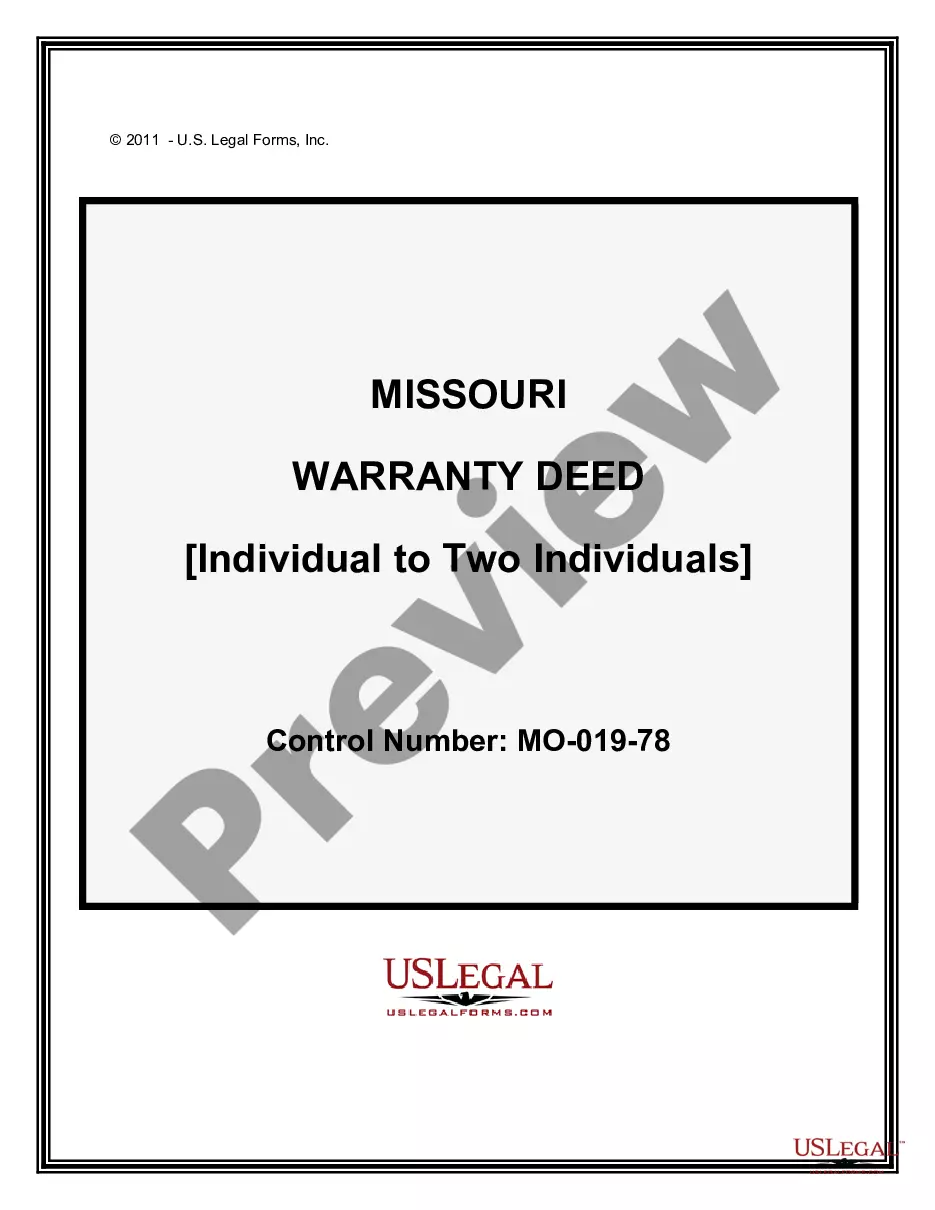
Missouri Warranty Deed - One Individual to Two Individuals
Overview of this form
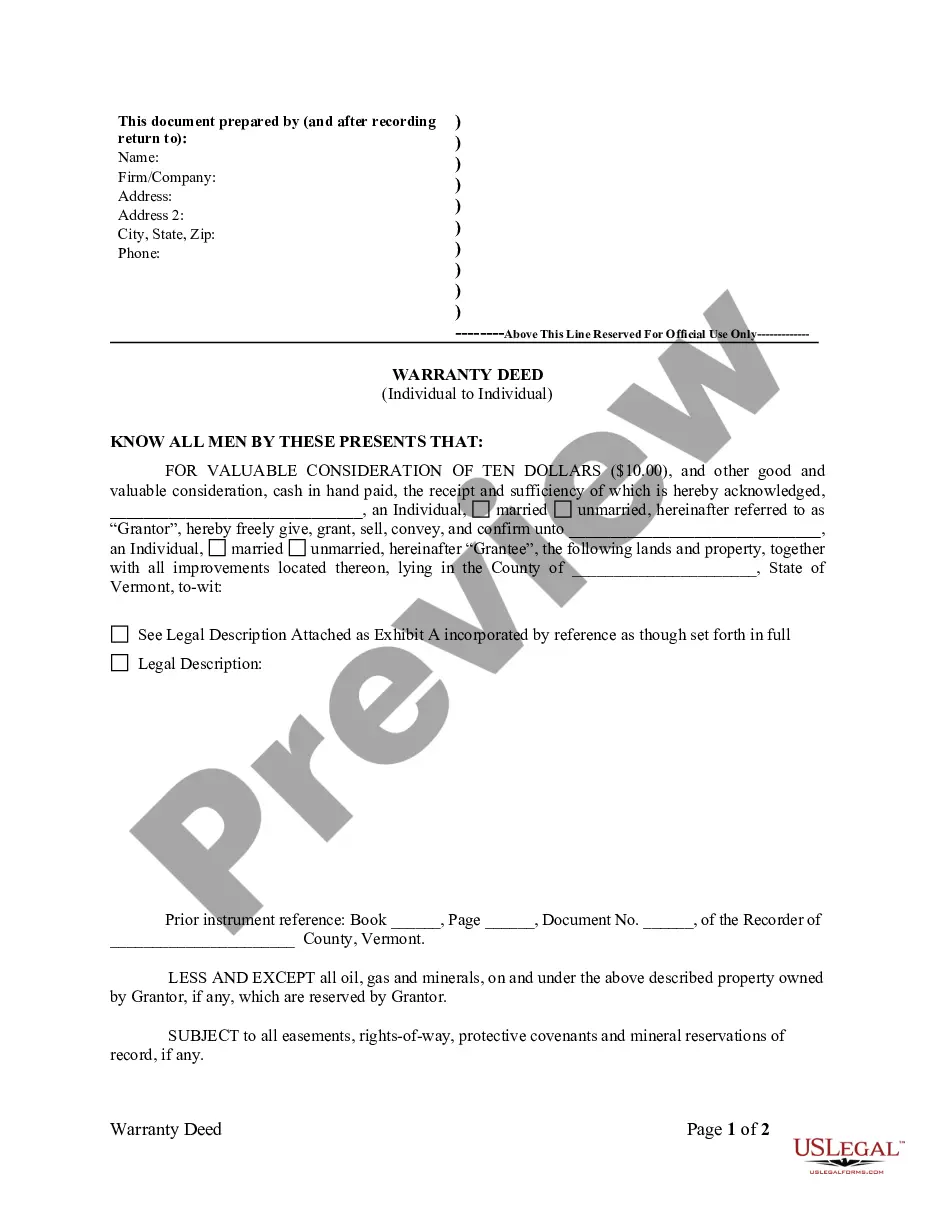
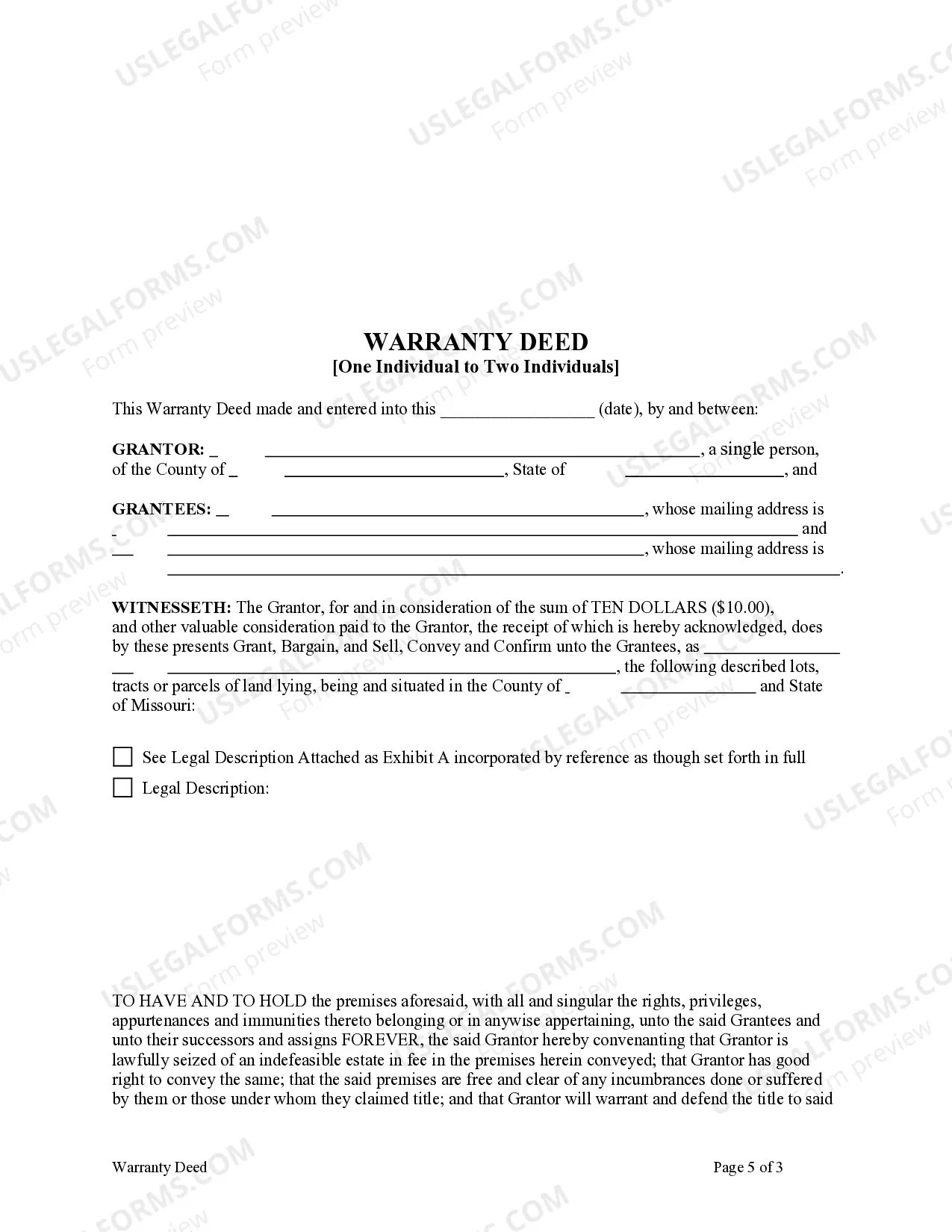
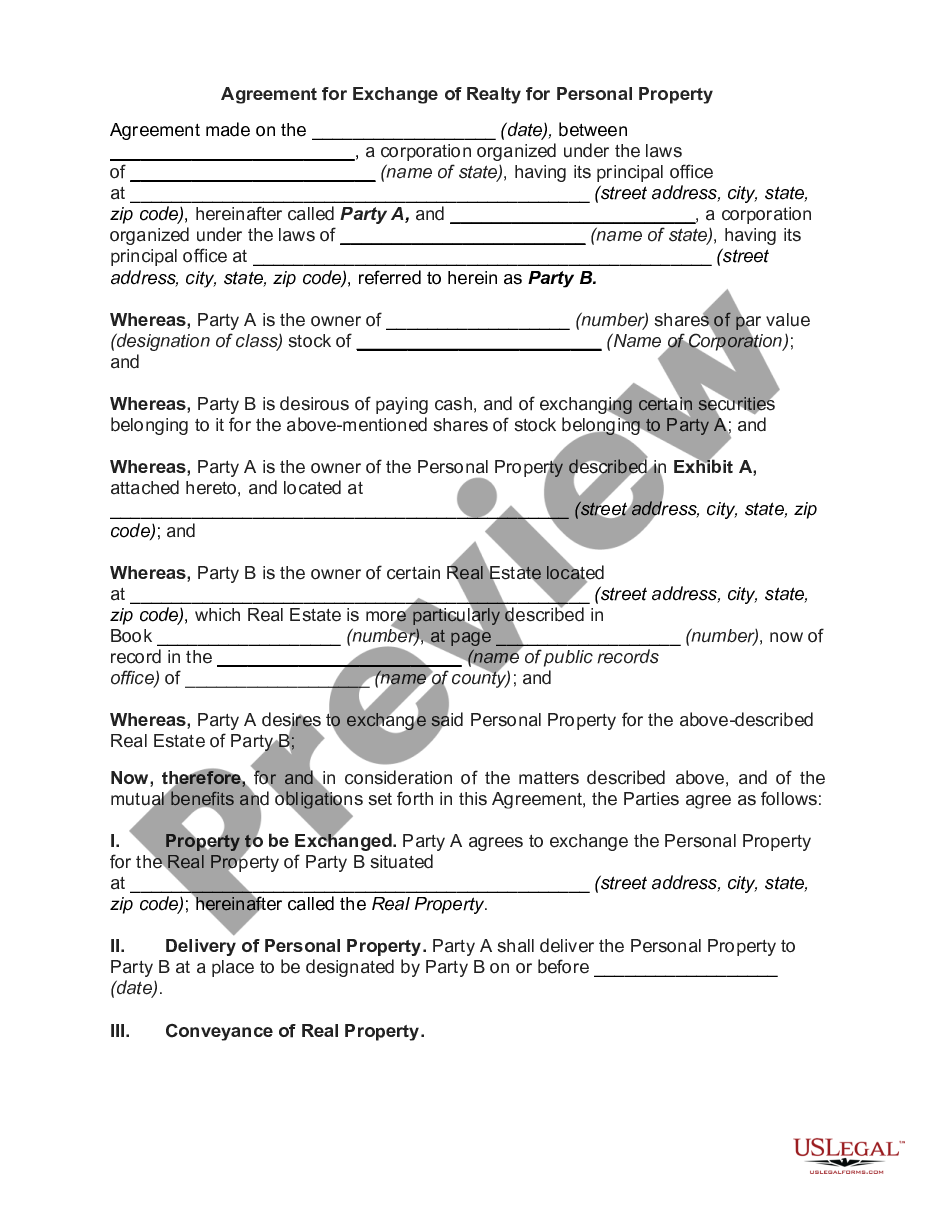
This Warranty Deed allows an individual (the grantor) to transfer property to two individuals (the grantees) either as joint tenants with the right of survivorship or as tenants in common. This form ensures that the transfer complies with state statutory laws, making it a reliable choice for property conveyance.
Form components explained
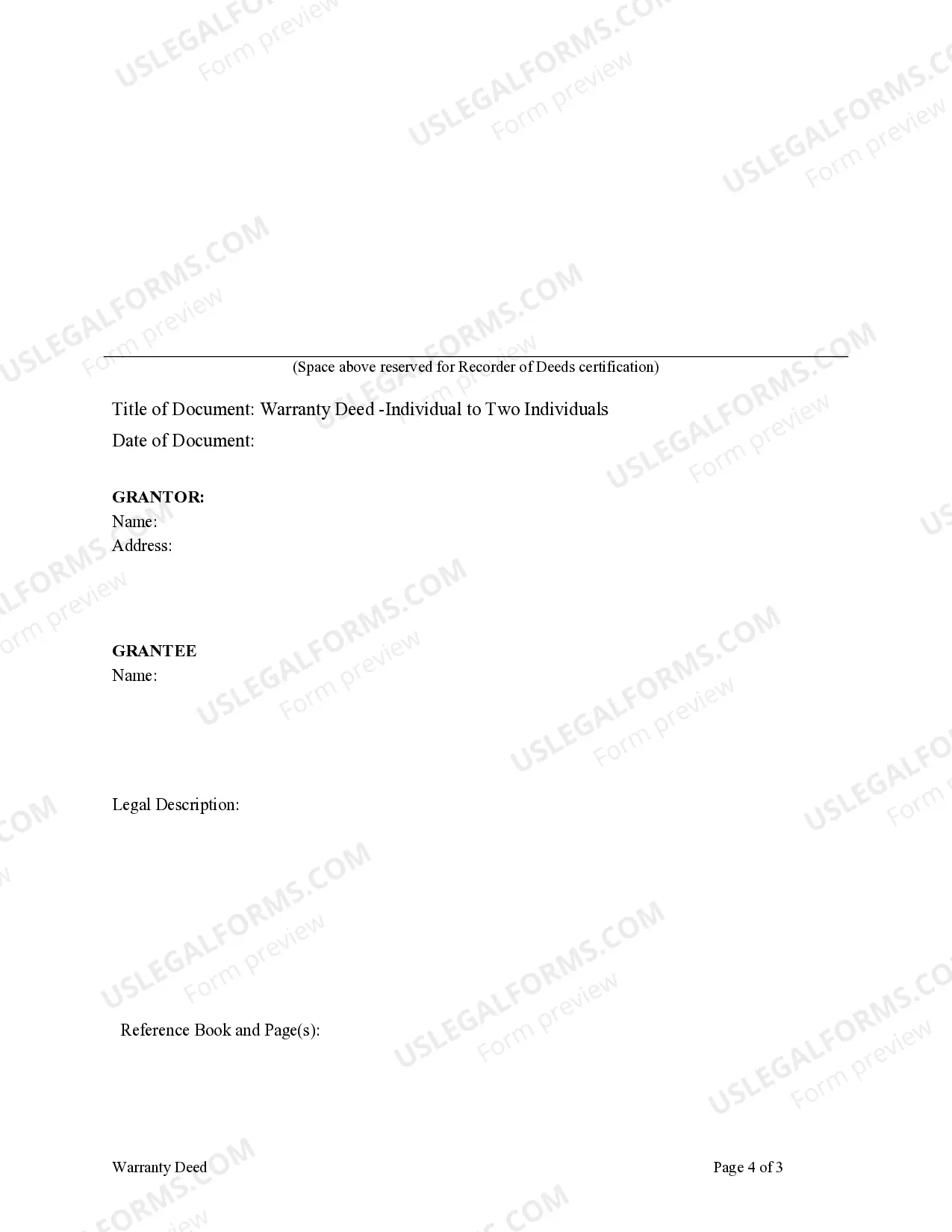
- Identification of the grantor and the grantees
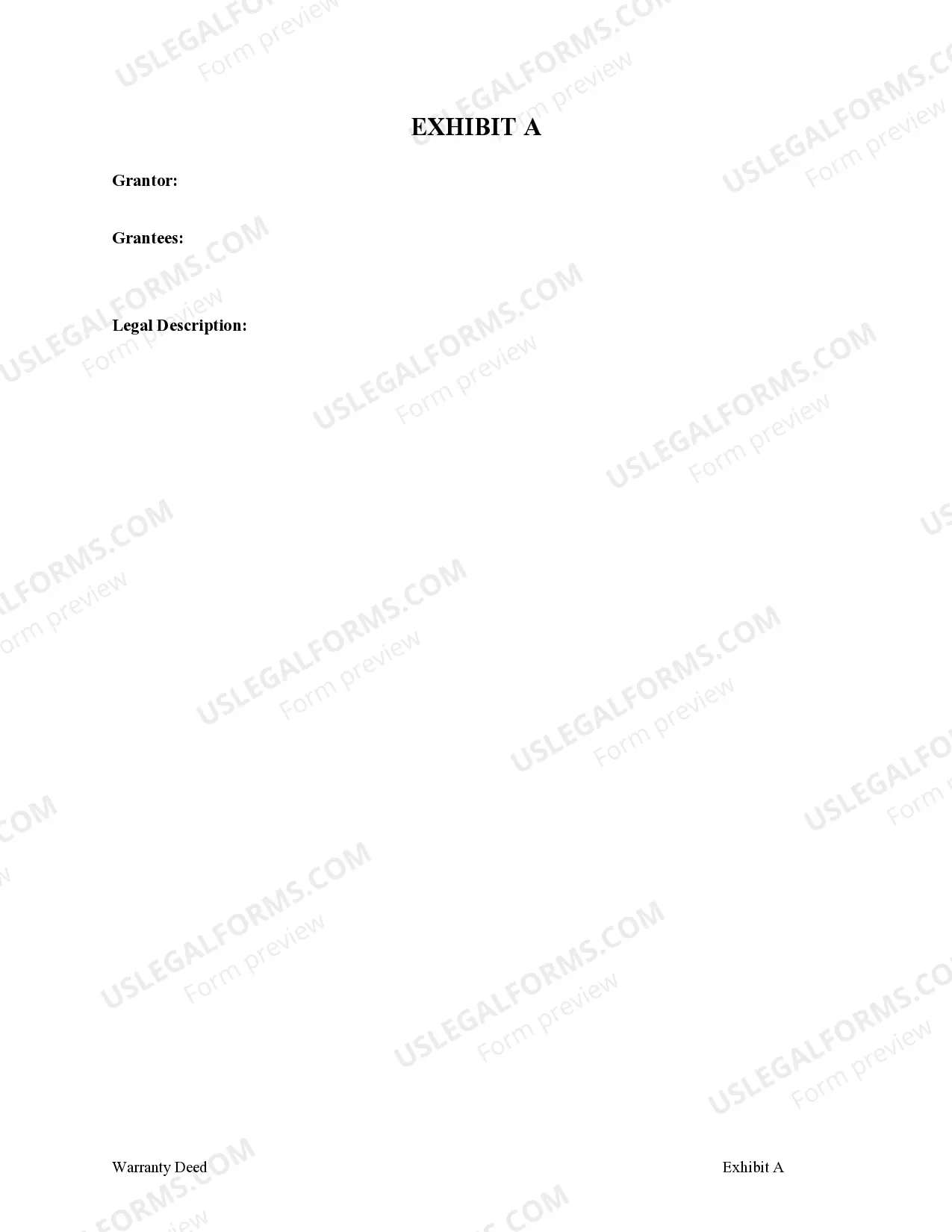
- Description of the property being conveyed
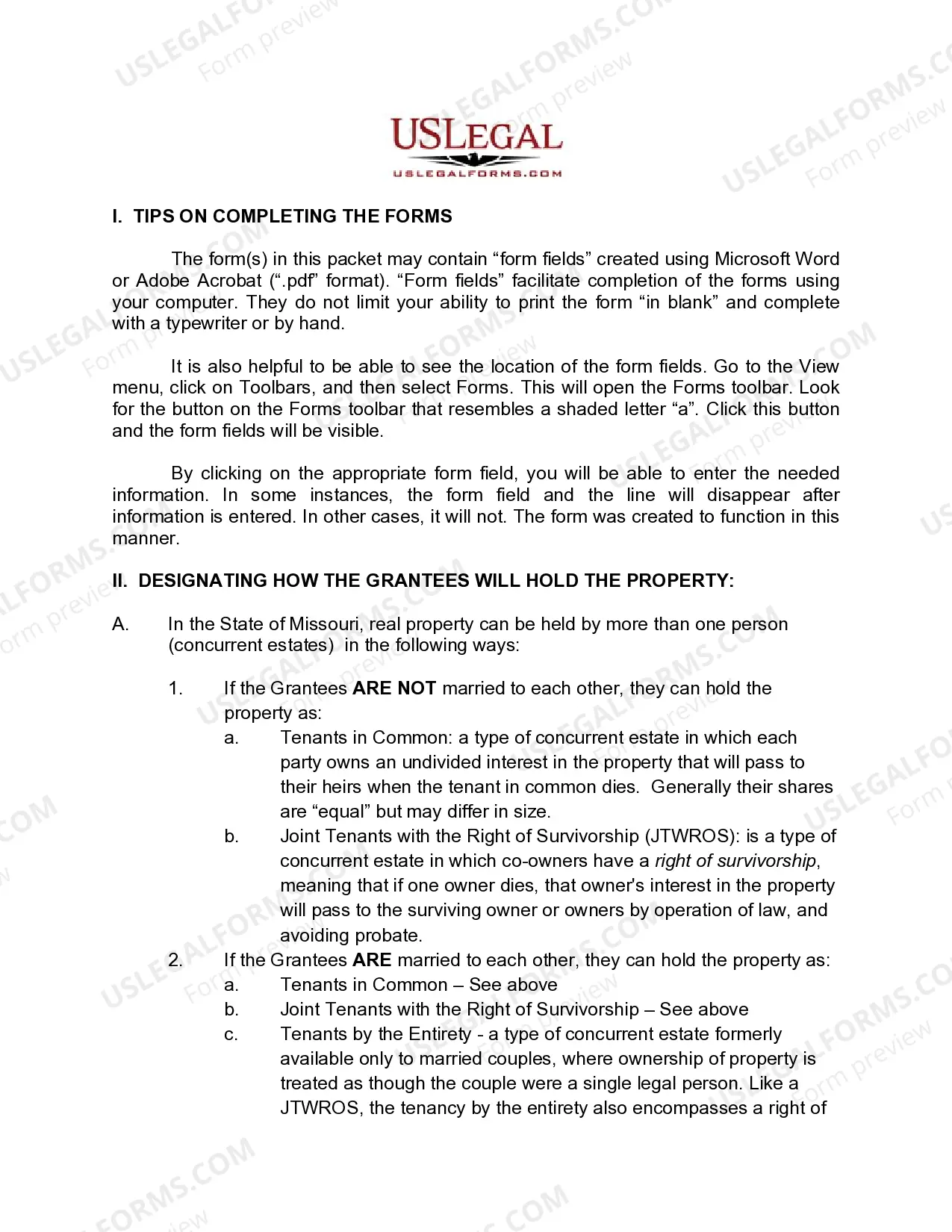
- Choice between Tenants in Common or Joint Tenants with Right of Survivorship
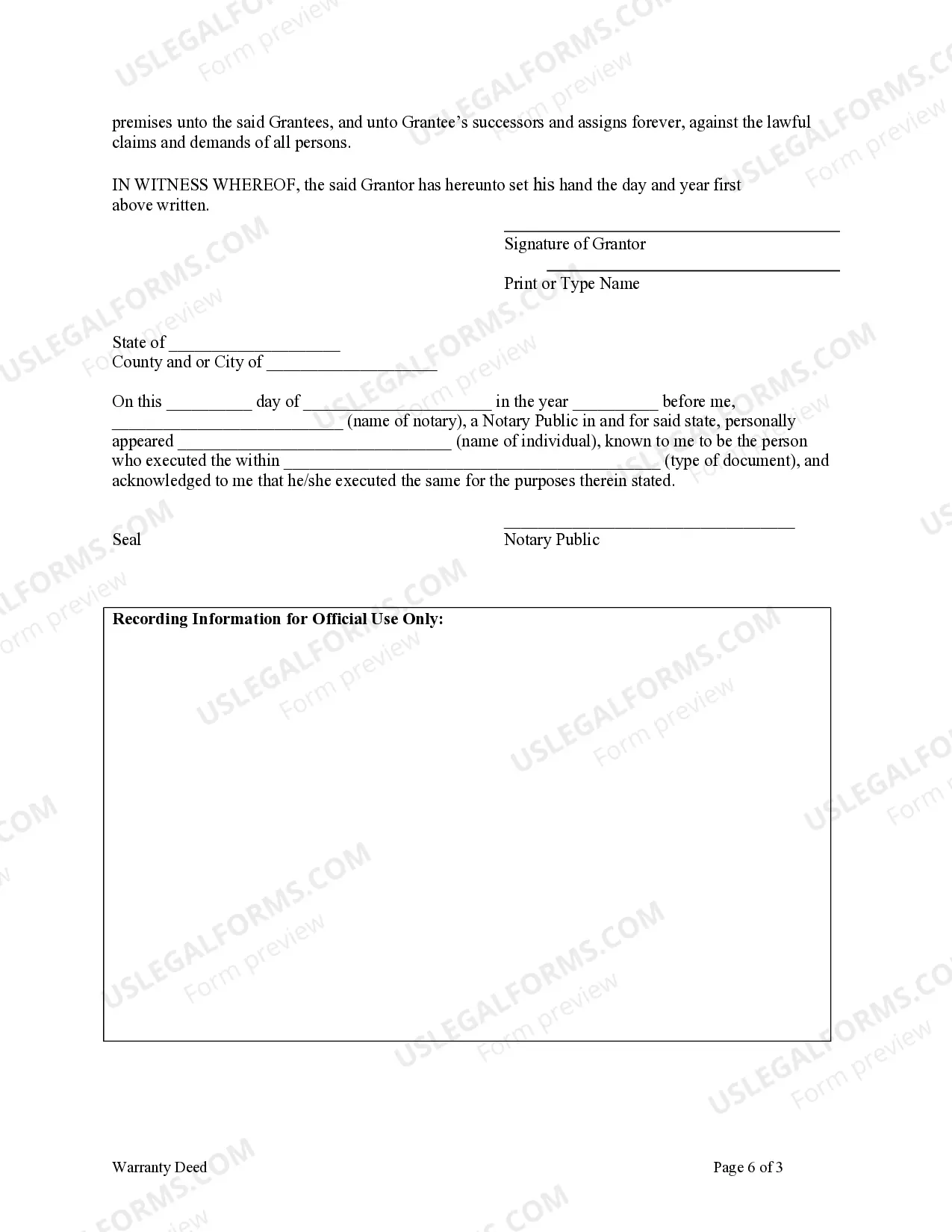
- Signatures of the grantor and notary public
- Recording information for official use




Common use cases
This form should be used when an individual wishes to transfer property ownership to two individuals. It is particularly useful in situations such as estate planning, co-ownership arrangements, and when couples or friends want to jointly own property while determining how ownership will be shared or transferred upon death.
Who can use this document
- Individuals transferring property to co-owners
- Couples looking to establish joint ownership rights
- Estate planners coordinating property transfers
- Those wanting to specify ownership type clearly for legal purposes
Steps to complete this form
- Identify the grantor and grantees by entering their full legal names.
- Clearly describe the property being transferred, including its address and parcel number.
- Specify how the grantees will hold the property (Tenants in Common or Joint Tenants with Right of Survivorship).
- Have the grantor sign the deed in front of a notary public.
- Complete any required recording information for official use.
Does this form need to be notarized?
To make this form legally binding, it must be notarized. Our online notarization service, powered by Notarize, lets you verify and sign documents remotely through an encrypted video session.
Get your form ready online
Our built-in tools help you complete, sign, share, and store your documents in one place.
Make edits, fill in missing information, and update formatting in US Legal Forms—just like you would in MS Word.
Download a copy, print it, send it by email, or mail it via USPS—whatever works best for your next step.
Sign and collect signatures with our SignNow integration. Send to multiple recipients, set reminders, and more. Go Premium to unlock E-Sign.
If this form requires notarization, complete it online through a secure video call—no need to meet a notary in person or wait for an appointment.
We protect your documents and personal data by following strict security and privacy standards.

Make edits, fill in missing information, and update formatting in US Legal Forms—just like you would in MS Word.

Download a copy, print it, send it by email, or mail it via USPS—whatever works best for your next step.

Sign and collect signatures with our SignNow integration. Send to multiple recipients, set reminders, and more. Go Premium to unlock E-Sign.

If this form requires notarization, complete it online through a secure video call—no need to meet a notary in person or wait for an appointment.

We protect your documents and personal data by following strict security and privacy standards.
Avoid these common issues
- Failing to include complete names of all parties involved.
- Not clearly indicating how the grantees will hold the property.
- Omitting signatures or notary acknowledgment.
- Incorrectly describing the property details.
Benefits of using this form online
- Convenient access to professionally drafted legal documents.
- Ease of completion using interactive form fields.
- Instant download and storage options available.
- Compliance with state requirements ensures legal validity.
Legal use & context
- This Warranty Deed serves as a legally binding document that establishes ownership transfer.
- It helps avoid potential disputes over ownership and shares post-transfer.
- Utilizing a properly executed deed can facilitate smoother property transactions and estate planning.
Key takeaways
- The Warranty Deed transfers property from one individual to two individuals with specific ownership arrangements.
- Proper completion and notarization of the form are essential for legal validity.
- Selecting how grantees hold the property can significantly impact future inheritance and ownership rights.
Looking for another form?
Form popularity
FAQ
A Missouri Warranty Deed - One Individual to Two Individuals can become invalid due to several factors. First, if the deed lacks the required signatures from both parties, it cannot be legally enforced. Second, if there is a failure to provide proper consideration or if the property description is unclear, the deed may be challenged. Lastly, any fraud or misrepresentation during the transaction can render the deed invalid, emphasizing the importance of using reputable platforms like uslegalforms to ensure proper documentation.
To add a person to a deed in Missouri, you will need to create a new Missouri Warranty Deed - One Individual to Two Individuals. Start by obtaining the proper form, which you can find on legal resources like US Legal Forms. Next, fill out the deed with the necessary information, including the names of the current and new owners. Finally, sign the deed in front of a notary and file it with the county recorder's office to ensure the change is official.
A warranty deed is a document often used in real estate that provides the greatest amount of protection to the purchaser of the property. The deed pledges or warrants that the owner owns the property free and clear of any outstanding liens, mortgages, or other encumbrances.
Special warranties allow the transfer of property title between seller and buyer. The purchase of title insurance can mitigate the risk of prior claims to the special warranty deed.
A warranty deed, also known as a general warranty deed, is a legal real estate document between the seller (grantor) and the buyer (grantee). The deed protects the buyer by pledging that the seller holds clear title to the property and there are no encumbrances, outstanding liens, or mortgages against it.
Adding someone to your house deed requires the filing of a legal form known as a quitclaim deed. When executed and notarized, the quitclaim deed legally overrides the current deed to your home. By filing the quitclaim deed, you can add someone to the title of your home, in effect transferring a share of ownership.
Today's question is is it possible to deed real estate to someone without them knowing it? Strictly speaking, the answer is no. Because it does not meet the acceptance element of a valid deed transfer. Us lawyers must learn to speak in elements because it governs everything that we do.
In most states you can file a disclaimer or deed of disclaimer that says specifically you were placed in title without your knowledge or consent and disclaim the deed.
They are (1) covenant for seisin; (2) covenant of the right to convey; (3) covenant against encumbrances; (4) covenant for QUIET ENJOYMENT; (5) covenant of general WARRANTY; and (6) covenant for further assurances.
A general warranty deed transfers real property from the buyer to the seller with the guarantee that the seller holds clear, unencumbered legal title to the property.A legal description of the property (found on the previous deed) A statement that the grantor is transferring the property to the grantee.