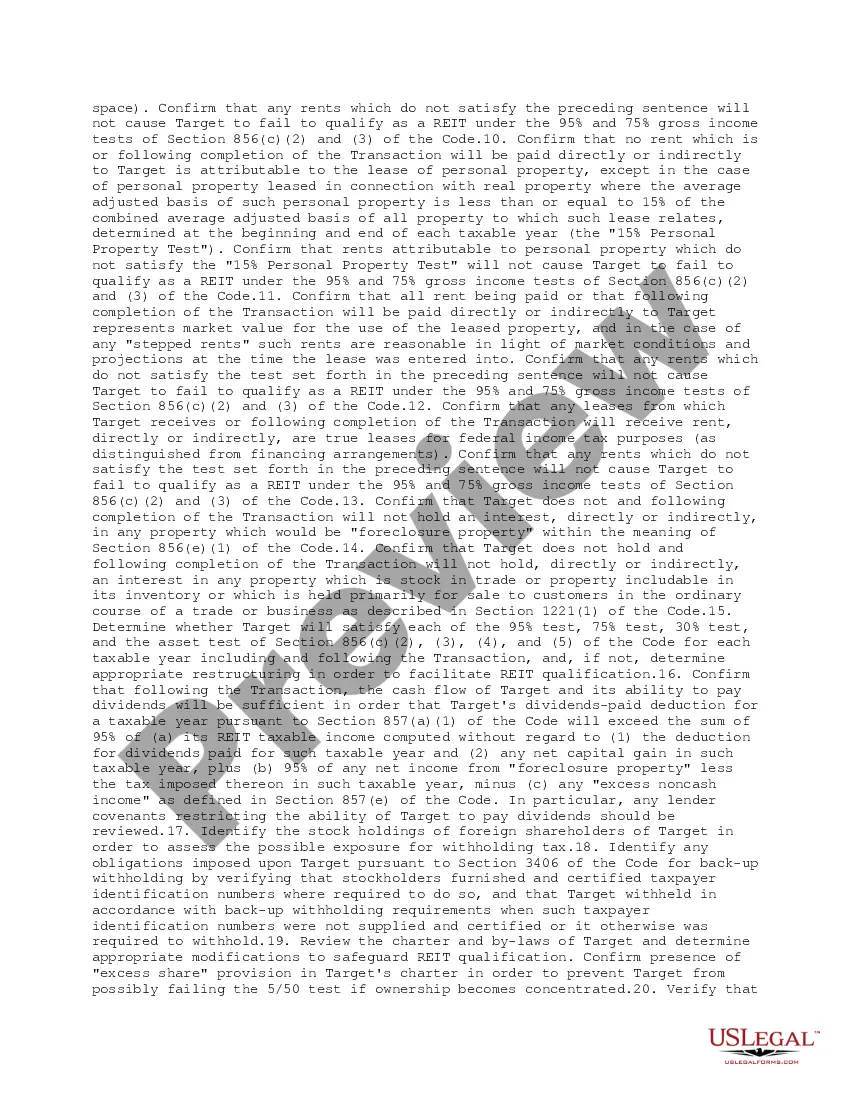
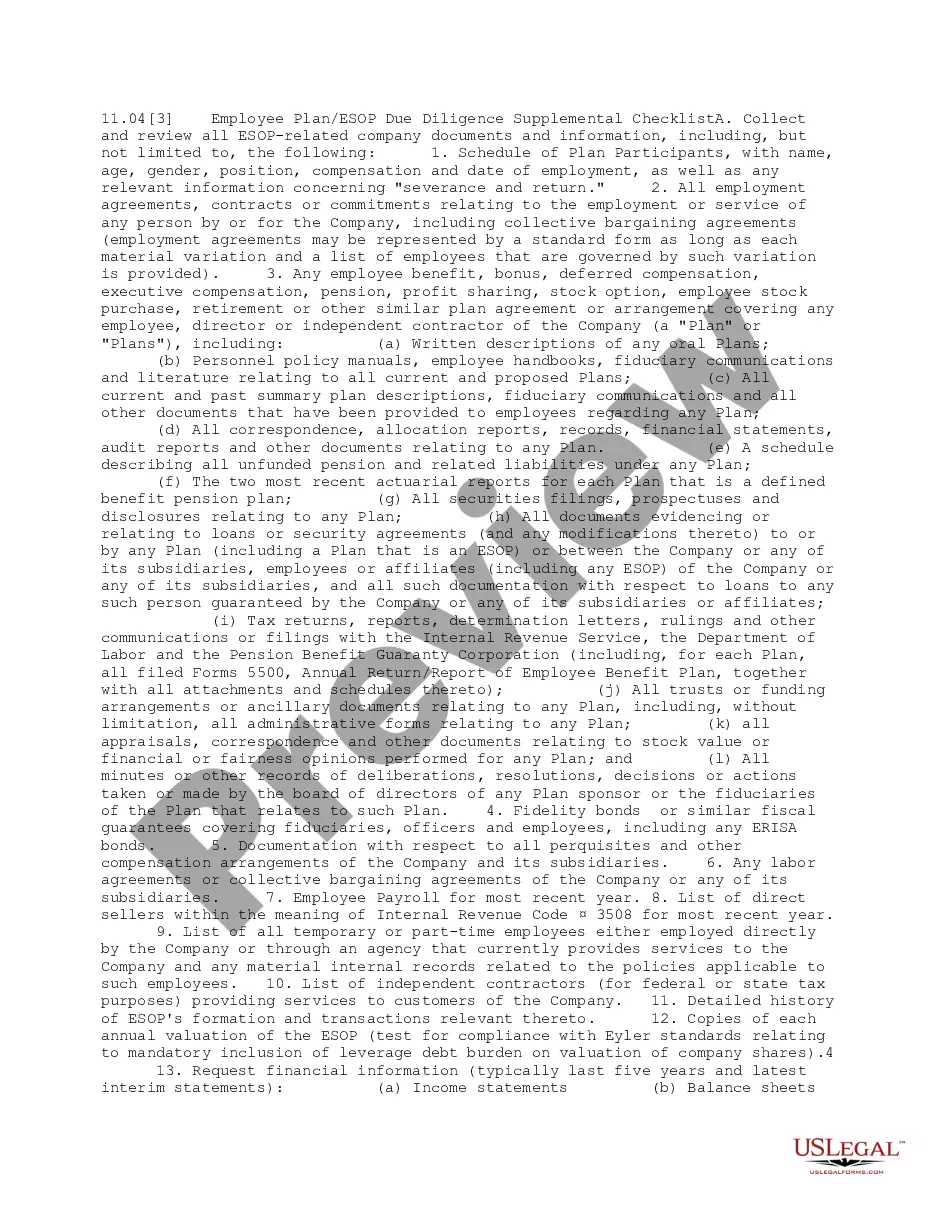
Minnesota Landlord Tenant Investment Trust REIT Due Diligence Supplemental Checklist
Description
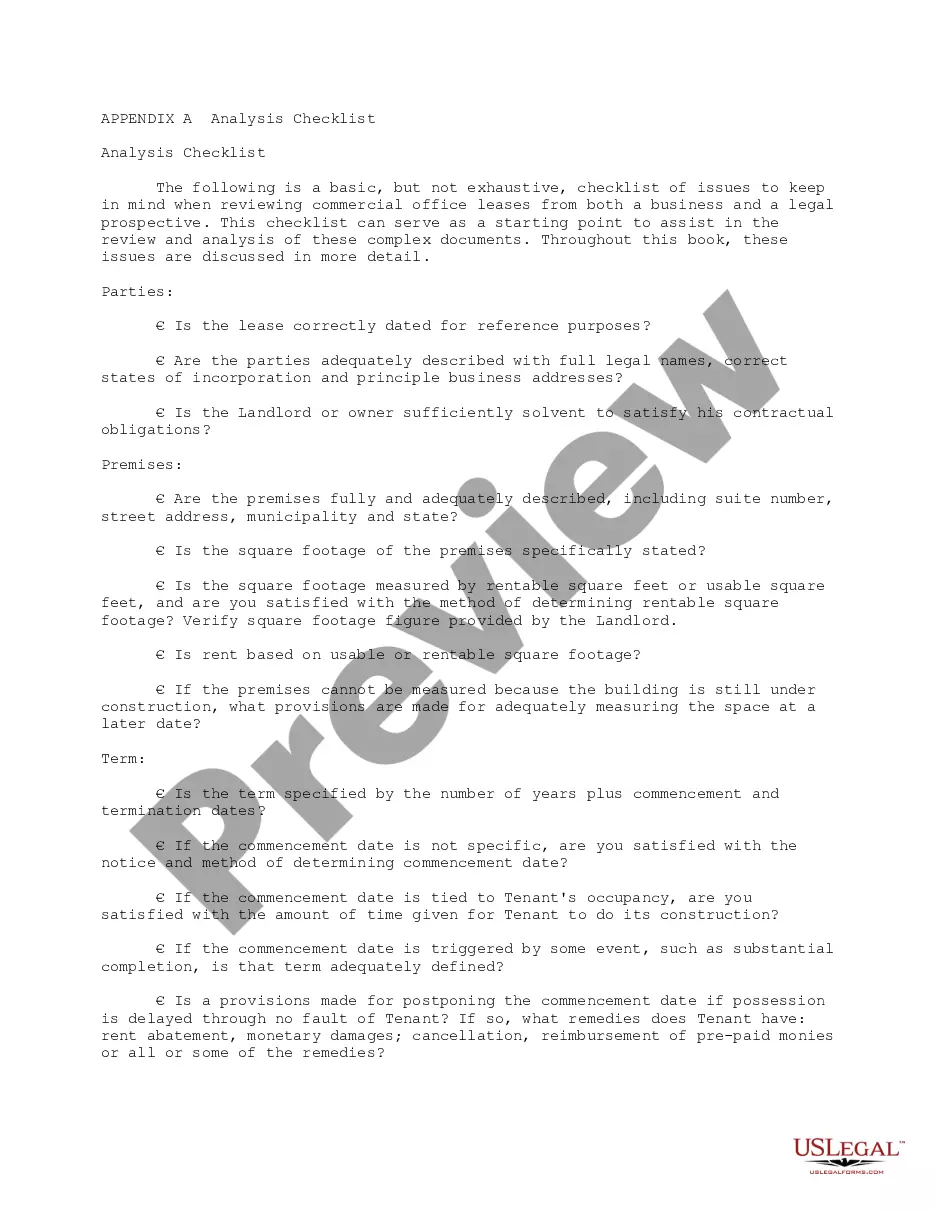
How to fill out Landlord Tenant Investment Trust REIT Due Diligence Supplemental Checklist?
You can dedicate time online searching for the sanctioned document template that fulfills the federal and state requirements you need.
US Legal Forms provides a vast array of legal forms that can be evaluated by experts.
You can download or print the Minnesota Landlord Tenant Investment Trust REIT Due Diligence Supplemental Checklist from our resources.
If you are visiting the US Legal Forms website for the first time, follow the simple instructions below: Initially, ensure that you have chosen the correct document template for the state/city of your choice. Review the form overview to confirm you have selected the right form. If available, utilize the Preview option to examine the document template simultaneously.
- If you already have a US Legal Forms account, you can sign in and select the Download option.
- After that, you can fill out, modify, print, or sign the Minnesota Landlord Tenant Investment Trust REIT Due Diligence Supplemental Checklist.
- Every legal document template you purchase becomes your property indefinitely.
- To obtain another copy of the purchased form, navigate to the My documents section and click on the corresponding option.
Form popularity
FAQ
The 95 income test requires that at least 95% of a REIT’s gross income comes from qualifying sources like rental income and dividends from other REITs. This test is vital for retaining tax treatment as a REIT under IRS regulations. Meeting this criterion ensures that your investment remains compliant and sustainable over time. The Minnesota Landlord Tenant Investment Trust REIT Due Diligence Supplemental Checklist serves as an excellent resource to ensure you meet this requirement.
The 75 rule in real estate refers to the guideline that suggests an investor should aim to finance no more than 75% of a property’s total value through loans. This rule helps maintain a balance between equity and debt, reducing financial risk. Implementing this rule can lead to more sustainable real estate investments. The Minnesota Landlord Tenant Investment Trust REIT Due Diligence Supplemental Checklist can help you track and analyze these financing strategies.
The 75% REIT asset test stipulates that a REIT must possess at least 75% of its total asset value in specific types of investments, primarily real estate. This regulation serves to ensure that REITs focus their operations on real property and maintain their primary business purpose. Failing to meet this requirement may lead to undesirable tax consequences. To navigate this test, refer to the Minnesota Landlord Tenant Investment Trust REIT Due Diligence Supplemental Checklist.
The three P's of due diligence refer to People, Processes, and Performance. It involves evaluating the people involved in the investment, assessing the processes they follow, and measuring the overall performance of the investment. This holistic approach ensures that you are making informed and strategic decisions. The Minnesota Landlord Tenant Investment Trust REIT Due Diligence Supplemental Checklist can assist you in covering all three P's systematically.
The asset tests for REITs help ensure compliance with Internal Revenue Service (IRS) requirements. Specifically, a REIT must meet tests regarding the composition of its assets to qualify for tax benefits. These tests assess the types and percentage of assets held, focusing on real estate. Utilizing the Minnesota Landlord Tenant Investment Trust REIT Due Diligence Supplemental Checklist can help you navigate these requirements effectively.
A due diligence checklist in real estate is a structured outline of considerations that an investor must review before finalizing a property acquisition. This checklist, especially the Minnesota Landlord Tenant Investment Trust REIT Due Diligence Supplemental Checklist, focuses on vital aspects like financial aspects, inspections, and legal documents. By methodically following this checklist, investors can make informed decisions and mitigate potential risks.
The IRS requires that 1099 forms be sent to recipients by January 31 of the year following the reportable payment. However, other deadlines exist for filing with the IRS, which may be different. Using the Minnesota Landlord Tenant Investment Trust REIT Due Diligence Supplemental Checklist helps you stay organized and ensures you meet all critical deadlines related to investment disclosures and tax reporting.
The four P's of due diligence are People, Process, Product, and Performance. Each component plays a vital role in thoroughly evaluating a potential investment. When applying these principles, especially in the context of the Minnesota Landlord Tenant Investment Trust REIT Due Diligence Supplemental Checklist, you can assess the stakeholders involved, the methods used, the property itself, and historical performance metrics.
To file a 1099 form online, you can utilize various online platforms that simplify the process. These platforms often provide step-by-step instructions and ensure compliance with IRS requirements. If you are dealing with investments or real estate, using the Minnesota Landlord Tenant Investment Trust REIT Due Diligence Supplemental Checklist can ensure that your reporting is complete and accurate, especially when dealing with forms related to investment revenue.
A due diligence check in real estate is an essential process that involves investigating a property thoroughly before a transaction. This check helps uncover any issues that may impact the investment's viability, such as title disputes or zoning regulations. Utilizing the Minnesota Landlord Tenant Investment Trust REIT Due Diligence Supplemental Checklist can simplify this process by outlining key areas to evaluate, ensuring nothing critical is overlooked.