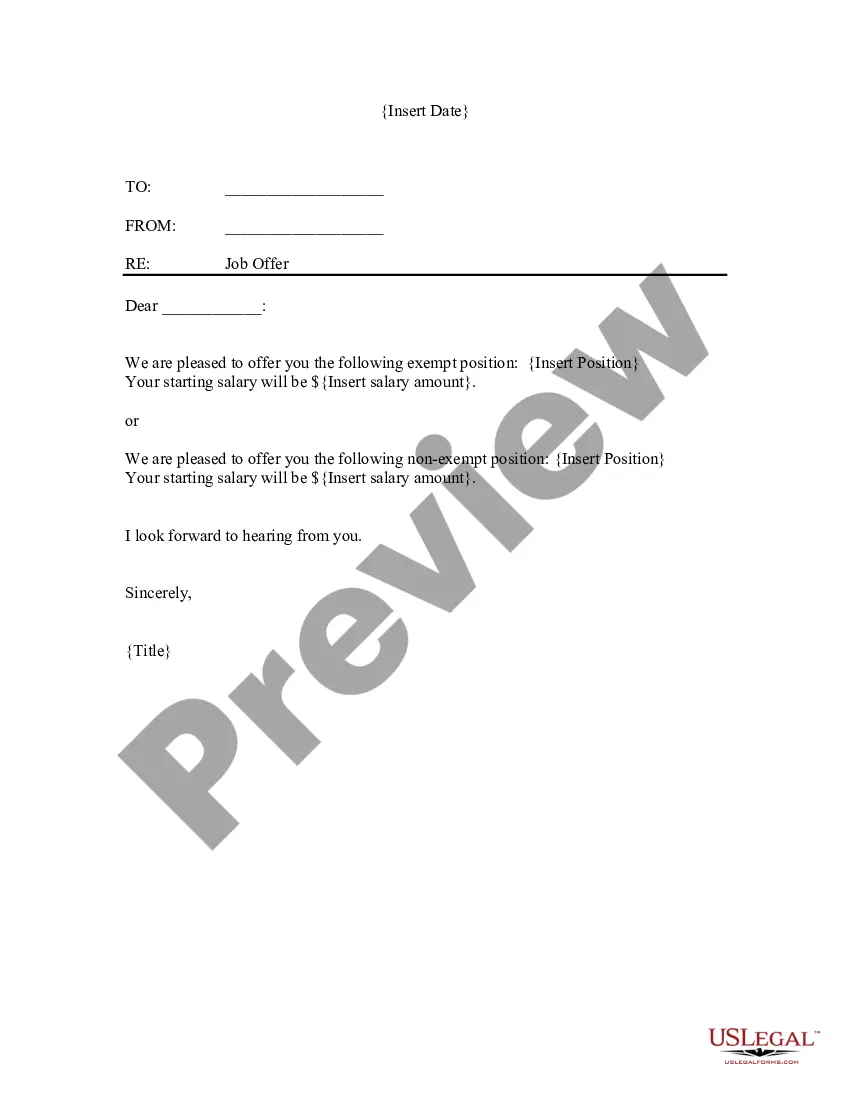
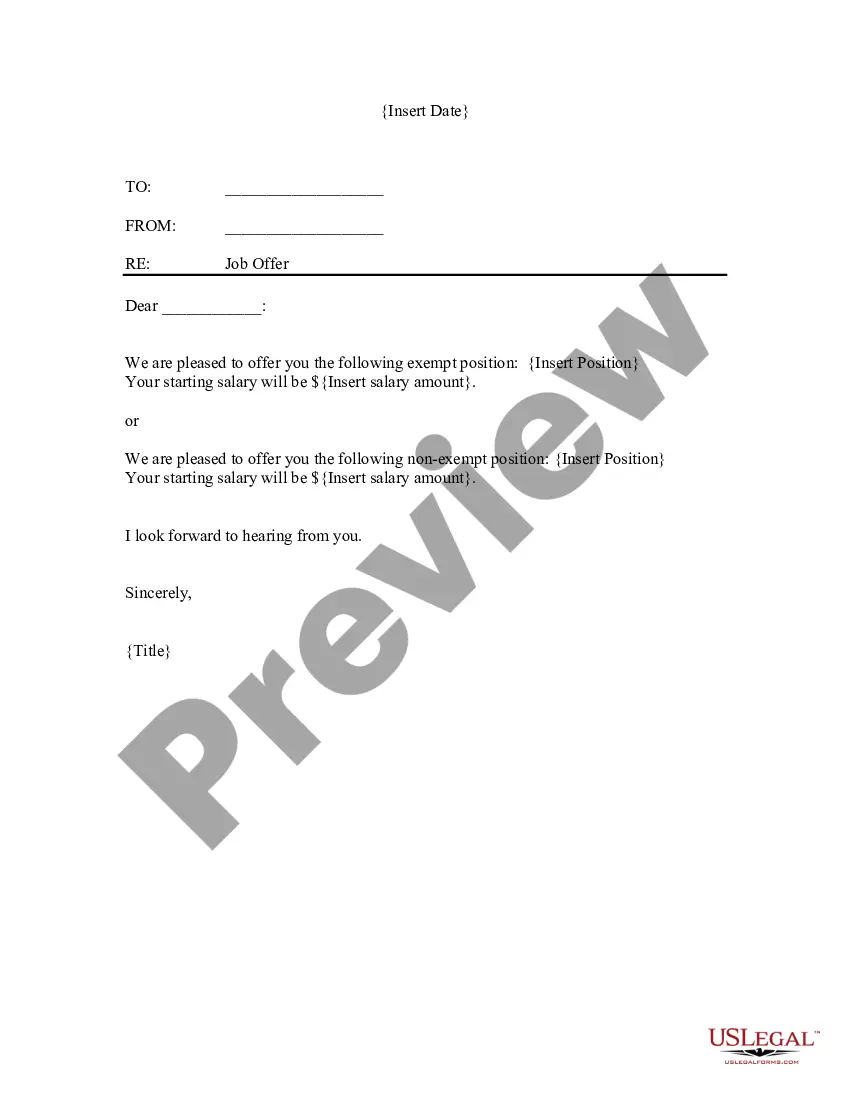
Minnesota Job Offer Letter for Teacher
Description
Get your form ready online
Our built-in tools help you complete, sign, share, and store your documents in one place.
Make edits, fill in missing information, and update formatting in US Legal Forms—just like you would in MS Word.
Download a copy, print it, send it by email, or mail it via USPS—whatever works best for your next step.
Sign and collect signatures with our SignNow integration. Send to multiple recipients, set reminders, and more. Go Premium to unlock E-Sign.
If this form requires notarization, complete it online through a secure video call—no need to meet a notary in person or wait for an appointment.
We protect your documents and personal data by following strict security and privacy standards.

Make edits, fill in missing information, and update formatting in US Legal Forms—just like you would in MS Word.

Download a copy, print it, send it by email, or mail it via USPS—whatever works best for your next step.

Sign and collect signatures with our SignNow integration. Send to multiple recipients, set reminders, and more. Go Premium to unlock E-Sign.

If this form requires notarization, complete it online through a secure video call—no need to meet a notary in person or wait for an appointment.

We protect your documents and personal data by following strict security and privacy standards.
Looking for another form?
How to fill out Job Offer Letter For Teacher?
Selecting the ideal legal document template can be challenging.
Clearly, there are numerous templates available online, but how do you find the legal form you need.
Utilize the US Legal Forms website. The platform offers a wide array of templates, including the Minnesota Job Offer Letter for Teacher, which you can use for both professional and personal purposes.
You can preview the form using the Review button and check the form summary to confirm it is the right one for you.
- All templates are reviewed by professionals and comply with state and federal regulations.
- If you are already registered, Log In to your account and click on the Acquire button to obtain the Minnesota Job Offer Letter for Teacher.
- Use your account to browse through the legal forms you have previously purchased.
- Navigate to the My documents section of your account to download another copy of the document you need.
- If you are a new user of US Legal Forms, here are simple steps you should follow.
- First, ensure you have selected the correct form for your region/state.
Form popularity
FAQ
So can you please assist me to have an offer letter or if you need further information please let me know. I am interested to work for your company and believe that I would be a better fit for the position. Your consideration in this regard would be appreciated. Thanks for the Reply, I really appreciate it .
It is not the HR person who is making the offer. The HR person is consulting with the hiring manager who should make the final decision about a candidate and sign the job offer letter. The offer letter is the manager's commitment to the new employee.
Whereas an offer letter is unofficial (avoiding statements that promise future wages or employment), an employment contract is exactly the opposite, setting wages and length of employment in legally binding stone.
In general, offer letters are less formal than employment contracts, which typically set terms and conditions of employment that are legally binding. It's also vital for employers to understand that they aren't required by federal law to send an offer letter to new hires.
With that, every job offer letter should include the following terms:A job title and description.Important dates.Compensation, benefits, and terms.Company policies and culture.A statement of at-will employment.An employee confidentiality agreement and noncompete clause.A list of contingencies.
The letter F. Google will no longer take job candidates' word for it if they claim they have a competing job offer. Recruiters will now ask to see offer letters before raising Google's offer, The Information reported. The move is unusual for applicants who are not seeking an executive-level position.
Asking for a formal offerThank you so much for the job offer. I am writing to confirm the next steps of this offer. Will you be sending a formal offer letter or employment contract? I am very excited about this opportunity and can be available to start preferred start date.
There's nothing illegal about the employer asking for that information. Of course, you don't have to provide it if you don't want to, but if their intention is to use it to counter-offer, it may actual help you to give them the information they're requesting.
Confidentiality and Non-Disclosure AgreementsNon-disclosure and confidentiality agreements are standard practice in offer letters. Typically, they state that you must keep sensitive information that you learn in your tenure at a company private, or else face consequences such as firing or lawsuits.
No employer has the right to ask the employee to show his Offer Letter, that's is not considered as the the good HR Practices. It's at the discretion of the employee to disclose the name of his new employer.