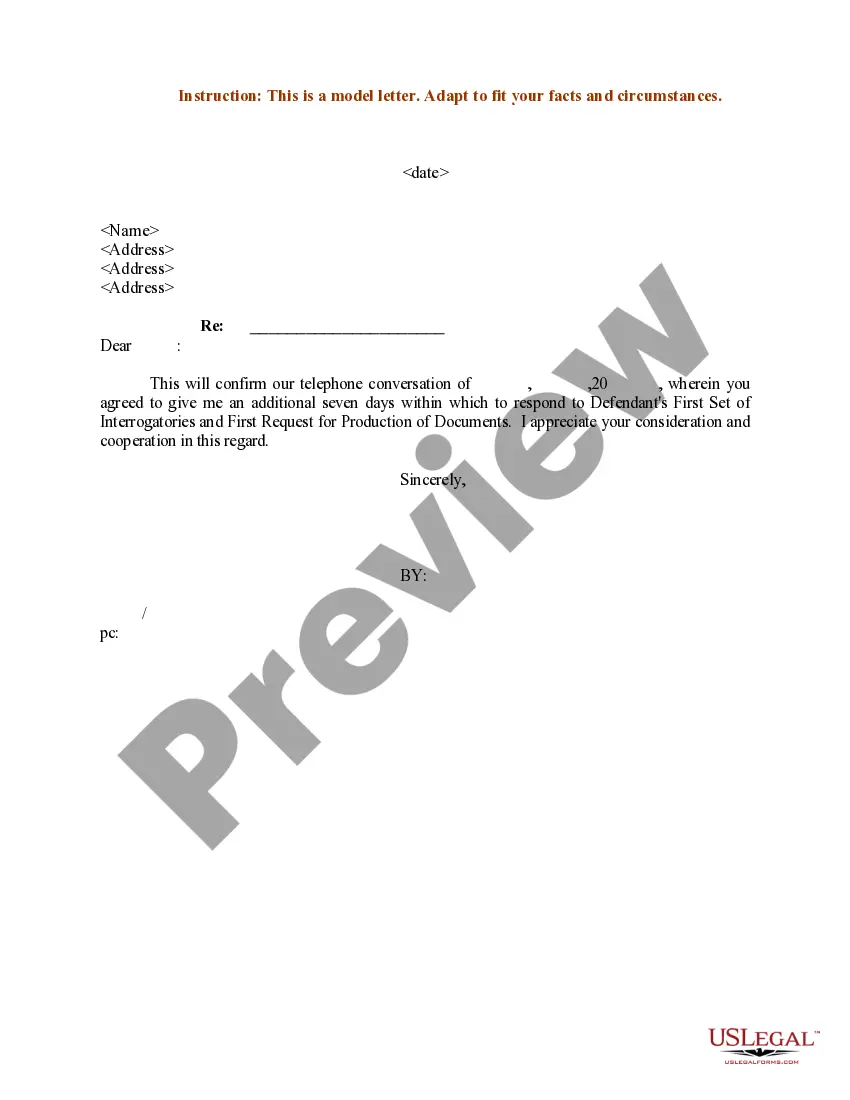
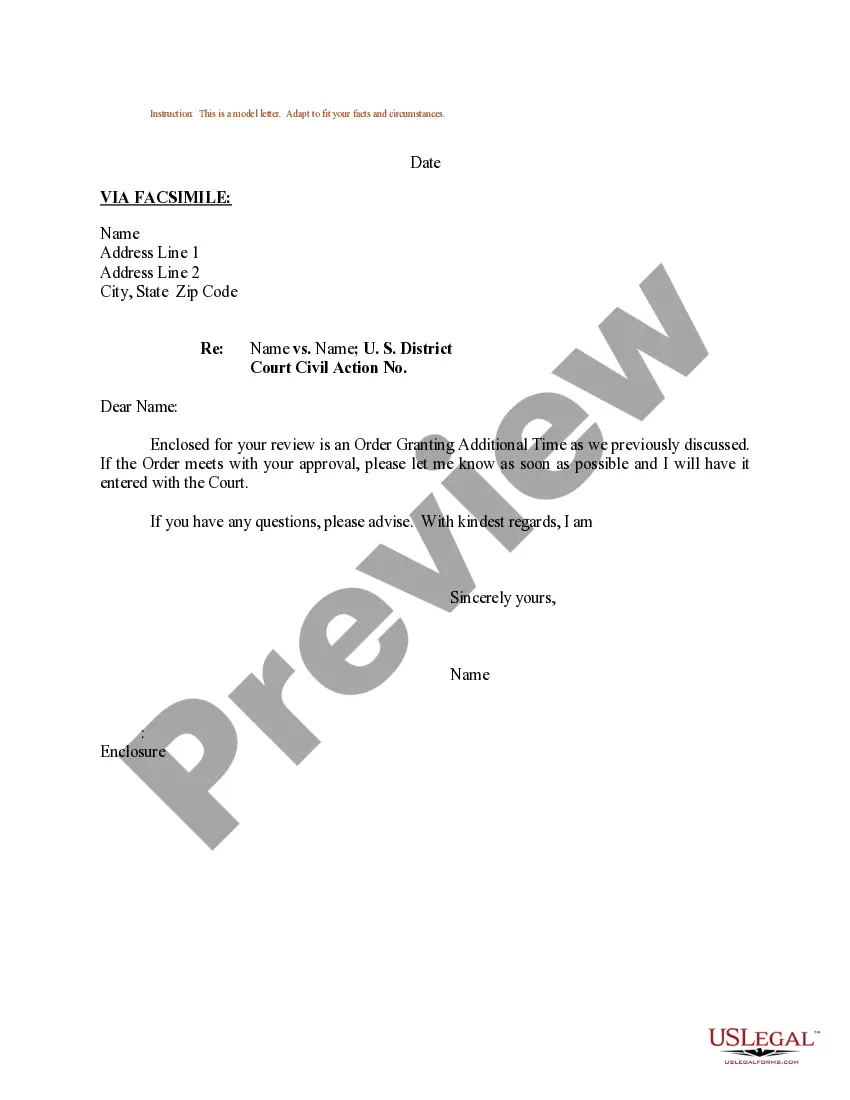
Minnesota Sample Letter Confirming Additional Time to Respond to Defendant's First Set of Interrogatories and First Request for Production of Documents
Description

Get your form ready online
Our built-in tools help you complete, sign, share, and store your documents in one place.
Make edits, fill in missing information, and update formatting in US Legal Forms—just like you would in MS Word.
Download a copy, print it, send it by email, or mail it via USPS—whatever works best for your next step.
Sign and collect signatures with our SignNow integration. Send to multiple recipients, set reminders, and more. Go Premium to unlock E-Sign.
If this form requires notarization, complete it online through a secure video call—no need to meet a notary in person or wait for an appointment.
We protect your documents and personal data by following strict security and privacy standards.
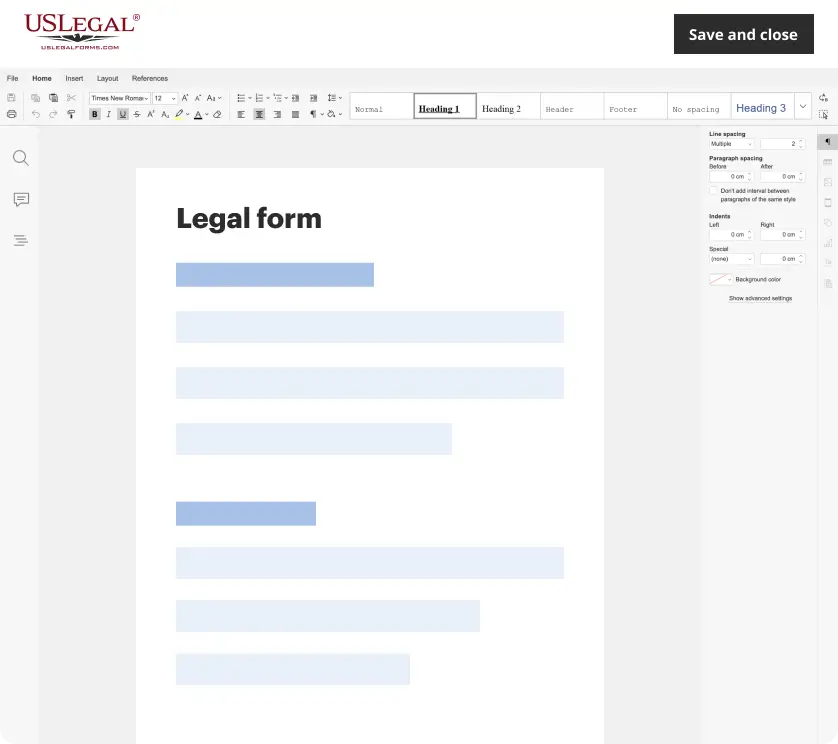
Make edits, fill in missing information, and update formatting in US Legal Forms—just like you would in MS Word.
Download a copy, print it, send it by email, or mail it via USPS—whatever works best for your next step.
Sign and collect signatures with our SignNow integration. Send to multiple recipients, set reminders, and more. Go Premium to unlock E-Sign.

If this form requires notarization, complete it online through a secure video call—no need to meet a notary in person or wait for an appointment.
We protect your documents and personal data by following strict security and privacy standards.
Looking for another form?








How to fill out Sample Letter Confirming Additional Time To Respond To Defendant's First Set Of Interrogatories And First Request For Production Of Documents?
US Legal Forms - one of the largest collections of valid forms in the United States - provides a broad selection of legitimate document templates that you can download or print. By using the website, you can access thousands of forms for business and personal purposes, categorized by type, state, or keywords. You can find the latest versions of forms like the Minnesota Sample Letter Confirming Additional Time to Respond to Defendant's First Set of Interrogatories and First Request for Production of Documents in just a few minutes.
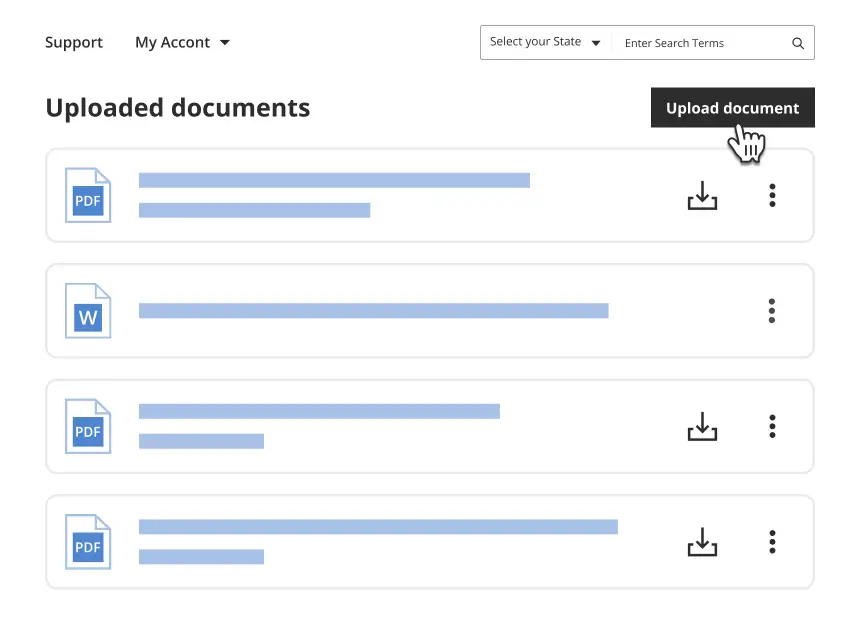
If you already have an account, Log In and download the Minnesota Sample Letter Confirming Additional Time to Respond to Defendant's First Set of Interrogatories and First Request for Production of Documents from the US Legal Forms library. The Download button will appear on each form you view. You have access to all previously saved forms in the My documents section of your account.
If you would like to use US Legal Forms for the first time, here are simple instructions to help you get started: Ensure you have selected the correct form for your city/region. Click the Review button to examine the content of the form. Read the form description to confirm that you have chosen the right one.
Every template you add to your account has no expiration date and is yours indefinitely. Therefore, if you wish to download or print another version, simply navigate to the My documents section and click on the form you need.
Access the Minnesota Sample Letter Confirming Additional Time to Respond to Defendant's First Set of Interrogatories and First Request for Production of Documents with US Legal Forms, one of the most comprehensive libraries of legitimate document templates. Utilize a vast array of professional and state-specific templates that meet your business or personal needs and specifications.
- If the form does not meet your requirements, utilize the Search box at the top of the screen to find one that does.
- If you are satisfied with the form, confirm your selection by clicking the Purchase now button.
- Then, choose the pricing plan you prefer and provide your details to register for an account.
- Process the transaction. Use your credit card or PayPal account to complete the transaction.
- Select the format and download the form to your device.
- Edit. Fill out, modify, print, and sign the saved Minnesota Sample Letter Confirming Additional Time to Respond to Defendant's First Set of Interrogatories and First Request for Production of Documents.
Form popularity
FAQ
The plaintiff must respond by the deadline. There are different ways to make sure you get each kind of discovery if the plaintiff does not give it to you by the deadline. If the plaintiff does not respond to the court order, then you can file a Motion to Dismiss and you may win your case. Send a final request.
How do I offer exhibits? Show the exhibit or provide a copy to the other side (or their lawyer if they are represented). Show the exhibit or provide a copy to the witness. ... ?Lay the foundation? for the exhibit. Ask the judicial officer to enter the exhibit into evidence.
A subpoena commanding production for inspection, copying, testing, or sampling of designated books, papers, documents, or electronically stored information, tangible things, or inspection of premises, must be served on the subject of the subpoena, and notice of the required production must be served in the manner ...
Each exhibit must be identified by a label or other mark and sufficiently described in the statement to identify it. Identification should be made by the initials of the person who will produce the exhibit and a consecutive number.
Explain why you need this extension (i.e. to cover costs of________ until ________). Itemize and explain any monthly costs and any other additional costs associated with the requested time extension. If there will be no cost change as a result of the additional time requested, say so.
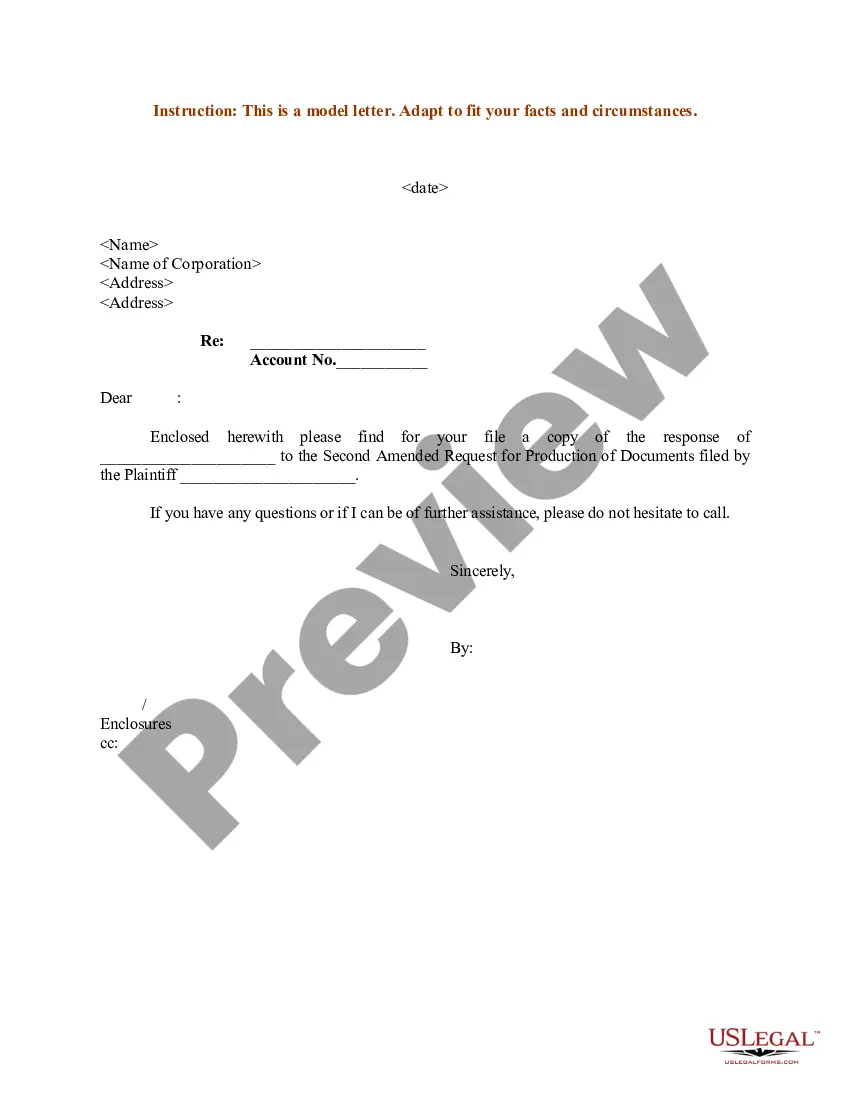
If you need more time, ask the other side. If they agree, send them a letter confirming the agreement to a new date. You must respond to the request and swear under oath that your response is true. Then you'll deliver your response to the other side's attorney (or to the other side, if they don't have an attorney).
Those reasons include everything from a court's crowded docket, the limited number of available judges, and recent budgetary constraints, to pre-trial challenges regarding the sufficiency of the complaint or the validity of the cause of action, legal maneuvering with things such as summary judgment motions, and ...
Discovery, in the law of common law jurisdictions, is a pre-trial procedure in a lawsuit in which each party, through the law of civil procedure, can obtain evidence from the other party or parties by means of discovery devices such as interrogatories, requests for production of documents, requests for admissions and ...