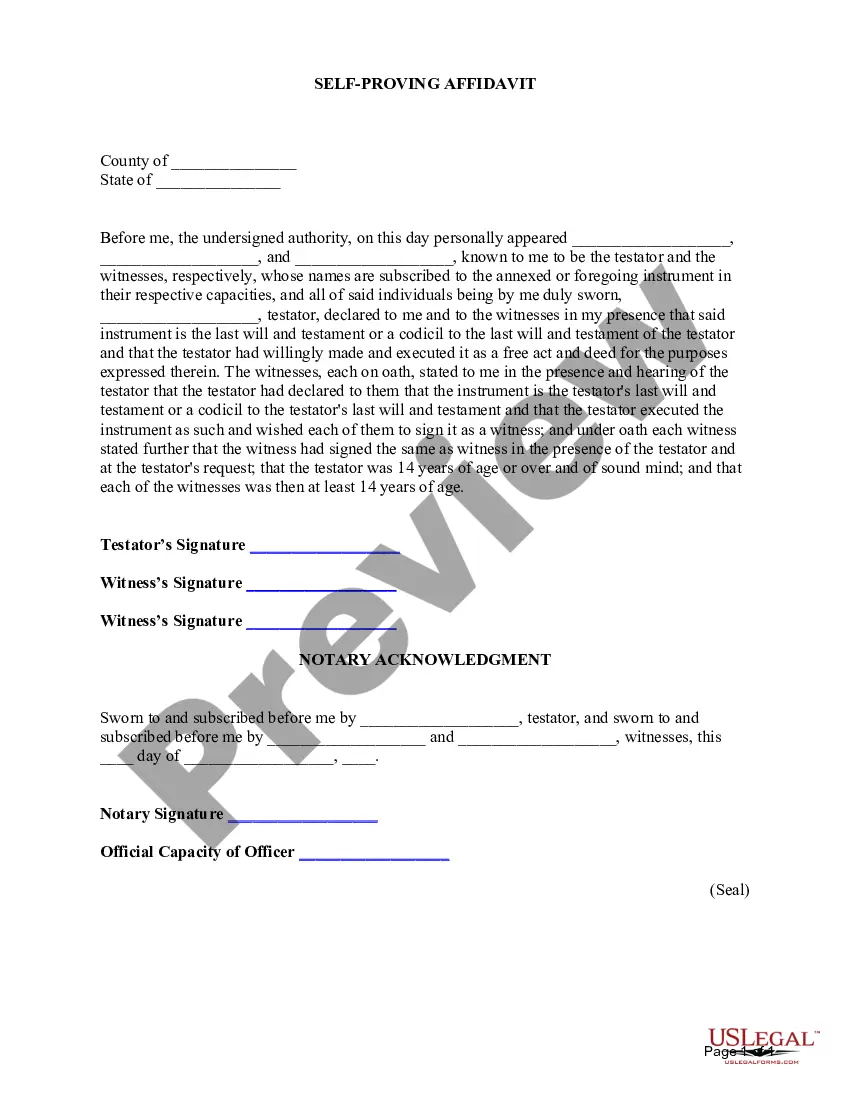
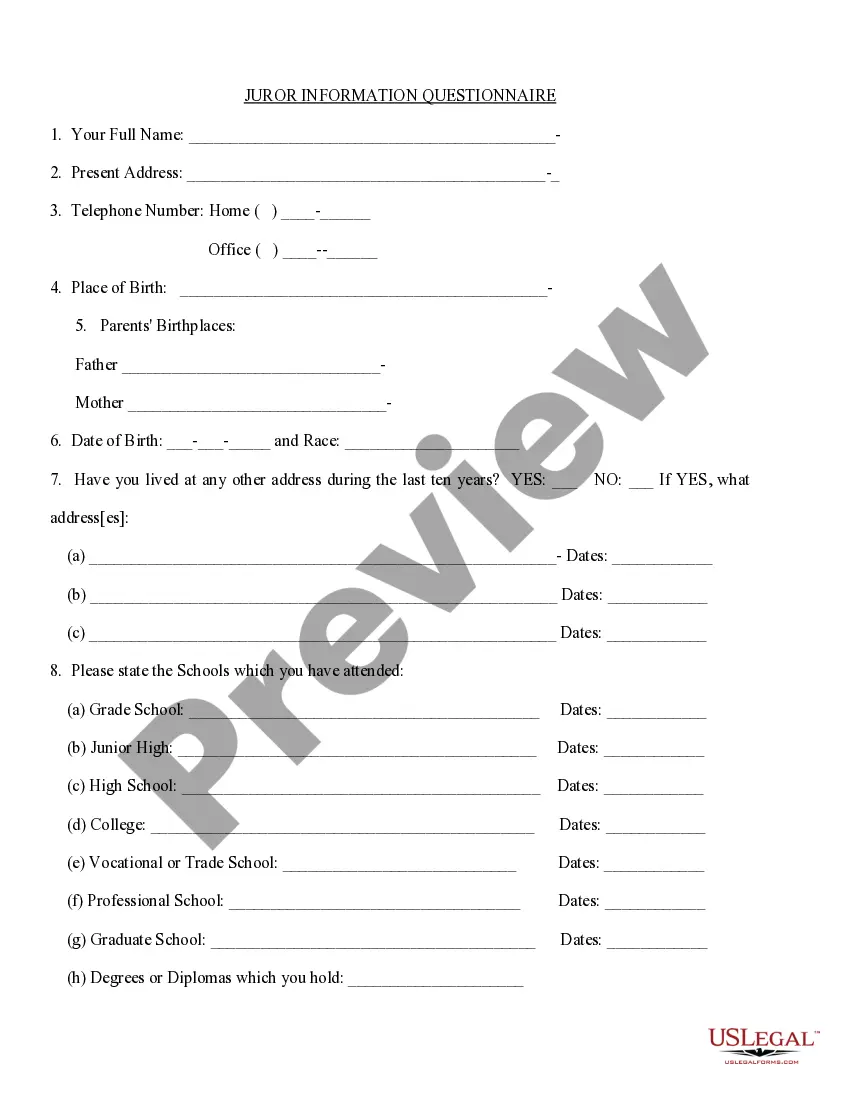
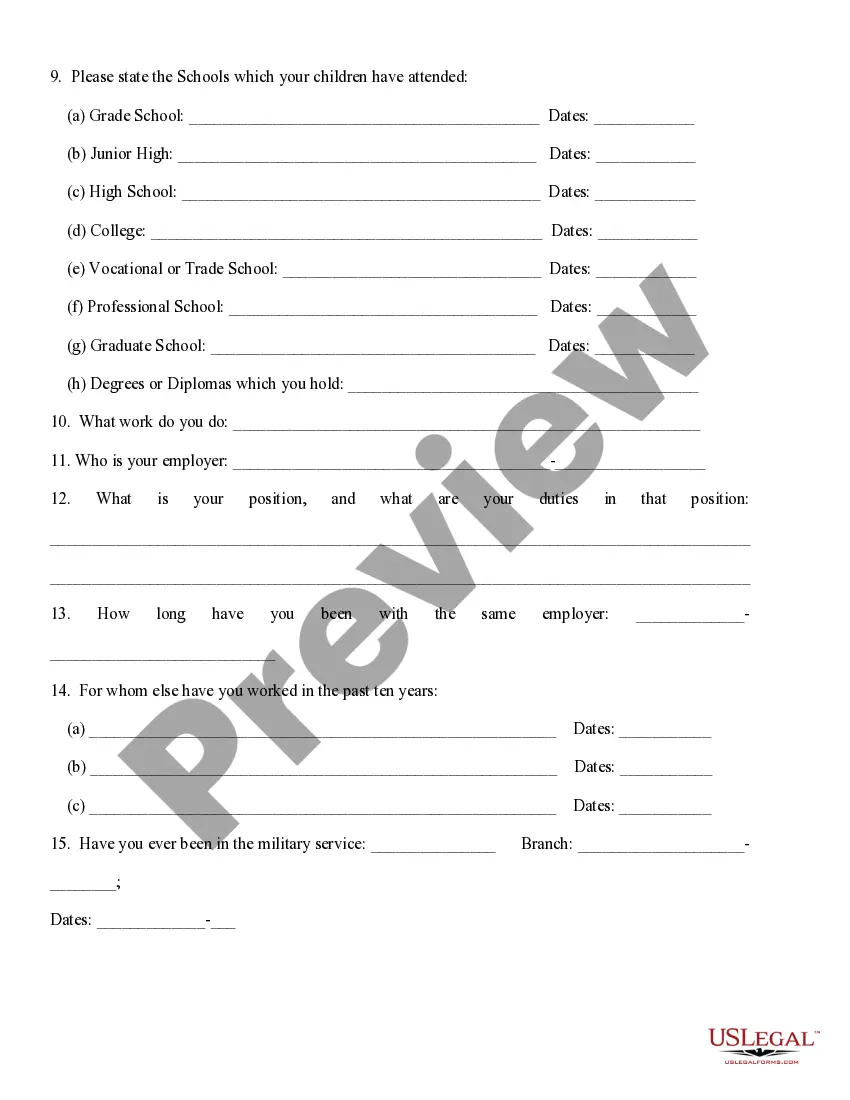
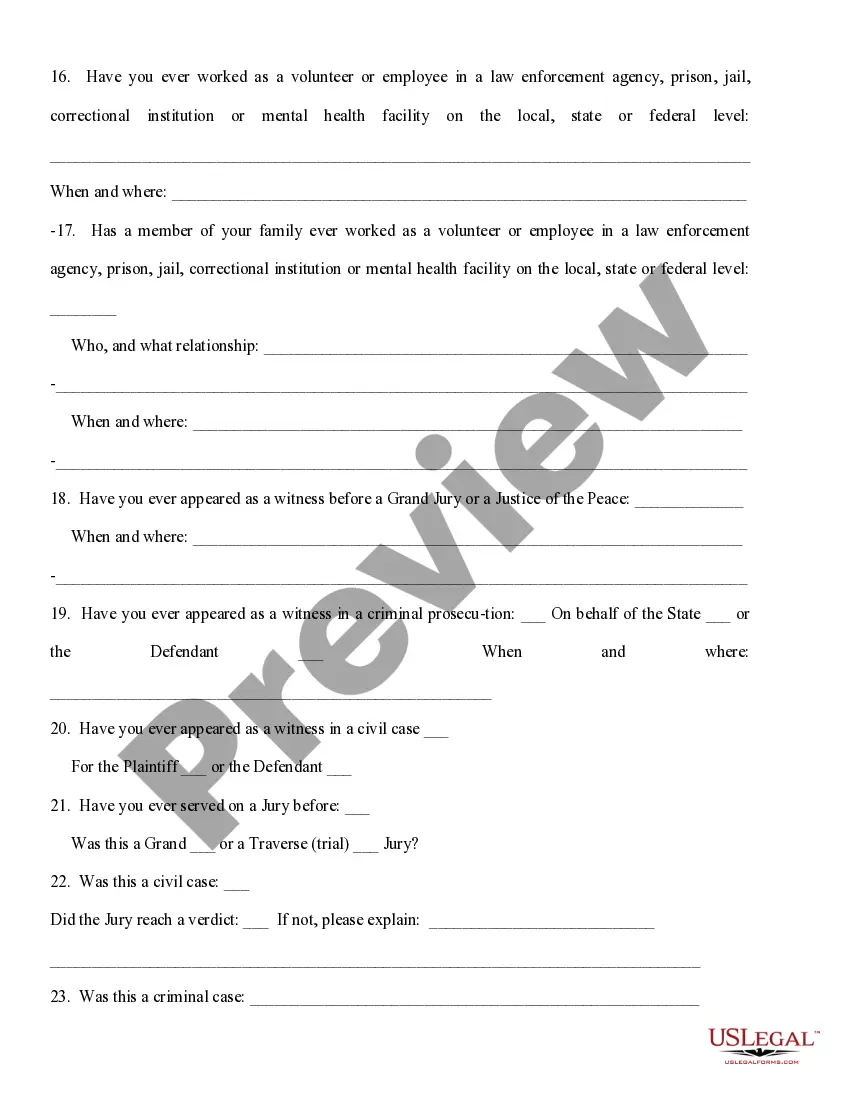
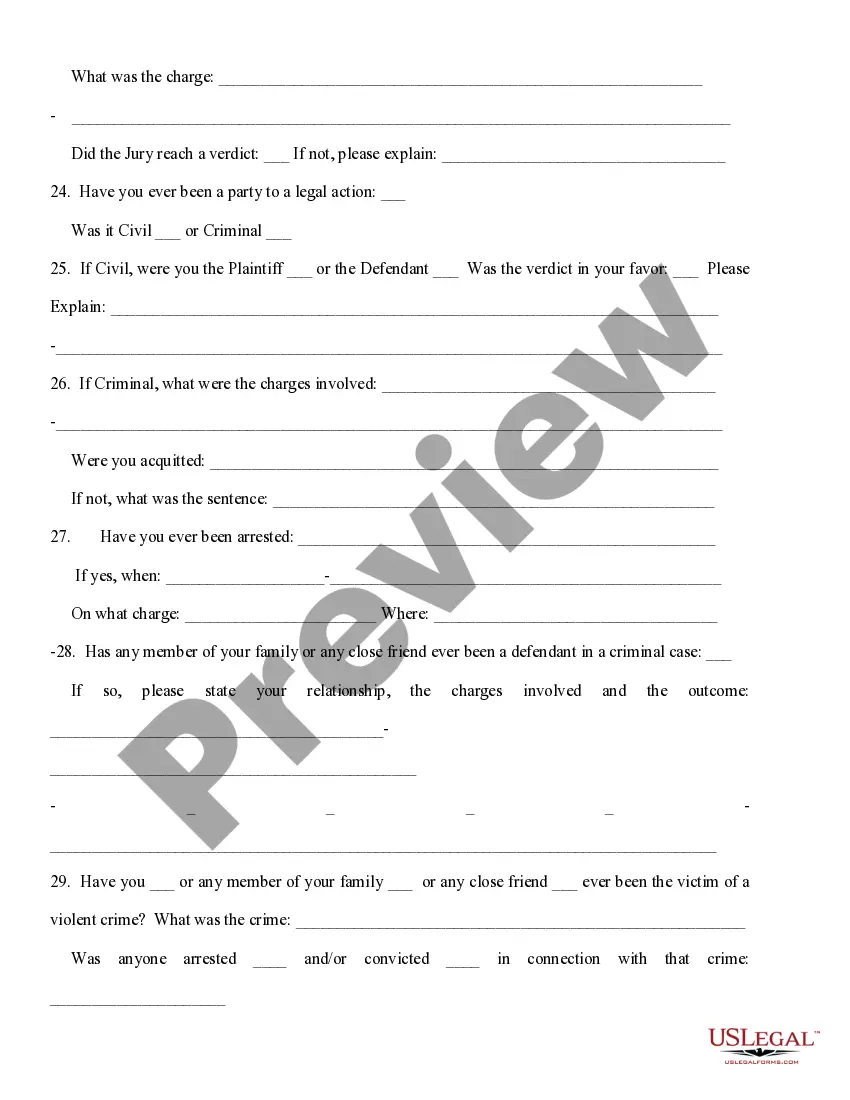
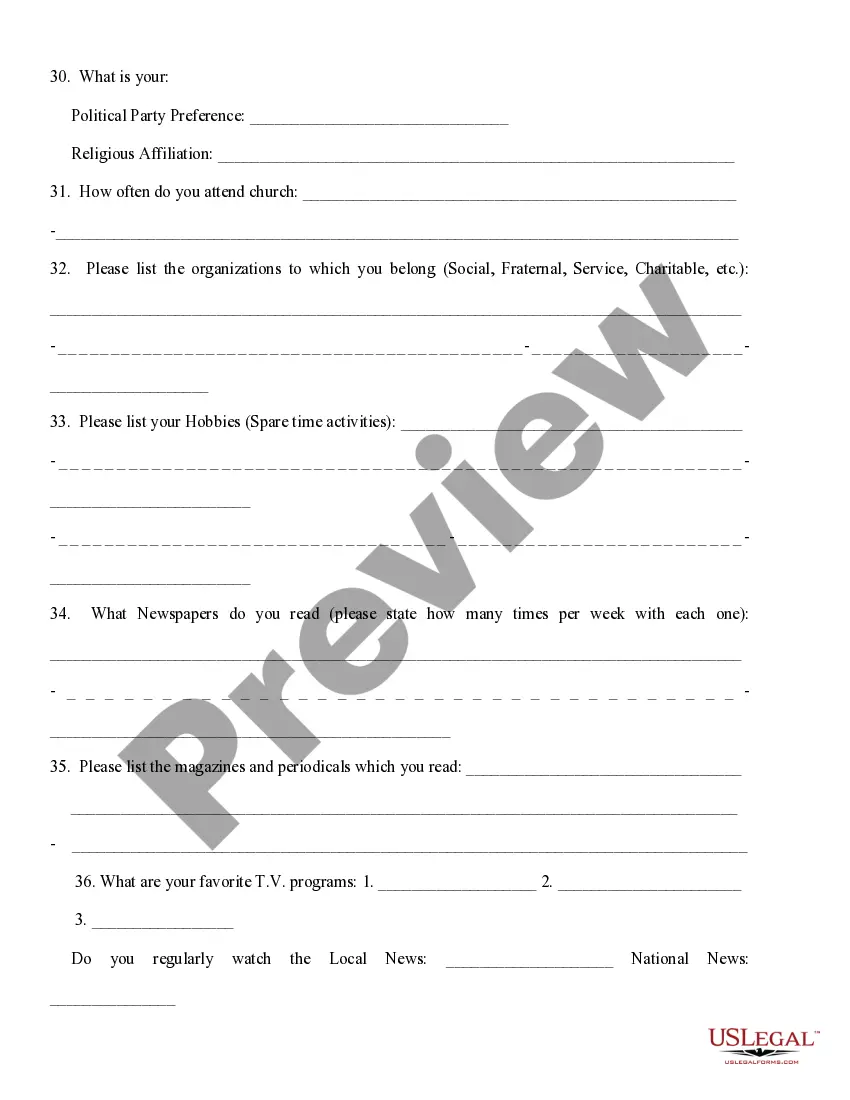
Minnesota Important Juror Questionnaire
Description
Get your form ready online
Our built-in tools help you complete, sign, share, and store your documents in one place.
Make edits, fill in missing information, and update formatting in US Legal Forms—just like you would in MS Word.
Download a copy, print it, send it by email, or mail it via USPS—whatever works best for your next step.
Sign and collect signatures with our SignNow integration. Send to multiple recipients, set reminders, and more. Go Premium to unlock E-Sign.
If this form requires notarization, complete it online through a secure video call—no need to meet a notary in person or wait for an appointment.
We protect your documents and personal data by following strict security and privacy standards.

Make edits, fill in missing information, and update formatting in US Legal Forms—just like you would in MS Word.

Download a copy, print it, send it by email, or mail it via USPS—whatever works best for your next step.

Sign and collect signatures with our SignNow integration. Send to multiple recipients, set reminders, and more. Go Premium to unlock E-Sign.

If this form requires notarization, complete it online through a secure video call—no need to meet a notary in person or wait for an appointment.

We protect your documents and personal data by following strict security and privacy standards.
Looking for another form?




How to fill out Important Juror Questionnaire?
US Legal Forms - one of the most prominent collections of legal templates in the USA - offers a broad selection of legal document formats that you can obtain or print. By using the website, you will access a vast array of forms for business and personal purposes, categorized by types, states, or keywords.
You can retrieve the latest versions of forms such as the Minnesota Important Juror Questionnaire in moments. If you already have an account, Log In to download the Minnesota Important Juror Questionnaire from the US Legal Forms library. The Download button will be visible on each form you view. You can access all previously saved forms in the My documents section of your account.
If you are using US Legal Forms for the first time, here are some straightforward instructions to help you get started: Ensure you have selected the correct form for your region/state. Click on the Preview button to examine the form's contents. Review the form description to confirm you have chosen the right form. If the form does not meet your needs, use the Search field at the top of the screen to find one that does.
Access the Minnesota Important Juror Questionnaire with US Legal Forms, the most extensive collection of legal document templates. Utilize a vast number of professional and state-specific templates that fulfill your business or personal needs and requirements.
- When you are satisfied with the form, confirm your choice by clicking the Download now button.
- Then, select the pricing plan you prefer and provide your details to register for an account.
- Process the payment. Use your credit card or PayPal account to complete the transaction.
- Choose the format and download the form to your device.
- Make modifications. Fill out, edit, and print the saved Minnesota Important Juror Questionnaire.
- Every template you save to your account has no expiration date and is yours indefinitely. So, if you need to download or print another copy, simply go to the My documents section and click on the form you need.
Form popularity
FAQ
Impartial: Without bias, prejudice, or other pre- conception. The members of a jury should have no opinion about or vested interest in a case at the start of the trial and should base the verdict only on competent legal evidence presented during the trial and on the judges' instructions about the law.
Your role as a juror is to get a full understanding of the facts of a criminal case, to evaluate the evidence, and to make an impartial and fair decision. The outcome of a trial by jury relies on you.
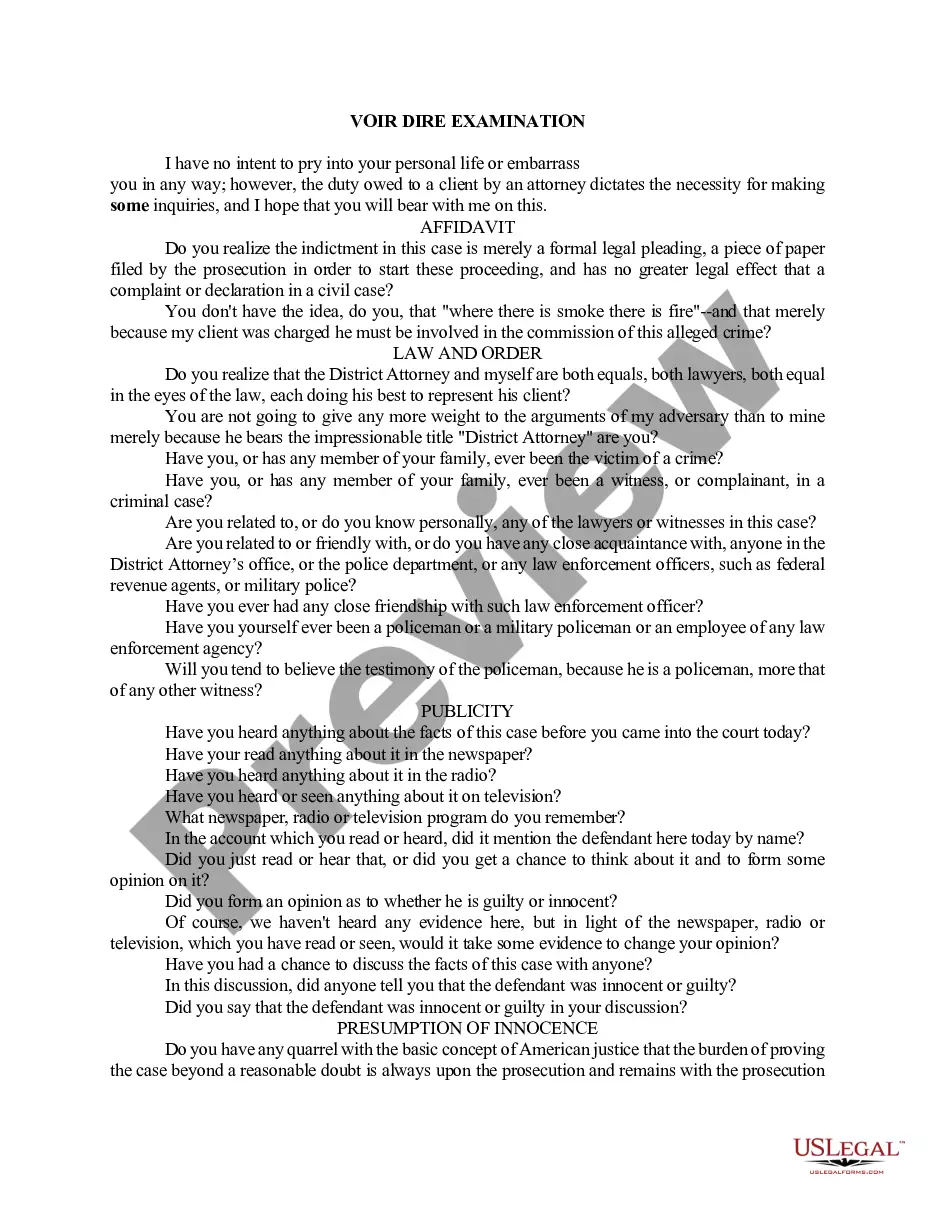
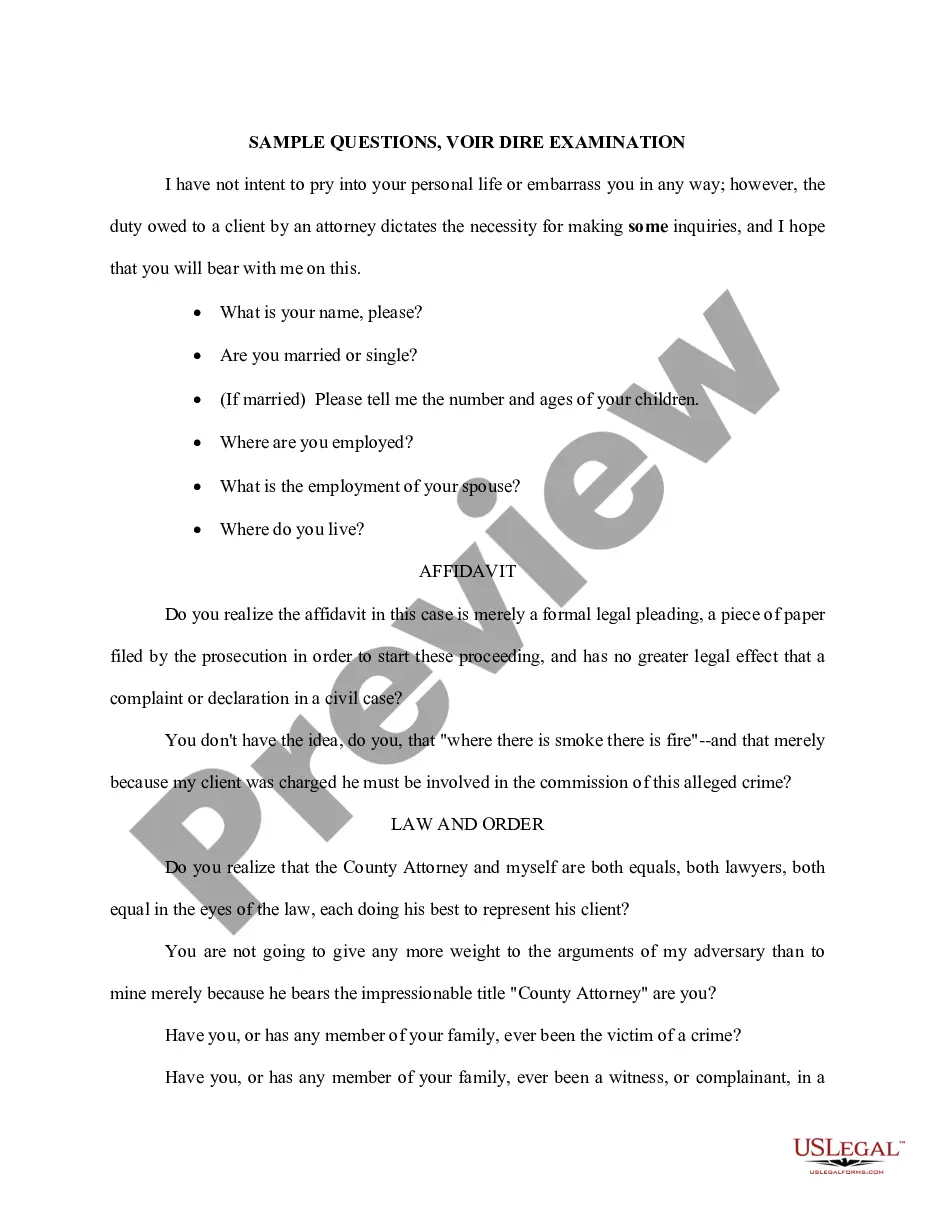
Benefits of jury questionnaires Jurors are more likely to reveal their true beliefs and disclose more information in a questionnaire as opposed to in open court, where they may censor their responses because of social-desirability effects, pressure from the judge to ?be fair,? and a desire to keep out of the spotlight.
You do not need any special skills or legal knowledge to be a juror. All you need is an open mind and a readiness to work with the other jurors to make decisions. You also need to be impartial?in other words, your decisions must not be influenced by personal feelings and biases.
Size and unanimity Size and unanimity. Traditionally, the jury had 12 members and was required to reach its decision with unanimity. ... Sentencing. In civil cases the jury decides both issues of liability and the amount of damages. ... Control. Trial by jury is conducted under the supervision of a judge.
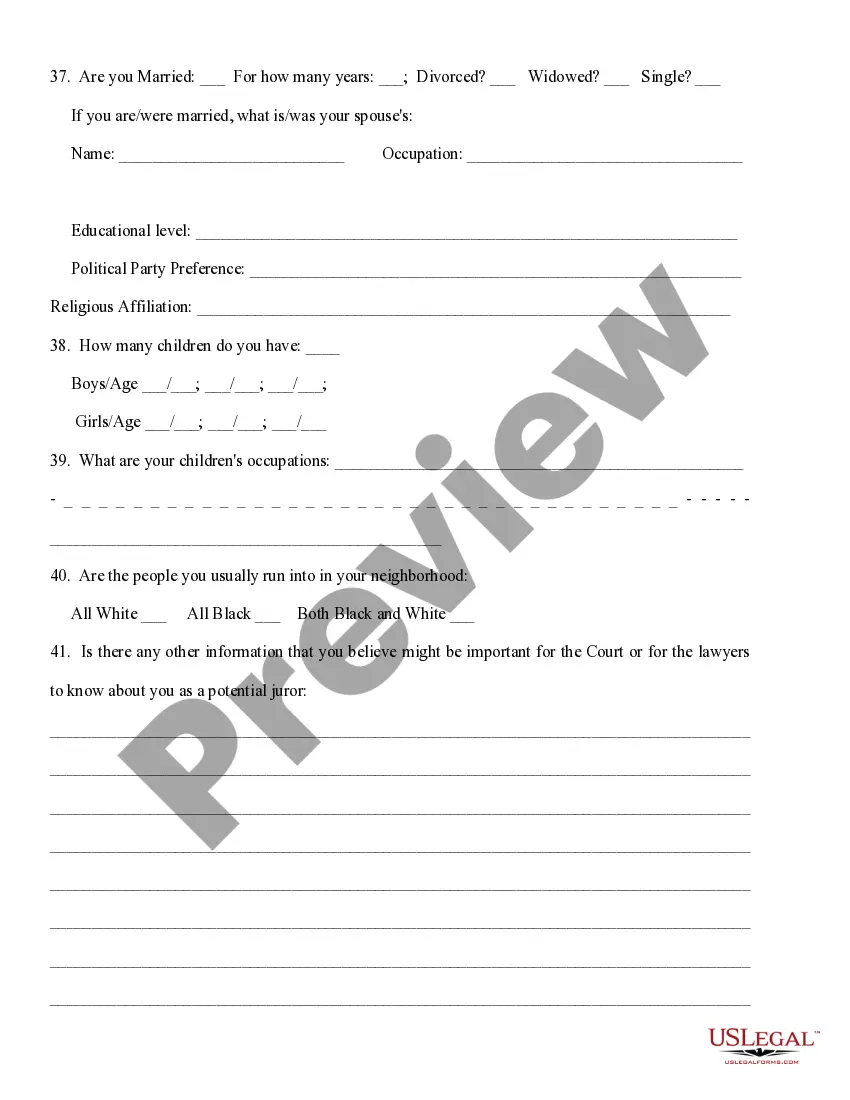
Often, jurors will be asked to state the neighborhood or area they live in, their profession, whether they have children, are married, and so on. This kind of information helps the judge and lawyers get a feel for the potential jurors, and might even inform an attorney's decision to use a challenge on someone.
A person does not qualify to serve if the person is any of the following: under a sentence for a felony conviction; a former juror who served on a state or federal grand or petit jury in the past four years; or a judge serving in the judicial branch.
They must have both integrity and good judgment. The jury system is based on these attributes. The continued vitality of the jury system depends on them. To meet their responsibility, jurors must decide the facts and apply the law impartially.