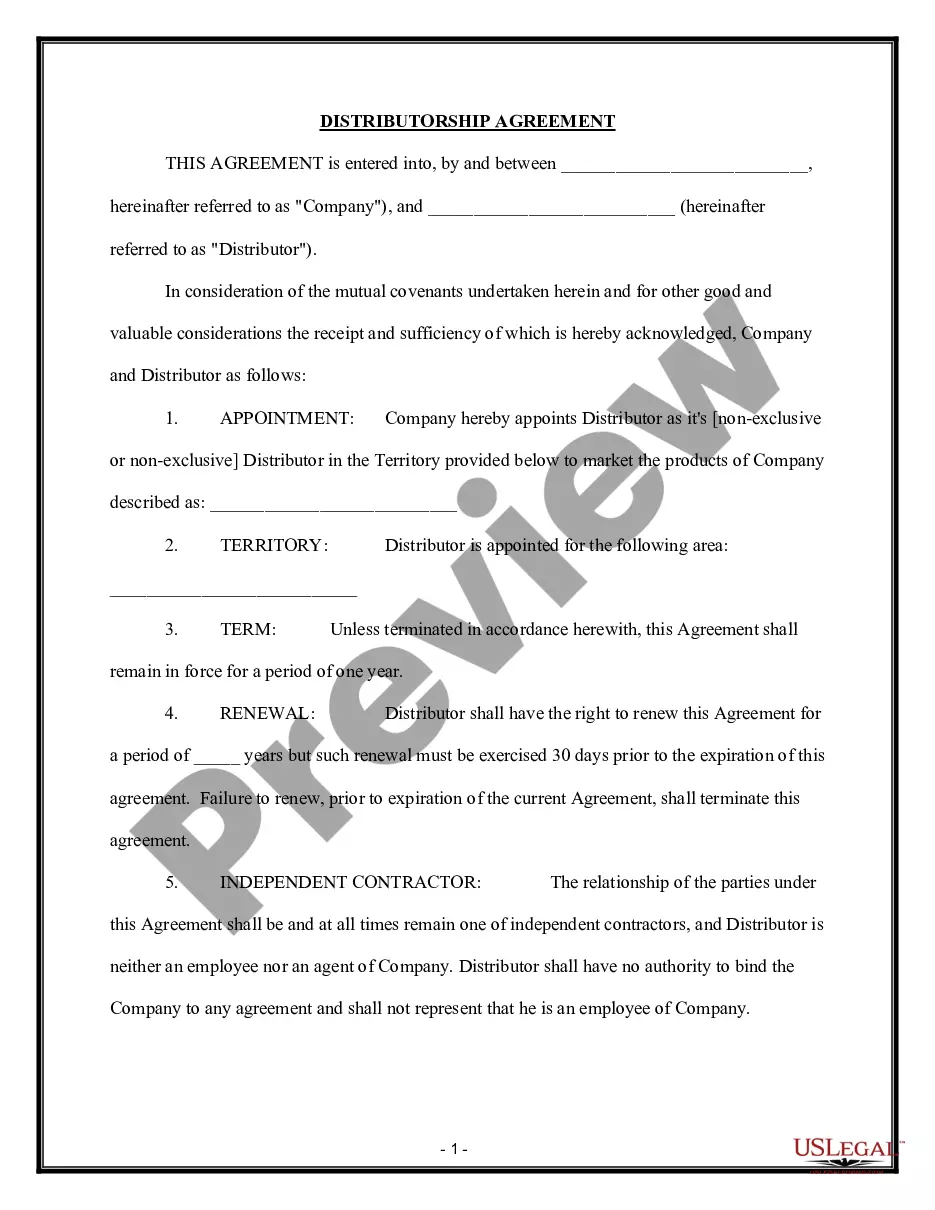
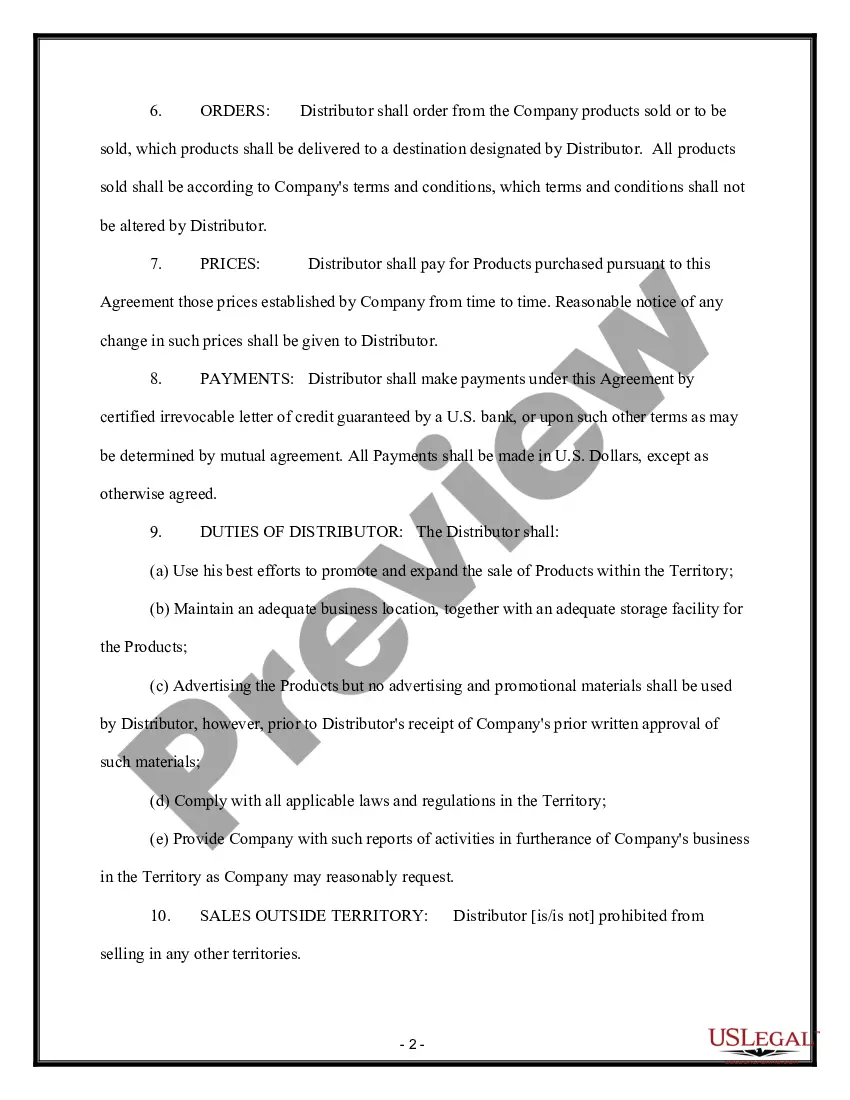
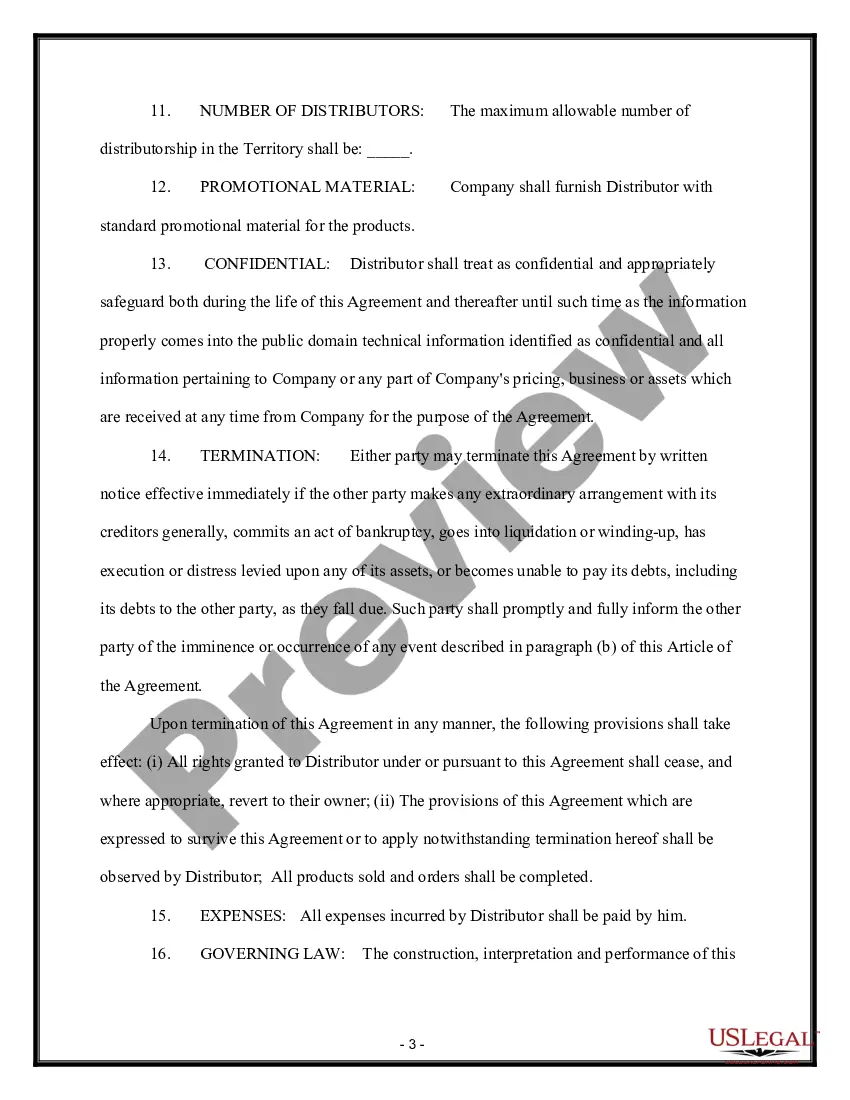
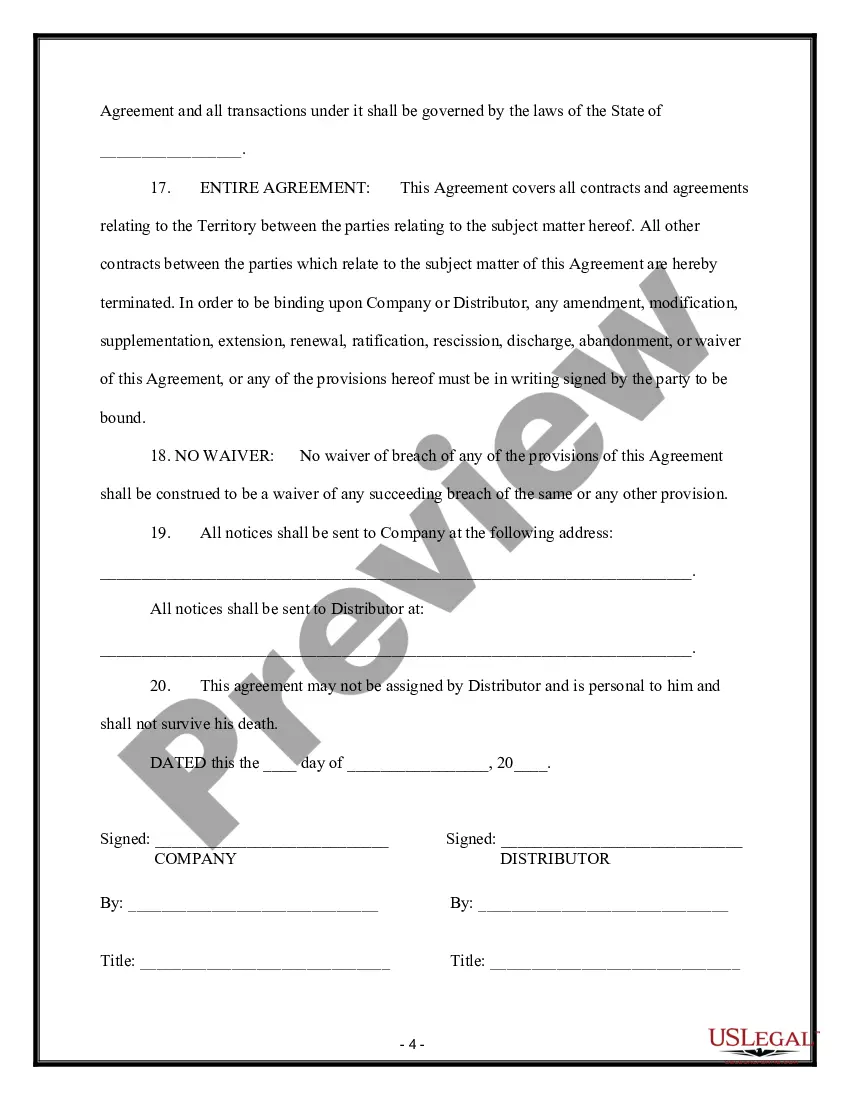
Minnesota Distributorship Agreement
Description

Get your form ready online
Our built-in tools help you complete, sign, share, and store your documents in one place.
Make edits, fill in missing information, and update formatting in US Legal Forms—just like you would in MS Word.
Download a copy, print it, send it by email, or mail it via USPS—whatever works best for your next step.
Sign and collect signatures with our SignNow integration. Send to multiple recipients, set reminders, and more. Go Premium to unlock E-Sign.
If this form requires notarization, complete it online through a secure video call—no need to meet a notary in person or wait for an appointment.
We protect your documents and personal data by following strict security and privacy standards.

Make edits, fill in missing information, and update formatting in US Legal Forms—just like you would in MS Word.

Download a copy, print it, send it by email, or mail it via USPS—whatever works best for your next step.

Sign and collect signatures with our SignNow integration. Send to multiple recipients, set reminders, and more. Go Premium to unlock E-Sign.

If this form requires notarization, complete it online through a secure video call—no need to meet a notary in person or wait for an appointment.

We protect your documents and personal data by following strict security and privacy standards.
Looking for another form?
How to fill out Distributorship Agreement?
You can spend time online attempting to locate the legal document template that meets the federal and state criteria you require.
US Legal Forms offers a vast array of legal documents that have been reviewed by professionals.
It is easy to obtain or print the Minnesota Distributorship Agreement from our platform.
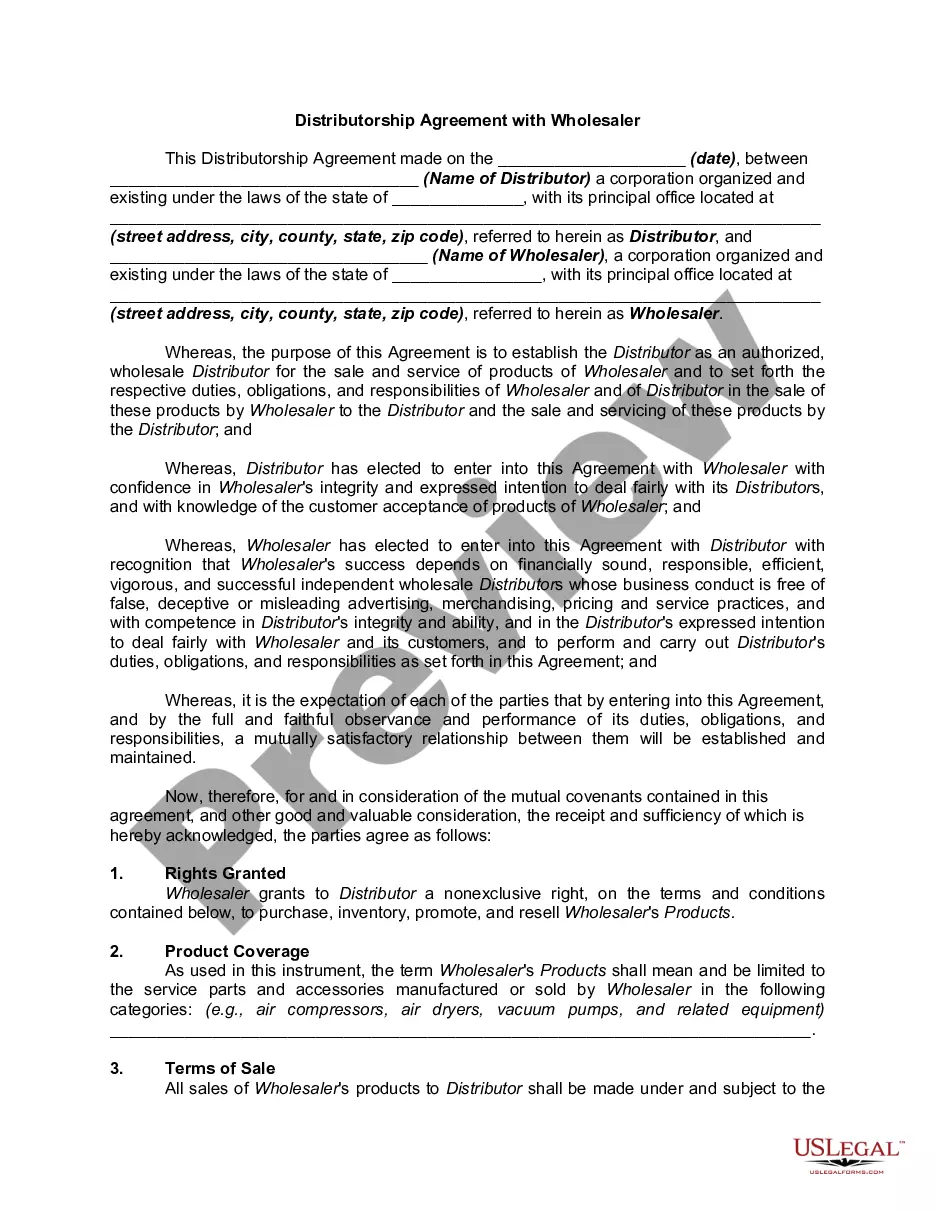
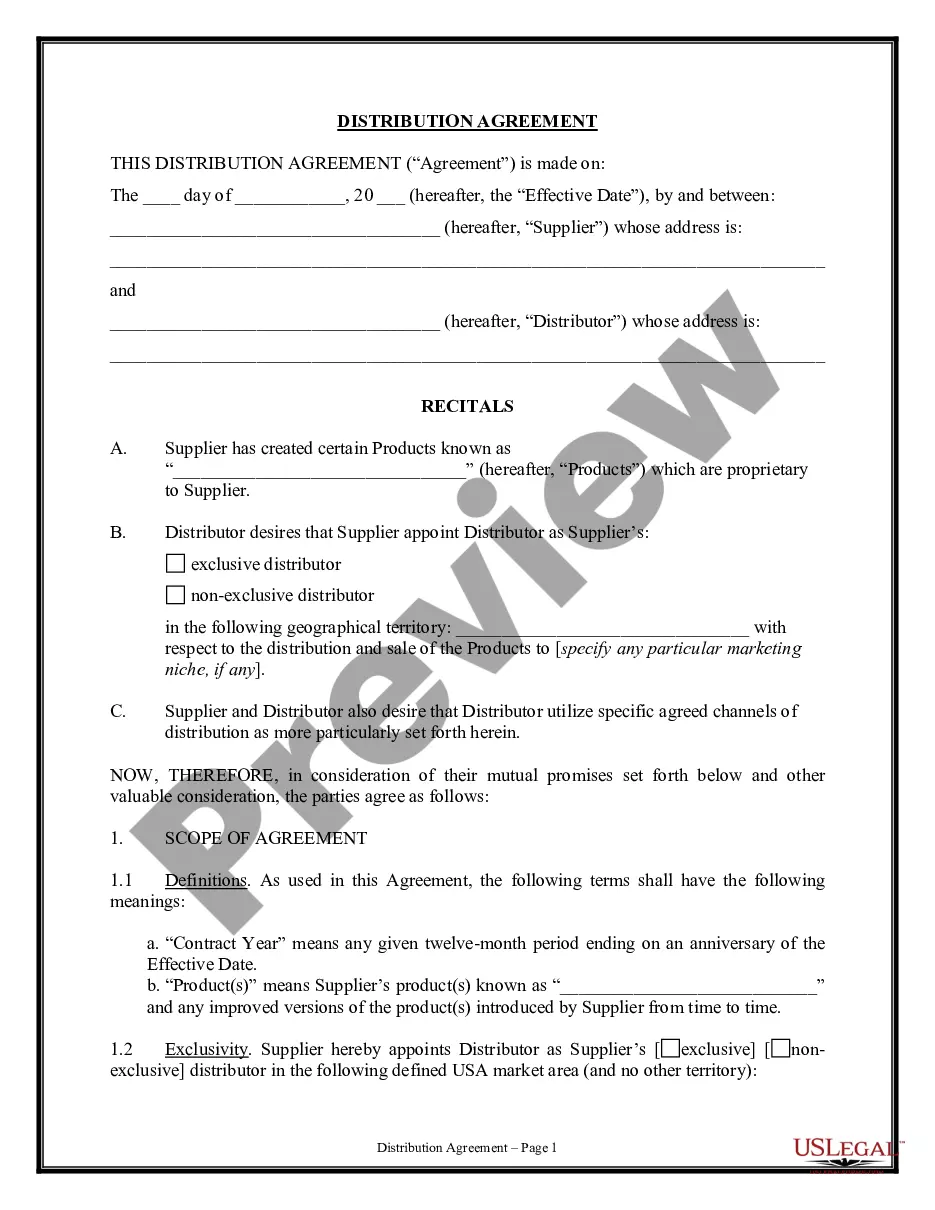
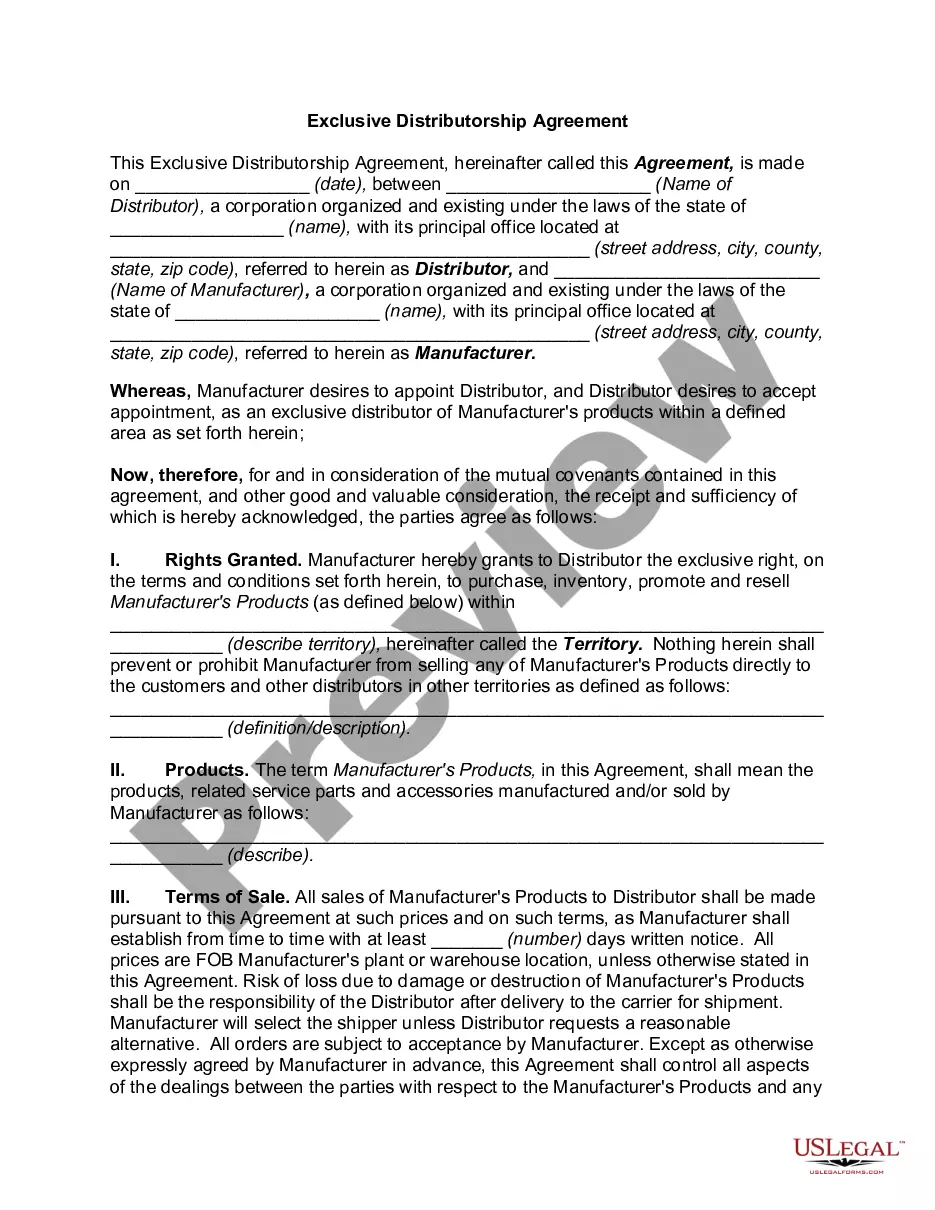
If available, take advantage of the Review button to look through the document template as well.
- If you already possess a US Legal Forms account, you may Log In and press the Download button.
- Subsequently, you can complete, modify, print, or sign the Minnesota Distributorship Agreement.
- Every legal document template you obtain is yours indefinitely.
- To retrieve another copy of a purchased form, go to the My documents section and click on the appropriate button.
- If you are utilizing the US Legal Forms site for the first time, follow the simple guidelines outlined below.
- First, ensure you have selected the correct document template for the region/city of your choice.
- Check the form description to confirm you have selected the accurate form.
Form popularity
FAQ
A distributor and a dealer perform distinct roles in the supply chain. A distributor purchases products directly from manufacturers and sells them to retailers or end users, while a dealer typically sells products directly to consumers. Understanding these differences is important for creating the right Minnesota Distributorship Agreement, which outlines responsibilities and relationships.
A Minnesota Distributorship Agreement typically focuses on the wholesale distribution of products to retailers or end-users, whereas a dealer agreement usually involves the resale of products directly to consumers at a retail level. The distributor takes on more responsibilities related to inventory and sales distribution, while dealers focus on selling the products directly. Understanding this distinction can help you choose the right agreement for your business model.
To create a Minnesota Distributorship Agreement, begin by gathering key information about the parties involved, the products, and the market environment. Next, structure the document to include essential clauses like termination conditions and dispute resolution methods. If you need guidance, consider using the ulegalforms platform to ensure your agreement meets legal standards.
A Minnesota Distributorship Agreement typically ranges from one to five years. The length often depends on the relationship between the distributor and supplier, as well as the specific market conditions. It's essential to define a term that allows both parties to evaluate performance and market dynamics.
To write up a simple agreement, start by clearly stating the names and roles of all parties involved. Outline the primary terms without unnecessary complexity. For instance, a Minnesota Distributorship Agreement should mention product details, distribution areas, and any financial terms in a straightforward manner.
Filling out a commission agreement involves detailing the terms of the commission structure and the responsibilities of each party. In a Minnesota Distributorship Agreement, specify the commission percentage, payment schedule, and any conditions that may affect the commissions. Accuracy in these details promotes transparency and understanding.
To fill out an agreement, first, gather all necessary information about the parties and the subject matter. Carefully enter this information in the designated sections of the Minnesota Distributorship Agreement. Be sure to double-check for accuracy and completeness before any signatures are added.
Filling out an agreement requires careful attention to detail. Begin by entering the names and contact information of both parties involved in the Minnesota Distributorship Agreement. Next, include all relevant terms, conditions, and signatures to finalize the document.
An example of a commission policy within a Minnesota Distributorship Agreement might include a tiered commission structure based on sales volume. This policy promotes higher sales by rewarding greater performance. Clear communication of this policy ensures that all parties understand how commissions are calculated.
Writing a simple commission agreement involves outlining the specific terms of commission earnings and obligations. Start with basic details such as the commission percentage and payment schedule. In a Minnesota Distributorship Agreement, it's vital to specify performance benchmarks that trigger commission payments.