Notice of Intent to Proceed to Judgment Pursuant to Minnesota General Rules Practice 306.01(b)
What this document covers
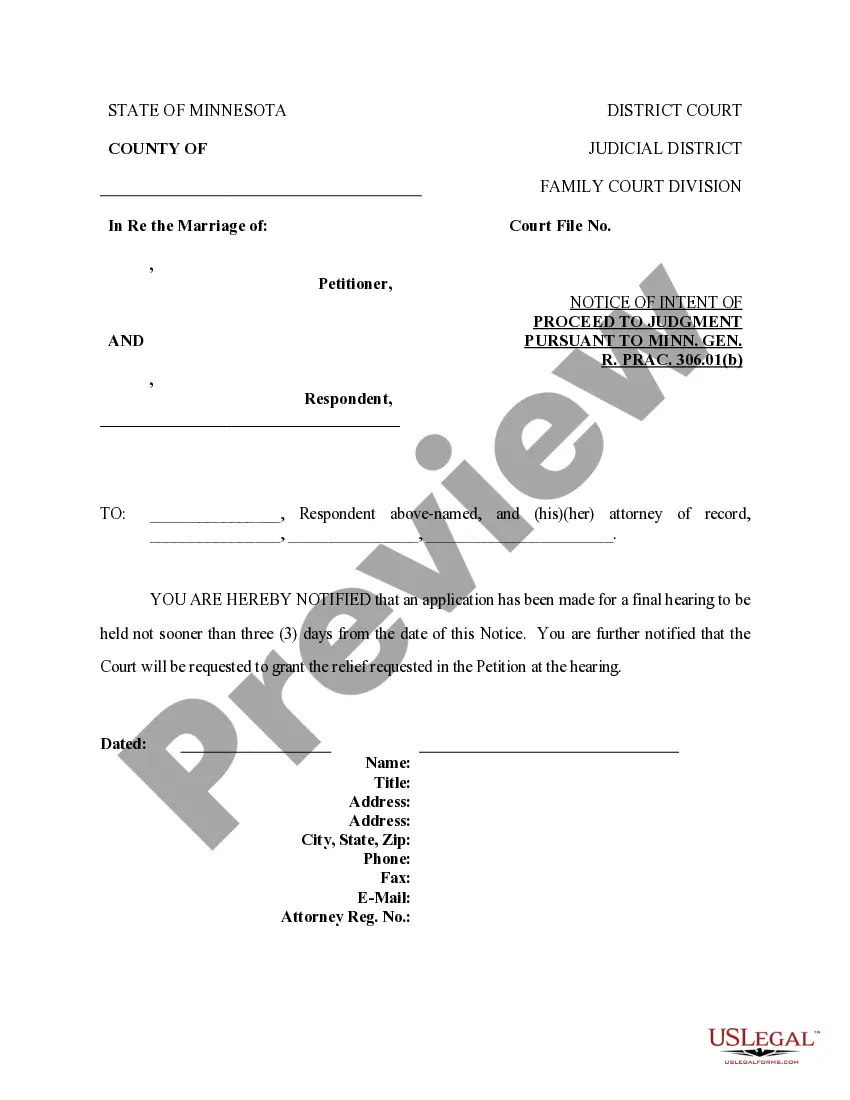
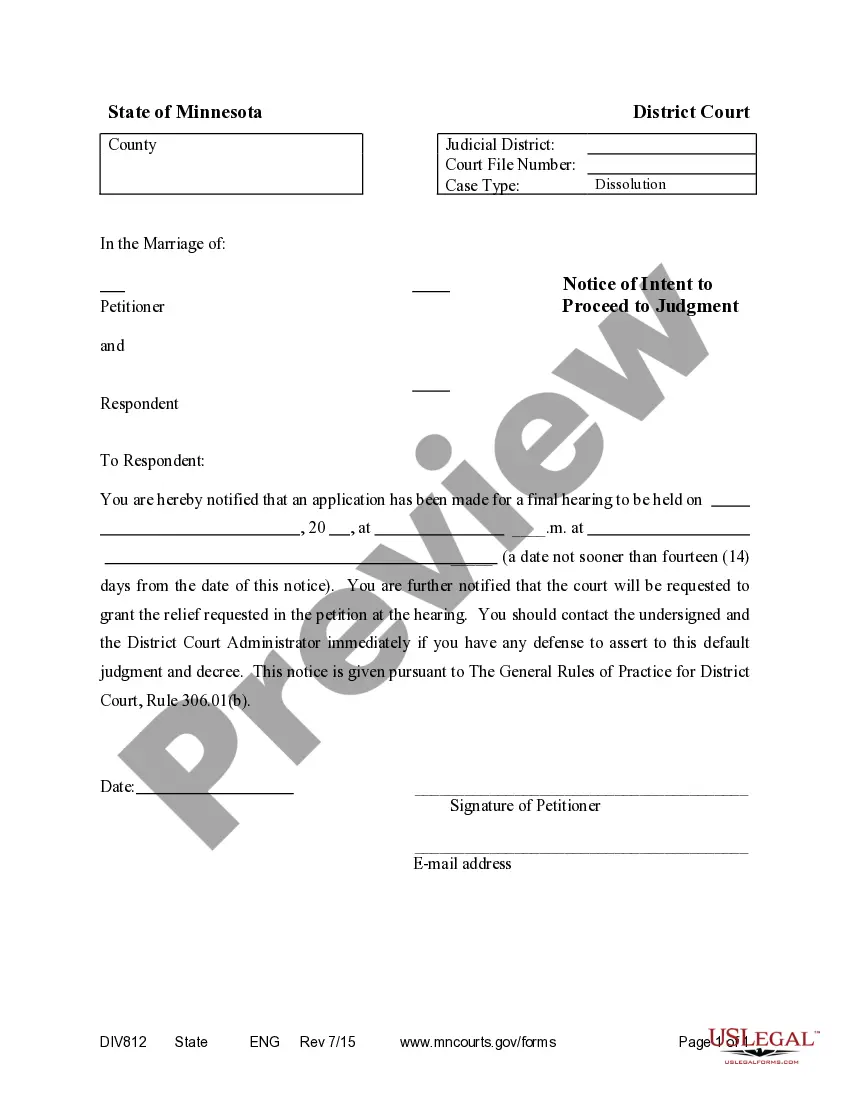
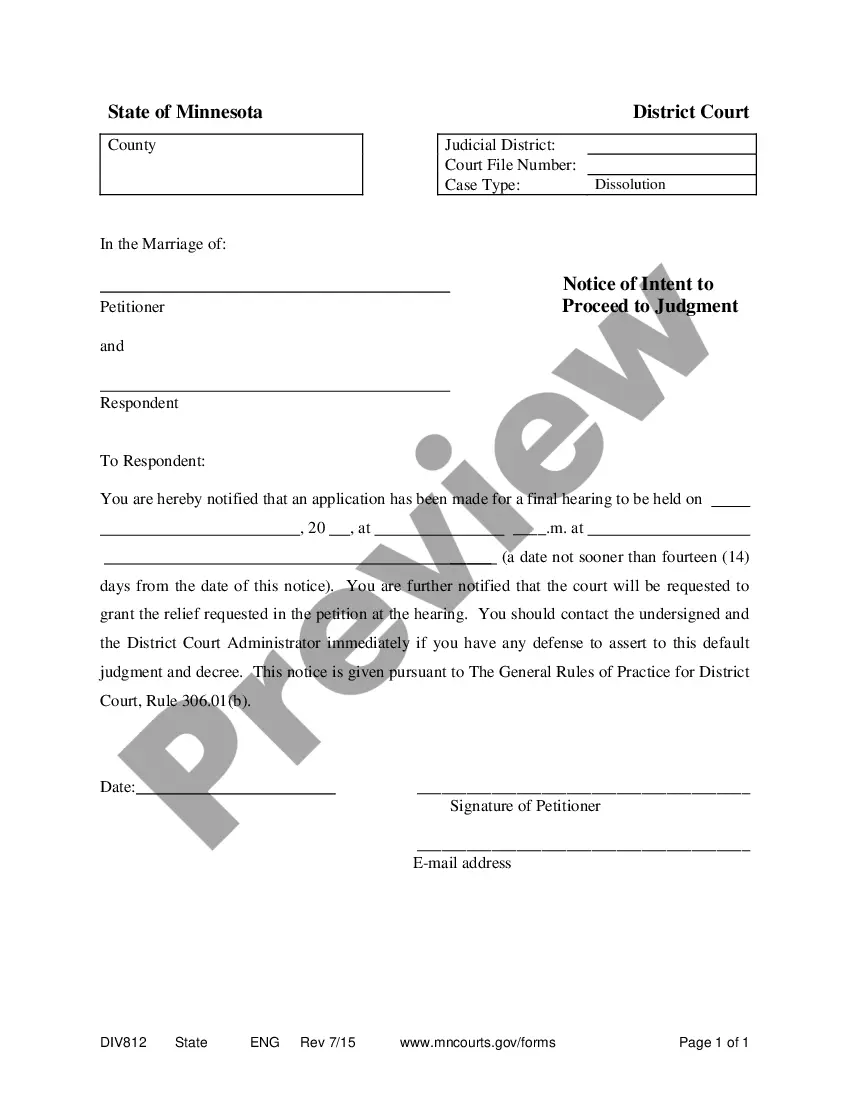
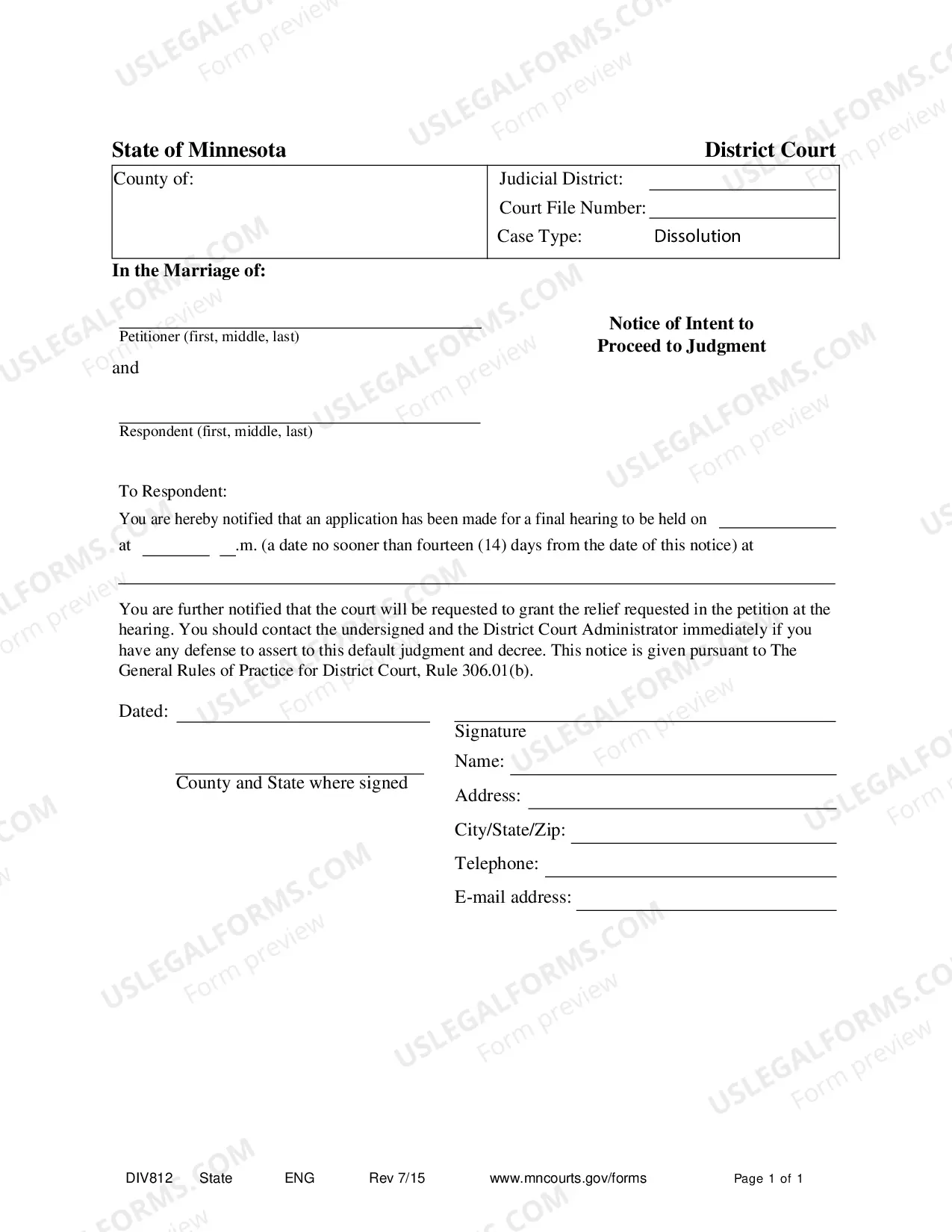
The Notice of Intent to Proceed to Judgment is a legal notification based on Minnesota General Rules of Practice 306.01(b). This form informs the respondent that an application has been made for a final hearing. It specifically states that the hearing will not occur sooner than three days from the date of the notice. This form is distinct as it emphasizes the timeline for the hearing, setting it apart from other procedural forms in Minnesota law.
Key parts of this document
- Date of the notice
- Notification of intent to hold a final hearing
- Statement that the hearing will occur no sooner than three days from the date of this notice
- Request for the court to grant the relief stated in the petition
When to use this document
This form should be used when a party in a legal proceeding intends to move forward with a request for a court judgment. It is commonly utilized in civil cases where a party has filed a petition and needs to notify the opposing party of a scheduled hearing date, enabling them to prepare for the upcoming court proceedings.
Who needs this form
This form is intended for:
- Petitioners who have filed a case in Minnesota courts
- Respondents who are parties to the case and will be notified of the hearing
- Legal representatives assisting clients in civil litigation
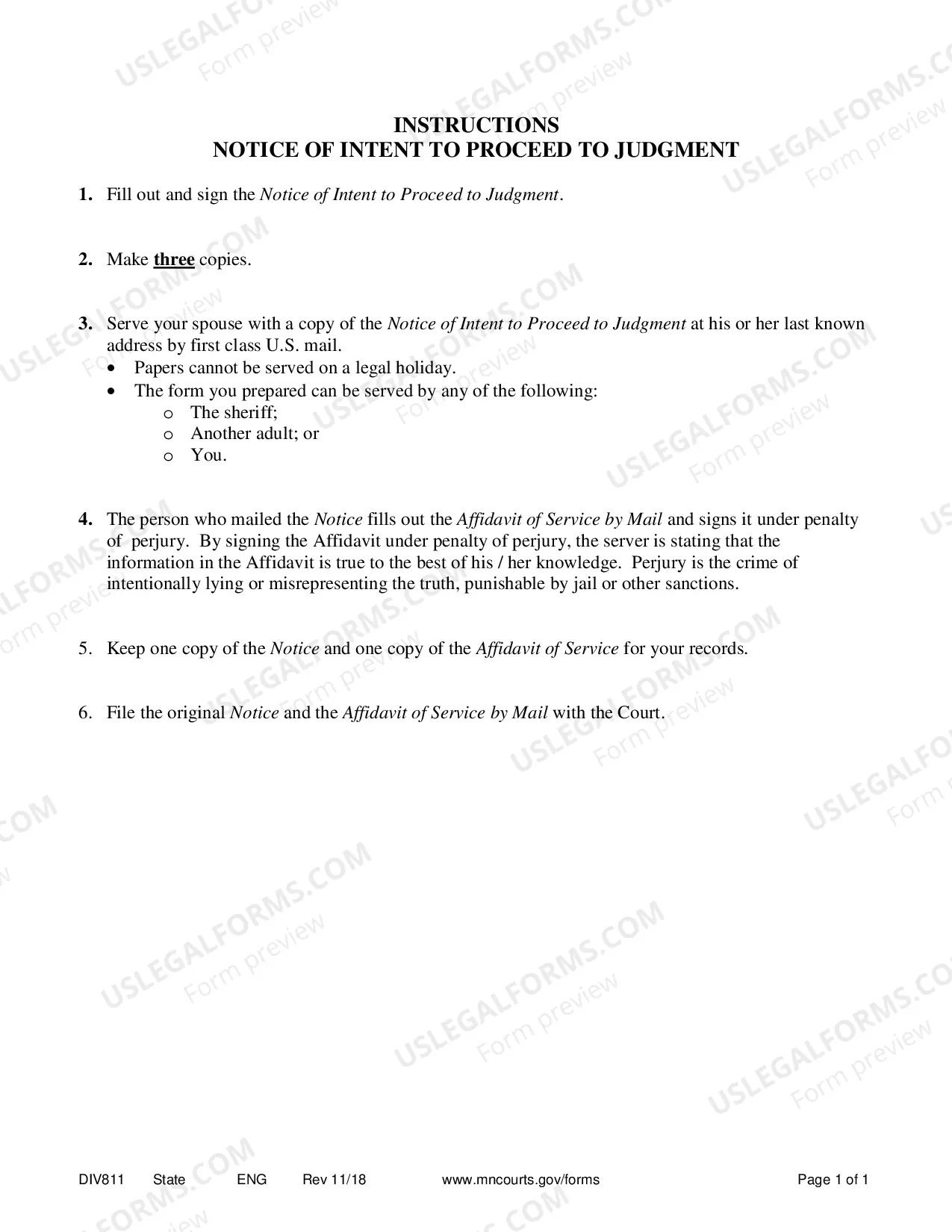
How to prepare this document
- Enter the date of the notice at the top of the form.
- Clearly state the intent to proceed with the application for a final hearing.
- Specify the timeline indicating that the hearing cannot be held sooner than three days from the notice date.
- Request the court to grant the relief as outlined in the petition.
- Sign and date the form to validate it.
Does this form need to be notarized?
This form usually doesn’t need to be notarized. However, local laws or specific transactions may require it. Our online notarization service, powered by Notarize, lets you complete it remotely through a secure video session, available 24/7.
Get your form ready online
Our built-in tools help you complete, sign, share, and store your documents in one place.
Make edits, fill in missing information, and update formatting in US Legal Forms—just like you would in MS Word.
Download a copy, print it, send it by email, or mail it via USPS—whatever works best for your next step.
Sign and collect signatures with our SignNow integration. Send to multiple recipients, set reminders, and more. Go Premium to unlock E-Sign.
If this form requires notarization, complete it online through a secure video call—no need to meet a notary in person or wait for an appointment.
We protect your documents and personal data by following strict security and privacy standards.

Make edits, fill in missing information, and update formatting in US Legal Forms—just like you would in MS Word.

Download a copy, print it, send it by email, or mail it via USPS—whatever works best for your next step.

Sign and collect signatures with our SignNow integration. Send to multiple recipients, set reminders, and more. Go Premium to unlock E-Sign.

If this form requires notarization, complete it online through a secure video call—no need to meet a notary in person or wait for an appointment.

We protect your documents and personal data by following strict security and privacy standards.
Mistakes to watch out for
- Failing to provide the correct date of notice.
- Not allowing the minimum three-day notice period before the hearing.
- Neglecting to sign the form before submission.
- Omitting clear details regarding the requested relief in the petition.
Why use this form online
- Convenience: Download and complete the form at your own pace.
- Editability: Easily fill in the required information on any device.
- Reliability: Access forms drafted by licensed attorneys, ensuring legal compliance.
Looking for another form?


Form popularity
FAQ
The Minnesota General Rules of Practice are a set of guidelines that govern court procedures in the state. These rules cover various aspects, including filing documents, court appearances, and the conduct of trials. Being knowledgeable about these rules, especially the Notice of Intent to Proceed to Judgment Pursuant to Minnesota General Rules Practice 306.01(b), ensures that you are well-prepared for your legal proceedings. Our platform offers resources and templates to help you understand and comply with these rules effectively.
The duration of an uncontested divorce varies by state, but it generally falls within a range of a few weeks to several months. Factors such as local court processes and the efficiency of the parties involved can impact the timeline. Familiarizing yourself with the Notice of Intent to Proceed to Judgment Pursuant to Minnesota General Rules Practice 306.01(b) can provide clarity on how to move forward efficiently. Utilizing our platform can simplify the entire process, ensuring you meet all necessary requirements.
In Minnesota, an uncontested divorce can typically take between 30 to 90 days from the time of filing to the final judgment. This timeline depends on several factors, including the court's schedule and the completion of necessary paperwork. If you are considering this route, being aware of the Notice of Intent to Proceed to Judgment Pursuant to Minnesota General Rules Practice 306.01(b) can help expedite your proceedings. Our platform can assist you in managing the required documents swiftly.
An offer of judgment in Minnesota is a formal proposal made by one party to settle a lawsuit before it goes to trial. This offer allows the other party to accept the terms and avoid further litigation costs. If the offer is rejected and the case proceeds to judgment, the rejecting party may face consequences outlined in the Notice of Intent to Proceed to Judgment Pursuant to Minnesota General Rules Practice 306.01(b). Understanding this process can help you navigate legal disputes more effectively.
After a default judgment is issued in a divorce case, the court typically grants the terms outlined in the petition. This may include decisions regarding property division, child custody, and support obligations. The parties are then required to adhere to the court's orders, which are enforceable by law. If you are navigating this process, understanding the Notice of Intent to Proceed to Judgment Pursuant to Minnesota General Rules Practice 306.01(b) is vital for ensuring compliance and protecting your rights.
Rule 37 addresses the consequences of failing to comply with discovery requests. This rule empowers the court to impose sanctions on parties who do not respond appropriately to requests for information. Sanctions can range from monetary penalties to striking pleadings. Being aware of these rules can help you navigate the process, especially when considering a Notice of Intent to Proceed to Judgment Pursuant to Minnesota General Rules Practice 306.01(b).
Rule 30 of the Minnesota Rules of Civil Procedure outlines the procedures for depositions in civil cases. This rule allows parties to take testimony from witnesses under oath before the trial. It is essential to follow these procedures to ensure that the testimony is admissible in court. Understanding the implications of the Notice of Intent to Proceed to Judgment Pursuant to Minnesota General Rules Practice 306.01(b) can be crucial when preparing for depositions.
A notice of default in a divorce is a legal document indicating that one party has failed to respond to a divorce petition or comply with court orders. This notice serves as a formal communication that the other party may proceed with the divorce process without their input. Understanding this notice is crucial, especially if you plan to file a Notice of Intent to Proceed to Judgment Pursuant to Minnesota General Rules Practice 306.01(b). If you need assistance with this process, US Legal Forms provides resources that can help you navigate the complexities of divorce proceedings.
Docketing a judgment in Minnesota requires submitting your judgment to the district court where the case was decided. This official record is essential for enforcement and public awareness. If you have received a Notice of Intent to Proceed to Judgment Pursuant to Minnesota General Rules Practice 306.01(b), it’s important to follow the proper steps to ensure your rights are maintained. Consider using USLegalForms for streamlined filing assistance.
Rule 69 in Minnesota relates to the enforcement of judgments and outlines the procedures for executing a judgment. It is critical to understand this rule, especially when dealing with a Notice of Intent to Proceed to Judgment Pursuant to Minnesota General Rules Practice 306.01(b). This rule helps ensure that the rights of the judgment creditor are upheld during the enforcement process. Familiarizing yourself with Rule 69 can assist in effectively managing your legal situation.