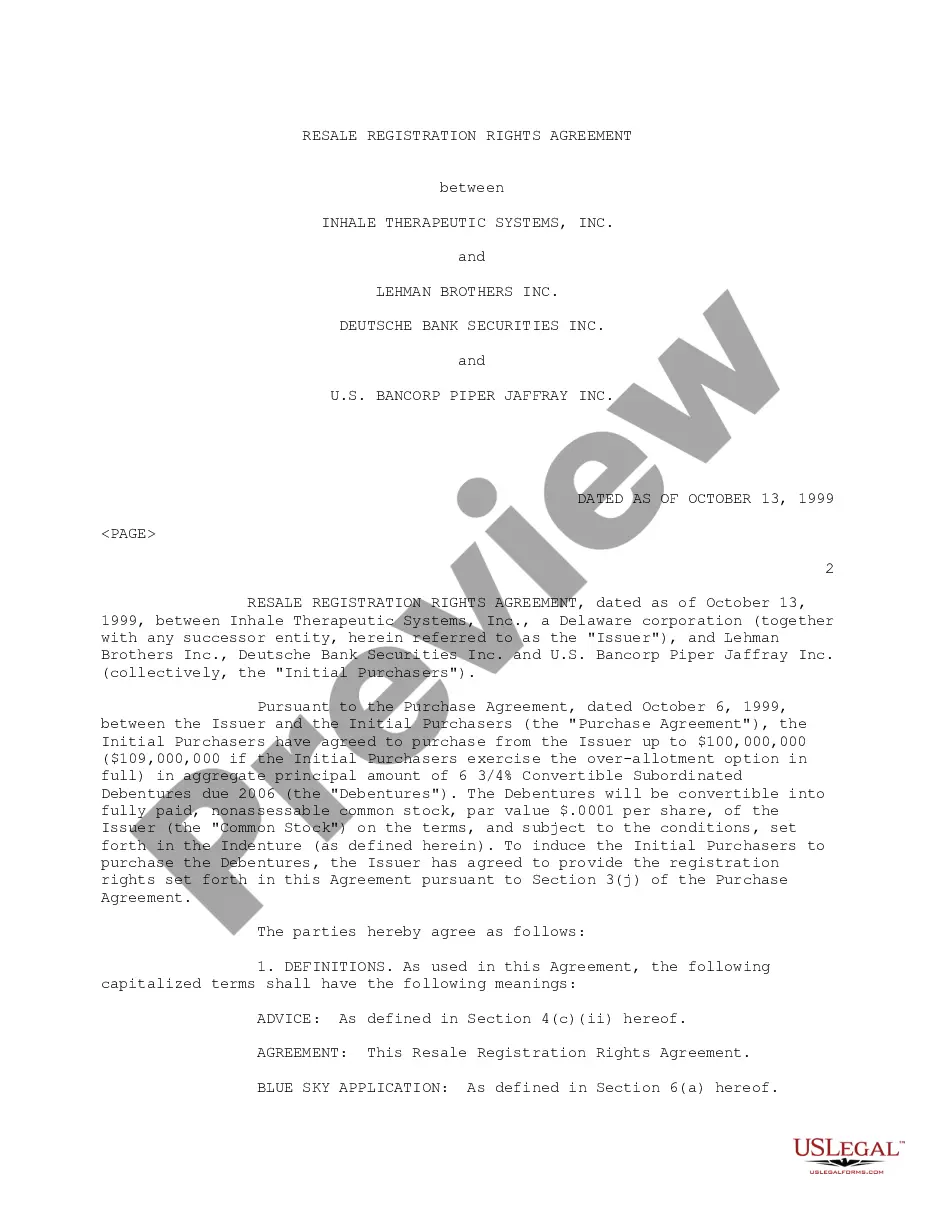
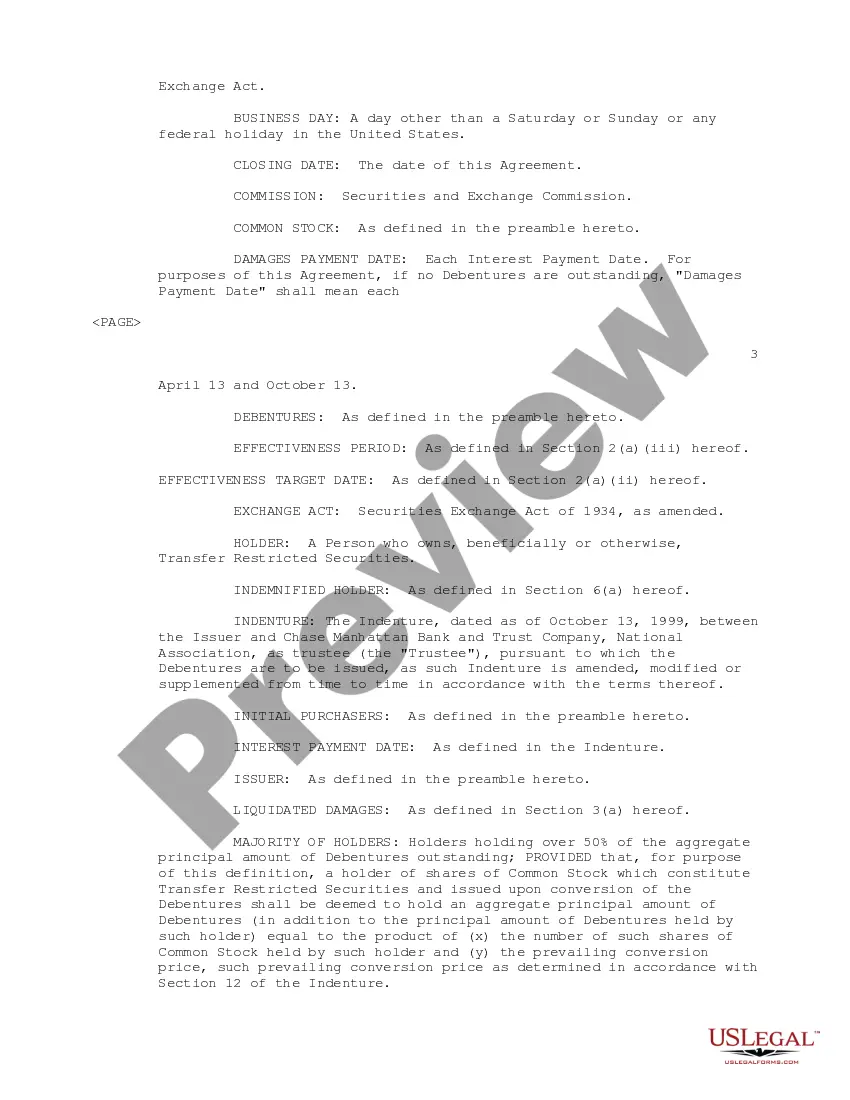
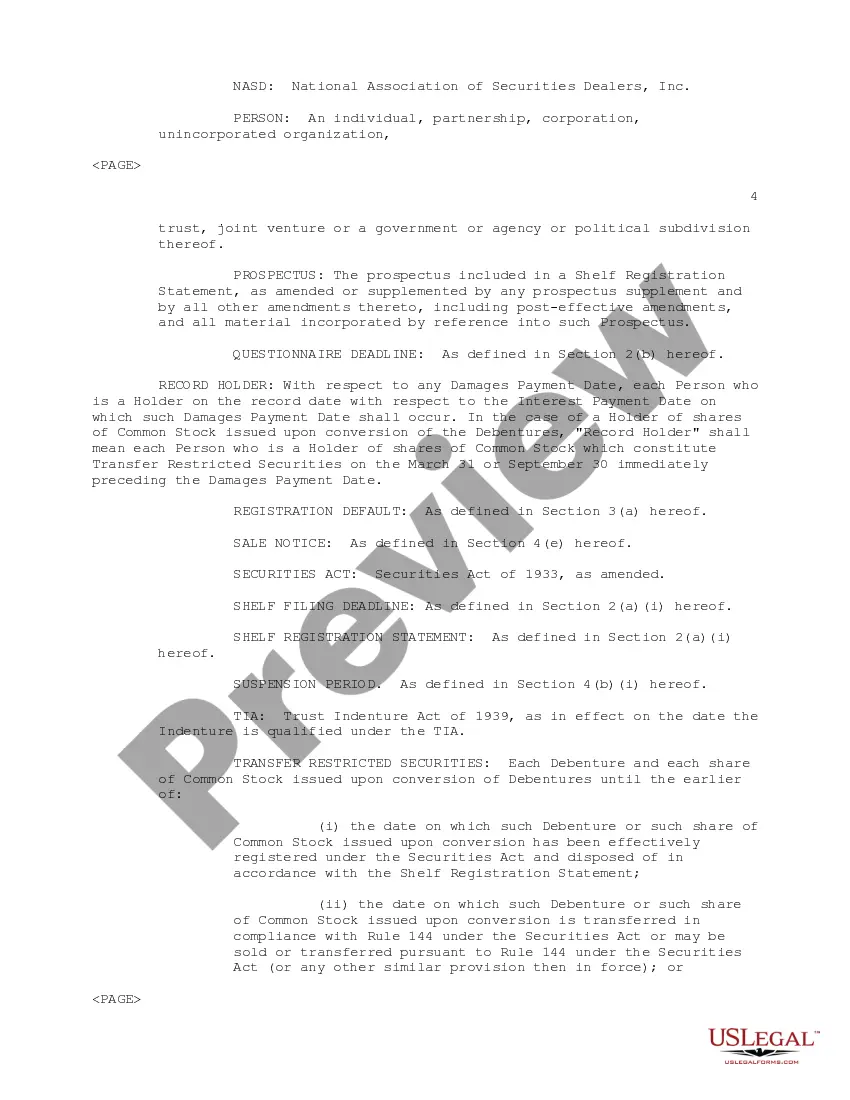
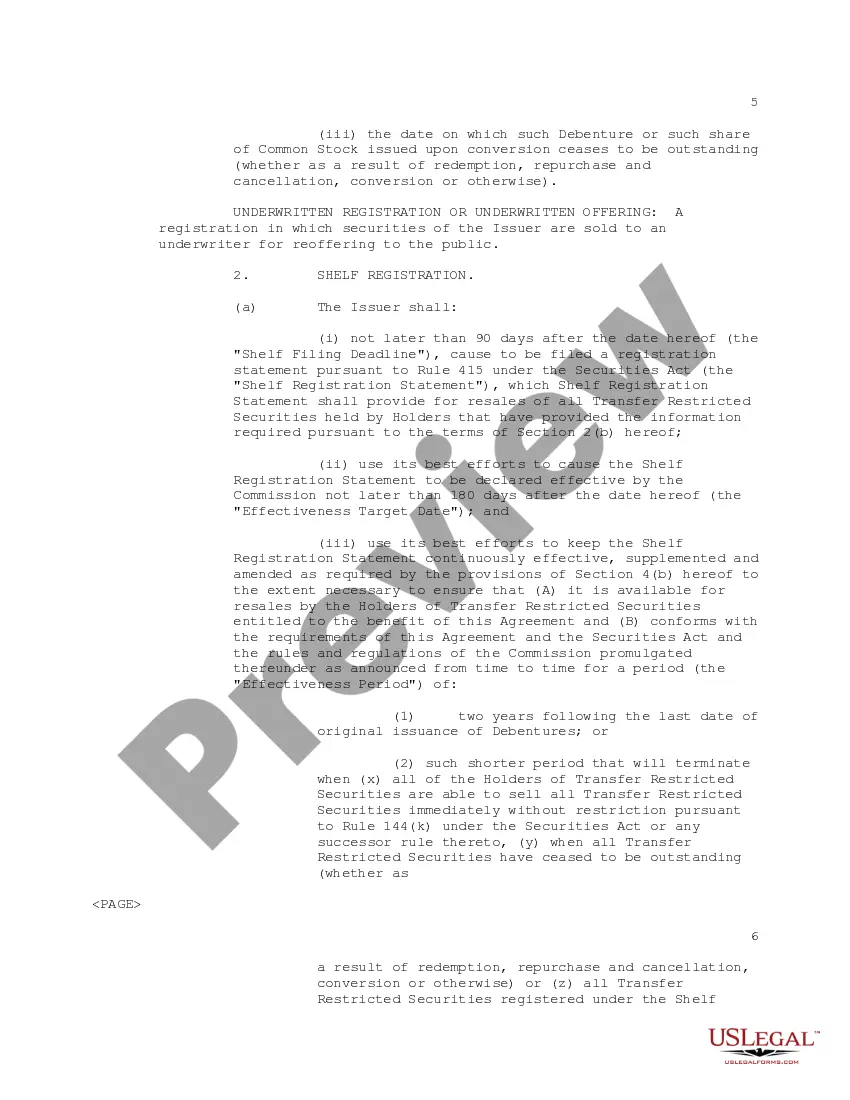
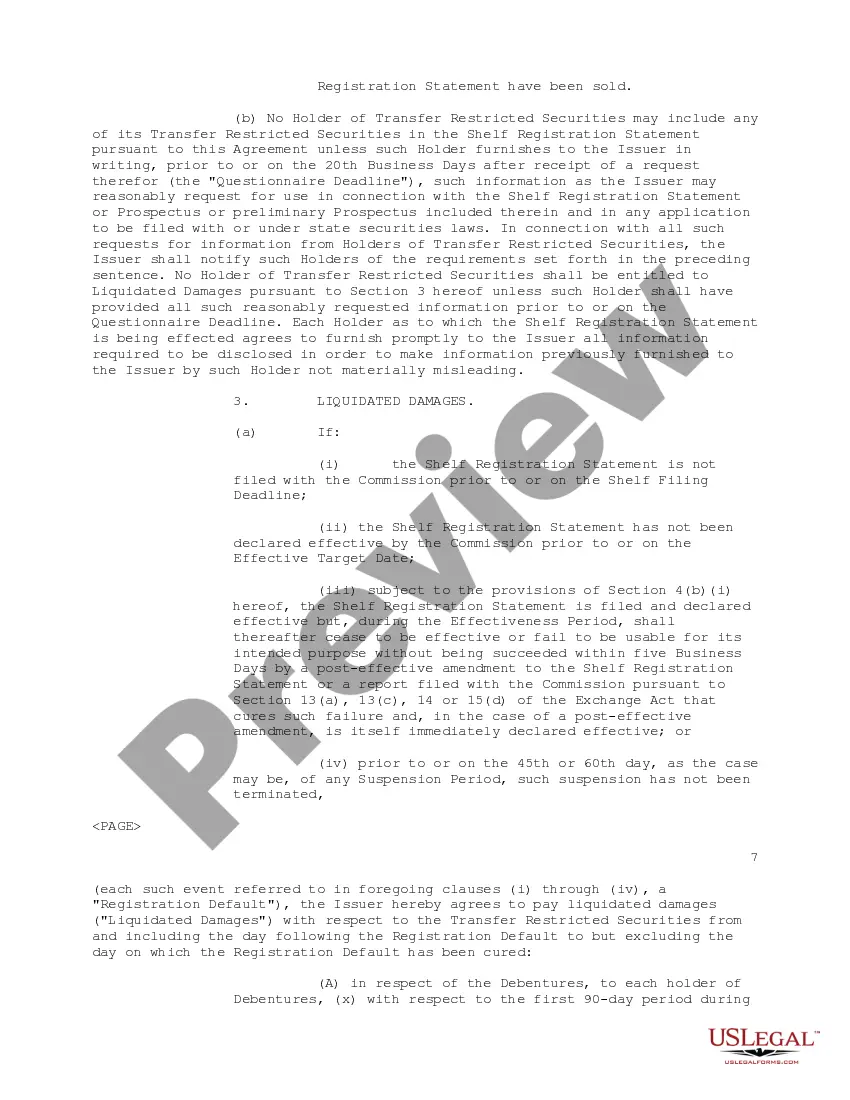
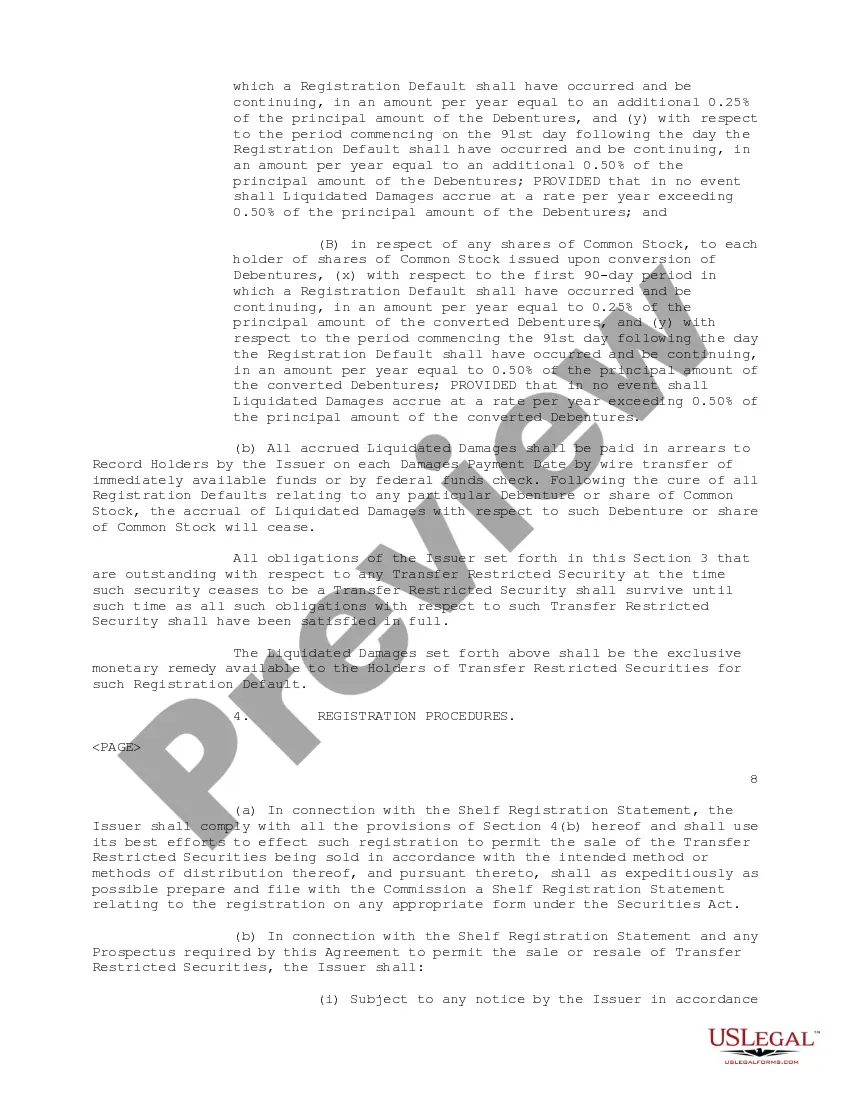
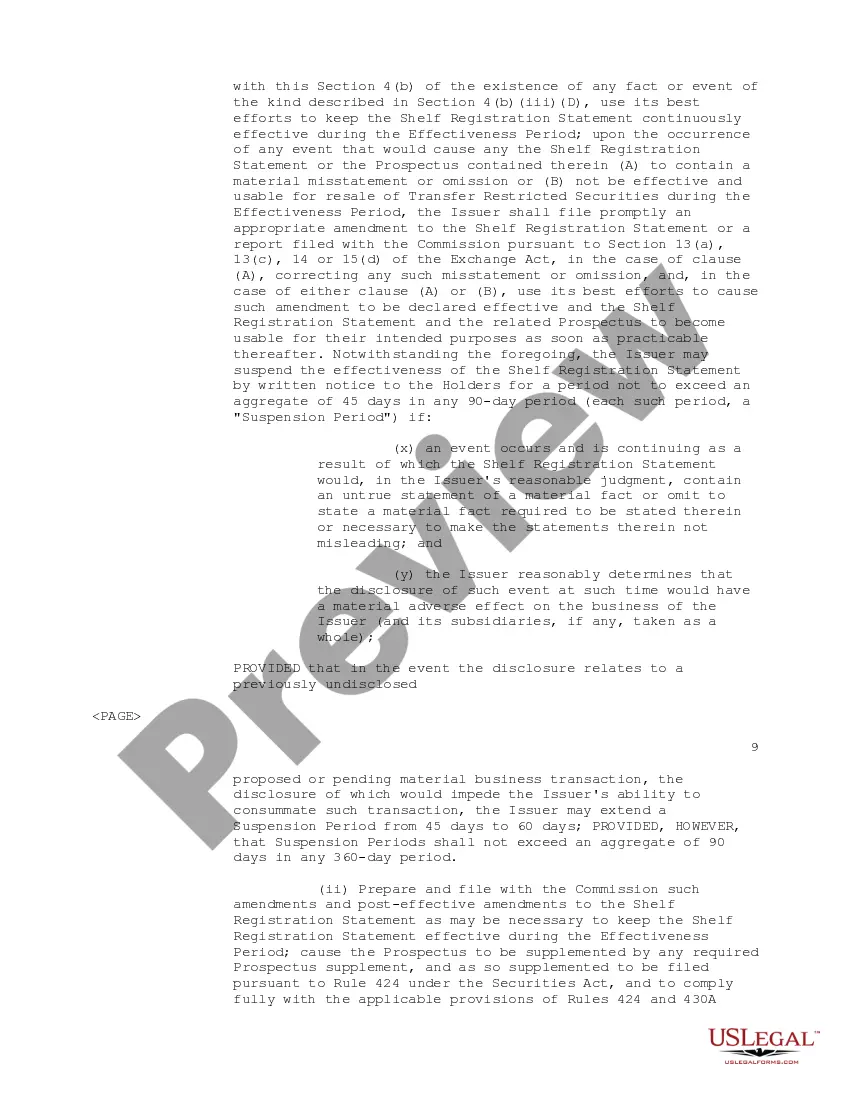
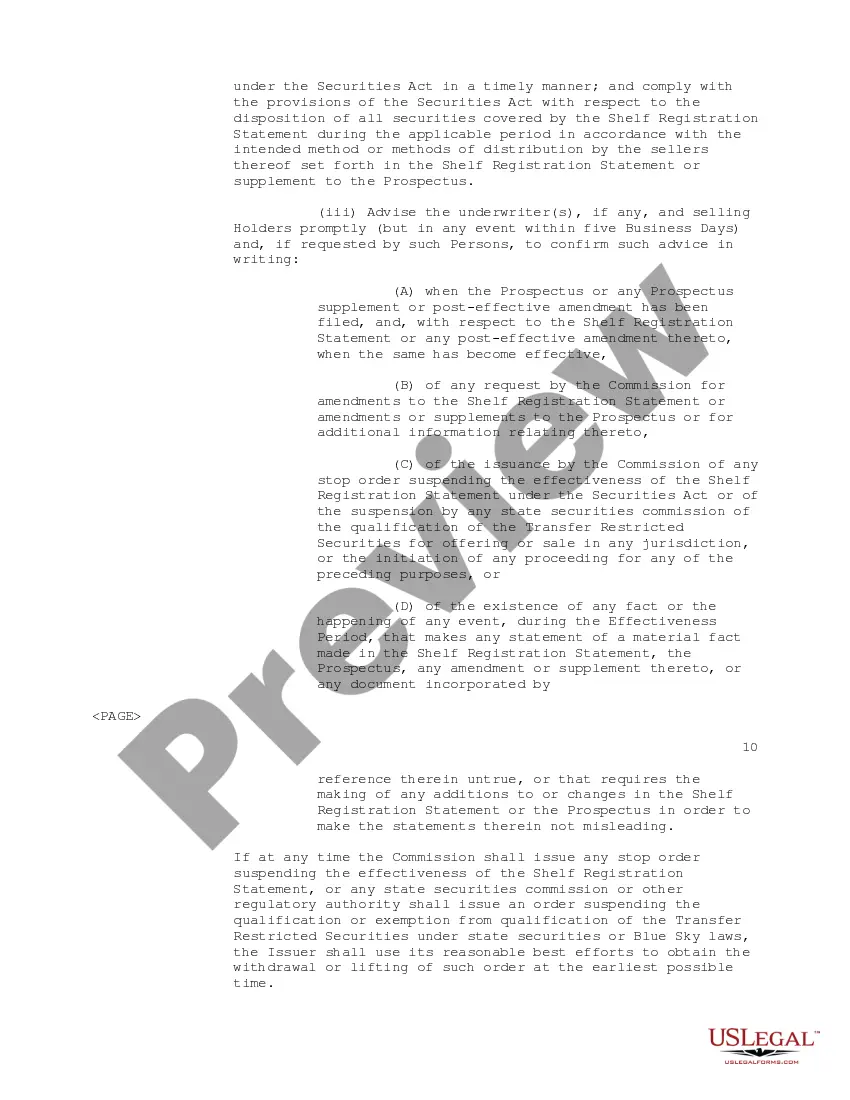
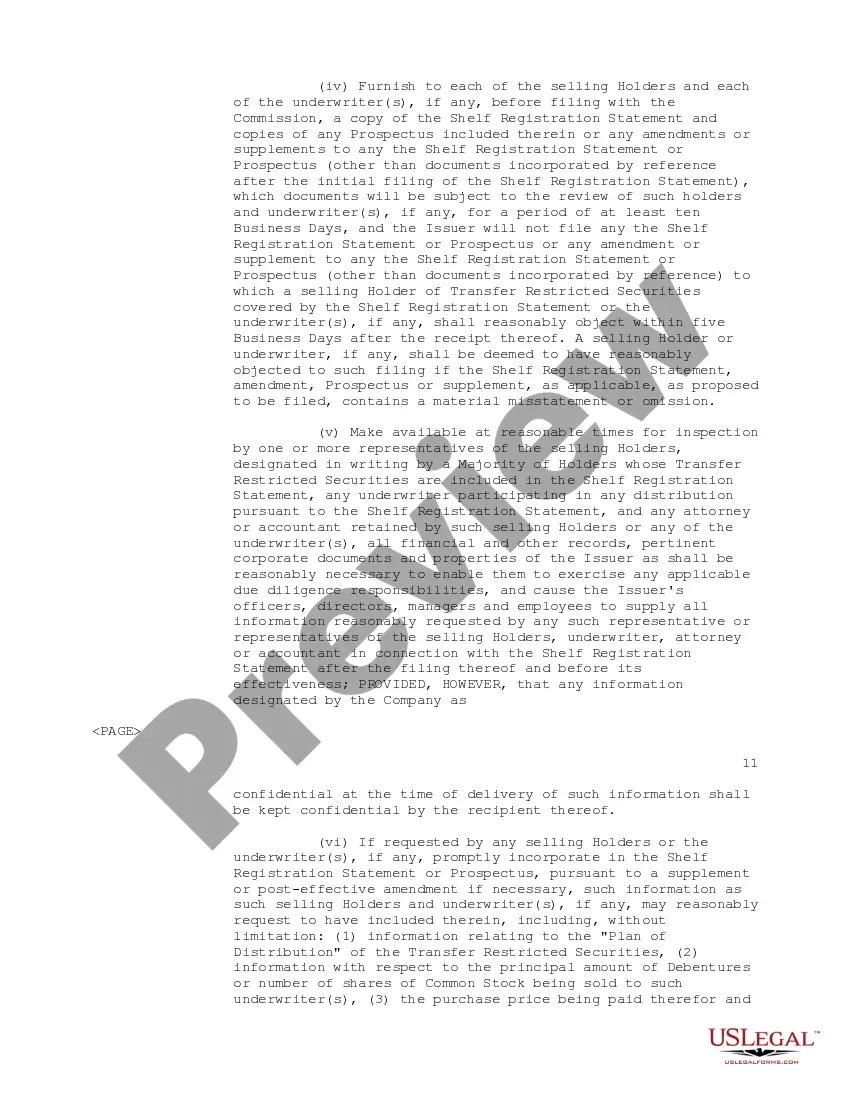
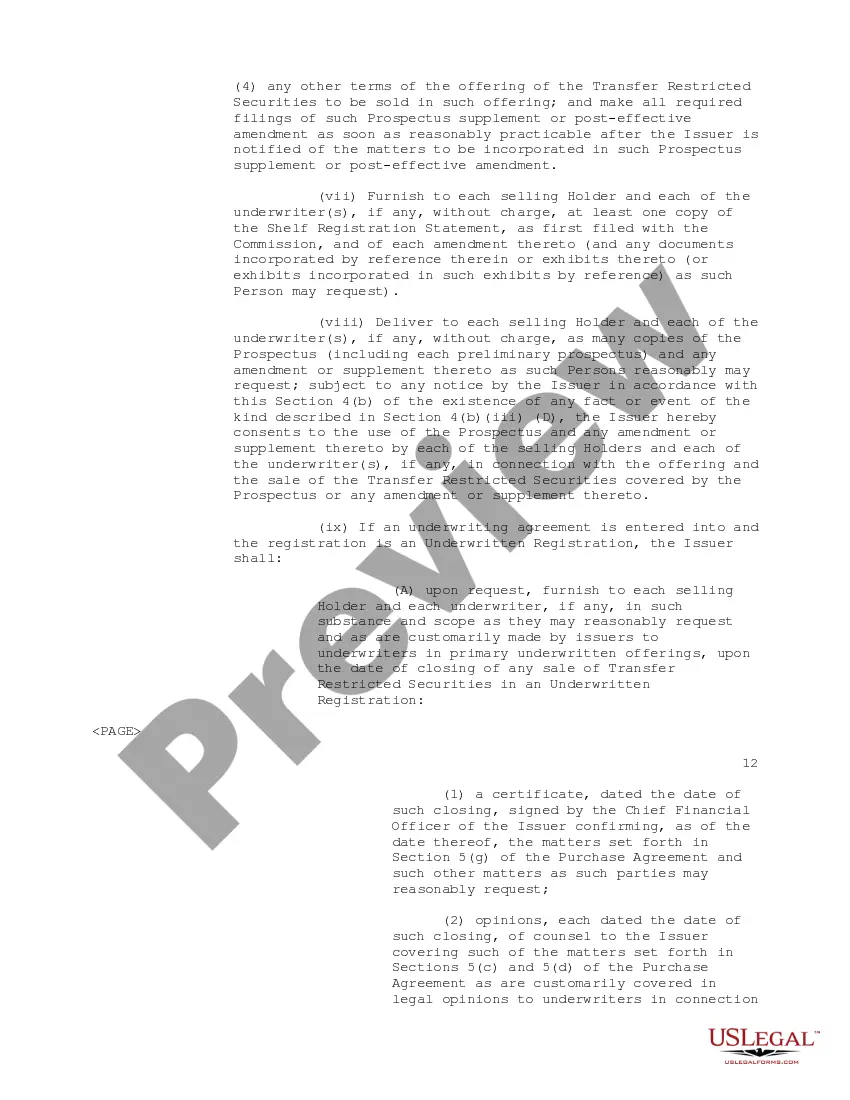
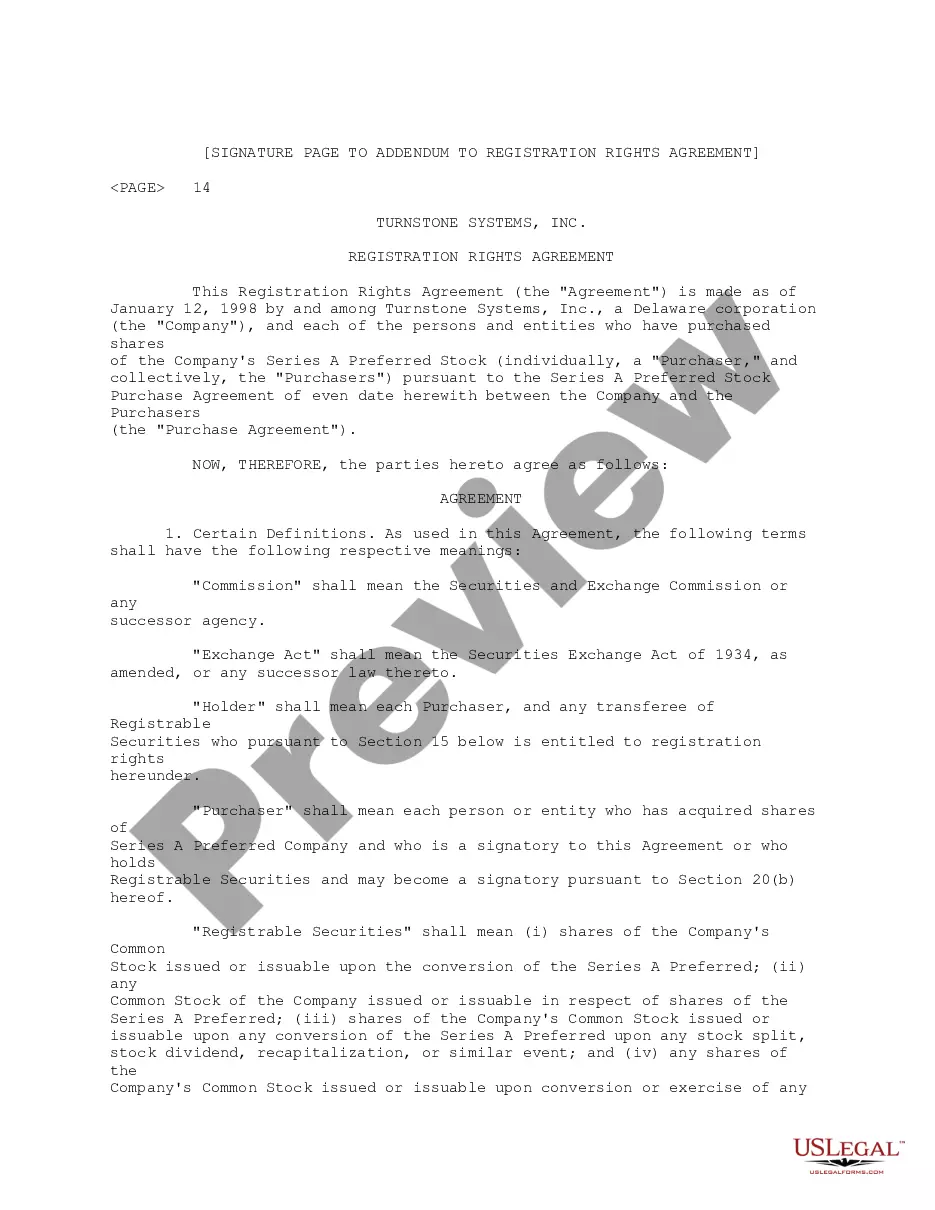
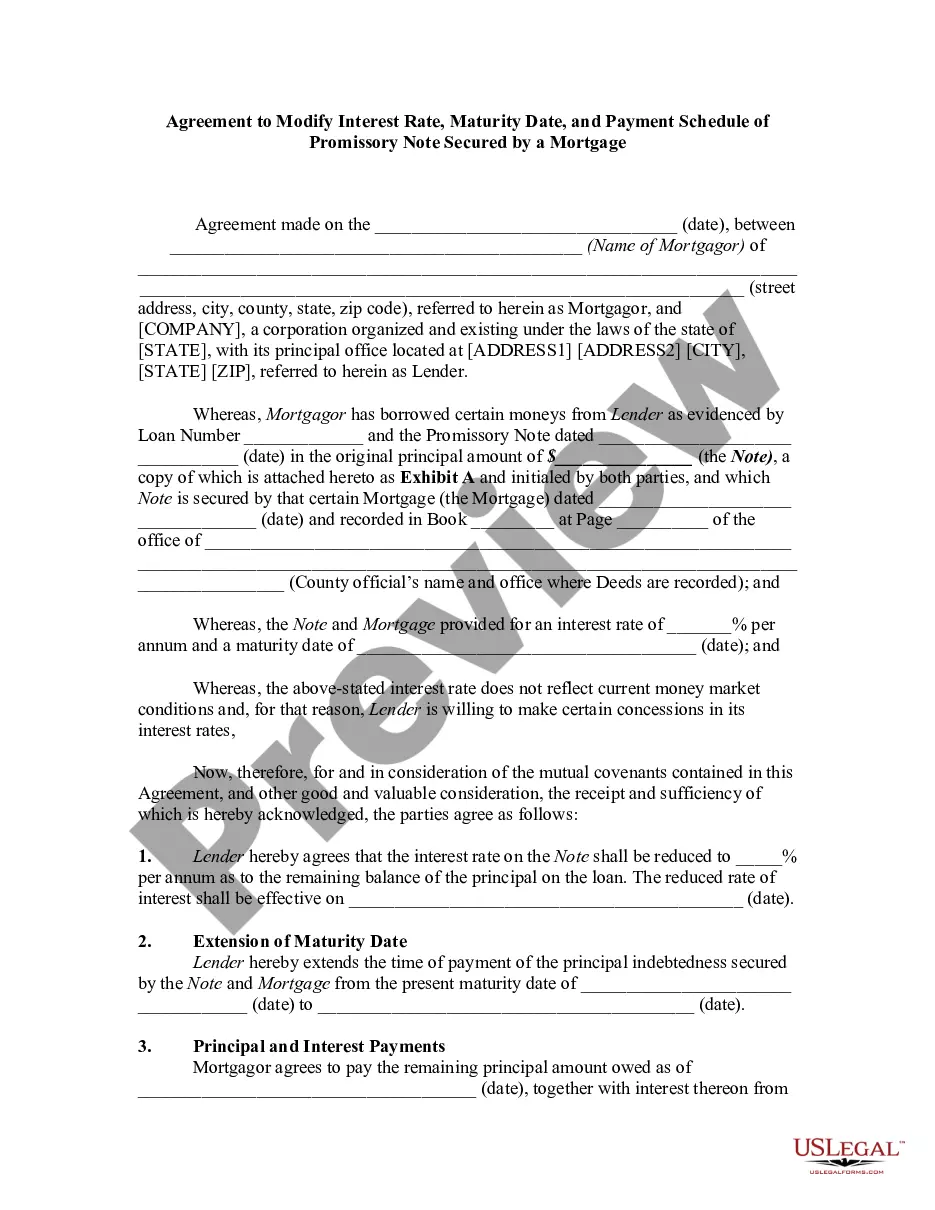
Michigan Registration Rights Agreement regarding the purchase of convertible subordinated debentures
Description

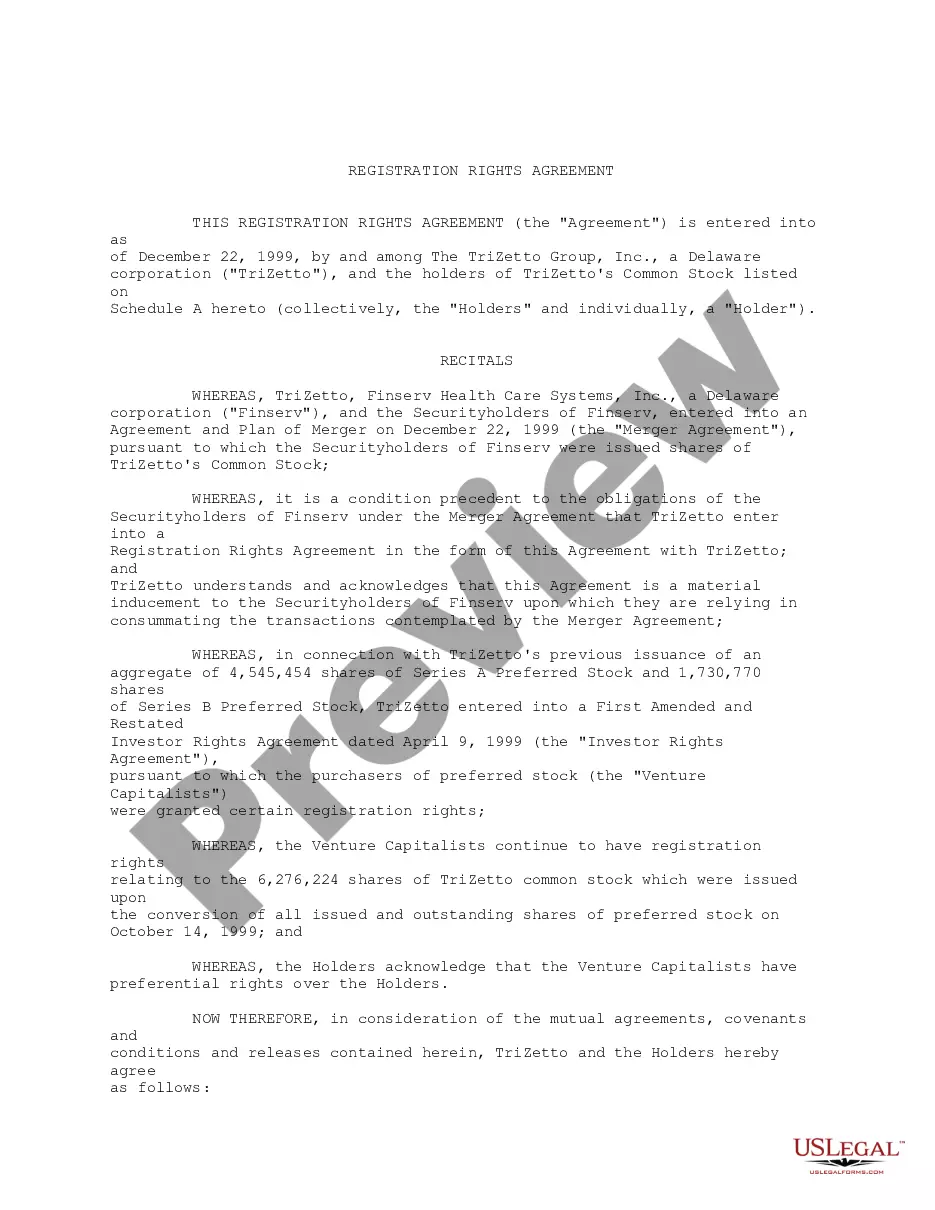
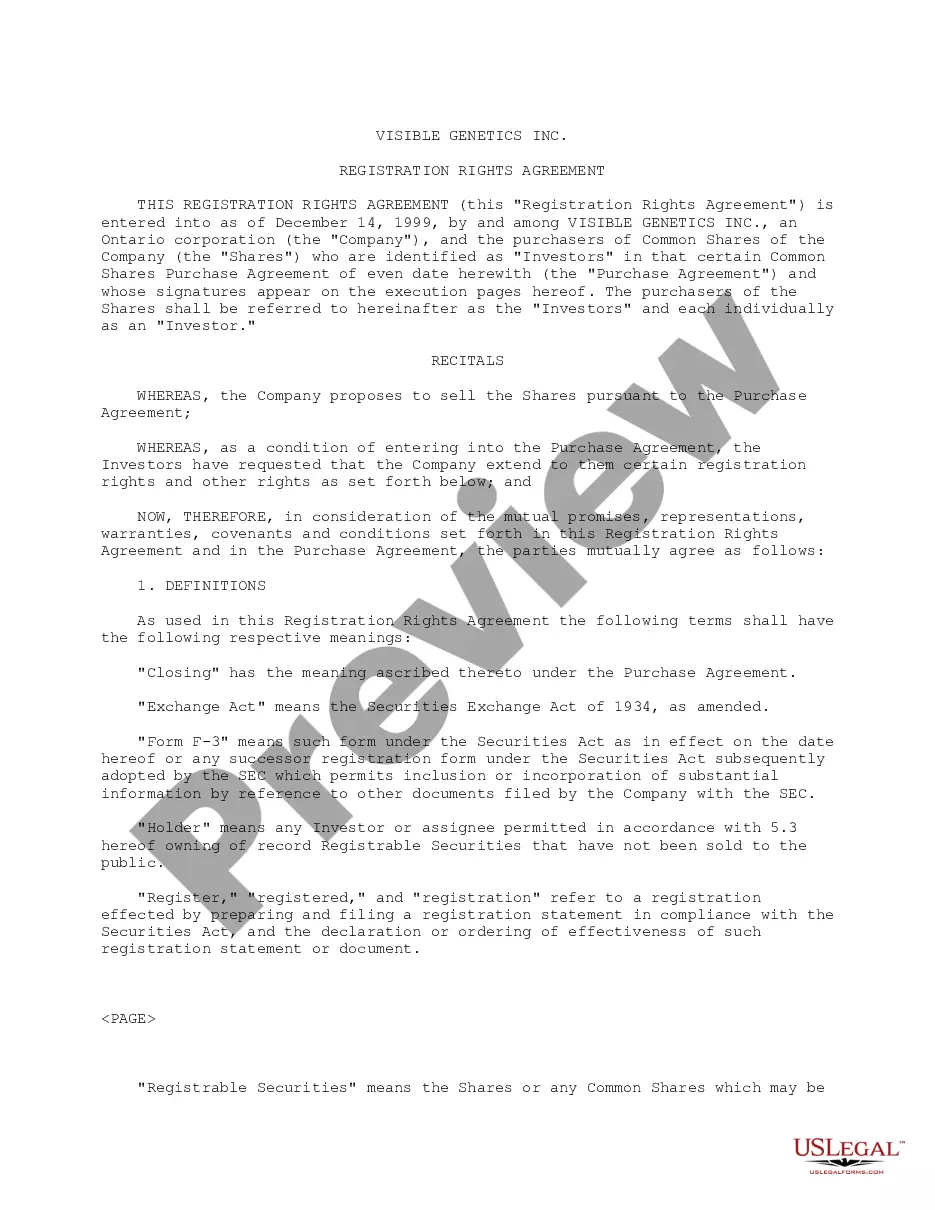
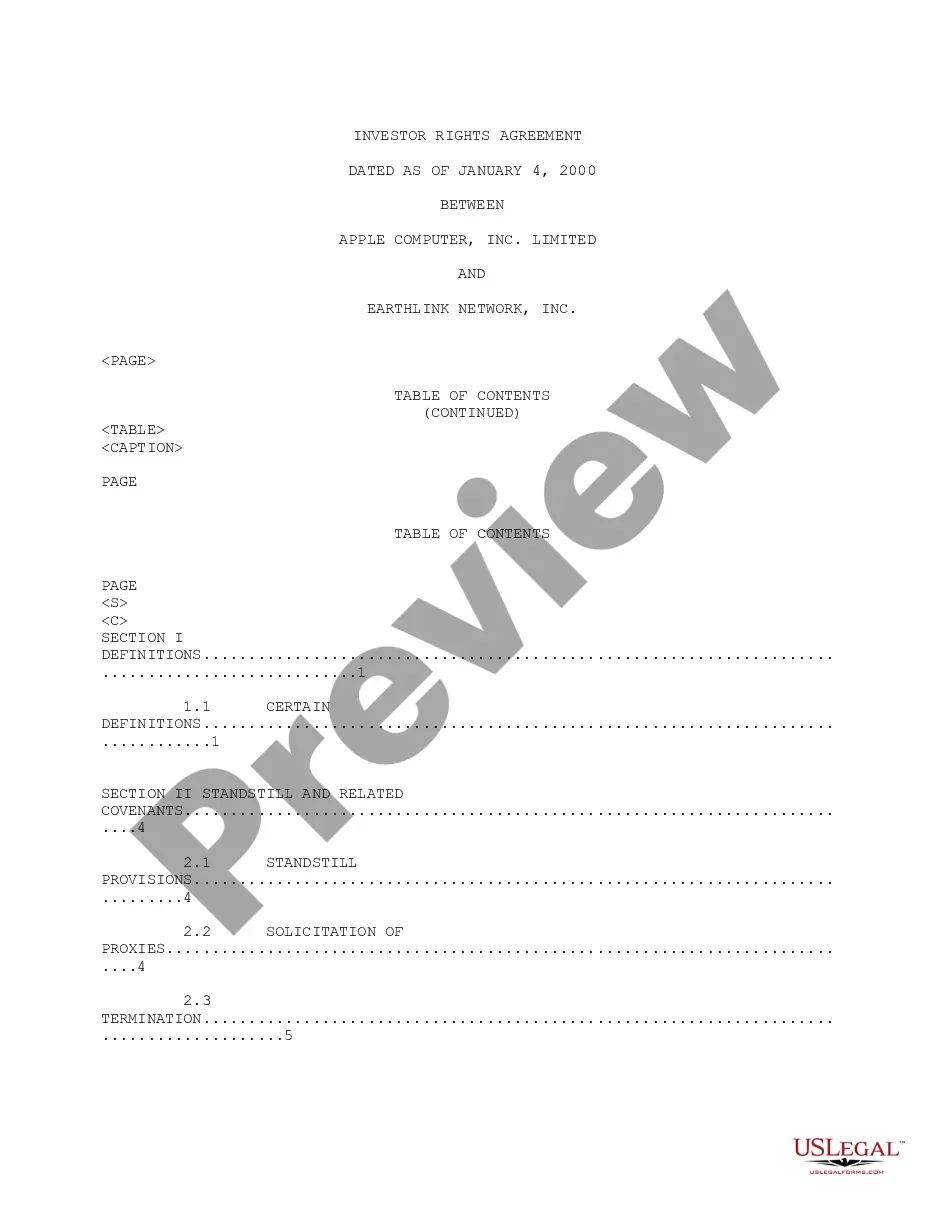
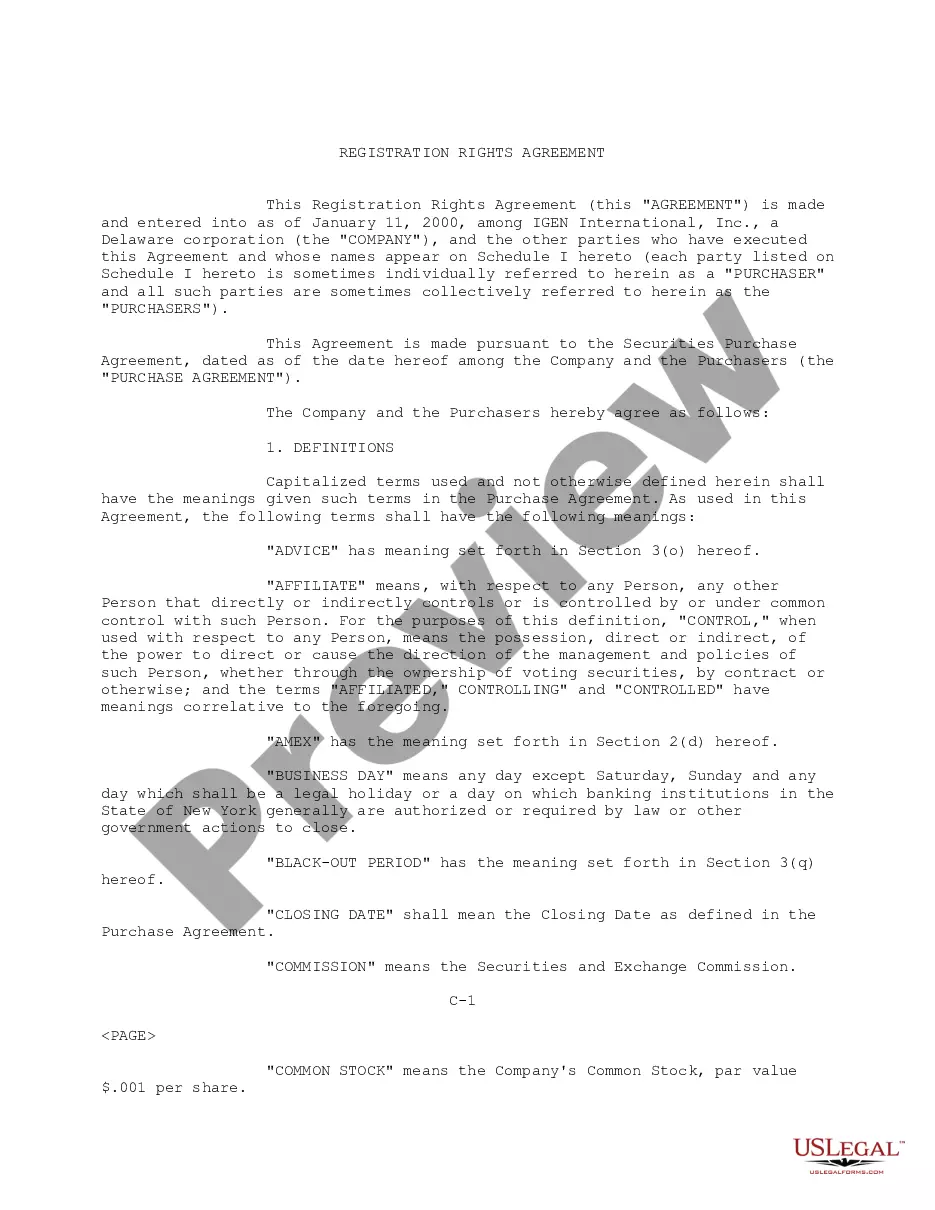

How to fill out Registration Rights Agreement Regarding The Purchase Of Convertible Subordinated Debentures?
You are able to spend several hours on the Internet trying to find the authorized record web template that meets the federal and state requirements you want. US Legal Forms offers a large number of authorized varieties which are evaluated by specialists. You can actually acquire or print out the Michigan Registration Rights Agreement regarding the purchase of convertible subordinated debentures from the support.
If you already have a US Legal Forms accounts, you may log in and then click the Down load button. Next, you may full, modify, print out, or signal the Michigan Registration Rights Agreement regarding the purchase of convertible subordinated debentures. Each and every authorized record web template you acquire is the one you have permanently. To get one more backup of any obtained type, visit the My Forms tab and then click the corresponding button.
Should you use the US Legal Forms internet site for the first time, keep to the easy guidelines listed below:
- Very first, make sure that you have chosen the correct record web template for your region/metropolis of your liking. Browse the type outline to make sure you have chosen the correct type. If available, use the Review button to look with the record web template as well.
- If you wish to find one more model from the type, use the Search area to get the web template that suits you and requirements.
- Upon having found the web template you need, click on Purchase now to move forward.
- Choose the rates plan you need, type in your qualifications, and register for a free account on US Legal Forms.
- Full the deal. You can use your credit card or PayPal accounts to purchase the authorized type.
- Choose the formatting from the record and acquire it to the gadget.
- Make changes to the record if necessary. You are able to full, modify and signal and print out Michigan Registration Rights Agreement regarding the purchase of convertible subordinated debentures.
Down load and print out a large number of record themes making use of the US Legal Forms site, which provides the largest collection of authorized varieties. Use specialist and express-distinct themes to tackle your company or specific needs.
Form popularity
FAQ
Registration rights, if exercised, can force a privately-held company to become a publicly-traded company. One type of registration rights?known as demand rights?allows investors to force a company to go public. Piggyback rights, another type, allow investors to have their shares included in a liquidity event.
A compulsory convertible debenture (CCD) is a type of bond which must be converted into stock by a specified date. It is classified as a hybrid security, as it is neither purely a bond nor purely a stock.
?Definition? A registration rights provision in a term sheet allows an investor to require a company to register the investor's shares with the SEC when certain conditions are met, ensuring that the investor has the opportunity to sell their shares in the public market.
Form S-3 is the registration statement that the Securities and Exchange Commission (SEC) requires reporting company issuers to file in order to issue shelf offerings.
In an unregistered securities offering, an agreement between the issuer and the purchasers of the security that creates an obligation for the issuer to register the re-offer and resale of the securities being offered at some time in the future (usually within six months).
Registration rights take the form of either "piggyback" or "demand." Piggyback rights allow investors to have their shares included in a registration that is currently in the planning stages by the company. Piggyback rights generally do not cause issues for a firm.