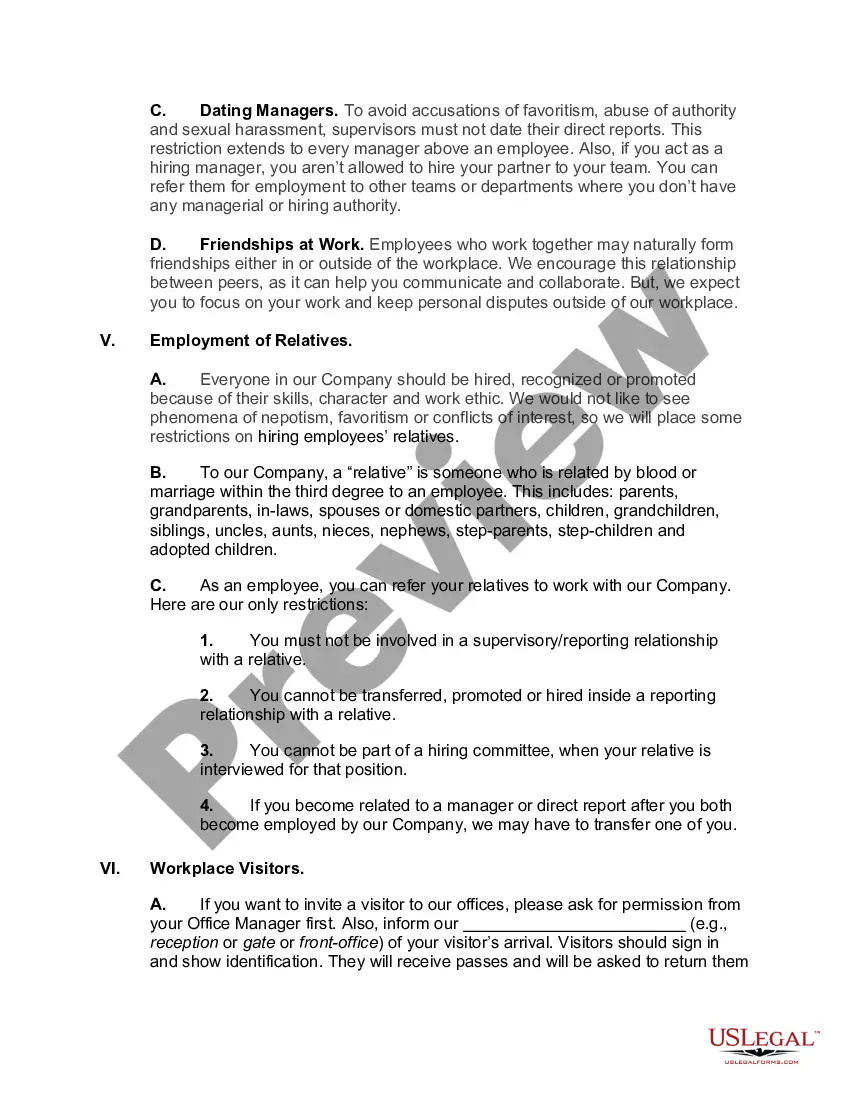
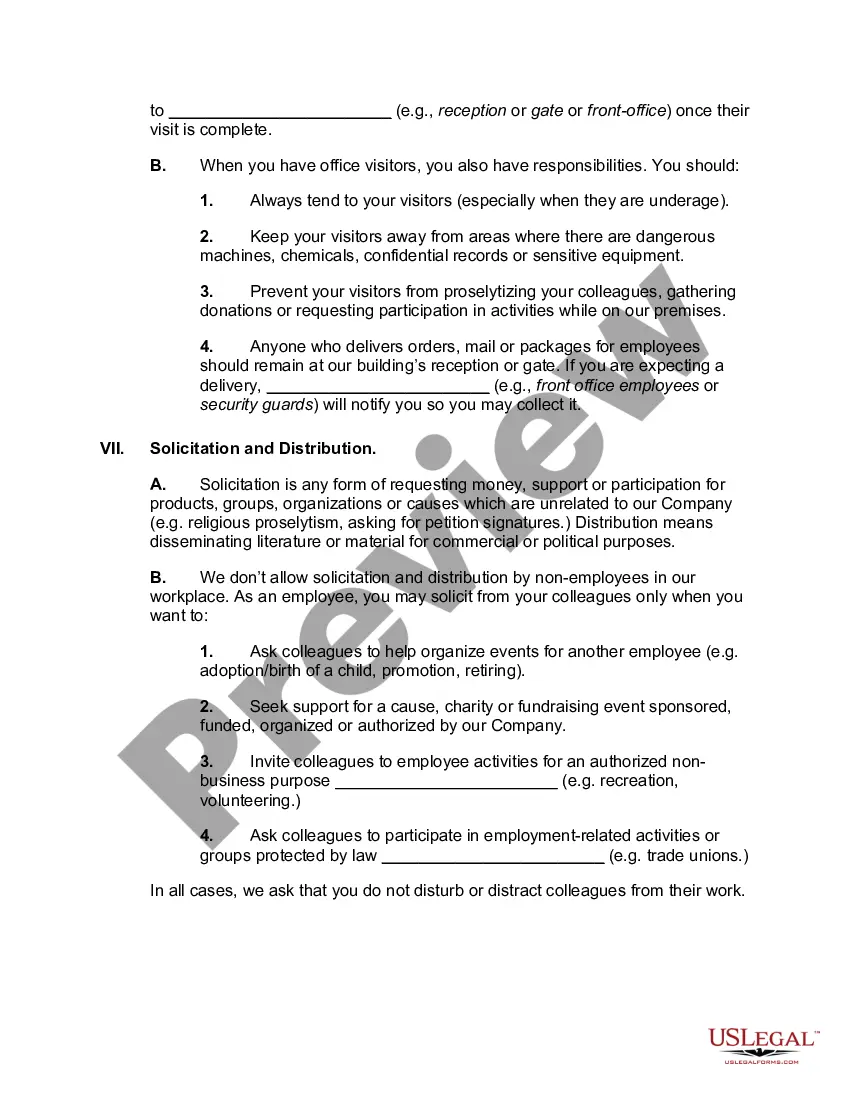
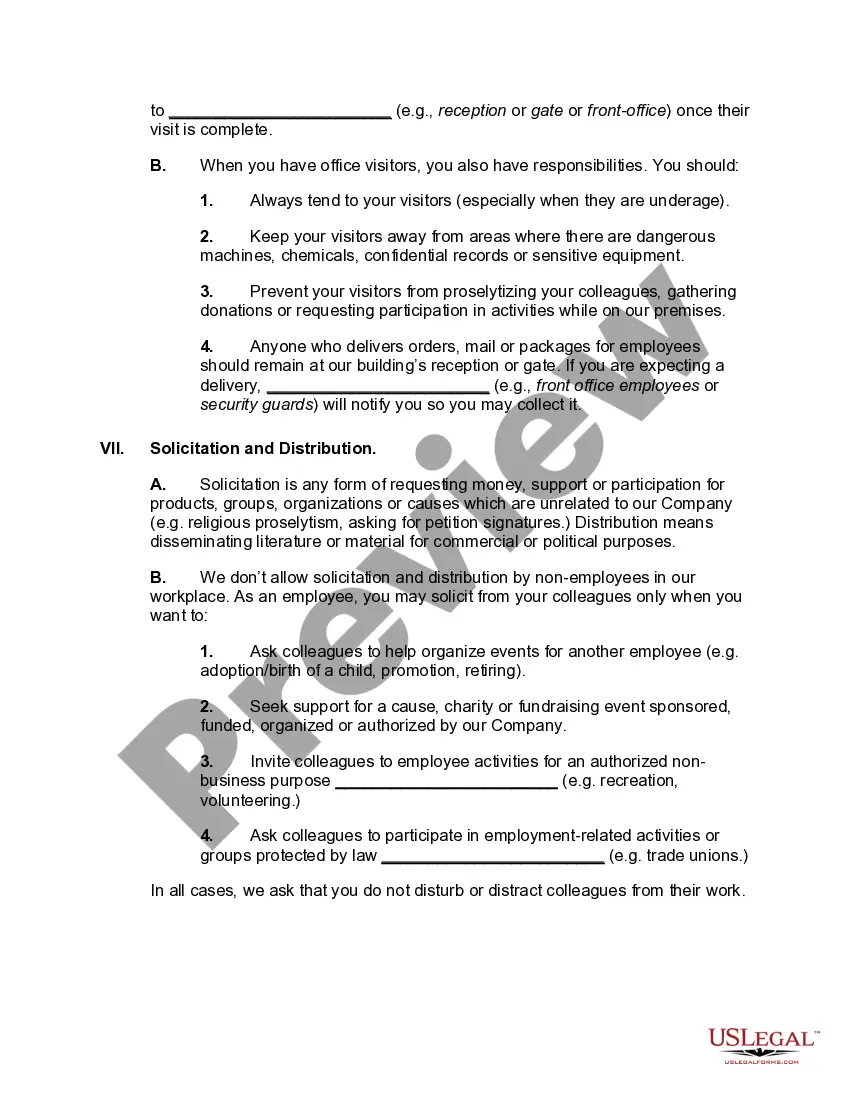
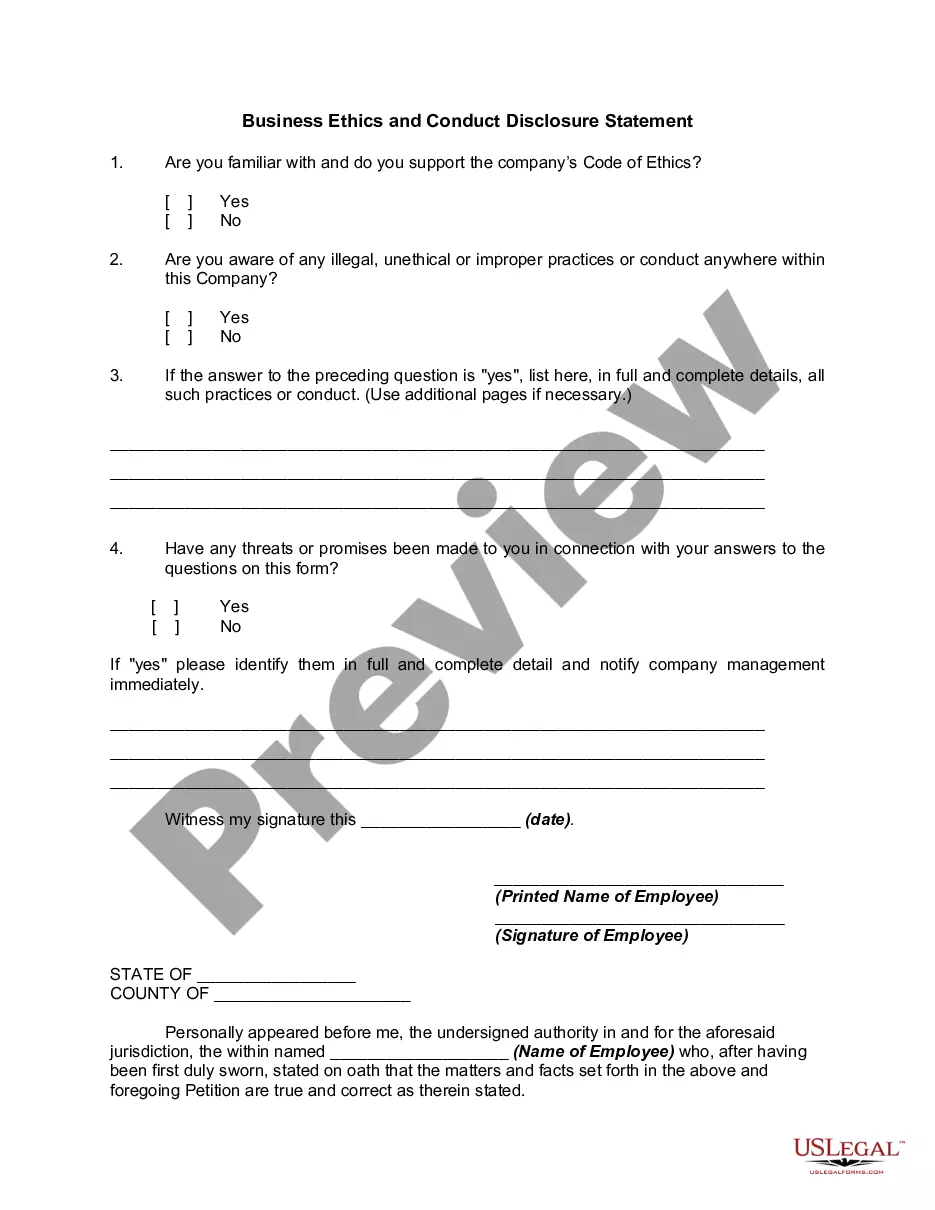
Michigan Employee Code of Conduct for Business
Description
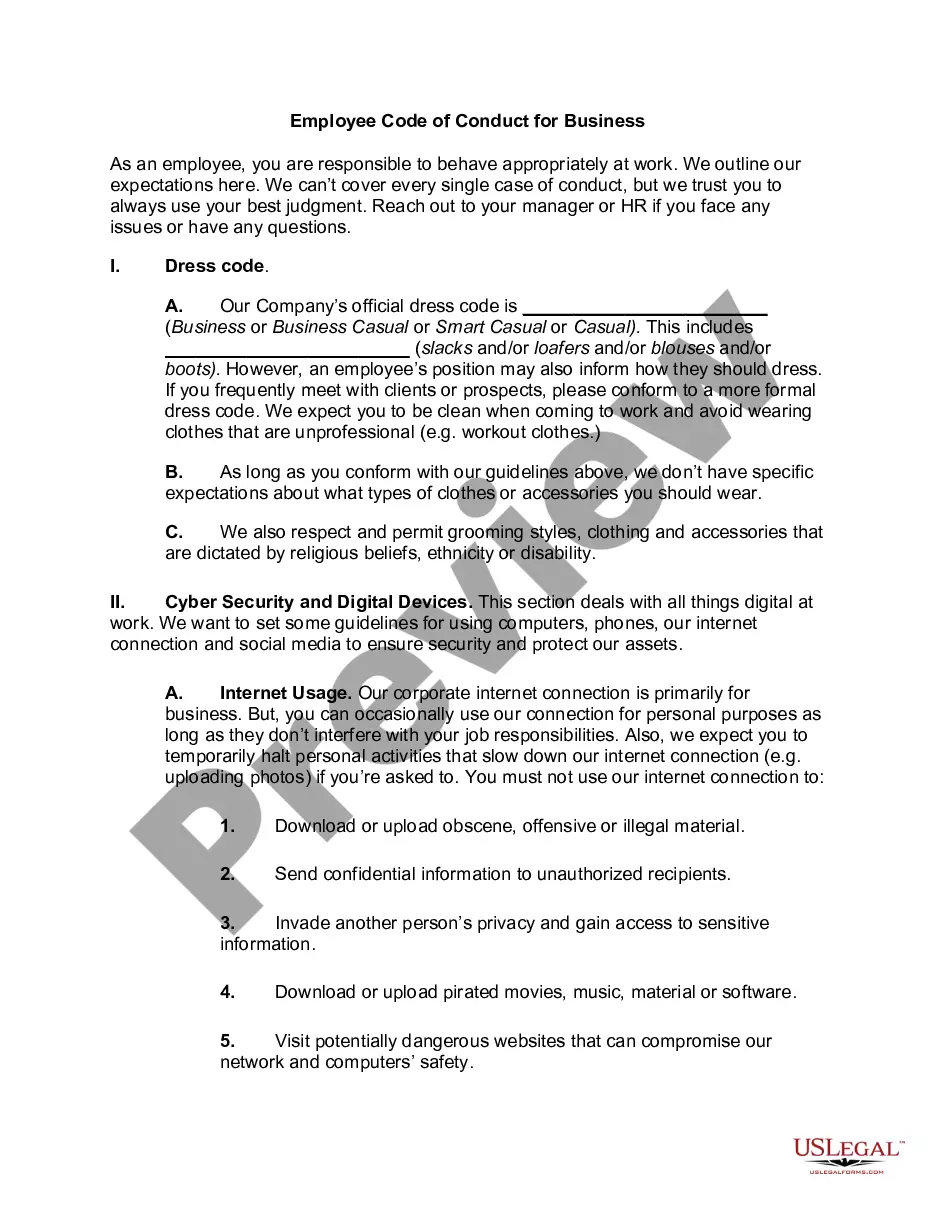
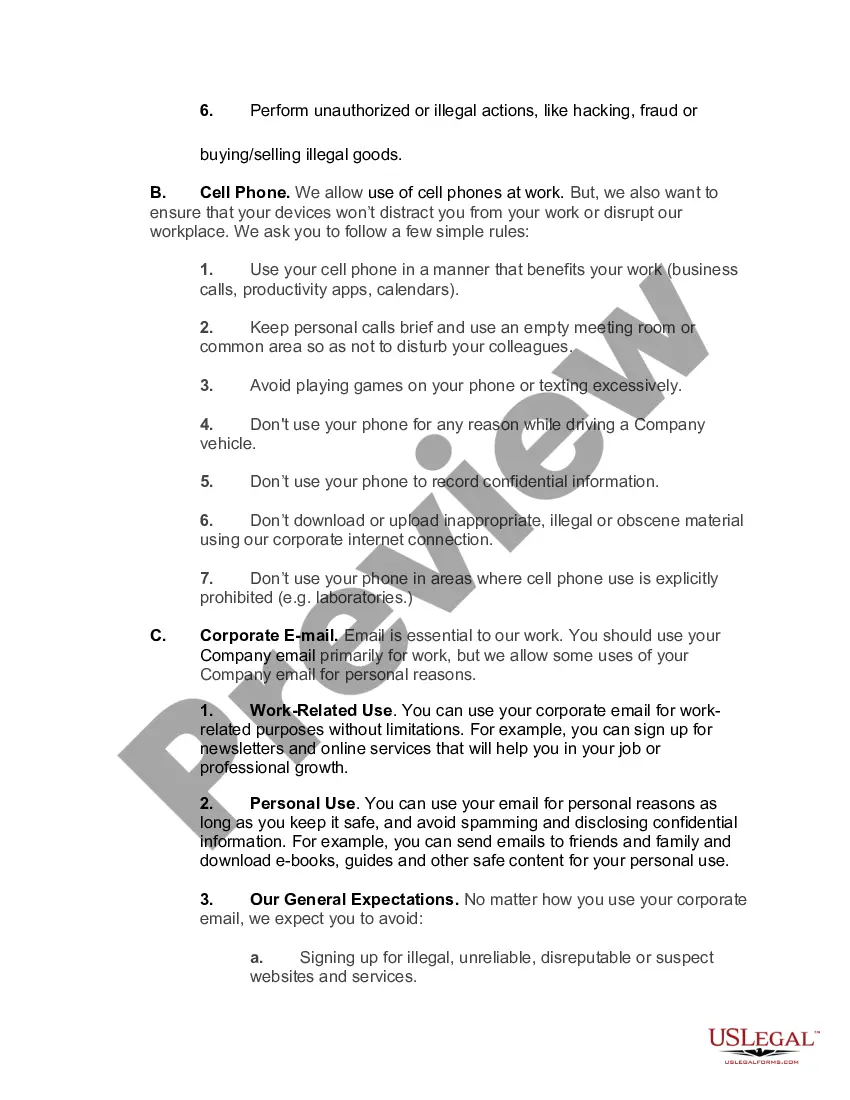
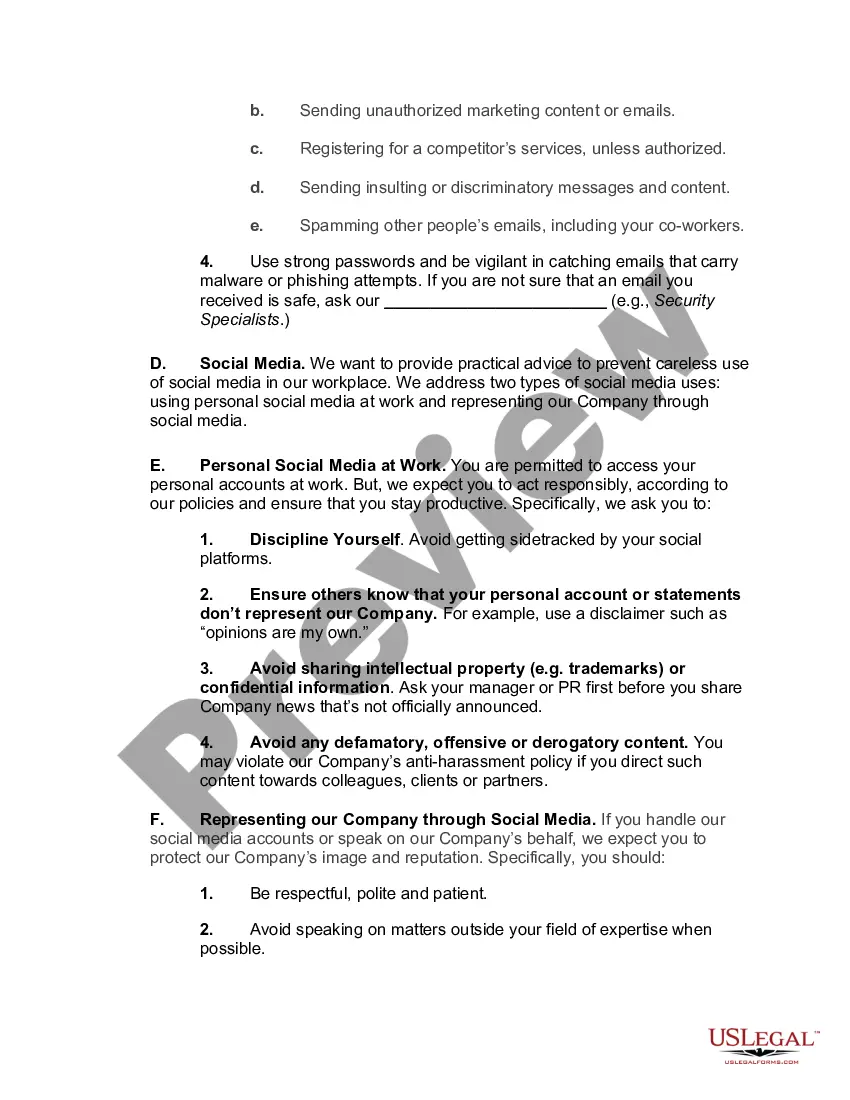
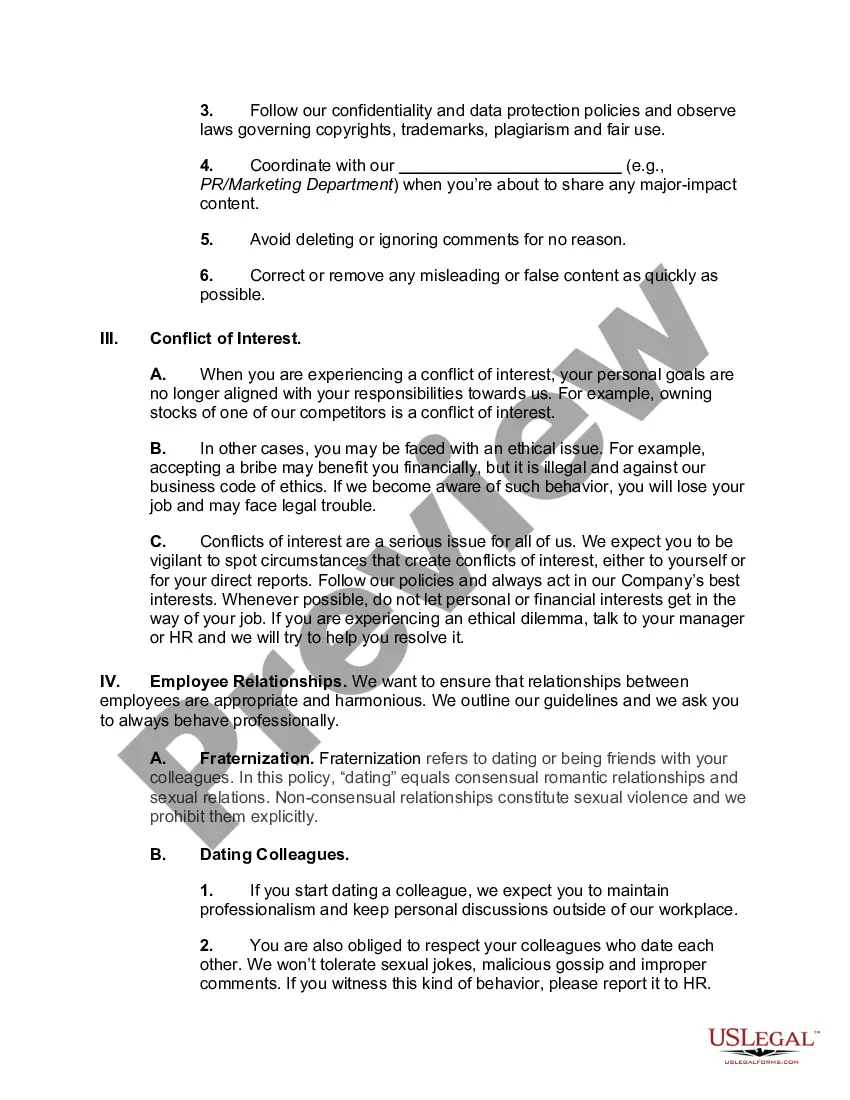
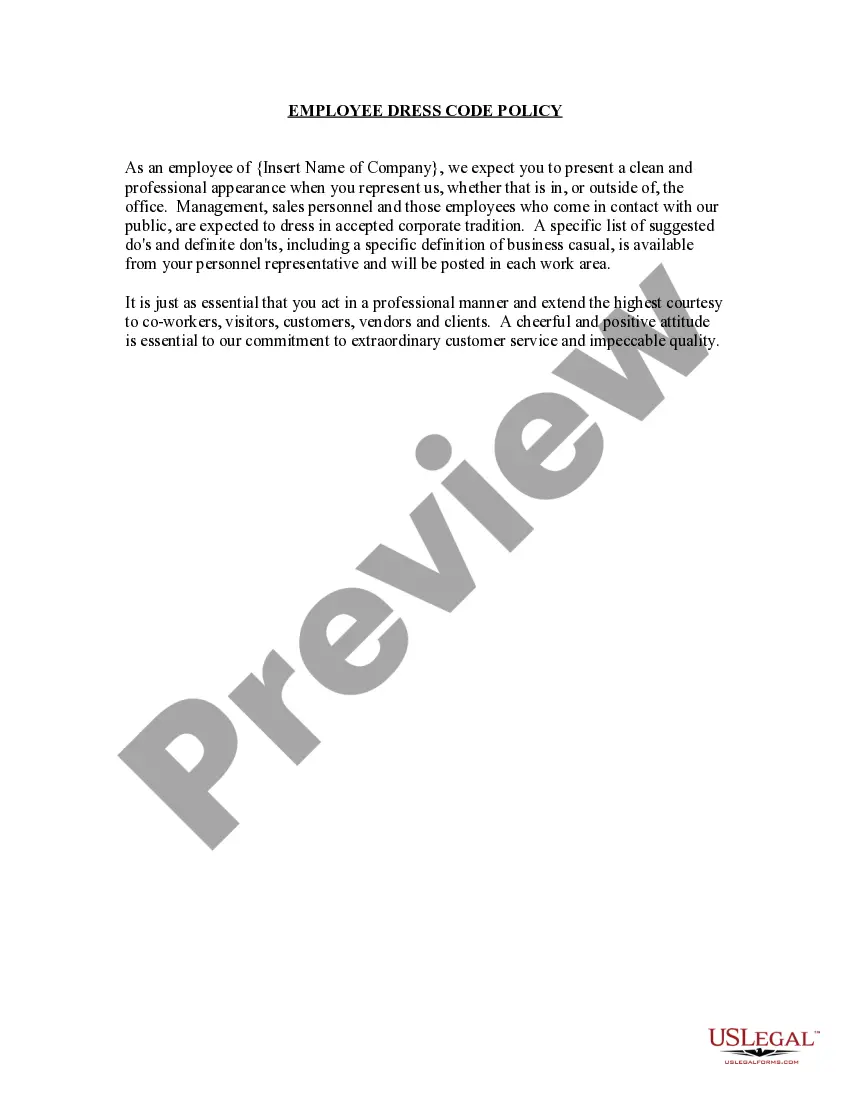
Get your form ready online
Our built-in tools help you complete, sign, share, and store your documents in one place.
Make edits, fill in missing information, and update formatting in US Legal Forms—just like you would in MS Word.
Download a copy, print it, send it by email, or mail it via USPS—whatever works best for your next step.
Sign and collect signatures with our SignNow integration. Send to multiple recipients, set reminders, and more. Go Premium to unlock E-Sign.
If this form requires notarization, complete it online through a secure video call—no need to meet a notary in person or wait for an appointment.
We protect your documents and personal data by following strict security and privacy standards.

Make edits, fill in missing information, and update formatting in US Legal Forms—just like you would in MS Word.

Download a copy, print it, send it by email, or mail it via USPS—whatever works best for your next step.

Sign and collect signatures with our SignNow integration. Send to multiple recipients, set reminders, and more. Go Premium to unlock E-Sign.

If this form requires notarization, complete it online through a secure video call—no need to meet a notary in person or wait for an appointment.

We protect your documents and personal data by following strict security and privacy standards.
Looking for another form?
How to fill out Employee Code Of Conduct For Business?
US Legal Forms - one of the largest repositories of legal documents in the United States - provides a selection of legal form templates that you can download or print.
By utilizing the website, you will access thousands of forms for business and personal purposes, categorized by types, states, or keywords. You can obtain the latest versions of forms like the Michigan Employee Code of Conduct for Business within minutes.
If you already possess an account, Log In and download the Michigan Employee Code of Conduct for Business from the US Legal Forms library. The Download button will appear on every form you view. You can access all previously downloaded forms from the My documents section of your account.
Process the payment. Use your credit card or PayPal account to complete the payment.
Select the format and download the form onto your device. Edit. Complete, modify, print, and sign the downloaded Michigan Employee Code of Conduct for Business. Each template you added to your account has no expiration date and is yours indefinitely. So, to download or print another version, just go to the My documents section and click on the form you desire. Access the Michigan Employee Code of Conduct for Business with US Legal Forms, the largest collection of legal document templates. Utilize thousands of professional and state-specific templates to meet your business or personal needs and requirements.
- Make sure you have selected the correct form for your city/county.
- Click the Review button to examine the content of the form.
- Refer to the form description to verify that you have chosen the right form.
- If the form does not meet your requirements, use the Search field at the top of the page to find one that does.
- Once you are satisfied with the form, confirm your choice by clicking on the Get now button.
- Then, select your preferred payment method and provide your details to register for an account.
Form popularity
FAQ
The code should reflect the company's culture, address the relevant risk areas for the organisation and outline reporting procedures for unethical conduct. Consider including examples of what constitutes appropriate and inappropriate behaviour to clarify issues that are ambiguous or prone to risk.
Compliance with laws or laws relevant to employee or member rights. Outline of unacceptable behaviors in the workplace and their consequences. Outline of internal practices such as dress code, drug use, or sexual harassment policies. Outline of external practices such as confidentiality and conflicts of interest.
Tips for writing a code of conductUse simple, clear language that all employees can understand.Use examples of acceptable and unacceptable behaviour to clarify points.Get someone else to read the document before finalising it. A friend or family member can help, but a professional proofreader would be best.29 June 2016
How to write a code of conductYour company's core values.Compliance with laws.Rules and policies for: Respect (including harassment, discrimination, and more) Use of company property. Personal appearance (including cleanliness and dress code) Absenteeism and lateness.Disciplinary actions.Signature page.
Unlike a code of ethics which is a set of principles that helps employees distinguish right from wrong a code of conduct is a written collection of rules, principles, values, expectations, and behavior that a company considers fundamental to their success.
These can include personal traits, such as honesty, kindness, integrity or any other characteristic you associate with your behavior. Ask yourself if people close to you would agree with your assessment. By determining your traits, you can create a more definite and honest code of ethics.
The following are steps you can follow when drafting a code of conduct for your organization:Determine who will be included in the creation of your company's code of conduct.Consider any ethical issues that have occurred in the past.Create an outline.Discuss the draft with stakeholders.Compose the final draft.
What are the five codes of ethics?Integrity.Objectivity.Professional competence.Confidentiality.Professional behavior.
It is also essential that the code address areas that are specific to the organization and how it conducts business.Step One: Gathering Information.Step Two: Creating the Draft.Step Three: Reviewing the Draft.Step 4: Formally Adopting the Code.Step 5: Introducing the Code.Step Six: Enforcing the Code.
How to write a code of conductYour company's core values.Compliance with laws.Rules and policies for: Respect (including harassment, discrimination, and more) Use of company property. Personal appearance (including cleanliness and dress code) Absenteeism and lateness.Disciplinary actions.Signature page.