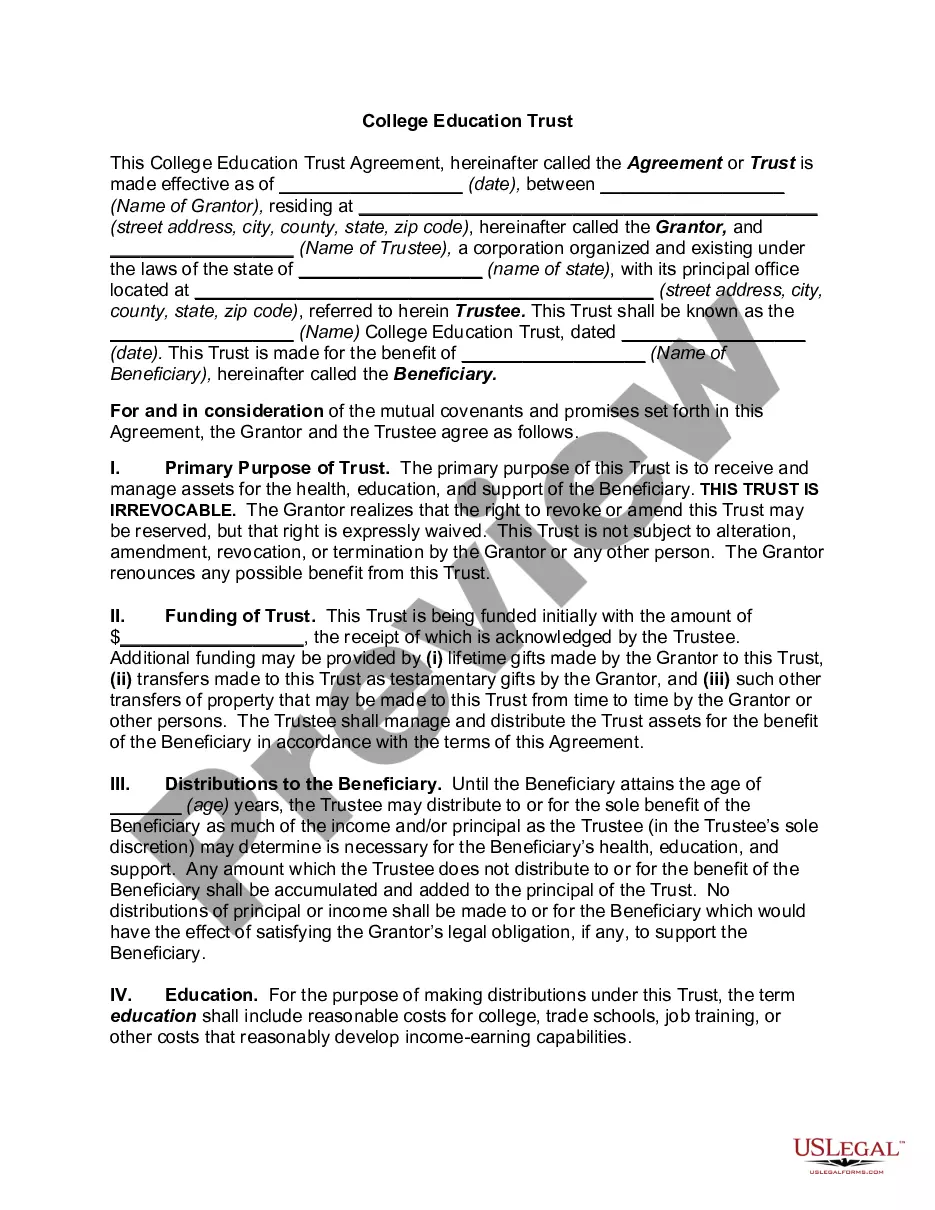
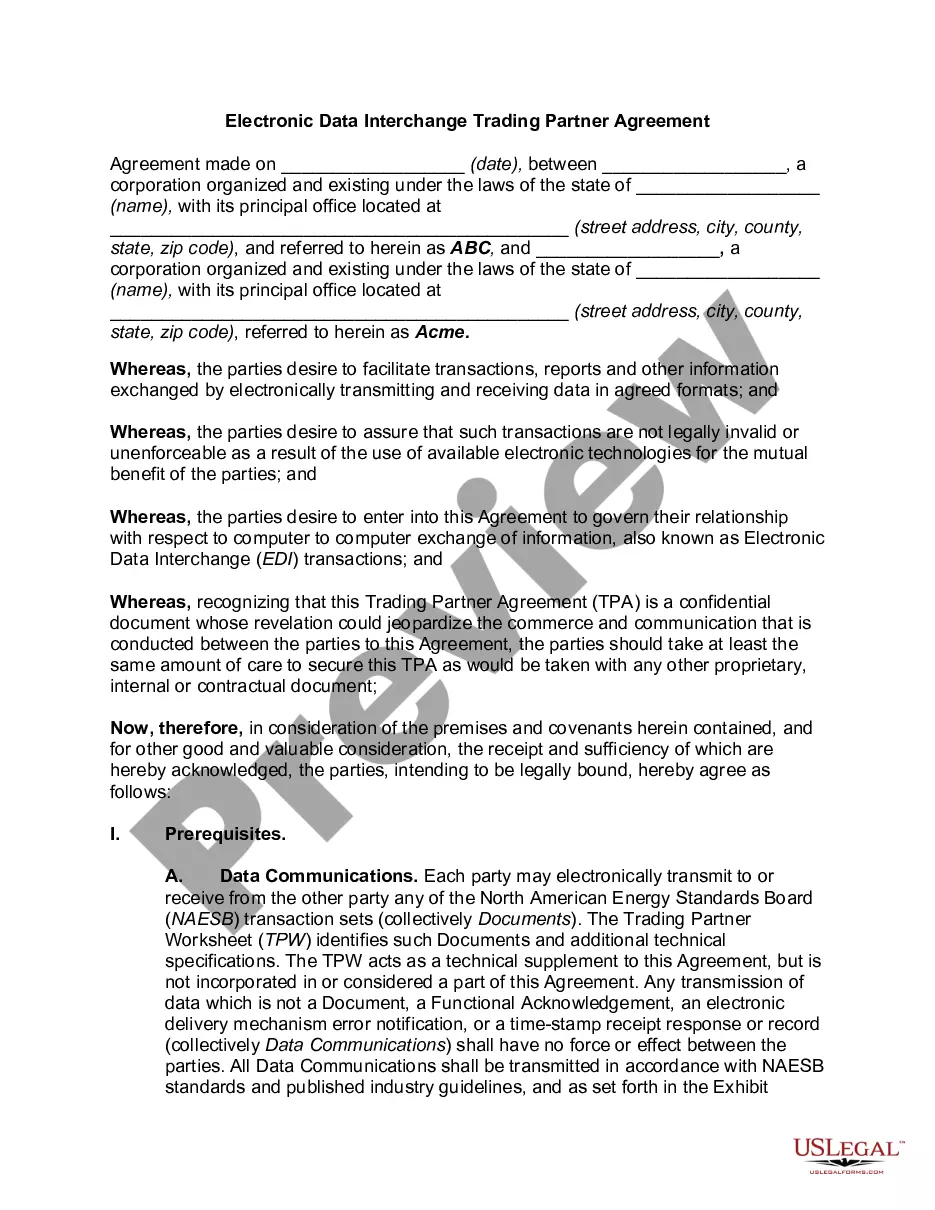
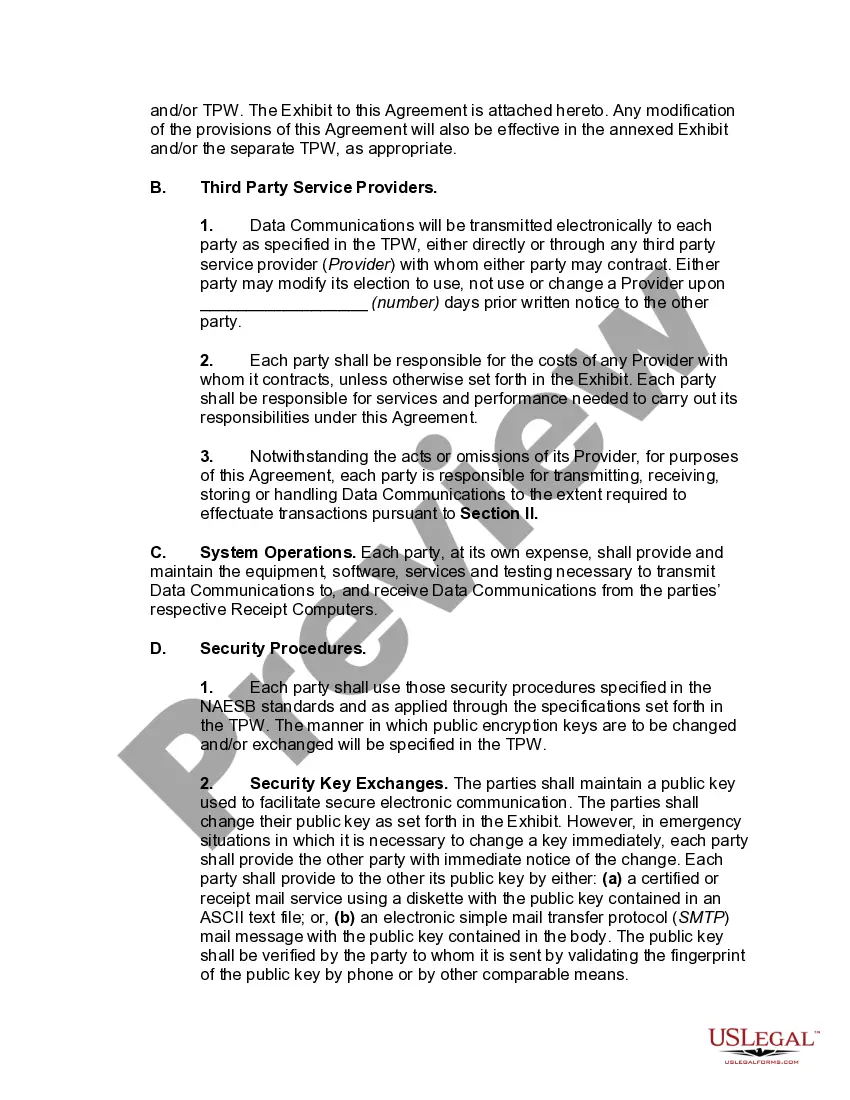
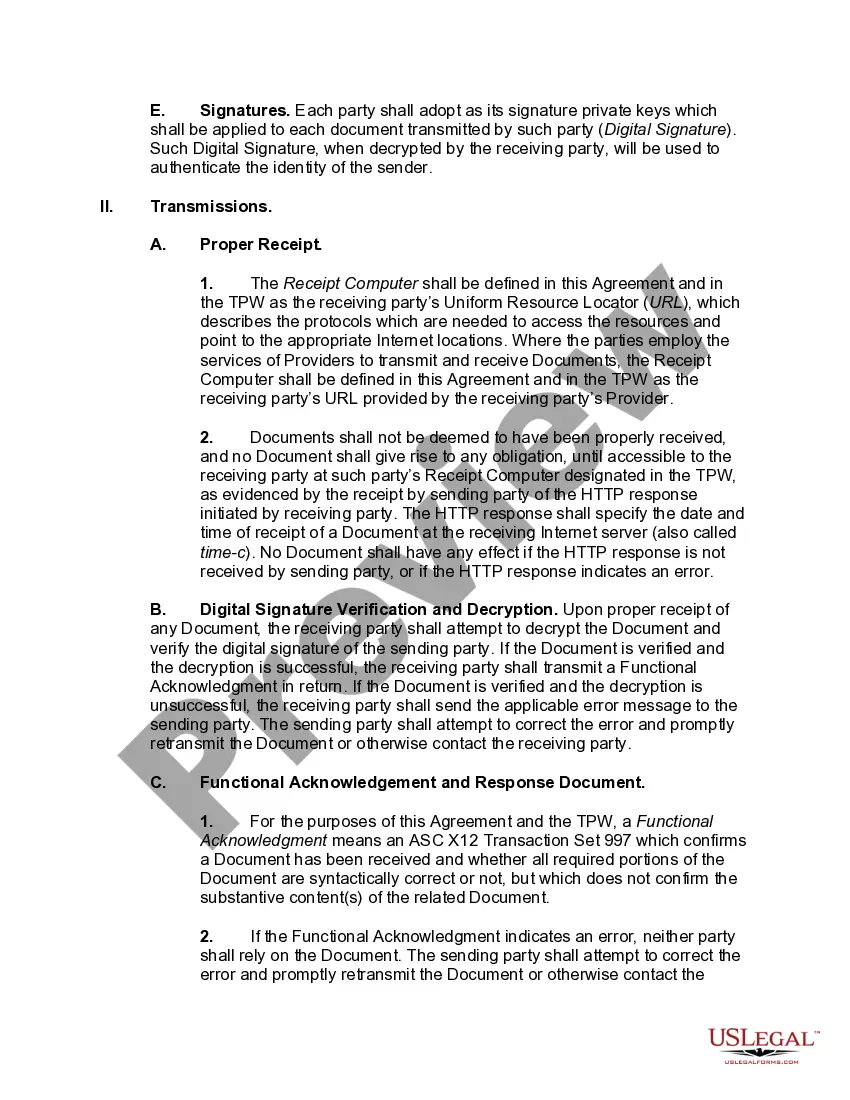
Michigan Electronic Data Interchange Trading Partner Agreement
Description
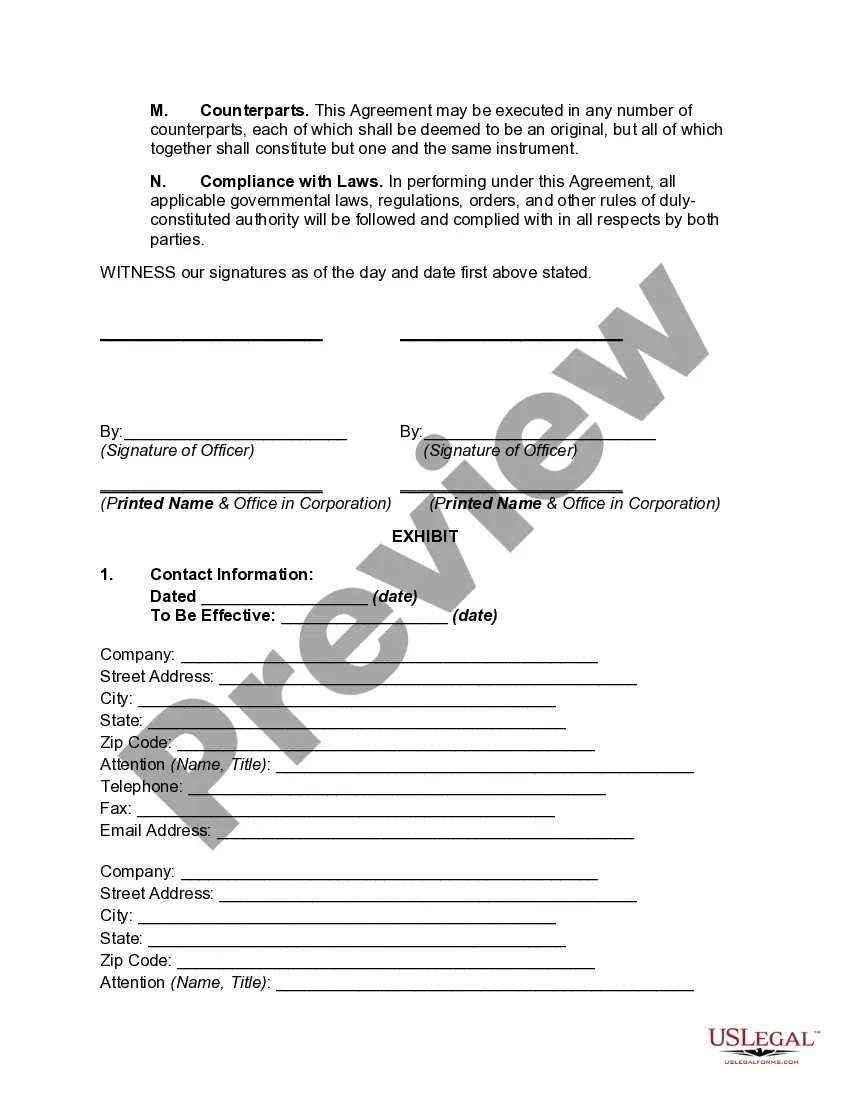
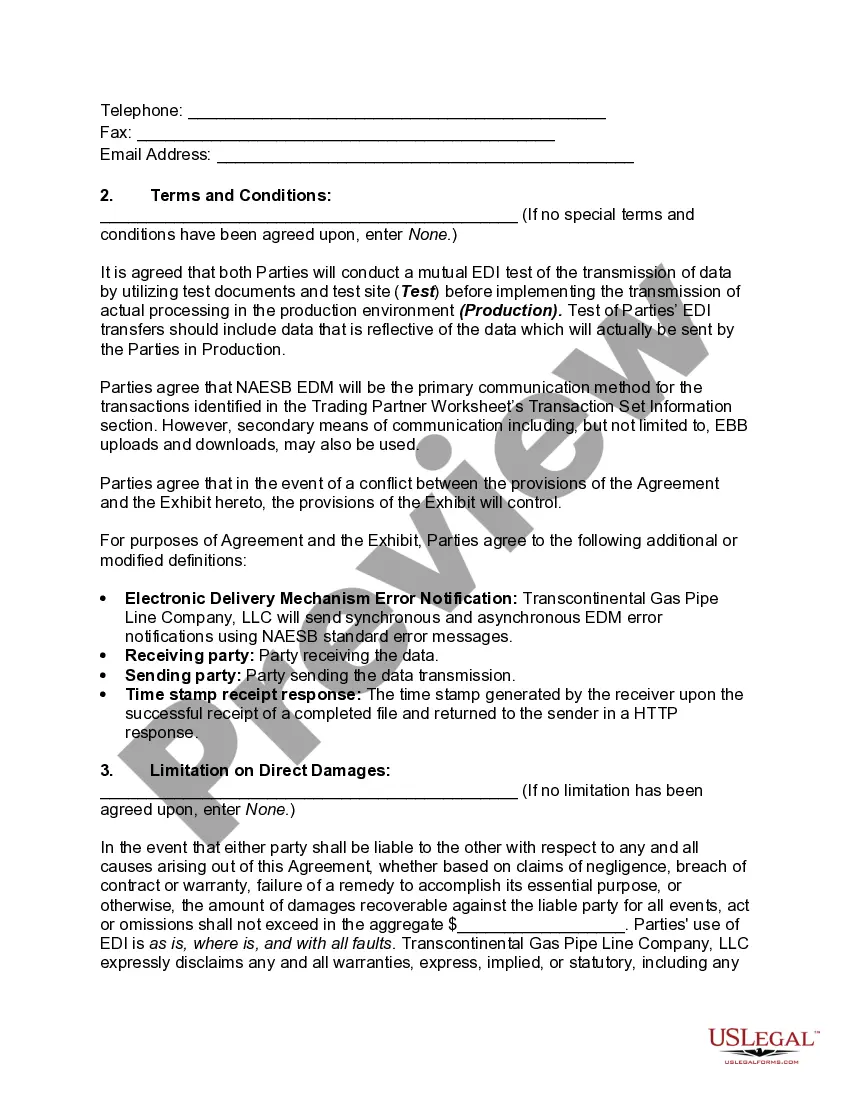
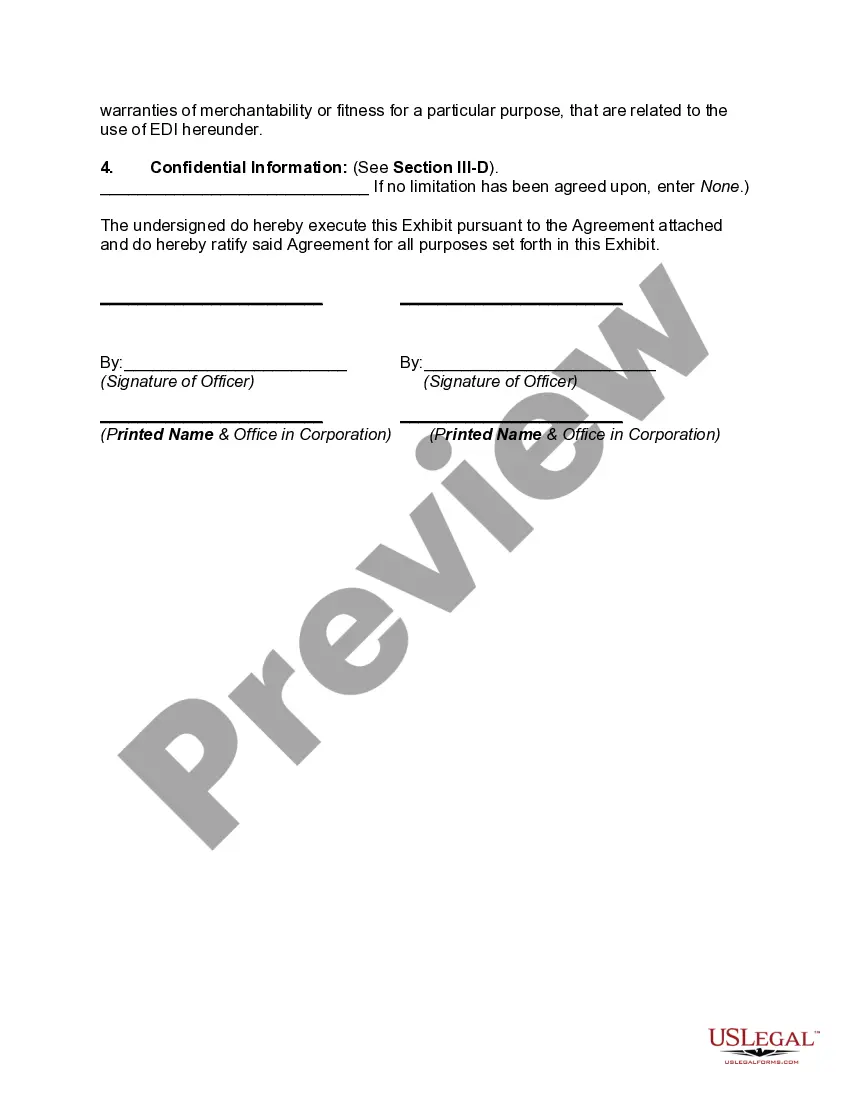
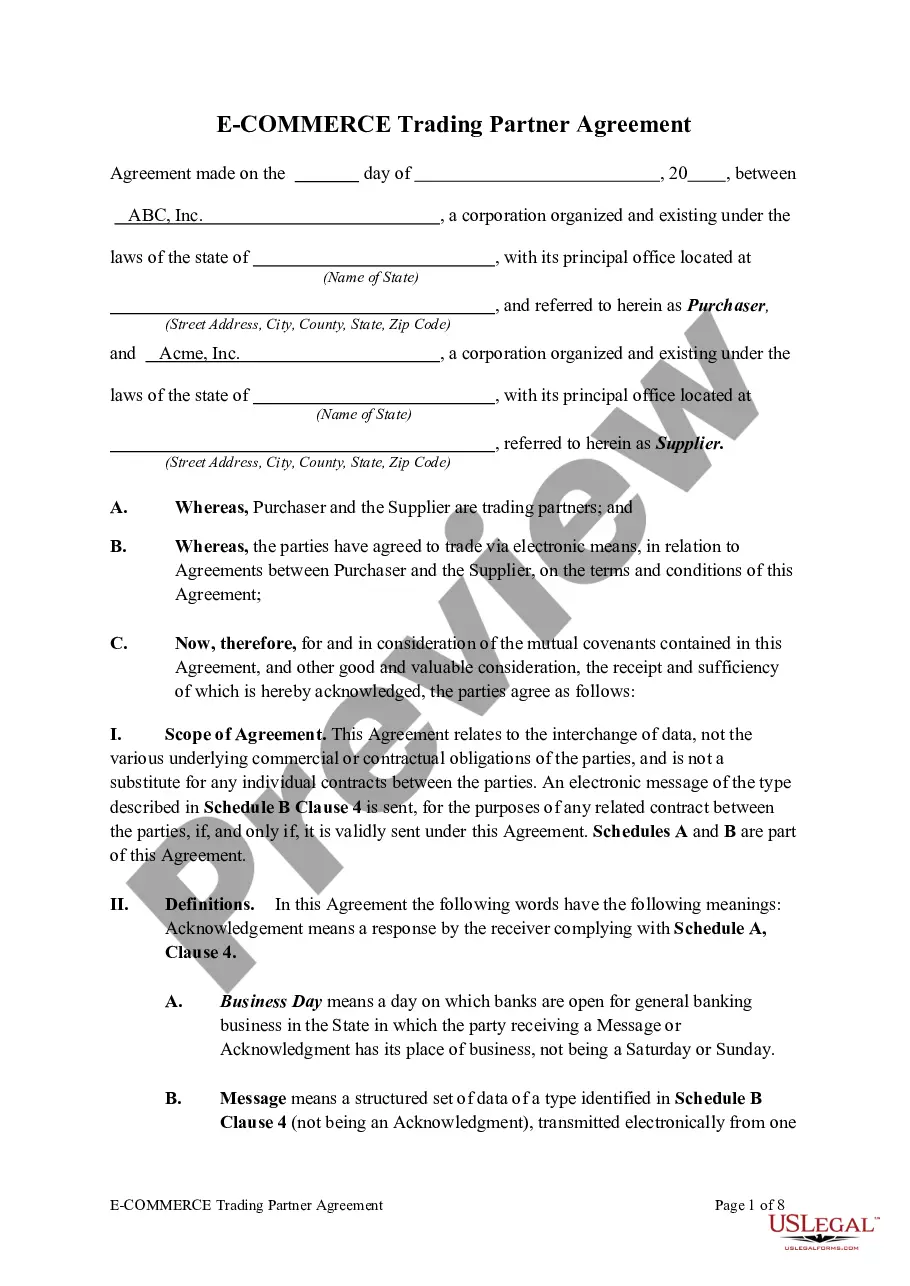
Get your form ready online
Our built-in tools help you complete, sign, share, and store your documents in one place.
Make edits, fill in missing information, and update formatting in US Legal Forms—just like you would in MS Word.
Download a copy, print it, send it by email, or mail it via USPS—whatever works best for your next step.
Sign and collect signatures with our SignNow integration. Send to multiple recipients, set reminders, and more. Go Premium to unlock E-Sign.
If this form requires notarization, complete it online through a secure video call—no need to meet a notary in person or wait for an appointment.
We protect your documents and personal data by following strict security and privacy standards.

Make edits, fill in missing information, and update formatting in US Legal Forms—just like you would in MS Word.

Download a copy, print it, send it by email, or mail it via USPS—whatever works best for your next step.

Sign and collect signatures with our SignNow integration. Send to multiple recipients, set reminders, and more. Go Premium to unlock E-Sign.

If this form requires notarization, complete it online through a secure video call—no need to meet a notary in person or wait for an appointment.

We protect your documents and personal data by following strict security and privacy standards.
Looking for another form?




How to fill out Electronic Data Interchange Trading Partner Agreement?
It is feasible to spend time online attempting to locate the legal document format that satisfies the federal and state requirements you need.
US Legal Forms offers a wide array of legal forms that are reviewed by experts.
You can obtain or print the Michigan Electronic Data Interchange Trading Partner Agreement from our service.
To get an additional version of the form, use the Lookup field to find the format that fits your needs and criteria.
- If you already possess a US Legal Forms account, you can Log In and click the Acquire button.
- After that, you can fill out, modify, print, or sign the Michigan Electronic Data Interchange Trading Partner Agreement.
- Each legal document format you acquire is yours indefinitely.
- To obtain another copy of any purchased form, visit the My documents section and select the appropriate option.
- If you are using the US Legal Forms website for the first time, follow the simple instructions below.
- First, ensure that you have chosen the correct document format for your county/town of preference.
- Review the form description to confirm you have selected the right form.
Form popularity
FAQ
How Does EDI Work?Step 1: Prepare the documents to be sent. The first step is to collect and organize the data.Step 2: Translate the documents into EDI format.Step 3: Connect and Transmit your EDI documents to your business partner.
What is a trading partner? An EDI trading partner is simply another company that you exchange documents with. Most OEMs will have a large network of trading partners which are sometimes referred to as 'Trading Communities'.
The Basic Steps of EDIDocument Preparation. Information necessary to produce a business document (purchase order, invoice, etc.) is collected in an electronic file.Outbound Translation.Outbound Communication.
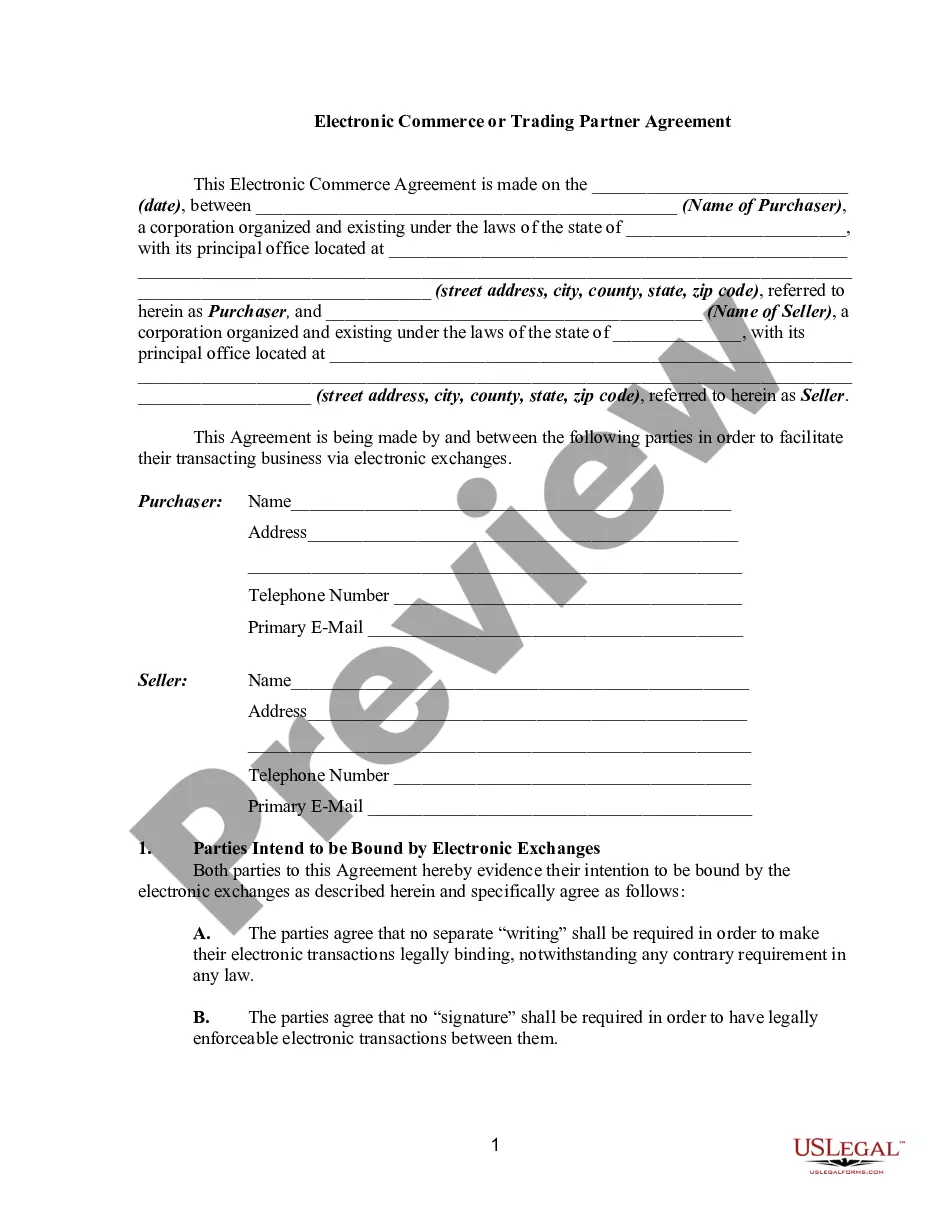
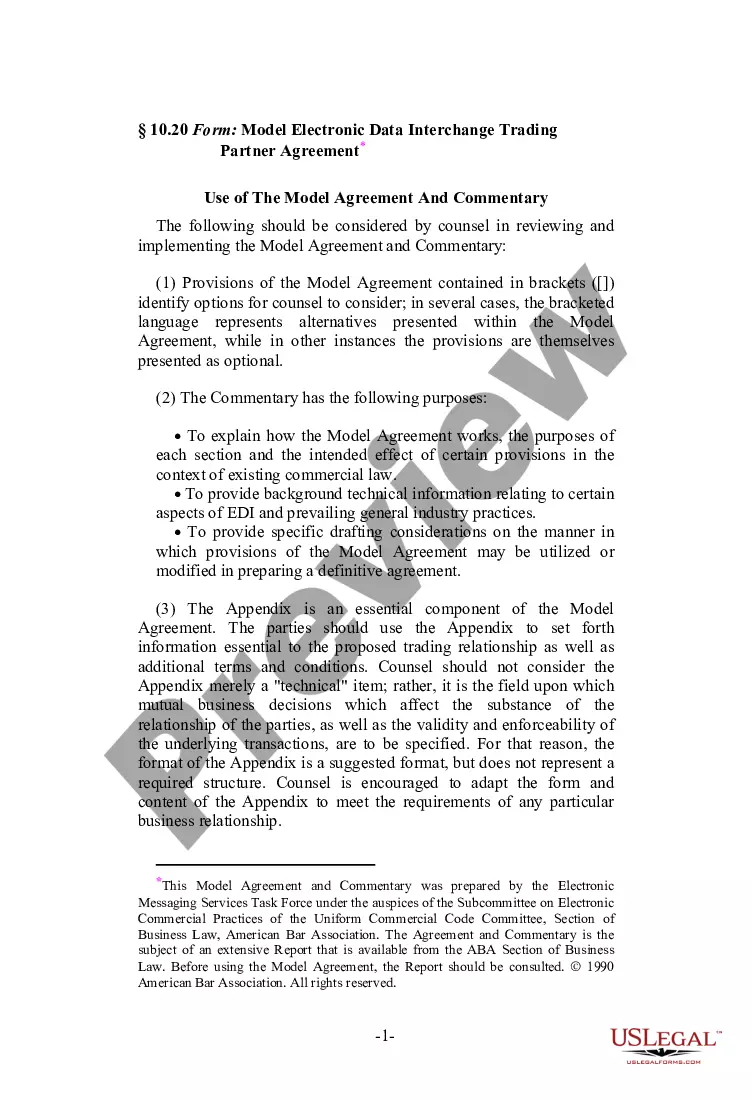
Trading Partner Agreement means an agreement in a form of contract related to the exchange of EDI information in electronic transactions. Trading Partner Agreement may include various terms of EDI exchange, such as duties, responsibilities, liabilities.
Many business documents can be exchanged using EDI, but the two most common are purchase orders and invoices.
Electronic Data Interchange (EDI) is the electronic interchange of business information using a standardized format; a process which allows one company to send information to another company electronically rather than with paper. Business entities conducting business electronically are called trading partners.
You need four components: A device on which to transmit the data. An application or an outsourcing company that translates the data into a standardized EDI format....How Do EDI Systems Work?Preparing the documents.Translating the documents into EDI format.Transmitting the documents through EDI to the recipient.
A Structured 10-Step Process for Successful EDI ImplementationStep 1: Develop the Organizational Structure.Step 2: Undertake a Strategic Review.Step 3: Conduct In-depth Analysis.Step 4: Develop a Business-Focused EDI Solution.Step 5: Select the Correct EDI Network Provider (VAN)Step 6: Integrate EDI with the Business.More items...
Types of EDIDirect EDI/Point-to-Point. Brought to prominence by Walmart, direct EDI, sometimes called point-to-point EDI, establishes a single connection between two business partners.EDI via VAN or EDI Network Services Provider.EDI via AS2.EDI via FTP/VPN, SFTP, FTPS.Web EDI.Mobile EDI.EDI Outsourcing.EDI Software.
With EDI, your company can exchange documents electronically with your trading partners. Instead of sending a document to a person who has to enter data, e.g., in an ERP system manually, you can send the document directly to the recipient's system, where the data is automatically registered.