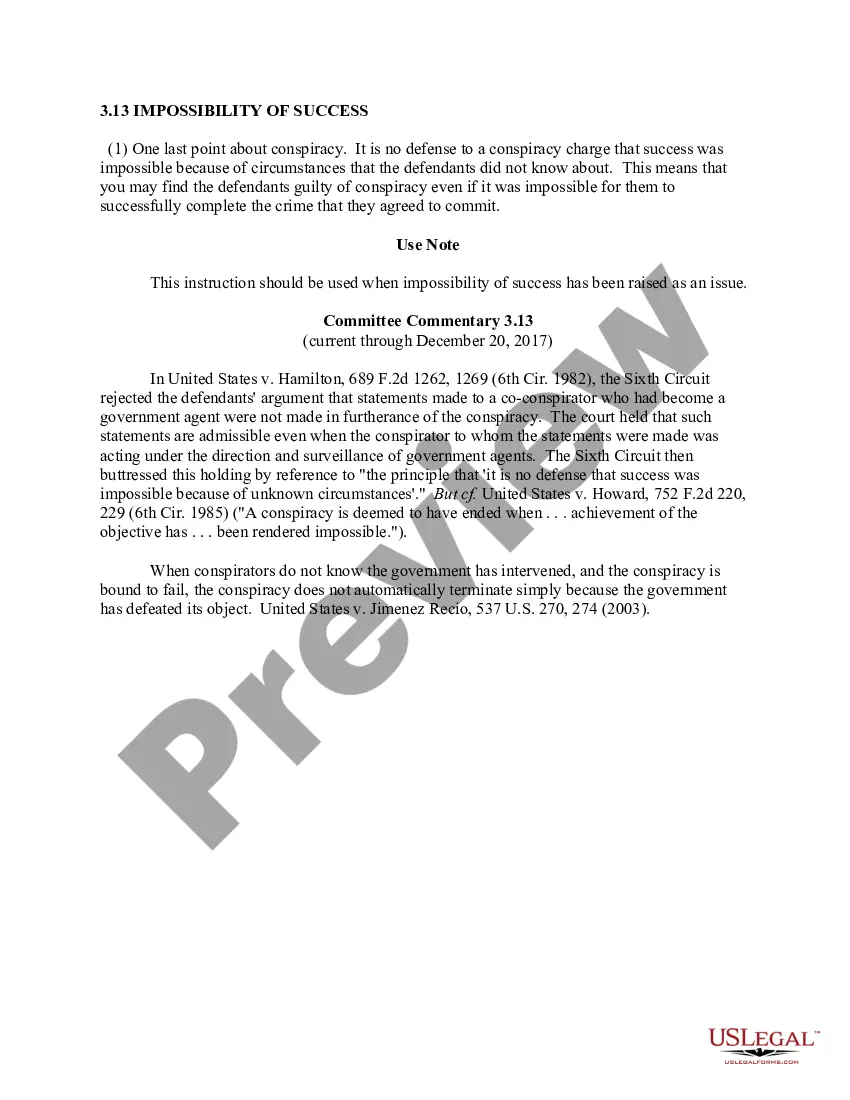
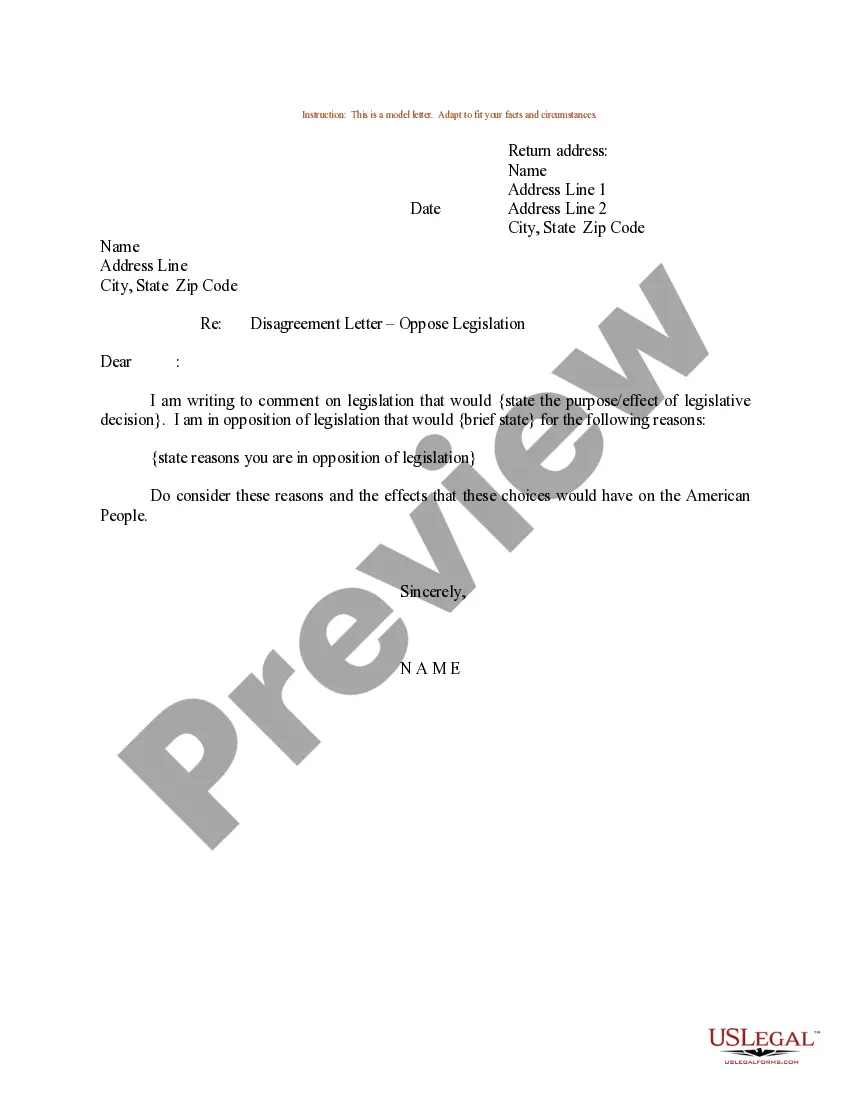
Michigan Sample Letter for Opposition to Legislation
Description
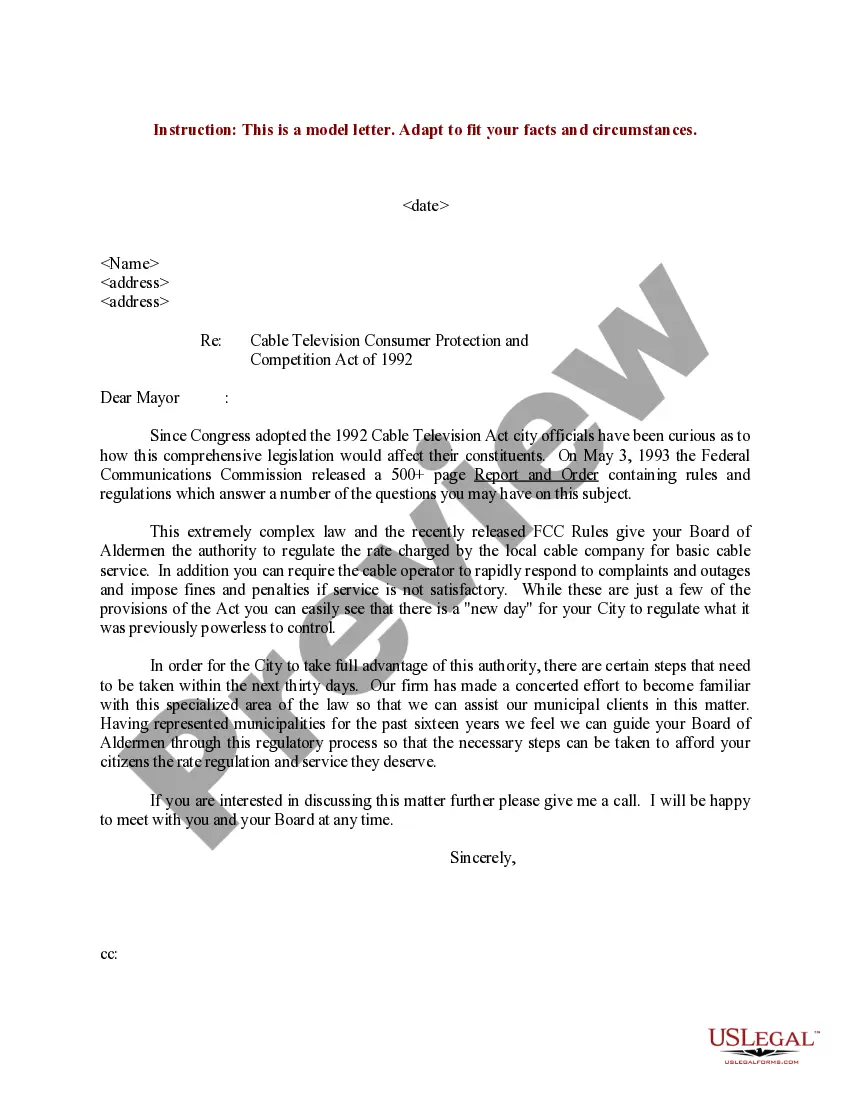
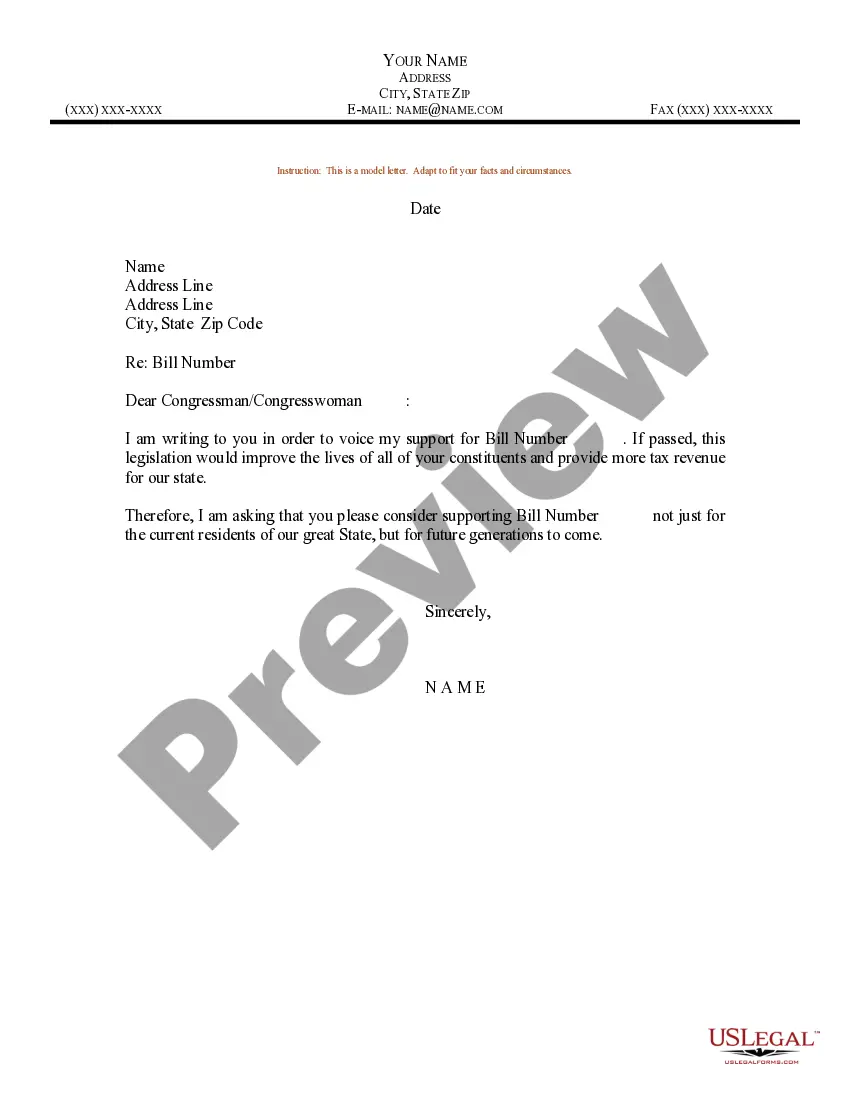
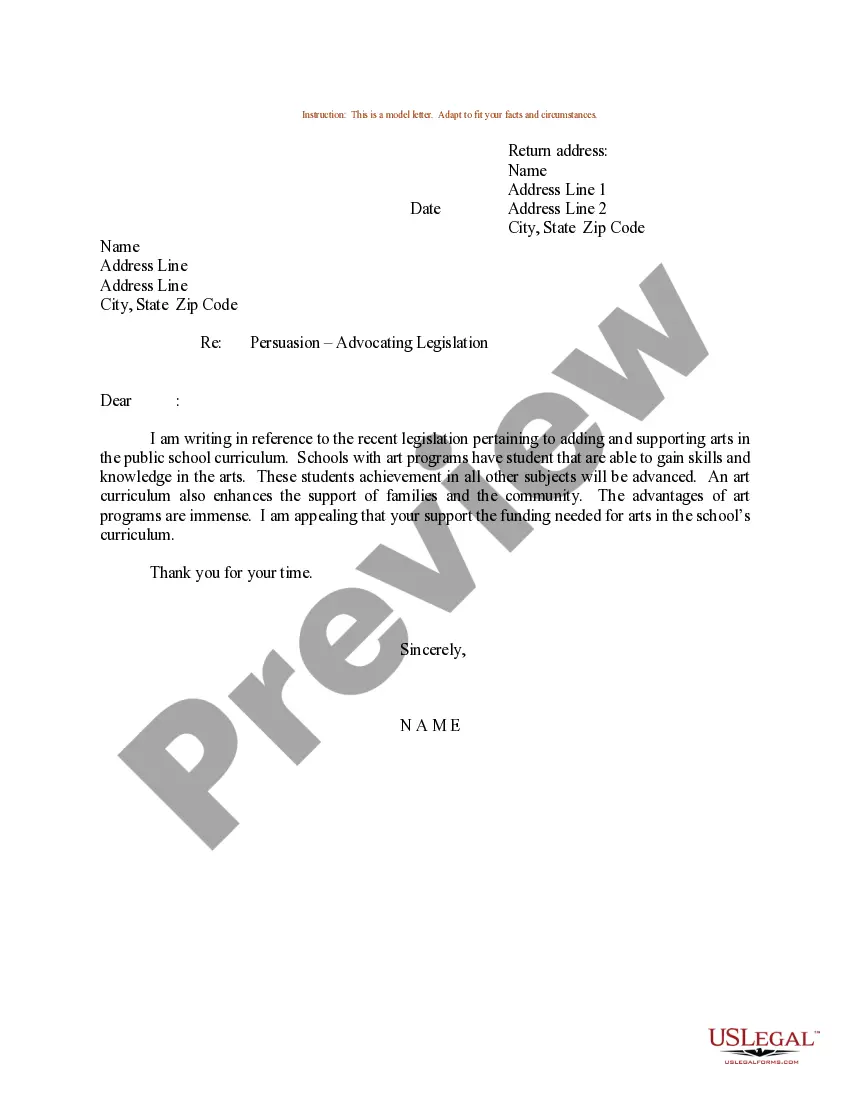
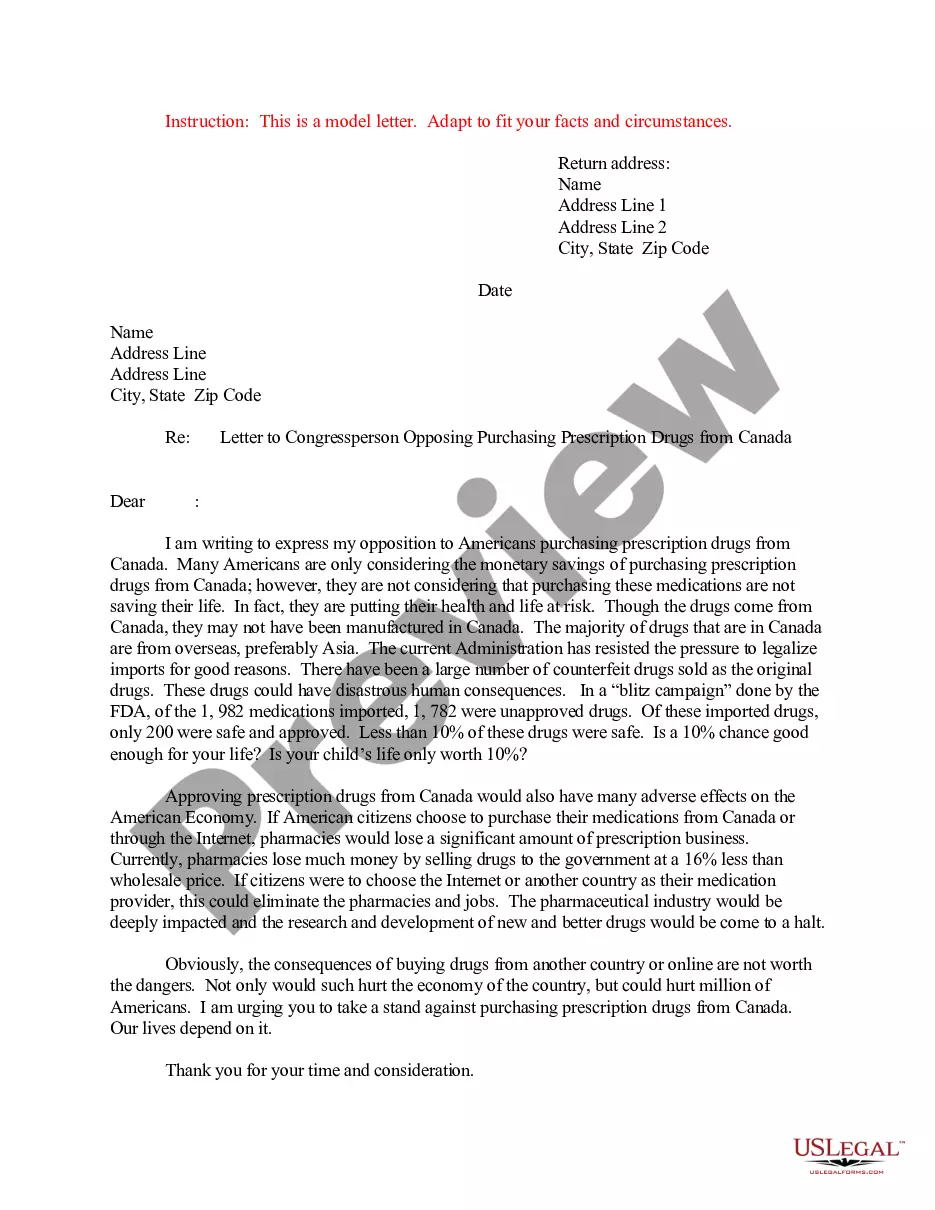
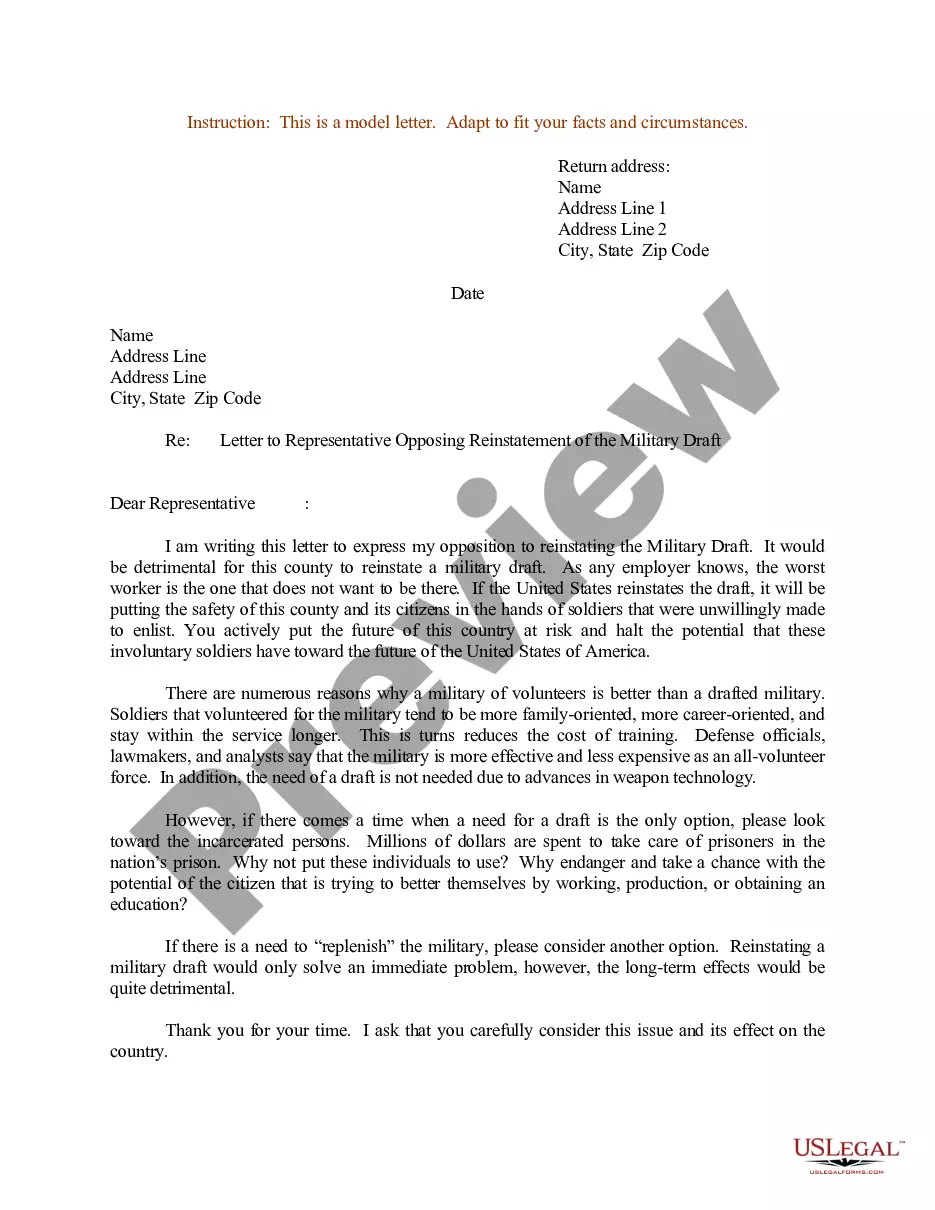
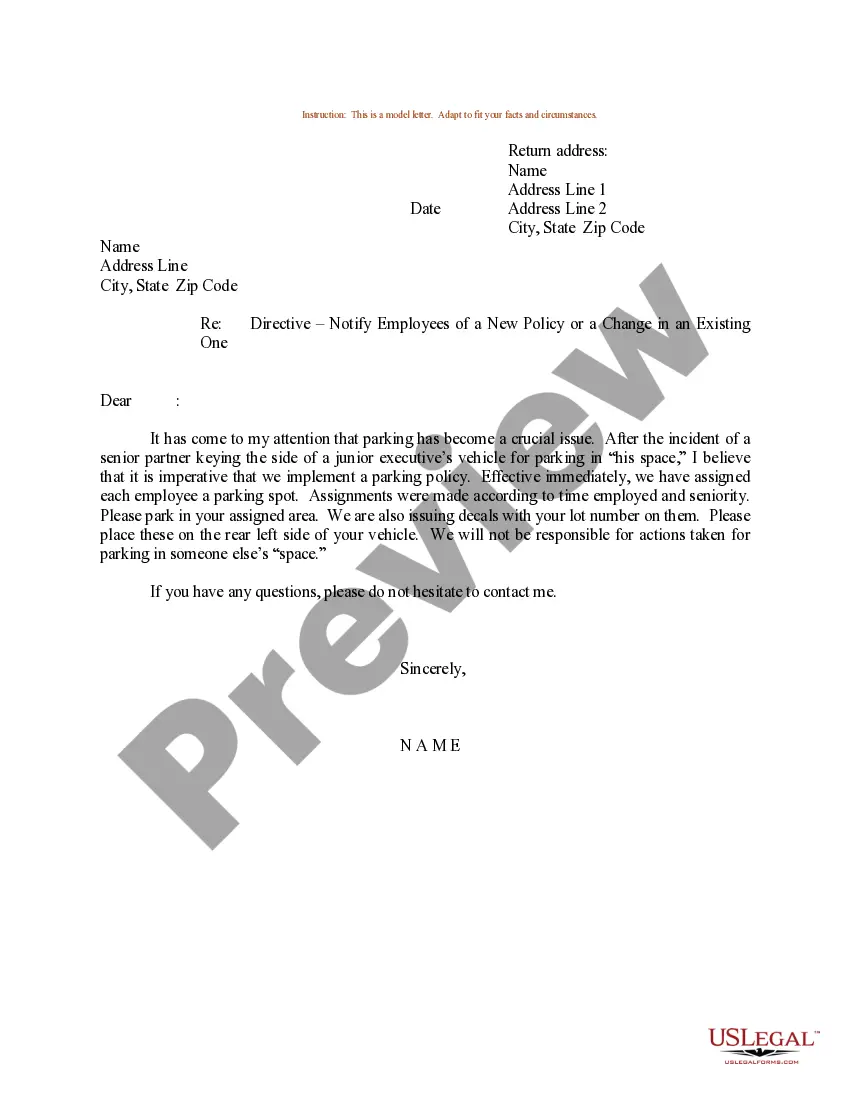



How to fill out Sample Letter For Opposition To Legislation?
If you need to thorough, obtain, or create valid document templates, utilize US Legal Forms, the largest collection of legal forms that can be accessed online.
Leverage the site`s straightforward and user-friendly search tool to locate the documents you require. Numerous templates for business and personal purposes are organized by categories, regions, or keywords.
Utilize US Legal Forms to acquire the Michigan Sample Letter for Opposition to Legislation in just a few clicks.
Step 4. Once you have found the form you need, select the Buy now option. Choose the payment plan you prefer and enter your details to create an account.
Step 5. Process the transaction. You can use your Visa or MasterCard or PayPal account to complete the payment. Step 6. Choose the format of the legal document and download it to your device. Step 7. Complete, edit, and print or sign the Michigan Sample Letter for Opposition to Legislation.
- If you are already a US Legal Forms customer, sign in to your account and then click the Download option to find the Michigan Sample Letter for Opposition to Legislation.
- You can also access forms you previously downloaded from the My documents section of your account.
- If you are using US Legal Forms for the first time, consult the steps below.
- Step 1. Confirm that you have selected the form for your specific city/state.
- Step 2. Use the Preview option to review the form`s details. Be sure to read the description.
- Step 3. If you are not satisfied with the form, use the Search box at the top of the screen to find alternative versions of the legal document template.
Form popularity
FAQ
Use Proper Salutation. The salutation should be "Dear Representative Smith" or Dear Senator Smith" or "Dear Assemblyman Smith" depending on the office held. The address should read: Honorable Jim Smith, Address, City, State, Zip.
Use your personal or. business address.Address your. legislator properly.State your. relafionship to the.Be factual. Be personal.Request a response. Include your fitle.Concentrate on a. single issue.Be specific about. what you want.Keep your letter. to one page.
State your subject clearly in the email subject line or first sentence of the letter. Stick to just one issue in the letter. Identify yourself as a constituent. State your views, support them with your expert knowledge and, when appropriate, cite the bill number of relevant legislation (e.g., H.R.
Explore this articleWriting Your Legislator.Address your legislator by his or her official title.Identify your issue.Make a compelling argument.Anticipate opposition.Ask your legislature to take action.
Date.Representative's Address.Salutation.Introduce yourself: your name, address and school to identify that you are a constituent.Why are you writing your Representative?Ask for a response.Thank your Representative for his/her time.Closing with your name.
Here are some important tips for your letter:Use letterhead.Verify the correct spelling of the legislator's name.Verify the correct title to use when addressing the legislator.Keep it short (one page maximum).Identify the issue.If the issue is a particular bill, verify the full name and bill number.More items...
Here are some important tips for your letter:Use letterhead.Verify the correct spelling of the legislator's name.Verify the correct title to use when addressing the legislator.Keep it short (one page maximum).Identify the issue.If the issue is a particular bill, verify the full name and bill number.More items...
Here are some important tips for your letter:Use letterhead.Verify the correct spelling of the legislator's name.Verify the correct title to use when addressing the legislator.Keep it short (one page maximum).Identify the issue.If the issue is a particular bill, verify the full name and bill number.More items...
State your subject clearly in the email subject line or first sentence of the letter. Stick to just one issue in the letter. Identify yourself as a constituent. State your views, support them with your expert knowledge and, when appropriate, cite the bill number of relevant legislation (e.g., H.R.
First Paragraph: My name is Your Name and I'm writing to ask that you Action.Establish the relationship. Introduce yourself and how you're related to the recipient.State your what and your why. Limit yourself to one specific action so as to not draw attention away from the issues you may find more important!