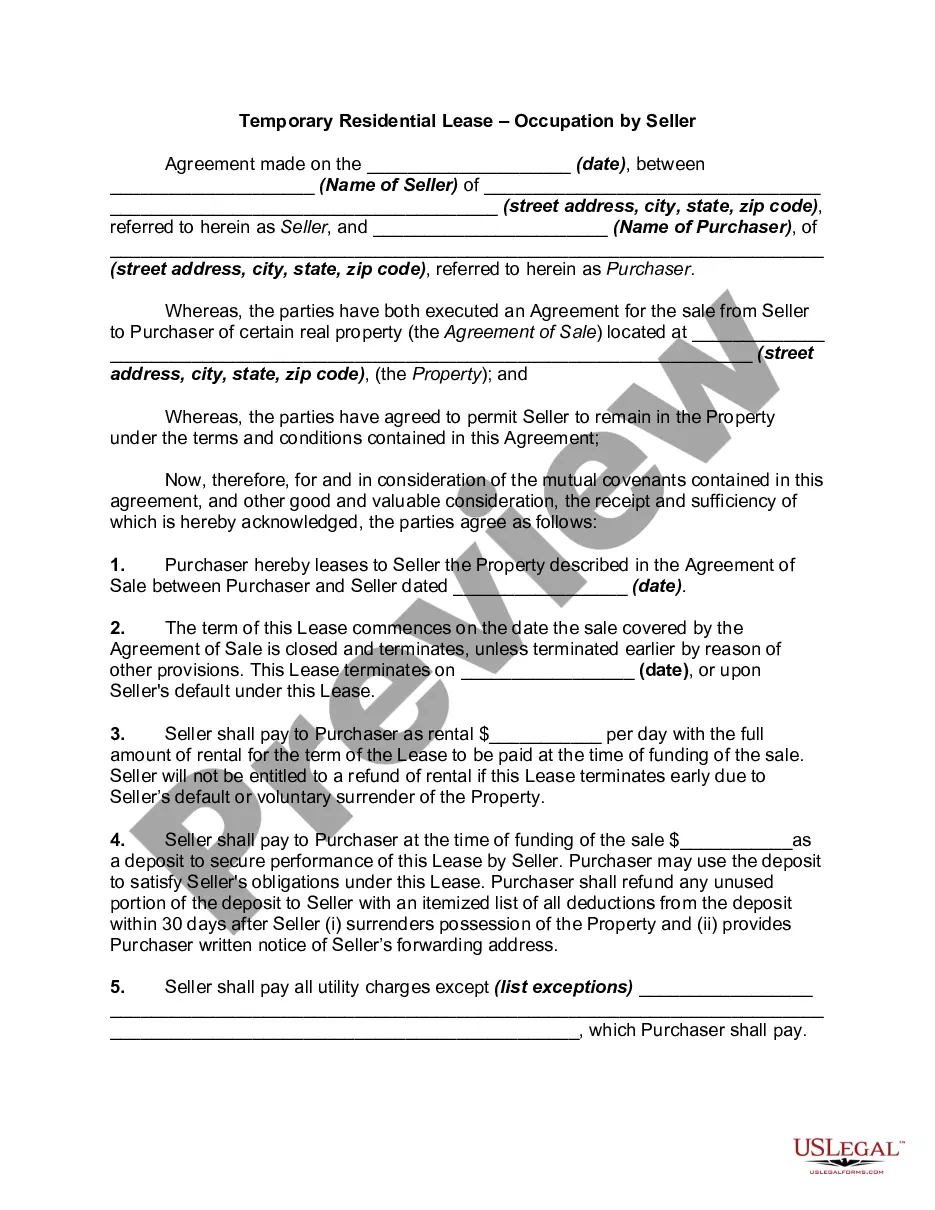
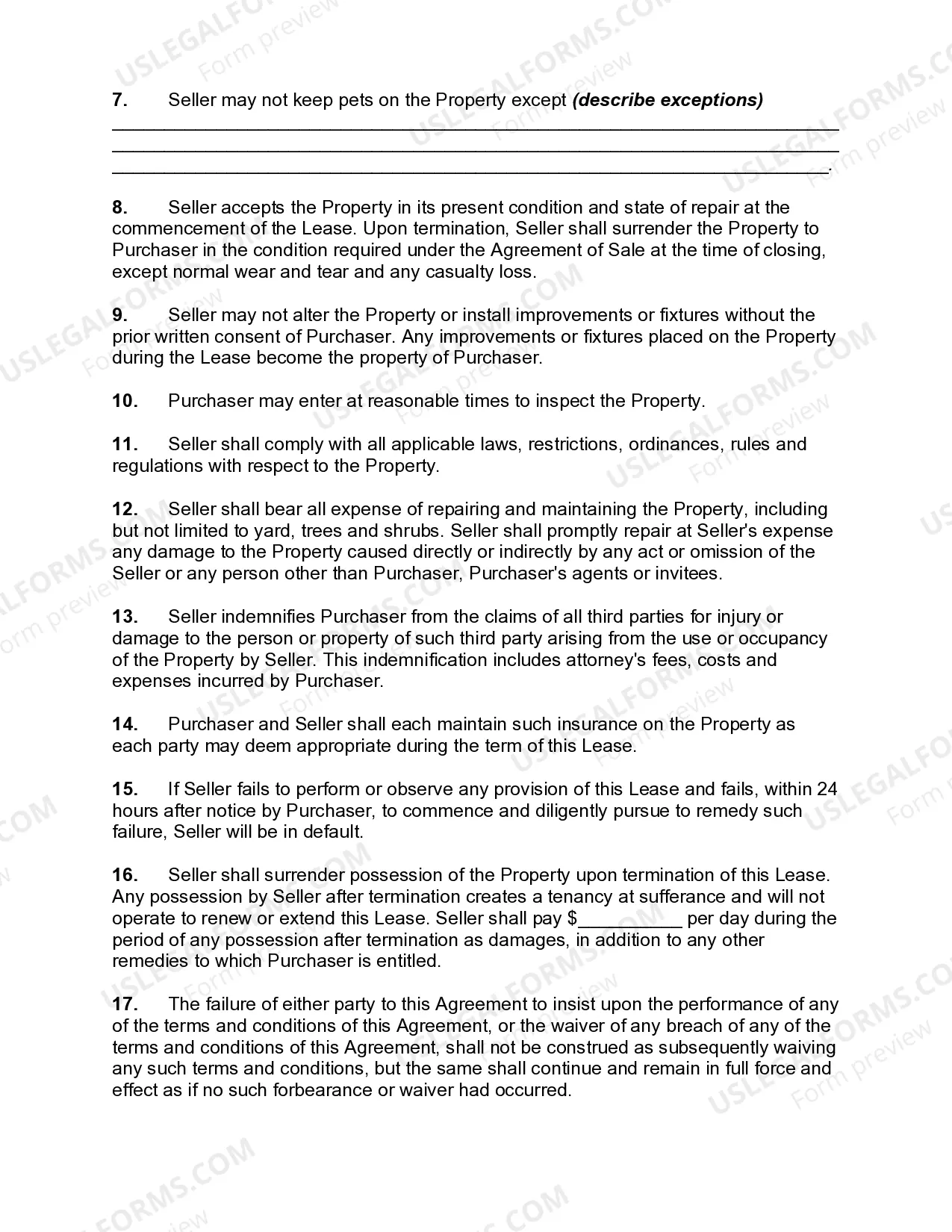
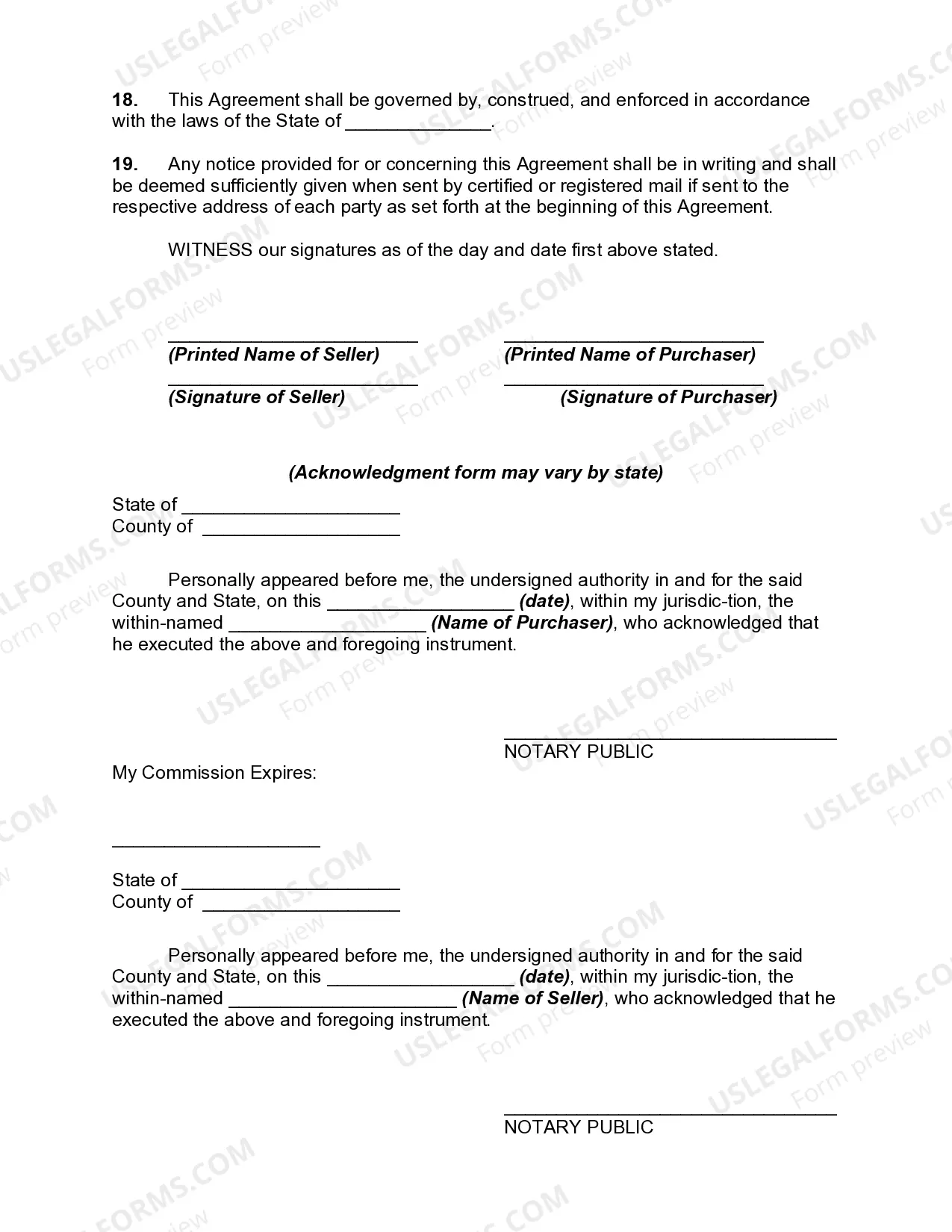
Michigan Temporary Residential Lease - Occupation by Seller - Post-Closing
Description

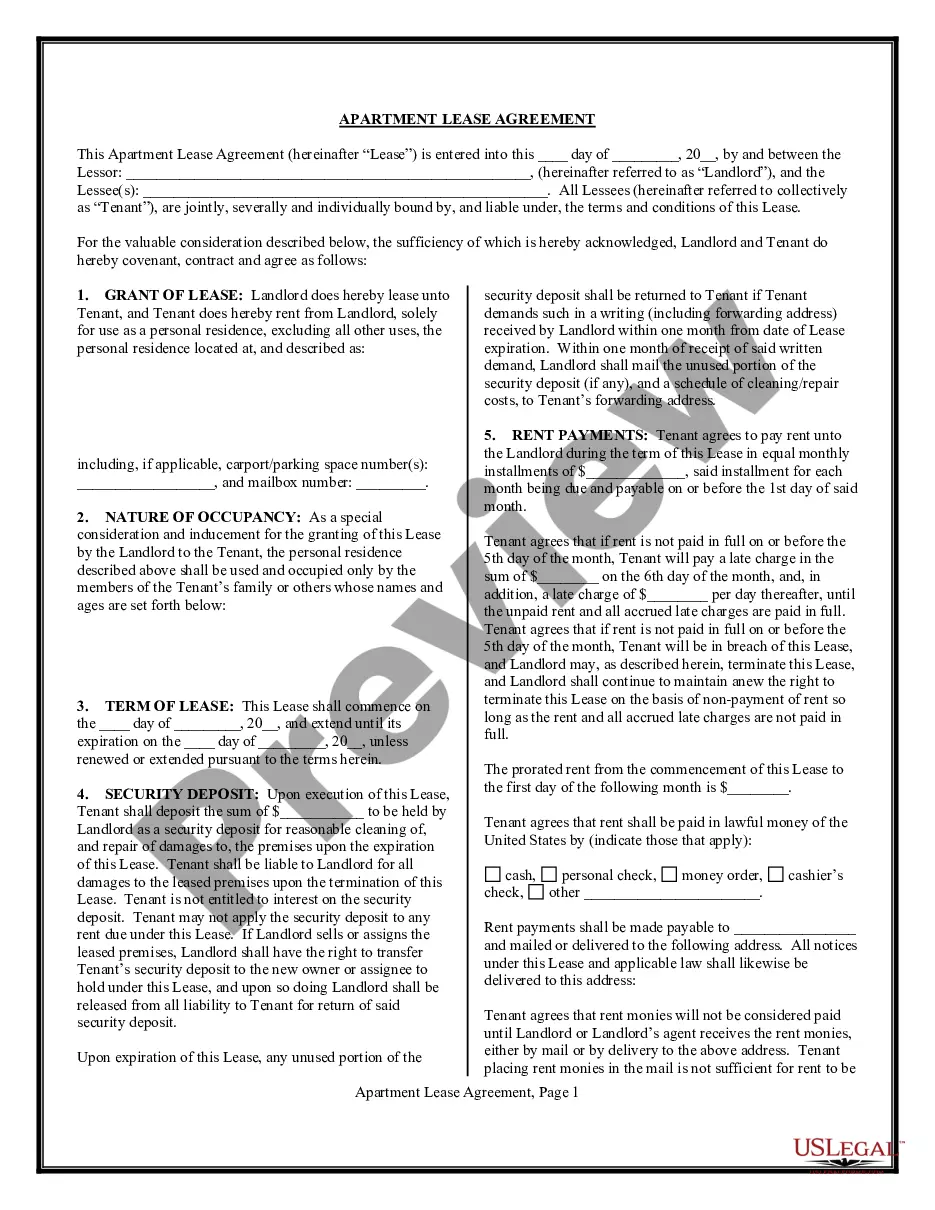
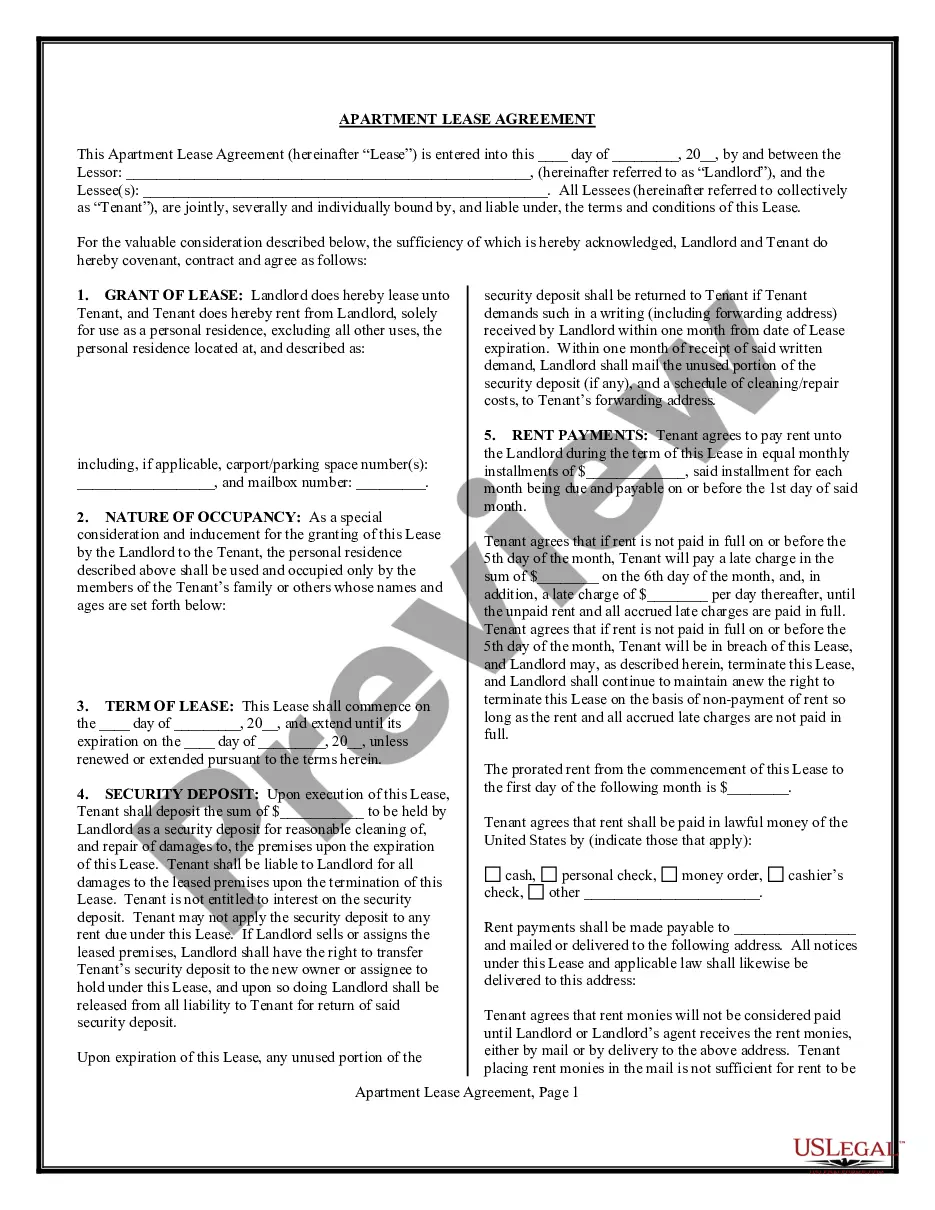
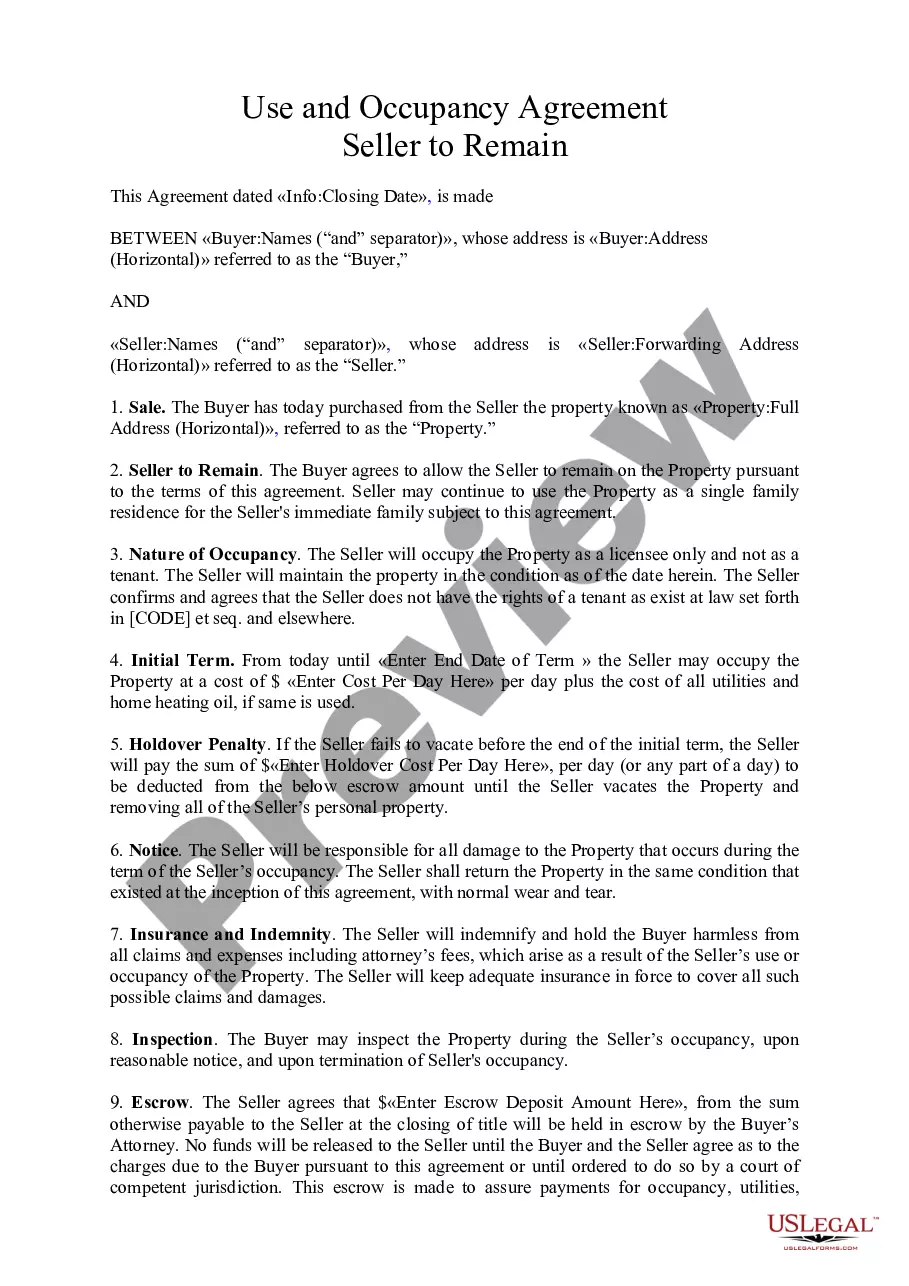
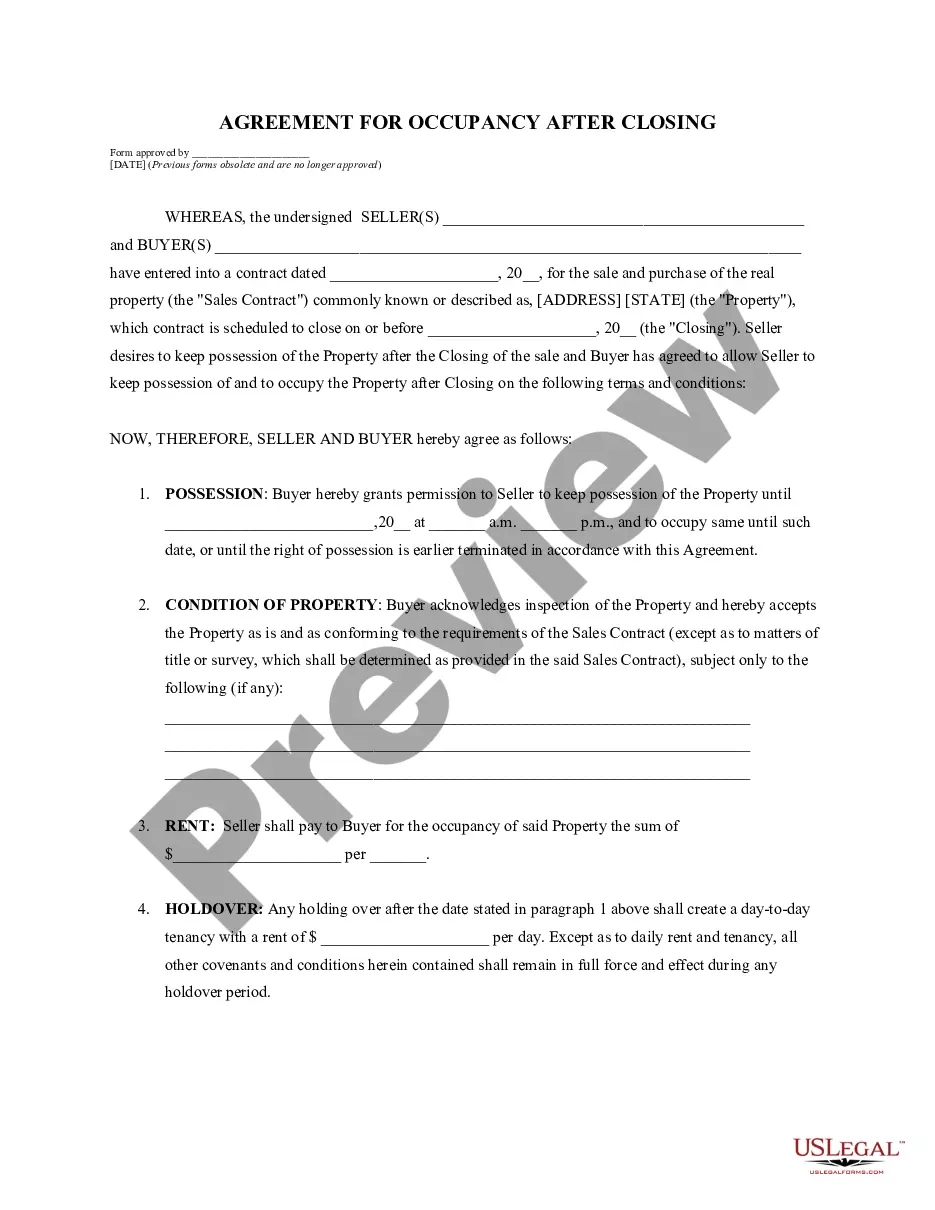
Get your form ready online
Our built-in tools help you complete, sign, share, and store your documents in one place.
Make edits, fill in missing information, and update formatting in US Legal Forms—just like you would in MS Word.
Download a copy, print it, send it by email, or mail it via USPS—whatever works best for your next step.
Sign and collect signatures with our SignNow integration. Send to multiple recipients, set reminders, and more. Go Premium to unlock E-Sign.
If this form requires notarization, complete it online through a secure video call—no need to meet a notary in person or wait for an appointment.
We protect your documents and personal data by following strict security and privacy standards.

Make edits, fill in missing information, and update formatting in US Legal Forms—just like you would in MS Word.

Download a copy, print it, send it by email, or mail it via USPS—whatever works best for your next step.

Sign and collect signatures with our SignNow integration. Send to multiple recipients, set reminders, and more. Go Premium to unlock E-Sign.

If this form requires notarization, complete it online through a secure video call—no need to meet a notary in person or wait for an appointment.

We protect your documents and personal data by following strict security and privacy standards.
Looking for another form?
How to fill out Temporary Residential Lease - Occupation By Seller - Post-Closing?
If you need to obtain, download, or print legal document templates, utilize US Legal Forms, the largest collection of legal forms available online.
Take advantage of the site's user-friendly and efficient search functionality to locate the documents you need.
A wide array of templates for business and personal purposes are categorized by type, state, or keywords.
Step 4. Once you have found the form you need, select the Purchase now button. Choose your preferred pricing plan and enter your details to register for an account.
Step 5. Complete the transaction. You may use your credit card or PayPal account to finalize the purchase.
- Utilize US Legal Forms to access the Michigan Temporary Residential Lease - Occupation by Seller - Post-Closing in just a few clicks.
- If you are already a client of US Legal Forms, sign in to your account and click the Acquire button to locate the Michigan Temporary Residential Lease - Occupation by Seller - Post-Closing.
- You can also find previously downloaded forms in the My documents section of your account.
- If you are using US Legal Forms for the first time, follow these steps.
- Step 1. Ensure you have selected the form for the correct city/state.
- Step 2. Use the Review option to examine the contents of the form. Remember to read through the summary.
- Step 3. If you are not satisfied with the form, use the Lookup section at the top of the screen to find other versions of the legal form template.
Form popularity
FAQ
Calculating temporary occupancy involves determining the number of days the seller will remain in the home after closing, as per the terms set in the Michigan Temporary Residential Lease - Occupation by Seller - Post-Closing. Factors such as move-out dates and any agreed-upon rental costs may influence this calculation. Proper documentation and clear communication help ensure everyone understands the arrangement.
The duration sellers have to move after closing is determined by the agreements outlined in the Michigan Temporary Residential Lease - Occupation by Seller - Post-Closing. Typically, this timeframe can vary from a few days to a longer period, depending on what both parties have negotiated. Clearly defining this timeframe helps facilitate the seller’s transition and protects the buyer’s interests.
When a seller stays in the house after closing, it is referred to as post closing occupancy. This situation is commonly handled through a Michigan Temporary Residential Lease - Occupation by Seller - Post-Closing. This term ensures that legal parameters govern the seller's living arrangement until they officially vacate the property.
Seller occupancy after closing refers to the seller's right to live in the property for a designated time frame post-closing. This arrangement is detailed in the Michigan Temporary Residential Lease - Occupation by Seller - Post-Closing and allows sellers to manage their moving timeline effectively. This can ease the transition process and ensure a more amicable relationship between the buyer and seller.
Temporary occupancy for a seller after closing often ranges from a few days to several weeks, depending on the terms stipulated in the Michigan Temporary Residential Lease - Occupation by Seller - Post-Closing. Sellers may require extra time to move out, and this clause provides them with the necessary flexibility. It is crucial to define these terms clearly to avoid misunderstandings later.
You typically gain possession of the property immediately upon the closing process completion. However, if there is a post closing occupancy clause in the Michigan Temporary Residential Lease - Occupation by Seller - Post-Closing agreement, the seller may stay for an agreed-upon period. This arrangement ensures clarity and helps to facilitate a smooth transition for both parties.
The post closing occupancy clause allows the seller to remain in the property for a specified period after the closing date. This clause is part of the Michigan Temporary Residential Lease - Occupation by Seller - Post-Closing agreement. It clearly outlines the duration and conditions under which the seller can occupy the home, ensuring both parties understand their rights and responsibilities.
Post-closing occupancy means that the seller remains in the property after the closing date as per the terms of a lease agreement. In the context of a Michigan Temporary Residential Lease - Occupation by Seller - Post-Closing, this arrangement allows sellers to stay longer while buyers assume ownership. This setup requires careful planning to ensure both parties' rights are respected and to facilitate a smooth transition.
Post occupancy refers to the period during which the seller continues to occupy the property after the sale has officially closed. In a Michigan Temporary Residential Lease - Occupation by Seller - Post-Closing, this arrangement benefits sellers who need additional time to relocate while providing buyers with the assurance that ownership has transferred. This term clarifies the seller's rights and responsibilities during this transitional phase.
Post-closing possession can carry risks for both sellers and buyers within a Michigan Temporary Residential Lease - Occupation by Seller - Post-Closing. Sellers may face the risk of damaging the property or failing to vacate on time, while buyers might deal with issues like property management and maintenance. It's essential to have a well-structured lease to mitigate these risks and clearly define expectations for both parties.