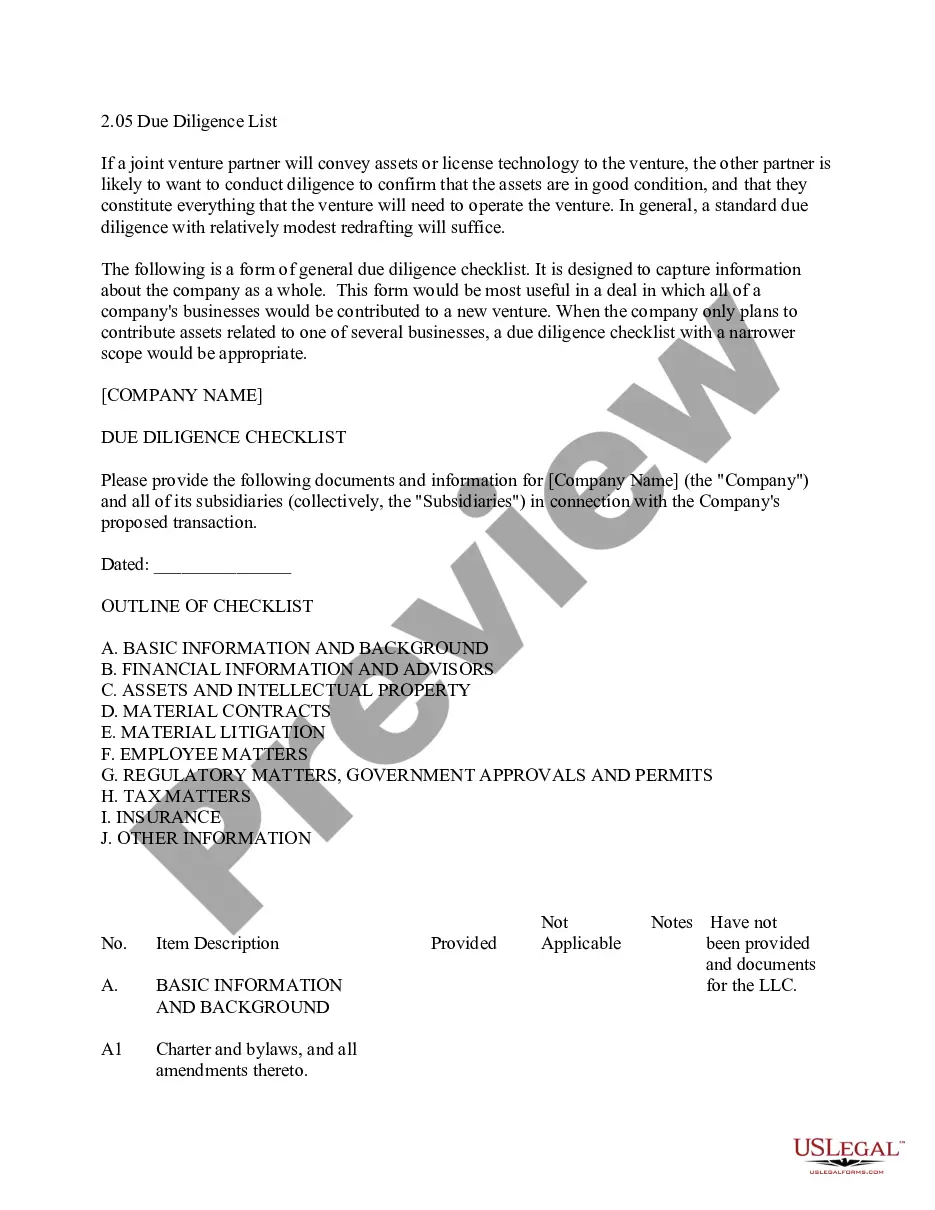
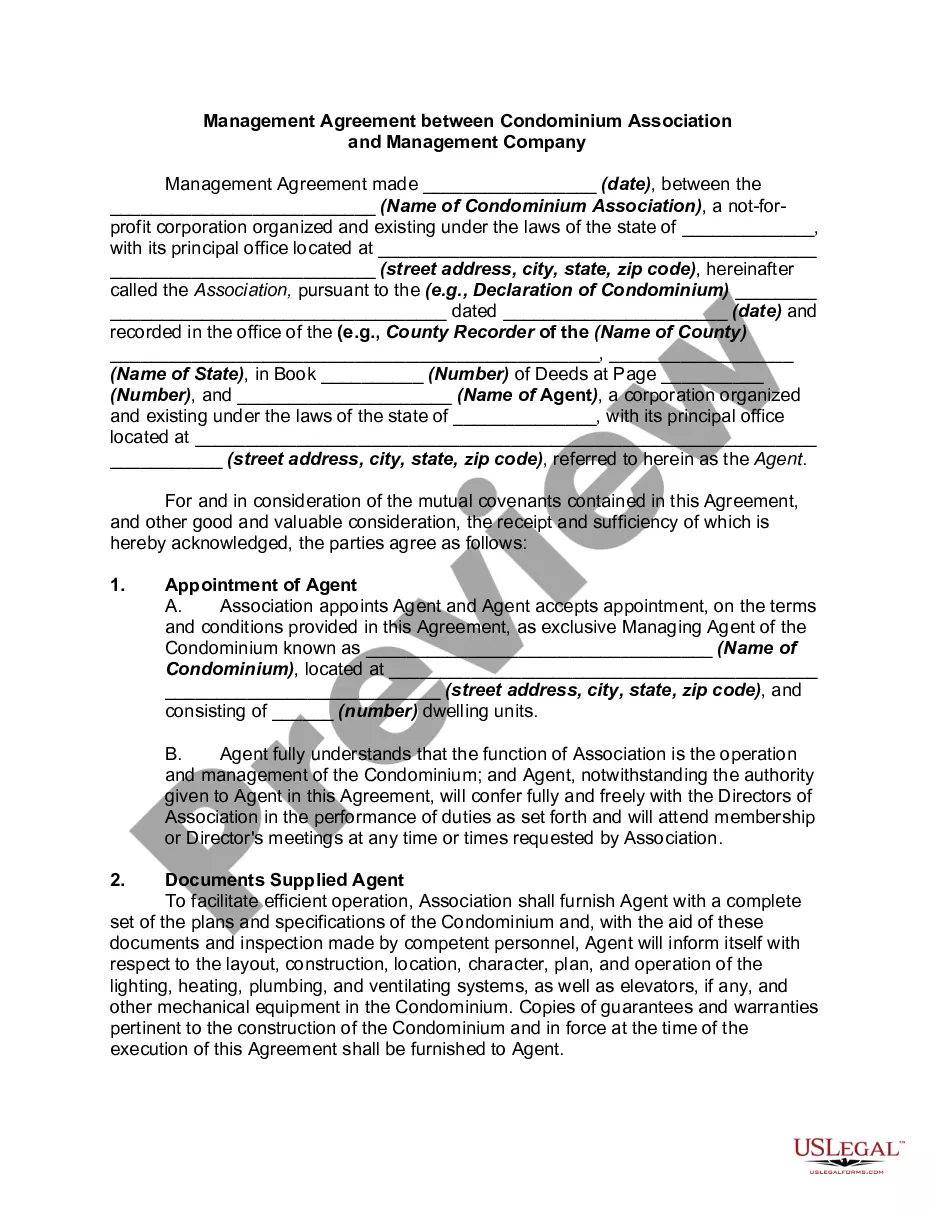
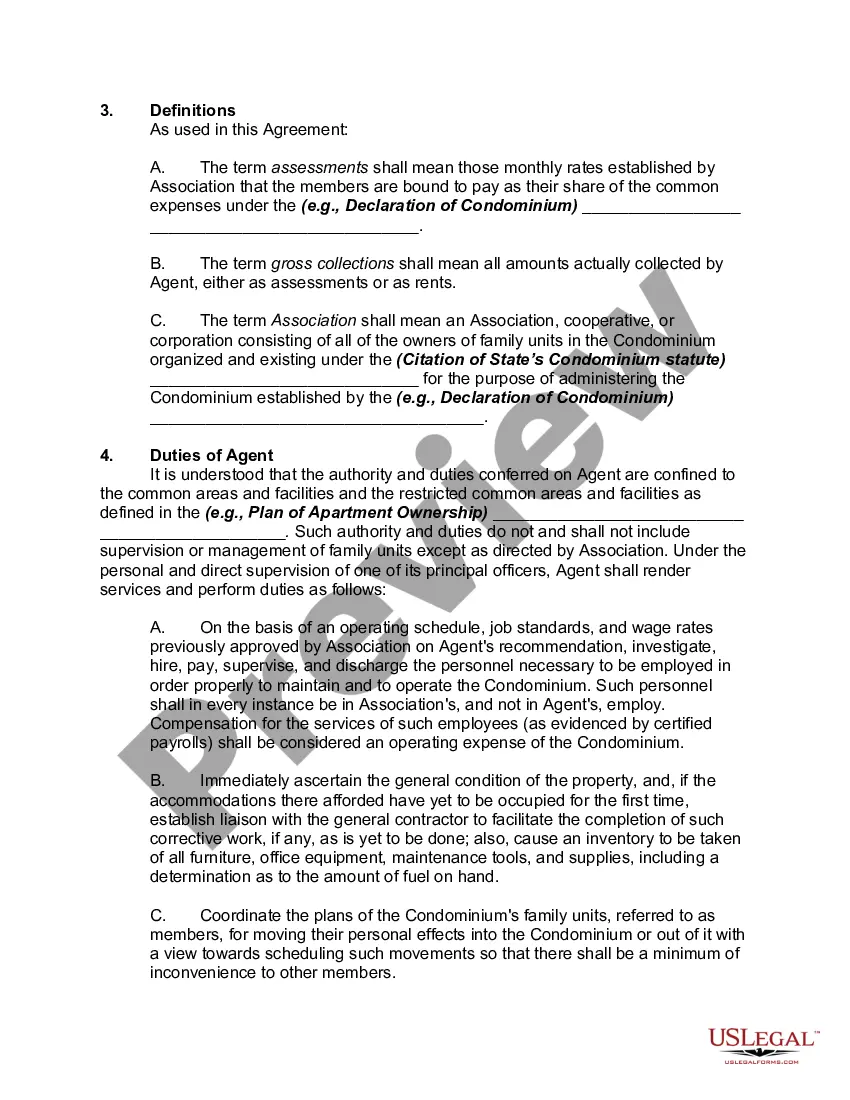
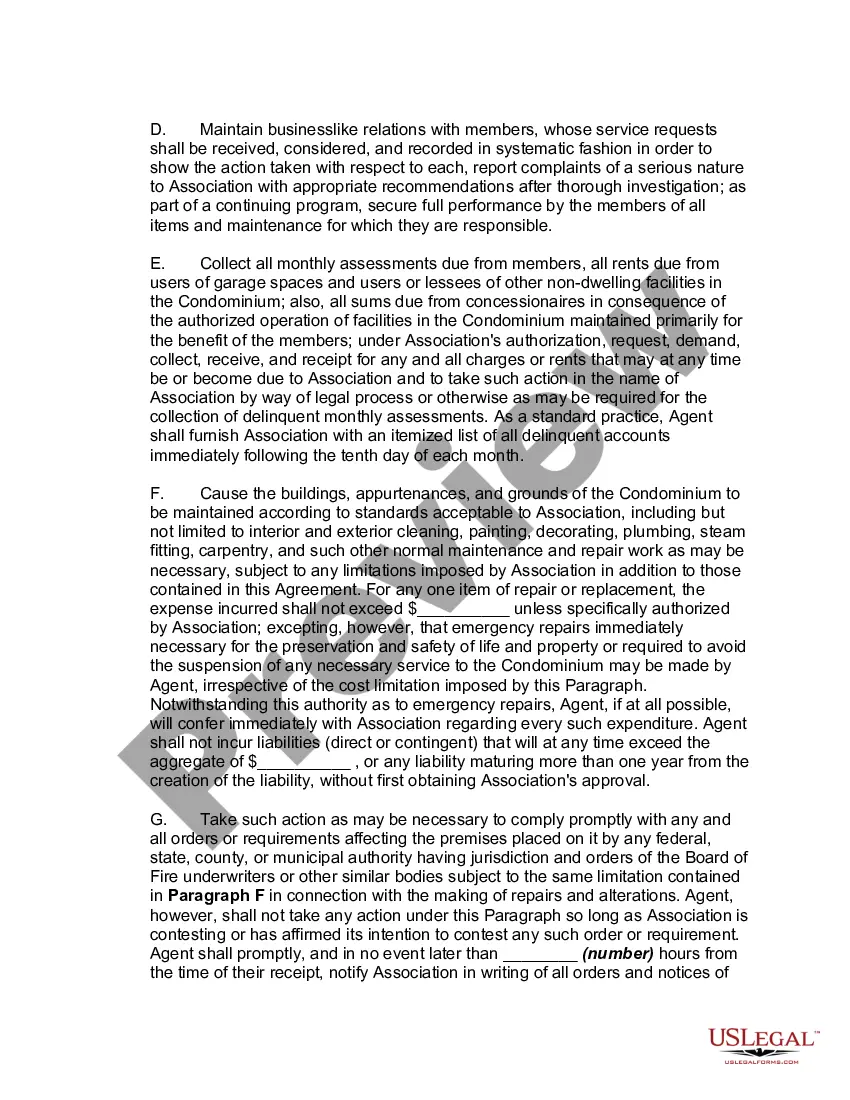
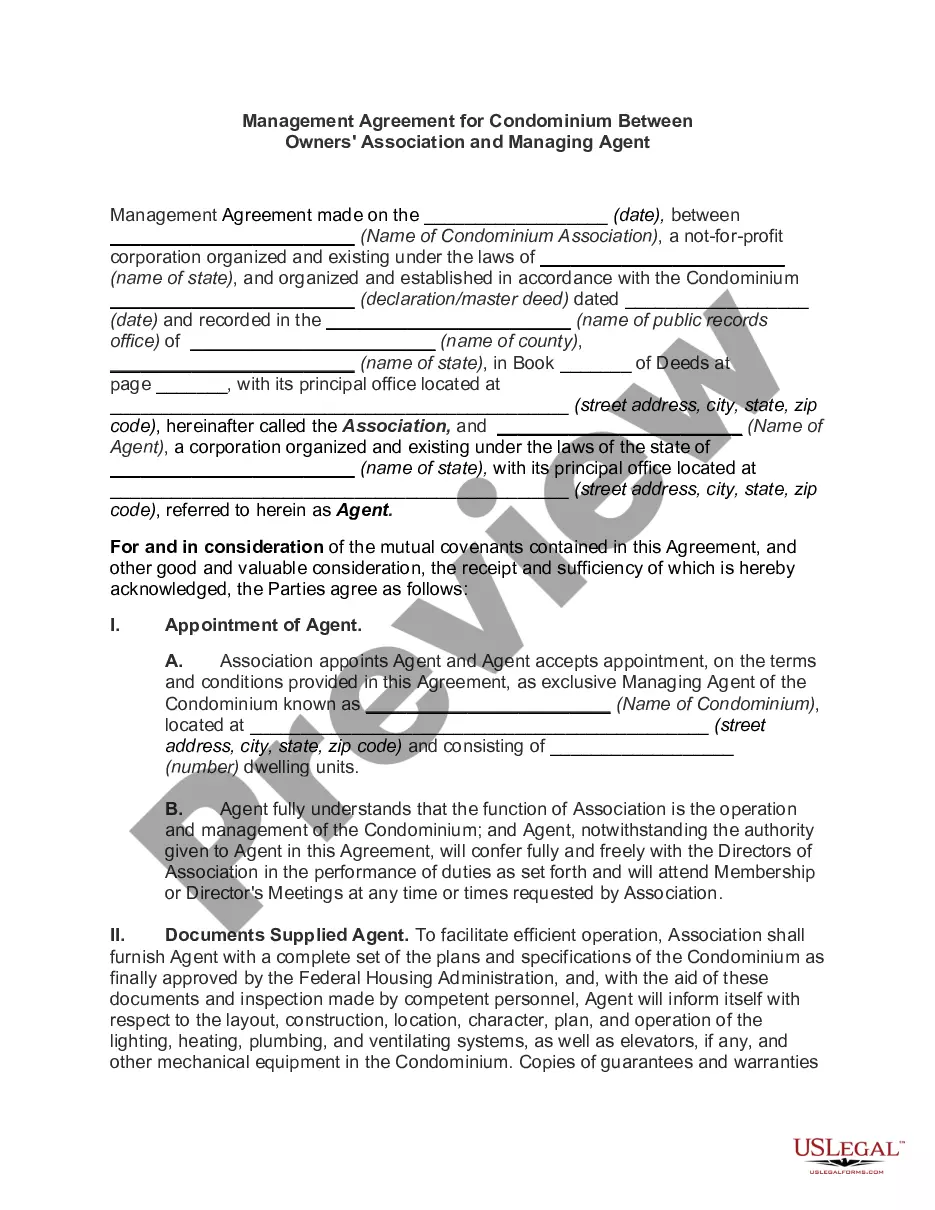
Michigan Management Agreement between Condominium Association and Management
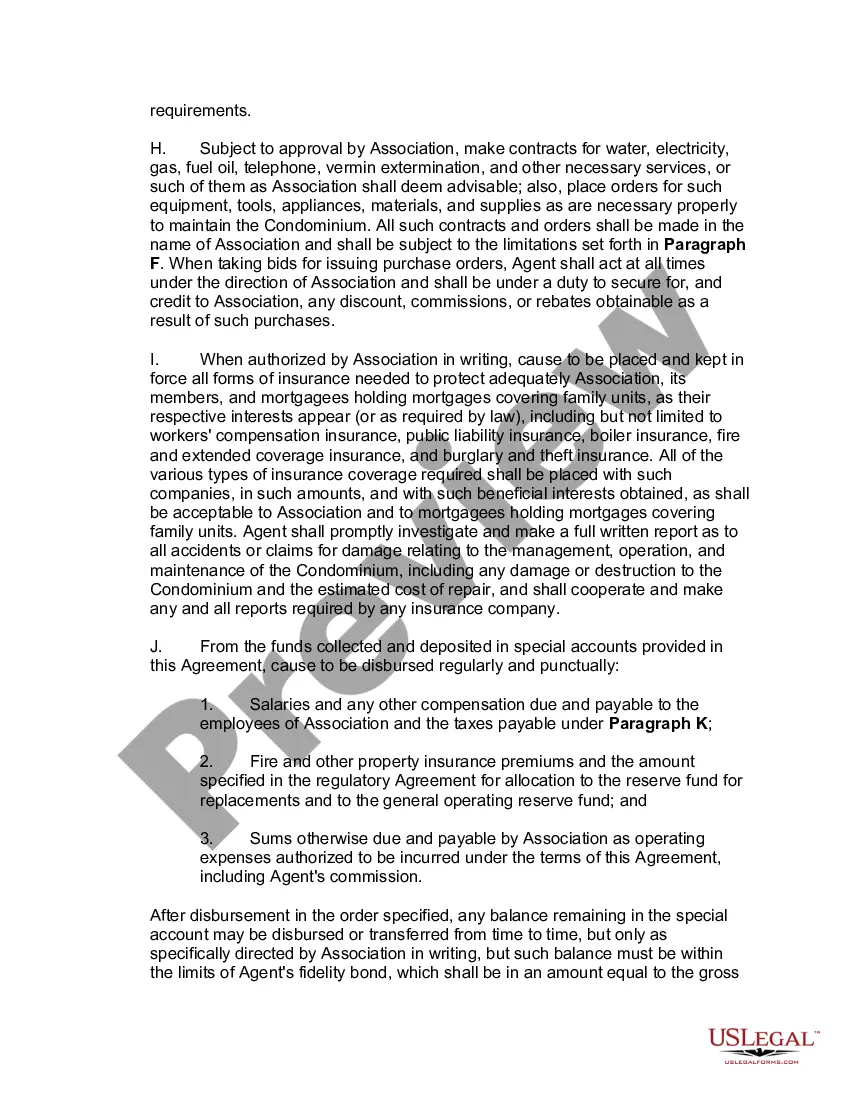
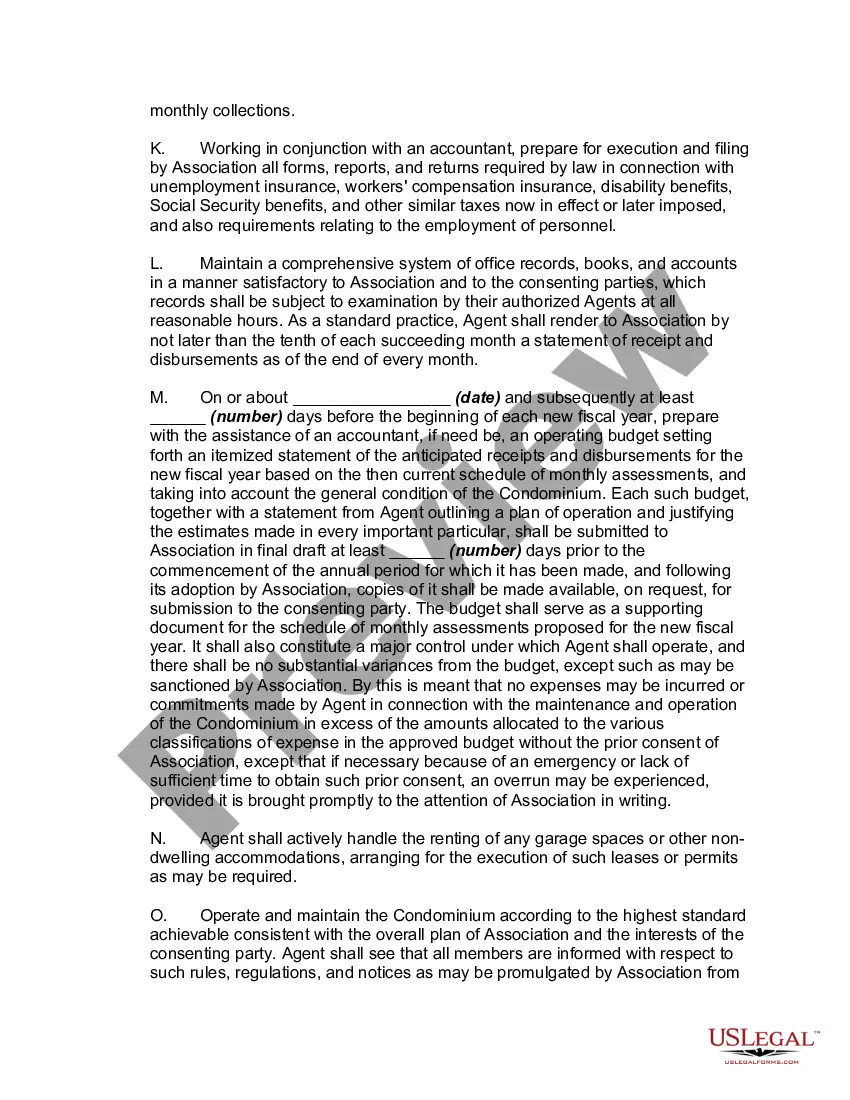
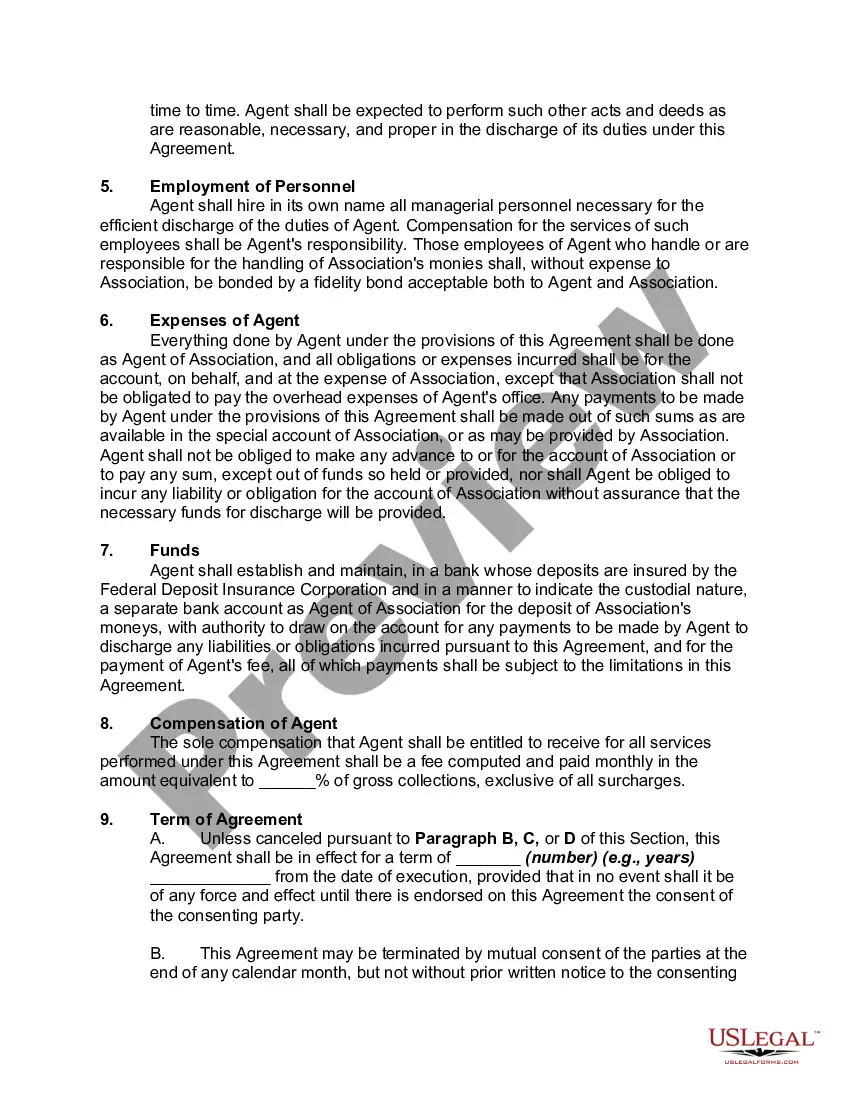
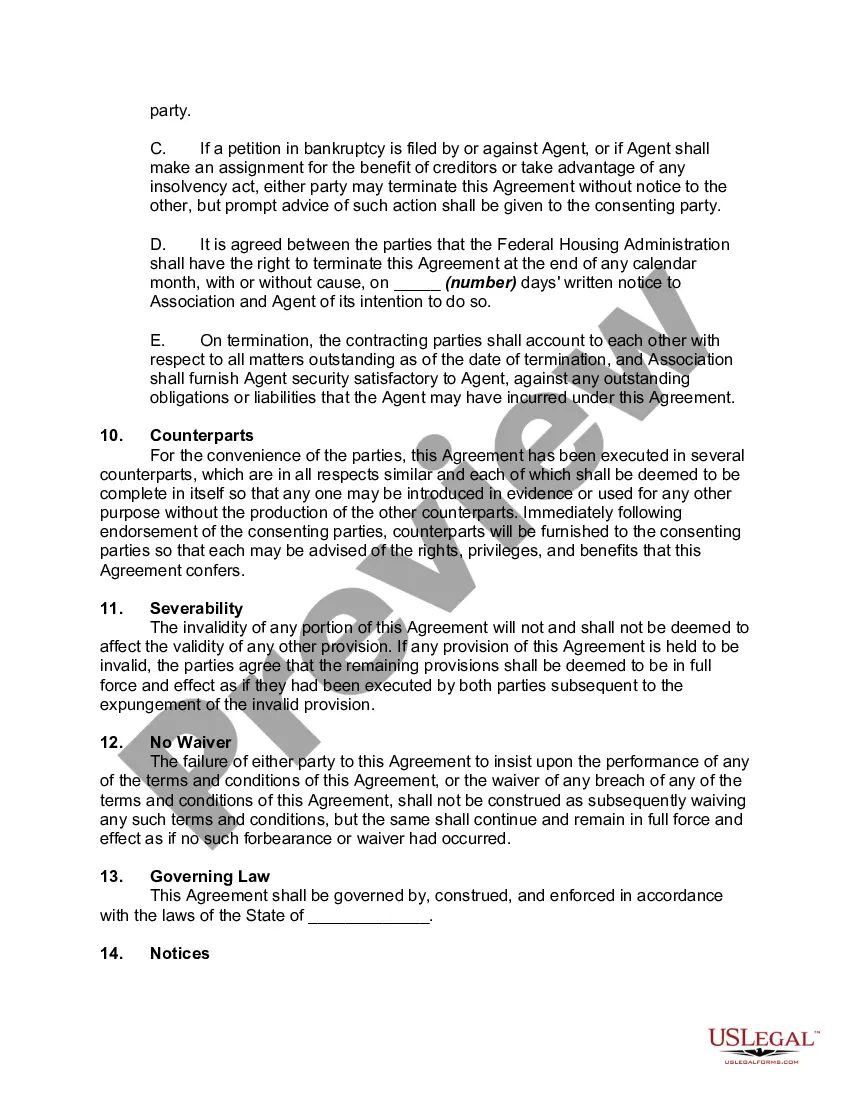
Description
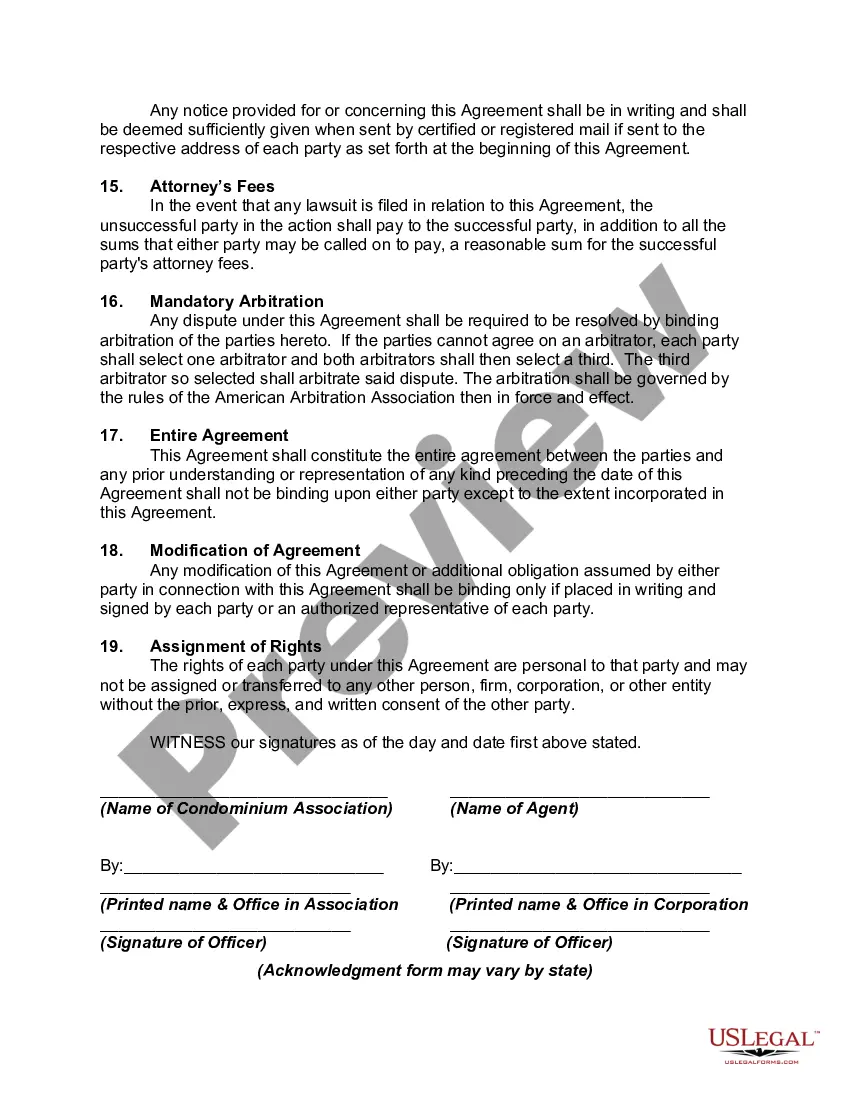
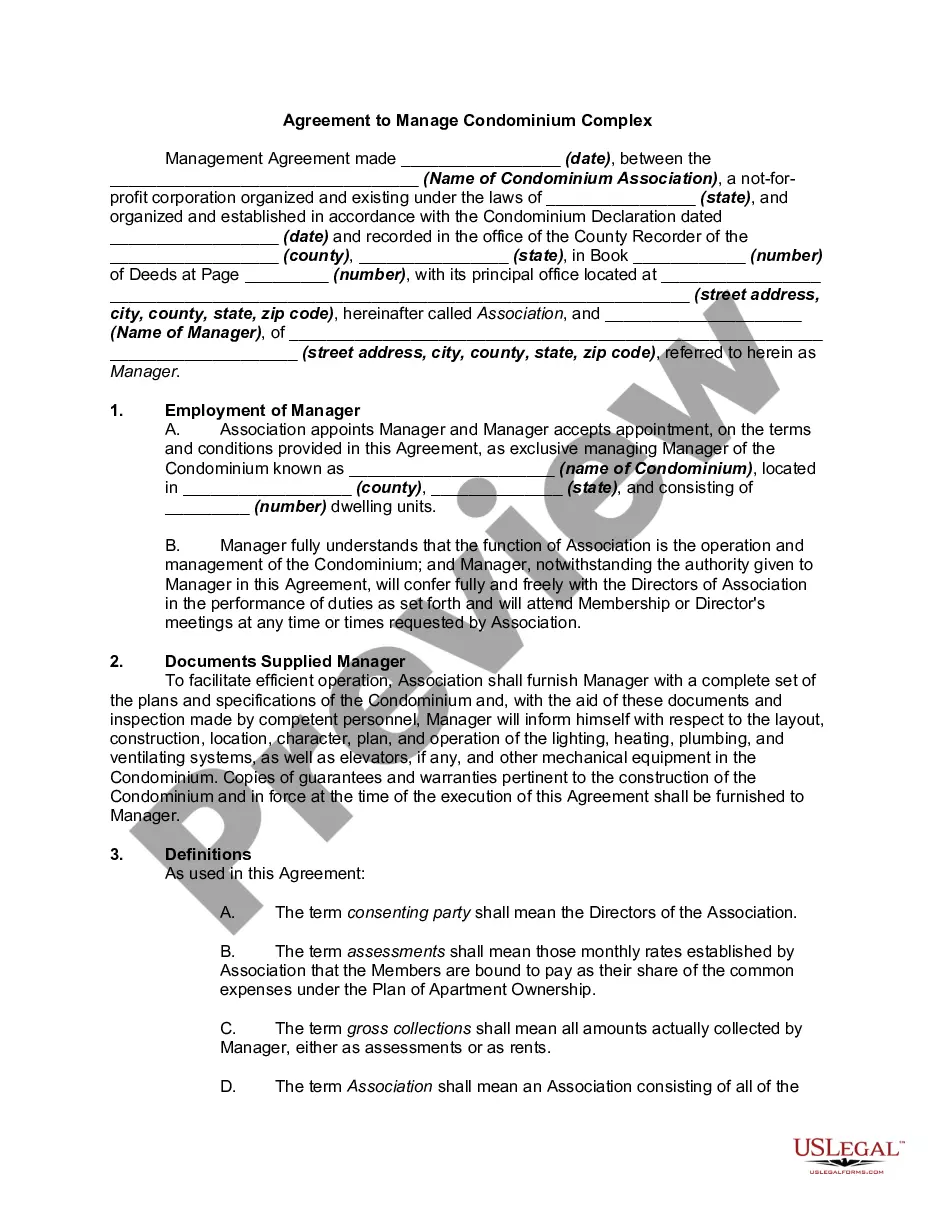
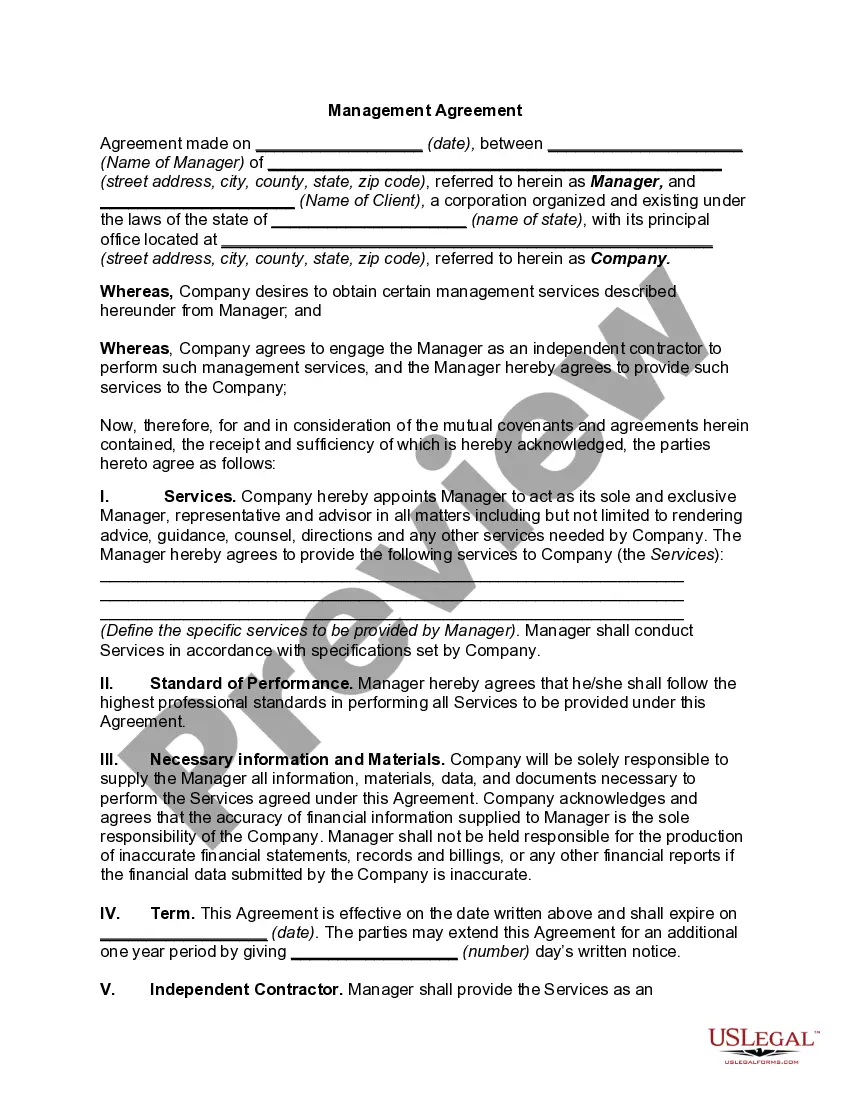
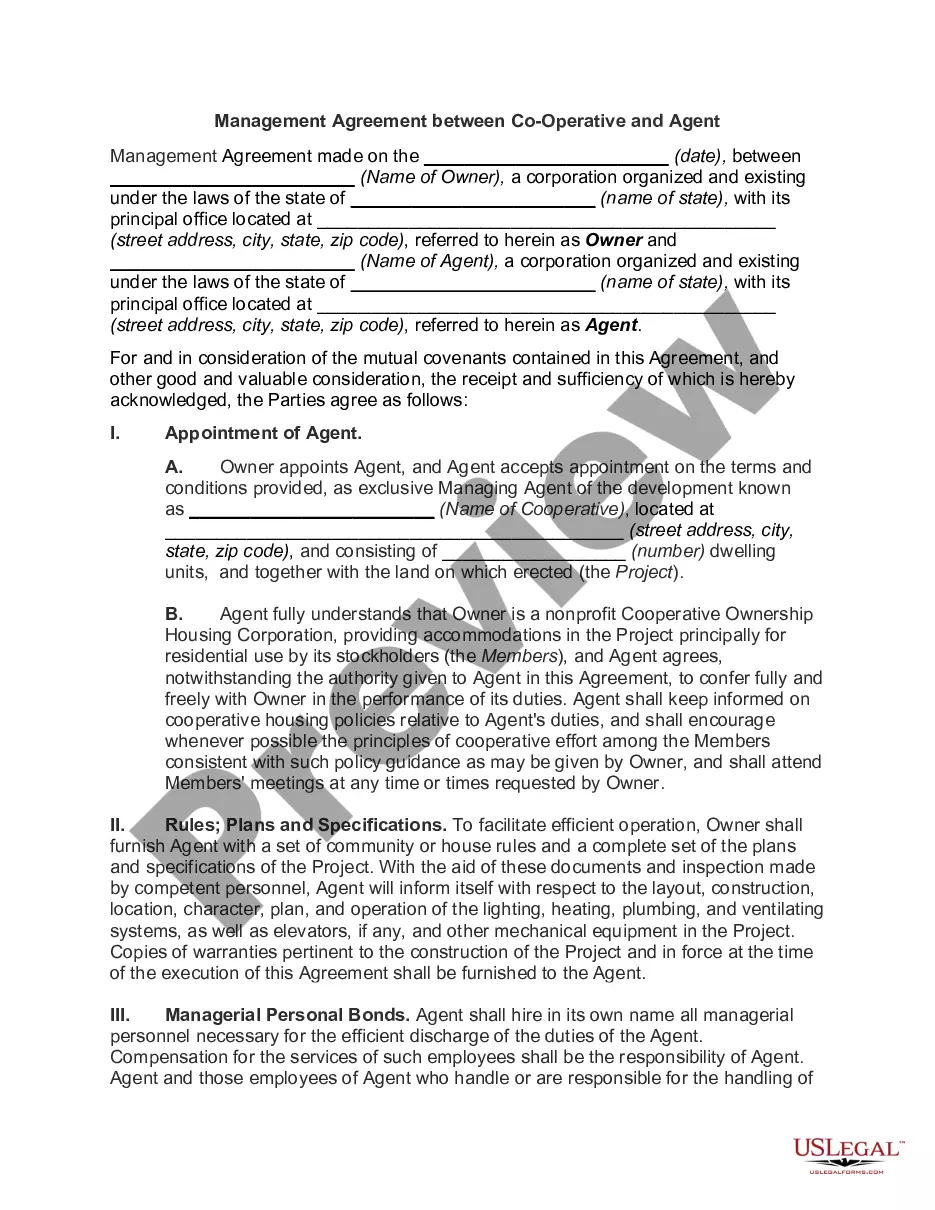
Get your form ready online
Our built-in tools help you complete, sign, share, and store your documents in one place.
Make edits, fill in missing information, and update formatting in US Legal Forms—just like you would in MS Word.
Download a copy, print it, send it by email, or mail it via USPS—whatever works best for your next step.
Sign and collect signatures with our SignNow integration. Send to multiple recipients, set reminders, and more. Go Premium to unlock E-Sign.
If this form requires notarization, complete it online through a secure video call—no need to meet a notary in person or wait for an appointment.
We protect your documents and personal data by following strict security and privacy standards.

Make edits, fill in missing information, and update formatting in US Legal Forms—just like you would in MS Word.

Download a copy, print it, send it by email, or mail it via USPS—whatever works best for your next step.

Sign and collect signatures with our SignNow integration. Send to multiple recipients, set reminders, and more. Go Premium to unlock E-Sign.

If this form requires notarization, complete it online through a secure video call—no need to meet a notary in person or wait for an appointment.

We protect your documents and personal data by following strict security and privacy standards.
Looking for another form?



How to fill out Management Agreement Between Condominium Association And Management?
Selecting the top authentic document template can be a challenge.
Of course, there are numerous templates accessible online, but how can you locate the actual document you require.
Utilize the US Legal Forms website. The service offers thousands of templates, including the Michigan Management Agreement between Condominium Association and Management, which you can use for business and personal purposes.
First, ensure you have selected the correct document for your area/state. You can review the document using the Preview button and read the document description to ensure this is the correct fit for you. If the document does not meet your requirements, utilize the Search field to find the appropriate document. Once you are confident that the document is suitable, choose the Buy now button to acquire the document. Select the pricing plan you prefer and enter the necessary information. Create your account and pay for the order using your PayPal account or credit card. Choose the file format and download the legal document template to your system. Complete, modify, print, and sign the acquired Michigan Management Agreement between Condominium Association and Management. US Legal Forms is the best collection of legal documents where you can find various file templates. Utilize the service to download properly crafted documents that meet state requirements.
- All of the documents are reviewed by professionals and comply with federal and state regulations.
- If you are already registered, Log In to your account and click on the Download button to retrieve the Michigan Management Agreement between Condominium Association and Management.
- Use your account to browse the legal documents you have purchased previously.
- Go to the My documents tab of your account and download another copy of the document you need.
- If you are a new user of US Legal Forms, here are straightforward instructions for you to follow.
Form popularity
FAQ
A management agreement should include the scope of services to be provided, management fees, and terms for termination. These components ensure all parties understand their responsibilities, which promotes a successful partnership between the condominium association and management. To create a thorough agreement, consider utilizing resources like uslegalforms.
A management agreement between an owner and a manager is a legal document that specifies how the property will be managed. It defines the obligations of the manager in relation to maintenance, finances, and enforcement of rules. This clear documentation is vital for smooth operations and the success of the condominium association.
Section 57 of the Michigan Condominium Act outlines the required content of condominium by-laws, including the powers and duties of the association. This section serves as a legal framework to ensure fair governance and management of condominium properties. Understanding this section is vital when forming a Michigan Management Agreement between Condominium Association and Management.
The purpose of a management agreement is to clarify the roles and responsibilities of the property manager and the condominium association. This agreement facilitates effective communication and helps establish a systematic approach to managing the property. Ultimately, it enhances the overall living experience for residents.
The contract between an owner and manager outlines the responsibilities, duties, and expectations of both parties. This agreement typically includes management fees, service scope, and termination conditions. A well-defined contract is essential for a transparent and productive relationship in any Michigan Management Agreement between Condominium Association and Management.
Not every condo association requires a management company, but many benefit from one. A management company can provide expertise in handling daily operations, financial planning, and maintenance coordination. If your association seeks efficiency and professionalism, a management company may be a valuable asset.
Property management focuses primarily on the operational aspects of rental properties, including tenant relations and maintenance. On the other hand, association management encompasses the governance of a community, overseeing compliance with rules and regulations established by the condominium association. Understanding these differences is crucial when forming a Michigan Management Agreement between Condominium Association and Management.
A management contract may limit control over property decisions, which can be a challenge for some condominium associations. Additionally, management contracts typically involve fees that can impact the association's budget. It's essential to carefully evaluate the terms to ensure they align with the needs of the community.
Yes, a Homeowners Association (HOA) involves property management, as it oversees community rules and maintains shared spaces. The association manages both financial aspects and property upkeep, which is often detailed in the Michigan Management Agreement between Condominium Association and Management. Homeowners benefit from a structured approach to governance and communal living, promoting a desirable living environment.
A property manager typically focuses on the day-to-day operations of a single property, handling maintenance, tenant relations, and financial tasks. In contrast, an association manager oversees the collective interests of the entire community, including compliance with the Michigan Management Agreement between Condominium Association and Management. This role involves strategic planning, enforcement of bylaws, and community engagement.