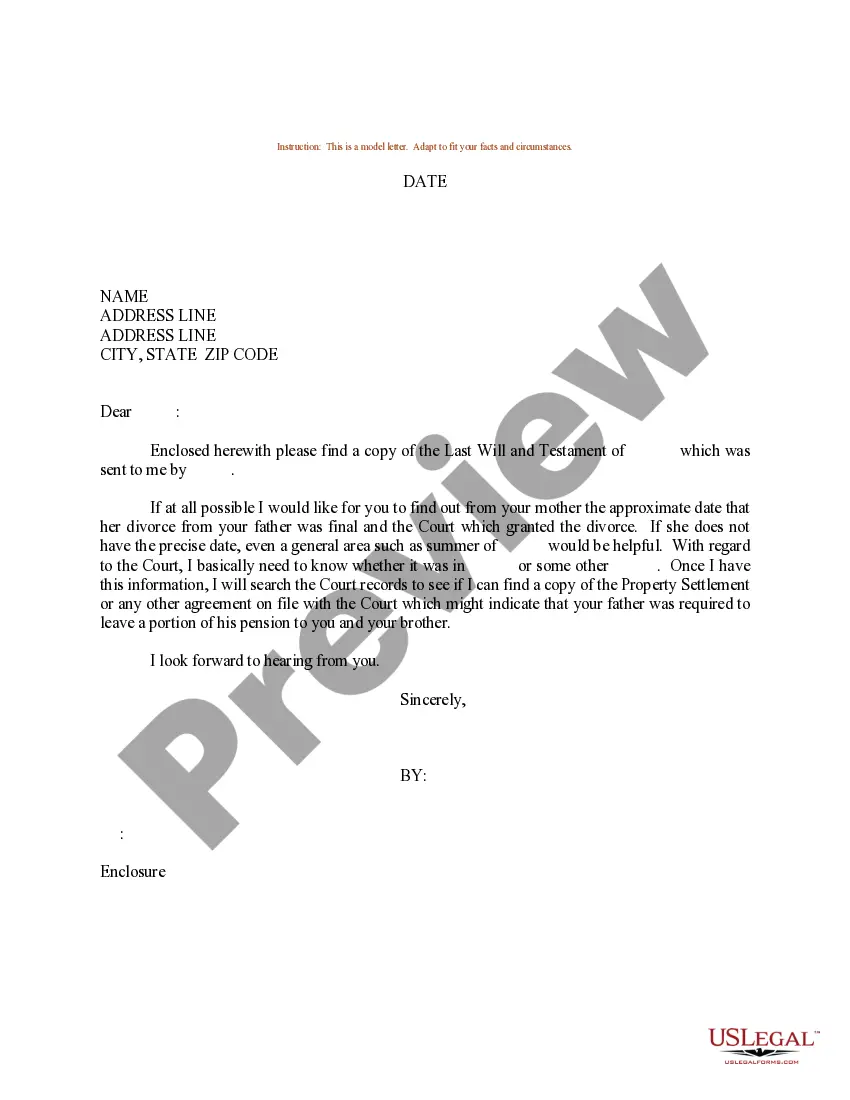
Michigan Sample Letter transmitting Last Will and Testament of Decedent
Description
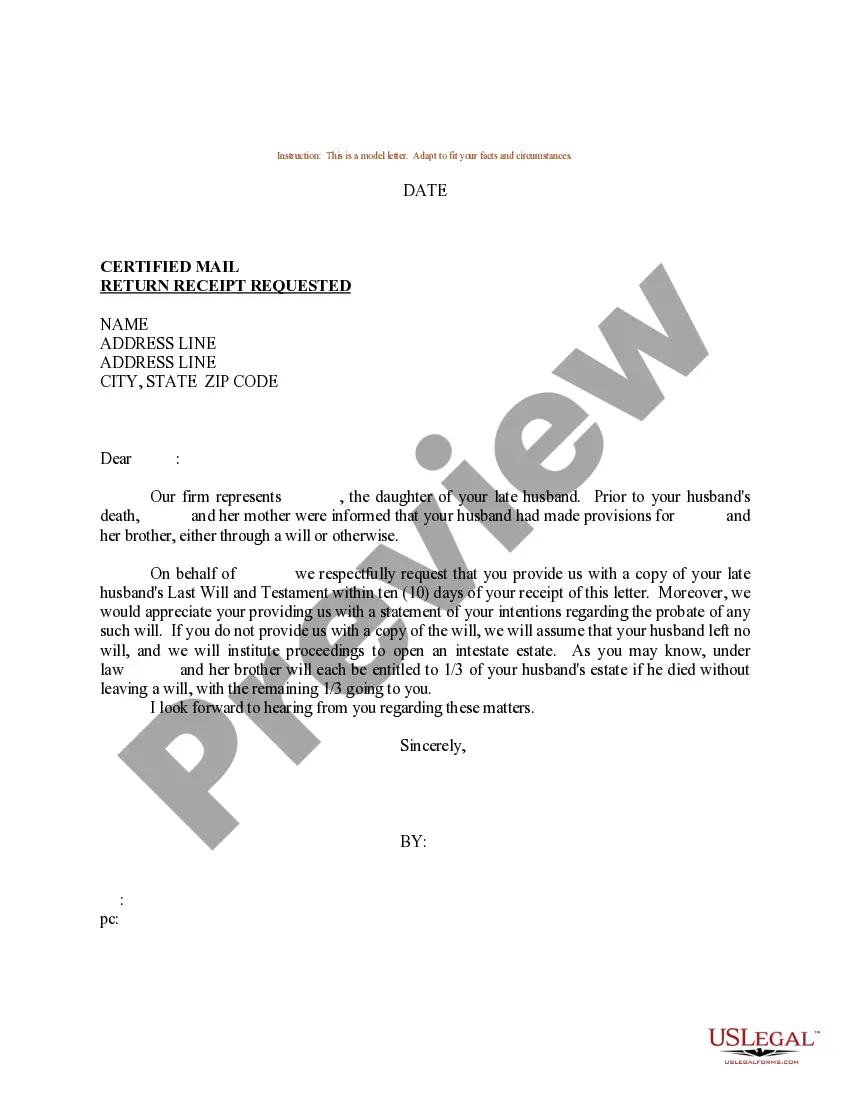
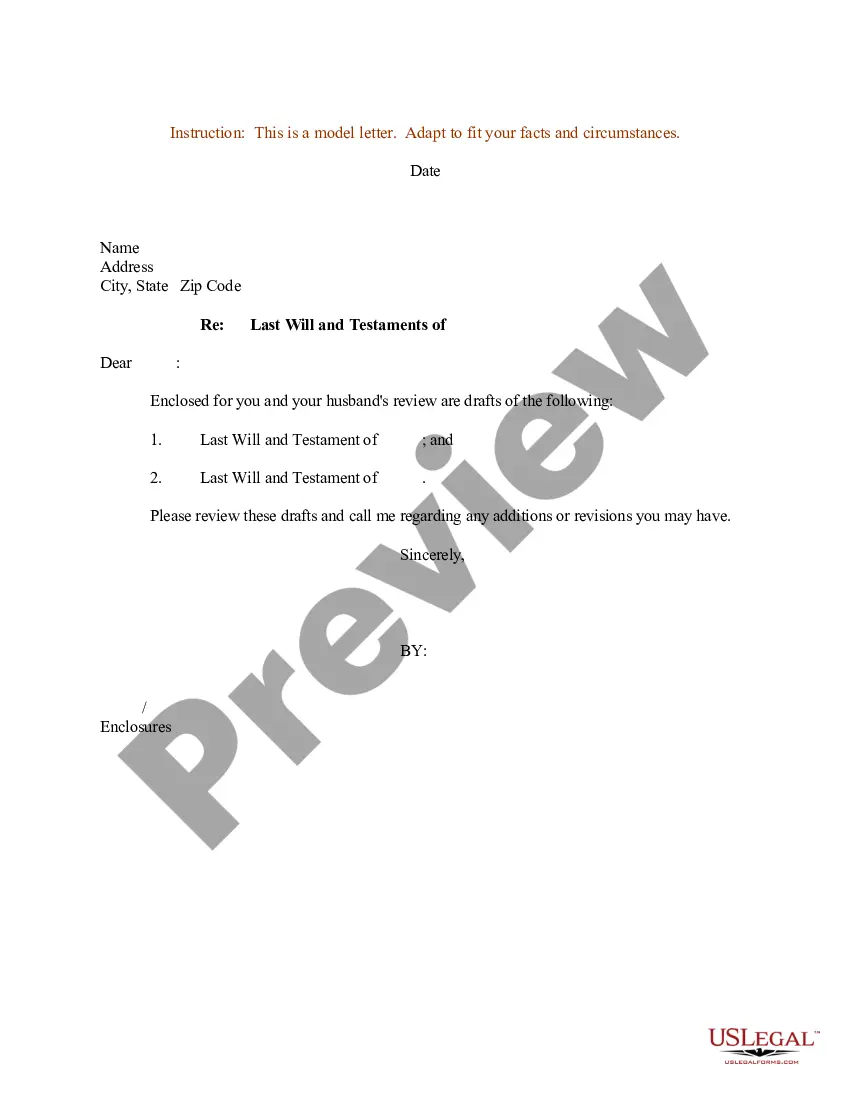
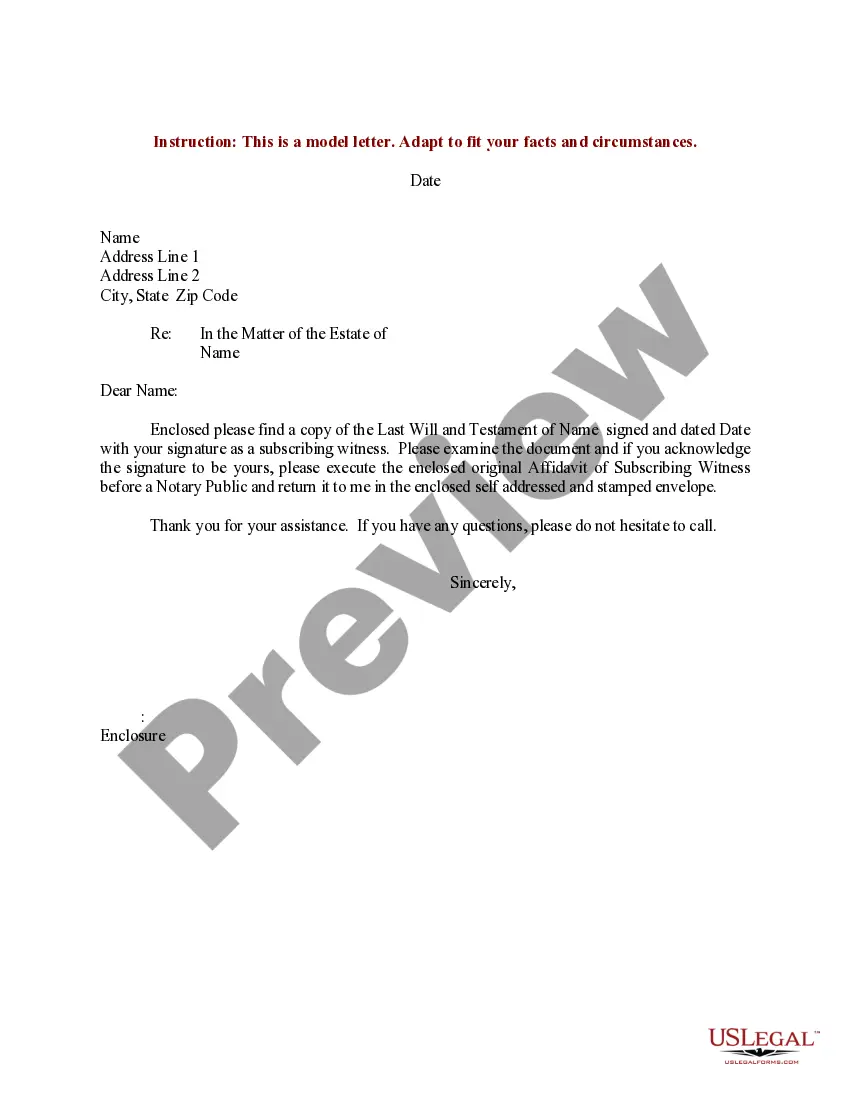
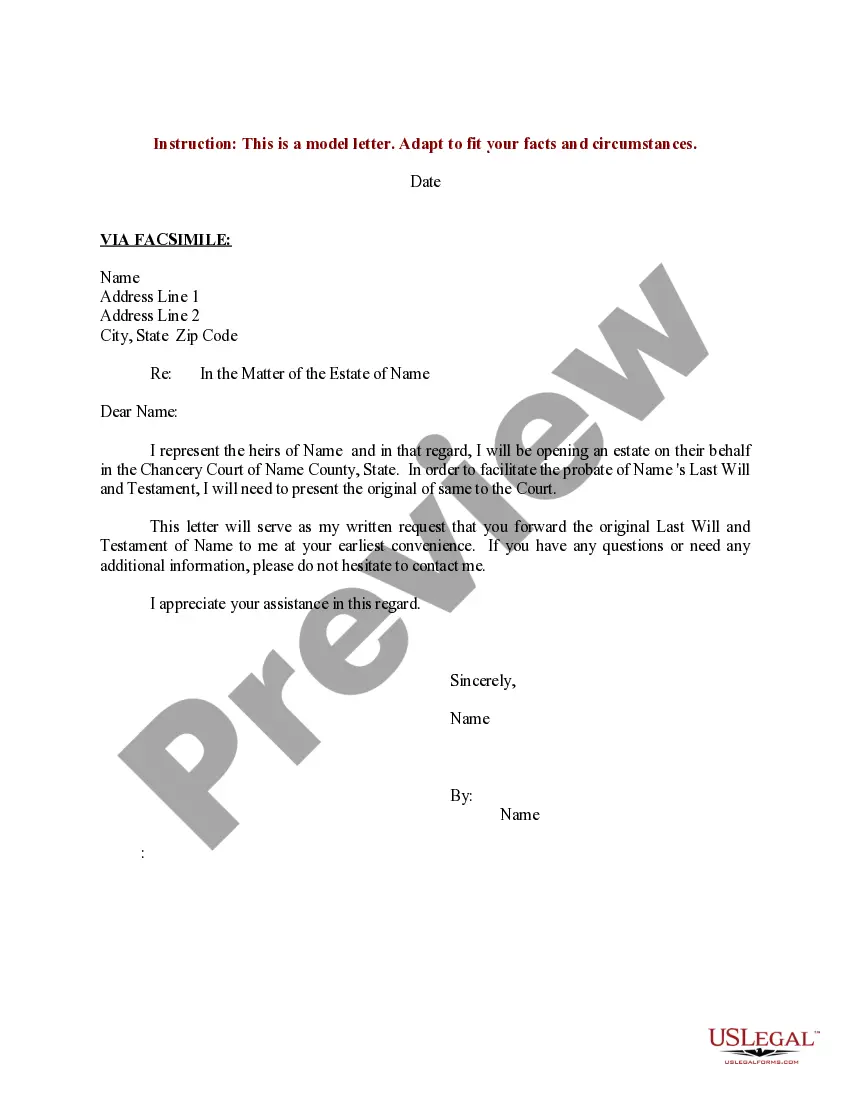
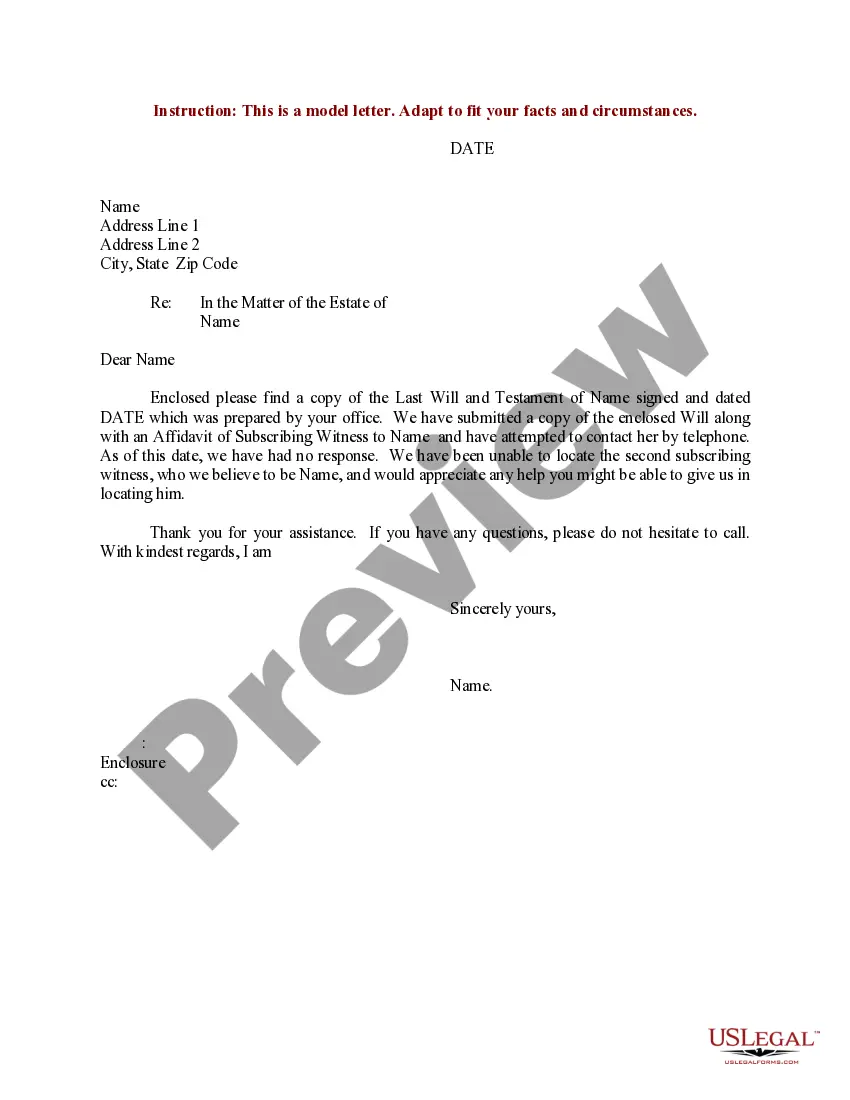
How to fill out Sample Letter Transmitting Last Will And Testament Of Decedent?
Selecting the optimal legal document template can be challenging. Clearly, there is an array of templates accessible on the web, but how can you secure the legal form you require? Utilize the US Legal Forms website. The service offers a vast collection of templates, including the Michigan Sample Letter sending Last Will and Testament of Decedent, which you can use for business and personal purposes. All the documents are verified by experts and comply with state and federal regulations.
If you are already registered, Log In to your account and click on the Acquire button to locate the Michigan Sample Letter sending Last Will and Testament of Decedent. Use your account to browse the legal forms you have previously ordered. Navigate to the My documents section of your account and retrieve another copy of the document you need.
If you are a new user of US Legal Forms, here are simple instructions you should follow: First, ensure you have selected the correct form for your city/county. You can view the form using the Preview option and examine the form outline to confirm this is the right one for you. If the form does not meet your requirements, use the Search field to find the appropriate form. Once you are confident that the form is suitable, click the Purchase now button to acquire the form. Choose the pricing plan you prefer and enter the necessary details. Create your account and place an order using your PayPal account or credit card. Select the document format and download the legal document template for your device. Complete, modify, print, and sign the obtained Michigan Sample Letter sending Last Will and Testament of Decedent.
This platform provides a reliable solution for accessing essential legal documentation.
- US Legal Forms is the largest collection of legal documents.
- You can find various document templates.
- Utilize the service to obtain professionally crafted files.
- All documents adhere to state regulations.
- The templates cover both business and personal needs.
- Expert verification ensures compliance with legal standards.
Form popularity
FAQ
The final letter to beneficiaries from the executor summarizes the estate's distribution and confirms that all obligations have been met. This letter provides beneficiaries with essential details about their inheritance and any next steps they may need to take. Using a Michigan Sample Letter transmitting Last Will and Testament of Decedent can help create a clear and professional communication. This fosters a smooth transition during a challenging time.
Filling out a last will and testament form involves providing personal information, specifying assets, and naming beneficiaries. It's essential to follow state-specific guidelines to ensure validity. A Michigan Sample Letter transmitting Last Will and Testament of Decedent can assist you in understanding the required elements for your will. Engaging with platforms like US Legal Forms can simplify this process and provide you with necessary templates.
The final estate distribution letter is a document that informs beneficiaries about the completion of the estate's distribution process. It outlines what assets are being distributed, and when beneficiaries can expect to receive their share. Incorporating a Michigan Sample Letter transmitting Last Will and Testament of Decedent can streamline this communication. This letter acts as a formal closure for all parties involved.
An example of a letter to a beneficiary includes a formal notification of their inheritance, along with details about the estate's final distribution. This letter should be clear and concise, explaining what the beneficiary can expect. A Michigan Sample Letter transmitting Last Will and Testament of Decedent can serve as a template to communicate important information effectively. This approach helps maintain transparency and trust among beneficiaries.
Final distribution refers to the process of distributing the remaining assets of an estate to beneficiaries after all debts and taxes have been settled. Understanding this step is crucial for ensuring that your loved ones receive their rightful inheritance. A Michigan Sample Letter transmitting Last Will and Testament of Decedent can serve as a formal notice to beneficiaries during this process. Clear communication is essential to avoid misunderstandings.
Common mistakes in will writing include failing to sign the document, not having witnesses, and unclear language. It's vital to ensure that your intentions are clear to avoid any confusion later. Using a Michigan Sample Letter transmitting Last Will and Testament of Decedent can help guide you in creating a valid and effective will. Always consult with legal experts to avoid these pitfalls.
A handwritten will must be dated and signed at the end of the document. A formal will can be typewritten. It must be signed and witnessed by at least two people. (Keep in mind that a beneficiary under the will should never be a witness to its signing.)
No, a Will does not have to be notarized in order for it to be legally valid in Michigan. However, it is an optional action step that you can take if you wish for your Will to be self-proving. To do so, you and your witnesses must go to a notary public.
If you intend to leave most of your property to your nearest family, you can make a simple and effective will without a lawyer using the Michigan statutory will. You can use our Do-It-Yourself Will tool to prepare your will.
The general requirements for a valid Will are usually as follows: (a) the document must be written (meaning typed or printed), (b) signed by the person making the Will (usually called the ?testator? or ?testatrix?, and (c) signed by two witnesses who were present to witness the execution of the document by the maker ...