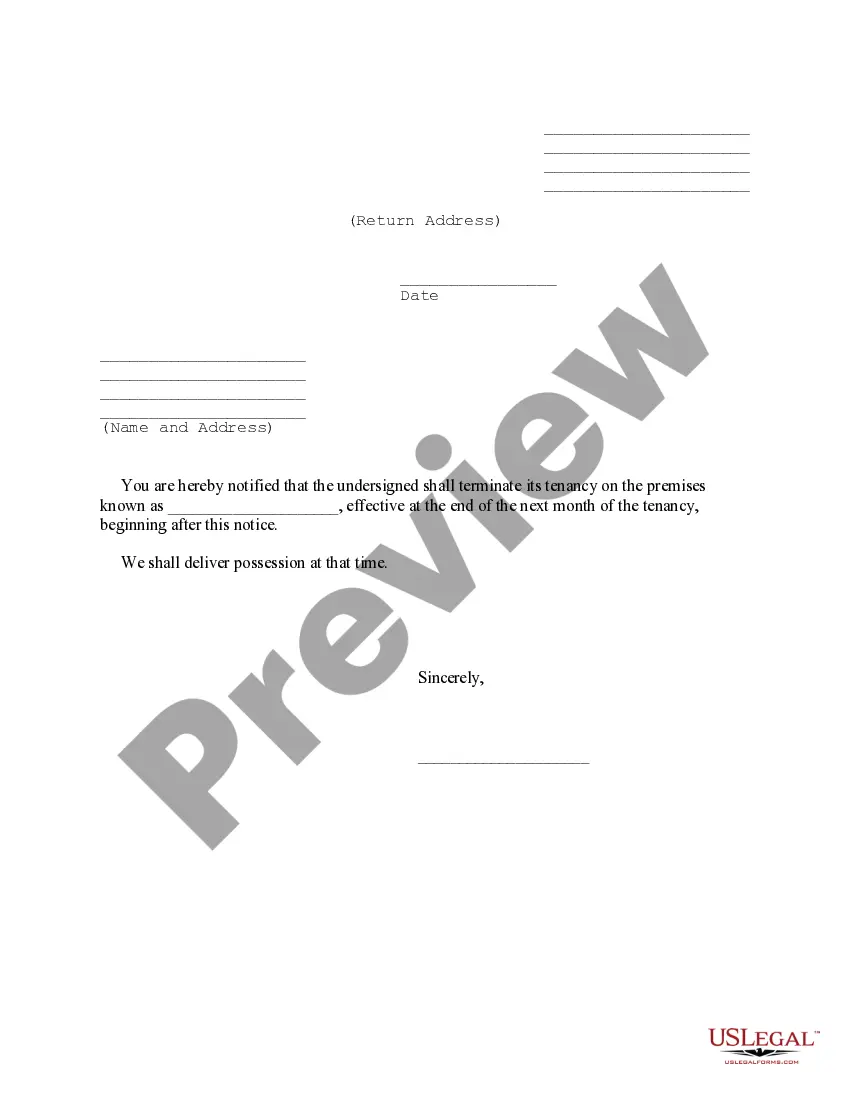
Michigan Equity Share Agreement

State:
Multi-State
Control #:
US-00036DR
Format:
Word; 
Rich Text
Instant download

Description

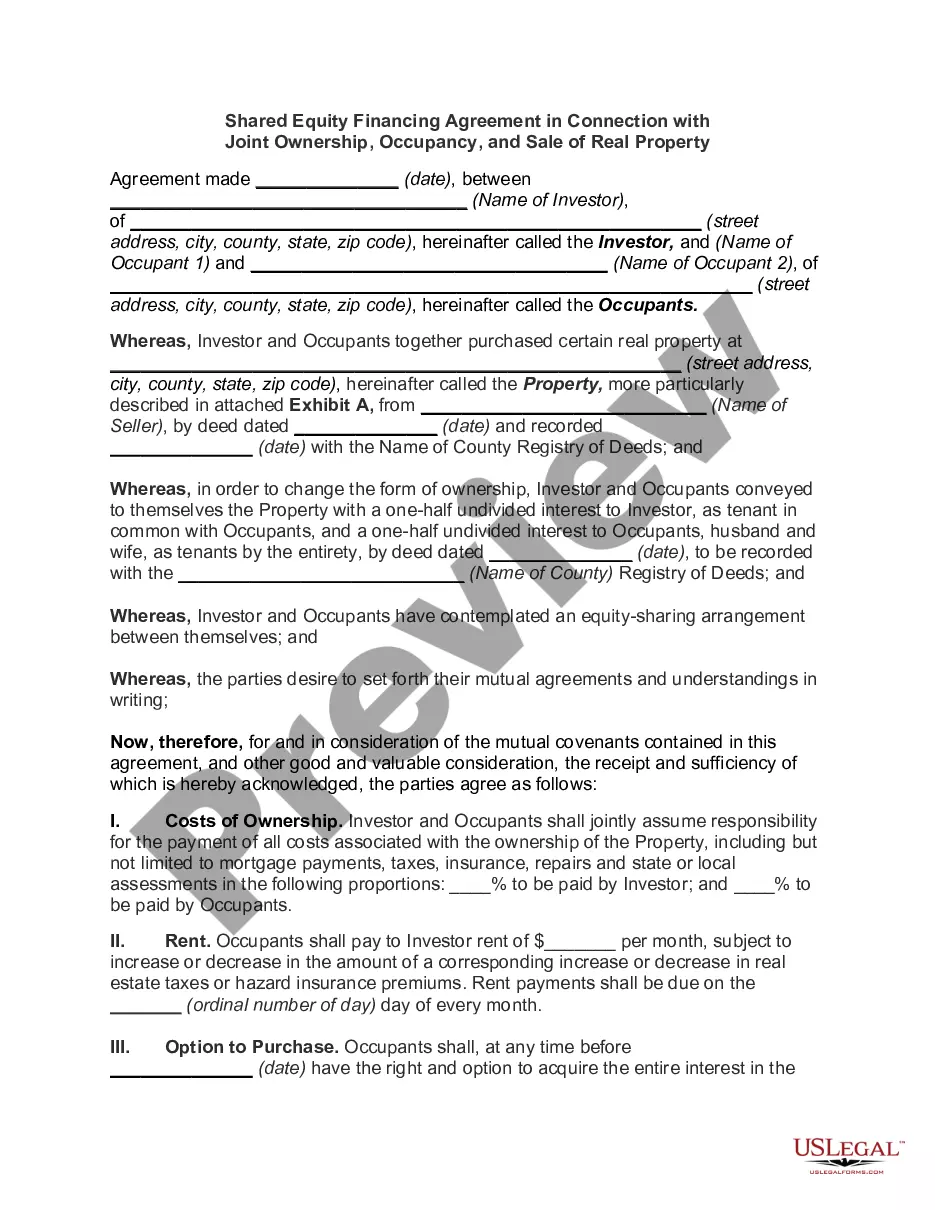
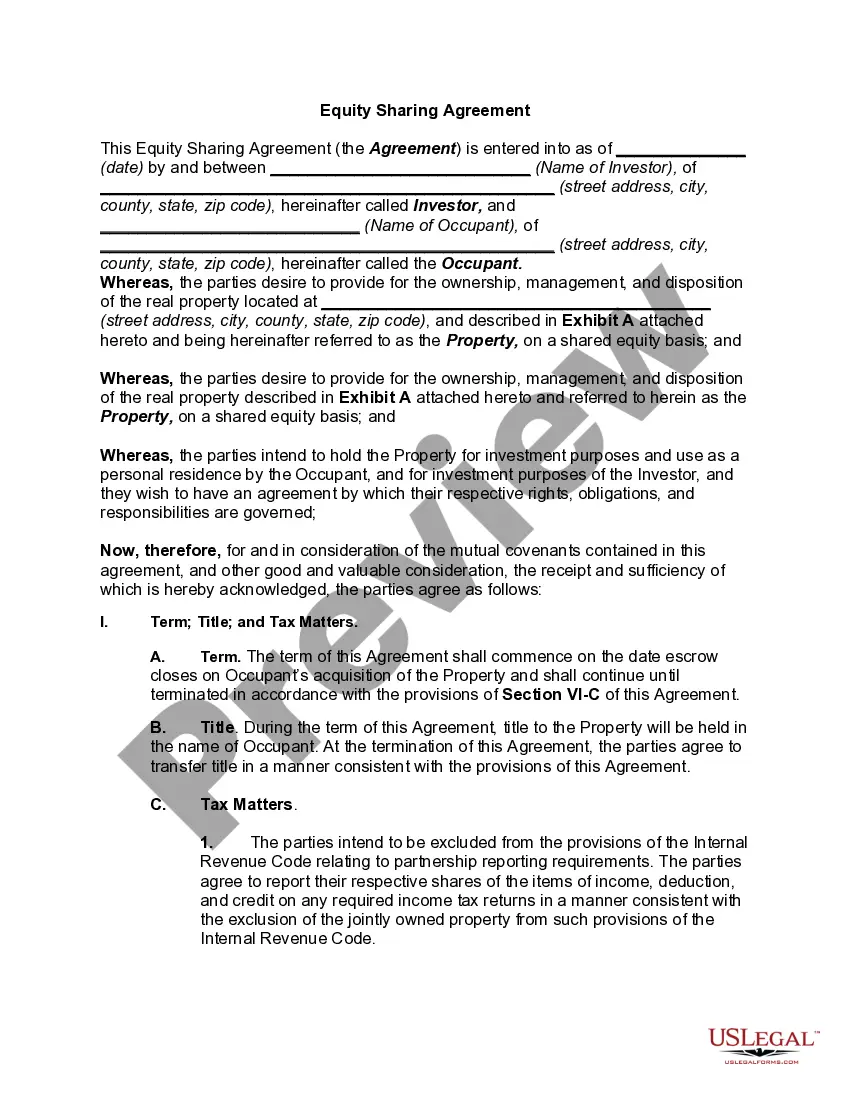
In equity sharing both parties benefit from the relationship. Equity sharing, also known as housing equity partnership (HEP), gives a person the opportunity to purchase a home even if he cannot afford a mortgage on the whole of the current value. Often the remaining share is held by the house builder, property owner or a housing association. Both parties receive tax benefits. Another advantage is the return on investment for the investor, while for the occupier a home becomes readily available even when funds are insufficient.


This form is a generic example that may be referred to when preparing such a form for your particular state. It is for illustrative purposes only. Local laws should be consulted to determine any specific requirements for such a form in a particular jurisdiction.


Free preview
  • Preview Equity Share Agreement
  • Preview Equity Share Agreement
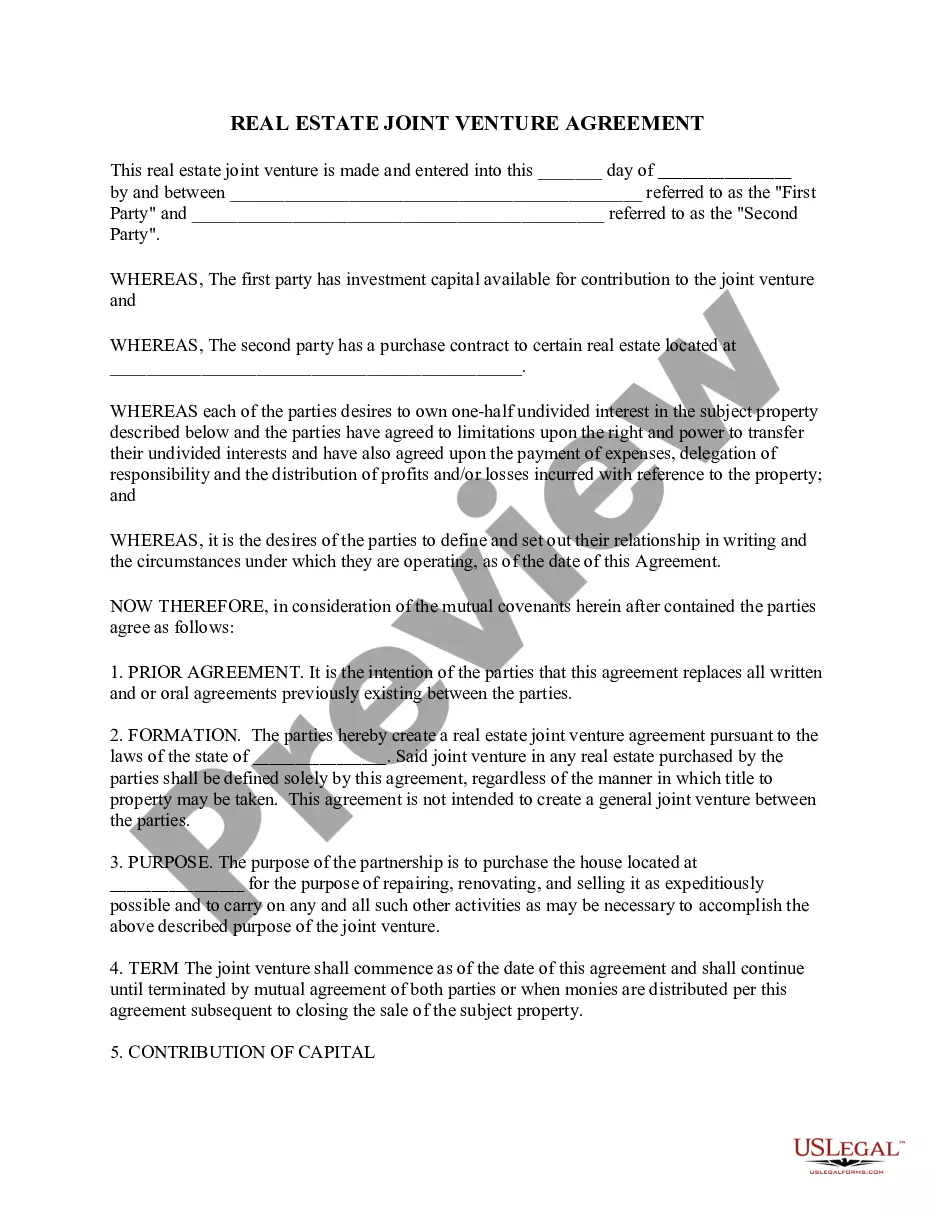
  • Preview Equity Share Agreement
  • Preview Equity Share Agreement
  • Preview Equity Share Agreement

How to fill out Equity Share Agreement?

If you wish to acquire, procure, or print authentic document templates, utilize US Legal Forms, the largest assortment of legal forms available online.

Employ the site's straightforward and user-friendly search feature to locate the documents you require. A range of templates for business and personal purposes are organized by categories and states, or keywords.

Utilize US Legal Forms to discover the Michigan Equity Share Agreement with just a few clicks.

Every legal document template you download is yours permanently. You have access to every form you have acquired in your account. Click the My documents section and select a form to print or download again.

Complete and download, and print the Michigan Equity Share Agreement with US Legal Forms. There are thousands of professional and state-specific forms you can use for your business or personal needs.

  1. If you are already a US Legal Forms user, Log In to your account and click on the Download button to obtain the Michigan Equity Share Agreement.
  2. You can also access forms you previously downloaded in the My documents section of your account.
  3. If you are using US Legal Forms for the first time, follow the instructions below.
  4. Step 1. Ensure you have chosen the form for the correct region/state.
  5. Step 2. Utilize the Preview option to review the contents of the form. Be sure to read the summary.
  6. Step 3. If you are not satisfied with the form, use the Search field at the top of the screen to find other versions of the legal form template.
  7. Step 4. Once you have identified the form you need, click the Get now button. Select the payment plan you prefer and provide your details to register for an account.
  8. Step 5. Complete the transaction. You can use your credit card or PayPal account to finalize the transaction.
  9. Step 6. Choose the format of the legal form and download it to your device.
  10. Step 7. Complete, edit, and print or sign the Michigan Equity Share Agreement.

Form popularity

FAQ

Whether a home equity agreement (HEA) is a good idea depends on your financial situation and goals. For some, the Michigan Equity Share Agreement can provide immediate funding without monthly payments, making it a viable option. However, it's essential to weigh the pros and cons and consider how it fits into your overall financial plan. Consulting with a professional or using platforms like US Legal Forms can help clarify your options.

Typically, a home equity agreement (HEA) can take anywhere from 10% to 30% of the home's future appreciation, depending on the terms outlined in the Michigan Equity Share Agreement. This percentage can vary based on the agreement's specifics, such as the length of the agreement and the initial investment. It's crucial for homeowners to review these details thoroughly to understand the implications for their financial future.

One significant con of a home equity agreement, like the Michigan Equity Share Agreement, is that you may lose a percentage of your home’s future value. Additionally, these agreements can create complexities in ownership and future financing options. Homeowners should consider how these agreements might impact their long-term financial goals before proceeding.

Dave Ramsey often cautions homeowners about the potential risks associated with home equity agreements, such as the Michigan Equity Share Agreement. He emphasizes that these agreements can lead to complications in home ownership and financial commitments. Ramsey advises people to fully understand the terms before entering into any agreement, as they may give away a portion of their home's value without realizing it.

To write a Michigan Equity Share Agreement, start by clearly defining the parties involved and their respective contributions. Next, outline the terms of the equity share, including how profits and losses will be distributed. It's also essential to specify the duration of the agreement and any conditions for termination. For a seamless experience, consider using the US Legal Forms platform, which offers templates and guidance for creating a legally sound equity agreement.

Shared equity agreements can be faster and easier to obtain than traditional equity financing, but they can be more onerous to pay off and reduce your proceeds from a home sale.

A shared equity finance agreement allows multiple parties to go in on the purchase of a property, splitting the equity ownership ingly. This type of arrangement is often structured when one party on their own cannot afford to purchase a home?for instance, when a parent helps an adult child.

A home equity loan could be a good idea if you use the funds to make home improvements or consolidate debt with a lower interest rate. However, a home equity loan is a bad idea if it will overburden your finances or only serves to shift debt around.

Entering into a home equity agreement can provide a homeowner with several benefits, such as: No monthly payments or interest charges. ... Lenient minimum credit score requirements. ... Flexibility in how you can use the funds. ... Consequences of a lump sum payment. ... It can get expensive depending on your home's amount of appreciation.

Home Equity Loan Disadvantages Higher Interest Rate Than a HELOC: Home equity loans tend to have a higher interest rate than home equity lines of credit, so you may pay more interest over the life of the loan. Your Home Will Be Used As Collateral: Failure to make on-time monthly payments will hurt your credit score.

Trusted and secure by over 3 million people of the world’s leading companies

Michigan Equity Share Agreement