Michigan Warranty Deed from two Trustees to an Individual
About this form
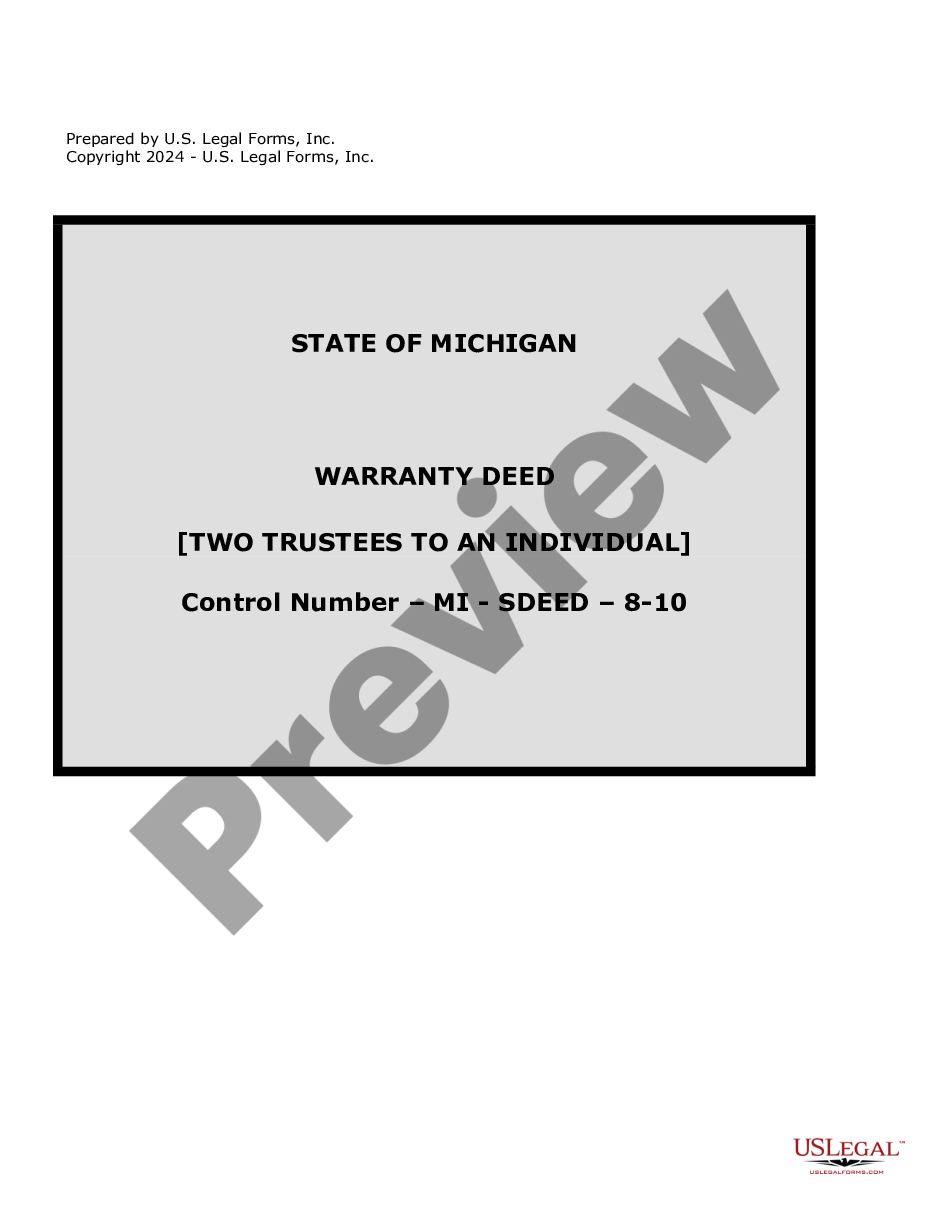
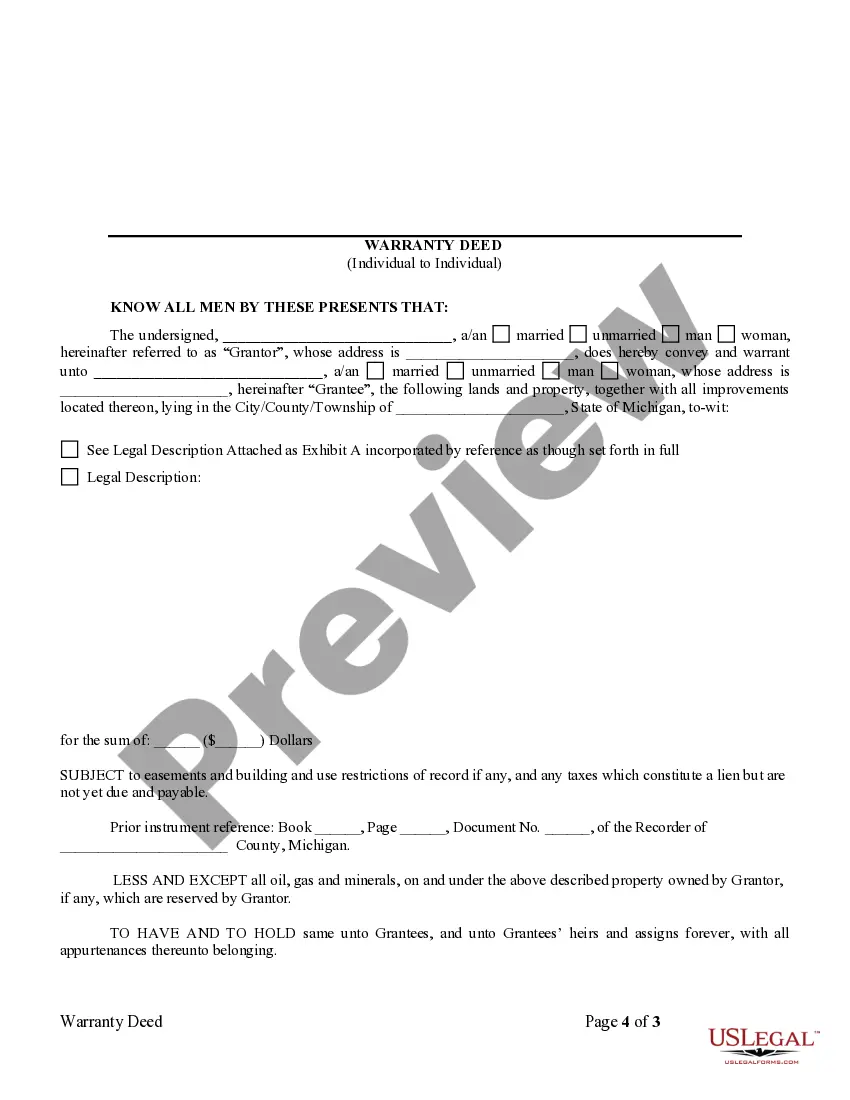
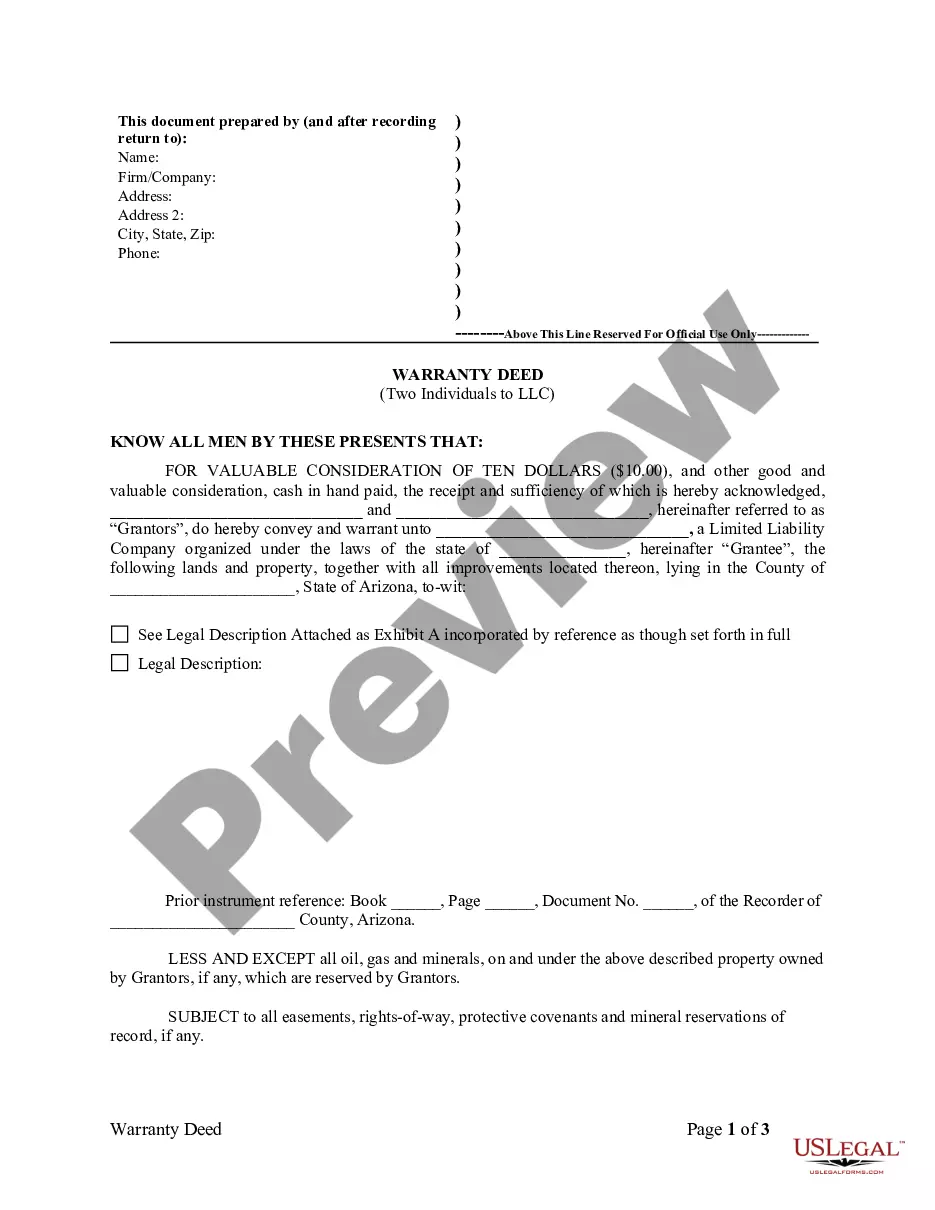
The Warranty Deed from two Trustees to an Individual is a legal document used to transfer property ownership from two trustees (acting in their capacity) to an individual. This form ensures the new owner (the grantee) receives the property free of any claims or encumbrances, except those specifically mentioned. It differs from other deeds, such as quitclaim deeds, because it includes warranties about the propertyâs title, offering more protection to the grantee.
Form components explained
- Names and addresses of all parties: Identifies the trustees (grantors) and the individual (grantee).
- Description of the property: Provides details about the land being transferred, including a legal description.
- Warranties of title: Assures the grantee that the property title is clear of other claims.
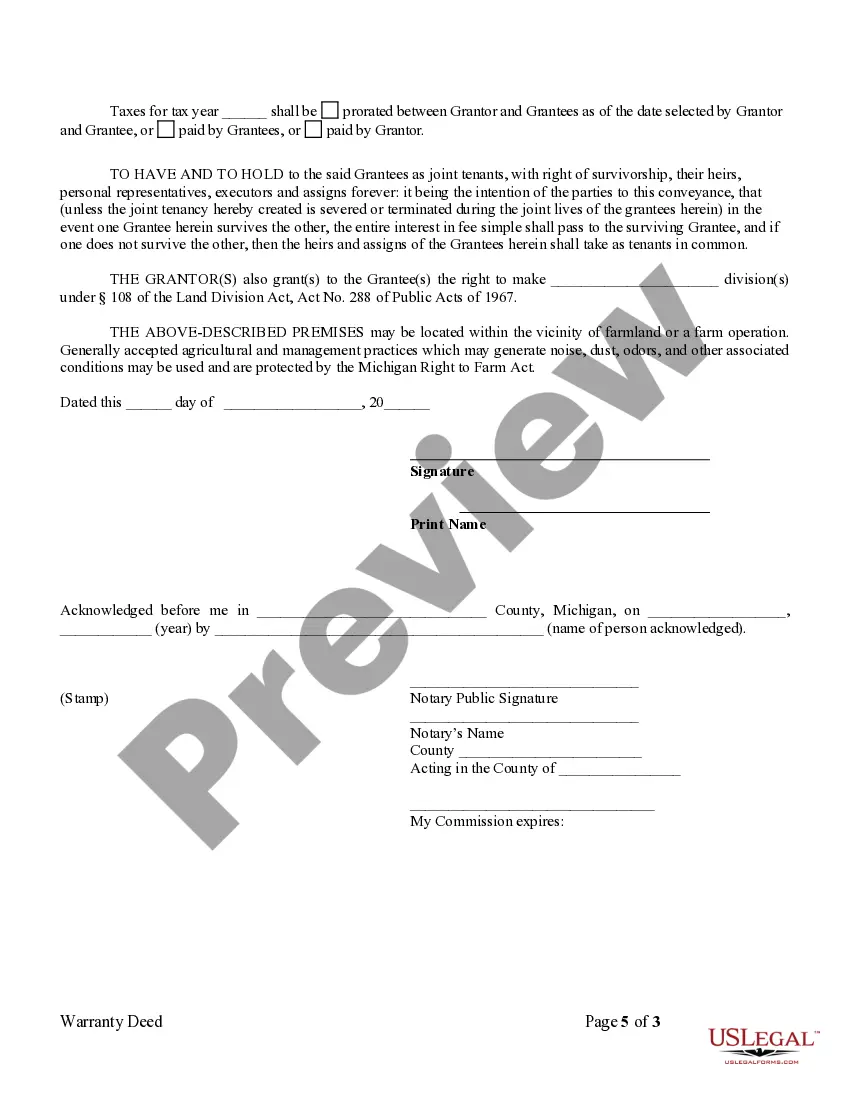
- Provision for taxes: Outlines how property taxes will be prorated between the parties.
- Joint tenancy clause: Specifies how ownership is shared and what happens upon the death of one grantee.




When to use this form
This form is appropriate when two trustees who hold property in trust wish to transfer ownership to an individual. This situation may arise in estate planning, family arrangements, or financial transactions where property held in trust is to be conveyed to a beneficiary or buyer directly.
Who needs this form
- Trustees managing a property who need to transfer ownership to an individual.
- Individuals receiving property from a trust as part of an estate settlement.
- Anyone involved in a property transaction where the title needs clear warranty protections.
Instructions for completing this form
- Identify the parties: Enter the names and addresses of the trustees and the individual receiving the property.
- Specify the property: Fill in the legal description of the property being transferred.
- Fill in warranty details: Complete the sections that describe the warranties regarding the property title.
- Enter tax provisions: Indicate how the taxes will be handled between the grantors and the grantee.
- Sign and notarize: Ensure that the form is signed by the grantors and notarized for validity.
Notarization requirements for this form
Yes, this form must be notarized to be legally valid. Notarization helps verify the identity of the signers and confirms that they signed the document willingly. US Legal Forms offers integrated online notarization with secure video calls for your convenience.
Get your form ready online
Our built-in tools help you complete, sign, share, and store your documents in one place.
Make edits, fill in missing information, and update formatting in US Legal Forms—just like you would in MS Word.
Download a copy, print it, send it by email, or mail it via USPS—whatever works best for your next step.
Sign and collect signatures with our SignNow integration. Send to multiple recipients, set reminders, and more. Go Premium to unlock E-Sign.
If this form requires notarization, complete it online through a secure video call—no need to meet a notary in person or wait for an appointment.
We protect your documents and personal data by following strict security and privacy standards.

Make edits, fill in missing information, and update formatting in US Legal Forms—just like you would in MS Word.

Download a copy, print it, send it by email, or mail it via USPS—whatever works best for your next step.

Sign and collect signatures with our SignNow integration. Send to multiple recipients, set reminders, and more. Go Premium to unlock E-Sign.

If this form requires notarization, complete it online through a secure video call—no need to meet a notary in person or wait for an appointment.

We protect your documents and personal data by following strict security and privacy standards.
Common mistakes to avoid
- Failing to properly identify all parties, which can lead to disputes.
- Leaving out the legal description of the property.
- Not including provisions for taxes, which could cause confusion later.
- Neglecting to have the deed notarized, invalidating the transfer.
Benefits of completing this form online
- Convenience: Download the form anytime from the comfort of your home.
- Editability: Easily fill in the fields on your computer, ensuring accuracy.
- Reliability: Forms are prepared by licensed attorneys, ensuring compliance with legal standards.
Looking for another form?

Form popularity
FAQ
To take a deed out of a trust, you will need to execute a new deed that transfers the property to the desired individual. This often involves creating a Michigan Warranty Deed from two Trustees to an Individual, which accurately reflects the details of the transfer. Make sure to follow the specific state laws regarding such transactions. If you are unsure about the process, uslegalforms can offer useful resources and templates to assist you.
Yes, you can transfer property from a trust to an individual, and this process typically involves executing a deed. You will need to prepare a Michigan Warranty Deed from two Trustees to an Individual to formalize the transfer. It is essential to follow the legal procedures to ensure that the transfer is valid and binding. Using platforms like uslegalforms can streamline this process and provide the necessary forms.
You do not have to hire a lawyer to transfer a deed; however, it is often beneficial. A lawyer can provide insights on the best practices for executing a Michigan Warranty Deed from two Trustees to an Individual. They can also help you navigate any potential legal complications that may arise. If you choose to proceed without one, ensure that you understand the necessary steps involved.
While you are not legally required to hire a lawyer to transfer a deed in New Jersey, having legal assistance can simplify the process. A lawyer can help ensure that your Michigan Warranty Deed from two Trustees to an Individual meets all legal requirements. This reduces the risk of errors that could delay the transfer. Consider using platforms like uslegalforms for guidance and documentation.
When one person in a jointly owned property dies, the surviving owner usually assumes full ownership of the property. This transfer is seamless if the property is held in joint tenancy. If you need to formalize this transfer, a Michigan Warranty Deed from two Trustees to an Individual can serve as an effective solution, ensuring all legal requirements are met.
If one owner of a jointly owned property dies in Michigan, the surviving owner typically inherits the deceased owner's share automatically. This is contingent upon how the property is titled, such as joint tenancy. A Michigan Warranty Deed from two Trustees to an Individual can help clarify ownership and ensure a smooth transition of property rights.
To add a person to a warranty deed, you will need to execute a new deed that includes the new owner's name. This process often involves a Michigan Warranty Deed from two Trustees to an Individual, which formalizes the addition of the new owner. It's advisable to consult legal resources or professionals through platforms like uslegalforms for guidance on completing the deed accurately.
Jointly owned property in Michigan provides both owners with equal rights to use and enjoy the property. Each owner can sell or transfer their interest, but this often requires consent from the other owner. When dealing with a Michigan Warranty Deed from two Trustees to an Individual, clear communication between owners is essential to navigate any changes in ownership.
In Michigan, a surviving spouse has strong inheritance rights, but this can depend on how the property is titled. If the property is held jointly, the surviving spouse usually retains full ownership. However, properties not jointly owned may require a Michigan Warranty Deed from two Trustees to an Individual to facilitate the transfer of assets according to the deceased's estate plan.
Yes, a trust deed generally requires the signatures of all trustees involved. This ensures that all parties are in agreement regarding the transfer of property. When executing a Michigan Warranty Deed from two Trustees to an Individual, having all trustees sign is crucial for the deed's validity and to prevent future disputes.