Michigan Judicial Circuit Court - Order Regarding Custody, Parenting Time (Visitation) and Child Support - Split Physical Custody with Standard Schedule
Overview of this form
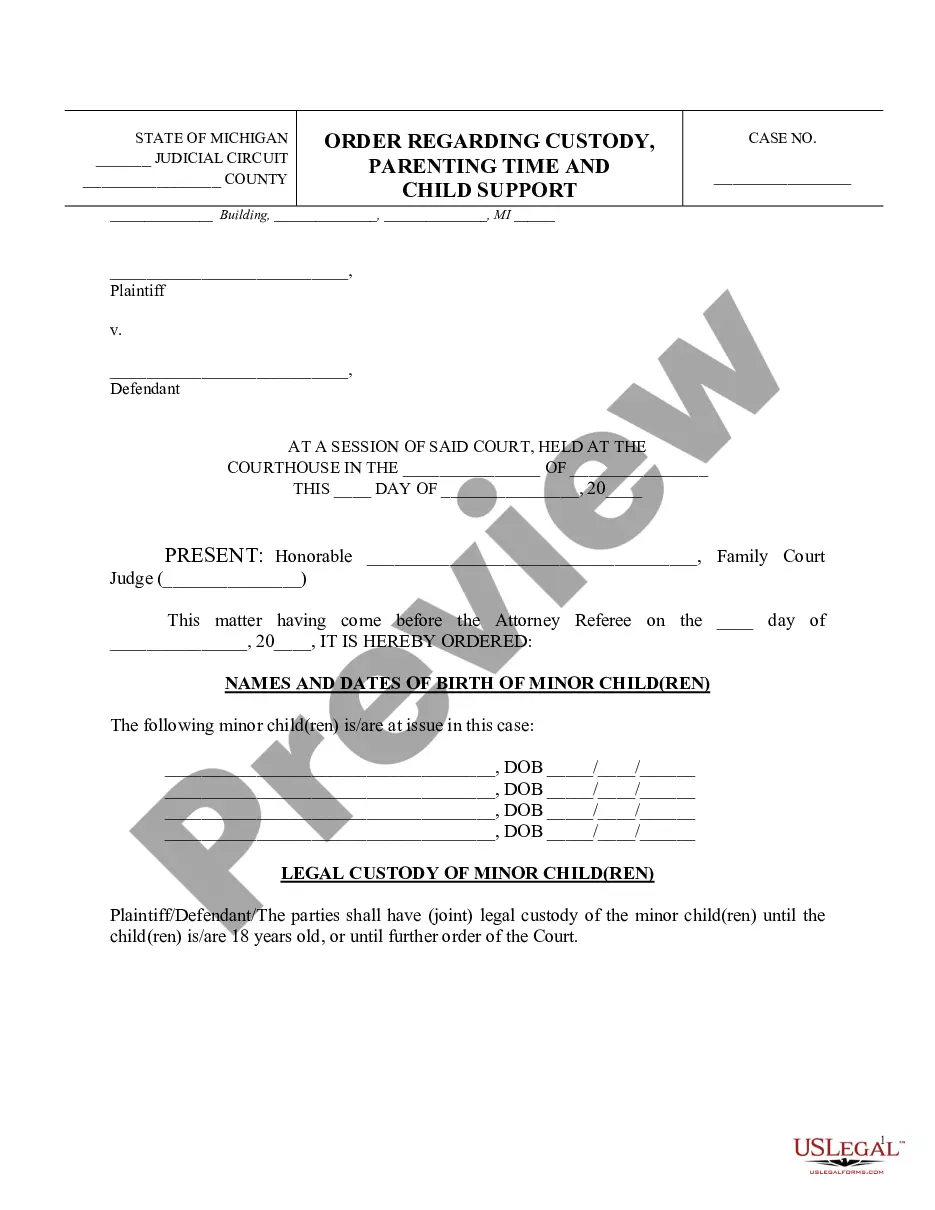
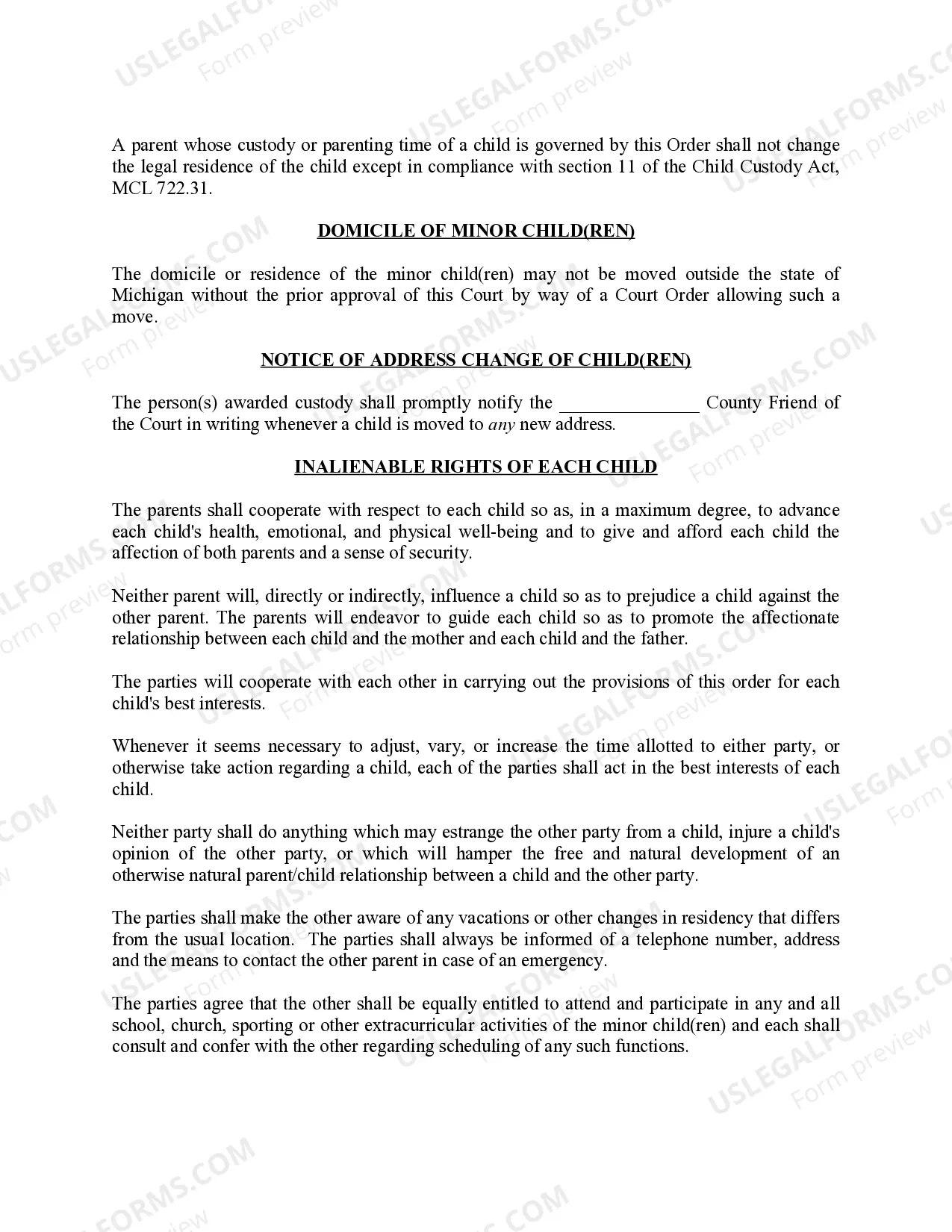
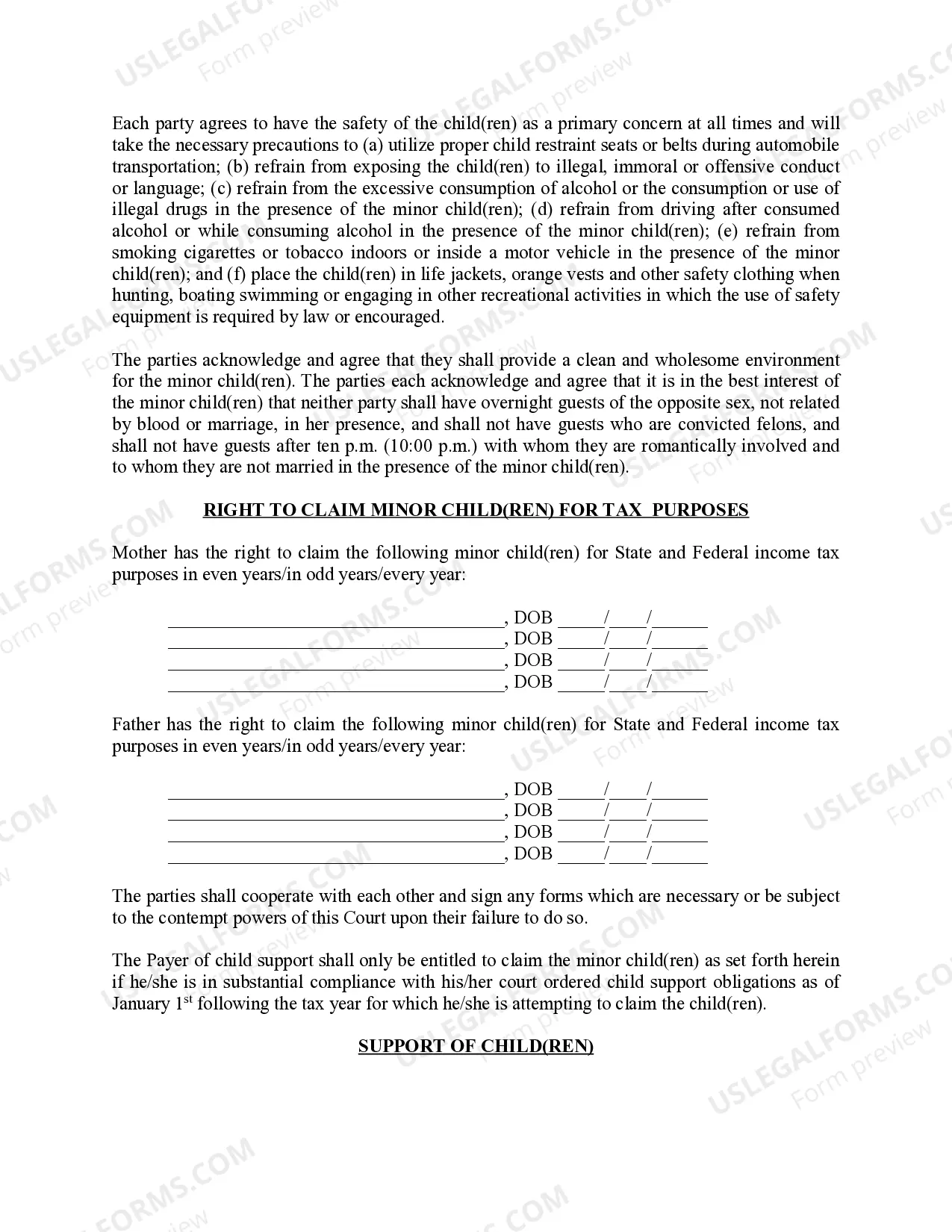
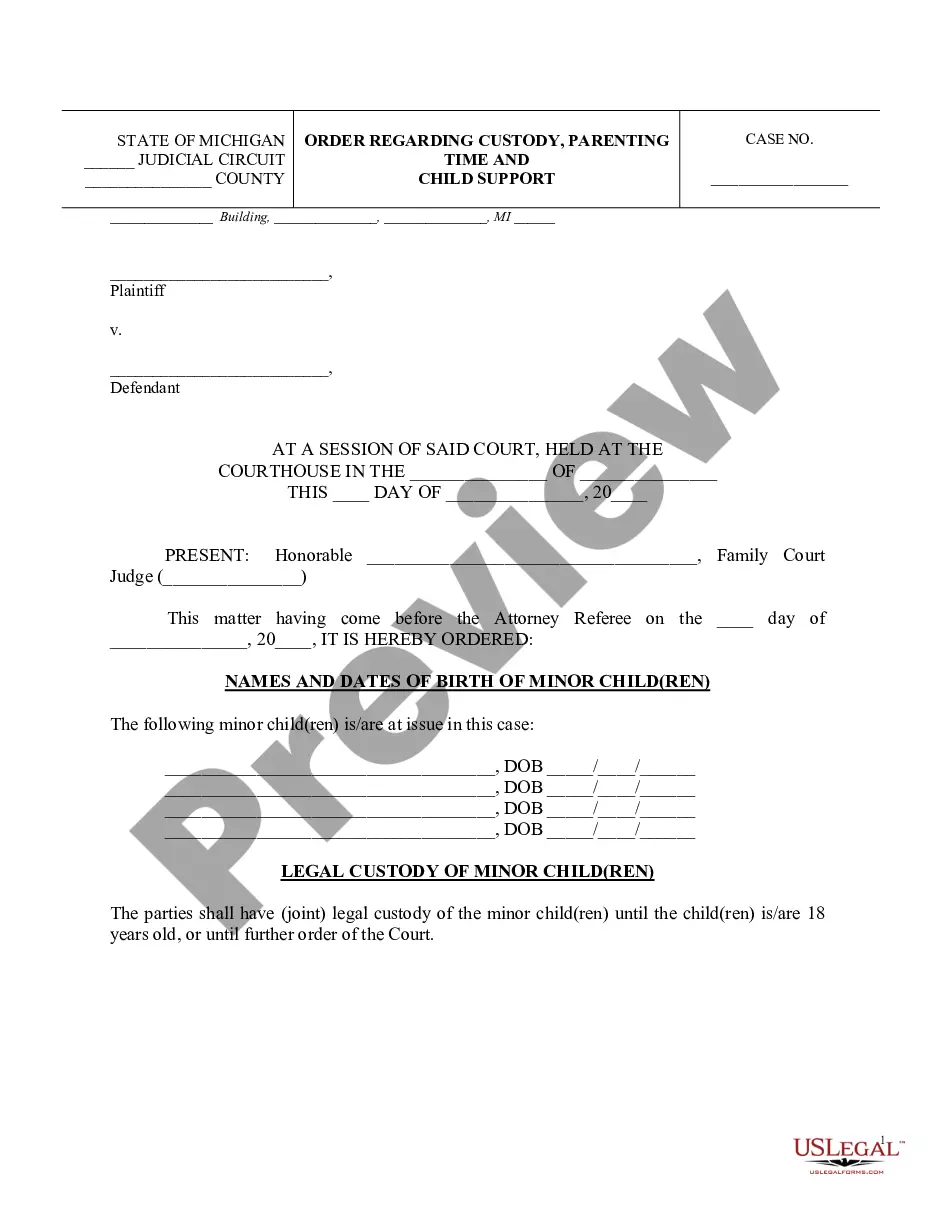
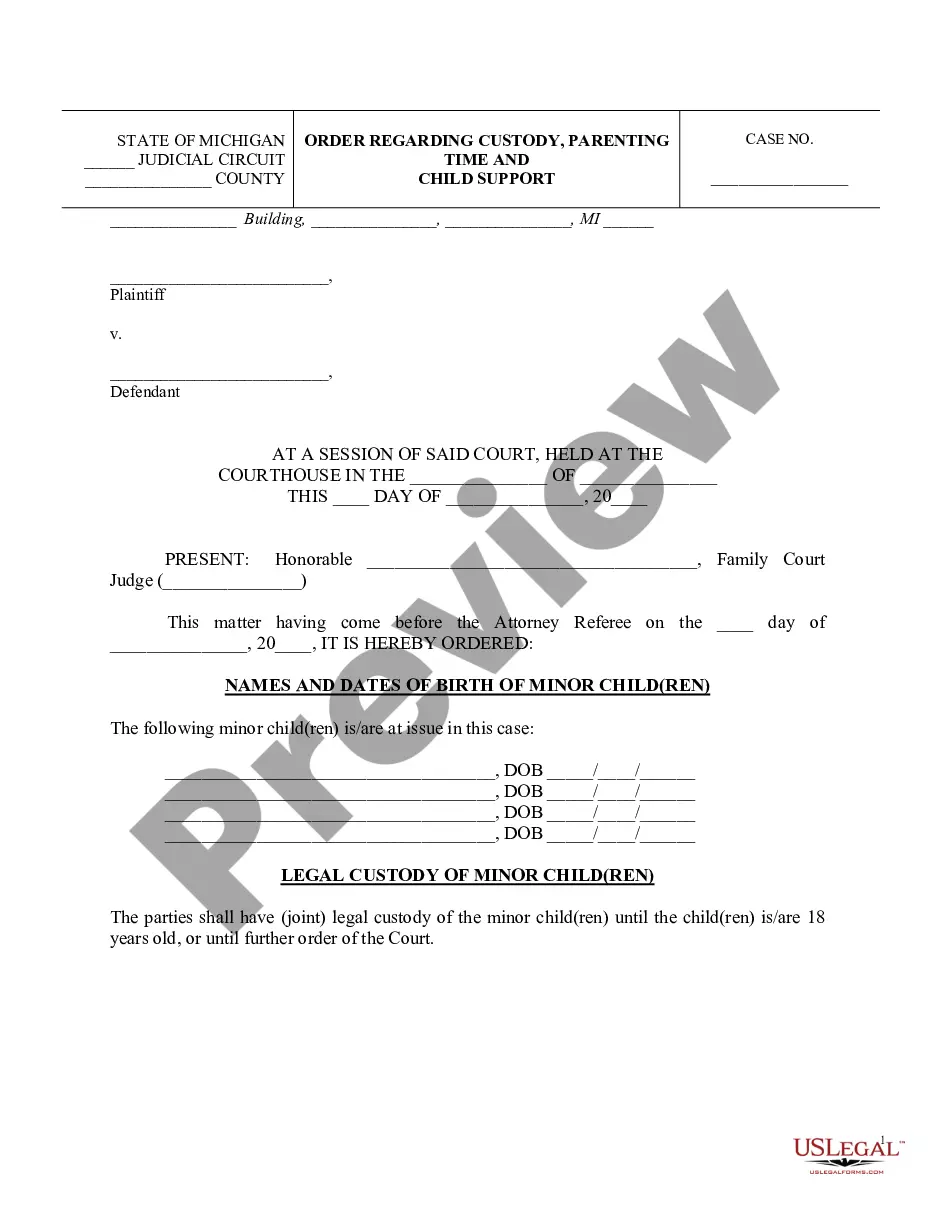
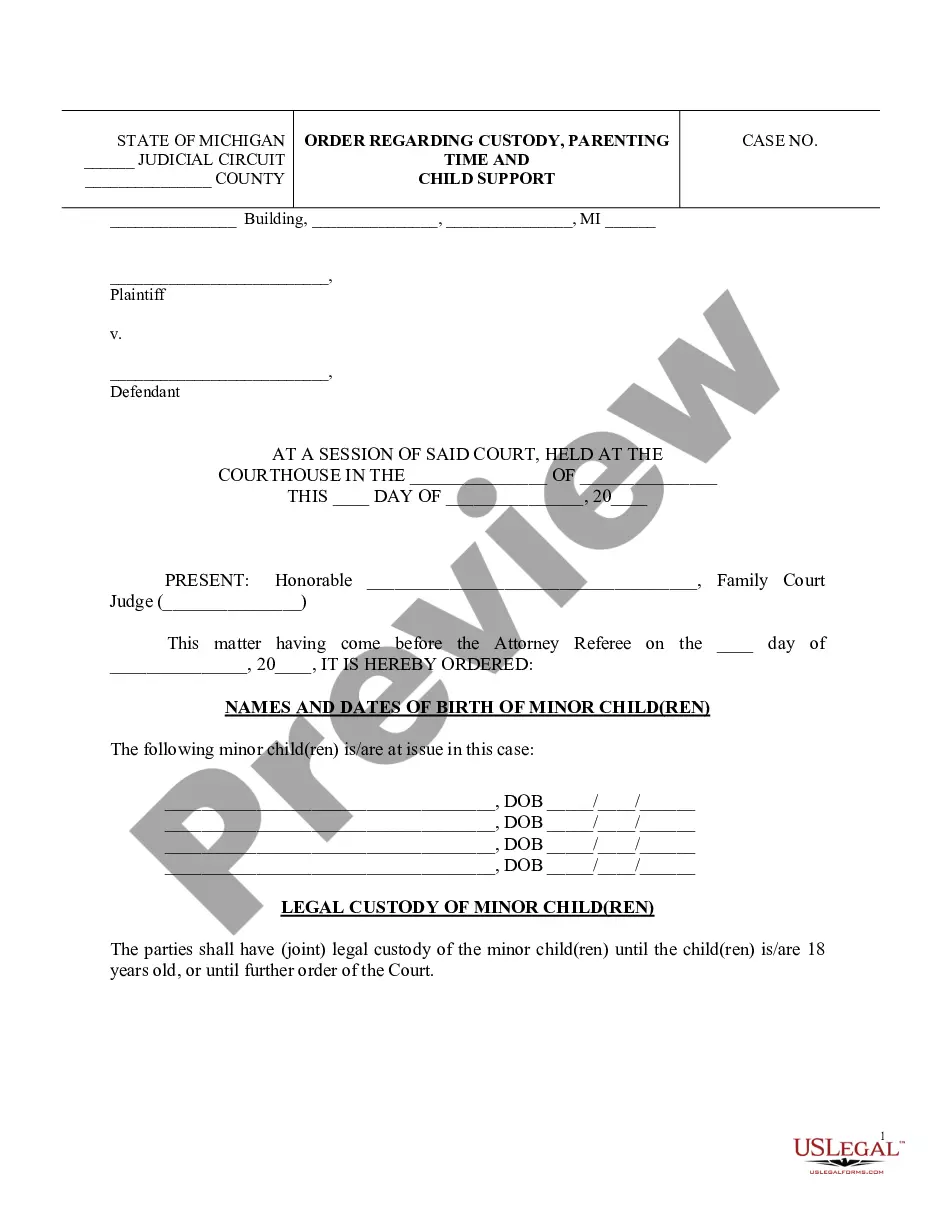
The Michigan Judicial Circuit Court - Order Regarding Custody, Parenting Time (Visitation) and Child Support - Split Physical Custody with Standard Schedule is a legal document used to establish the custody arrangement for minor children in Michigan. This order facilitates split physical custody coupled with a standard parenting time schedule. Unlike other custody forms, this one specifically addresses situations where both parents share custody and outlines holiday and visitation details to promote a stable parenting environment.
Form components explained
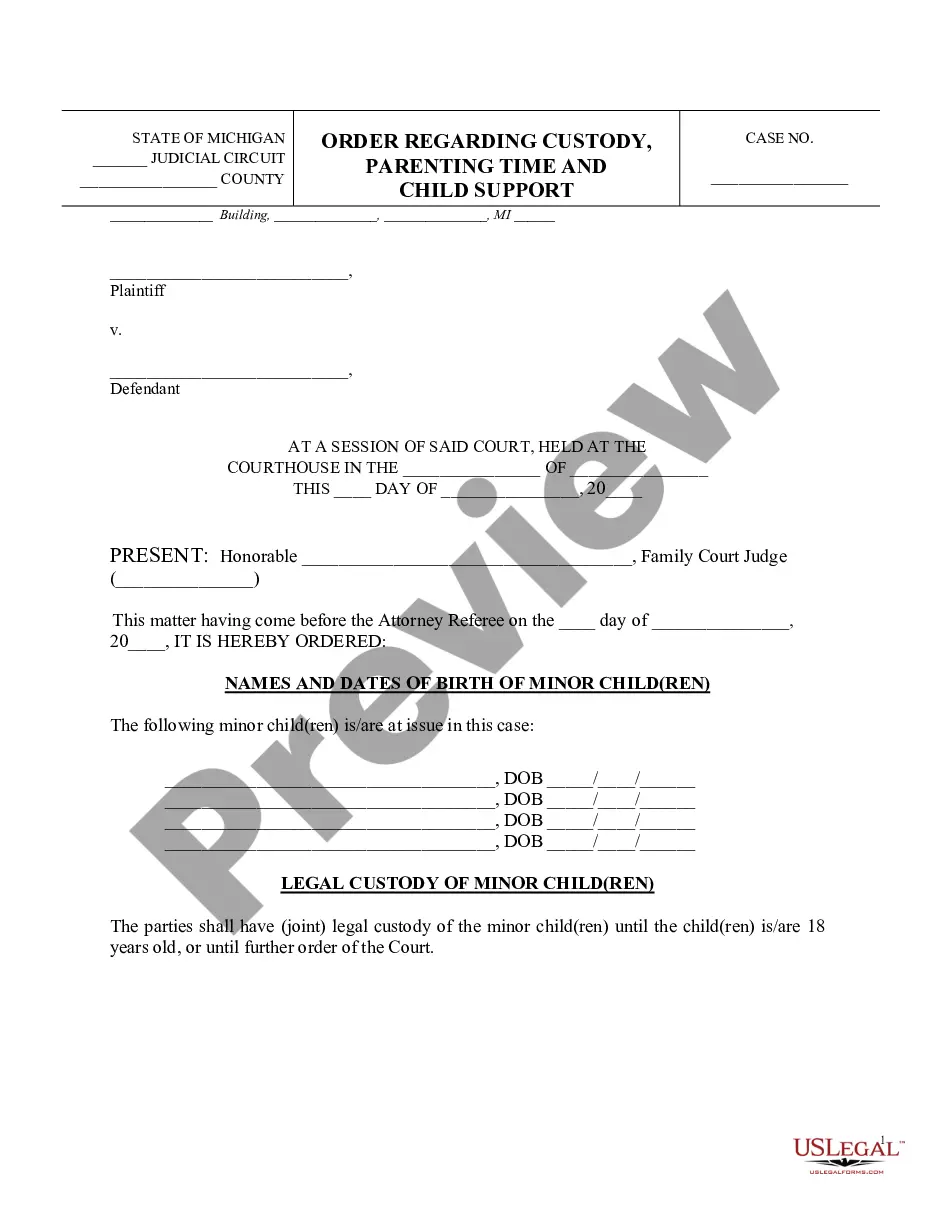
- Identification of the court, case number, and parties involved.
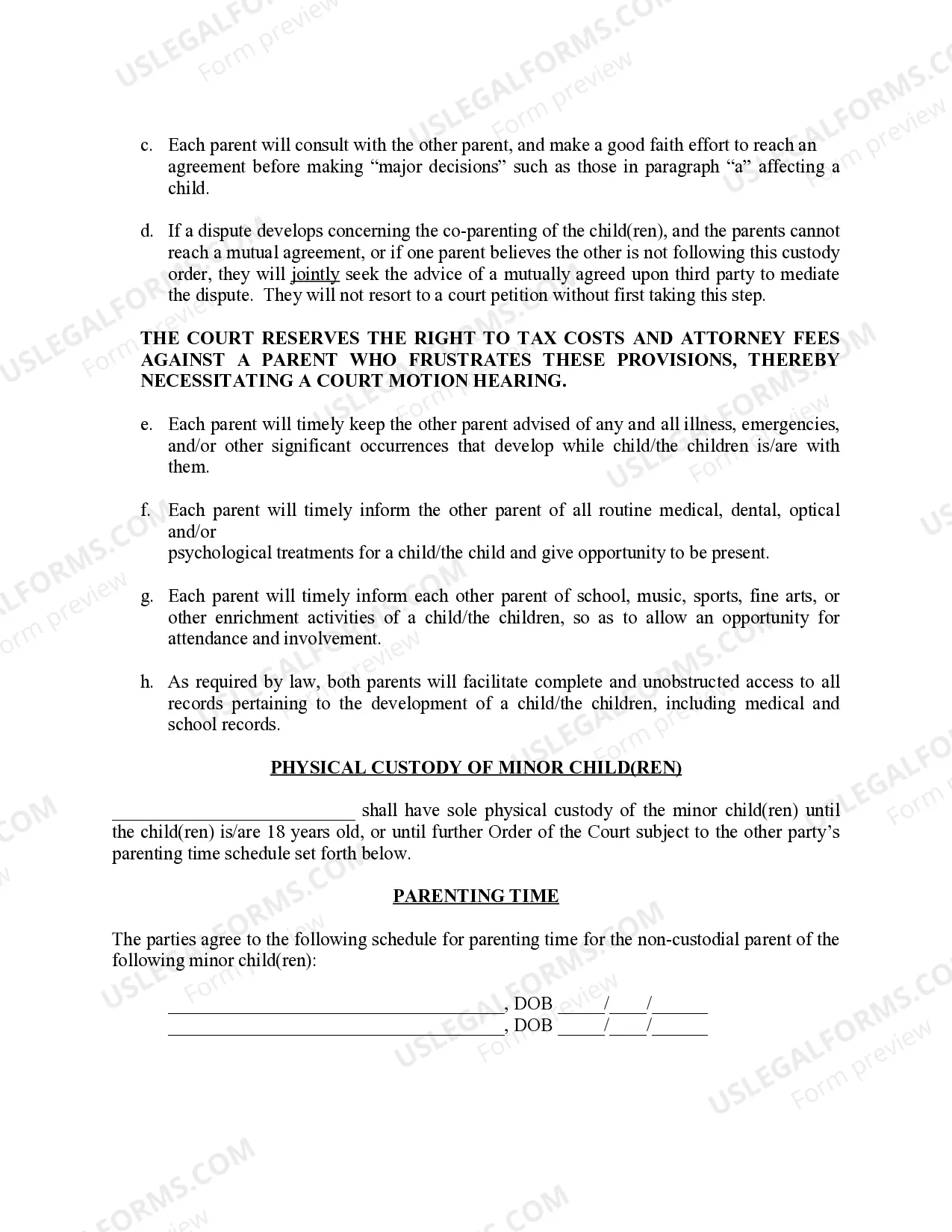
- Details of legal custody, including joint decision-making responsibilities.
- Physical custody assignments for minor children.
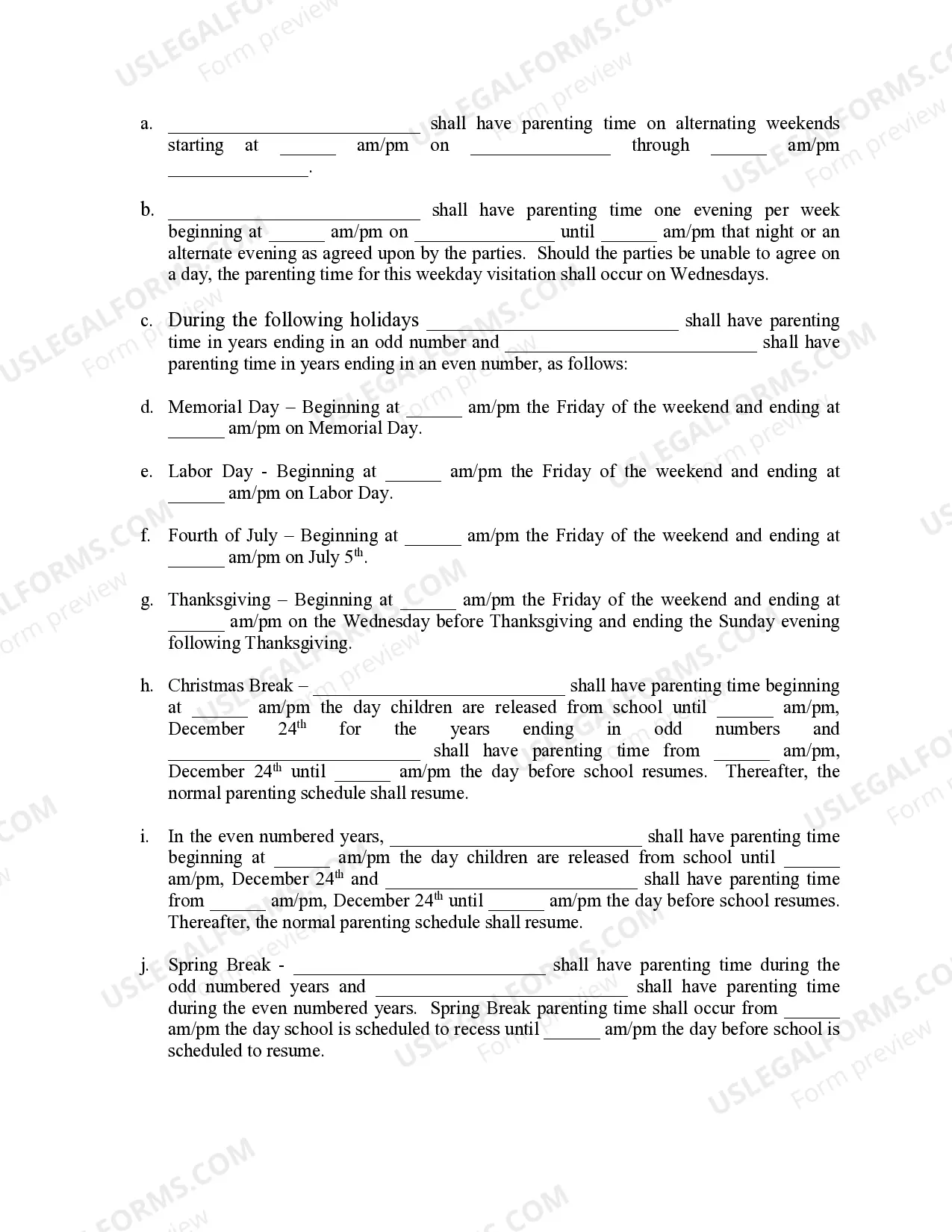
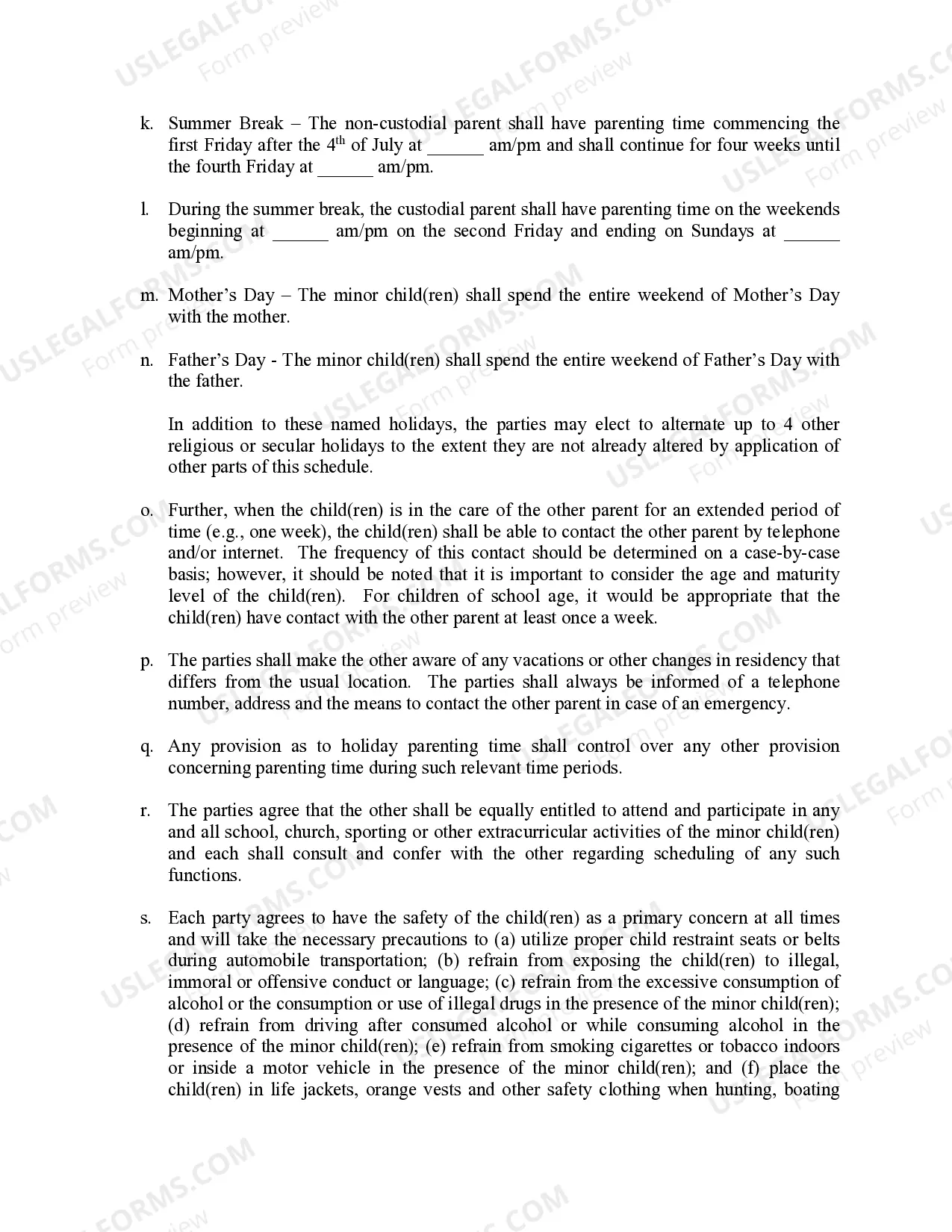
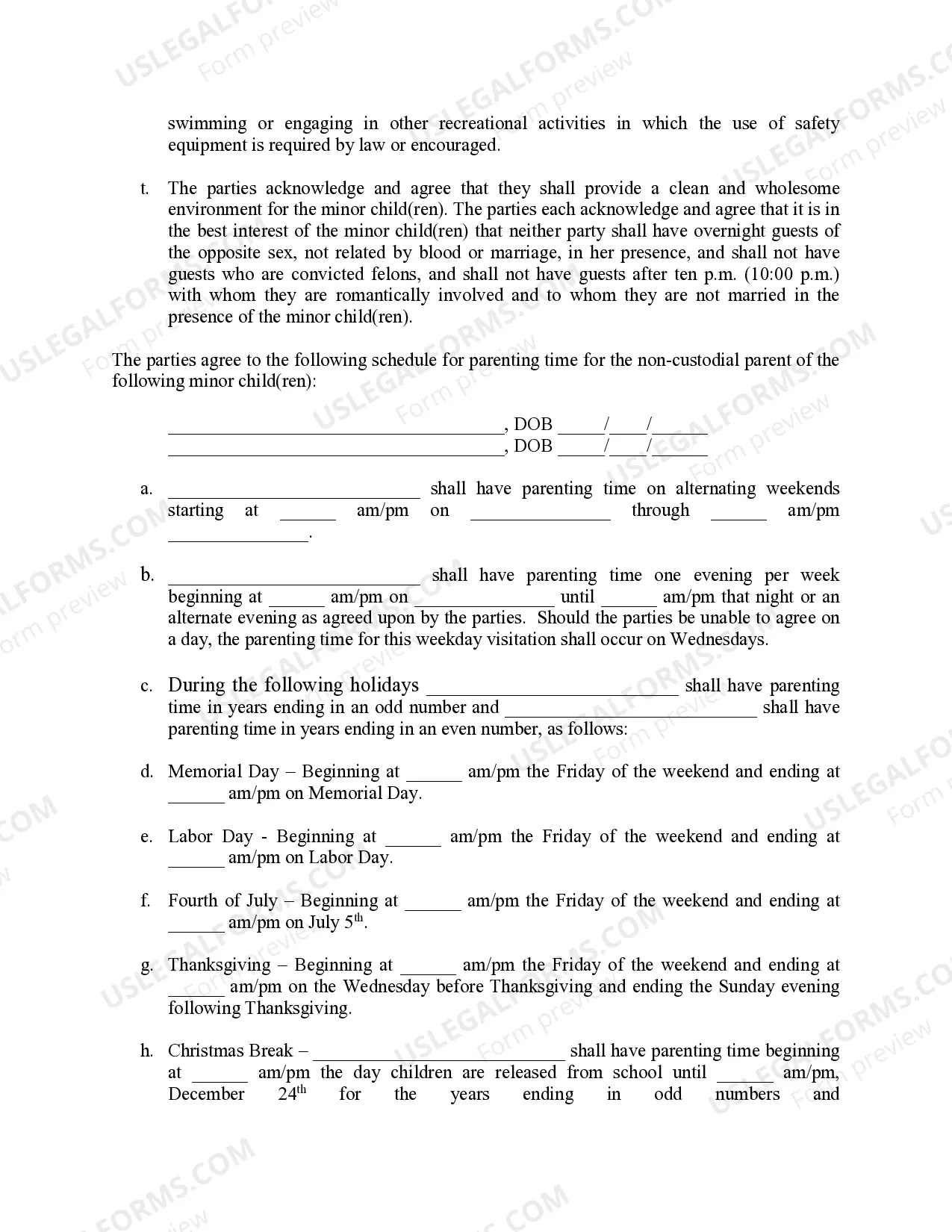
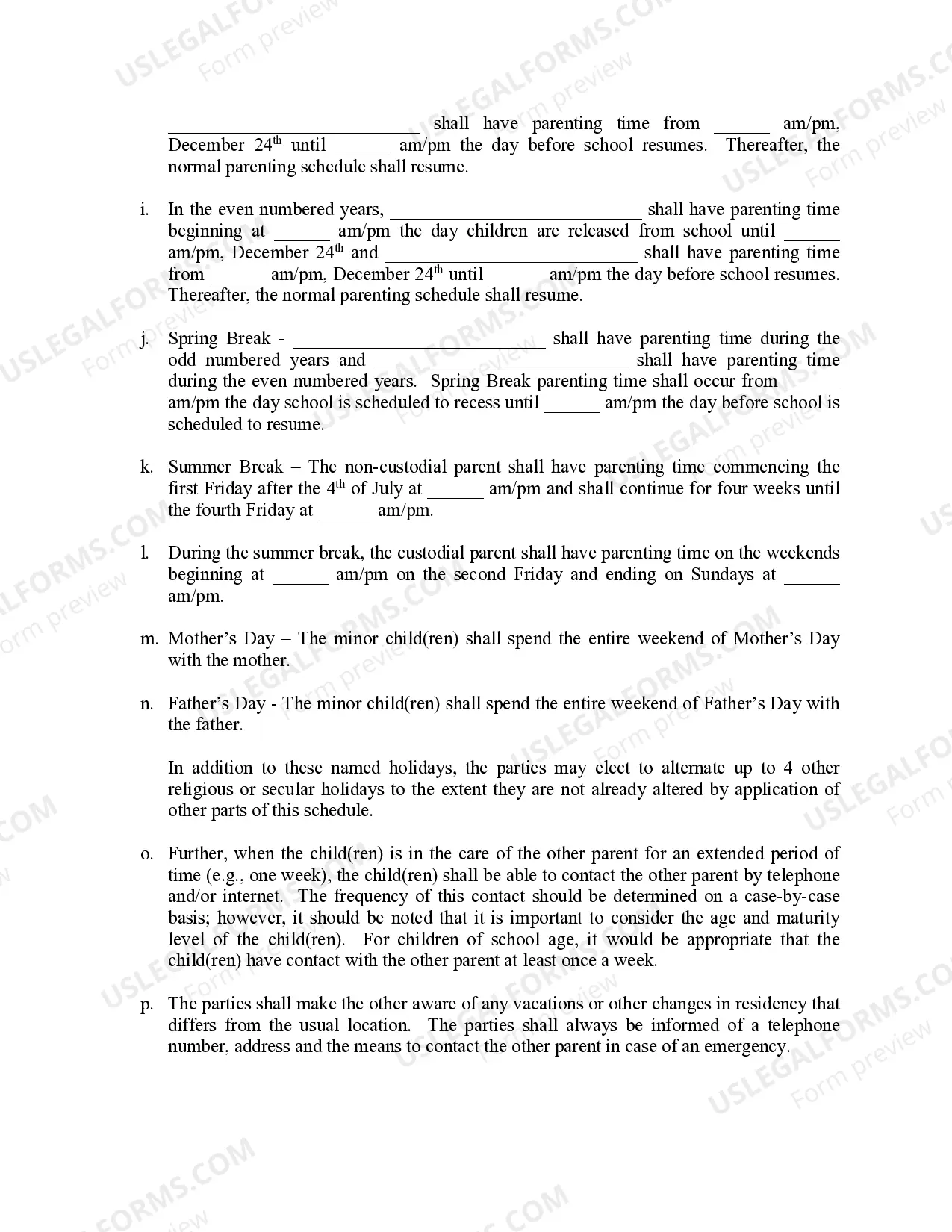
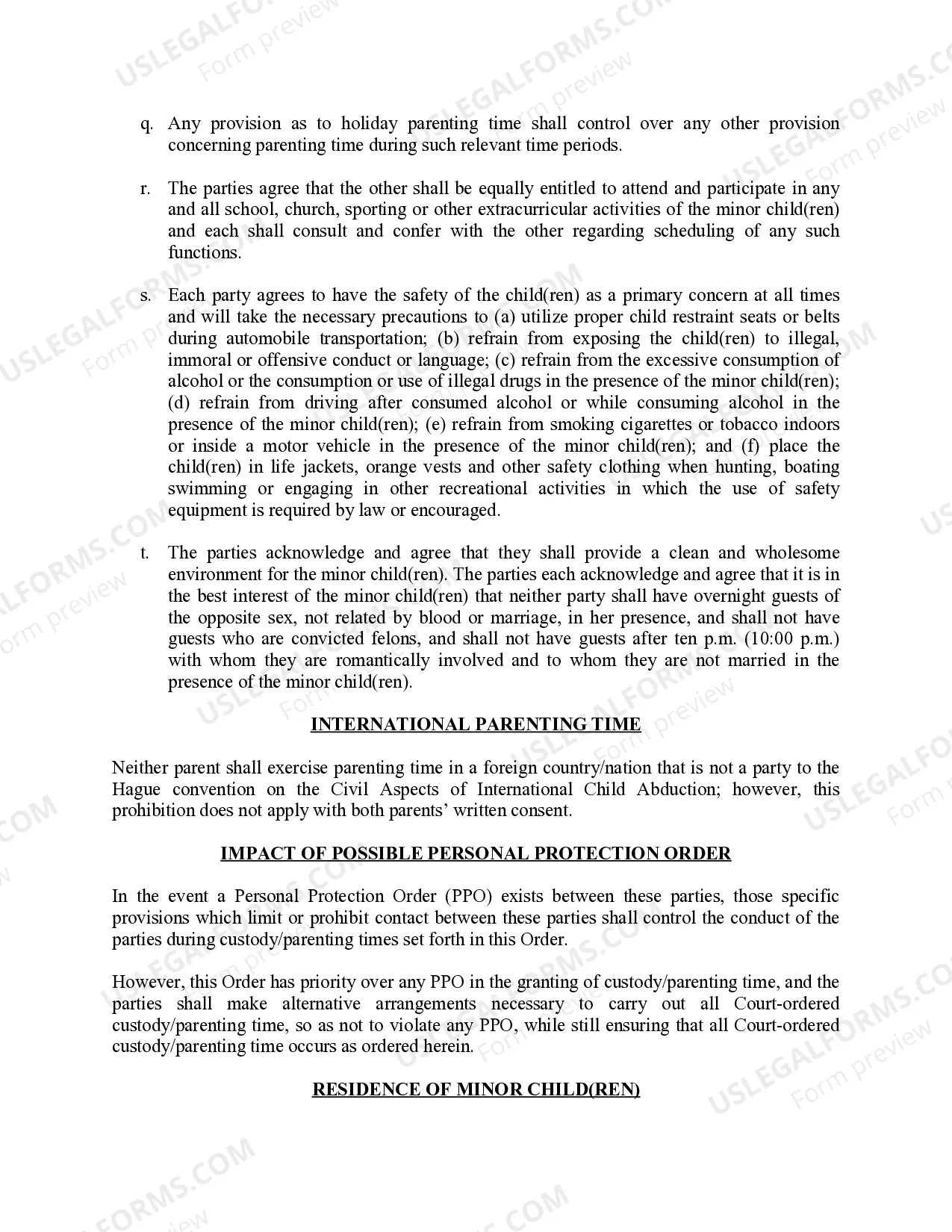
- Explicit parenting time schedules for holidays and weekends.
- Provisions for communication regarding children's well-being between parents.
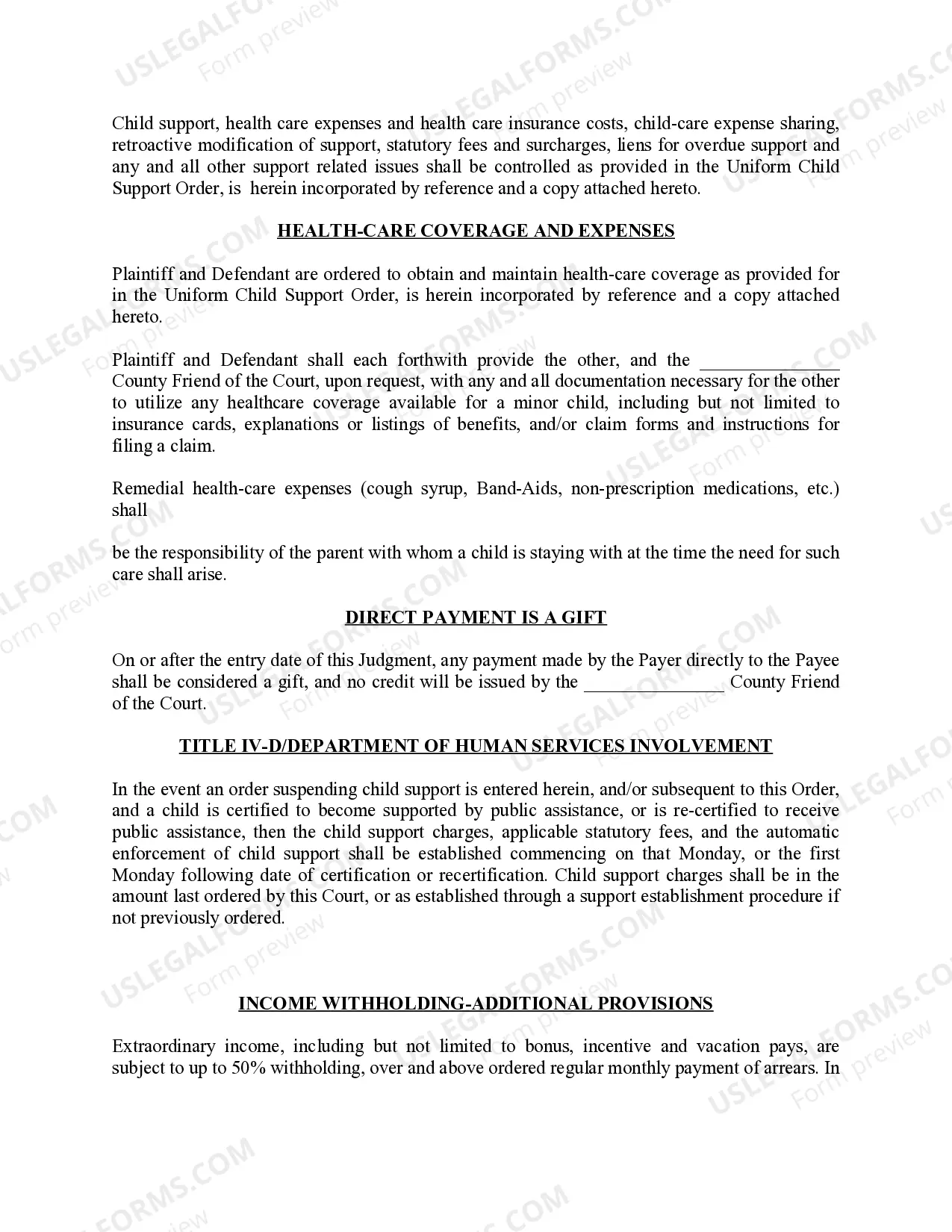
- Child support obligations and healthcare responsibilities.

When to use this form
This form is necessary when parents in Michigan are divorcing or separating and wish to formalize an agreement regarding custody, parenting time, and child support for their minor children. It is particularly relevant for parents who agree to a split physical custody arrangement and require clarity on visitation schedules and responsibilities.
Who should use this form
- Parents seeking to establish or modify a custody agreement in Michigan.
- Individuals involved in a divorce where child custody and support are contested.
- Parties who have reached an agreement regarding split custody and need to formalize it legally.
How to complete this form
- Fill in the court name, county, and case number at the top of the form.
- Provide the names and dates of birth of the minor children involved.
- Specify the legal custody arrangement, indicating if it is joint custody.
- Detail the physical custody and parenting time schedule, including specific times for holidays.
- Include provisions for communication, child support, and health care coverage.
Is notarization required?
This form does not typically require notarization unless specified by local law. However, it is advisable to consult with a legal professional to ensure compliance with any specific requirements related to notarization in your jurisdiction.
Get your form ready online
Our built-in tools help you complete, sign, share, and store your documents in one place.
Make edits, fill in missing information, and update formatting in US Legal Forms—just like you would in MS Word.
Download a copy, print it, send it by email, or mail it via USPS—whatever works best for your next step.
Sign and collect signatures with our SignNow integration. Send to multiple recipients, set reminders, and more. Go Premium to unlock E-Sign.
If this form requires notarization, complete it online through a secure video call—no need to meet a notary in person or wait for an appointment.
We protect your documents and personal data by following strict security and privacy standards.

Make edits, fill in missing information, and update formatting in US Legal Forms—just like you would in MS Word.

Download a copy, print it, send it by email, or mail it via USPS—whatever works best for your next step.

Sign and collect signatures with our SignNow integration. Send to multiple recipients, set reminders, and more. Go Premium to unlock E-Sign.

If this form requires notarization, complete it online through a secure video call—no need to meet a notary in person or wait for an appointment.

We protect your documents and personal data by following strict security and privacy standards.
Typical mistakes to avoid
- Failing to include all required parties' names and signatures.
- Not clearly outlining the parenting time schedule leading to confusion.
- Omitting details on healthcare responsibilities and child support obligations.
Benefits of using this form online
- Convenient access to essential legal forms from anywhere with an internet connection.
- Edit and customize the form easily to suit individual custody arrangements.
- Reliable templates drafted by licensed attorneys to ensure legal validity.
Looking for another form?
Form popularity
FAQ
The most common co-parenting 50/50 plans include 2-2-3, 3-4-4-3, 2-2-5-5, and alternating weeks. However, some more uncommon arrangements also exist, like alternating custody every two weeks.
Parenting time shall occur one evening per week from p.m. to p.m. on a day of the week to be determined by the parties. If the parties cannot agree on a day, the parenting time shall occur on Wednesday evening.
A 2-2-3 schedule can work well for a toddler if the parents live close to each other. The following schedules can also work for a toddler: Alternating every 2 days schedule where your toddler alternates spending 2 days with each parent.
A common 70/30 schedule in Michigan, the every weekend schedule, has children visit the noncustodial parent one evening per week, plus every other weekend. In the alternating weekends schedule, children spend every other weekend with the noncustodial parent in an 80/20 division of parenting time.
File the original Motion Regarding Parenting Time form along with the Uniform Child Custody Jurisdiction Enforcement Act Affidavit (MC416) and all copies with the Circuit Court Clerk at 225 West Main Street Gaylord, MI 49735. A filing and order entry fee of $100.00 is due at the time of filing.
Most parents choose a 2-2-3 schedule, where kids spend two days, two days, and three days with each parent in a rotating schedule. The weeks rotate so that each parent has some weeks with a larger amount of parenting time.
Requirements for agency visitation include no physical contact between the child and parent unless initiated by the child, and no in-audible communication between the parent and child. This includes written communication.
Your letter should be well-organized and specific to your situation. It should demonstrate your genuine commitment to being a good co-parent, make a thoughtful argument in favor of your custody arrangement and show that you prioritize your child's best interests.