Michigan Judicial Circuit Court - Order Regarding Custody, Parenting Time (Visitation) and Child Support - Sole Physical Custody with Reasonable Visitation
Overview of this form
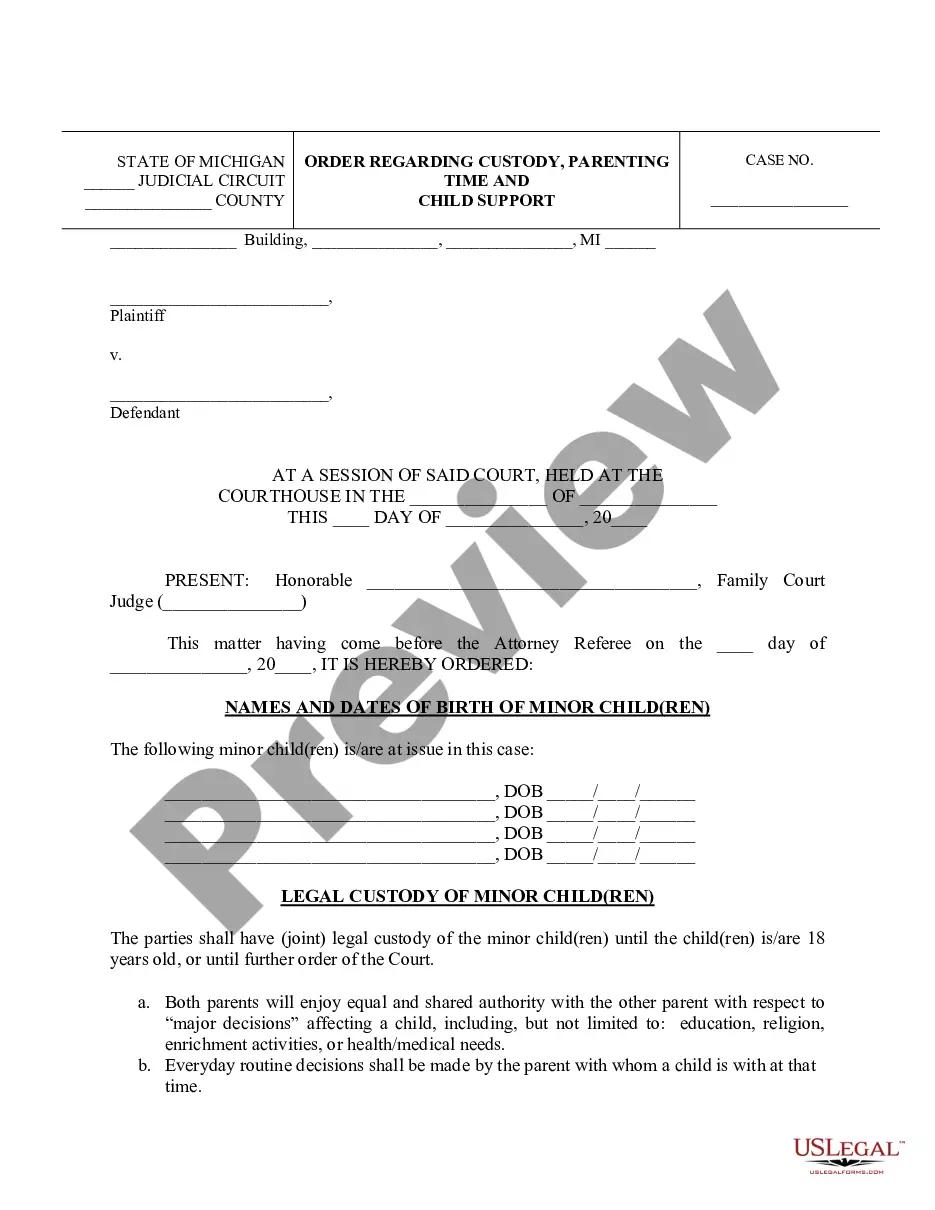
The Michigan Judicial Circuit Court - Order Regarding Custody, Parenting Time (Visitation) and Child Support is a legal document that establishes sole physical custody of a child with one parent and outlines reasonable visitation rights for the other parent. This form is ideal for parents who maintain a cooperative relationship and do not foresee significant conflicts concerning custody or child support issues.
What’s included in this form
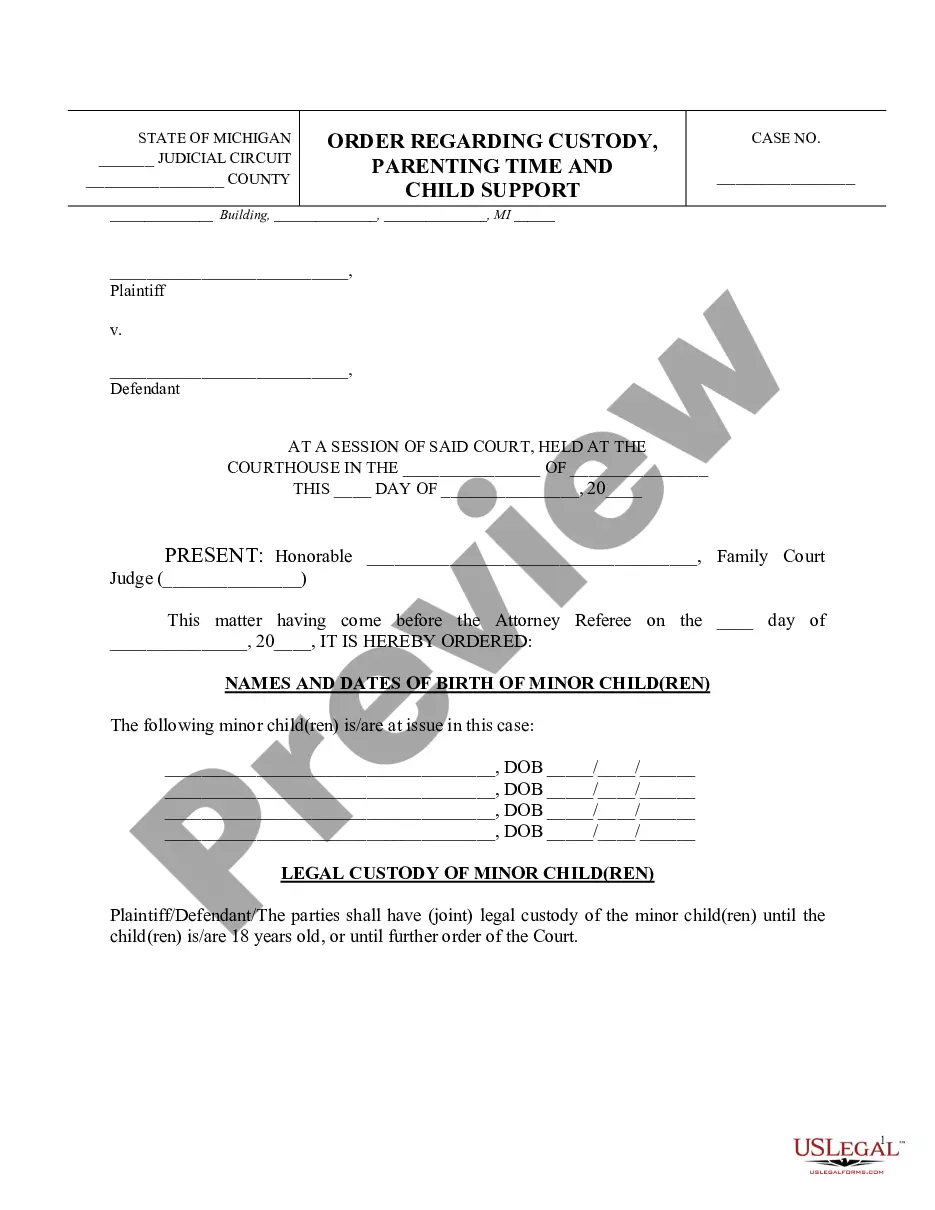
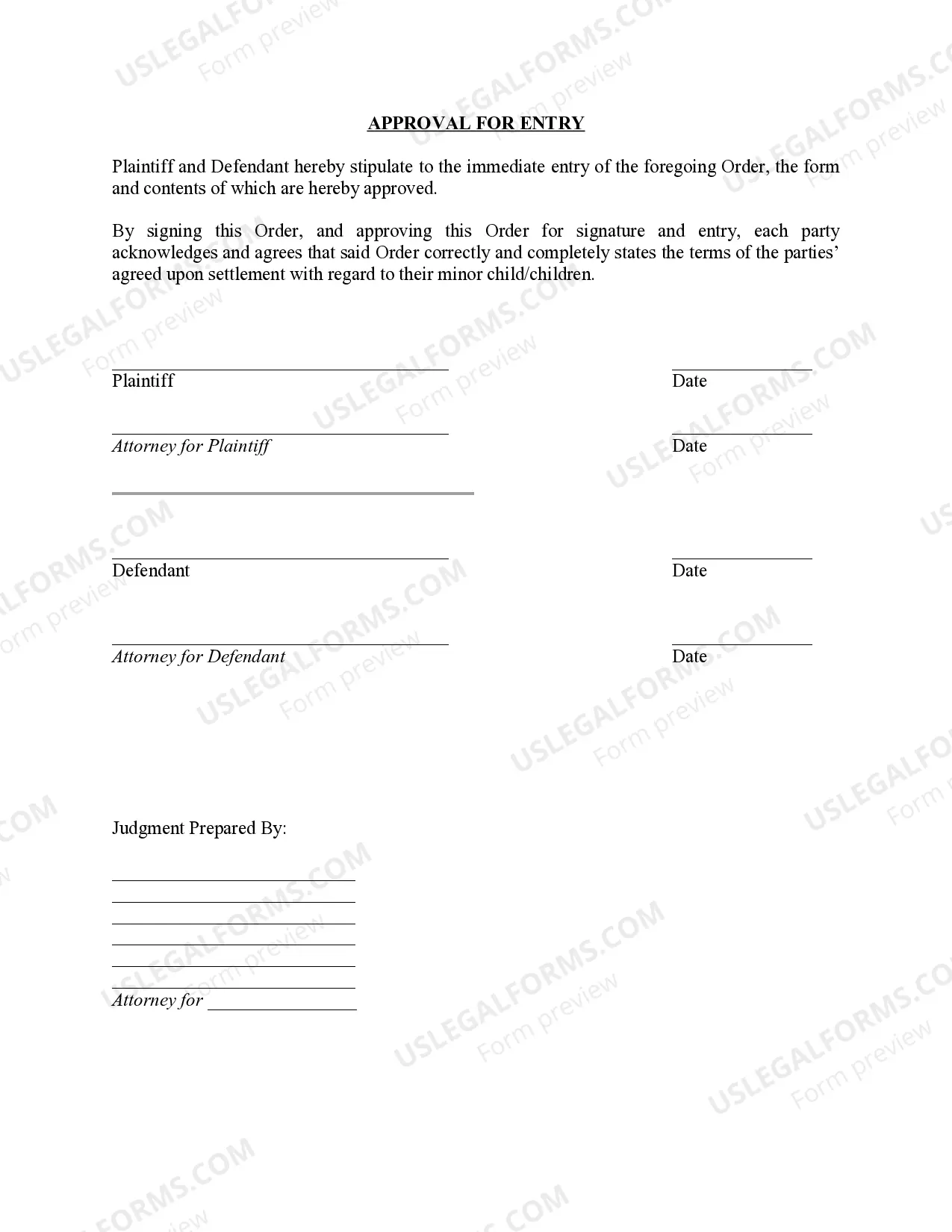
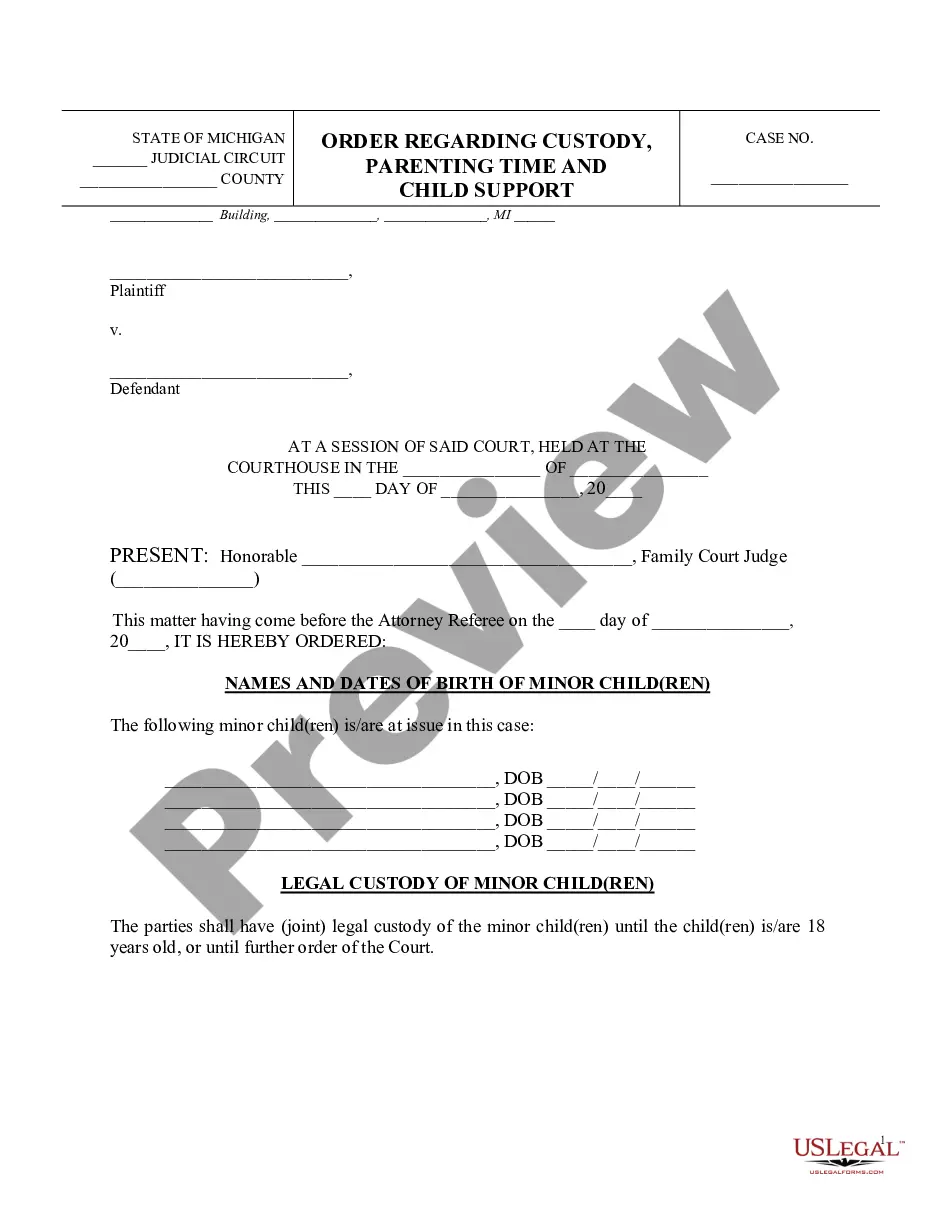
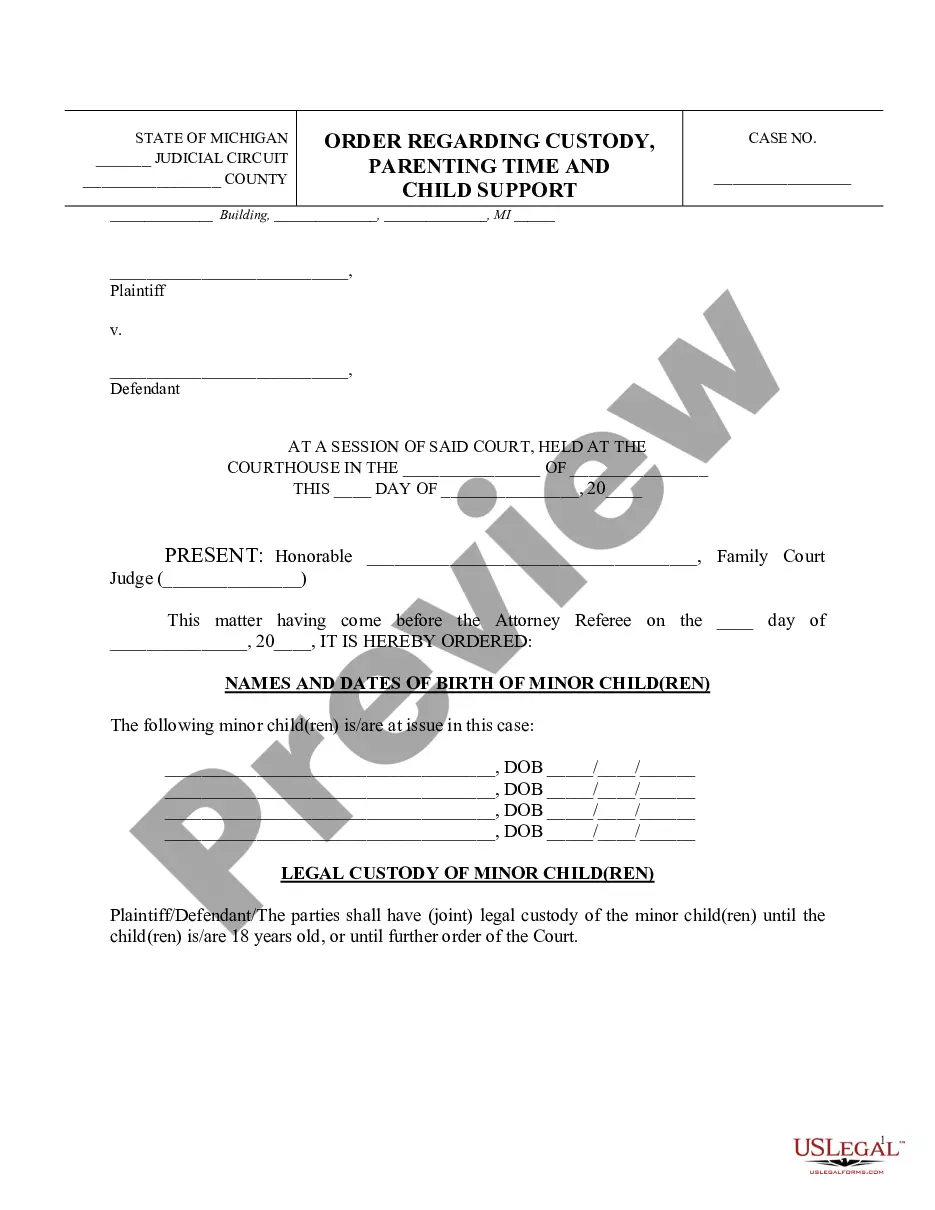
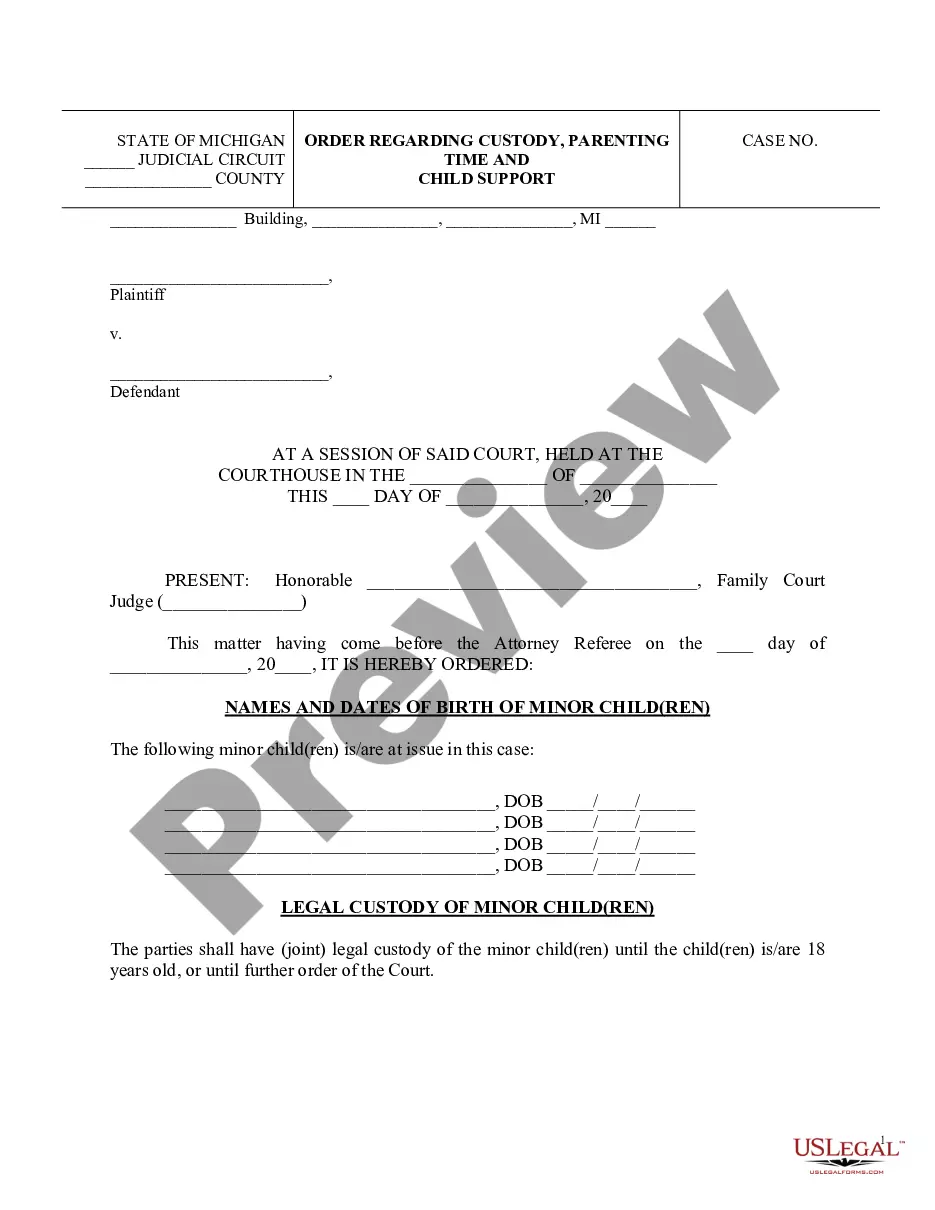
- Identification of the parties involved and the minor child(ren).
- Legal custody arrangements, detailing joint legal custody and the roles of each parent.
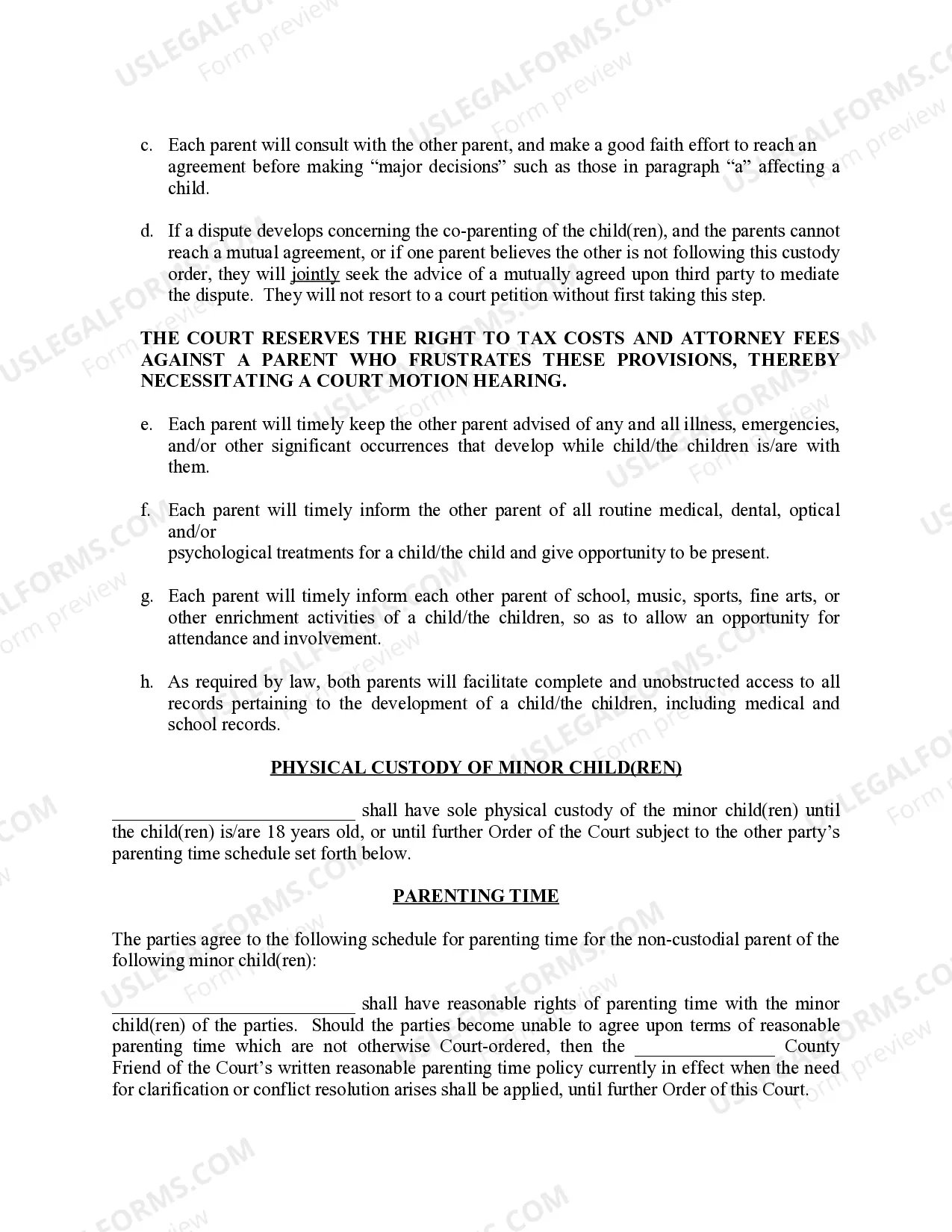
- Specifications of physical custody, granting sole physical custody to one parent.
- Parenting time schedule for the non-custodial parent, emphasizing reasonable visitation rights.
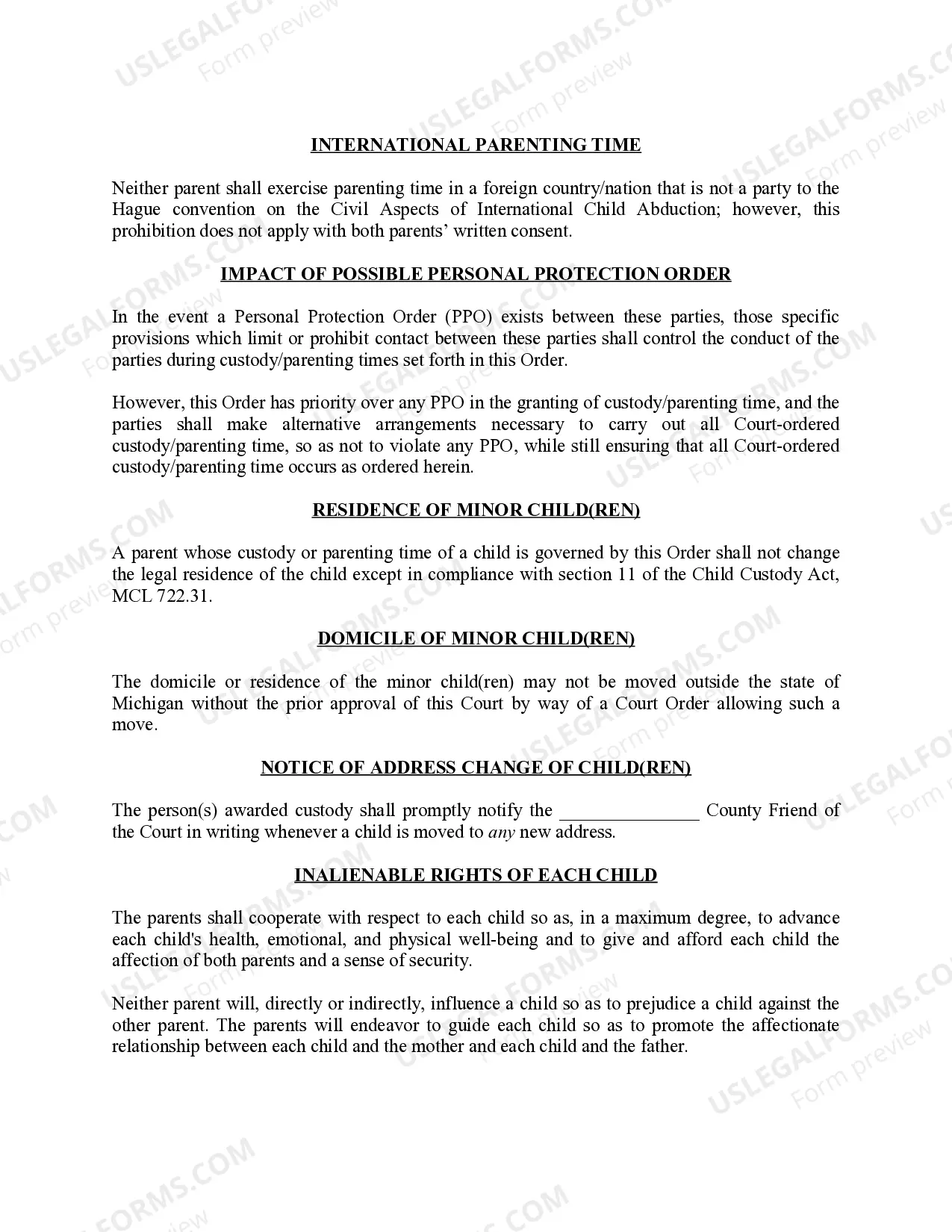
- Details on any applicable personal protection orders and their impact on custody arrangements.
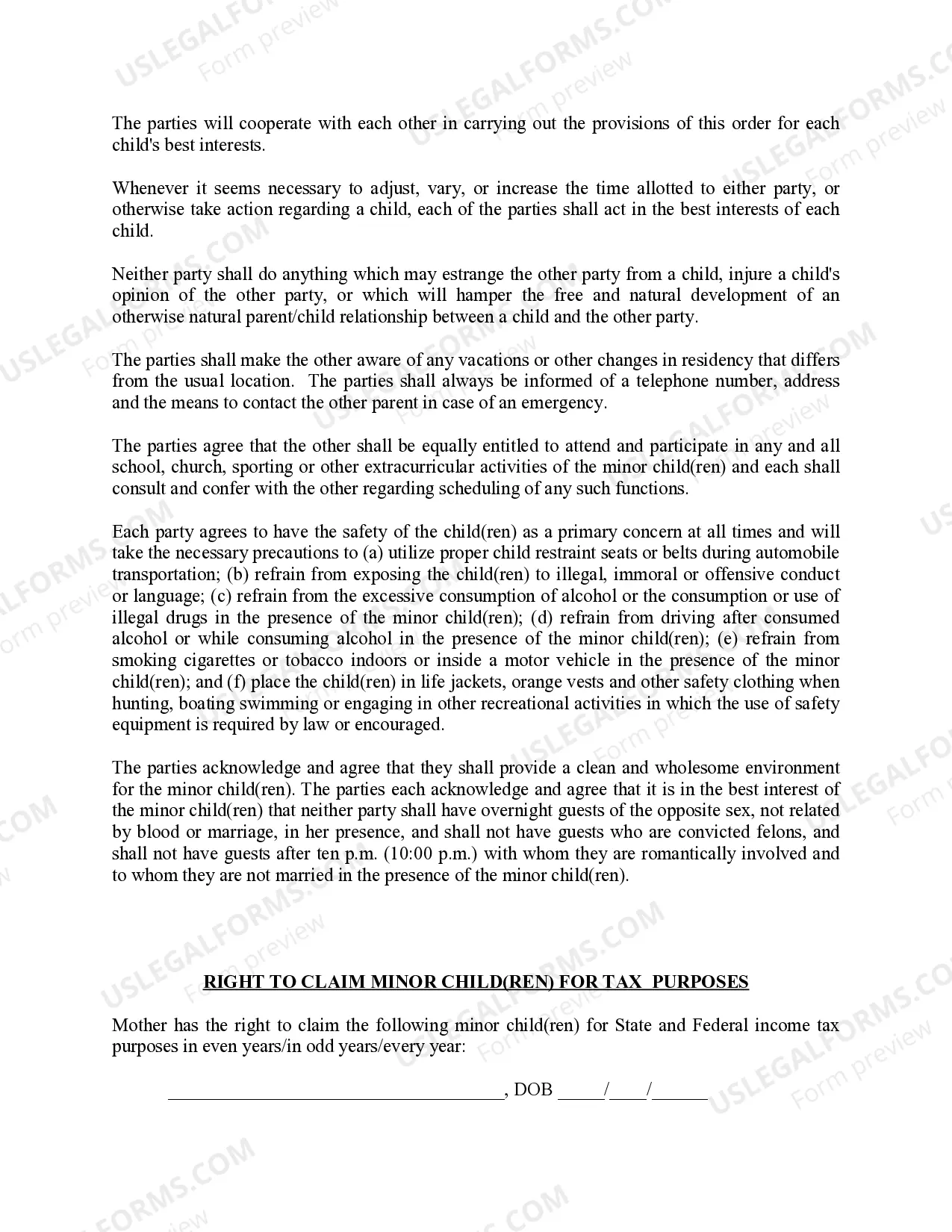
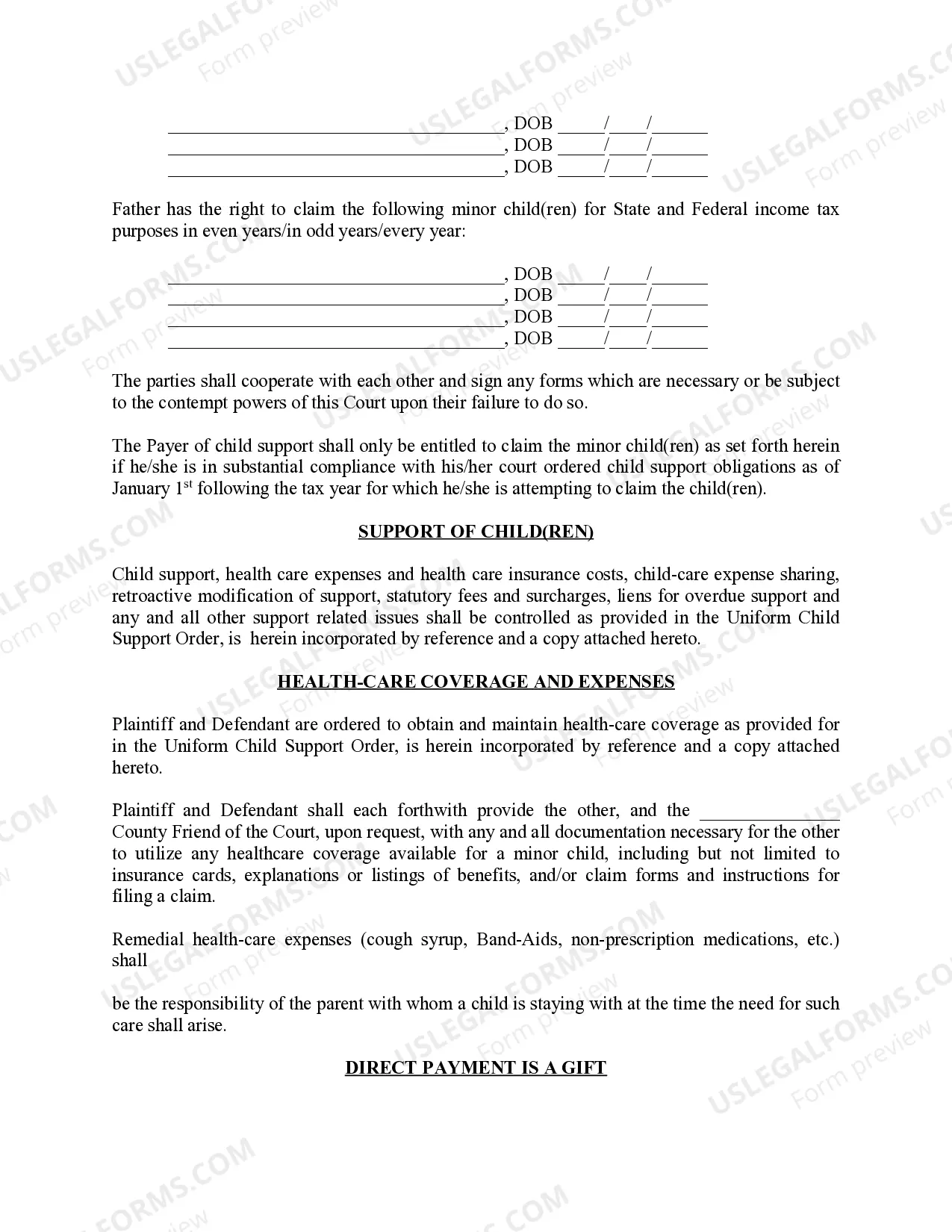
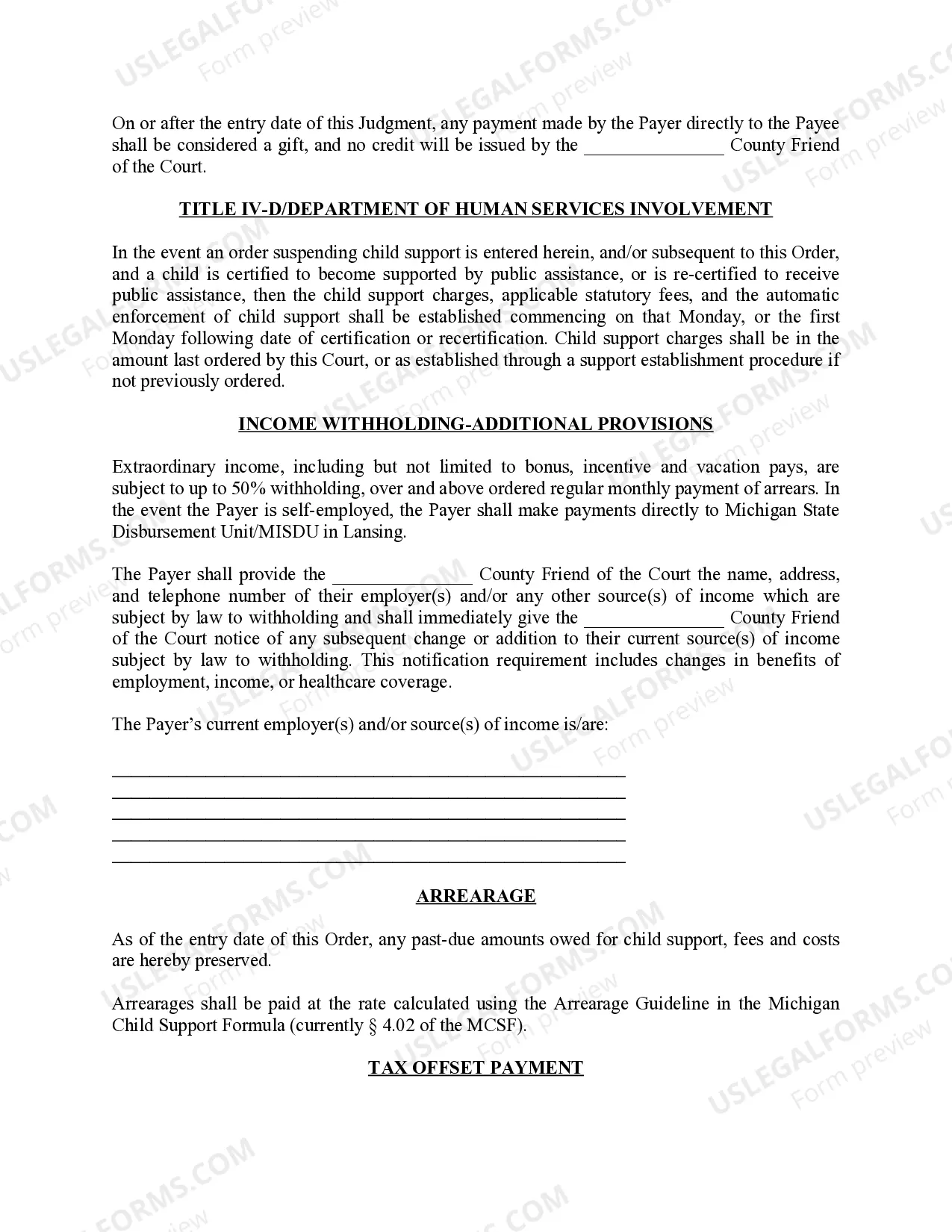
- Provisions for child support obligations, health care coverage, and tax claims for the minor child(ren).
Situations where this form applies
This form should be used during divorce or separation proceedings when parents agree on the custody arrangement and visitation terms for their minor child(ren). It is particularly beneficial for cooperative parents who seek a clear, legal framework for their parenting relationship without contentious disputes.
Who can use this document
- Parents in Michigan who are undergoing divorce or separation.
- Individuals seeking to establish custody and visitation schedules amicably.
- Those who wish to formalize an agreement on child support and healthcare responsibilities.
Steps to complete this form
- Identify the parties involved by entering their names and addresses.
- List the names and dates of birth of the minor child(ren) affected by this order.
- Specify the legal custody arrangements, indicating who will have sole physical custody.
- Enter details about the agreed parenting time schedule for the non-custodial parent.
- Include provisions for child support and healthcare responsibilities.
- Have both parties sign the form, indicating their agreement to the terms set forth.
Notarization requirements for this form
This form does not typically require notarization unless specified by local law, making the filing process simpler for parents involved in custody arrangements.
Get your form ready online
Our built-in tools help you complete, sign, share, and store your documents in one place.
Make edits, fill in missing information, and update formatting in US Legal Forms—just like you would in MS Word.
Download a copy, print it, send it by email, or mail it via USPS—whatever works best for your next step.
Sign and collect signatures with our SignNow integration. Send to multiple recipients, set reminders, and more. Go Premium to unlock E-Sign.
If this form requires notarization, complete it online through a secure video call—no need to meet a notary in person or wait for an appointment.
We protect your documents and personal data by following strict security and privacy standards.

Make edits, fill in missing information, and update formatting in US Legal Forms—just like you would in MS Word.

Download a copy, print it, send it by email, or mail it via USPS—whatever works best for your next step.

Sign and collect signatures with our SignNow integration. Send to multiple recipients, set reminders, and more. Go Premium to unlock E-Sign.

If this form requires notarization, complete it online through a secure video call—no need to meet a notary in person or wait for an appointment.

We protect your documents and personal data by following strict security and privacy standards.
Avoid these common issues
- Failing to provide accurate names and details for the minor child(ren).
- Not clearly defining the parenting time schedule.
- Neglecting to sign and date the form correctly.
- Overlooking the need to communicate amendments to the custody arrangement.
Benefits of using this form online
- Convenience of downloading and filling out the form from home.
- Editability allows parents to update details easily before finalization.
- Access to attorney-drafted forms ensures legality and validity.
- Detailed information on how to complete the form minimizes errors.
Looking for another form?
Form popularity
FAQ
Making Up Missed Visits The judge will always consider what is in the best interest of the child. If a parent misses visitation and wishes to make up those visits, a judge may approve. However, depending on the reasons why the parenting time was missed in the first place, the request may be denied.
You cannot deny parenting time in Michigan without a court order. If you refuse parenting time to the other parent, you may be held in contempt of Court. Proper cause is always needed if you are denying parenting time in Michigan.
Keep copies of your communication and correspondence with the other parent. The evidence often offered in today's child custody trials includes copies of texts and e-mails of the parties. Other common evidence includes the parties' income information (often tax returns and paystubs), photos and sometimes calendars.
Michigan law mandates how long cases involving child custody can take: no more than 360 days from filing. The Friend of the Court office makes sure parents have final orders by then.
Parenting time is the time a noncustodial parent spends with the children. Under Michigan law, children have a right to parenting time with the non-custodial parent unless the other parent demonstrates, by clear and convincing evidence, that visitation would endanger the child's physical, mental, or emotional health.
Guideline, sole custody occurs when primary physical custody and legal custody are given to one parent. Physical custody is when a parent provides most of the day to day care for the child. Legal custody is. when a parent has the responsibility of making all major decisions regarding the child's upbringing (such.
There are three main factors that determine interference in child custody cases in Michigan: First and foremost, there must be an existing legal order (i.e. custody arrangement) regarding custody or parenting time, and then, One parent must detain children from the custodial parent for a period of 24 hours or more.
Physical custody refers to the children's living arrangements. Custody can be ?sole? or ?joint.? Sole custody means only one parent has custody. Joint custody means the parents share custody. If parents share legal custody, they must make important decisions about their children together.