Michigan Lease Enforcement Forbearance Agreement
Overview of this form
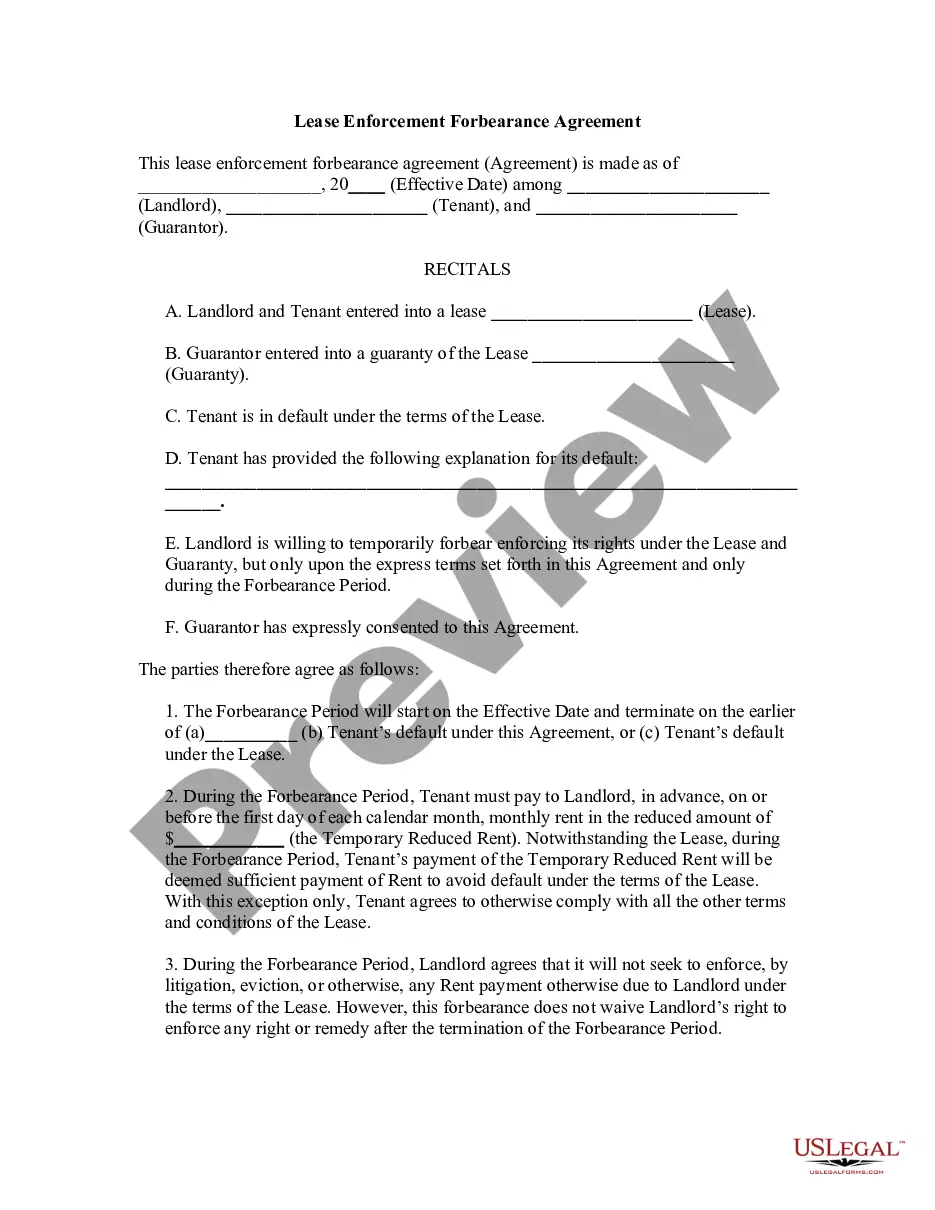
The Lease Enforcement Forbearance Agreement is a legal document that allows a tenant to temporarily postpone rent payments while preventing the landlord from pursuing eviction. This agreement offers a structured approach for tenants facing financial difficulties, providing a short-term respite and outlining the conditions in which rent can be reduced or suspended. Unlike a typical lease agreement, this form specifically addresses situations where a tenant is in default and seeks a mutual understanding with the landlord.
Form components explained
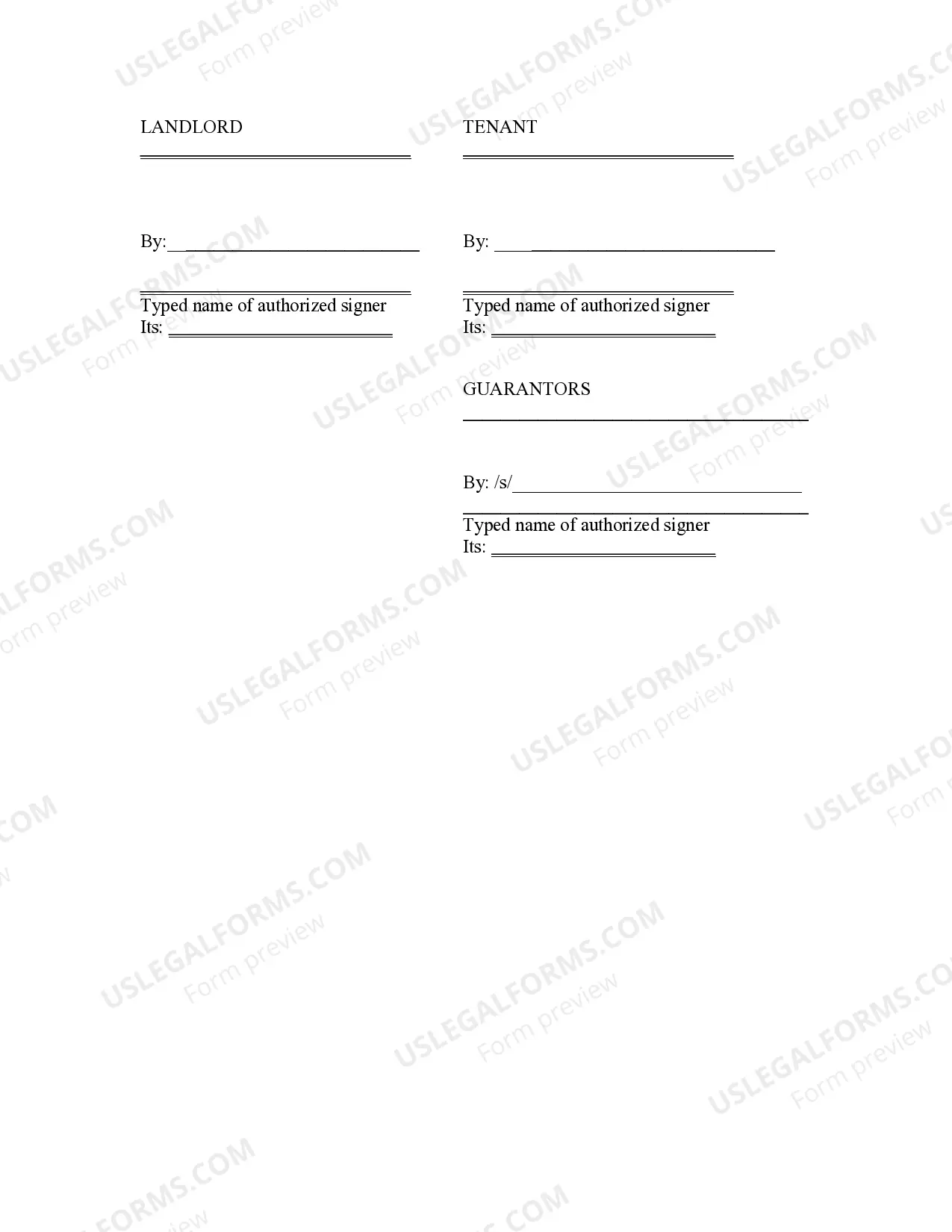
- Identification of the parties involved: landlord, tenant, and guarantor.
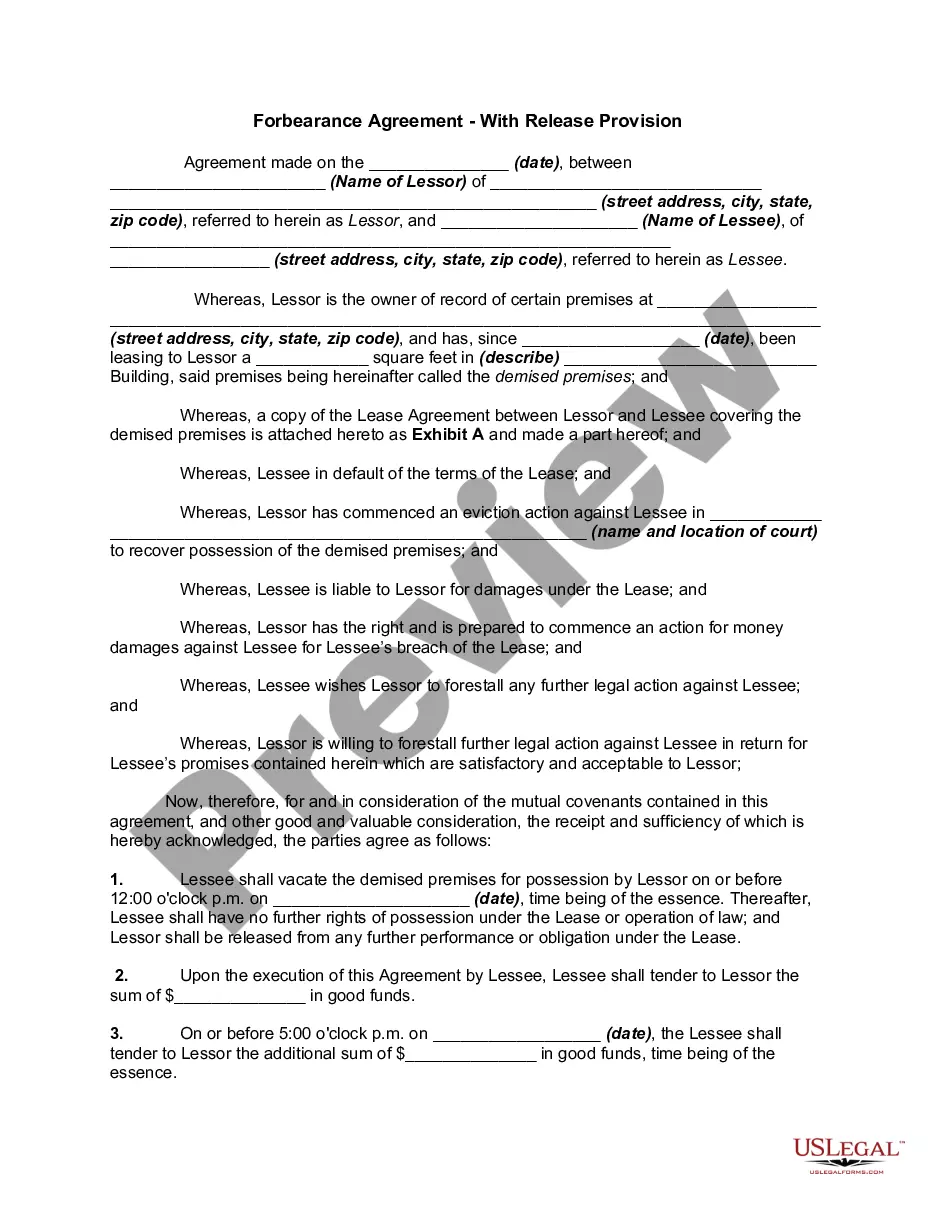
- Details of the original lease and any relevant guaranty agreements.
- Definition of the forbearance period and conditions for temporary rent reduction.
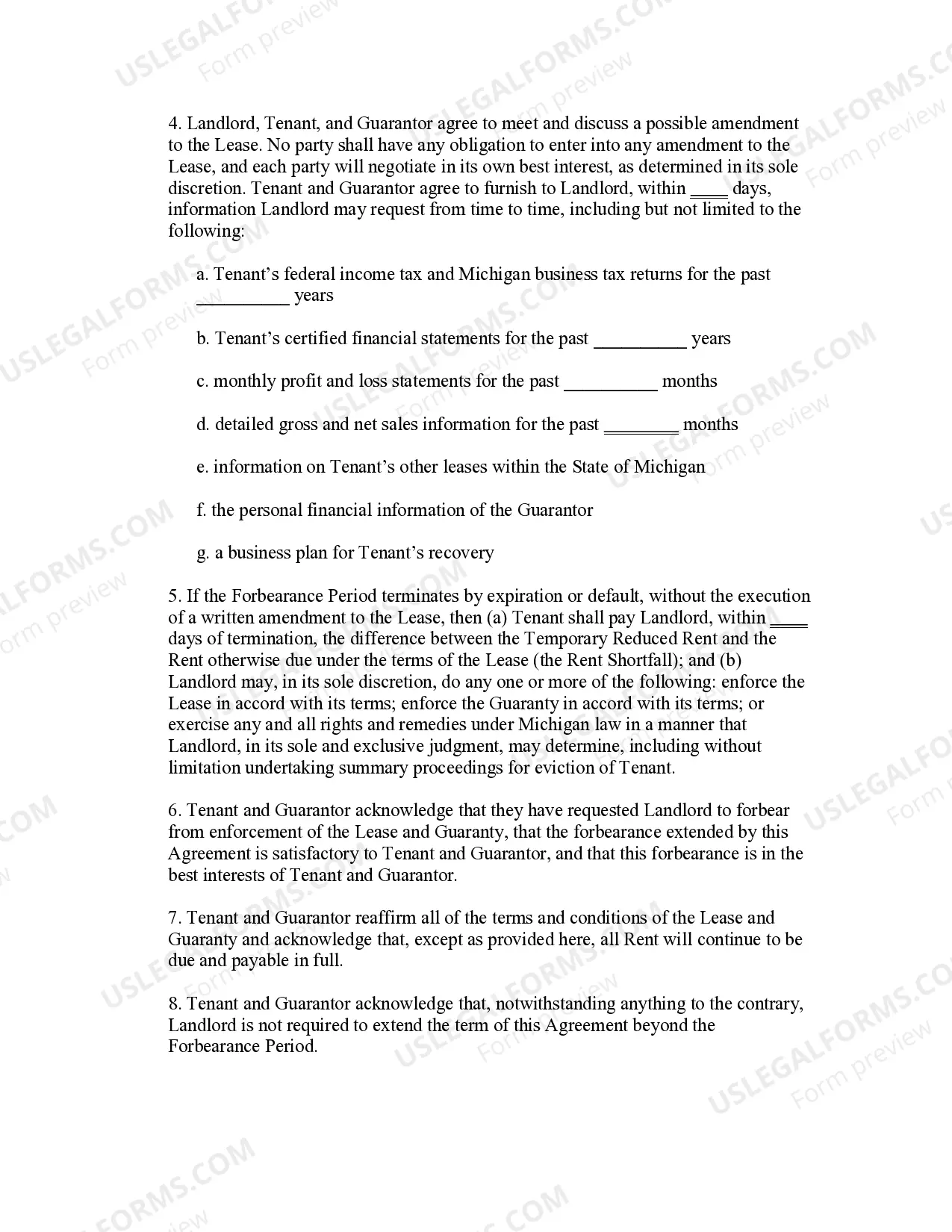
- Requirements for information sharing between the tenant and landlord.
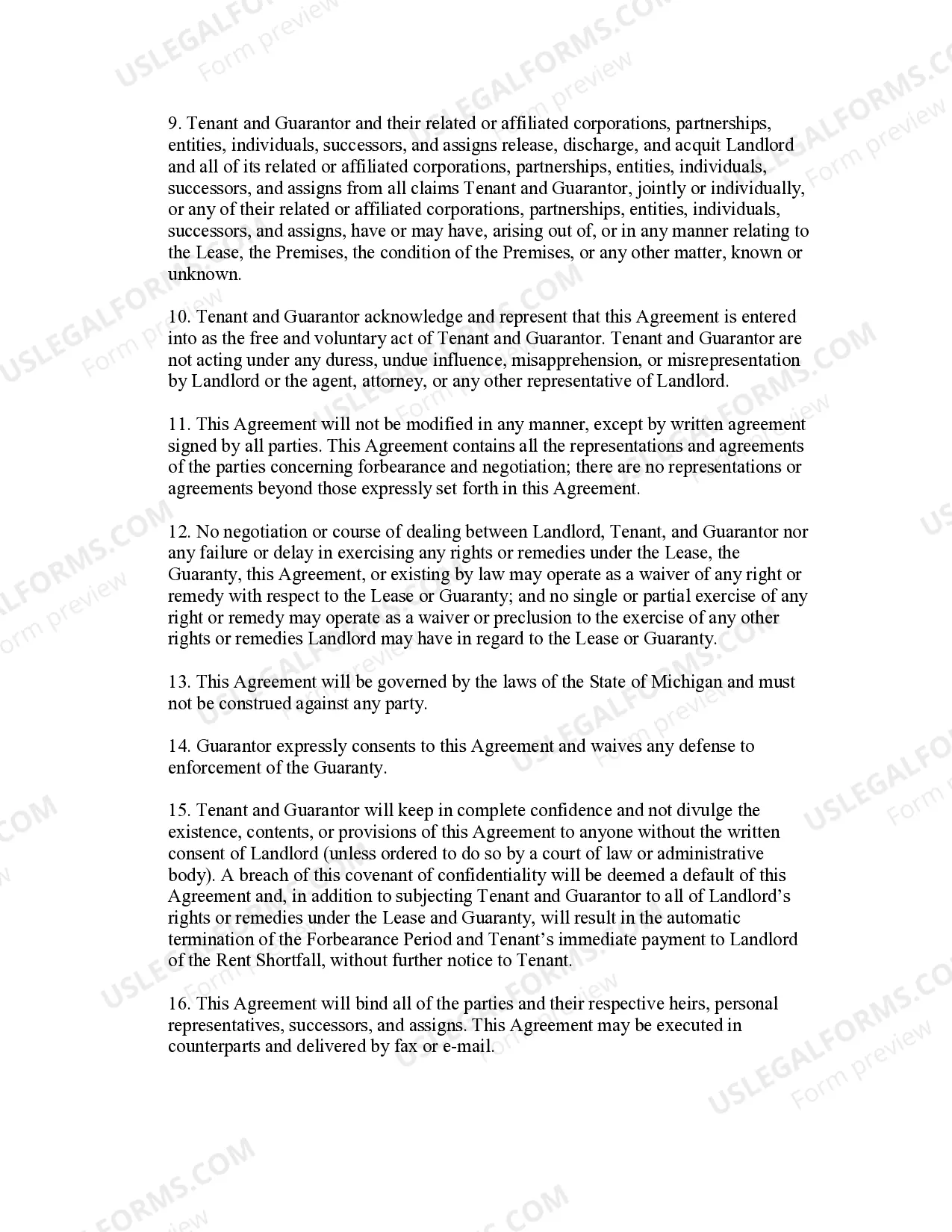
- Consequences of default during the forbearance period.
- Confidentiality and waiver clauses.
When this form is needed
This form is applicable when a tenant is experiencing temporary financial hardship and unable to meet their rent obligations. It is designed for landlords and tenants who wish to agree on a plan to defer rent payments instead of proceeding with eviction. Use this form to establish clear terms for support during challenging times, and to ensure that all parties understand their rights and responsibilities during the forbearance period.
Intended users of this form
Eligible users include:
- Landlords seeking to work cooperatively with tenants facing hardship.
- Tenants who are currently in default of their lease and need temporary relief.
- Guarantors involved in lease agreements who wish to understand their role in potential obligations.
Completing this form step by step
- Identify and enter the parties: landlord, tenant, and guarantor.
- Specify the effective date of the agreement and the lease details.
- Define the forbearance period by entering relevant start and end dates.
- Set the amount for temporary rent reduction as agreed upon.
- Obtain signatures from all parties involved to finalize the agreement.
Does this form need to be notarized?
This form does not typically require notarization to be legally valid. However, some jurisdictions or document types may still require it. US Legal Forms provides secure online notarization powered by Notarize, available 24/7 for added convenience.
Get your form ready online
Our built-in tools help you complete, sign, share, and store your documents in one place.
Make edits, fill in missing information, and update formatting in US Legal Forms—just like you would in MS Word.
Download a copy, print it, send it by email, or mail it via USPS—whatever works best for your next step.
Sign and collect signatures with our SignNow integration. Send to multiple recipients, set reminders, and more. Go Premium to unlock E-Sign.
If this form requires notarization, complete it online through a secure video call—no need to meet a notary in person or wait for an appointment.
We protect your documents and personal data by following strict security and privacy standards.

Make edits, fill in missing information, and update formatting in US Legal Forms—just like you would in MS Word.

Download a copy, print it, send it by email, or mail it via USPS—whatever works best for your next step.

Sign and collect signatures with our SignNow integration. Send to multiple recipients, set reminders, and more. Go Premium to unlock E-Sign.

If this form requires notarization, complete it online through a secure video call—no need to meet a notary in person or wait for an appointment.

We protect your documents and personal data by following strict security and privacy standards.
Typical mistakes to avoid
- Failing to include detailed explanations for the tenant's default.
- Not specifying the forbearance period accurately.
- Leaving out the required signatures of all parties, including the guarantor.
Benefits of using this form online
- Convenience of accessing and completing the form at any time.
- Editability allows for easy modifications to meet specific needs.
- Reliability of a professionally drafted agreement by licensed attorneys.
Legal use & context
- This agreement is legally binding and enforceable under Michigan law.
- It creates a temporary arrangement that can prevent eviction while protecting the rights of both landlord and tenant.
- Ensure all agreed-upon terms are explicitly stated to avoid misunderstandings.
Looking for another form?

Form popularity
FAQ
term lease ends on its own without further action. However, many leases include the provision that the lease converts to a monthtomonth tenancy at the end of the fixed term.
Once you get a Notice to Quit, you have a certain amount of time to move out or fix what you did wrong. If you don't move out or correct what you did wrong, your landlord can go to court to evict you. 30 days, if it's been more than 30 days since the lease ended.
Before a landlord can start the eviction process, they must give the tenant an official written 7-Day Notice to Pay or Quit. The filing for eviction does not continue if the rent is paid within the 7 days. If they cannot pay and remain on the property, the landlord reserves the right to continue filing for eviction.
A Demand for Possession is used when the tenant has violated the lease agreement, while a Notice to Quit is used when the initial rental or lease term has ended ing to the lease or rental agreement and the landlord now wants the tenant to move out.
If a tenant violates any terms of the lease agreement, the landlord must issue a 30-Day Notice to Quit. If the tenant resolves these issues on time, the eviction process does not continue. Lease violations may include: Damage to the rental property.
The Michigan Notice to Quit is a type of eviction notice form used by landlords, property managers, and property management companies to notify tenants that they must either comply with an order, or quit and give up possession of the rental property within a certain period of time.
(2) If a tenant neglects or refuses to pay rent on a lease at will or otherwise, the landlord may terminate the tenancy by giving the tenant a written 7-day notice to quit.
A Michigan 7-Day Notice to Quit (Non-Payment), also called a ?Demand,? is a rental notice used to inform a tenant of unpaid rent, which they will have 7 days to cure the breach. If the tenant decides to move out within 7 days, they may still be liable to pay rent.