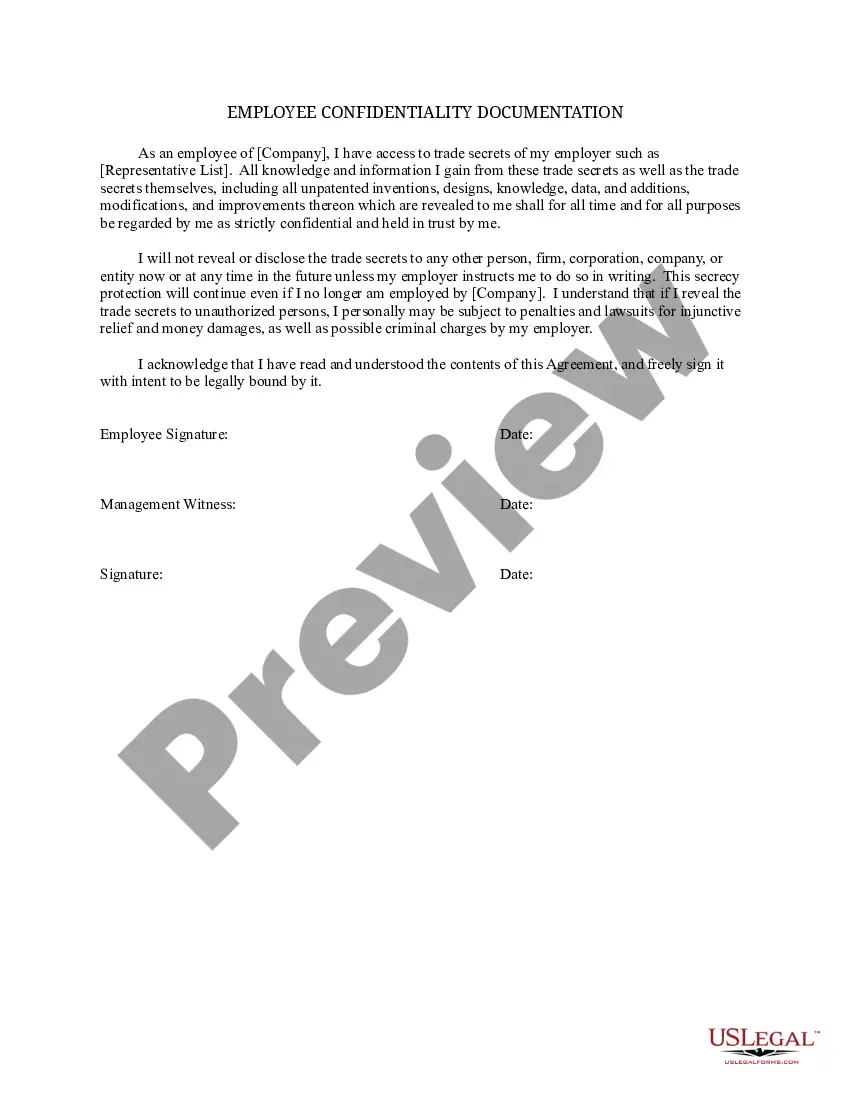
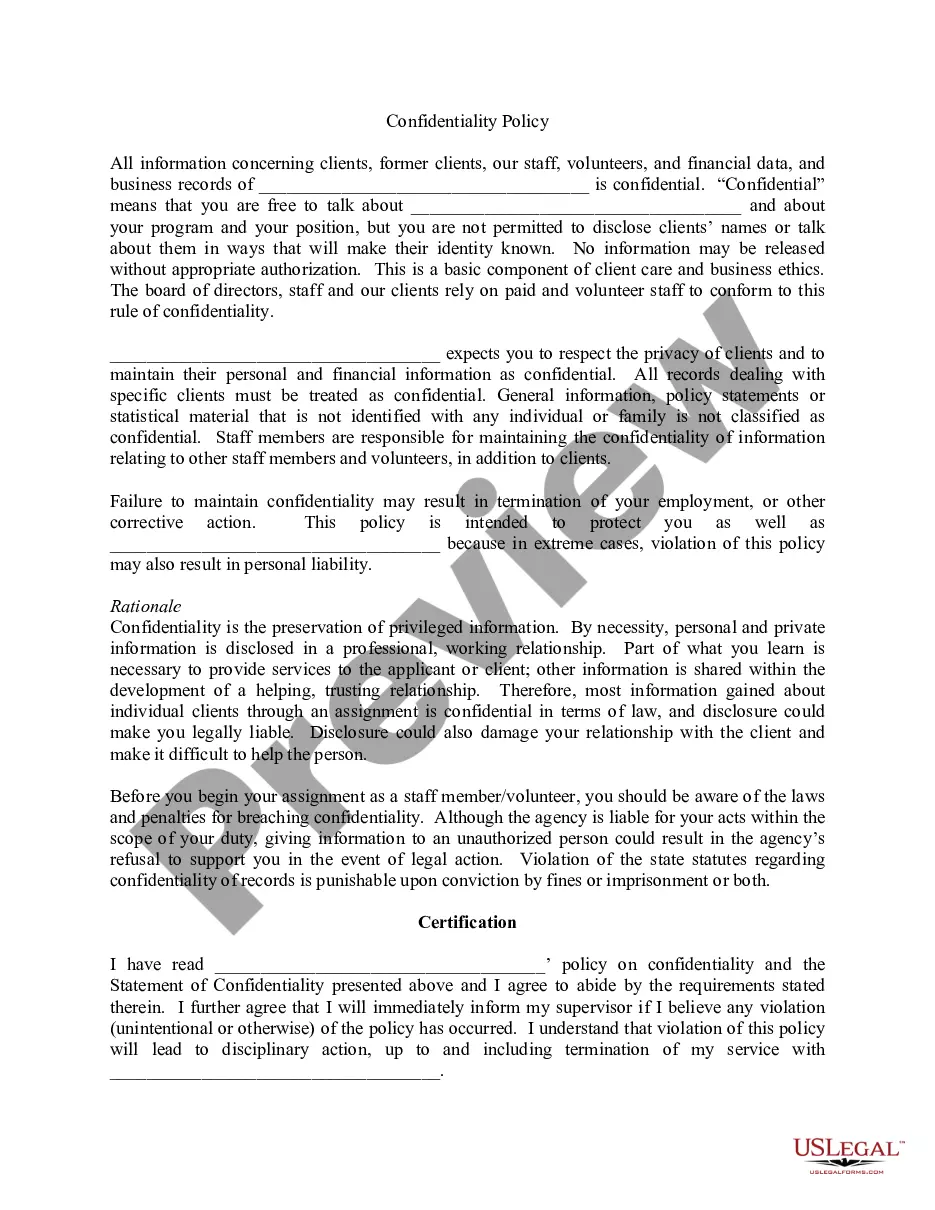
Maine Employee Confidentiality Documentation
Description
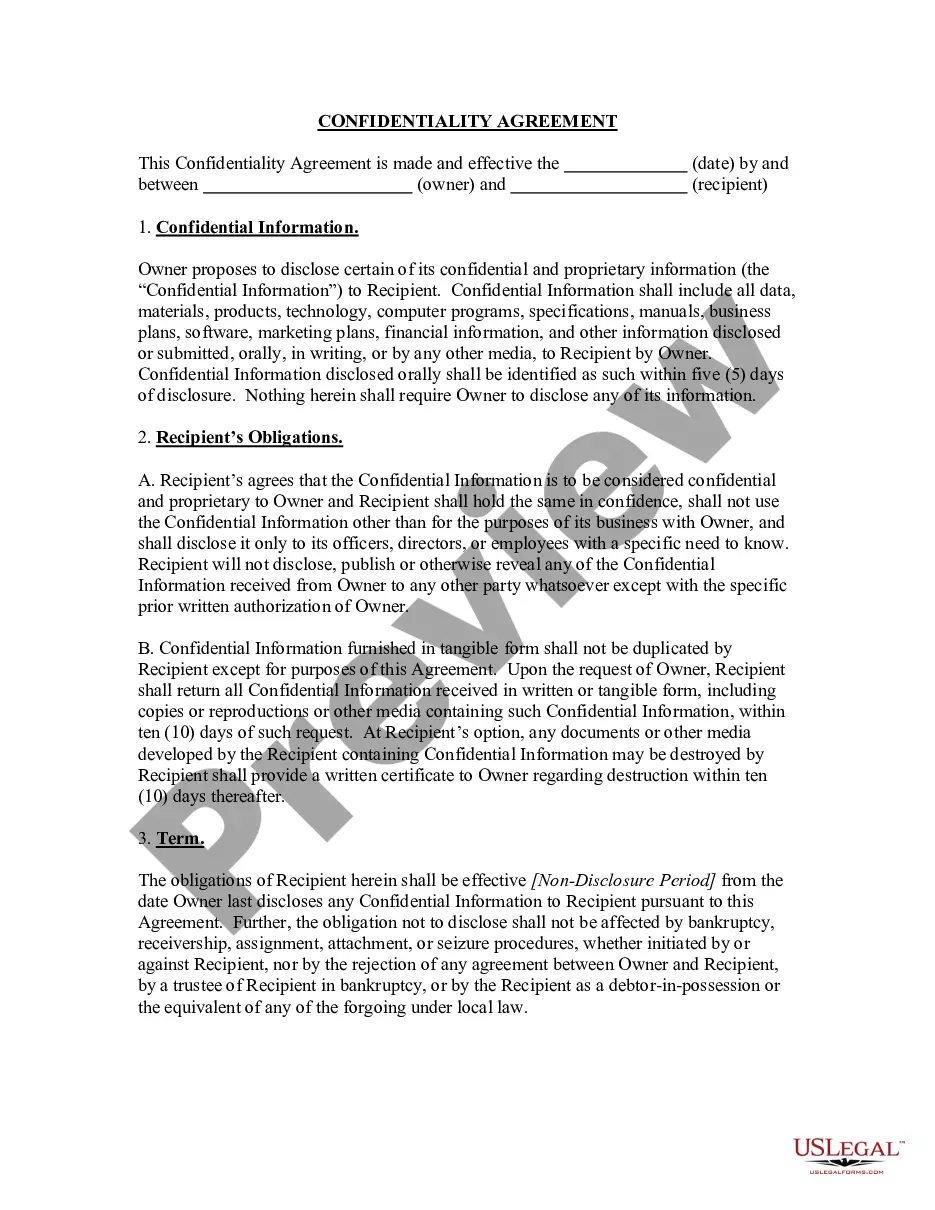
Get your form ready online
Our built-in tools help you complete, sign, share, and store your documents in one place.
Make edits, fill in missing information, and update formatting in US Legal Forms—just like you would in MS Word.
Download a copy, print it, send it by email, or mail it via USPS—whatever works best for your next step.
Sign and collect signatures with our SignNow integration. Send to multiple recipients, set reminders, and more. Go Premium to unlock E-Sign.
If this form requires notarization, complete it online through a secure video call—no need to meet a notary in person or wait for an appointment.
We protect your documents and personal data by following strict security and privacy standards.

Make edits, fill in missing information, and update formatting in US Legal Forms—just like you would in MS Word.

Download a copy, print it, send it by email, or mail it via USPS—whatever works best for your next step.

Sign and collect signatures with our SignNow integration. Send to multiple recipients, set reminders, and more. Go Premium to unlock E-Sign.

If this form requires notarization, complete it online through a secure video call—no need to meet a notary in person or wait for an appointment.

We protect your documents and personal data by following strict security and privacy standards.
Looking for another form?




How to fill out Employee Confidentiality Documentation?
You can dedicate numerous hours online trying to locate the legal document template that fulfills the state and federal standards you require.
US Legal Forms provides a vast selection of legal templates that are reviewed by professionals.
You can actually download or print the Maine Employee Confidentiality Document from our platform.
If available, use the Preview button to view the document template simultaneously. If you wish to find another version of the form, use the Search area to obtain the template that suits your needs and requirements.
- If you already have a US Legal Forms account, you can Log In and click on the Download button.
- Then, you can fill out, modify, print, or sign the Maine Employee Confidentiality Document.
- Every legal document template you purchase is yours forever.
- To obtain an additional copy of a purchased form, go to the My documents tab and click the appropriate button.
- If you are visiting the US Legal Forms website for the first time, follow the simple instructions below.
- First, ensure you have selected the correct document template for the state/town of your choice.
- Review the form details to make sure you have chosen the correct type.
Form popularity
FAQ
This can include salaries, employee perks, client lists, trade secrets, sales numbers, customer information, news about pending terminations, reasons for a firing, phone codes or computer passwords. You may not divulge this information while you are working for an employer or after you leave.
Confidential Employee Information Personal data: Social Security Number, date of birth, marital status, and mailing address. Job application data: resume, background checks, and interview notes. Employment information: employment contract, pay rate, bonuses, and benefits.
For example, the following information should be kept confidential:Insurance and benefit enrollment forms and claims information.Medical exam information.Workers' compensation records.FMLA leave certifications and medical documentation; leave information (e.g. dates)More items...?
These should include, for example:Ensuring that confidential information is always locked away at night, and not left unattended during the day;Password-protecting sensitive computer files;Marking confidential information clearly as such, and ensuring that paper copies are shredded before disposal; and.More items...
Confidential information is generally defined as information disclosed to an individual employee or known to that employee as a consequence of the employee's employment at a company. This information isn't generally known outside the company or is protected by law.
Here is a list of five types of documents that must be confidential.Customer Lists. Your customers will not be very appreciative if you give away their sensitive information.Financial Accounts/Statements.Supplier List.Employee Contracts.Operation Manuals.
What is considered confidential? All attorney-client communications, work product, and trial prep documents should be regarded as confidential. Other examples of confidential information include client medical records, workers' compensation claims, financial records, and HIPAA information of both clients and employees.
The Americans with Disabilities Act (ADA) prohibits employers from including medical information in an employee's general personnel file. Employers should create a separate file for employee medical information that includes records related to medical leave, reasonable accommodations, workers' compensation claims, etc.
While there is no single universal legal definition of private employee data, it generally includes employee addresses, photos, social security numbers, dates of birth, protected class information and medical records.
This includes employee resumes, background checks, interview notes and tests, performance reviews and disciplinary paperwork. Employment information such as pay rate, employment contract, level of benefits, vacation and bonuses are also confidential documentation.