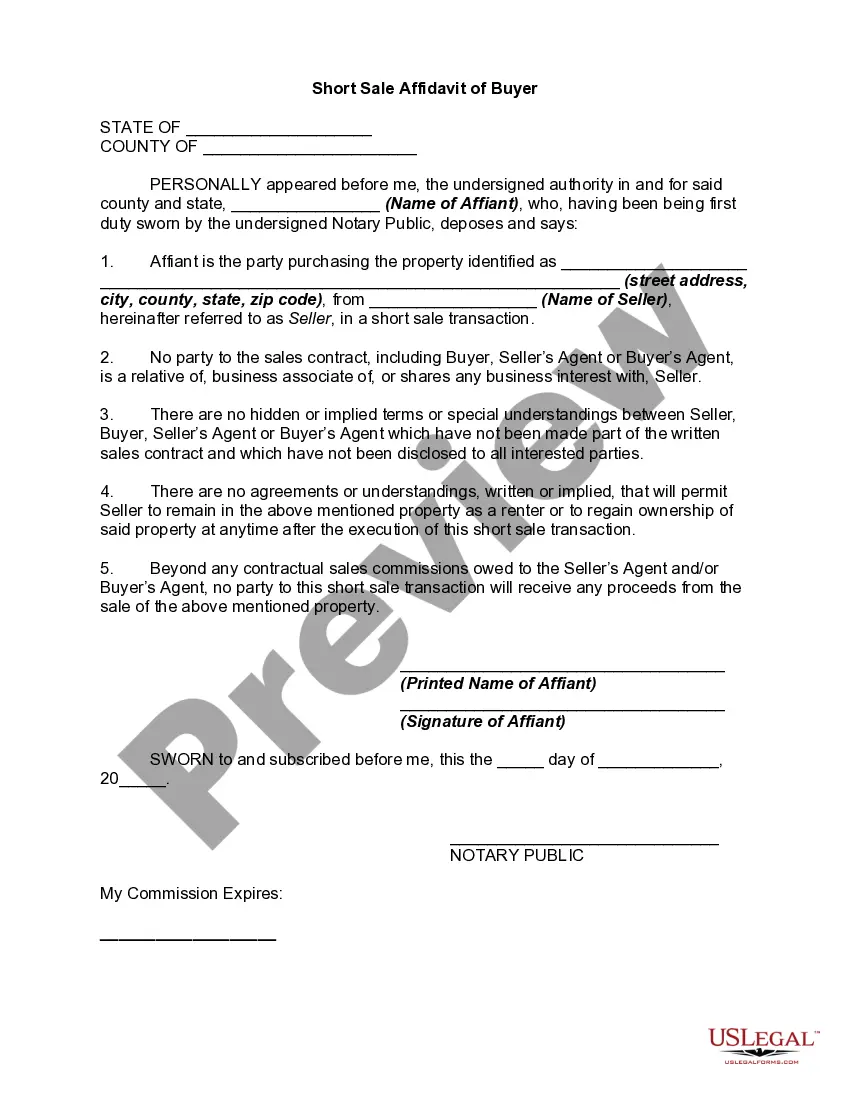
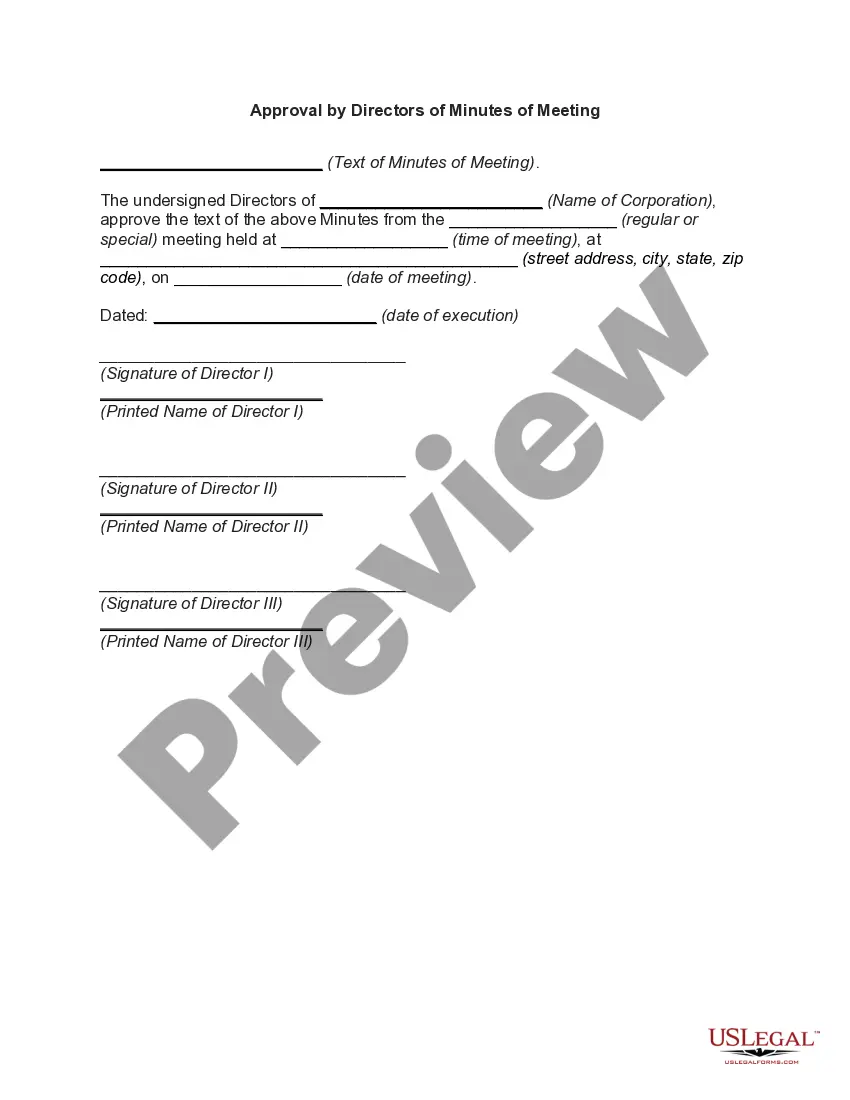
Maine Approval by Directors of Minutes of Meeting
Description

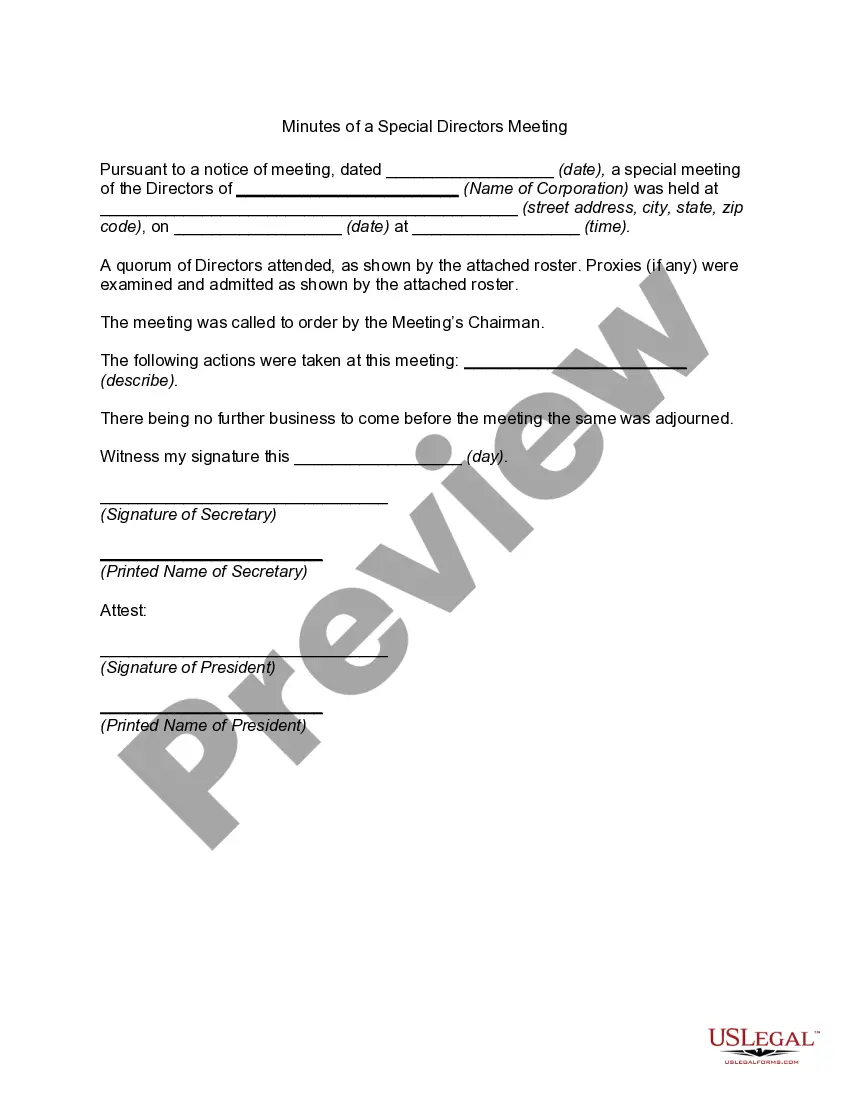


How to fill out Approval By Directors Of Minutes Of Meeting?
You might invest hours on the Web looking for the legal document format that meets the federal and state requirements you desire.
US Legal Forms offers a wide array of legal templates that are reviewed by experts.
You can effortlessly obtain or print the Maine Approval by Directors of Minutes of Meeting from the service.
If available, utilize the Preview feature to review the document format as well. If you wish to find another version of the form, use the Search area to find the format that fits your needs and requirements.
- If you already have an account with US Legal Forms, you can Log In and click the Download button.
- Subsequently, you can complete, edit, print, or sign the Maine Approval by Directors of Minutes of Meeting.
- Every legal document template you receive is yours permanently.
- To retrieve another version of any purchased form, navigate to the My documents section and select the appropriate option.
- If you are using the US Legal Forms site for the first time, follow these simple instructions.
- First, ensure you have selected the correct document format for your desired county or city.
- Review the form description to confirm that you have chosen the right one.
Form popularity
FAQ
The minutes should include the title of the group that is meeting; the date, time, and venue; the names of those in attendance (including staff) and the person recording the minutes; and the agenda.
In addition to recording the time the meeting adjourns, the person who recorded the minutes should sign them. The words Submitted by followed by the signature is acceptable according to Robert's Rules of Order, Newly Revised, says Bowie.
What not to include in meeting minutes1 Don't write a transcript.2 Don't include personal comments.3 Don't wait to type up the minutes.4 Don't handwrite the meeting minutes.1 Use the agenda as a guide.2 List the date, time, and names of the attendees.3 Keep minutes at any meeting where people vote.4 Stay objective.More items...?
Meeting minutes serve as legal documents that may be examined when an organization is being investigated or sued. Therefore, it is important to keep accurate meeting records but not to include unnecessary information that could prove harmful in the future.
Distribution, Part 1 Minutes should be submitted to the building manager and the board president, who should take a day or two to review them separately and then compare reviews with one another via email.
Usually, a designated person drafts the minutes during meetings (for example, a Board Secretary in the case of Boards of Directors), but this can be done by anyone else in the meeting who is willing, as long as other members agree that the person is charged to write the minutes.
Meeting minutes also need to be signed by the individual who took the minutes at the conclusion of the board meeting. Once signed, the minutes become a legal binding copy. This copy should be maintained in corporate records. It is good practice to keep a hard copy along with an electronic copy.
5. Get your notes approved. After you type up your minutes, the next step is to have them approved. Typically, you will send the minutes to the most senior team member who was in attendance at the meeting.
Minutes, once entered in the Minutes Book, shall not be altered without Board's approval.
Simple Rule 1: A member of a group has a right to examine the minutes of that group. Plain and simple, Robert's Rules says that the secretary of an organization has to (1) keep minutes and (2) make them available to members that ask for them.