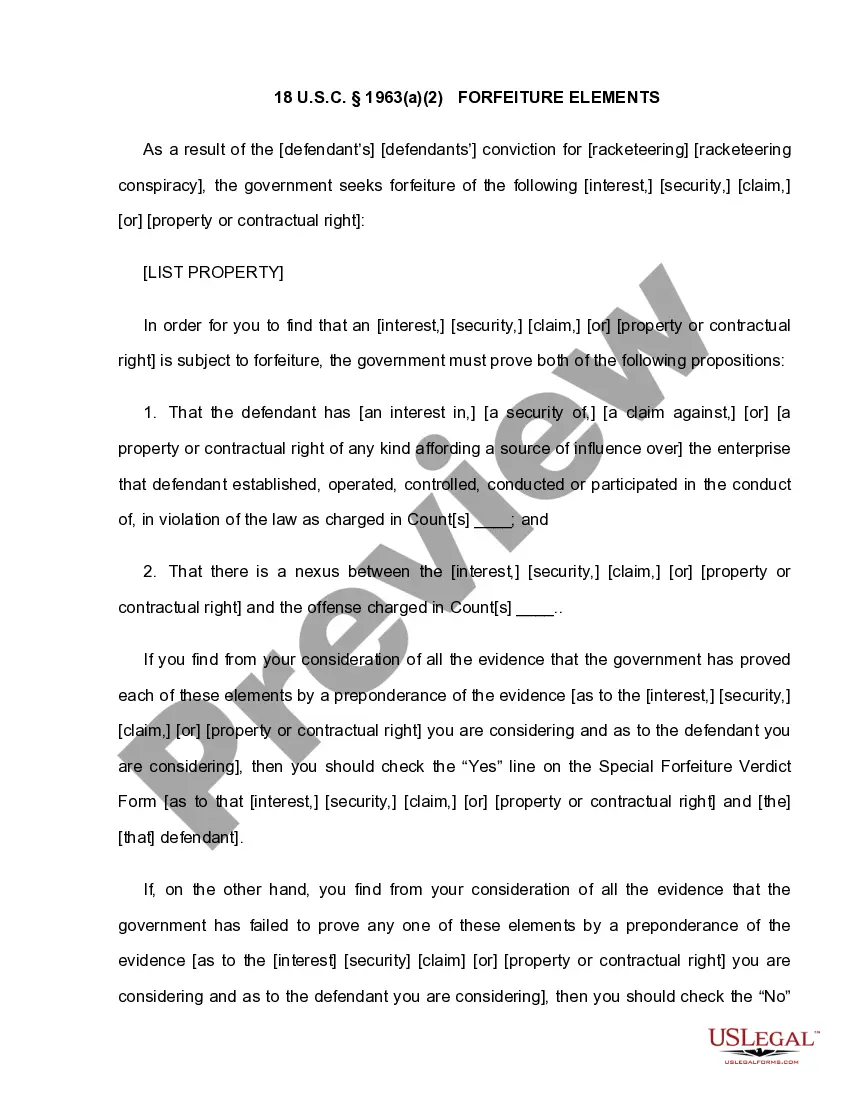
Maine Testamentary Trust of the Residue of an Estate for the Benefit of a Wife with the Trust to Continue for Benefit of Children after the Death of the Wife
Description
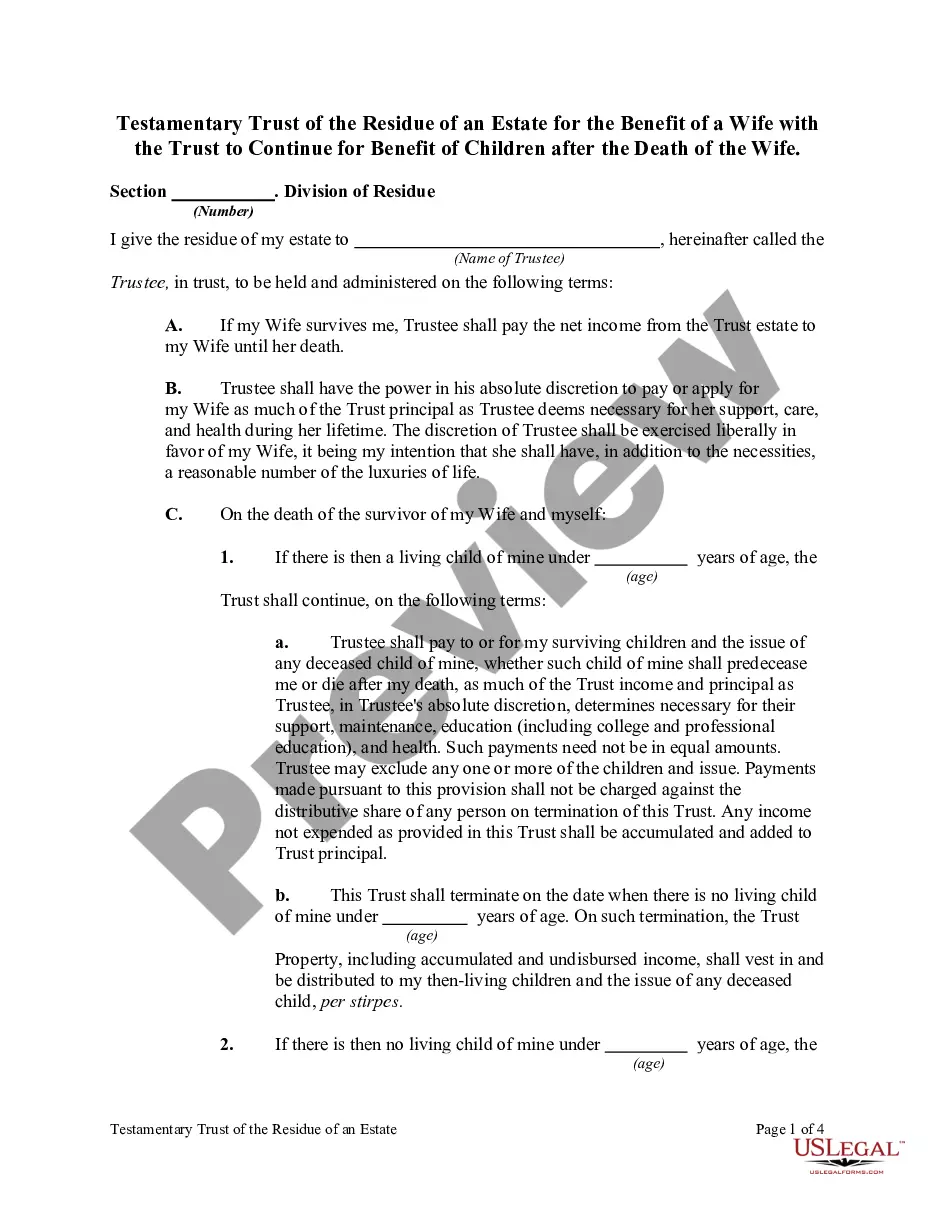

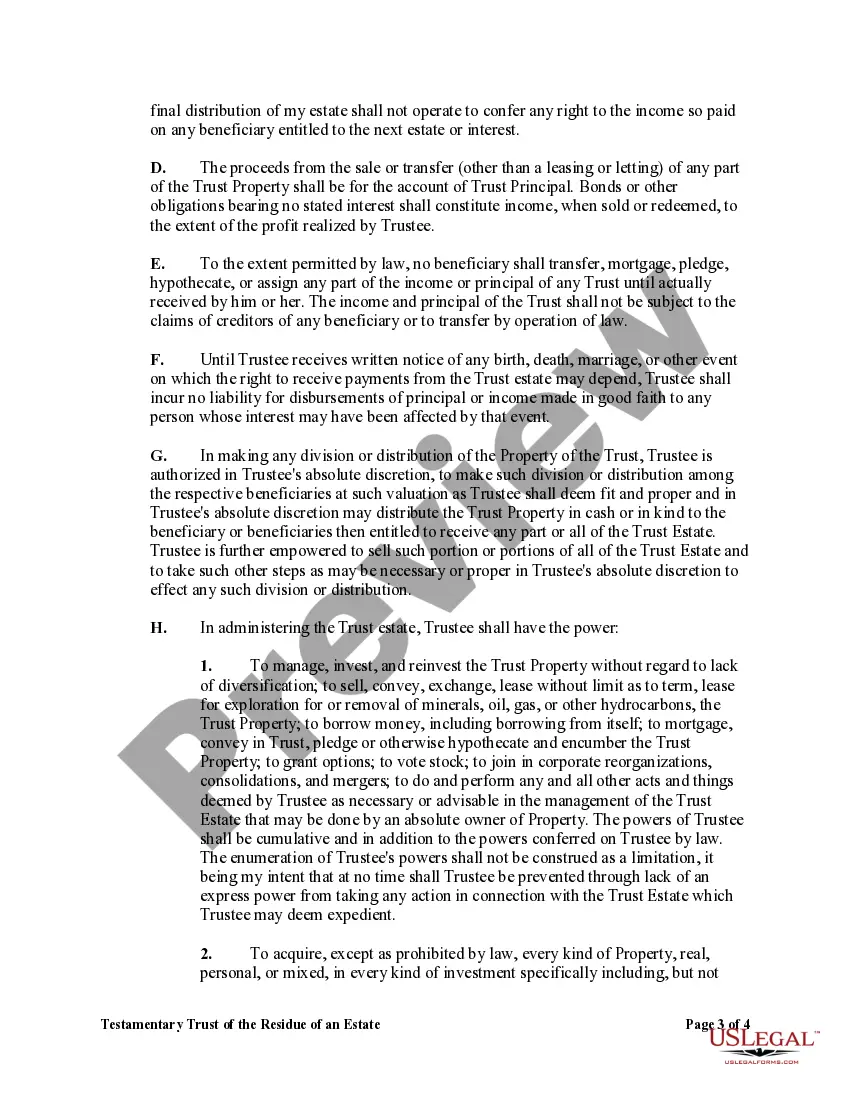
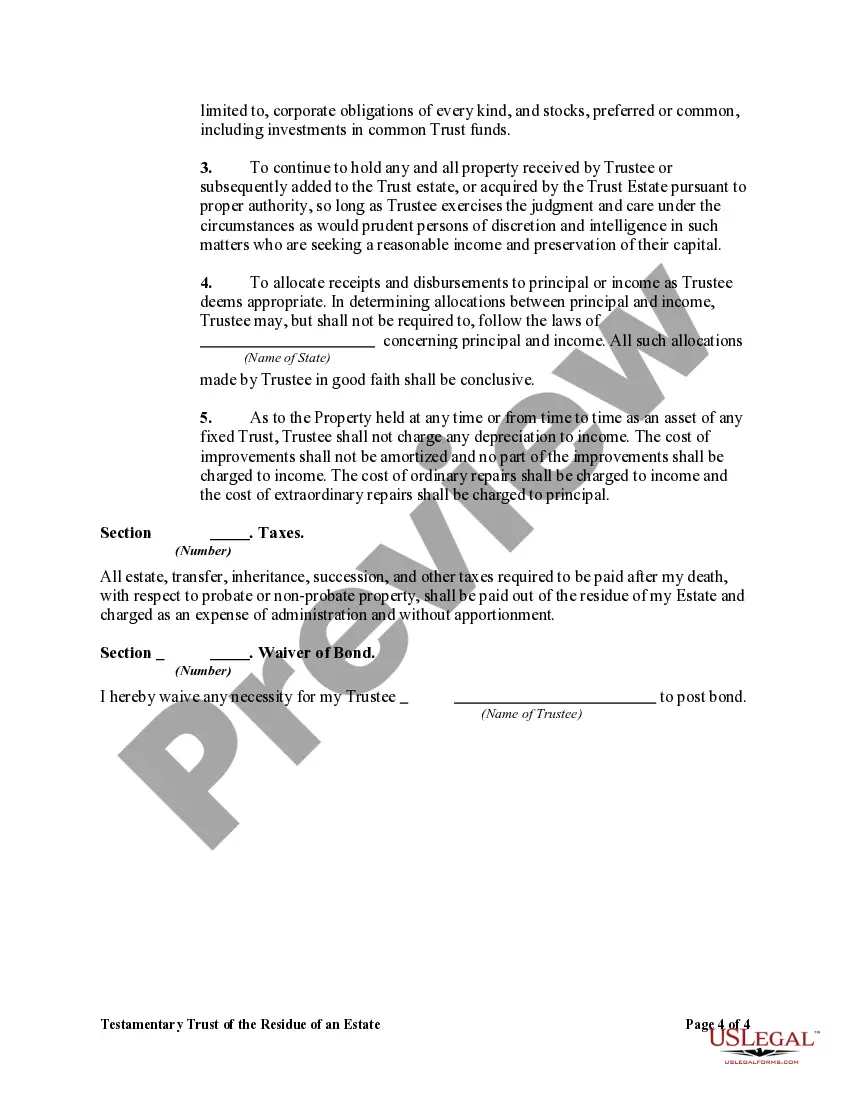
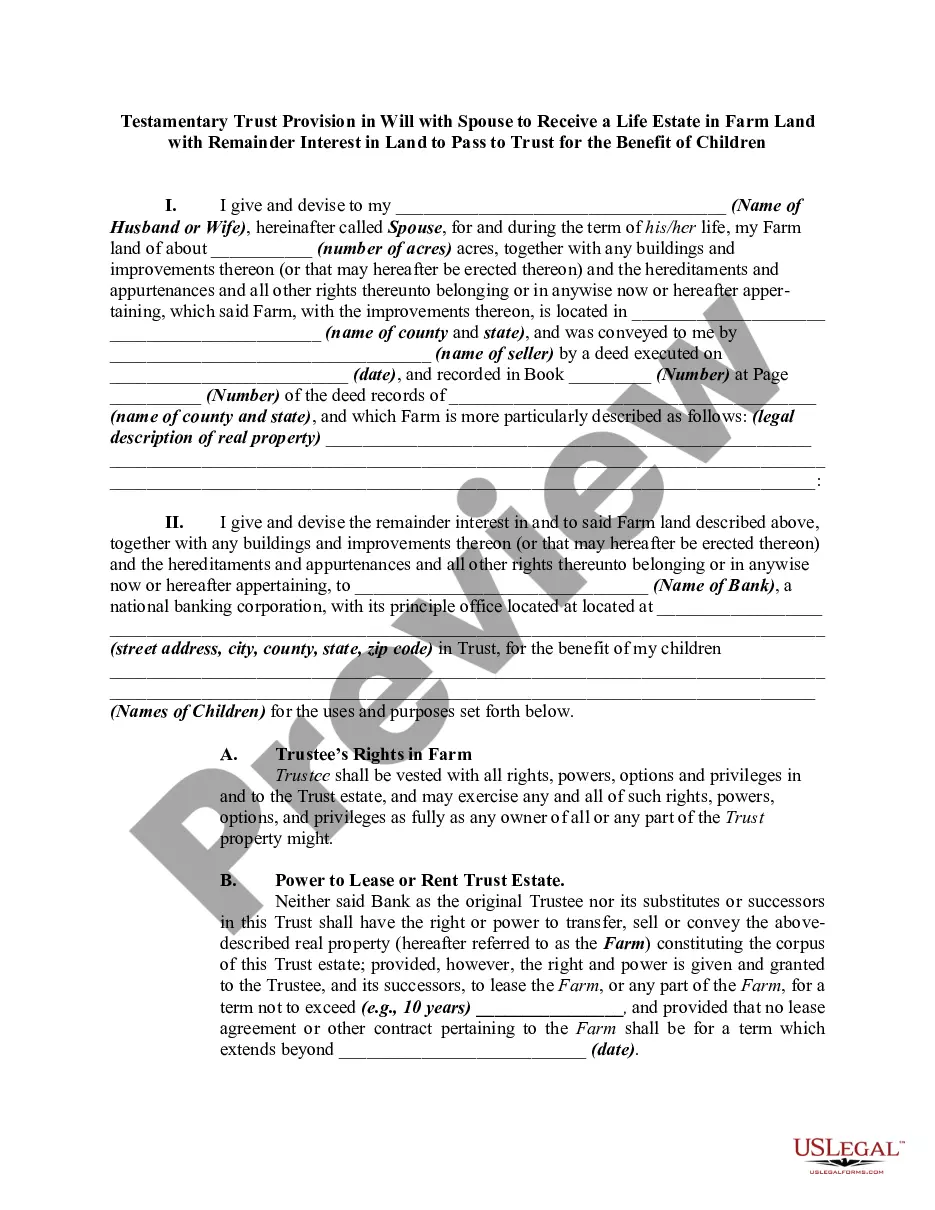
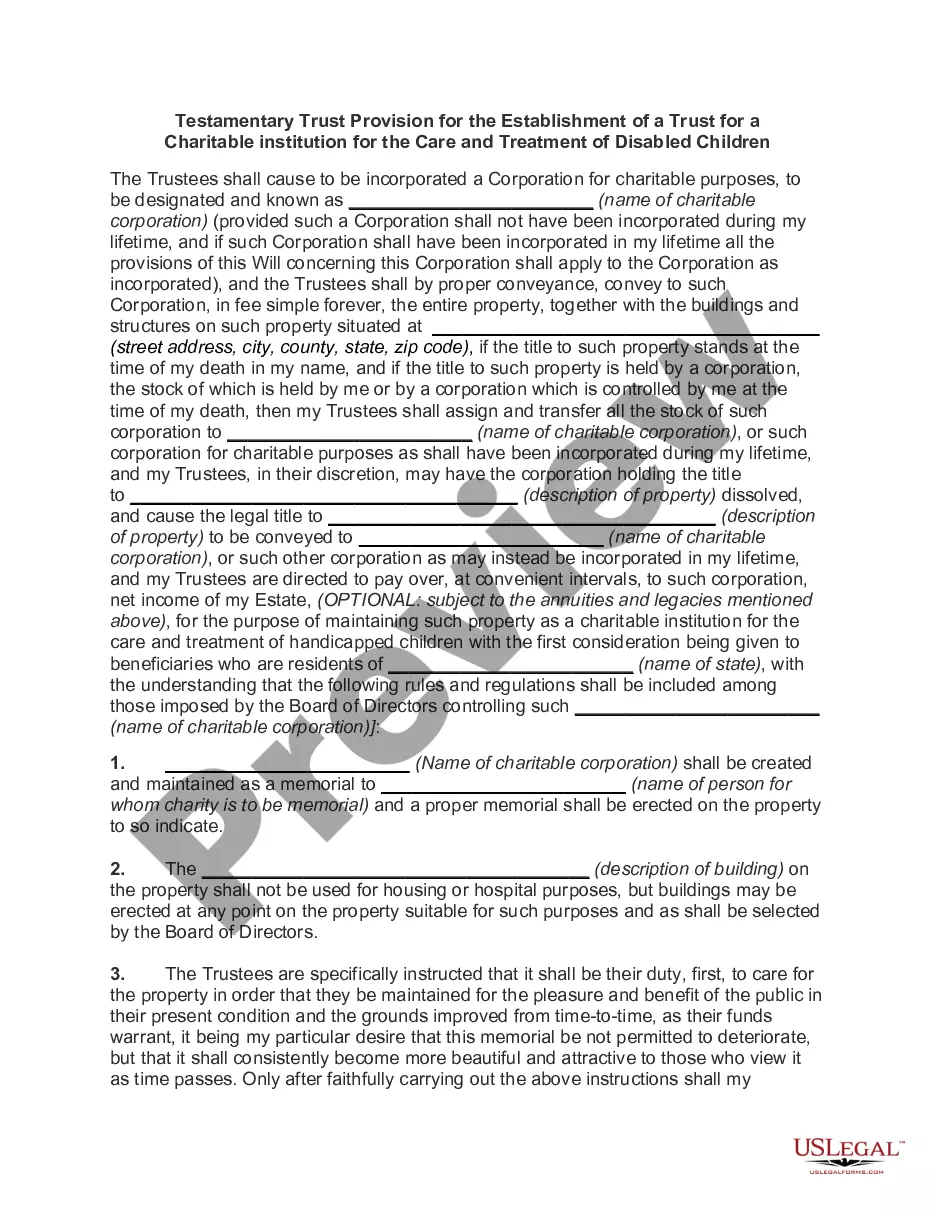
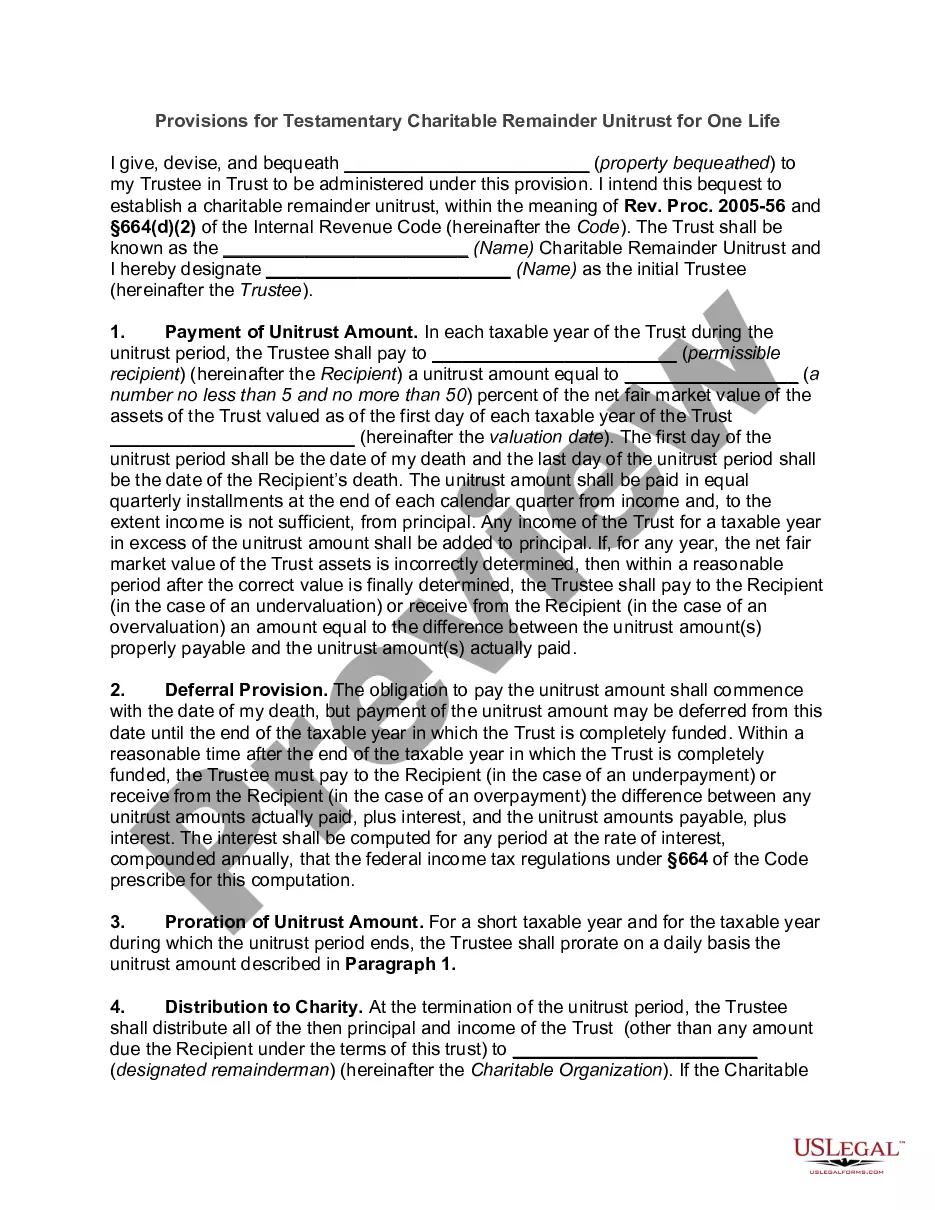

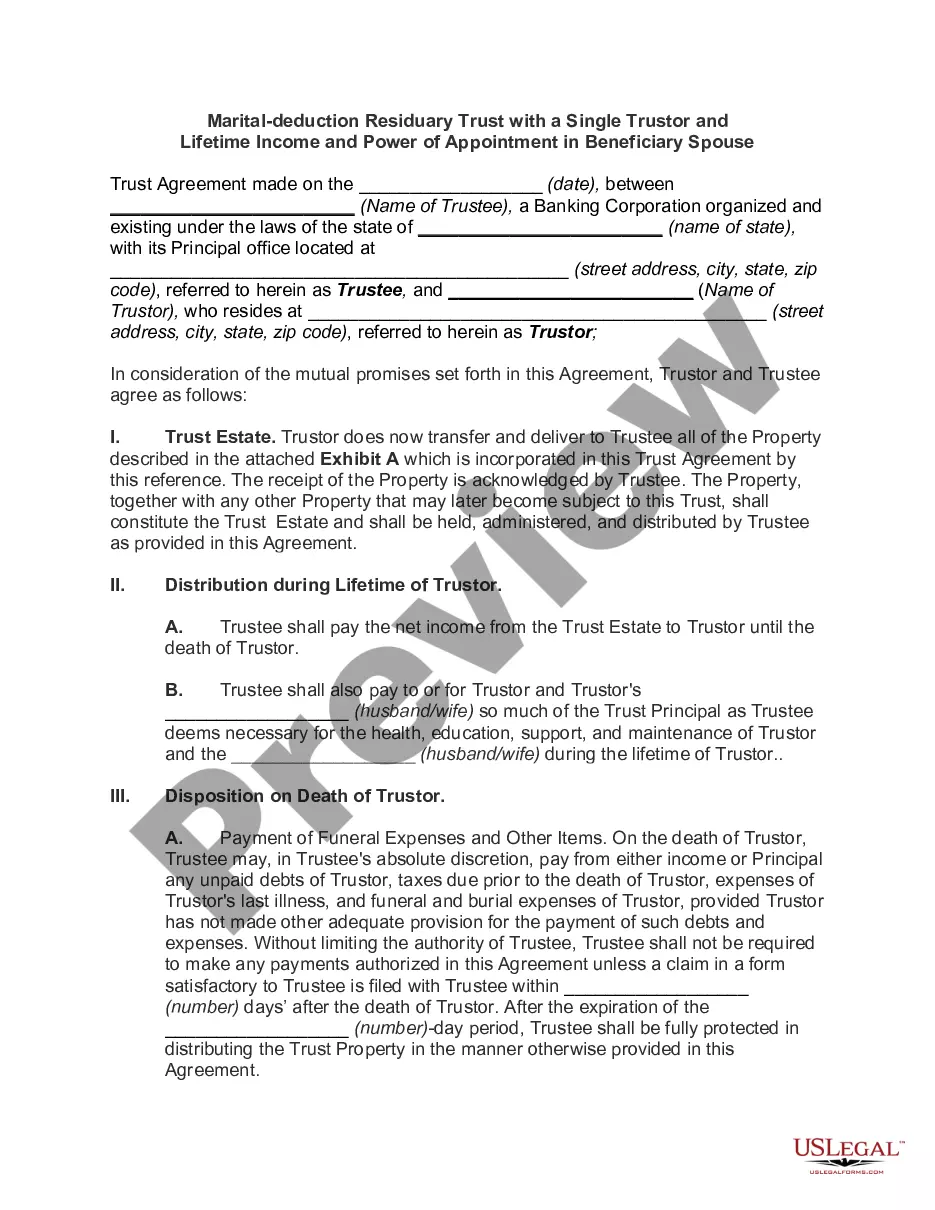
How to fill out Testamentary Trust Of The Residue Of An Estate For The Benefit Of A Wife With The Trust To Continue For Benefit Of Children After The Death Of The Wife?
If you require to aggregate, download, or print legal document templates, utilize US Legal Forms, the largest compilation of legal forms, accessible online.
Make the most of the site's straightforward and convenient search feature to locate the documents you seek.
Various templates for business and personal purposes are organized by categories and states, or keywords.
Step 4. Once you have found the form you need, select the Buy now button. Choose the payment plan you prefer and provide your information to register for an account.
Step 5. Process the transaction. You can use your credit card or PayPal account to complete the purchase.
- Leverage US Legal Forms to obtain the Maine Testamentary Trust of the Residue of an Estate for the Benefit of a Wife with the Trust to Persist for the Benefit of Children after the Wife's Passing in just a few clicks.
- If you are an existing US Legal Forms user, Log In to your account and click on the Download button to receive the Maine Testamentary Trust of the Residue of an Estate for the Benefit of a Wife with the Trust to Persist for the Benefit of Children after the Wife's Passing.
- You can also access forms you previously acquired from the My documents section of your account.
- If you are using US Legal Forms for the first time, consult the steps outlined below.
- Step 1. Confirm you have selected the form relevant to the appropriate city/state.
- Step 2. Utilize the Preview option to review the content of the form. Don't forget to check the description.
- Step 3. If you are not satisfied with the form, use the Search field near the top of the screen to find alternative versions of your legal form template.
Form popularity
FAQ
Following the death of the primary benefactor, a survivor trust remains in effect and is managed according to the trust's terms. In the case of a Maine Testamentary Trust of the Residue of an Estate for the Benefit of a Wife with the Trust to Continue for Benefit of Children after the Death of the Wife, the wife will benefit from the trust during her lifetime, with provisions for the children established for after her death.
'Residual' refers to what remains of an estate after specific bequests and expenses are settled. In a Maine Testamentary Trust of the Residue of an Estate for the Benefit of a Wife with the Trust to Continue for Benefit of Children after the Death of the Wife, this means the remaining assets will be allocated to the beneficiaries designated in the trust after satisfying all other obligations.
How does it save tax? A testamentary trust allows the person who controls it to split the income generated by the trust between family members. Importantly, children who receive income from a testamentary trust are taxed at adult tax rates, instead of penalty rates (up to 66%) which apply to other types of trusts.
A residuary beneficiary is a person who receives any property from a will or trust that is not specifically left to another designated beneficiary. The property received by the residuary beneficiary from a will is referred to as the residuary bequest.
Where a person is a Residuary Beneficiary, they are entitled to receive a full account of the Estate assets and how they have been distributed in order to see how their share has been calculated. The Estate Accounts do not have to be provided until the Estate administration has been finalised.
The surviving spouse generally stands to inherit first, followed by the decedent's children, their parents, their siblings and so forth. Under certain circumstances, stepchildren may have priority to inherit over other heirs.
Many married couples own most of their assets jointly with the right of survivorship. When one spouse dies, the surviving spouse automatically receives complete ownership of the property. This distribution cannot be changed by Will.
A testamentary trust is created to manage the assets of the deceased on behalf of the beneficiaries. It is also used to reduce estate tax liabilities and ensure professional management of the assets of the deceased.
In most states, most or all of the money goes to the deceased's spouse and children.
As a community property state, California law presumes all the property you or your spouse acquire during your marriage to be marital property, regardless of how it is titled.